B2B web design and development sits closer to sales operations than to marketing decoration. The buyer landing on your homepage is a research committee running a shortlist, not a shopper chasing one click. Your site either shortens their internal review or drags it out. This guide walks the layout math, the tech stack picks, the sales integration, and the reporting model that separates a working B2B site from a brochure nobody in the buying group finishes reading.
You’ll get the exact sections a b2b web design and development project needs, the CMS and framework choices worth defending in a 12 to 18 month build cycle, the sales enablement patterns that pull demo requests forward, and the analytics wiring that lets a revenue team argue for more budget. Read this against your last 90 days of pipeline data before you brief a designer or a shop. The brief you hand over decides more than the studio you pick.
Why b2b web design and development is different from consumer builds
A consumer site sells to a person clicking a paid ad. B2b web design and development sells to a 5 to 9 person buying group researching over 60 to 90 days. That gap changes almost every downstream decision, from hero copy through pricing pages and form length.
Hero copy has to name the buyer role, not the promise. Feature pages need proof density that stands up to a procurement review. Every form field carries a cost, since the demo request gets passed to a rep, not a shopping cart. B2b web design services that skip the committee produce a homepage that reads well to a marketer and confuses a real buyer.
Watch the difference on Hotjar. A consumer visitor scrolls once, clicks a product tile, and either converts or bounces inside 90 seconds. A b2b buyer opens 4 to 7 tabs on the same visit, scans your integrations page, opens two case studies, and drops off if the pricing model looks murky. The build has to answer that scanning pattern with real content, not lofty headlines.
Buyer research from Gartner, G2, and the TrustRadius 2024 B2B buying disconnect report keeps showing the same pattern. B2b buyers watch 4 to 6 vendor sites before they book a call. They finish the review inside your site or on a competitor site. B2b web design and development gets you into the shortlist or drops you before the demo is even offered. Get the buyer-role page grid right first. Then argue about hero copy.
Sitemap and layout the buying committee actually uses
Every b2b web design and development sitemap needs 4 layers. Homepage and solution overview. Buyer-role pages (CFO, VP Engineering, Head of Procurement, Head of RevOps). Proof pages (case studies, integrations, security, pricing). Demo request and pricing pages. Skip the buyer-role layer and you force one homepage to speak to 5 different jobs at once. That’s how b2b web design services fail before a single wireframe gets drawn.
The layout math on a b2b homepage is tight. Above the fold you get one clear headline naming the buyer’s job, a subhead naming the outcome in numbers, and one primary CTA. Below the fold, three proof blocks. Named clients with logos. One case study card with a hard number. One integration strip if the product plugs into a known stack. Nothing else in the first 800 pixels.
For b2b website design and development, the second scroll is where you win the review. Feature blocks tied to buyer roles. Pricing anchor with a starting-from number. Security summary with a link to the SOC 2 report. FAQ block covering the 6 questions a procurement lead types into every vendor site. That is the shape of a page a buying committee finishes reading.
One tell that separates a working b2b site from a broken one. Count the words above the pricing page CTA. Under 400 words and the buyer bounces to your competitor’s pricing page. Over 900 words and the buyer skips to the FAQ. Land between 500 and 750 words with a stated starting price, and the demo request rate on that page typically doubles.
Tech stack picks worth defending for b2b web design and development
WordPress with a custom theme. Still the default for content-heavy b2b sites that need 40+ solution and industry pages. Editorial team owns publishing. Marketing owns the CMS. Development stays lean on plugin count. B2b web design services teams that use WordPress well cut monthly content shipping cycles from weeks to days.
Webflow. The right pick for a 25 to 60 page marketing site with a small internal team. Designer-led. No plugin bloat. Ships fast. Falls over as the page count crosses 150 or if you need custom auth, gated content, or a complex data model. For B2B SaaS teams under 40 headcount, Webflow is the fastest path from wireframe to live site.
Next.js on a headless CMS. The pick for engineering-led product companies with in-house frontend talent. Sanity, Contentful, or DatoCMS on the backend. Vercel or Netlify for hosting. Delivers the fastest page loads and the cleanest handoff between marketing and product engineering. Not the right pick if the marketing team has to open a ticket every time they want to change a headline.
HubSpot CMS. Underrated for b2b web development when the sales team already lives inside HubSpot. Every form fires straight to the CRM. Contact records line up with page views out of the box. Weaker on custom design flexibility and page speed, so pair with a strict template library.
For b2b sites over 150 pages that need SEO depth and CRM discipline, WordPress with a custom theme beats Webflow on total cost of ownership by 30 to 50% across a 3-year window.
Sales integration inside b2b web design services
Sales integration decides whether the site moves pipeline or just moves traffic. The build has to wire form submissions straight into the CRM with clean UTM tags, route by buyer role and company size, and hand the sales rep enough context to open the first call intelligently. B2b web design and development shops that treat the CRM handoff as “someone else’s problem” launch sites that generate leads sales won’t touch.
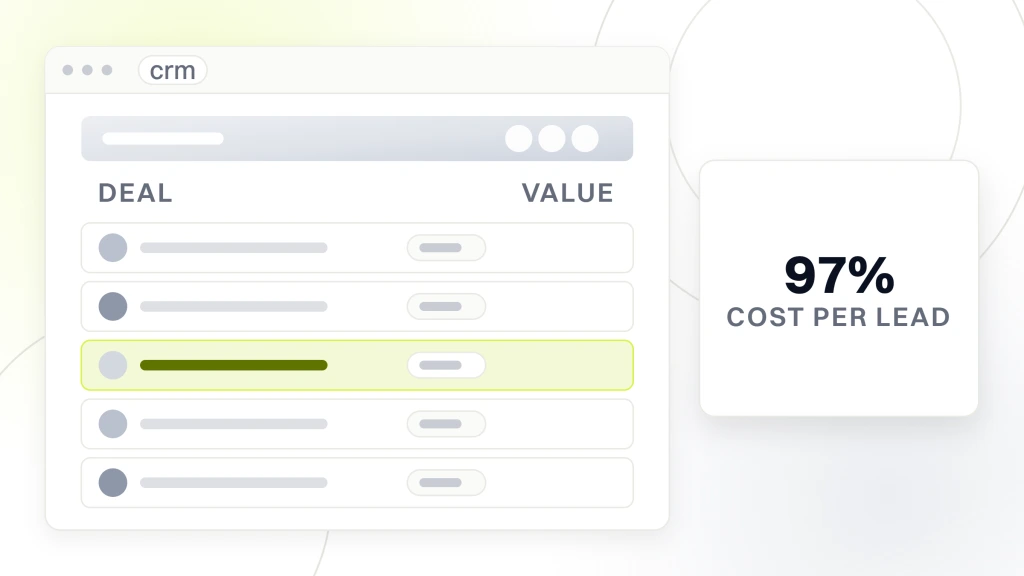
Three integrations belong in every b2b web development scope. First, form-to-CRM sync with round-robin routing rules. Second, chat-to-CRM sync so the SDR team sees the pre-call conversation. Third, calendar booking tied to the rep’s live availability. Get all three wired at launch and demo-to-close cycles drop by 15 to 25% inside the first quarter. For the automation layer that sits behind these integrations, see our Sales Funnel and Automation Services.
Our client Automation Anywhere ran into this exact gap before the redesign. Their old site produced leads the SDR team ignored, since the routing rules dropped half the context. After the b2b web design and development rebuild wired lead scoring plus rep routing plus enrichment at the form layer, cost per lead dropped 97% and the SDR team started calling every fresh lead inside 20 minutes.
The pattern repeats across b2b web design services engagements. Rocket Software’s launch curve pushed activation rate up 300% once the site funneled qualified traffic into a guided demo flow instead of a generic contact form. Poly Processing saw cost per lead drop 90% on the annual curve after we tied the site’s form logic to the CRM enrichment step. Sales integration is the multiplier every b2b website design and development project needs to earn.
Security, privacy, and hosting for b2b web development
Security shows up in every enterprise procurement review. Your b2b web development stack has to answer 3 questions the procurement lead types into every vendor site. Where is the data hosted. What is the encryption model. What is the incident response window. If the site can’t answer these in the first 90 seconds, the buyer moves on.
Hosting picks map to the stack pick. WordPress runs best on Kinsta, WP Engine, or Pantheon for b2b sites that need 99.9% uptime and hardened WAF rules. Webflow ships with a hosted security model that removes most of that burden. Next.js on Vercel sits in between, depending on how the API layer is built. B2b buyers reviewing your SOC 2 attestation want the security model to match the stack pick. Any mismatch delays the procurement review by weeks.
Privacy adds a second layer. GDPR, CCPA, and industry-specific rules like HIPAA or SOC 2 Type II shape the cookie banner, the form disclosures, and the data retention policies you publish. B2b website design and development shops that treat privacy as a plugin install launch sites that fail the first legal review. Build the privacy layer into the sitemap from day one. Every form gets a privacy line. Every cookie category gets a consent toggle. Every data flow gets documented.
SEO integration in b2b web design and development services
SEO integration is the quiet reason b2b web design and development projects underperform after launch. Pair the launch with the right SaaS SEO tooling so rankings compound instead of stall. A gorgeous site that ignores Core Web Vitals, structured data, and search intent produces zero organic pipeline. The SEO checklist that goes into every scoping doc includes schema markup on every solution and case study page, Core Web Vitals under 2.5 seconds on LCP (see the Core Web Vitals thresholds for the full LCP, INP, and CLS benchmarks), an internal link graph modeled around buyer roles, and a content model built for the searches your buyers actually run.
The scope of SEO integration decides the search visibility ceiling. B2b web design services that treat SEO as a bolt-on after launch typically cap at brand-only search visibility. Baking SEO into the sitemap, the URL structure, and the content model at scoping time is what wins searches for buyer role plus integration plus outcome. See the Google structured data intro for the schema types worth wiring at launch.
Post launch, SEO integration lives in the retainer motion. Every top-performing b2b site we’ve measured runs a monthly content plus technical retainer. That retainer builds the deep pages Google rewards, watches Core Web Vitals as the site changes, and expands the internal link graph as new case studies land. Without it, the site coasts and organic pipeline flattens inside 6 months. For the search side of the retainer, see our Search Engine Optimization Services.
Custimy landed 500+ new keyword rankings inside 12 months of a b2b web design and development rebuild wired around this SEO discipline. Simply.Coach saw a 120% lead growth curve inside a 48-day sprint once the site’s landing pages matched real search intent. Neither result came from a plugin. Both came from an SEO model built into the site architecture at scoping time.
Reporting the b2b web design and development team can defend
Reporting is where a lot of b2b web design services engagements collapse. The design team ships the site. The marketing team celebrates the launch. Six months later, sales asks what the site actually did for pipeline, and marketing scrambles to build a report that never existed in the scope. Wire the reporting model before launch. Every b2b web design and development scope should include a dashboard that maps site behavior to pipeline stages inside the CRM.
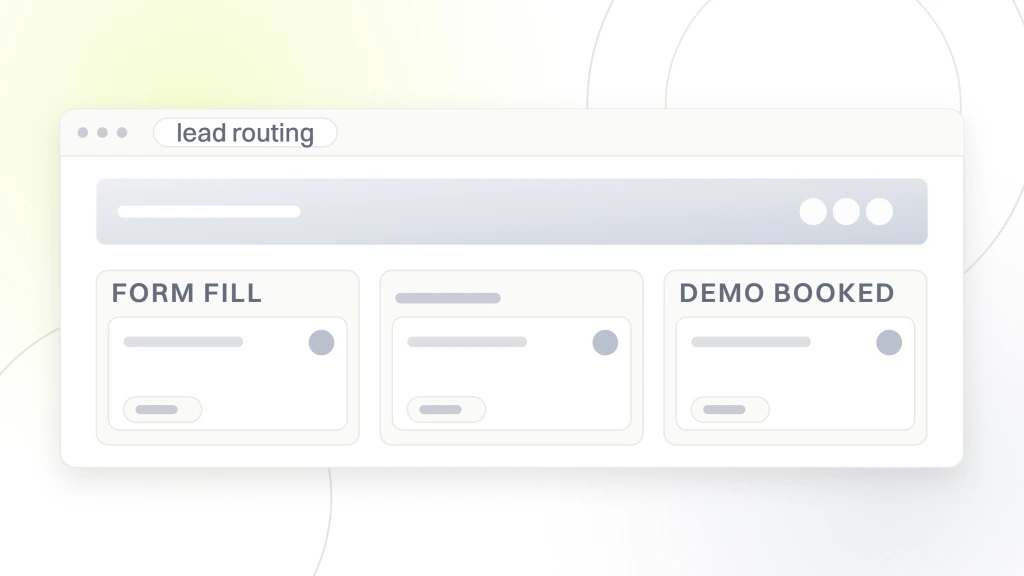
The dashboard has to answer 4 questions. How many sessions turned into demo requests. How many demo requests turned into qualified opportunities. What closed revenue tied back to first-touch site sessions. Which specific pages carried the highest conversion rates. Every one of those needs GA4 plus a CRM query plus UTM discipline. Skip any one and the reporting story falls apart when a CFO asks about ROI.
One VP of Marketing we worked with kept sending the executive team a weekly “web insights” email built entirely on session count and average time on page. Six months in, the CFO asked what those numbers had to do with pipeline. She had no answer. She switched the report to demo requests, qualified opportunities, and closed revenue the following week. Her marketing budget survived the next quarterly review by a 40% margin, mostly since the numbers finally lined up with what the CFO actually funds.
If your b2b site can’t map a session to a pipeline stage inside 4 clicks, the reporting model is broken. Fix that before you touch the redesign.
B2b web design and development pitfalls that show up in every audit
Pitfall 1. Skipping the buyer role interviews before wireframes. Every studio that skips this step produces a homepage that reads well to the marketing team and lands as generic to the actual buyer. Talk to 8 to 12 buyers before you brief the designer. That call time is the cheapest research on the project.
Pitfall 2. Over-designed hero animations. Buyers on a review call open the homepage in the middle of a Zoom demo. If the hero takes 3 seconds to render an animation, the sales rep loses the room. Keep the hero static. Save the motion for later sections. Motion below the fold is a nice-to-have. Motion above the fold is a lead-loss machine on slow LTE and screen-shared demos.
Pitfall 3. Pricing pages that hide the pricing. B2b buyers scan for pricing signals early in the review. Pages that force a “contact sales” click for basic pricing hints get shortlisted out. The counter is a pricing anchor. “Plans start at $2,400 per month” with a link to the full pricing conversation. That anchor keeps the buyer inside the review long enough to book the demo. Full transparency wins b2b web design services accounts every time we’ve measured it against opaque pricing.
Pitfall 4. Launching without a 90-day post-launch review scheduled on the calendar. Every b2b web design and development project drifts inside the first 90 days after launch as sales feedback trickles in, page speed regressions land, and CRM routing rules stop firing. Book the 90-day review with the buyer research team and sales leadership before launch. Fix the drift now, when it’s still cheap.
Pricing benchmarks for b2b website design and development
Pricing depends on scope, page count, integration depth, and the size of the buying committee your site has to serve. A lightweight b2b marketing site of 20 to 40 pages with a standard CMS and 2 CRM integrations lands between $15,000 and $35,000. A mid-market build of 60 to 150 pages with custom design, deep CRM sync, and a retainer wrap lands between $45,000 and $120,000. A full enterprise b2b web design and development program with 200+ pages, a headless stack, custom auth, and a resource library lands between $150,000 and $400,000.
Redefine Web’s SMB build tiers start at $2,500, $4,500, and $7,500 for smaller b2b marketing sites that need a fast launch. Ongoing maintenance retainers run $199, $299, or $499 per month, covering hosting, security patches, and 2 to 4 hours of small edits. Anything larger gets scoped as a custom b2b website design and development engagement priced to the exact page count and integration depth.
Watch the retainer line closely. B2b web design services shops that quote a low build price and no retainer typically walk away at launch, leaving the site to drift. Every b2b site we’ve launched that hit its 12-month pipeline target ran a $2,500 to $12,000 per month retainer covering content, SEO, and CRO. That’s the real cost of a b2b site that keeps producing pipeline over 3 years, not just at launch.
What to spec in your b2b web design and development brief this week
Three actions to finish the b2b web design and development brief this week. Interview 8 buyers from your last 90 days of closed and closed-lost deals. Pull the analytics baseline for the last 90 days across sessions and demo request rate per page. Model the buyer role grid across the sitemap.
The buyer role grid runs 5 roles times 4 problem clusters times 3 outcome pages. List which of those 60 pages your current site actually has. That inventory gap is the redesign scope.
Those three inputs shape the entire b2b web design and development brief. B2b web design services shops that get the brief with those inputs deliver a build that pays back inside 12 months. Shops that get a brief without those inputs deliver a build that looks good and generates the same pipeline as the site it replaced. The brief carries more weight than the shop you pick. Redefine Web runs the buyer interviews, the analytics baseline, and the sitemap grid as the first 2 weeks of every b2b engagement. For the full b2b web design and development motion, review our Custom Web Development Services.
Book your b2b web design and development strategy call
Redefine Web builds b2b web design and development programs that treat the site as a sales operations asset, not a marketing decoration. Our team wires buyer interviews, analytics baselines, sitemap grids, CRM integration, and reporting dashboards into every engagement from day one. That’s how our clients see cost per lead drop 90%, activation curves push up 300%, and pipeline curves finally match what the CFO actually funds. See our full Web Design and Development Services for the design side of the engagement, or talk to us about scoping the buyer role grid, the tech stack, and the retainer motion that will carry your b2b site through the next 3 years of pipeline growth.