Sales funnel vs marketing funnel is the comparison growth teams get wrong most often, and the confusion costs real revenue. The marketing funnel covers awareness through interest. The sales funnel covers intent through close. Swap them in a meeting and two dashboards stop agreeing, budget lands in the wrong channel, and the MQL-to-SQL handoff turns into a blame game between the two teams.
This guide walks the sales funnel vs marketing funnel debate pair by pair, then lines it up against the sales pipeline, the customer journey, the flywheel, and the sales process. You get the scope, the owner, the primary metric, and the meeting each model earns its keep in. Our team at Redefine Web has run these models across B2B SaaS accounts where the wrong choice cost six-figure ad spend, so the recommendations reflect what actually moves the number.
Sales Funnel vs Marketing Funnel Basics
The split is simple on paper. Marketing owns the top of the buyer journey. Sales owns the bottom. Where the two meet decides which deals close and which die in a stale email thread. The handoff is where most B2B teams fumble the data, the metrics, and the accountability.
Marketing funnel covers awareness through interest
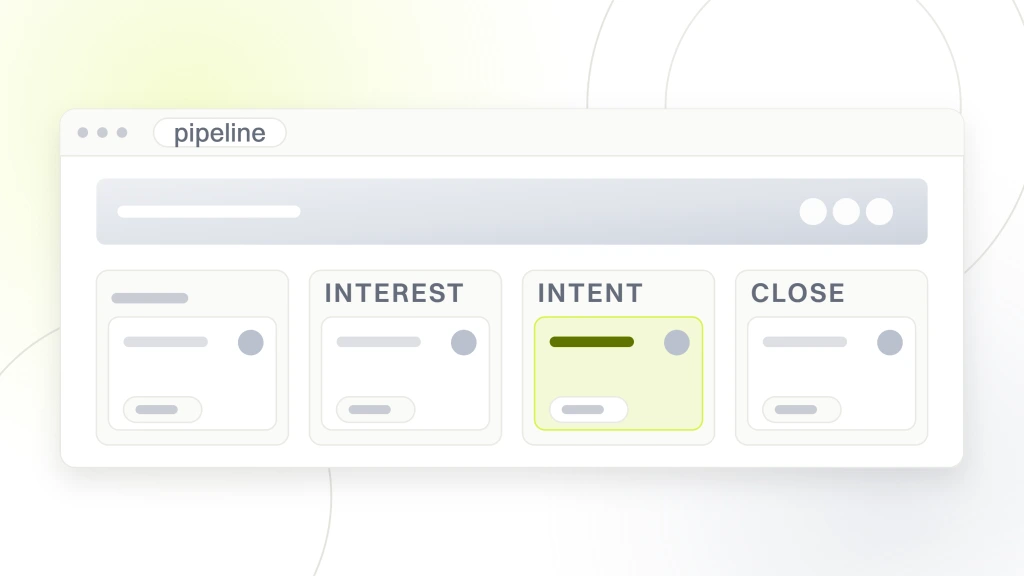
The marketing funnel spans awareness, interest, and consideration. Blog posts, paid ads, social, email nurture, and gated assets carry the visitor through those stages. Marketing owns the metrics. That’s impressions, clicks, opt-ins, and MQL (marketing qualified lead) counts. The funnel ends the moment a lead crosses the qualification bar and becomes a sales qualified lead.
Sales funnel covers intent through close
The sales funnel picks up at intent and runs through evaluation, proposal, and close. Discovery calls, demos, proposals, contracts, and price negotiations do the work. Sales owns the metrics. SQL to opportunity, opportunity to proposal, proposal to close. The funnel ends when the deal is signed or lost, not before.
The handoff row is where teams fumble
Deals go missing between MQL and SQL. Marketing counts MQLs one way. Sales counts SQLs another. Both sides tune definitions to look good on their own scorecards. Leads sit unclaimed in the gap, follow-up emails stall, and pipeline value quietly disappears. Name the handoff explicitly. Write the exit criteria for every MQL down in one page. That single document fixes 80% of the fight.
Combined view keeps both teams honest
A combined marketing plus sales funnel view kills the finger-pointing. Awareness sits on the left. Closed revenue sits on the right. Every stage in between shows up on one board. Marketing sees which top-of-funnel work drives closed deals. Sales sees which channels feed the strongest opportunities. Both read from the same numbers, and quarterly reviews stop turning into a definition argument.
Sales Funnel vs Flywheel
The sales funnel vs flywheel debate is a philosophical one HubSpot popularized around 2018. The funnel treats customers as an output. The flywheel treats them as an input that fuels the next round of growth. Both models capture real dynamics. Neither replaces the other, no matter what flywheel-first marketing content sometimes claims.
Funnel ends at the sale
The traditional sales funnel ends when the deal closes. Post-sale motion happens in a separate customer success system with its own metrics. That design worked when new logo acquisition was the biggest revenue lever. It stops working the moment retention and expansion carry more revenue than net new, which happens fast in SaaS, subscriptions, and services.
Flywheel loops customers back into growth
The flywheel model puts customer success at the center. Happy customers refer new ones. Renewals fund the next round of acquisition. Word-of-mouth pulls paid CAC down over time. Every existing customer turns into a growth engine, not a one-time revenue event. The model captures dynamics the classic funnel just does not see.
When to use each
Use the funnel when acquisition cost and stage conversion dominate the meeting. Use the flywheel when retention, expansion, and referral are the growth levers. Most B2B SaaS companies benefit from tracking both. A funnel view for acquisition planning. A flywheel view for customer success and revenue expansion. They complement each other and answer different questions.
Why the flywheel does not replace the funnel
Flywheel proponents sometimes argue the model replaces the funnel entirely. That claim misses the point. The funnel still describes the acquisition motion cleanly. The flywheel describes the customer-fed growth motion. Both are true at the same time. Companies that run only the flywheel view lose sight of channel-level acquisition conversion and end up guessing about paid spend efficiency.
Sales Funnel vs Website
Sales funnel vs website is the comparison small business owners face when picking their first web presence. A website is a set of pages that describes the business. A sales funnel is a sequence engineered to convert intent into revenue. Some websites do both. Most do not. Knowing the difference decides which platform, which agency, and which content plan pays for itself.
Websites answer questions
Websites hold the answers visitors search for. Services, prices, team bios, contact information. The visitor arrives with a question. The website answers it. The site’s job stops right there. Whether that visitor becomes a paying customer is a separate question the website was never built to track.
Sales funnels convert intent into revenue
Sales funnels start from a specific intent. An ad click, an email link, a search query with buyer language in it. Every step, from landing page to form to thank-you page to nurture email, points at one action. The funnel tracks each step and optimizes for the outcome, not the traffic count.
When a website becomes a funnel
A website turns into a sales funnel the moment its pages are structured around conversion paths. The home page filters visitors into segment-specific paths. Service pages sell the offer. Contact pages book directly to calendars. Content assets feed the top of the funnel. Once every page has a clear role in the buyer journey, the site is functioning as a funnel, not a brochure.
Landing page vs sales funnel
A landing page is one page inside a sales funnel. A sales funnel is the full sequence. Landing pages hit a single moment. Funnels play out over days or weeks and stitch several touchpoints together. Vendors that promise a landing page funnel as a full solution are selling one page plus a checkout upsell, not an end-to-end funnel. Buyers should know that before they sign a contract.
Sales Funnel vs Sales Process
Sales funnel vs sales process is a subtle split that matters most to sales enablement teams. The funnel is the shape of how deals move. The process is the set of activities reps do at each stage. A funnel without a process is a picture. A process without a funnel view is a checklist. Both together produce a repeatable revenue engine.
Funnel defines the stages
The funnel names the stages and the metrics that grade each one. Discovery, qualification, evaluation, proposal, negotiation, close. Every stage has an exit criterion. Every stage has a KPI. The funnel shows the shape, but it does not show the work behind the shape.
Process defines the activities
The sales process names the exact activities reps run at each stage. Discovery call script. Qualification questions. Demo agenda. Proposal template. Negotiation frameworks. The process turns funnel stages into repeatable rep behaviors any new hire can follow on day 30.
Why teams need both
Reps without a defined process wing it at every stage. Managers without a funnel view cannot spot patterns across the pipeline. Both gaps quietly hurt performance. Enablement teams that build the process against a clear funnel view produce reps who ramp faster and close more consistently. New hires read the same map their managers and leadership read. Coaching conversations reference the same picture. Weekly reviews pull from the same stage definitions. Everyone points at the same square when a deal stalls, and the coaching moves get specific instead of vague.
Funnel Models Compared at a Glance
The table below lines up all six models side by side. Scope, owner, primary metric, and the meeting each one earns its keep in. Two rows can share a metric and still cover different scopes. That is the whole point of running more than one model.
| Model | Scope | Owner | Primary metric | Best used for |
|---|---|---|---|---|
| Marketing funnel | Awareness to MQL | Marketing | MQL count, cost per MQL | Content and paid media planning |
| Sales funnel | MQL to closed revenue | Marketing plus sales | Conversion rate stage to stage | Full-journey optimization |
| Sales pipeline | SQL to closed revenue | Sales | Deal count and value | Weekly revenue forecasting |
| Customer journey | Awareness to advocacy | UX and CX | Emotional touchpoints, NPS | Experience design and CX |
| Flywheel | Attract, engage, delight loop | Marketing, sales, CS | Retention, expansion, referral | Post-sale growth planning |
| Sales process | Rep activities per stage | Sales enablement | Activity adherence | Rep ramp and coaching |
How to read the comparison
Scope names the slice of the buyer journey the model covers. Owner names the team that runs it. Primary metric names the number that grades the work. Best used for names the meeting where the model earns its keep. Pick the model that matches the conversation. Pulling a customer journey map to plan next month’s paid budget is the wrong tool for the job. For a deeper primer on each stage, see our post on sales funnel stages.
Running multiple models together
Mid-market and enterprise companies run three or four of these models at once. Marketing funnel for content planning. Sales pipeline for revenue forecasting. Customer journey for CX design. Flywheel for retention planning. The models complement each other precisely because they cover different scopes. Trying to compress every conversation into one funnel view loses signal fast. Layer in sales funnel optimization services once the models are in place, and each stage gets a measurable improvement plan tied to revenue.
Which model to start with
Startups build the sales funnel first, since it maps directly to acquisition efficiency and dollars per lead. Growth-stage companies add the flywheel and the customer journey once retention and referral pull real revenue. Enterprise companies run all five plus segment-specific variants for each buyer persona. The number of models a team runs tends to mirror the stage the company sits at. For vertical-specific patterns, review these sales funnel examples by industry and copy the closest match to your motion.
Sales Funnel Applied at Automation Anywhere
Automation Anywhere, a global RPA (robotic process automation) SaaS platform, worked with our team at Redefine Web across a 4-year program from 2020 to 2024. We ran a sales funnel, a marketing funnel, and a customer journey model in parallel on the account. Each model drove different decisions and surfaced problems the others could not see on their own.
Sales funnel drove acquisition efficiency
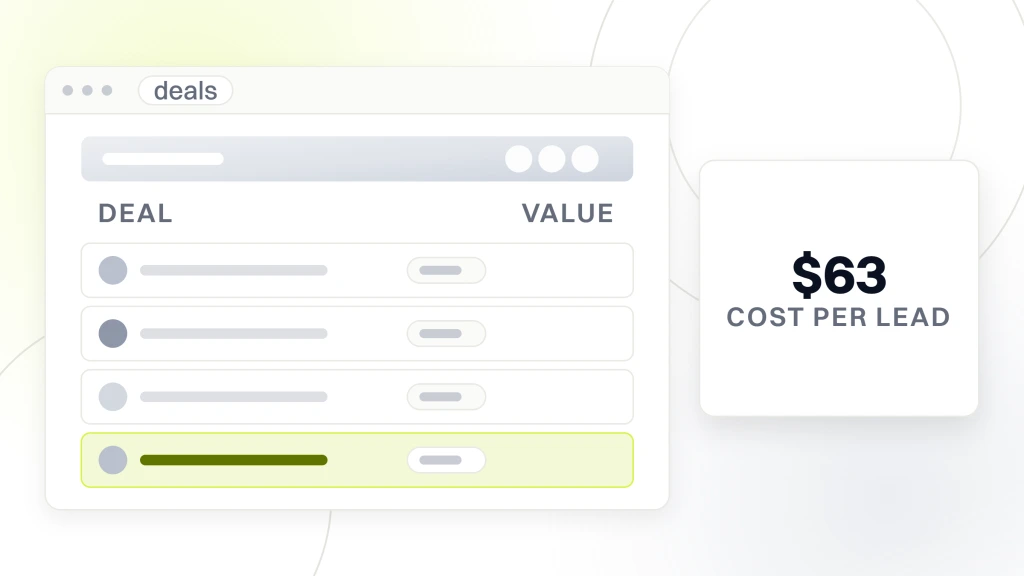
The sales funnel view pinpointed which channels produced leads that actually converted to signed contracts. Reworking the offer, the landing pages, and the qualification bar dropped cost per lead 97%, from $1,936 down to $63 over the program. That single stage-to-stage view drove the biggest budget shift on the account.
Marketing funnel drove content strategy
The marketing funnel view showed which content assets earned the most opt-ins at the top of the pipeline. Ad impressions climbed 300% as the mix tilted toward the pieces that qualified inbound leads for RPA use cases. That data reshaped the editorial calendar and the paid media plan quarter over quarter.
Customer journey drove volume at scale
The customer journey view surfaced friction points inside the post-signup flow that were suppressing referral loops. Scaling customer acquisition 100 times, from 150 leads a month to nearly 8,000 leads a month, required onboarding to keep up. Mapping the full journey exposed the touchpoints that needed dedicated CS motion. The three-model view surfaced problems each funnel alone would have missed.
How to Pick the Right Model for the Conversation
Picking the right model for the meeting is the practical skill that separates senior growth marketers from junior ones. The right model varies by decision, time horizon, and audience. Some meetings need funnel views. Others need journey maps. Others need pipeline reports. Grab the wrong model and the answers miss the real question in the room.
- Weekly revenue forecast. Pull the sales pipeline. Count deals and dollar values by stage.
- Monthly channel performance review. Pull the sales funnel. Show conversion rates stage to stage.
- Quarterly content planning. Pull the marketing funnel. Show top-of-funnel asset performance.
- Annual experience redesign. Pull the customer journey. Show emotional touchpoints across the full experience.
- Retention program design. Pull the flywheel. Show renewal, expansion, and referral loops.
- Rep onboarding and coaching. Pull the sales process. Show activities per stage.
Cross-referencing between models
The best growth teams cross-reference across models to catch issues one model alone would miss. A weak middle in the sales funnel plus a low NPS score in the customer journey usually points at a broken onboarding experience that hurts both new customers and referral rates. Neither model on its own would surface that pattern quickly enough to fix it. For B2B teams tuning this deeper, see our take on B2B sales funnel strategy.
Documenting which model owns which decision
Growing organizations document which model owns which type of decision. That documentation cuts down debate inside meetings. When the CFO asks where the marketing budget is going, the marketer knows to pull the marketing funnel, not the customer journey. When the CEO asks where most deals are lost, the sales VP knows to pull the sales funnel, not the pipeline snapshot. When search traffic drives most leads, pair the funnel view with an SEO sales funnel guide so content and revenue stay in the same conversation.
Retiring models that stop delivering
Some models stop delivering insight the moment the underlying business changes. A journey map built for a one-time-purchase model does not fit a subscription business. Retire the old model. Rebuild the ones that no longer match reality. Keeping stale models drains team attention and produces bad decisions from misleading data.
Common Mistakes When Comparing Sales Funnel vs Marketing Funnel Models
The debate produces a short list of predictable mistakes. Every one ends the same way. Dashboards that do not agree, meetings sidetracked by definition arguments, and decisions that miss the real signal in the numbers.
Treating them as one thing
Some teams use sales funnel as an umbrella for every model. That works in casual conversation and breaks the second reporting rolls up. The dashboard labeled sales funnel ends up showing marketing metrics, sales metrics, and journey emotions mashed together. Nobody trusts the number. Everyone argues about the definition.
Treating them as competing choices
Other teams treat the models as competing. Are we a funnel company or a flywheel company? That framing wastes months. The models cover different scopes and answer different questions. Running two or three of them in parallel serves the business better than picking one and forcing every conversation through it.
Copying enterprise stacks at startup scale
Startups sometimes build every model at once. The overhead crushes small teams. Start with the sales funnel. Add other models as the business matures and the numbers demand them. Copying an enterprise stack at startup scale produces dashboards nobody updates and processes nobody follows. Get the primer on what is a sales funnel and pair it with a working sales funnel templates pick to skip that trap. The pipeline mechanics live in Salesforce on the sales pipeline.
Debating definitions instead of building
The biggest waste of time in this space is debating definitions. Adopt a working definition. Document it. Move on to measurement. Companies that spend three months in workshops defining every model produce beautiful documents and zero revenue. Companies that pick a definition and start measuring produce real learning inside 30 days.
These six models are complementary, not competing. Each one answers a different growth question, and picking the right one for each meeting is what keeps teams aligned. If you want a partner to choose the right models for your business and build the dashboards behind them, our sales funnel and automation team handles the model design, the data integration, and the reporting layer. Retainer plans start at $1,499 a month.