
Google Ads management for lawyers is the paid search discipline that routes high-intent legal queries to a landing page built for one practice area, one geography, and one signed case at a time. Done well, it books cases at cost per acquisition (CPA) inside the range every legal marketing partner claims and few actually hit.
The channel matters. 63% of law firms name Google Ads their top paid channel for signed cases, and legal cost per click sits among the highest of any vertical. Personal injury clicks routinely clear $250, and DUI clicks in metro markets clear $80. That math punishes bad campaign structure faster than it does in any other industry.
Here is what the next 2,500 words cover: the practice-area frames that decide bid strategy, the cost per case math that decides budget, the landing page rules that grow conversion rate 2 to 4x, and the weekly operating rhythm that keeps campaigns from drifting into unprofitable ad groups.
Why law firm Google Ads management is different from every other vertical
Law firm Google Ads management runs against three constraints most other industries do not face at the same intensity. First, state bar advertising rules govern every headline, description, and landing page. Second, cost per click is the highest in the market. Third, the buying cycle jumps from 48 hours (car accident, DUI arrest) to 6 months (estate planning), so ad copy, offers, and landing pages have to match the urgency of the query.
Miss any one of the three and campaigns burn budget without producing signed cases. Personal injury firms that route every query to a generic contact page see 6 to 12% form conversion. Firms that split by injury type and route to a landing page built for that case type see 22 to 34% form conversion on the same traffic. That gap is the entire margin of the channel.
Legal PPC pricing at Redefine Web runs $999, $1,499, $2,499, or from $4,500 per month for management. Ad spend is billed separately and stays under the firm’s control. The tier tracks number of practice areas, number of geographic markets, and monthly ad spend, not headcount or vanity deliverables.
Cost per click and cost per case by legal practice area
Budget for Google Ads management for lawyers by cost per case, not cost per click. The following ranges reflect national averages; metro markets and California, New York, Texas, and Florida run 20 to 40% higher. Rural and secondary markets run 10 to 25% lower.
| Practice area | CPC range | Form conversion rate | Target cost per signed case |
|---|---|---|---|
| Personal injury (auto) | $60 to $180 | 18 to 28% | $1,200 to $4,500 |
| Mass tort / class action | $100 to $250+ | 12 to 22% | $3,000 to $12,000 |
| Criminal defense (DUI) | $40 to $120 | 16 to 26% | $800 to $3,000 |
| Family law (divorce) | $15 to $60 | 12 to 22% | $600 to $2,400 |
| Estate planning | $8 to $35 | 10 to 20% | $300 to $1,500 |
| Immigration | $10 to $45 | 14 to 24% | $400 to $1,800 |
Form-to-signed rate is the number that ends the argument. A $180 CPC on personal injury is affordable when 24% of forms convert to consultations and 40% of consultations sign. That same $180 CPC destroys a firm running a 6% form rate and a 15% consult-to-sign rate. Fix the funnel first. Then talk about bids.
Campaign structure for lawyer Google Ads management
Structure Google Ads campaigns for lawyers around the practice area, not the firm. One campaign per practice area, one ad group per intent tier inside that campaign, one landing page per ad group. Shared homepages waste 40 to 60% of paid clicks because the visitor cannot find the answer to the exact question they typed.
The four ad group intent tiers
- Hire intent. “personal injury lawyer near me,” “DUI attorney open now,” “divorce lawyer [city].” Highest bid, hire-focused ad copy, direct-response landing page with click-to-call above the fold.
- Case-specific intent. “lawyer for rear-end collision,” “attorney for felony DUI,” “family lawyer for military divorce.” Mid to high bid, case-type ad copy, landing page written for that case type.
- Research intent. “how much does a personal injury lawyer cost,” “what happens after a DUI arrest,” “do I need a lawyer for a small estate.” Lower bid, educational ad copy, landing page that answers the question and offers a next step.
- Brand and competitor intent. Your firm name, misspellings, and (carefully) competitor firm names where a conquesting strategy makes sense. Lowest CPC, highest form rate, defends against competitors bidding on your brand.
Splitting hire, case-specific, and research queries into separate ad groups is the single change that most often cuts cost per case 30 to 50% in the first 60 days. The reason is bidding: hire queries convert at 3 to 5x the rate of research queries and deserve 3 to 5x the CPC. Blended ad groups underbid the hire queries and overbid the research queries at the same time.
Landing pages that convert lawyer Google Ads traffic
One landing page per ad group. One offer per page. One primary conversion action per page. That is the entire rule set. Firms that follow it see form conversion rates in the 20 to 30% range on hire-intent traffic. Firms that route paid clicks to a services page or homepage plateau at 4 to 8% and blame the channel.
The 8 elements of a lawyer Google Ads landing page
- Case-specific H1. “Rear-End Accident Lawyer in Tampa” beats “Personal Injury Attorney” every time. Match the query.
- Trust bar in the first 400 pixels. Bar admissions, years in practice, cases handled, and any credible award badges. No superlatives.
- Click-to-call above the fold. Click-to-call phone number, tracked through CallRail or CTM, staffed 24/7 for injury and criminal work.
- Short form with 3 to 4 fields. Name, phone, case type, one open question. Longer forms drop conversion 30 to 50%.
- Case results section. Real numbers, real case types, bar-compliant disclaimers. Skip when the state bar restricts case result advertising.
- Attorney bios with photos. Trust anchors. Firms with photographed attorney bios convert 10 to 20% higher than firms with stock photos or none.
- Local proof. Google Business Profile reviews embedded, courthouse familiarity, community mentions. Signals local practice.
- One secondary CTA at page bottom. Case evaluation download, free guide, or a schedule-a-call widget for lower-urgency practice areas.
Load speed matters more here than in most verticals. Legal paid clicks cost $40 to $250. A 3-second landing page that loses 30% of visitors before the form loads costs the firm real money. Target Largest Contentful Paint under 2.5 seconds, Interaction to Next Paint under 200 ms, and Cumulative Layout Shift under 0.1 on mobile.
Case study. Boland Injury Lawyers cut cost per signed case 47%
Boland Injury Lawyers, a mid-sized personal injury firm serving three metro markets, started with a $28,000 monthly Google Ads budget routed through two campaigns and one shared landing page. Cost per signed case sat at $5,800. Reasonable for the vertical, painful for the firm.
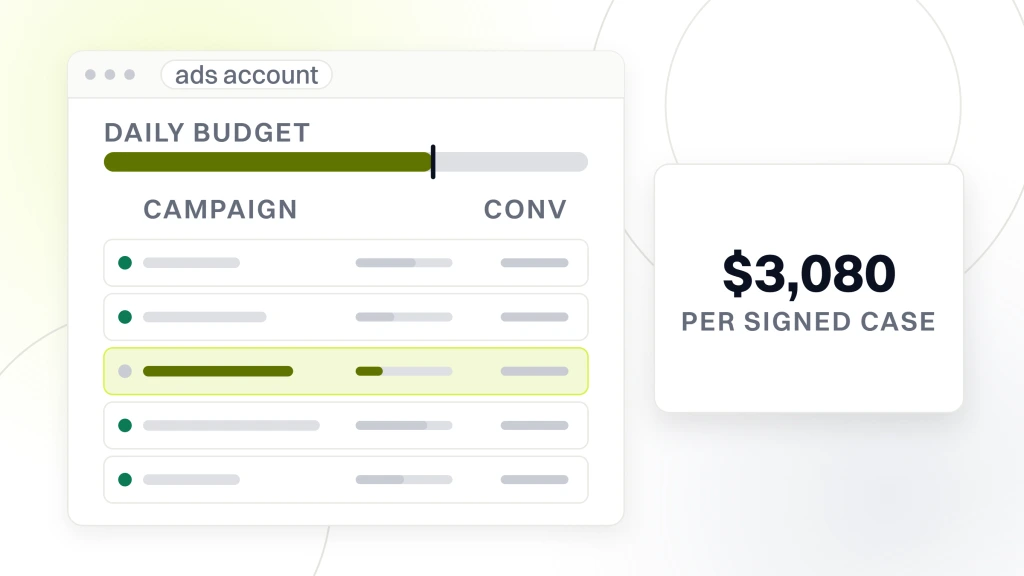
Three changes over 90 days moved the number. First, the account was rebuilt into 6 campaigns split by case type (auto, truck, motorcycle, slip and fall, dog bite, wrongful death) with hire and case-specific ad groups inside each. Second, one landing page was built for each case type, each with case-specific H1, testimonial, and settlement result. Third, offline conversion import was wired from the firm’s CRM back into Google Ads so bidding optimized to signed cases instead of form fills.
Result: cost per signed case dropped to $3,080 (a 47% drop), signed case volume rose 62%, and the wasted spend on non-injury queries (workers’ comp research, car repair searches, insurance company queries) fell from 18% of budget to 3%. Ad spend held flat at $28,000 while monthly revenue from the channel roughly doubled.
Tracking and attribution for law firm Google Ads management
You cannot manage a legal Google Ads account off form fills alone. Legal buyers call more than they fill forms, and the highest-value cases almost always start with a phone call. Three tracking pieces are non-negotiable for law firm Google Ads management.
- Dynamic call tracking through CallRail, CallTrackingMetrics, or WhatConverts. Every keyword and campaign gets its own tracking number so you can see which query produced which call. Human-scored call outcomes (booked consult, wrong number, non-case) feed back into Google Ads as offline conversions.
- Form tracking with source attribution via Google Tag Manager and a CRM that records first-touch and last-touch campaign, ad group, and keyword. Do not rely on Google’s autotagged form conversions alone; they miss the multi-touch reality of legal buyers.
- CRM back-sync of signed cases to Google Ads offline conversion import. Without this, the algorithm optimizes for form fills, which correlate loosely with signed cases in legal. Cost per case creeps up 15 to 30% every quarter without back-sync.
Set up a case value field in the CRM (average settlement, average retainer, or a tiered flag) so offline conversion import can pass an actual dollar value back to Google. That lets you run Target ROAS bidding on accounts with 60+ signed cases logged, which drops cost per case another 10 to 25% in most cases.
Google Local Services Ads for lawyers
Google Local Services Ads (LSAs) charge law firms per qualified lead, not per click, and require Google to screen the firm’s licensing, insurance, and bar standing. Once approved, the firm earns a Google Guaranteed badge that grows click share on branded and near-me queries. LSAs run in a slot above regular Google Ads and outrank them for eligible legal queries in most metros.
Every law firm running Google Ads should also run LSAs in parallel. Firms running both typically see LSAs deliver 20 to 40% of total leads at a lower cost per lead, while search ads capture the wider intent surface (research queries, case-type queries, competitor queries) that LSAs miss. Track cost per signed case separately for each channel and shift budget monthly based on which is producing.
LSAs also expose leads to dispute for firms with strict intake criteria. Lead disputes reduce charges for wrong-service, wrong-geo, spam, and unreachable leads. Firms that dispute diligently push effective cost per lead down 10 to 15% every month.
State bar rules and Google Ads copy compliance
Every state bar publishes rules on attorney advertising. Google Ads headlines and descriptions must comply, and violations trigger disciplinary review that can suspend the account and, in serious cases, the attorney. Write the copy with your state’s rules of professional conduct open in a second tab.
- Superlatives. Best, top, #1, and most-experienced trigger review in 32 states unless substantiated by an independent, objective source. Safer alternatives: award badges from Super Lawyers, Best Lawyers, or Martindale-Hubbell (linked and dated); years in practice; number of cases handled.
- Case result advertising. Some states ban settlement figures in ads entirely; others require disclaimers like “past results do not guarantee future outcomes.” Check your state’s rule before using case results in ad copy or landing pages.
- Testimonials. Client testimonials are restricted or banned in about a dozen states. Where allowed, add the required disclaimer. Never invent testimonials.
- Specialization claims. Certified specialist or specialist in [area] requires actual state bar certification in most jurisdictions. Skip the word if you are not certified.
- Contact requirements. Most states require a physical office address on any responsive landing page and require the ad to identify a specific attorney or firm as responsible.
Get a compliance review of the account before every launch and again every 90 days. A single bar complaint costs more in attorney time than the entire ad budget.
Weekly operating rhythm for lawyer Google Ads management
Legal Google Ads accounts drift fast. Google auto-applies recommendations that add irrelevant keywords, Search Partners inflates spend on low-intent placements, and Performance Max buries the search terms report. A weekly cadence keeps the account tight. Monthly cadence is too slow at $40 to $250 CPCs.
The weekly checklist
- Search terms report. Review every ad group that ran 20+ clicks. Add 5 to 30 negatives per ad group per week. Move any high-performing search term into its own exact-match ad group.
- Bid caps. Adjust maximum CPC for any ad group that hit a spend threshold with a cost per conversion 20% above target. Cut, do not pause, unless the ad group is fundamentally off-strategy.
- Ad copy rotation. Pause any responsive search ad below 50% impression share of its ad group’s best-performing ad. Write two new variants per paused ad, ideally testing one urgency angle and one credibility angle.
- Landing page conversion rate. Pull last-7-day form and call conversion rate by landing page. Any page below 8% on hire-intent traffic needs a hypothesis and a test within 14 days.
- Offline conversion sync. Confirm signed-case import ran cleanly in the last 7 days. A failed sync for 2+ weeks starts to bias the algorithm toward form fills.
- Competitor position. Auction Insights report for the top 3 practice-area campaigns. Any new competitor above 10% overlap rate needs a look at their landing page and offer.
Time cost: 2 to 4 hours per week for a single-practice-area firm, 6 to 10 hours per week for a 3-to-4 practice area firm across multiple markets. Below that time investment, drift compounds and cost per case rises quarter over quarter. A dedicated Google Ads management engagement handles this cadence and reports on signed cases, not clicks.
Common mistakes in law firm google ads management
Most legal Google Ads accounts fail on execution, not strategy. The same seven mistakes show up across firm sizes and practice areas.
- Running one campaign for the whole firm. Personal injury and estate planning need different bids, different copy, and different landing pages. One campaign averages the two into losing money on both.
- Enabling Search Partners and Display Network. Both are on by default for new campaigns. Both burn legal budget on low-intent placements. Turn them off before launch.
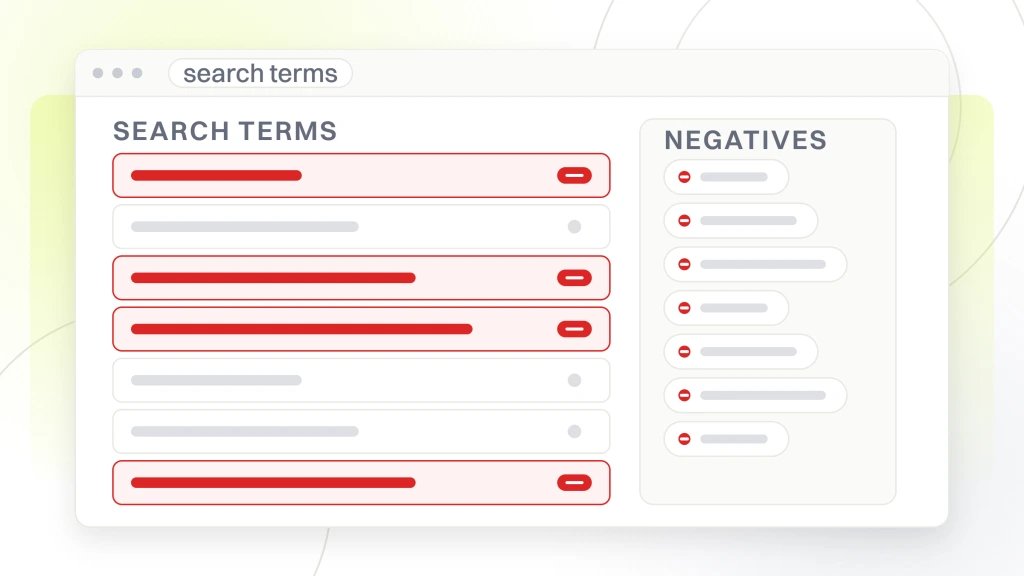
- Zero negative keywords at launch. A new law firm campaign needs 200+ negatives before it goes live: job, salary, free, DIY, pro bono, template, definition, meaning, Wikipedia, and every non-hire modifier you can list.
- Auto-applied recommendations. Google’s auto-apply adds broad match keywords and expands geo-targeting in ways that inflate spend. Turn all auto-apply settings off.
- Shared landing pages. One landing page for every ad group wastes 40 to 60% of paid clicks. See the landing page section above.
- No call tracking. Legal buyers call. Without CallRail or CTM, you are optimizing off form fills alone and missing half your conversion volume.
- Judging month one. Legal campaigns need 60 to 90 days to hit steady-state cost per case. Pausing at day 20 restarts the learning curve.
A structured Google Ads audit catches every one of these inside a two-week engagement and produces a fix-list ranked by dollar impact. Firms that run an audit before hiring an agency avoid buying management on top of a broken account.
Google Ads management for lawyers vs. broader PPC management
Google ad management for lawyers is a subset of broader PPC management that covers Bing Ads (Microsoft Advertising), Facebook and Instagram, LinkedIn for high-value B2B legal work, and YouTube for brand and awareness plays. Legal firms with mature Google Ads accounts often add Microsoft Advertising for a 15 to 25% cheaper CPC on the same query set, and Facebook for practice areas with visual case types (personal injury, mass tort intake, employment law).
Google Ads still carries the largest share of legal paid budget by far. Rankings.io and Clio both peg Google Ads at 60 to 75% of paid budgets for the average U.S. law firm. Master Google Ads first, add channels once cost per case on Google is inside target for 90 straight days.
The wider professional services PPC playbook applies to law firms with two adjustments: buying cycles are longer than most B2C legal queries, and case values are much higher, so target CPA can absorb higher CPCs than most professional service verticals.
What to look for in a legal Google Ads management partner
Every legal marketing agency claims Google Ads expertise. The differences show up in the reporting and the account access. Six questions filter serious partners from ones that will burn the budget.
- How many law firm clients do you currently manage? Look for 8+ active legal accounts and at least 3 in your practice area.
- Do you report on signed cases, form fills, or clicks? Signed cases is the only correct answer. Form fills and clicks are inputs, not outcomes.
- Do you set up offline conversion import from the CRM? Yes is the only correct answer. Without it, bidding drifts.
- Who owns the Google Ads account? The firm owns it. Never sign a contract where the agency owns the account and you lose access at contract end.
- What is your cadence? Weekly is the correct answer. Monthly is too slow at legal CPCs.
- Can I speak to two references at my case value tier? A serious agency will connect you inside a week.
Bar-safe headline and description templates for lawyer Google Ads
Copy 8 to 15 responsive search ad headlines per ad group. Rotate credibility, urgency, offer, and case-specific angles. Skip the superlatives. The examples below are bar-safer defaults; check your state before running any.
- Rear-End Accident Lawyer in [City]
- Injured in a Car Accident? Call Now
- Free Case Review for [Injury Type]
- 25 Years Handling [Practice Area] Cases
- Speak to an Attorney in 15 Minutes
- Local [City] Law Firm, Available 24/7
- No Fee Unless We Recover for You
- Google Screened Law Firm, Verified
Descriptions run 60 to 90 words across the two 90-character description slots. Lead with the case type. Include the geographic market. Close with a specific call to action tied to your intake capacity (24/7 answer, same-day consult, no-fee-unless-we-win where allowed).
Extensions, assets, and Google Ads account hygiene for law firms
Ad assets (formerly extensions) grow click-through rate 10 to 25% for law firms at effectively zero cost. Add every asset type Google supports for legal, and rotate them by ad group.
- Sitelinks. 4 to 6 per ad group. Case type sitelinks (“Truck Accident Cases,” “Motorcycle Accidents”) grow CTR on hire-intent queries.
- Callouts. 4 to 10 per campaign. Short credibility statements: “25 Years in Practice,” “Google Screened,” “Available 24/7,” “No Fee Unless We Win.”
- Structured snippets. “Case Types” is the highest-value header for legal. List the specific case types you handle.
- Call assets. Tracked phone number with CallRail or CTM forwarding. Set business hours if the intake team is not 24/7.
- Location assets. Linked from Google Business Profile. Never advertise without a claimed and verified GBP.
- Lead form assets. Use carefully; the leads convert lower than landing page form fills for legal, but the volume is real.
- Image assets. Attorney photos and office photos beat stock images. Skip courtroom stock photography.
Book more signed cases with a tighter Google Ads account
Google Ads management for lawyers rewards firms that treat the channel like an operations problem, not a media buy. Split by practice area. Build one landing page per ad group. Track calls and signed cases, not just form fills. Run the weekly cadence. Comply with state bar rules on every headline.
Do all of that and cost per signed case drops into the range where Google Ads becomes the most predictable, most scalable channel in the firm. Miss any one of them and the channel looks broken when it is actually the account that is broken.
Ready to book more cases from your Google Ads account? Get a free Google Ads audit to see what is bleeding budget and what is producing signed cases, or start a Google Ads management engagement built for lawyers. Legal PPC retainers start at $999 per month and scale with practice areas and markets.