
Google Local Service Ads management is the fastest-growing paid channel for home services, legal, and healthcare in 2026. LSA sits above Google Ads on the search results page, charges per lead instead of per click, and hands verified Google Guaranteed or Google Screened badges to accounts that pass background checks. Done right, google local service ads management books jobs at 30 to 45% lower cost than paid search. Done wrong, it burns budget on disputed leads and under-ranked hours. This guide walks the exact playbook we run on live accounts.
You will get through it in nine minutes with setup steps, ranking factors, the dispute workflow, and the budget rules that decide whether LSA earns its place in your paid mix. The same lsa management playbook fits a solo plumber and a five-office law firm. Pair this with our home services marketing agency guide for the full home services growth stack. What shifts is the number of service areas, the count of licenses to verify, and the volume of dispute traffic to handle.
What google local service ads management covers end to end
A google lsa agency handles seven ongoing jobs on every account. Verification upkeep. Budget pacing. Lead dispute filing. Ranking factor work. Bid strategy tuning. Service area updates. Review acquisition. Miss one and the account drifts inside 30 days. Run all seven every month and the account books jobs at the lowest cost per lead in your paid mix.
LSA breaks from Google Ads in three concrete ways. Bidding runs per lead, not per click. Ranking pulls from review score, response rate, verified status, and account history in place of Quality Score. Disputes claw back budget when a lead is fake or outside the service area. Every management call has to respect those three rules. A tactic that wins in Google Ads rarely maps cleanly to LSA, and the ranking model stays opaque, since Google publishes less about how the LSA auction resolves than it does about the Quality Score model.
LSA versus Google Ads
LSA charges per qualified lead, which typically ranges from $8 to $32 for home services and $65 to $220 for legal. Google Ads charges per click, which ranges from $2 to $18 for the same verticals. The math flips. LSA leads convert to booked jobs at 25 to 45%, and Google Ads clicks convert to leads at 4 to 12%, then leads to booked jobs at 25 to 45%. Net cost per booked job on LSA usually runs 30 to 45% below Google Ads for the same service.
That gap widens once dispute credits come through. LSA gives money back for bad leads. Google Ads does not. Over a 12-month window, disputes recover 8 to 18% of LSA spend, which pushes the effective delta between the two channels closer to 40 to 55% in favor of google local service ads management. For a vertical-specific breakdown, see our dental Local Services Ads guide.
Verification setup and google local service ads management prerequisites
Verification is where most local service ads for contractors stall out. Google Guaranteed for home services checks the business license, insurance policy, and background reports on every technician who will step into a customer home. Google Screened for legal checks the bar registration, malpractice coverage, and background reports on the attorneys. Both tracks run 2 to 6 weeks. Skip a document or send an expired license and the queue resets, adding 2 to 4 weeks onto launch.
Have every document staged before the profile ever opens. Business license current within 12 months. General liability policy at $1 million minimum. Background check consents signed by every technician or attorney on the roster. Photo ID for the primary account owner. Miss one and Google parks the account. Miss background consent for even one technician and verification halts for the whole account, not that single tech.
- Current business license (within 12 months)
- General liability insurance ($1M minimum)
- Workers comp certificate where required
- Background check consent from every technician
- Photo ID for the account owner
- Bar admission verification for legal accounts
- Malpractice insurance for legal accounts
Background check timing
Background checks route through Pinkerton and Evident and run 5 to 10 business days per person. Batch every technician’s consent form at once so the checks process in parallel. Feed consents in one at a time and verification stretches to 6 weeks or more. Legal accounts hit the same friction on attorney checks. Google’s verification documentation walks each step in detail.
Budget rules for google local service ads management
LSA charges per lead, which shifts budget math. Set the weekly budget at 5 to 7 times the target lead volume multiplied by the target cost per lead. A home services account targeting 40 leads per week at $18 per lead needs a $720 weekly budget with 20 to 30% headroom for volume swings. Underbudget and Google throttles delivery. Overbudget and the account burns dollars on marginal leads outside the tightest service area.
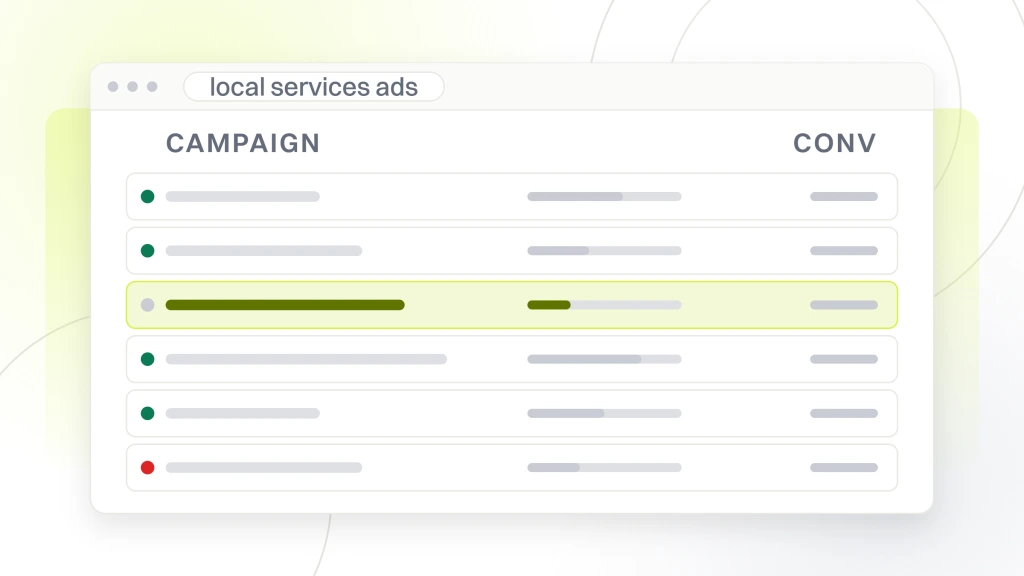
Set bidding to Max Per Lead initially, then switch to Max Leads once the account has 60 plus qualified leads to train on. Max Per Lead controls cost as the account learns which leads convert. Max Leads scales volume once the conversion pattern is stable. Accounts that use Max Leads out of the gate usually pay 20 to 35% more per lead than they need to for the first 90 days, since Google’s system has no history to optimize against.
| Vertical | Cost per LSA lead | Weekly budget target |
|---|---|---|
| Plumbing | $12 to $28 | $500 to $1,800 |
| HVAC | $18 to $34 | $700 to $2,400 |
| Roofing | $25 to $45 | $900 to $3,200 |
| Electrical | $14 to $30 | $550 to $2,100 |
| Personal injury law | $110 to $220 | $3,500 to $12,000 |
| Family law | $65 to $145 | $2,000 to $6,500 |
| Cleaning services | $8 to $18 | $300 to $1,200 |
Weekly versus monthly budget setting
LSA runs on a weekly budget cycle, not monthly. That is a shift from Google Ads discipline. Adjust weekly on Monday morning based on last week’s lead volume and dispute rate. Accounts that set the LSA budget monthly and forget it usually lose 15 to 25% of potential leads during high-demand weeks and burn 10 to 15% extra during slow weeks. Weekly adjustment fits LSA’s actual pacing model.
Ranking factors inside google local service ads management
LSA ranking pulls from five main factors. Review score. Review count. Response rate to inbound leads. Response time. Account age plus verification history. Google shares little about the exact weights, but review score and response rate carry the heaviest weight in every account we have run. Accounts holding 4.7 or higher review scores and sub-two-hour response times regularly outrank same-vertical competitors even at lower bids.
Review acquisition is the single highest-return ongoing task inside lsa management. Ask every happy customer for a Google review within 24 hours of the job. Automate the ask by SMS or email. Wire the review workflow into the invoice step and the account hits a 4.8 review score inside 90 days. Ask only when someone remembers and the score lands at 4.3 to 4.5 and rank drops on identical bids.
Response rate and response time
Answer every lead notification inside 15 minutes during business hours. Missed leads count against response rate and drag rank. After-hours leads still count but with a lower penalty. Accounts with 90%+ response rate and sub-15-minute response time rank above accounts with 80% response rate and 45-minute response time on identical bids. The response rhythm shows up in the LSA dashboard weekly, so the metric moves fast.
Review acquisition workflow
Build the review ask into the closing script. Technician marks the job complete in the CRM. CRM fires an SMS with a direct Google review link 30 minutes later. Automatic follow-up email 24 hours later if no review posted. Accounts that run this workflow hit 25 to 40% review-per-completed-job rates. Manual asks drop to 8 to 15%. The delta compounds over the year and shows up in LSA rank inside 90 days.
Lead disputes as core google local service ads management discipline
Google credits LSA charges when the lead is not a real prospect. Wrong service. Outside service area. Spam. Duplicate. Junk call. Every account has 8 to 18% of leads that qualify for a dispute. Accounts that file every valid dispute recover 8 to 18% of monthly LSA spend as credit toward future leads. Skip disputes and that money stays on the table.
File disputes inside 30 days of the lead. The dispute window closes after 30 days and credits are lost. Include specific evidence in each dispute. “Caller asked for a service we do not offer” plus the recording. “Caller located outside our service area” plus the ZIP code they gave. “Spam call” plus timestamp. Google reviews each dispute manually and approves 60 to 80% of well-documented disputes. Poorly documented disputes get denied and the credit is lost.
- Wrong service dispute with call recording
- Outside service area dispute with ZIP
- Spam dispute with timestamp evidence
- Duplicate lead dispute with reference to prior lead ID
- Junk call dispute with recording
- Wrong number dispute with call log
- Test call dispute for internal QA calls
Service area strategy in google local service ads management
Service area choice decides which leads Google sends. Set the area too tight and volume stalls. Set too wide and out-of-area disputes climb past what makes sense. The right target is a service area where 90% of leads convert to jobs the technician can profitably reach inside 45 minutes. Add or remove ZIPs quarterly based on the dispute report and the technician utilization report.
Multi-location businesses run separate LSA profiles per location. Each profile carries a dedicated service area, a dedicated review pool, and a dedicated budget. Do not overlap service areas across profiles. Google throttles both profiles when they compete against each other in the same ZIP. Assign each ZIP to the profile closest to it geographically and let the review counts and response times differentiate rank across the network.
Overlap penalty
Overlapping service areas across profiles cause Google’s system to reduce impression share for both. Draw the map with clean boundaries. Every ZIP gets one profile. Multi-location networks that split ZIPs by drive time hit 25 to 40% higher lead volume than networks that let all profiles compete in every ZIP. The math is simple. Two profiles competing on the same lead cancel each other out. One profile winning the auction routes the lead cleanly. If the network truly needs coverage in a border ZIP, assign it to the profile with the higher review score in that ZIP and monitor conversion by month to confirm the choice held.
Reporting cadence for google local service ads management
LSA reporting runs on a weekly and monthly cadence. The weekly report tracks lead volume, cost per lead, dispute rate, response rate, and review acquisition rate. The monthly report adds ranking share, service area utilization, technician-level lead distribution, and cost per booked job. Weekly reporting catches drift inside 7 days. Monthly reporting drives the reallocation decision.
A weekly LSA report is a five-line email. Leads received versus target. Cost per lead versus target. Disputes filed and credits received. Response rate. New reviews acquired. Owners read that in 90 seconds and know whether the account is healthy. Anything longer gets skipped, which defeats the purpose. The monthly report expands to 14 metrics with commentary and the next-month plan.
Accounts that skip the weekly report usually catch drift a month late. A response rate that slid from 92% to 78% inside a week costs rank almost immediately. Catching it Monday morning versus catching it four Mondays later is the difference between 8% lower lead volume for a week versus 30% lower lead volume for a month. The weekly discipline is the single highest-ROI reporting habit in LSA management.
Daily dashboard check
Check the LSA dashboard once a day for two minutes. Look for a spike in cost per lead, a drop in response rate, or a wave of disputes queued. Two minutes a day catches account-level anomalies before they become week-level problems. Accounts that check monthly usually inherit anomalies that already cost 15 to 25% of the week’s budget by the time they see the dashboard.
Case study on google local service ads management for a plumbing operator
Berks Plumbing is a real client of ours. When the account came in, the site was a single-page brochure, Google Ads was burning budget on irrelevant clicks, and organic traffic barely registered. We restructured the whole paid mix. That included rebuilding the site, tightening Google Ads targeting, and restructuring the Local Service Ads profile against the seven-job checklist covered above. Verification hardened. Weekly budget pacing put in place. Dispute filing moved to a Wednesday rhythm. Review workflow wired into the invoice step.
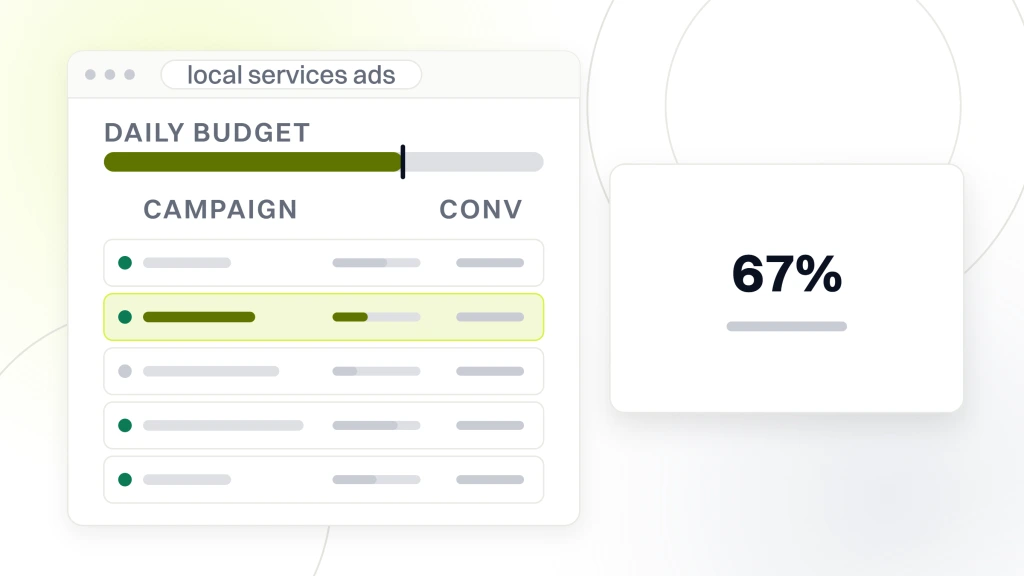
Twelve months in, the numbers landed at 99% more conversions, 67% lower cost per acquisition, and 75% higher organic traffic against the pre-engagement baseline. LSA carried a heavy share of the conversion gain. Per-lead pricing plus dispute credits pulled the effective cost per booked job below what Google Ads alone had ever produced. That is the operating model we recommend for every plumbing, HVAC, roofing, and electrical account we sign.
The rhythm that gets the account there is boring on paper and hard in practice. Monday morning budget review. Tuesday review acquisition batch. Wednesday dispute filing. Thursday response rate check. Friday rank review. Repeat every week for 12 months and the numbers compound. Skip a week here and there and the numbers drift back to average.
How to choose a google local service ads management company
Ask any agency five specific questions before signing. Weekly dispute filing rate. Average review acquisition rate per completed job. Response rate SLA. How they handle service area overlap on multi-location accounts. Verification onboarding timeline. Vague answers on any of the five mean the agency has not run enough LSA accounts to have real answers.
Best google local service ads management agencies charge $800 to $2,400 per month for solo operators and $3,000 to $7,500 per month for multi-location networks. The retainer usually includes the seven ongoing jobs listed above, but confirm dispute filing is included and not billed separately. Agencies that bill disputes per filing are pushed toward under-filing, and that costs the client more in unrecovered credit than the retainer saves. Our Google Ads management services team includes LSA in the standard retainer. For home services accounts, our PPC for home services page covers the full cross-channel operating model. Multi-location dental groups running a similar LSA-adjacent playbook can reference our dental PPC services page for the parallel discipline.
Legal-specific LSA management
Legal-focused google lsa agency work centers on malpractice insurance verification, the bar association renewal cycle, and jurisdiction-specific service area rules. Personal injury and family law carry the highest LSA cost per lead in the country. Nailing those variables is the gap between $85 per booked case and $180 per booked case.
Red flags in agency LSA pitches
Watch for agencies that claim exclusive access to LSA features. Google publishes the same LSA capabilities to every verified account. Agencies that pitch “proprietary optimization” or “beta access we cannot share details on” are dressing up standard workflows. Ask for the specific dashboard they use. Google’s LSA dashboard is the same for every advertiser. Any agency that cannot walk you through the same dashboard you would see is running smoke, not a workflow.
30-day launch plan for google local service ads management
Week one gets verification documents ready. Week two submits verification and starts profile setup. Week three completes background checks and starts service area mapping. Week four launches with a conservative budget and Max Per Lead bidding, plus the review acquisition workflow live. Day 30 the account is verified, running, and collecting the first cohort of reviews.
Days 31 to 90 are the calibration window. Watch cost per lead settle. Watch dispute rate trend. Watch review score climb. Adjust budget upward as response rate holds above 90%. Switch to Max Leads bidding once the account has 60 plus qualified leads on file. Add ZIPs to the service area if utilization is under 70% of technician capacity. Cut ZIPs if the technician cannot reach them profitably.
Day 90 review
Day 90 is the first real review inside google local service ads management against target cost per booked job. Compare LSA cost per booked job to Google Ads for the same service. If LSA is 20 to 40% lower, reallocate 15 to 25% of Google Ads budget to LSA. If LSA is at parity, hold both budgets and continue calibration for another 30 days. Accounts that skip the day 90 review usually leave 15 to 25% of possible efficiency unclaimed for the rest of the year. Our free Google Ads audit includes an LSA baseline for accounts running both channels.
Lock in the weekly google local service ads management rhythm
The channels that book jobs at the lowest cost per lead all share one trait. The team runs the same five habits every week without fail. Budget review Monday. Review acquisition Tuesday. Dispute filing Wednesday. Response rate check Thursday. Rank review Friday. That five-day rhythm is the whole game. Everything in this guide plugs into that rhythm. Miss the rhythm and google local service ads management drifts back to average within 30 to 60 days.