
Legal PPC management is the weekly job of turning paid ad spend into signed cases, not raw call volume. Law firms buy clicks that cost 3x to 20x more than a plumber pays, and one wrong campaign burns a month of retainer before the intake team sees a signed retainer. Google Ads, Local Service Ads, and Microsoft Ads each pull different buyers. An arrest at 2am, an ER visit, or a couple who spent six weeks researching family law before touching a phone. Get the account structure and the tracking right, and every click ties back to a signed case.
Boland Injury Lawyers P.C. in Los Angeles ran combined SEO plus PPC and held case flow at 40% below the local personal injury cost per case, with 20% more consultations and top-3 rankings on 15 high-value keywords. Personal injury clicks run $120 to $460 on high-intent terms, so account structure and targeting matter more here than in any other vertical.
Legal PPC management for family law and divorce
Family law and divorce paid media runs on different mechanics than personal injury. Click costs run $8 to $75 depending on metro and specialty. Consideration cycles run 2 to 8 weeks as clients emotionally prepare to file. Meta remarketing carries far more weight in family law than in personal injury, since divorce and custody buyers spend time researching before making the first call.
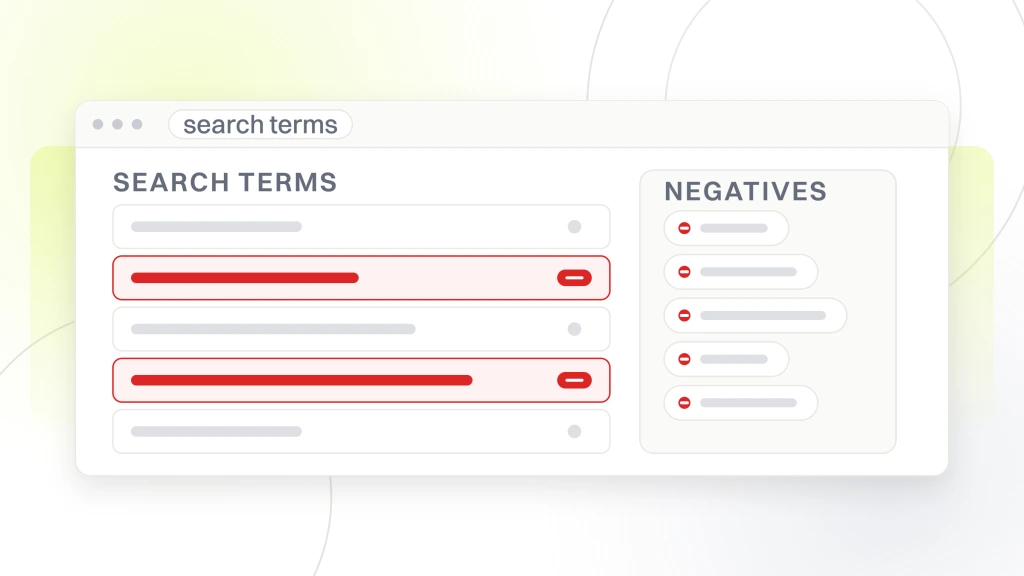
Meta remarketing pools for family law
Every visitor to a family law landing page joins a 90-day Meta remarketing pool with 3 to 5 creative variations. Warmup content covers state divorce process guides and custody FAQs. Closing content covers attorney intro videos and consult booking incentives. Warm audiences convert 3x to 5x higher than cold Meta interest targeting. Skip this step and the paid budget bleeds on cold Meta interest that never books a consult.
Confidentiality-safe ad copy
Family law ad copy avoids referencing custody outcomes, guaranteed results, or case details that could trigger bar advertising rule violations. Every state bar publishes advertising rules that limit what family law attorneys can promise in ad copy. Skip this step and one bar complaint can strip the firm of its ad license for 90 days, killing the paid program mid-quarter. Compliance review runs 3 to 5 hours per campaign at launch.
Intake tracking that closes the loop
Every account rests on intake tracking that closes the loop from click to signed retainer. Google Ads call extensions, CallRail forwarding numbers, and offline conversion imports from the firm’s CRM tell Smart Bidding which click types actually book qualified consults and which ones sign retainers. Skip this step and Smart Bidding trains on the wrong signals for months.
CRM integration for offline conversion imports
The program leans on legal CRMs like Litify, Filevine, Clio Grow, MyCase, and Lawmatics. Each one supports offline conversion imports through native Google Ads integrations or custom scripts. Every signed retainer feeds a Signed Case conversion. Every consult feeds a Consult Booked conversion. Smart Bidding then learns which ad groups produce signed cases versus which produce consults that never sign. The signed-case signal is what matters.
Call scoring by intake specialists
The intake team scores every call within 24 business hours. Qualified leads with note quality above 3 out of 5 feed Smart Bidding as a Qualified Consult conversion. Junk and out-of-scope inquiries get flagged and excluded from bidding entirely. Firms that skip call scoring waste 30% to 50% of the ad budget on intake time chasing bad leads. Per the Google Search product blog, offline conversion imports remain the highest-impact optimization for phone-dominant conversion funnels.
Boland Injury Lawyers P.C. case study
The Boland Injury Lawyers P.C. engagement covered a personal injury practice in LA across auto, motorcycle, pedestrian, and premises liability cases. Boland ran a well-respected firm offline in one of the most crowded legal markets in the US, but the digital presence fell short. Prior paid media ran one blended personal injury campaign with no LSA and Google Ads only. Cost per signed case ran roughly 60% above the LA personal injury median.
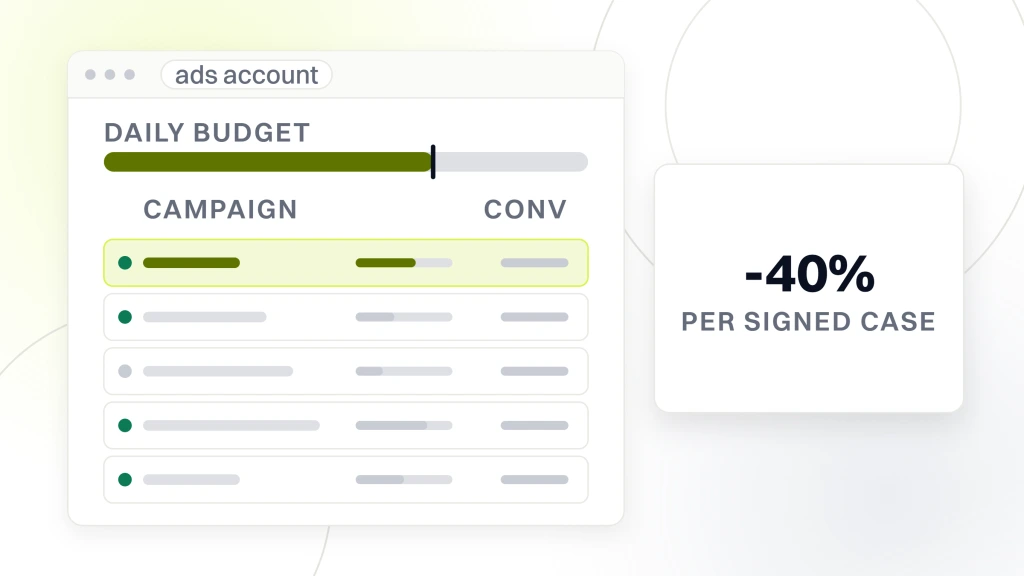
Our team rebuilt the paid program alongside a wider SEO and social push. Google Ads split into 4 practice-area campaigns. LSA verification cleared for personal injury. Six landing pages tuned for both organic and paid intent, one per practice area. Offline conversion imports from the CRM wired into Google Ads so Signed Case conversions became the primary bidding signal. Across the 6-month engagement, organic traffic surged 40%, client consultations from the website jumped 20%, and 15 high-value LA personal-injury keywords hit Google’s top-3. Cost per signed case landed 40% below the LA personal injury median. Case flow held steady quarter over quarter for two years.
The three changes that carried the account
Change one was the split by practice area. Auto, motorcycle, pedestrian, and premises cases moved into 4 dedicated campaigns with distinct landing pages. Change two was LSA. The Google Screened badge captured booking-ready consults at 30% to 45% lower cost per lead than Search alone. Change three was Signed Case tracking. Wiring the CRM to Google Ads via offline imports shifted Smart Bidding from consult volume to signed retainer volume, which cut wasted spend by roughly 40% inside one quarter.
Landing pages that carry ppc management for law firms
For law firm paid media, landing pages carry more conversion weight than any other vertical. That’s why click costs are so high. A weak landing page on a personal injury campaign wastes $150 to $460 per click. Every serious law firm engagement scopes landing page work in month one. Homepage traffic on legal paid ads converts 40% to 70% lower than a purpose-built landing page.
Above-the-fold anatomy for legal landing pages
Above the fold, place a headline naming the practice area and city (Los Angeles car accident lawyer), a phone number in large font, click-to-call on mobile, and one photo of the lead attorney. Below the fold, add 3 review snippets with client first names, a settlement result if the state bar allows, 3 practice-area credentials, and a booking form. Keep the page under 600 words. A page over 900 words on legal paid traffic reads as content marketing and dilutes conversion focus.
Bar-compliant credential display
Every landing page displays bar admission year, state of licensure, and practice area credentials in a footer or sidebar. Skip this step and the page reads as content-mill work rather than a licensed attorney’s site. Bar rules in most states also require an attorney name in the header, a physical office address, and a disclaimer that past results do not guarantee future outcomes.
Red flags in law firm paid media proposals
Every law firm owner reads a paid media proposal that sounds great until a second proposal shows up. The gap sits in the numbers the first proposal skips. Seven red flags catch most shallow paid media pitches before the retainer signs.
- No mention of LSA on an eligible practice area. The agency misses the highest-converting local channel.
- No offline conversion imports from the CRM in month one. Smart Bidding trains on wrong signals for 60 to 90 days.
- Retainer under $1,499 with a promise of full multi-channel scope. That budget covers 8 to 12 hours per month of real work.
- Case studies with only click-through rate or cost per click. Real case studies show cost per signed case.
- Account owned by the agency instead of the client through the MCC link.
- Percent-of-spend pricing under $10,000 in monthly ad spend without a flat-fee cap on agency fees.
- No compliance-checked ad copy process. One bar complaint kills the paid program mid-quarter.
The tempting pitch every personal injury owner gets. A national agency promising 40 signed cases per month for $2,999 flat with a proprietary intake AI. The intake AI is a Zapier workflow with a rebranded logo. The 40 cases footnote counts every unqualified call. The named specialist runs 35 firms in parallel. None of that produces signed retainers at a workable cost per case.
Green flags to look for in a real proposal
A real proposal names Google Ads, LSA where eligible, Microsoft Ads, and the CRM by name for offline conversion imports. It puts a week-one tracking QA pass on the schedule and includes a landing page rebuild in the setup fee. It spells out a bar-compliance review process for every ad copy variation. Sample weekly one-pager reports show cost per signed case, not click-through rate. Case studies come from law firms in the same practice area with real spend and real signed case counts across 6 months.
Legal PPC management retainer pricing bands
Retainer pricing follows a predictable band by ad spend, practice area, and scope. At Redefine Web our PPC retainer tiers start at $999 per month for the Launch tier, step to $1,499 per month for Growth, then $2,499 per month for Scale, and from $4,500 per month for Enterprise. Ad spend is billed separately and paid directly to Google, Microsoft, or Meta by the firm.
The right tier maps to firm size and paid budget. Solo attorneys and small firms with under $3,000 per month in paid ad spend usually sit at $999 or $1,499 per month. That tier covers Google Ads plus one landing page, CallRail install, and monthly reporting. Mid-size firms with $3,000 to $15,000 in monthly ad spend land at $2,499 per month, which adds LSA management, Microsoft Ads, offline conversion imports, and quarterly landing page rebuilds. Multi-office firms with above $15,000 per month in ad spend start at $4,500 per month, and the fee scales with campaign complexity and channel count.
Personal injury retainers sit at the top of the range. Click costs run $120 to $460 and the compliance overhead is heavy. Family law, immigration, and criminal defense retainers usually land one tier down. For a fuller breakdown of the fee mechanics, see ppc management cost. The PPC management services package covers the full multi-channel scope. The Google Ads management services option runs Google-only for firms that already have LSA and Meta handled in-house.
First 90 days of the engagement
The first 90 days set the ceiling for the next 12 months. Get them right and the firm compounds case flow every quarter. Get them wrong and the engagement stalls at month 6 renewal. The pattern below has run across roughly 20 law firm engagements we onboarded this year across personal injury, family law, immigration, and criminal defense practices.
Days 1 to 30 verification and setup
Days 1 to 14 file the LSA application if eligible, run tracking QA, install CallRail, and audit the existing account. Days 15 to 30 restructure campaigns, write initial ad copy, run bar-compliance review, and rebuild the top-priority landing page. The firm sees no case flow change in this window. Setting expectations is the biggest single factor for engagement survival at day 45, when firms tend to panic if week 3 has not already produced new signed cases.
Days 31 to 90 optimization and scale
Days 31 to 60 switch bidding to Target CPA once 30 conversions accrue. Days 61 to 90 layer ZIP-level bid adjustments and A/B test the second landing page variant. By day 90 the account should show a 25% to 45% drop in cost per signed case versus the pre-engagement baseline. Compounding kicks in from month four onward. Renewal conversations at month 6 close themselves when signed cases and cost per case both stay green quarter over quarter.
How to choose a legal PPC management partner
Choosing a partner runs 30 days of vetting, not one call. Ask three vendors for line-item scopes, one written 90-day plan, and access to a live client dashboard showing cost per signed case. Vendors that show all three win the pilot. Vendors that hide behind gated calls get scratched. For the wider comparison walk-through, see how to choose a ppc management company.
Discovery call questions worth asking
Ask six questions on the first call. Who is the named specialist on my account? What was the cost per signed case on a similar law firm last quarter? How do you wire offline conversion imports from Litify, Filevine, or Clio Grow back into Google Ads? What is your bar-compliance review process for ad copy? What does your weekly one-pager look like? What does the MCC ownership and termination clause say in the contract? Any vendor that dodges two of those questions gets scratched.
Pilot scope before annual retainer
Sign a 90-day pilot before any longer retainer. The pilot covers setup plus 60 days of management at a reduced monthly fee. At day 90, the firm partner reviews signed case volume and cost per signed case with the specialist and either signs a six-month retainer or walks. That structure protects the firm and gives the vendor a real chance to prove signed case flow before the paperwork gets serious. Six months is the standard retainer term, since signed cases compound across quarters, not weeks.
Booking your legal PPC management retainer
This program is the weekly job of running Google Search, LSA for legal, Microsoft Ads, and Meta remarketing so every click books a qualified consult and enough qualified consults become signed cases. The work covers campaign structure by practice area, bar-compliant ad copy, purpose-built landing pages, offline conversion imports from the CRM, and weekly negative keyword hygiene. Accounts routinely see 30% to 50% drops in cost per signed case inside 6 months when all five pieces run cleanly. For the plain-English primer on scope, read what is ppc management.
If the firm spends more than $5,000 per month on paid ads, professional law firm paid media management pays for itself inside two quarters. Ask three vendors for line-item scopes. Look for the green flags above. Pick the one that gives full account ownership through the MCC link and runs a written bar-compliance review process. Redefine Web offers a full the legal marketing retainer bundle that pairs paid media with SEO, content, and CRM tuning. Book a 20-minute call and we will walk through three law firm engagements we ran this year with real spend, real signed case counts, and real cost per signed case across the personal injury, family law, and immigration verticals.