
Dental Google Ads management is a monthly operating rhythm, not a launch-and-forget campaign. Practices that hold to a clear weekly and monthly checklist keep growing booked patient volume 15 to 30% quarter over quarter. Accounts left on autopilot drift into rising cost per click, falling Quality Score, and cost per booked patient creeping up until the owner cancels paid search entirely. This guide covers the exact rhythm we run on live dental accounts, from weekly search-term hygiene through quarterly business reviews. Follow it, and the account keeps compounding rather than sliding sideways into wasted budget and stale creative.
The same playbook runs for a solo general dentist spending $2,500 per month and a five-location group spending $22,000 per month. What scales is the number of ad groups and the number of eyes on the account, not the checklist itself. Bookmark this page and open it every month-end, because that is the moment every dollar in the budget gets a new job for the next 30 days. Miss the reset and the account starts drifting inside two weeks.
Monthly Dental Google Ads Management Checklist
The monthly dental Google Ads management checklist runs 3 to 5 hours and picks up everything the weekly cadence skips. Bid adjustments across ad groups. Budget reallocation across campaigns. Ad copy tests. A landing page hypothesis check. Quality Score review. Extension refresh. Audience layering review. This is the block where the account stops surviving and starts compounding. Skip it two months in a row and cost per booked patient climbs 20 to 35% almost every time.
Run the monthly on the first business day of the month with last month’s numbers still fresh. Do not run it mid-month, because the data pattern has not resolved yet. Follow the checklist in order, because the outputs of earlier steps feed later steps. Budget reallocation only makes sense after Quality Score changes, since the Quality Score delta may already justify pausing a campaign entirely.
Budget reallocation math
Reallocate budget every 30 days based on cost per booked patient by campaign. Implants campaign at $180 cost per booked patient with $600 case profit gets more budget. Cleanings campaign at $22 with $75 case profit gets more budget. Question-term campaign at $95 with a 40% later-book rate gets held flat while the follow-up flow is tested. Any campaign at cost per booked patient above 3x the account target gets a bid drop or a pause. This is the single highest return-on-investment hour in the cadence. Google’s budget documentation covers the pacing mechanics.
Ad copy testing rotation
Every ad group needs 2 to 4 active responsive search ads. Refresh one variant per ad group per month. Rotate in a new headline that leads with the procedure and the outcome. Kill the worst-performing variant when the winner has 95% statistical confidence at 100 conversions or more. Practices that let ad copy calcify for 6-plus months typically see click-through rate drop 15 to 25% below refreshed variants. Ad fatigue shows up first in click-through rate, then in cost per click, then in booked patient volume.
Metrics That Predict Booked Patient Volume
Three metrics predict booked patient volume out of a dental paid search account. Cost per lead. Lead-to-booked-patient rate. Cost per booked patient. Every other number on the account dashboard is diagnostic. Those three are the profit-and-loss predictors that connect ad spend to chairs filled. If you cannot read all three at a glance every Monday morning, the reporting stack is broken and needs a rebuild before any tactical work matters.
Cost per lead should sit at $18 to $52 in most metros. Lead-to-booked-patient rate should sit at 35 to 60% depending on front-desk skill. Cost per booked patient sits at $45 to $135 for cleaning and exam intent, $110 to $310 for implant and cosmetic intent, and $18 to $60 for emergency intent. Above those ranges the account has a specific problem to fix. Below them the practice is either underspending or reporting phantom conversions from a broken tracking setup.
Cost per lead as a diagnostic tool
Cost per lead running high signals landing page conversion problems. Fewer leads per dollar of clicks. Cost per lead running low with flat booked-patient count signals lead quality problems. More leads coming in but few of them being real prospects. Read cost per lead alongside the lead-to-book rate. A rising cost per lead with flat book rate is a landing page test. A flat cost per lead with a falling book rate is a keyword quality test. Diagnose in that order.
Attribution across calls, forms, and chats
Dental accounts attribute across three conversion actions. Phone calls tracked via CallRail or CallTrackingMetrics. Form fills tracked via GA4 events. Chat interactions tracked via chat-widget integrations. Every action needs a value tied to it. Otherwise the account optimizes toward form fills, which are cheaper to generate but often lower quality than phone calls. Our call tracking for dentists post covers the full setup.
Reporting Cadence Between Practice and Manager
A dental practice needs three reporting cadences to keep the paid search account honest. A weekly summary email with pacing, top negatives added, and any anomalies. A monthly report with the full metrics table, campaign-level performance, and next month’s plan. A quarterly business review that ties paid search spend to booked patient revenue by procedure type. Skip one cadence and the account manager stops being accountable for outcomes.
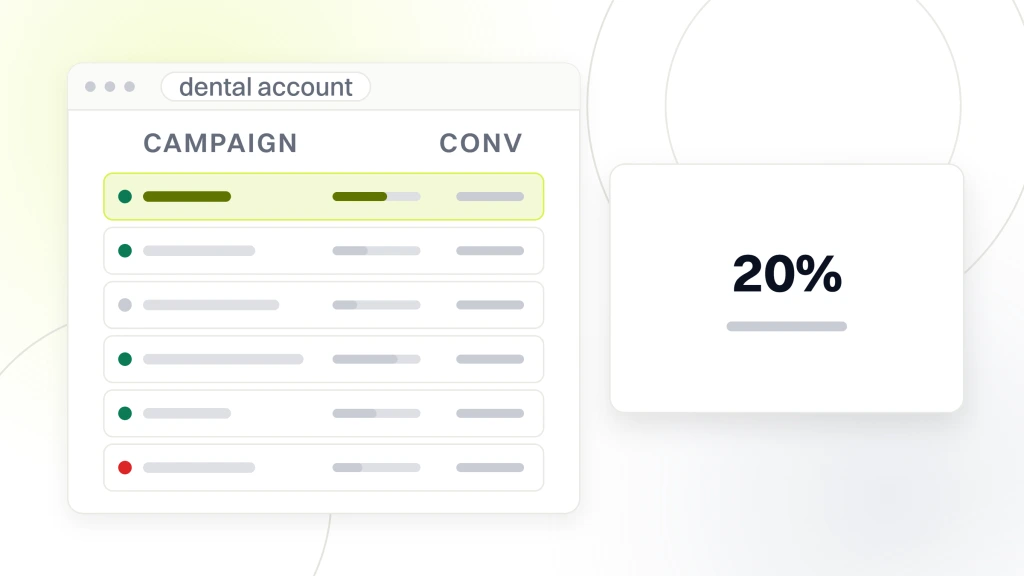
Smile Design Dentistry, the 50-plus location Florida DSO we manage, runs on this exact three-tier reporting cadence. The weekly emails catch daily pacing issues before they compound. The monthly report drives the reallocation call. The quarterly review connects paid search dollars to procedure revenue, which is the number that keeps the chief financial officer comfortable with the spend. That structure held the account at 30% lower cost per call and 20% higher paid search conversion rate for two consecutive years across every location in the network.
Weekly report contents
The weekly report is a five-line email. Spend to date versus monthly pace. Conversions to date versus target. Top 3 new negatives added. Any disapprovals or account warnings. One line of commentary on what changed in the account. Practice owners read those in 90 seconds and know whether to sleep well or ask a follow-up question. The five-line format is the maximum length a busy doctor will read between two operatory checks on a Monday morning.
Quarterly business review structure
The quarterly review runs 45 to 60 minutes and covers four sections. Trailing 90-day performance against target. Next 90-day plan with specific tests. Budget recommendation for the coming quarter. Question and answer. Bring one chart per topic, not ten. Leave with a clear owner for every next-quarter test. The quarterly review is the moment the account stops being a bill and starts being a strategic asset in the practice’s growth plan.
Smart Bidding for Dental Google Ads Management
Smart Bidding uses Google’s machine learning to set bids based on conversion probability. On dental accounts, it works well once a campaign is generating 30 or more monthly conversions. Below that threshold it undertrains and results underperform manual cost per click. The right sequence for dental Google Ads management is manual cost per click for the first 90 days, then a Smart Bidding rollout once the conversion signal is properly trained. Anyone selling you Smart Bidding on day one of a new account is skipping the calibration work.
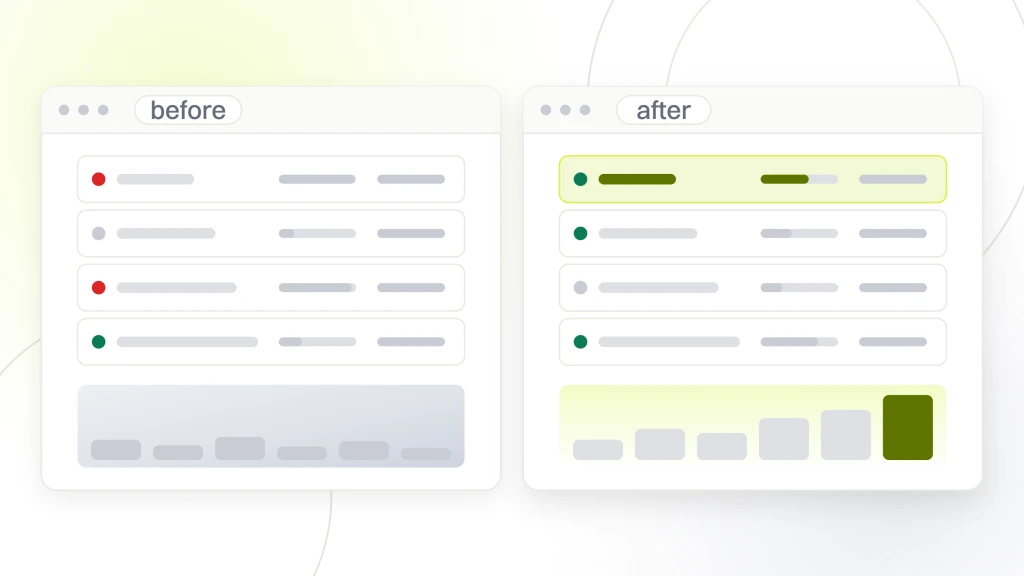
Choose the bid strategy based on the campaign goal. Target cost per acquisition fits campaigns where cost per conversion matters more than revenue mix. Target return on ad spend fits accounts with reliable revenue attribution per conversion, which is uncommon in dental unless the booking system integrates with GA4. Maximize Conversions fits growing accounts where budget is not the constraint.
Target cost per acquisition setup and calibration
Set target cost per acquisition at 80% of the actual last-90-day cost per conversion. Google will initially overspend by 15 to 25% while it learns, then settle. Do not adjust the target within the first 14 days, because the algorithm is still calibrating. After 14 days, tighten the target by 5 to 10% every two weeks until the account hits the desired cost per acquisition or conversions start dropping. That titration pattern squeezes 12 to 25% efficiency out of the account.
Portfolio bidding across campaigns
Portfolio bid strategies group multiple campaigns under one target. Useful when campaigns share conversion characteristics such as all procedure terms. Not useful when the campaigns are structurally different, such as emergency and cosmetic. Group at the level of shared intent. Otherwise the algorithm optimizes against the average, which hides the winners and rewards the losers. VP Dental, a growing multi-location group in Charlotte, ran into exactly this trap and paid for it with a full quarter of flat booked-patient volume before we rebuilt the portfolio structure around intent rather than location.
Seasonality and Dental PPC Management
Dental search demand does not run flat across the calendar. January and September carry insurance-reset and back-to-school peaks. October through December carries benefit runoff. April through June carries cosmetic pre-wedding demand. Emergency demand spikes weekends and Monday mornings. Dental Google Ads management has to plan against the shape of that curve, not a flat monthly budget. Practices that pace flat all year underperform their calendar by 15 to 25% and never quite know why.
Adjust budgets by month using a seasonality index. Baseline months at 100. January and September at 125. October at 115. November and December at 110. Summer months at 90. Emergency ad groups run flat but hourly bid modifiers boost weekend evenings. iSmile Dental Spa in Carmichael, California went from 1 to 2 monthly bookings to 12 to 14 partly because the seasonality index finally matched their patient demand curve.
Back-to-school planning
Late August through mid-September is the back-to-school checkup peak. Prepare copy 3 weeks ahead. Bid up 15 to 25% across pediatric and family dentist ad groups. Add a Back to School header on landing pages. Practices that plan the peak book 30 to 50% more September appointments than practices that keep flat budgets. The 3-week lead time matters because ad approvals for pediatric copy can sit in review for 4 to 7 days.
January insurance reset
The first three weeks of January carry an insurance-reset search surge as patients want to use fresh benefits. Bid up 20 to 40% on cleanings, exams, and preventive terms. Add copy referencing 2026 benefits reset. Every year, practices that miss this window underperform their first-quarter target by 10 to 20% and then chase for the rest of the year. The math is punishing because the first quarter also carries the highest average case value in most general practices.
Landing Page Discipline Inside Dental Google Ads Management
Every hour of dental Google Ads management dies at a weak landing page. A 4% click-through rate ad group with a 1.2% landing page conversion rate is a rounding error against media spend. The same 4% click-through rate ad group with a 6% landing page conversion rate becomes the engine of the account. The landing page pulls its weight or it drags the whole media budget down with it.
Every service needs a matched landing page. Not the homepage. Not the generic services page. A dedicated page carrying the procedure name in the H1, the price band above the fold, a booking form or click-to-call in the first viewport, three trust signals, and a matched offer that mirrors the ad. Practices that route paid clicks to the homepage burn 40 to 60% of the traffic before the visitor reads anything. Our dental PPC landing pages guide covers the layout formula in more depth.
Above-the-fold rules for dental landing pages
Above the fold needs five items. Procedure H1 matching the ad. Price band or offer. One trust signal such as rating, reviews, or credentials. Booking form or click-to-call. Practice phone number visible without scroll. Miss any one and conversion rate falls. Add all five and the same ad spend produces 30 to 60% more bookings. This is the closest thing to a guaranteed win in dental paid search.
Form versus call as primary call to action
Dental landing pages should lead with a call action on mobile and a booking form action on desktop. Mobile traffic converts 3 to 5 times higher on click-to-call than on form fills. Desktop converts 1.5 to 2 times higher on form fills than on click-to-call. Setting the call to action based on device is one of the highest-return landing page changes in dental. It takes an hour to implement and grows conversion rate 15 to 25% inside a week for most practices.
Handling ad disapprovals in a Dental Account
A dental paid search account carries a specific set of policy risks the average manager underestimates. Healthcare content policies flag copy that promises specific health outcomes. Restricted content policies flag before-and-after imagery in some jurisdictions. Trademark policies flag ads mentioning competitor practice names. Disapprovals compound, because Google reads a pattern of them as an account-level signal and starts downweighting ad delivery across every campaign.
Check the account daily during the first two weeks of any new campaign. Fix disapprovals inside 24 hours. Never appeal without first rewriting the offending copy, because Google’s appeal process rarely reverses a policy-driven disapproval on the same copy. Delicate Dental Group discovered this the hard way after two months of unaddressed cosmetic-imagery flags before the account was handed over for management. Cleaning up that backlog took a full 30 days before delivery normalized.
Healthcare policy edges
Ad copy cannot promise pain-free treatment, guaranteed results, or specific health outcomes. Replace absolute language with softer positioning. Comfort-focused. Gentle. Predictable. Confident. Skip phrases like guaranteed pain-free and permanent whitening, because both trigger disapprovals under the misleading claims policy. Read the healthcare and medicines policy before writing new copy.
Before-and-after imagery rules
Before-and-after imagery in ads triggers restricted content flags in cosmetic and orthodontic campaigns. Use lifestyle imagery for the ad and reserve the before-and-after for the landing page or a dedicated gallery on the site. Landing page imagery does not go through Google’s ad review, so the before-and-after can live there without policy risk. Document photo consent per patient regardless, because HIPAA rules cover the images independent of ad policy.
In-house Versus Agency Account Ownership
Practices ask whether to keep dental Google Ads management in-house or hand it to an agency. The decision comes down to account size, complexity, and the internal team’s depth. Under $2,500 per month with a marketing-savvy owner, internal usually wins. Above $6,000 per month, agency usually wins on cost per booked patient. Between $2,500 and $6,000 per month, it depends on whether the practice has 4-plus hours of protected weekly time for the account.
Agency-run paid search on dental accounts typically runs $600 to $2,400 per month for a solo practice and $2,500 to $6,000 per month for multi-location groups. The return-on-investment math holds when the agency’s optimization work delivers 15 to 30% better cost per booked patient than the internal alternative would. Our dental PPC management retainer starts at $999 per month bundled with SEO. North County Dental Care, a single-location practice in Vista, CA, saw 1,000% patient growth once one agency ran its paid search, local SEO, and website under a single plan.
Signals it is time to hire an agency
Three signals point toward hiring. Monthly spend crossing $5,000. Complexity crossing 15 campaigns or 3 locations. Owner time under 3 hours per week for the account. When any two of the three are true, the account has outgrown internal management and agency return on investment is usually positive inside 90 days. Our how to choose a dental Google Ads agency post covers the evaluation criteria.
Red flags when hiring
Watch for agencies that report on clicks only, do not name the strategist assigned to your account, require 12 or 18 month contracts, or share credentials rather than granting access via a manager account. Any agency that resists access-only setup is protecting a black box.
Next Steps for Practice Owners
Dental Google Ads management is not a launch project. It is a monthly operating rhythm that compounds every 30 days into a growing booked patient volume. The weekly checklist protects the account from drift. The monthly checklist finds the winners and reallocates budget toward them. The quarterly review ties spend to procedure revenue. Run the three cadences together for two full quarters and the account stops being a bill and starts being a growth engine for the practice. The math is boring on paper but relentless in practice, which is exactly why it works when everything flashier fails.
If you would like a second set of eyes on the account, or a starting-point audit that scores where you stand against these benchmarks, our team runs dental accounts through this exact rhythm every month for practices from single-location general dentists to 50-plus location DSOs. The engagement usually starts with a 45-minute working session on the current account structure and reporting stack. From there the next two weeks cover a baseline audit against the metrics table above, a written 90-day plan, and the first monthly reallocation call. Most practices see the first meaningful drop in cost per booked patient by day 45 and the first improvement in booked patient volume by day 60, which is faster than most practices expect and slower than what internal teams often promise themselves.