
A DTC apparel brand doing $1.4M annual revenue asked our team to settle a founder argument last spring. The performance marketer wanted 80% of budget in paid since Google Shopping return looked clean. The head of brand wanted 70% in organic since paid was starting to plateau. The seo vs ppc for ecommerce fight had run six weeks with no data underneath it. Our audit found the paid account was buying $1,800 monthly on branded queries the store already ranked position one for organically, and the organic side had not published a category-page rewrite in 11 months. Neither side was wrong about their channel. Both were wrong about the split, and both were wrong about the math they used to defend it.
This guide covers the comparison the way our team walks it with DTC founders sitting at kickoff. Timeline to first conversion and how the two curves diverge past day 90. Real cost per acquisition once you count the compounding math paid dashboards hide. Control over demand for launches, seasons, and new geographies. Compounding revenue across 12 to 36 months of published pages. A working budget split by revenue stage from pre-launch to $20M. When to combine the two channels and how they cannibalize each other the moment the split gets sloppy.
Timeline to first conversion in seo vs ppc for ecommerce
Timeline is the first honest split between the two channels, and it is the one founders underestimate at kickoff. Paid search buys a click today and a conversion inside 48 hours on a properly warmed account. Organic search buys a page today and a ranked position 4 to 9 months later once Google trusts the URL enough to rank it above the fold. Both curves are real. The founder question is which curve the runway can absorb without breaking the P&L.
What the paid curve actually looks like week one
A new Google Ads account with clean creative and a 20-SKU feed usually books its first sale inside 72 hours if the offer is priced within 15% of competitor benchmarks. Meta prospecting on a warm pixel produces first conversions inside five to seven days once creative variants pass CPM thresholds. The learning phase drags the numbers around for the first 45 to 60 days as the algorithm settles cost per acquisition into a stable band. Founders that pause paid inside the learning window lose the algorithm training and restart the meter every time the account resumes, so a lot of DTC brands waste $8,000 to $22,000 in the first quarter without knowing why.
What the organic curve actually looks like month three
Organic search on a fresh domain takes 90 days to index category pages reliably, 180 days to earn ranked positions on mid-competition queries, and 9 to 12 months to reach the top three on a query worth more than $8 CPC. A domain with two years of history and 40 existing pages moves faster. That domain can earn ranked positions on new category pages inside 90 to 120 days if internal linking is done cleanly and the content answers a real query intent. Founders shopping this decision should map the runway against these two curves before signing anything. If cash needs to book a return inside 90 days, paid runs the split at 80 to 90%. If cash can wait nine months for compounding revenue, the split flips.
Real cost per acquisition inside seo vs ppc for ecommerce
Cost per acquisition looks simple on the paid dashboard and hides its real math on the organic side. Both dashboards lie in different directions. Paid understates cost by pretending platform spend equals total acquisition cost. Organic overstates cost early since the first 90 days of content investment sits on the balance sheet before any revenue lands against it. Honest CPA math on the split runs the numbers past the 12-month mark, not the 30-day mark.
Paid CPA the way the account manager reports it
A healthy Google Shopping account for a DTC apparel brand runs cost per sale between $18 and $42 depending on average order value and prospecting share. Meta prospecting on the same brand runs $24 to $65 cost per sale at scale. Those numbers are the platform-reported figures and they are directionally right. The dashboards omit the agency retainer, the creative production cost, the landing page build hours, the feed maintenance time, and the payment processing fee eating another 2.9%. Real fully-loaded CPA on a DTC paid program usually sits 30 to 45% higher than the platform-reported CPA the account manager screenshots into the monthly review.
Organic CPA the way the P&L actually shows it
Organic CPA over 24 months on a working content program lands between $6 and $19 per sale, and that is where the case gets interesting on the founder’s side of the table. The math looks brutal in months one through six as content investment (writing, editing, linking, technical fixes) shows up at $8,000 to $18,000 monthly with zero attributed revenue against it. By month nine, ranked category pages start booking sales that the paid dashboard cannot claim credit for. By month 18, the same pages produce recurring revenue at near-zero incremental cost. Boogie Board is the reference our team returns to at kickoff. The account produced $650K+ in managed ad budget at $31 cost per sale on the paid side and organic compounded the base underneath. Numbers are pulled from our case book directly rather than modeled.
Control over demand across paid and organic
Control is the third comparison and the one nobody talks about honestly at signing. Paid media hands the founder same-day dials for spend, geography, product mix, and messaging. Organic search hands the founder no direct dial for volume, and Google decides the ranking on its own signals, not on today’s marketing meeting.
Where paid control saves the quarter
A DTC brand rolling out a new product line uses paid to buy demand the same week the SKUs go live, since organic cannot produce meaningful traffic on a brand-new URL for six to nine months. A seasonal brand hitting Q4 uses paid to double budget across November and December, since organic rankings do not respond to daily spend increases. A brand testing a new geography uses paid to buy the first 500 conversions in that market inside 30 days before committing to translated content and local link-building. Paid control is the emergency lever every founder should keep active regardless of the long-term budget split. The control disappears the moment the account gets policy-suspended, and that is the reason founders should hold at least a 30-day organic pipeline as insurance against the disappearing dial.
Where organic control produces the deeper moat
Organic control produces a compounding moat rather than a direct dial. Category pages ranking for high-intent terms keep converting across 18 to 36 months without incremental cost. Comparison pages ranking for competitor brand plus alternative queries capture buyers unreachable through paid, since the comparison intent sits outside paid ad copy budgets. Editorial content ranking for informational terms builds email list growth and pixel data that fuels retargeting at half the acquisition cost of cold traffic. A store with 200 ranking category and cluster pages produces 30 to 45% of monthly revenue from organic once the compounding kicks in, and none of that revenue disappears when a paid channel gets suspended or a Meta account gets flagged. The Google Search Central SEO starter guide is a useful outside read for founders who want to understand the ranking mechanics before signing on for organic work.
Compounding value across the two channels over 24 months
Compounding is the comparison that turns sharpest at the 12-month mark. Paid media stops producing revenue the moment budget stops running. Organic search keeps producing revenue on published pages for years, at diminishing marginal cost per session. The founder question is how much of each channel to fund across the compounding window the paid dashboard cannot see.
What paid compounding really looks like
Paid media compounds inside the account through creative libraries, negative keyword lists, audience learning, and feed hygiene work carrying forward across quarters. A Meta account running for 24 months holds thousands of dollars of tested creative and audience insight the founder does not lose if a campaign pauses next Monday. A Google Shopping account holds 12 to 24 months of negative keyword curation and feed structure work that would take another team 40 to 80 hours to rebuild from scratch. That compounding sits inside the paid account structure, not inside the revenue curve. Revenue-side compounding only exists in paid when repeat purchase rates and customer lifetime value grow past the acquisition cost across cohorts. The compounding disappears the day the ad account gets suspended, and that is the reason founders should not treat account infrastructure as identical to organic infrastructure on the balance sheet.
What organic compounding really looks like
Organic compounding sits inside the ranking pages themselves rather than inside an account infrastructure. A category page ranking position three for a $60 CPC term produces revenue equivalent to $180,000 annually if it captures 3,000 monthly sessions at a 2% conversion rate on a $100 average order value. That revenue keeps arriving on the page across 24 to 36 months without incremental production cost. A store with 60 to 100 ranking category and cluster pages produces $500,000 to $2M annually in organic-attributed revenue that would cost $800,000 to $3M annually to buy through paid at the same intent match. That gap is the mathematical basis for the ecommerce SEO and PPC services split every real agency proposes at signing. The gap does not appear on the daily dashboard, since the daily dashboard measures paid spend, not organic replacement value. Our writeup on ecommerce seo services covers the exact scope that produces the compounding curve at $500K to $10M annual revenue.
Budget split by stage across DTC revenue tiers
The right budget split shifts as revenue scales, since the constraints change at every tier. Early-stage brands need cash today. Mid-stage brands need repeatable acquisition math. Scaling brands need channel diversification against platform risk. The seo vs ppc for ecommerce split answers a different question at each stage of the revenue curve.
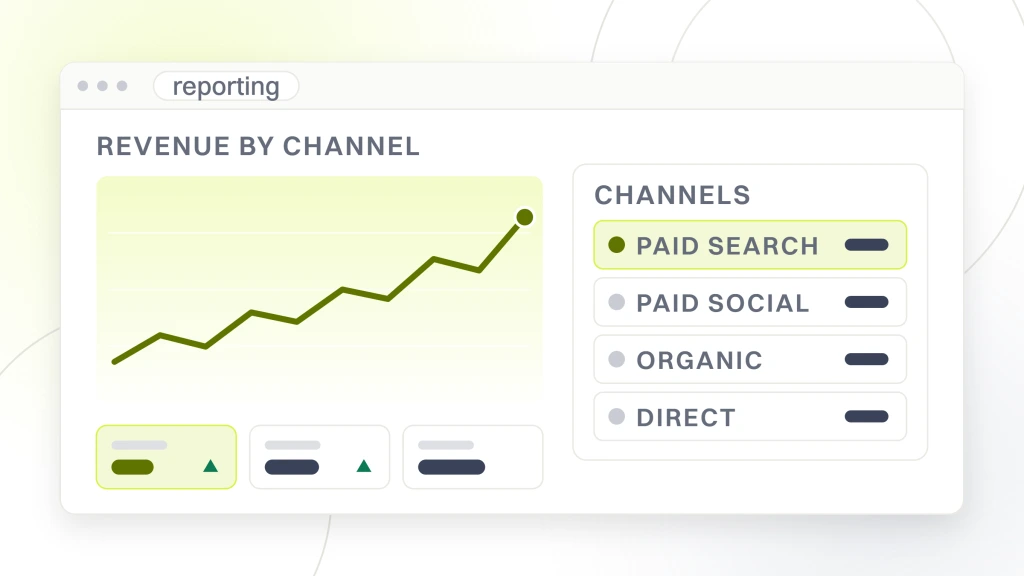
The budget split table our team uses at kickoff
| Revenue stage | Monthly marketing budget | PPC share | SEO share | Focus of the split |
|---|---|---|---|---|
| Pre-launch to $200K annual | $1,500 to $5,000 | 80% | 20% | Buy first conversions, build foundational content |
| $200K to $1M annual | $4,000 to $15,000 | 70% | 30% | Scale paid, publish 3 to 5 pages monthly |
| $1M to $5M annual | $12,000 to $60,000 | 60% | 40% | Balance channels, defend margin, deepen content |
| $5M to $20M annual | $50,000 to $250,000 | 50% | 50% | Full compounding on organic, sustained paid coverage |
| $20M+ annual | $200,000+ | 40% | 60% | Organic carries the base, paid handles peaks and launches |
The table above assumes the founder wants both channels running and has 12 to 24 months of runway to see the split pay back on the P&L. Brands with under six months of runway should push the split heavier to paid, since organic will not produce a return inside the timeframe the cash allows. Brands with 36 months of runway and a strong content operator should push the split earlier toward organic, so the compounding produces higher lifetime margin. Every real ecommerce SEO PPC agency starts the conversation with the runway question rather than the channel-mix question, since the runway determines which channels can produce a return inside the founder’s decision horizon.
When to combine the two channels for a DTC store
Most founders treat the seo vs ppc for ecommerce question as an either-or choice at kickoff. The stores that produce the largest 24-month revenue outcomes treat the two channels as one operating system that shares data, defends margin, and covers each other’s blind spots at the specific inflection points that determine annual revenue on the year-end statement.
The five moments the two channels reinforce each other
- Product launch where paid buys demand across the first 90 days and organic builds the category page that will rank by month nine.
- Seasonal peak where paid doubles budget for six weeks and organic captures the search interest paid does not have inventory to buy at auction.
- Competitor comparison where organic ranks the comparison page and paid runs branded-plus-alternative search ads defending the query.
- Retargeting depth where organic sessions build the pixel data that halves prospecting cost across the next quarter of paid campaigns.
- New geography where paid tests demand in a market for 90 days before organic commits to translated content and local link-building.
Each combination scenario above needs the two channels to share data through a single blended reporting layer, or the vendors on each side end up optimizing against each other. A shared weekly dashboard that reports paid spend, organic sessions, blended CPA, and channel-attributed revenue is the minimum tooling required to run the two together honestly. Stores that skip the blended layer usually end up with an ecommerce PPC services vs SEO argument at every quarterly review, since each vendor points at the other’s inefficiency without a shared measurement plane.
Where cannibalization happens across the split
Cannibalization is the hidden cost that shows up when the split gets executed sloppily across two vendors. Two channels bidding against each other on the same query waste money on both sides and produce the same conversion the store would have earned with one channel operating alone.
The three most common cannibalization patterns
Branded query cannibalization happens when paid buys clicks on the store’s own brand name and the store ranks position one organically for the same term. The store pays for the click twice, once through the paid bid, once through the organic session that would have arrived without any paid spend. Most DTC accounts waste $500 to $3,500 monthly through this pattern before an audit catches it. Performance Max cannibalization happens when the smart shopping campaign eats branded search queries the standalone shopping campaign was already earning at half the cost, and that shows up as a healthy blended return and masks a real margin loss inside the branded query mix. Comparison query cannibalization happens when paid buys clicks on competitor plus alternative queries the organic comparison page already ranks for, producing the same conversion at a higher blended cost per acquisition than either channel would produce alone.
How to catch cannibalization in the weekly review
Catching cannibalization needs pulling three reports weekly without skipping any. Google Search Console query report filtered by brand name and category term, cross-referenced against the paid search terms report on the same queries. Performance Max asset group performance filtered against the standalone shopping campaign on the same product feed. GA4 landing page report filtered by traffic source to spot pages receiving both paid and organic sessions on the same query intent. Founders that skip these three reports lose 12 to 25% of paid budget to cannibalization inside six months. Any real ecommerce SEO and PPC services engagement includes the cannibalization audit at the front of the retainer, since the recovered budget usually pays for the audit two or three times over inside the first quarter.
Agency vs in-house staffing for the split
Once the founder settles the budget split, the next decision is who runs each channel across the year. Some brands hire two separate specialists. Some hire one ecommerce SEO PPC agency that runs both under one roof. Some build in-house teams. Each staffing model produces a different cost structure and a different accountability pattern the founder inherits at signing.
Split-agency staffing across two vendors
Split-agency staffing puts one vendor on paid media and a separate vendor on organic search. The upside is channel-deep expertise on each side of the retainer. The downside is that the two vendors optimize against each other unless the brand runs a strong internal marketing lead who owns the blended reporting layer. Cost sits between $6,000 and $18,000 monthly across both vendors for a DTC brand doing $2M to $8M annual revenue. The pattern works well past $5M annual revenue when internal marketing capacity can absorb the coordination overhead. Below $2M annual revenue it usually produces friction that eats 15 to 30% of the value each vendor could produce alone.
Combined ecommerce SEO and PPC services retainer
A combined ecommerce SEO and PPC services retainer puts both channels under one team with a shared strategist, shared reporting, and shared cannibalization audit cadence baked into the monthly review. Cost sits between $4,500 and $12,000 monthly for the same revenue tier, since the shared strategist absorbs the coordination overhead the split model pays for twice. The pattern works well between $500K and $8M annual revenue where the coordination overhead matters more than the channel-deep specialty. Past $10M annual revenue the split model catches back up, as the internal marketing team can absorb coordination and the channel-deep vendors produce marginal gains the combined retainer cannot match. Six-month contracts on retainer engagements start at $1,499 per month and scale through $2,499, $3,999, and from $6,000 per month for Scale tier on the ecommerce marketing retainer pricing.
A real engagement in production
A DTC accessories brand doing $2.1M annual revenue ran an all-paid acquisition model across Google Ads and Meta for three years running. Blended ad spend crossed $520,000 annually with a cost per sale of $28 and a 9% conversion rate on the paid landing pages. The paid numbers were strong on the monthly dashboard. The problem was that every dollar of new customer growth needed another dollar of paid spend, and the founder wanted a channel that kept producing revenue when the ad budget flattened at the top of the runway.
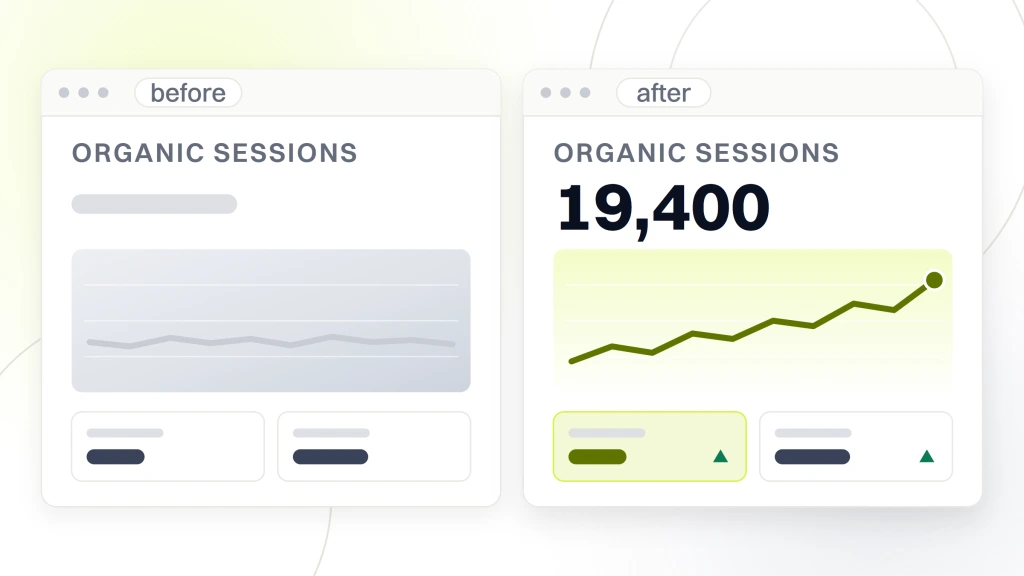
Our team walked the split for the account across a four-week discovery block. Paid held 100% of the acquisition budget with zero organic infrastructure across the domain. The store had 38 SKU pages and no category, comparison, or editorial content ranking for non-branded queries. The domain carried decent authority from press coverage and no ranking body to receive it. Recommendation was to hold paid spend flat and invest 25% of incremental marketing budget into a 12-month organic build across category pages, comparison pages against legacy brand alternatives, use-case editorial content, and technical SEO fixes for the Shopify template driving the storefront.
Across the following 12 months, organic sessions grew from under 3,600 monthly to 19,400 monthly, non-branded organic revenue picked up 21% of total store revenue that paid had previously carried alone, and blended cost per sale dropped from $28 to $21 as organic carried lower-cost repeat purchase traffic paid had been buying at full rate on branded queries. The paid account kept its $520,000 annual budget and produced marginal revenue on top of the organic base rather than carrying the whole store alone through the quarter. Our own Boogie Board work is the near-mirror pattern in the case book, managing $650K+ in ad budget at $31 cost per sale on paid, and organic compounded the base underneath across the same window. That is the pattern the seo vs ppc for ecommerce question produces when it stops being an either-or argument and starts being a split.
Where the split fits the DTC marketing stack
The split sits at the strategy layer of the DTC marketing stack. Every downstream decision (creative production, feed hygiene, content cadence, technical SEO) compounds through the split or fights against it. Founders that pick channels before picking the split usually revisit the whole plan inside 12 months when the numbers stop making sense on the quarterly review.
How the split ties into the retainer stack
Our team sets the split as the first deliverable inside every DTC retainer we open at kickoff. The split produces the budget. The budget produces the channel plan. The channel plan produces the reporting cadence. The reporting cadence produces the monthly review the founder reads without skipping. Removing the split at the front breaks the whole chain, and every channel then executes against a different assumption about what winning looks like on the P&L. Combined retainers include cannibalization audits, blended reporting, and channel rebalancing every quarter as inputs to the next 90 days of paid and organic work.
What honest scoping looks like at signing
Honest scoping at signing includes a written statement of the budget split, the target CPA and organic session goals by quarter, the blended reporting format, and the cannibalization audit cadence. Retainers start at $1,499 per month for DTC brands doing $500K to $2M annual revenue, and scale through $2,499, $3,999, and from $6,000 per month for brands past $5M annual revenue. Six-month contracts are standard, since paid learning phases take 45 to 60 days to stabilize and organic ranking gains take at least two quarters to compound past initial publishing cost. The ecommerce marketing agency hub covers the retainer scope for founders who want the split and the execution run together across paid and organic channels inside one team.
Book a working split call for your DTC store
The answer to seo vs ppc for ecommerce is a split, not a winner. Founders that treat it as a winner-take-all argument at kickoff usually revisit the whole plan inside 12 months when paid plateaus and organic sits underfunded. Founders that pick the split, fund both channels against runway, and run a shared cannibalization audit every quarter tend to land inside the pattern the Boogie Board and RAFZ Cirkulära Interiörer accounts produced in our case book. Paid carrying the launch curve, organic carrying the compounding base, blended cost per sale dropping quarter over quarter. If you want the split, the budget, and the retainer scoped against your revenue tier, book a call and we will walk the timeline, the CPA math, and the 12-month organic build against your current paid mix on the same page.