The best marketing channels for manufacturers come down to 6 plays with real RFQ (request for quote) math behind each one. Search marketing pulls in the engineers and buyers already typing part numbers into Google. LinkedIn ABM (account-based marketing) opens named conversations with procurement and engineering teams at target accounts. Email marketing keeps distributors and OEM (original equipment manufacturer) contacts warm across the long industrial buying cycle. Trade shows still work, but only when a written digital follow-up sequence catches every scanned badge. A technical content library of spec sheets, application guides, and compatibility charts compounds authority across 18 to 36 months. Google Ads on part-number and application queries closes the short-cycle buyers who need a quote this week.
Below, you get the 6 channels ranked by RFQ ROI for mid-market and industrial accounts, what each channel costs per qualified quote, which channels to launch in month one versus month twelve, and how Poly Processing built a compounding RFQ engine on this exact stack. Real client math anchors every recommendation, including the 10x return and 90% drop in cost per lead the Poly Processing team measured. Read this before signing your next marketing plan, and before renewing any channel that has never hit target on cost per RFQ.
Why search marketing for manufacturers leads the channel mix
Search marketing for manufacturers wins on cost per qualified RFQ at $180 to $650 across mid-market industrial accounts. Engineers and procurement leads type exact part numbers, application specs, and compatibility questions into Google every workday. Show up on those queries with a working landing page tied to a technical spec sheet and the RFQ lands in the sales team’s inbox that same week. Miss the search layer and the manufacturer relies on trade shows and referrals only, both of which cost 3x to 5x more per qualified RFQ across a rolling 12-month window.
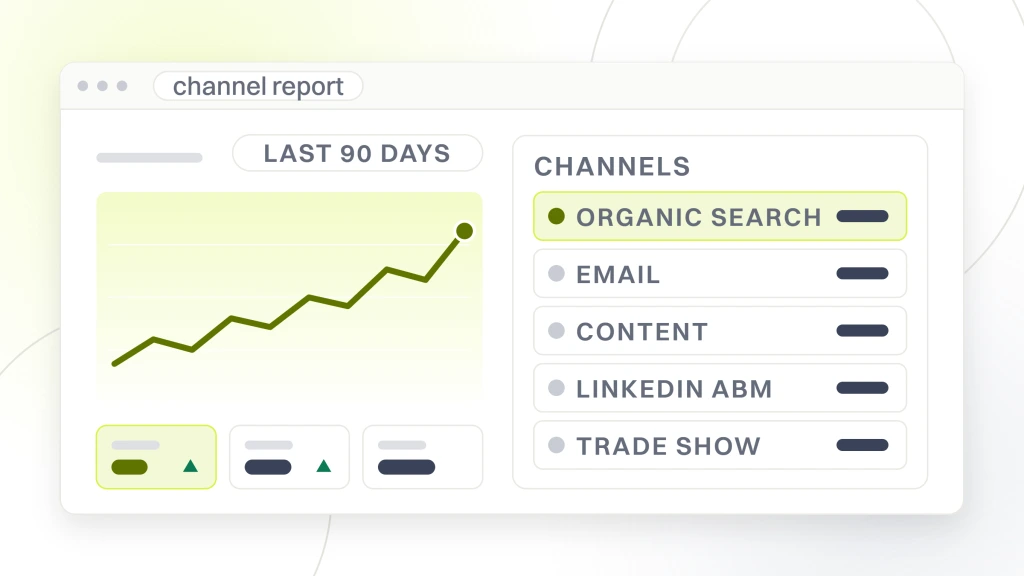
The search layer splits into two plays. Paid search on Google Ads captures part-number and short-cycle application queries the buyer is running today. SEO on the technical library compounds across 18 to 36 months on the long-tail engineering queries buyers run before ever asking sales for a quote. Run one without the other and half the funnel goes cold. Every working manufacturer marketing plan we audit runs both plays inside a single measurement stack with CRM attribution wired to RFQ form submissions from day one.
Google Ads on part-number queries produces inside week one
Google Ads on part-number and application queries produces first RFQs inside week 1 to 2 of the campaign launch. Cost per click on industrial part-number queries runs $2.20 to $8.40 depending on vertical. Conversion rate to RFQ on a working landing page runs 4% to 9%. So cost per RFQ lands in a predictable band once the campaign is properly structured. Skip the landing page work and dump traffic to a generic contact page and cost per RFQ triples inside 30 days. That is the single most common mistake we see on paid search for manufacturers.
SEO on the technical library compounds across quarters
SEO on technical library terms produces first ranking gains at month 4 to 6 and first RFQs at month 6 to 9. Ranking gains compound quarter over quarter as the library grows. A manufacturer with 40 published application guides and spec pages by month 12 sees organic RFQ volume grow 3x to 4x by month 24 versus the paid-only baseline. According to Think with Google research on manufacturing buyers, 89% of industrial buyers start their sourcing process with a search query on technical specifications or applications. Miss the technical library and the manufacturer forfeits 89% of the buying journey to a competitor who published first.
Email marketing for manufacturers wins on absolute cost per RFQ
Email marketing for manufacturers wins on absolute cost per RFQ across existing distributor and OEM lists. The lists already exist inside the CRM. The infrastructure cost sits at $180 to $600 per month. So every RFQ produced through email carries the lowest fully loaded cost of any channel in the working mix. Manufacturers who skip email and pour budget into paid search only leave the cheapest working channel on the shelf, quarter after quarter.
Manufacturing email marketing sequences that produce
A manufacturing email marketing sequence that produces runs 4 monthly touches per distributor or OEM contact. Touch one is a technical update, a new product spec, an engineering change notice, or an ASTM revision impact. Touch two is a case study or application example from a recent live install. Touch three is a pricing or promotion update for active distributors. Touch four is a re-engagement or quote-status check-in. Skip any single touch inside the four-touch cadence and response rate drops 30% to 45% across a rolling 12-month window versus a full four-touch run.
Email marketing for manufacturing account segmentation
Email marketing for manufacturing works best when the list splits into 4 segments. Distributor list. Direct OEM accounts. Past-quote inactive list. Newsletter subscribers, mostly engineers and procurement researchers. Each segment gets its own sequence and its own success metric. Distributors track order frequency and average order value. OEMs track spec-in rate on new part releases. The past-quote inactive segment tracks re-engagement back to a fresh quote request. Newsletter tracks engagement rate and technical download conversions. Blast a single email to all 4 groups and expect roughly 40% of the possible response rate across a 12-month cycle.
Manufacturing content marketing builds the technical library
Manufacturing content marketing is not blog posts on industry trends. Real content marketing for a manufacturer is the technical library. Application guides, specification sheets, engineering calculators, comparison charts, install manuals, and compliance documentation. Each of those pieces pulls qualified traffic from engineers and procurement leads already deep in a buying process. The technical library compounds over 18 to 36 months at $95 to $280 per qualified RFQ at maturity, well below what paid search costs per quote and slightly above what email marketing costs per quote.
Content marketing services for manufacturers deliverables
Working content marketing services for manufacturers deliver 5 content types monthly. 2 application guides at 1,800 to 3,200 words each with technical specs and drawings. 1 case study or install profile at 1,200 to 1,800 words. 1 comparison chart or spec table on the site. 1 engineering calculator or interactive tool per quarter. Total monthly deliverable count lands at 4 to 6 published pieces. Total monthly cost lands at $3,500 to $7,500 depending on technical depth required. Skip the interactive tool and the retainer cost drops to $2,800 to $5,500 monthly. For a full-service SEO retainer, our tiers run $999, $1,499, $2,499, and from $4,500 per month depending on scope.
Case study usage in manufacturing marketing content
How to use case studies in manufacturing marketing content matters more than most manufacturers think. Case studies work when they include the named customer where possible, install location and industry, specific spec sheet of what was installed, quantitative outcome data (production increase, downtime reduction, cost savings percentage), and a technical drawing or install photo. Case studies do not work as generic testimonials without any of those 5 elements. Any working manufacturer marketing plan produces 8 to 16 real case studies annually across the distributor and OEM install base.
Poly Processing on the best marketing channels for manufacturers
Poly Processing is an industrial manufacturer of polyethylene chemical storage tanks used across water treatment, mining, food processing, and heavy chemical applications. The engagement with Redefine Web ran on 3 of the 6 channels covered above. Channel one was search marketing (SEO plus Google Ads on application and part-family queries). Channel two was email marketing to the distributor and engineer database. Channel three was content marketing on the technical library covering chemical compatibility charts, install manuals, and specification sheets. The measured outcome was a 10x return on every marketing dollar spent through inbound strategy, a 90% drop in cost per lead making digital marketing the most profitable acquisition channel, and hundreds of qualified monthly leads flowing to the sales team from inbound automation.
Which channels Poly Processing skipped and why
Poly Processing skipped 3 channels in the initial engagement. LinkedIn ABM did not fit yet, since the account had not built out the target-account list at scale. Trade shows continued running separately but were not integrated with the digital follow-up sequence initially. Direct outreach through sales tools ran through the existing distributor network rather than a new digital cold-outreach layer. The three-channel focus on search plus email plus content produced the compounding library authority that carried the RFQ pipeline across every quarter of the working partnership.
Why 3 channels beat 6 in the Poly Processing engagement
3 channels beat 6 in the Poly Processing engagement, since discipline on the 3 channels that fit the account beat a scattered 6-channel launch that would have overwhelmed the internal marketing team. Poly Processing had roughly 2.5 internal marketing FTEs supporting a working account list of 800+ distributors and 40+ named OEM accounts. Adding LinkedIn ABM plus trade show follow-up plus digital cold outreach would have consumed 40% to 60% of the internal team’s capacity without producing incremental RFQ pipeline. The three-channel discipline let the internal team run consistently against a working plan and delivered the 10x ROI outcome.
Social media marketing for manufacturers works on LinkedIn ABM only
Social media marketing for manufacturers works primarily on LinkedIn and secondarily nowhere else. LinkedIn ABM with named account lists produces $220 to $840 per booked meeting inside 6 months of launch on B2B industrial accounts. Facebook, Instagram, and TikTok produce roughly 8% to 12% of LinkedIn ROI on the same budget for manufacturer accounts. X produces near-zero measurable RFQ pipeline. Manufacturers who spread social media budget across 5 platforms end year one with a dashboard full of vanity metrics and zero RFQs to show for it.
When LinkedIn ABM is worth funding
Fund LinkedIn ABM when the target-account list matures to 400+ named accounts with individual buyer intelligence per account, when the internal sales team has capacity to follow up on booked meetings inside 24 hours, and when the CRM has working attribution wired to LinkedIn campaign performance. Skip more LinkedIn ABM investment when any of those 3 prerequisites fail. Working accounts double LinkedIn ABM budget in year 2 once the target-account list plus sales team plus attribution prerequisites all sit inside the working operational rhythm.
When Facebook and Instagram earn a small role
Facebook and Instagram earn a small role in 3 narrow cases. Retargeting existing site visitors who bounced without submitting an RFQ. Recruitment advertising for engineers, welders, and skilled trades in the manufacturer’s home region. Brand awareness in consumer-adjacent verticals like kitchen equipment, hardware retail, or DIY tooling. Outside those 3 cases, treat the platforms as marketing budget landfills for manufacturer accounts.
Trade shows plus digital follow-up as a paired channel
Trade shows still rank as one of the strongest channels for a manufacturer when a written digital follow-up sequence catches every scanned badge inside 24 hours of show close. A standalone booth at $18,000 to $65,000 all-in per major event pulls 40 to 180 raw leads. Only 8% to 22% of those convert to a qualified RFQ inside 90 days without follow-up. Add a real digital follow-up layer (email nurture plus LinkedIn touches plus retargeting ads) and the same 40 to 180 leads produce 30% to 45% qualified RFQ conversion inside 120 days of the show wrap.
The 5-email post-show sequence that works
Working trade show follow-up runs a 5-email sequence starting 24 hours after the show closes. Email one is a specific thank-you referencing the conversation topic. Email two at day 4 sends the technical specification sheet the attendee asked about. Email three at day 14 shares a relevant case study or application example. Email four at day 30 offers a specific next step (spec review call, sample request, engineering consultation). Email five at day 60 does a check-in on active RFQ status. Skip any email in the sequence and post-show conversion drops 20% to 35% versus the working five-touch flow.
Trade show ROI math with and without digital follow-up
Trade show ROI math without digital follow-up runs at $1,800 to $6,500 per qualified RFQ (booth cost divided by qualified RFQs at 90 days). Add a working digital follow-up sequence at $2,400 to $6,000 total cost across the 120-day post-show window and the cost-per-RFQ drops to $900 to $2,400. Better still, the average RFQ value from a trade show contact runs 2x to 3x the average RFQ value from a cold search inquiry, since the show conversation pre-qualifies the buyer’s intent and application specificity before the RFQ ever hits the sales team.
How to sequence the best marketing channels for manufacturers by month
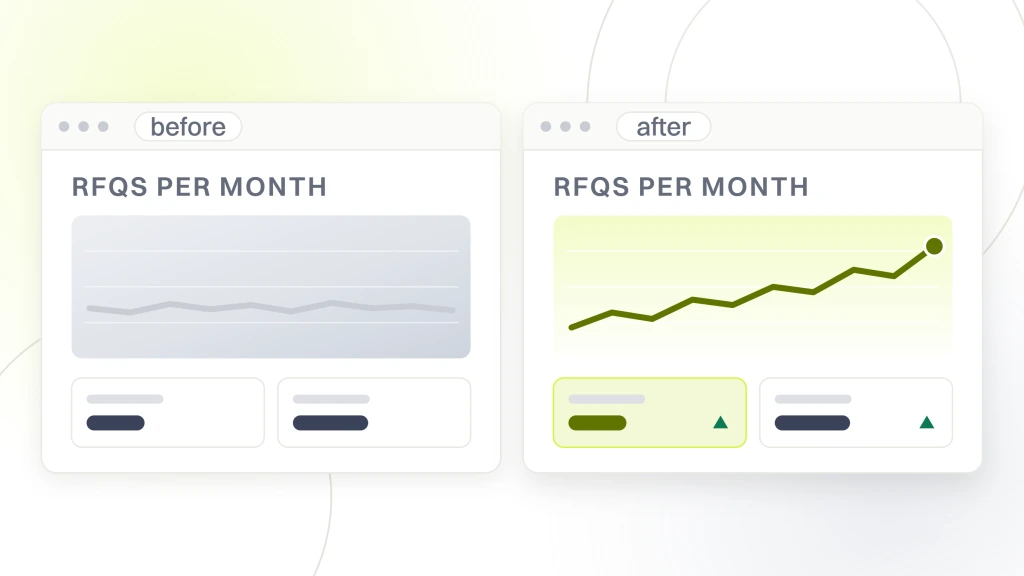
Sequence the channel launch month by month against team capacity and RFQ velocity, not all at once against a slide. Month one launches paid search plus email marketing on existing lists. Month 3 layers content marketing and SEO on top of the paid layer. Month 6 adds LinkedIn ABM on the named target-account list. Month 12 integrates the trade show digital follow-up sequence into the CRM. Any faster runs the internal team into the ground.
Month one channel launch checklist
Month one launches on the 2 channels that produce inside week 1 to 4. Google Ads on part-number and application queries (first RFQs land inside week 1 to 2). Email marketing on existing distributor and OEM lists (first re-engagement RFQs land inside week 2 to 4). Both channels need CRM tracking wired to attribution before launch. Both need conversion tracking on the site with GA4 events tied to RFQ form submission. Skip either wiring step and the account cannot measure which channel produced which RFQ across the next 6 months. That measurement gap is fatal to budget decisions.
Month 3 content and SEO layer
Month 3 layers content marketing and search SEO on top of the working paid layer. Content marketing produces first meaningful traffic at month 6 to 9 and first RFQs at month 9 to 12. SEO on technical library terms produces first ranking gains at month 4 to 6 and first RFQs at month 6 to 9. Both compound across 18 to 36 months. Skip the layer at month 3 and the account stays dependent on paid traffic forever without ever building the compounding library that reduces cost-per-RFQ over time.
Mistakes across the manufacturer channel mix
Every manufacturer marketing plan we audit shows the same 5 mistakes across the channel mix. Fix these mistakes and the same annual channel spend produces 2x to 3x the qualified RFQ pipeline across the fiscal year. Fix any 3 of the 5 and the plan pulls ahead of 70% of the competitive vertical inside 12 months of running the corrected mix. None of the fixes require new budget, just a rewired attribution stack and a disciplined sequencing plan.
- Launching all 6 channels at once instead of sequencing 3. Attention dilutes and no channel produces working RFQ math.
- Running trade shows without a written digital follow-up sequence. Post-show conversion drops from 30% to 45% down to 8% to 22%.
- Blasting the same email to all 4 segments. Response rate drops 60% versus a working segmented cadence.
- Skipping the technical library, since it does not produce inside week 4. Skipping year one of content forfeits year 2 and year 3 compounding.
- No CRM attribution wired to any channel. Every budget decision runs on vibes instead of cost-per-RFQ math.
The manufacturer that launches all 6 channels in month one produces a marketing plan document that looks impressive on the wall and produces zero measurable RFQ pipeline in the field. The Google Ads account burns $8,000 monthly on generic keywords with no conversion tracking. The LinkedIn ABM sequence targets 40,000 accounts nobody has qualified. The trade show budget covers 4 shows nobody has staff to work. The CRM receives lead data from 3 platforms that do not talk to each other. Budget decisions run on vibes since the attribution wiring never got done. Cut the plan to 3 channels, wire the attribution, and the same annual budget produces 2x to 3x the qualified RFQ pipeline inside 4 quarters.
How to audit the current channel mix
Audit the current channel mix with 4 checks. Check one asks whether cost per qualified RFQ exists as a working metric per channel. Check 2 asks whether CRM attribution ties each closed RFQ back to the originating channel. Check 3 asks whether each channel has a defined monthly budget cap and a working monthly review cadence. Check 4 asks whether the internal marketing team has capacity to execute against every channel currently in the plan. Fail on 2 of 4 and cut the channel count from 6 back to 3 before the next quarter kicks off.
Budget mix across the working channel stack
Budget mix across the manufacturer channel stack depends on account size and current sales-cycle stage. Mid-market industrial accounts ($10M to $50M in annual revenue) typically run a total marketing budget of $180,000 to $650,000 per year. Split roughly 35% into search (SEO plus Google Ads), 25% into content and technical library production, 15% into email marketing infrastructure, 15% into LinkedIn ABM, and 10% into trade shows plus digital follow-up. Adjust the mix each quarter based on RFQ velocity trends and pipeline gaps flagged in the monthly review call. The mix that starts paid-heavy in year one shifts organic-heavy by year 3 on most industrial verticals we track.
When to shift budget away from paid search
Shift budget away from paid search when the SEO layer starts producing organic traffic at month 12 to 18 and the compounding content library covers the buyer intent queries paid search was covering. Working accounts shift 20% to 40% of paid search budget into content and technical library production across months 12 to 24. The paid search budget stays higher on new-product launches and application category expansions. Overall the working manufacturer marketing plan gradually shifts from paid-heavy in year one to organic-plus-ABM heavy by year 3 across most industrial verticals we have measured.
When to invest more in LinkedIn ABM
Invest more in LinkedIn ABM when the target-account list matures to 400+ named accounts with individual buyer intelligence per account, when the internal sales team has capacity to follow up on booked meetings inside 24 hours of the marketing team booking them, and when the CRM has working attribution wired to LinkedIn campaign performance. Skip more LinkedIn ABM investment when any of those 3 prerequisites fail. Working accounts double LinkedIn ABM budget in year 2 once the target-account list plus sales team plus attribution prerequisites all sit inside the working operational rhythm. PPC retainers for the paid layer run our standard tiers at $999, $1,499, $2,499, and from $4,500 per month.
Wrapping up the best marketing channels for manufacturers guide
The right channel mix for a manufacturer comes down to 6 plays, a sequenced launch across months one through twelve, a budget mix that shifts across years one to 3, and 5 mistakes that quietly destroy RFQ pipeline if you miss them. Search marketing wins on cost per qualified RFQ. Email marketing wins on absolute cost per RFQ. LinkedIn ABM wins on named-account penetration inside target lists. Content marketing wins on compounding authority across 18 to 36 months of the plan. Poly Processing compounded technical library authority on a three-channel discipline of search plus email plus content and measured a 10x return with a 90% drop in cost per lead.
The 2 pieces every channel mix needs on paper are CRM attribution wired to every channel and a monthly review cadence that ties channel spend to cost per qualified RFQ. Every mix needs a written 12-month sequencing plan across the 6 channels. Every mix needs a written budget cap per channel. Nail those 3 and the channel mix produces working RFQ pipeline every quarter of every year. Miss any and the channel mix produces a marketing plan document that looks impressive without producing measurable revenue outcomes.
Redefine Web runs three-channel and six-channel manufacturer engagements through the manufacturing marketing agency program, plus a manufacturing marketing retainer from $1,499/mo for smaller-scope coverage. For channel-specific depth, see manufacturing SEO or PPC for manufacturers. Let’s talk through your current channel mix against the six-channel math above, or read the manufacturing website design lineup for the site foundation that carries every channel into an RFQ.