Optometrist marketing services split into eight core deliverables. Local SEO. Paid search. Recall automation. Landing pages. Reviews. Content. Reporting. Strategy. The retainer at a specialist agency covers those eight. What varies is depth, cadence, and how tightly each line ties to booked exam volume. This guide walks every service, what it adds, and when to add or drop it inside a working plan.
Numbers come from Vision Express, Dr Parth Shah, and the working book at our optometrist marketing agency. You get the scope by line item, the cost range, the expected impact on booked exams, and the sequence in which to add services. Owners deciding between a $2,200 retainer and a $4,800 retainer can read this piece and know exactly which services justify the difference. The work is boring on the surface and specific in the mechanics. The list below is the same one we walk through on every discovery call with a new practice, and every practice already running paid channels can cross off the services already in place.
Recall automation as an optometrist marketing services multiplier
Recall automation multiplies the return on every other line in the plan. A mature practice with 3,000 active patients pulls 30 to 45% of monthly bookings from recall at zero incremental ad spend. That works out to 20 to 40 booked exams a month from patients the practice already knew, at a marketing cost per booked exam of $6 to $12 versus $30 to $55 for paid channels.
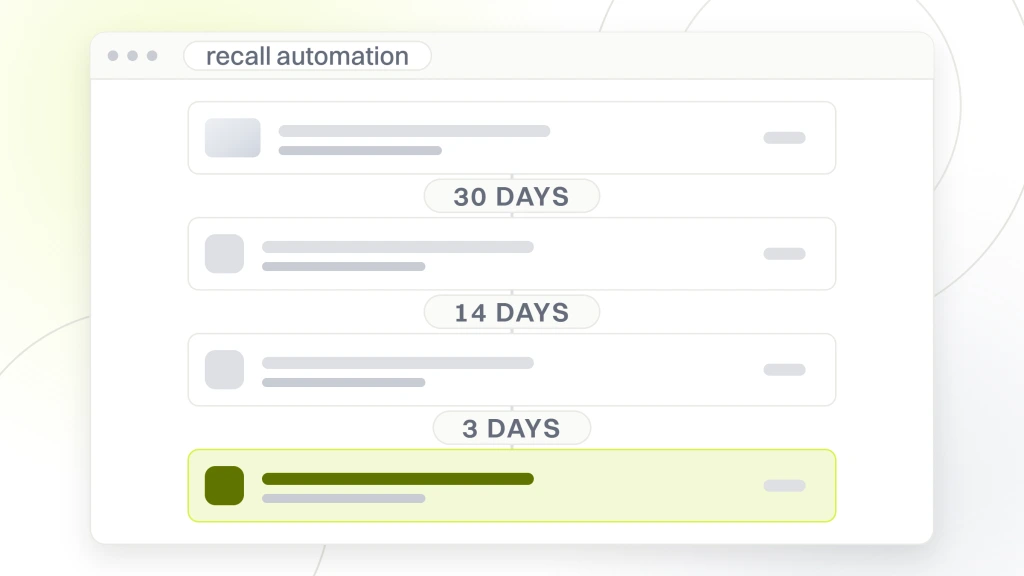
The mechanics are boring and specific. Email automation on annual exam anniversary. SMS reminder at 30, 14, and 3 days before appointment. Reactivation email at 14 months for patients who missed their annual. Contact lens refill reminder at 45 days before supply runs out. Post-visit review request 24 hours after appointment. Each of these is a triggered flow in the email plus SMS platform, wired to the practice-management system.
Recall is the biggest scope difference between a $1,200 monthly retainer and a $2,400 monthly retainer. The cheap retainer covers GBP (Google Business Profile) and a few Google Ads campaigns. The mature retainer wires the recall stack in month one and tunes it quarterly. Practices skipping recall lose 8 to 15 booked exams a month by month twelve. Over a full year that adds up to $50K to $95K in lost new-patient revenue.
Compliance matters here. Any recall flow that touches patient contact data needs a signed BAA (business associate agreement) between the practice and the agency. HIPAA discipline is not optional even for a service most people think of as non-medical. Agencies without a BAA offer are either operating outside compliance or unaware of the requirement. Neither is acceptable.
Landing pages inside optometrist website marketing
Landing pages inside the website scope decide the conversion rate on every paid click. A page built for a specific query, with the booking form above the fold and social proof below, converts at 12 to 18%. The same paid click sent to the home page converts at 3 to 5%. The difference is roughly 3 to 4 times the cost per booked exam for the same ad spend.
Every ad group needs a matched landing page. Routine eye exam ads point at a routine exam landing page. Contact lens fitting ads point at a contact lens fitting page. Dry eye treatment ads point at a dry eye page. The scope inside a good retainer covers 4 to 8 landing pages in month one, with new pages added when new campaigns launch.
The landing page A/B testing scope is where retainers separate. Cheap retainers push a landing page live and forget it. Mature retainers run 2 to 4 tests per page per quarter, iterating headline, form position, social proof placement, and CTA copy. Two to three quarters of iteration typically doubles the conversion rate on the top-traffic page, which halves the cost per booked exam on that traffic without changing ad spend.
Landing page tool subscriptions run $50 to $200 monthly (Unbounce, Instapage, HubSpot Landing Pages). Some agencies bundle. Others pass through. Both approaches are honest. The dishonest pattern is marking these up 30 to 60% as a hidden margin play. Ask for the raw invoice on any tool line the agency bills to you.
Reviews, content, and reporting as retainer line items
Reviews, content, and reporting round out the retainer scope. Reviews compound the map pack ranking. Content builds top-of-funnel visibility over 6 to 12 months. Reporting keeps everyone honest on the numbers that matter.
Review generation runs on a specific system. Post-visit SMS with a Google review link goes out 24 hours after every appointment. Positive replies get a thank-you. Negative or lukewarm replies get a direct call from the practice manager. Response inside 48 hours on every review, positive or negative. Practices running this system add 8 to 15 new Google reviews a month with a 4.7 to 4.9 star average.
Content on eye care topics targets the queries patients actually search before booking. Dry eye symptoms. Contact lens brand comparisons. Kids first eye exam expectations. Progressive lens options. One deep piece a week (1,500 to 2,500 words) tied to a service the practice offers. Content published in Q1 ranks in Q3. Practices that skip content build no organic base and stay dependent on paid channels indefinitely.
Reporting cadence is weekly numbers (4 to 6 KPIs), monthly deep-dive (12 to 18 metrics), and quarterly plan review. Weekly reports catch drift. Monthly reports drive channel adjustments. Quarterly reports reset the plan. Anything past that (30-slide monthly decks, weekly executive summaries with no numbers) is theater, not accountability.
- Weekly. Cost per booked exam by channel, ad spend to date, GBP post count, reviews received.
- Monthly. Booked exams by channel, top 5 keywords by ranking, landing page conversion rates, recall performance.
- Quarterly. Return on marketing investment, channel mix reallocation, plan updates for next quarter.
- Annual. Full-year cost per booked exam, revenue attribution, plan for next year.
Cost of the retainer line by line
Cost of the retainer line by line clarifies where the dollars land. A $2,400 monthly retainer at a single-location practice breaks down roughly like the table below. Different agencies weight differently but total labor allocation lands close to these numbers.
The table below is not a menu. The bundling matters. Services compound. Local SEO without content thins out at month 6. Paid search without landing pages wastes 60% of ad spend. Recall without reporting drifts unnoticed. Read the table as a scope check, not a pick-list.
| Service line | Monthly hours | Cost equivalent | Impact on booked exams |
|---|---|---|---|
| Local SEO plus GBP | 10 to 15 | $600 to $900 | 20 to 35% of monthly volume |
| Paid search management | 8 to 12 | $480 to $720 | 30 to 45% of monthly volume |
| Recall automation | 3 to 5 | $180 to $300 | 30 to 45% of mature practice volume |
| Landing page work | 4 to 6 | $240 to $360 | Conversion rate 3 to 4x on paid |
| Reviews plus content | 4 to 6 | $240 to $360 | Compounds map pack ranking |
| Reporting plus strategy | 3 to 5 | $180 to $300 | Enables all above |
The math sums to roughly $1,920 to $2,940 in cost-equivalent hours against a $2,400 retainer. The gap is agency overhead and margin, which sits at 15 to 25% for reputable specialist shops. Agencies charging more than 40% margin are either understaffed on delivery or padding the retainer. Ask directly what the effective hourly rate is if you want to price-check.
Customized marketing services for optometrists versus off-the-shelf packages
A customized plan beats an off-the-shelf package, since practice-specific quirks shift the scope by 25 to 40%. A practice with 3,000 active patients and a strong review base needs a different mix than a practice with 800 patients trying to build reviews. A practice serving a dense metro needs different mechanics than a rural practice with thin competition.
Off-the-shelf packages (Gold plan, Platinum plan, Enterprise plan) save the agency time and cost the practice booked exams. The Gold plan may include four hours of content a month when the practice needs six. Or eight hours of paid search when the practice needs four. Or none of the recall automation the practice actually needs. Practices on generic packages typically hit steady state at 20 to 30% below what customized scope would produce.
Customization does not mean higher price. A $2,400 retainer can be customized as easily as a $4,800 retainer. What it means is that the agency spent 4 to 8 hours on a discovery audit before quoting the scope, so the mix inside the retainer actually fits. Any agency quoting a package price on the first call without an audit is selling a template.
The audit that produces a customized scope covers current site performance, GBP status, existing campaigns, recall list size, review base, competitor local pack rankings, and the practice’s own booking system. Two to four hours of audit work. A written scope proposal at the end. Any agency skipping this step is not customizing anything, no matter what the sales deck claims.
Dedicated marketing team for optometrists inside a retainer
A specialist retainer team looks like a specific staffing model. One lead planner as the point of contact and quarterly review owner. One account manager for weekly communication and tactical calls. One paid search specialist. One SEO specialist. One content writer. One data analyst for reporting. That works out to six seats, none full-time on a single account, but all named and accessible.
The client-to-lead ratio decides how dedicated the team actually is. Specialist boutiques run 8 to 12 accounts per lead planner. Mid-size agencies run 12 to 15. Above 15 the lead is on autopilot and juniors do the actual thinking. Ask the ratio during the vetting call. Any answer above 15 means the account will get junior treatment regardless of what the sales deck said.
The response cadence is a practical proxy for how dedicated the team is. Emails answered within 4 hours during business hours. Slack or Teams messages answered same-day. Weekly calls that start on time and end with written next-steps. Monthly deep-dive that the lead runs personally, not the account manager. If any of these slip in month one, the pattern will not fix itself.
The dedicated team model works. Optometry accounts benefit from institutional memory. The lead who has been on the account for 18 months knows why cataract awareness in October is worth 30% more in ad spend than in July. That memory does not exist at agencies that rotate account owners every 4 to 6 months. Ask about tenure of the lead on your call.
When to add or drop a marketing service line
Adding or dropping a service line should happen on a quarterly cadence, driven by the numbers. Add a service when the base is stable and cost per booked exam is under target for two consecutive quarters. Drop a service when it misses target for two consecutive quarters with no clear reason.
Add paid social (Meta) in Q3 or Q4 of year one, after Google Ads is at steady state. Add SMS marketing in Q2, once the email recall flow is verified working. Add YouTube pre-roll in year two, after content on the site starts ranking. Add PR and community sponsorships in year two, after the map pack is at the top of the page. Sequence matters. Each layer builds on the one below.
Drop programmatic display if it does not hit target CPM (cost per mille) and booked exam attribution inside 90 days. Drop connected TV if the reach math does not clear at single-location scale. Drop influencer campaigns if reach and engagement do not translate to bookings inside 60 days. Practices that hold on to underperforming channels out of sunk-cost thinking waste $12K to $30K annually.
One founder we interviewed added programmatic display in month 4, connected TV in month 6, and podcast sponsorship in month 8. By month 10 he had spent $46K on three channels that produced 11 attributed bookings. He dropped all three in month 11 and reinvested the budget in Google Ads and recall, adding 55 booked exams in the following quarter without changing total spend.
Case study on running the full stack
Vision Express, an independent optometry practice, ran the full stack after competing against corporate chains with hidden service pages, weak GBP, and no conversion tracking. In 6 months the program drove a 135.9% organic traffic surge and 62% more booked exams, alongside 71% practice growth. Service-specific landing pages for vision therapy, dry eye, and contact lens fitting carried the paid conversion gain. Location-based SEO and GBP optimization owned the map pack. High-intent paid ads on premium services covered the rest.
The sequencing was standard. Month one covered audit, tracking install, GBP optimization, and Google Ads launch on brand plus routine intent. Month two added medical intent campaigns and the first three landing pages. Month three wired the recall automation and launched the content cadence. Month four started A/B testing on landing pages. Month five added the review system. By month six the full stack was producing.
A second data point from an ophthalmology practice next door in the same industry group is Dr Parth Shah, a Canberra eye surgeon who started with no website at all. In 6 months the program delivered a 120% organic traffic surge, 22 top-10 keyword rankings, 40% more patient bookings, and a 35% revenue boost. Same playbook order. Accessible website first, technical SEO and content clusters second, GBP and local search third, referral outreach fourth.
The takeaway is that no single service in the stack was doing the work. Every service pulled a share of the volume. Cutting any one of them in isolation would have reduced total bookings by more than that service’s share, since the compounding effects run through the whole stack. That is why bundled scope beats à la carte pricing at any practice past $50K in monthly revenue.
First 90 days on any optometrist marketing services engagement
The first 90 days on any engagement decide whether the retainer produces booked exams or drifts. Six milestones on the scoreboard tell you which side of that line the engagement lands on. Miss two of them and the plan needs a reset.
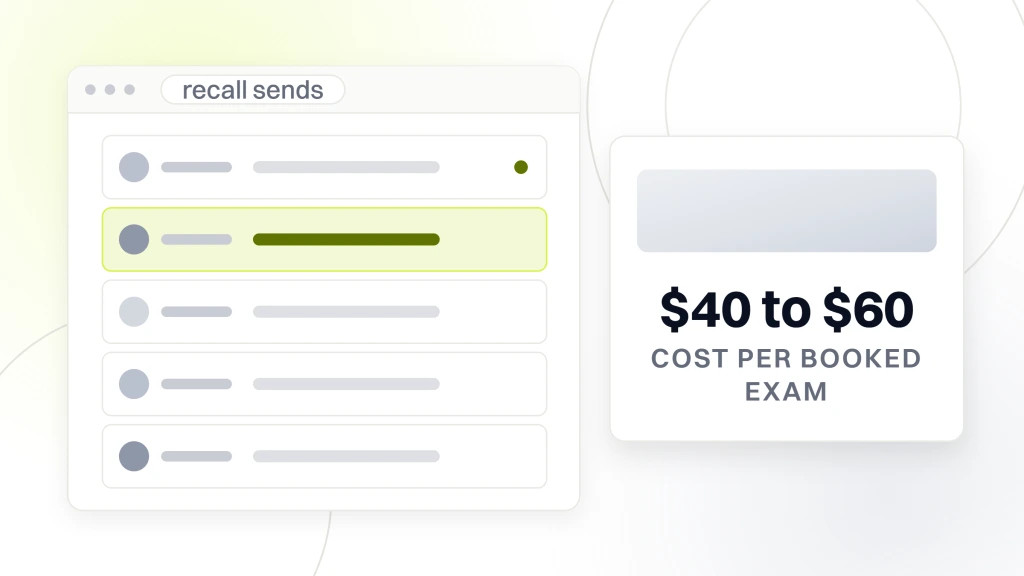
Day 30. Tracking live, Google Ads live on routine and brand intent, one booked exam attributed inside week 6. Day 60. Recall automation launched, medical intent campaigns live, cost per booked exam at $60 to $85 blended. Day 90. Content cadence at one deep piece per week, cost per booked exam at $40 to $60, 8 to 15 new Google reviews collected, first quarterly review completed with channel diagnosis.
The scoreboard fits on one page. Print it. Review it every Friday for the first 12 weeks. If milestones slip by more than 2 weeks with no written reason, the account is not getting attention. Address the issue on a call, not with a resignation email. Practices already using dedicated SEO services and PPC services should map those into the same scoreboard so nothing sits outside the reporting.
Any engagement worth its retainer is boring by month four. Numbers steady, milestones met, quarterly reviews producing measured adjustments. The exciting week is the week nothing broke and cost per booked exam ticked down 3%. If the retainer is not producing that pattern, the plan needs a review. For a broader tour of the vendor selection process, see the marketing companies for optometrists vetting guide. For the earlier stage on picking channels, the Optometrist marketing guide covers the mix. Cost math sits in Optometrist marketing cost. Strategy sequencing sits in Optometrist marketing strategy.
Every practice owner we talk to has the same five to seven questions before signing. The answers below match what we tell them on discovery calls.
Book a scope review on your optometrist marketing plan
A scope review is 45 minutes on a call, plus a written audit of your current site, GBP, campaigns, recall list, and review base. You walk away with a line-by-line scope, a cost range, and a first-90-day plan whether or not you engage. Practices that book the review typically decide inside 2 weeks, and the ones that engage start seeing tracked booked exams in week 6.
The bottom line is that scope decides everything. Skip a service and you leave 8 to 15 booked exams on the table every month. Bundle the wrong mix and you pay for hours the practice does not need. The eight-service framework in this guide is the same one that took Vision Express from hidden service pages to 62% more booked exams in 6 months, and the same one Dr Parth Shah used to move from zero web presence to 22 top-10 keywords and 40% more bookings. Book the scope review and get the mix right the first time.