Optometrist marketing is a small stack of channels that either book eye exams or waste money. You do not need eleven tactics running at once. You need the seven that move the schedule, in the right order, at a budget that matches practice size. This guide walks each channel with real 2026 numbers, the sequencing that gets a solo practice booked inside 60 days, and the mix a multi-location group runs after month six.
You will see what each channel costs, what it delivers, and how to know which one to add next. Every number below comes from live optometry engagements, including a Vision Express program that grew practice revenue 71% in six months and a Dr Parth Shah engagement that produced 22 top-10 keyword rankings plus a 40% gain in patient bookings. Skim what fits your stage. Skip the rest. Come back to the sequencing chart before you sign your next vendor.
The 7 channels that move optometrist marketing forward
Optometrist marketing that produces booked exams runs on seven channels. Anything else is either legacy print work that occasionally pays off or platform experimentation that never earns its slot. Name the seven first. Order them by return per dollar second.
- Website that converts routine and medical exam intent at 6 to 12%
- Google Business Profile plus local search for the map pack
- Google Ads on routine, medical, and brand intent
- Search engine optimization on non-brand organic queries
- Recall and reactivation automation into the existing patient list
- Review generation tied to the practice-management system
- Meta Ads on specific service lines like myopia management or dry eye
A solo practice runs five of the seven. A two-location group runs all seven with different budget weightings by location. A five-location group adds consolidated reporting and location-level attribution on top. Each section below covers what the channel delivers, what it costs, and what it looks like when it is running well. The order below is the buying order, not the alphabet.
You will notice print, direct mail, radio, and community sponsorship do not appear on the list. Those channels still work for specific practices in specific markets. They belong in a follow-on conversation once the seven digital channels produce predictable numbers. Adding print before the digital baseline stabilizes breaks attribution and leaves the quarterly budget indefensible.
One more filter before you buy. Every channel below has to book measurable exams inside 90 days or clear a defensible reason for a longer runway. SEO gets the runway. Content gets the runway. The technical work behind that runway lives in our optometrist SEO checklist. Everything else earns its slot with tracked cost per booked exam or gets cut at the next quarterly review.
Website first, so every other channel earns back
Your website conversion rate decides whether the rest of the budget earns back. A page that converts routine exam intent at 8% turns a $2,400 Google Ads month into 60 booked exams. The same page at 3% conversion turns the same spend into 22 booked exams. Same traffic, different math, and the difference lands squarely on the site.
A working optometry site has a booking button visible on every page, one page for every exam type, a page for every accepted vision plan, an about-the-doctor page with a real photo, an insurance page, and a location page with map and hours. Frames and lenses get their own section when retail is a growth focus. Missing any of these pages sends prospective patients to a competitor who has them, and that competitor is usually two blocks away.
Cost for a new site lands at $6,000 to $22,000 depending on complexity. Ongoing site work runs $500 to $1,500 monthly for updates, new content, and iterative conversion improvements. Practices already on a functional WordPress site can retrofit for 30 to 50% of the cost of a full rebuild. Practices stuck on Wix or a generic template usually need the rebuild since the mobile experience fails the phone-hand test on the first click.
Vision Express is the case that proves the math. Their site rebuild moved bookings up 62% in six months and total practice revenue up 71% across the same window. The rebuild covered service pages, a cleaner booking flow, an insurance page, and page-speed work. The channels around it (Google Ads and local search) delivered the same traffic they had been delivering. The difference was the site converting that traffic instead of losing it. For a deeper look at the layout patterns that convert, our optometrist website design guide walks the pages, the booking flow, and the CRO tests we run on every rebuild.
Local search and Google Business Profile as the free-traffic engine
The map pack captures 60 to 75% of the clicks on any “optometrist near me” search. Position 4 and below gets almost nothing. Moving from position 7 to position 2 changes the phone volume by 5x on the same underlying demand, which is why practices that ignore local search leave the cheapest source of new patients on the table.
The work covers weekly Google Business Profile posts, quarterly service edits, citation cleanup across 40 to 60 directories, review outreach through the practice-management system, and grid rank tracking with a tool like Local Falcon. A working local search program runs $600 to $1,500 monthly. Solo practices in mid-competition markets sit at the low end. Multi-location groups in metros run higher since each location needs its own profile management. See Google Search Central’s business info documentation for the fundamentals every practice should verify quarterly.
Results take 8 to 16 weeks to show in most markets. Practice owners who expect week-two map-pack movement lose faith in the vendor before the work compounds. Owners who understand the timeline stay patient through month 3 and see the payoff in month 4 when the map pack shifts and phone volume climbs 30 to 60%. Reviews are the most durable ranking signal. Practices that ask every satisfied patient at checkout pass competitors inside two quarters.
One tactic worth naming out loud. Every morning your staff drives past three competing practices on the way to work, pulls into your parking lot, and never opens Google Maps to route in. Every direction request tells Google the business is a real destination. Four seconds of clicking “Directions” costs nothing and moves an engagement signal Google weighs. Practices that make this a team habit typically climb one map-pack position over 90 days without spending a dollar on citations.
Google Ads for the fastest path to booked exams
Google Ads books exams in week one when the campaigns launch clean. Cost per booked exam on optometry sits at $18 to $55 blended across routine and medical intent. Metro competition pushes the number higher. Rural markets hold near the low end. No other digital channel produces exams that fast, which is why every 90-day plan we run starts here.
Campaign structure matters more than budget size. A working structure runs three campaign types. Routine exam intent covers non-brand searches like “eye doctor near me” and “optometrist accepting new patients.” Medical exam intent covers dry eye, diabetic retinopathy, floaters, sudden vision changes, and other symptom searches. Brand covers the practice name plus doctor names and defends against competitor bids. Each campaign runs its own ad group and landing page.
Budget typically runs $2,000 to $6,000 monthly for a single-location independent. A new practice needs the top end for six months to build baseline volume. An established practice with strong brand demand sits at the low end since the brand campaign captures free demand that a stronger competitor would otherwise steal. Both patterns produce workable cost per booked exam when the campaign structure follows the three-type model above.
Management fee runs $600 to $1,500 monthly on top of ad spend. Flat retainer beats percent of ad spend at every practice size since a vendor charging 15% of spend earns more by raising your budget than by improving your cost per booked exam. The incentive works against the practice. Our PPC services for optometrists program runs flat retainer with practice-owned ad accounts, which keeps the vendor honest and the account portable.
SEO for optometrists as the compounding channel
Organic search brings 40 to 70% of long-term digital traffic to an established optometry site and drives 20 to 40% of the total booked exams from digital channels. Compounding kicks in around month 6 and grows through month 30. The channel is slower than paid but delivers a lower blended cost per booked exam over 18 to 36 months, which is why any practice planning to still be around in 3 years builds SEO into the mix.
Three pillars carry the work. Technical covers site speed, mobile rendering, schema markup for medical practice and local business, indexing hygiene, and internal link architecture. On-page covers service pages for routine exam, contact lens exam, diabetic eye exam, dry eye workup, myopia management, low vision, and vision therapy where the practice offers them. Off-page covers earned links from local publications, healthcare directories, and community partnerships.
Content depth beats content quantity. A page with 1,800 words on diabetic eye exams that covers what to expect, insurance coverage, referral patterns from primary care, and follow-up frequency will rank and convert. Ten thin pages on adjacent topics will not. Publishing cadence for the content pillar runs one deep piece per week, not five short pieces. Practices that respect the cadence rank on medium-competition queries inside 60 to 120 days. Our SEO for optometrists guide walks the full content map and technical checklist we use on new engagements.
SEO retainer runs $800 to $2,500 monthly. The bottom end is technical maintenance and light content cadence. The top end is a full program with three articles per month, technical work, and active link building. Practices that already rank well on brand searches but weakly on non-brand searches usually need the top-end program for 9 to 12 months before tapering to maintenance.
Recall and reactivation as the highest-return channel in optometrist marketing
Existing patients cost 10 to 15% of what new-patient acquisition costs. A well-run recall program books 30 to 50% of total exam volume from patients who scheduled a year or two ago. The math beats every paid channel by a wide margin, and yet most independent practices leave the flows on a sticky note taped to the front desk monitor.
A working recall program covers three flows. The 12-month recall for standard patients ready for a return exam. The reactivation flow for patients who missed the 12-month window and now sit at 18 to 30 months lapsed. The re-engagement flow for patients who last visited 3 or more years ago. Each flow uses email plus SMS in sequence, with SMS driving the fastest booking rates when the message is short and links to a booking page directly.
Tooling runs $150 to $500 monthly for practice-management-integrated tools like Weave, Solutionreach, or the recall module inside RevolutionEHR. Setup work to build the flows runs $1,500 to $4,000 as a one-time project or gets rolled into the retainer of a full-stack vendor. Once live, the flows run themselves and only need quarterly review to tune message copy and send timing. Practices that automate recall inside 90 days of engagement typically add 20 to 40 recalled exams monthly to the schedule without a dollar of new-patient spend. Message timing matters as much as message copy. A 12-month recall sent 30 days before the exam anniversary books at twice the rate of one sent 30 days after. A reactivation SMS sent Tuesday morning books at 1.5x the rate of the same message sent Friday afternoon. Small timing tweaks move the exam schedule more than most owners expect.
Reviews as the trust signal that closes the click
A practice with 200 reviews at 4.8 stars beats a practice with 40 reviews at 5.0 stars every time. Volume matters. Recency matters. Response rate matters. Content of the reviews matters since Google reads the review text and factors relevant service keywords into the local ranking, so a review that mentions “contact lens exam” or “dry eye clinic” moves both a category ranking and a service-specific ranking.
The work covers outreach cadence, response template drafting, and a monthly review of trend patterns. Outreach uses the practice-management system to send a review request via SMS 24 hours after the visit ends. The request links directly to Google review, not to a review-gating page that violates Google policy. Response drafting handles both positive and negative reviews with templates that match the practice voice and never argue in public.
Cost runs $200 to $600 monthly bundled with local search or as a standalone service. Practices running review outreach at a 40% request rate typically gain 10 to 20 new reviews monthly, which climbs the map pack over six months and adds trust that converts more clicks into calls. Practices that neglect reviews watch the map pack drift downward as competitors accumulate fresh signal.
Negative reviews need a specific playbook. Respond inside 24 hours. Never argue in public. Offer a phone call. Take the specific complaint offline and log the resolution internally. A well-handled negative review shows every future prospective patient that the practice takes patient experience seriously. Ignoring a negative review does more damage than the review itself. It signals nobody at the practice is watching.
Meta Ads for demand creation on specific service lines
Meta Ads on Facebook and Instagram play a different role than Google Ads. Google captures active demand. Meta creates demand and retargets past visitors. Our social media marketing for optometrists guide walks the creative and audience mix that actually books exams. For optometry, Meta earns its slot when the practice runs specific service lines like myopia management, dry eye clinics, scleral lens fittings, or aesthetic services that Google search volume cannot support on its own.
Creative production is the bottleneck. Static images convert at half the rate of short videos on Meta. A working program produces two to four short videos per month, each 20 to 60 seconds, featuring the doctor, a patient explaining an experience, or a brief educational moment about a condition or service. Video production runs $400 to $1,200 per piece if outsourced. In-house iPhone content works when the doctor is comfortable on camera.
Retargeting campaigns close the loop. Every visitor to the site who did not book gets served a follow-up ad for two weeks. The retargeting ad delivers social proof, a reminder about accepting new patients, or a specific incentive like a same-week appointment slot. Retargeting cost per booked exam runs 30 to 50% lower than cold acquisition since the audience already showed intent.
Meta budget runs $800 to $3,000 monthly for optometry. Practices without specific service lines that suit awareness content usually skip Meta entirely and put the budget into Google Ads plus content. Practices with a myopia management program or a dry eye specialty use Meta to educate a market that Google cannot reach yet since the query volume is still low.
Optometrist marketing budgets at a glance
The table below shows what independent practices spend by size in 2026. Numbers assume flat retainers with no ad-spend markup, which is the fair pricing pattern reputable vendors follow. Bundle discounts of 15 to 25% apply when a single full-stack vendor runs the program instead of three separate accounts.
| Practice stage | Retainer | Ad spend | Total monthly |
|---|---|---|---|
| Solo, year 1 to 3 | $1,800 to $2,800 | $2,000 to $3,500 | $3,800 to $6,300 |
| Solo, established | $2,200 to $3,500 | $2,500 to $4,500 | $4,700 to $8,000 |
| Two-location group | $3,500 to $5,500 | $3,500 to $6,000 | $7,000 to $11,500 |
| Three to five locations | $5,500 to $9,000 | $5,000 to $10,000 | $10,500 to $19,000 |
| Six or more locations | $9,000 to $18,000 | $8,000 to $18,000 | $17,000 to $36,000 |
Ad spend runs on top of every management retainer and flows directly to Google or Meta. A vendor rolling ad spend into the retainer and calling it “included” is a red flag since it hides the split and creates a conflict of interest on budget decisions. Setup costs are one-time. A practice signing today pays the setup across months 1 to 3, not on the first invoice.
The optometrist marketing cost guide breaks the math down further, including cost per booked exam by channel and how to model 12-month payback before signing.
One more note on the ranges. A brand-new practice in month one usually invests at the top of the range for the first six months since there is no organic traffic, no review base, and no recall list to lean on. A 10-year established practice usually sits at the middle of the range since brand demand carries part of the load and the recall list produces a large share of monthly bookings without ad spend. Match the number to the stage, not the aspiration.
Payment structure matters as much as the total. A vendor asking for full setup upfront plus 12 months of retainer prepaid transfers their risk onto the practice. A vendor billing monthly with a 30-day wind-down clause carries their own risk and stays motivated to keep the numbers moving. Look at the paper before you look at the pitch deck.
Sequencing a 90-day marketing for optometrists engagement
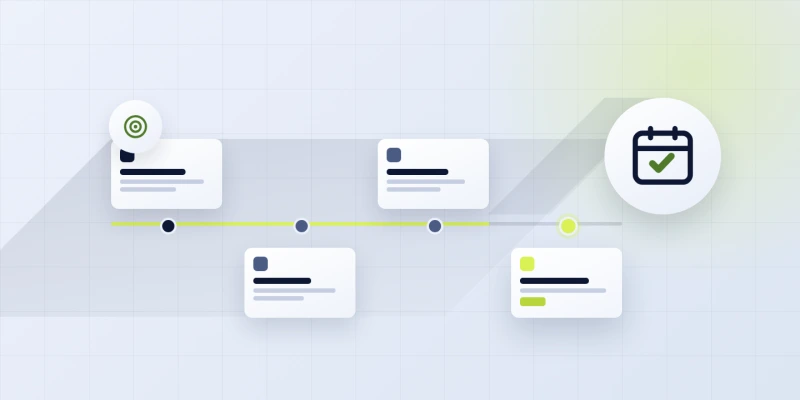
Sequencing decides whether the first 90 days feel productive or scattered. Our marketing for optometrists playbook covers the same ninety-day arc. The right order runs website audit and fix in weeks 1 and 2, Google Business Profile cleanup in weeks 2 and 3, Google Ads launch in weeks 3 and 4, tracking and reporting live by end of week 4, SEO content cadence starting week 6, and recall automation live by week 8. Meta Ads and advanced services follow after the base program stabilizes.
The reason for this order is compounding. Website work fixes the conversion rate every other channel depends on. Local search moves the free traffic before paid budget scales. Google Ads books exams inside two weeks and creates the tracked baseline for reporting. SEO content compounds slowly from month 3 onward. Recall automation captures the existing patient list before new-patient acquisition scales the list further.
Skipping any step or reordering the sequence produces predictable problems. Launching Google Ads before fixing the website conversion rate wastes 20 to 40% of the ad spend for the first 90 days. Building content before fixing technical SEO wastes the ranking potential. Running Meta Ads before recall automation invests in top-of-funnel awareness before capturing the existing bottom-of-funnel demand. Each mistake costs 60 to 120 days of momentum.
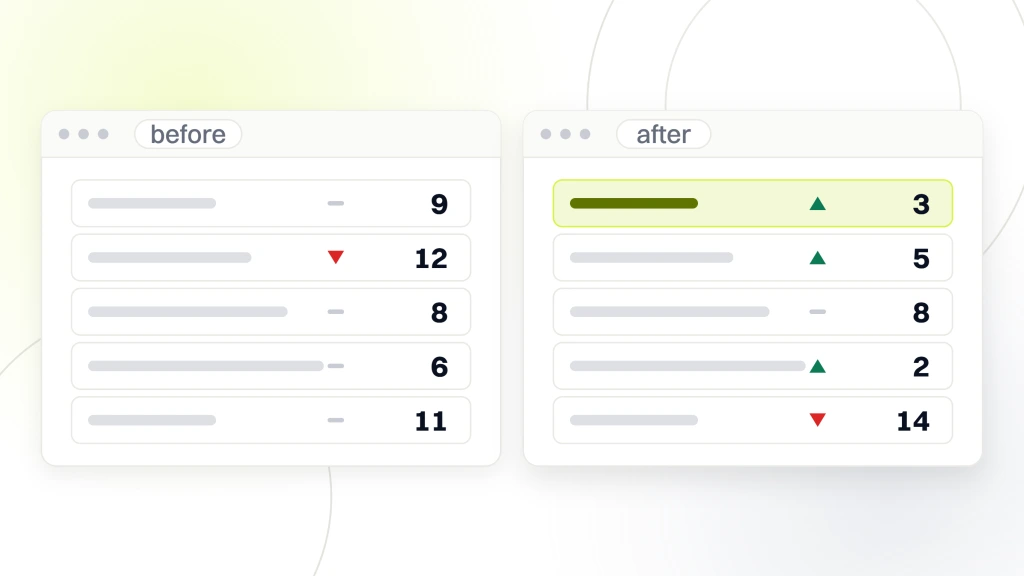
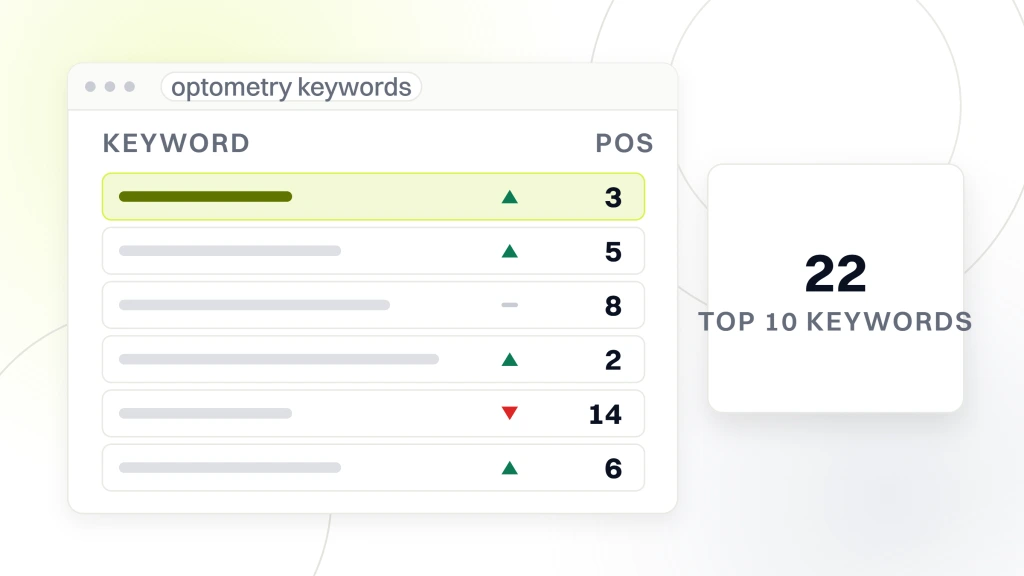
Dr Parth Shah’s engagement followed this sequence over six months and produced 22 top-10 keyword rankings, a 120% organic traffic gain, a 40% gain in patient bookings, and 35% revenue growth. The sequence worked since each service enabled the next. The website rebuild made the SEO ranking possible. The local search work fed the paid campaigns with review social proof. The reporting layer made every decision defensible with real numbers. For the full 12-month roadmap, our optometrist marketing strategy post walks each quarter.
Marketing for optometrist clinics at solo, group, and multi-location scale
Solo practices book exams from a smaller radius, compete with fewer direct rivals, and can run a lean program. A five-location group competes across a wider footprint, needs a consistent brand voice across sites, and requires clean reporting to see which location produces which return. The mix of channels does not change. The weighting does.
Solo practice mix. Website plus updates, GBP plus local search, Google Ads on routine and brand intent, recall automation, review outreach, and reporting. Total lands at $2,800 to $4,200 monthly plus $2,000 to $3,500 in ad spend. Skip Meta Ads until a specific service line justifies the awareness spend. Skip separate SEO retainer until month 6 when the site is stable and content cadence can begin.
Group practice mix. All seven channels concurrent, with SEO and Meta carrying more weight. Location-specific landing pages replace generic service pages. Reporting splits by location so the operator sees which practice needs attention. Recall automation runs per-location tuning based on staff mix and demographics. Total lands at $6,000 to $12,000 monthly retainer plus $4,000 to $10,000 in ad spend.
Groups above 8 locations often move to a hybrid model with an in-house marketing coordinator plus a vendor. The coordinator owns brand, event calendar, and clinical content review across sites. The vendor owns paid media, technical SEO, and consolidated reporting. Roles need written boundaries. Overlap kills accountability and doubles coordination overhead. See our marketing companies for optometrists post for the full vendor selection framework.
What a real optometrists marketing case looks like
A real optometrists marketing case looks like a 90-day base program that produces trackable booked exams by month 3, then compounds through month 12. Vision Express hit 62% booking growth and 71% revenue growth in six months on this pattern. The stack, sequence, and reporting all matter.
The reason to walk a real case first is calibration. Numbers in a vendor pitch always look tidy. Numbers from a live engagement include the messy weeks when a Google Ads audit paused a campaign, a front desk hire slowed down review outreach, or a practice-management system upgrade broke the recall integration for 11 days. Every real case has weeks like that. Watch how the vendor talks about them.
Vision Express, an independent optometry practice specializing in vision therapy and dry eye, came to us in month zero with a stale site, a flat map-pack ranking, and no recall program running. Booking volume had plateaued for three quarters. Their prior vendor sent a monthly report with pretty charts and no cost per booked exam number anywhere in it, which is a common story when a practice grows past a general-purpose marketing agency.
The engagement ran the standard 90-day sequence. Site rebuild in weeks 1 to 4 with a fixed booking flow and dedicated pages for vision therapy and dry eye. GBP overhaul in weeks 2 to 3 with a full citation cleanup. Google Ads launched week 4 with routine, medical, and brand campaigns. Recall automation went live at week 8. Content cadence started at week 6 with the first three service pages.
Six months in, the practice was up 62% on booked exams and 71% on total practice revenue. Organic traffic gained 135.9% by month six with the compounding still ramping. Cost per booked exam from Google Ads landed at $28 blended. Recall reactivation added 32 exams per month to the schedule by month 5. The reporting layer let the practice owner see cost per booked exam per channel weekly, which the prior vendor never delivered even monthly.
Not every case runs this cleanly. Vision Express had a doctor comfortable on camera, a front desk staff open to changing the review-request cadence, and a stable practice-management system that integrated cleanly with the recall tool. Practices with more friction on any of those inputs move slower. The channels still work. The compounding still happens. The timeline shifts by 30 to 60 days.
Working with Redefine Web on optometrist marketing
Redefine Web runs optometrist marketing as an integrated program under one lead per practice. The stack covers search engine optimization, Google Ads management, website builds, local search, recall automation, and reporting. Retainers start at $999 monthly for a lean local search program and scale to $4,500 monthly for full-stack coverage. See our full optometrist marketing agency stack for the packages and reference cases.
Every engagement follows the 90-day sequence. Website in weeks 1 and 2. GBP and local in weeks 2 and 3. Google Ads live by week 4. Tracking and reporting live by end of week 4. SEO content cadence starting week 6. Recall automation live by week 8. Meta Ads and advanced service lines follow once the base is producing predictable cost per booked exam numbers by month 3.
Contract structure runs six months minimum, flat retainer with no ad-spend markup, 30-day wind-down clause, and practice-owned ad accounts and domain. Reference calls with current independent optometry clients are provided during the first fit call, not held back until the pitch. If your practice does not fit our current book, we will name a peer shop that fits better and part on good terms.
Reporting cadence runs weekly on the 15-minute quick numbers and monthly on the strategic narrative. Every dashboard ties directly to cost per booked exam per channel. It is the only metric that matters when the practice owner sits down at month end and asks whether marketing earned its keep. Everything else supports that number or gets removed from the report.
Onboarding runs two weeks. Kickoff call, access handoff, tracking audit, competitor scan, and the first draft of the 90-day plan land inside week 2. The plan is a working document, not a pitch artifact. Practice owners edit it live during the review call. That draft becomes the working plan the team executes against for the first quarter.
Which optometrist marketing channel to add next
A new practice in year 1 adds website, local search, and Google Ads first. An established solo practice at year 5 adds reporting and recall automation before layering more paid. A multi-location group adds consolidated reporting and location-level attribution on top of the seven channels every practice runs.
The order matters more than the total. Buying every channel at month zero without sequencing produces waste. Buying the right two channels and running them well for 90 days produces the tracked baseline that justifies scaling into the rest. Practice owners who trust the sequence save money and see the compounding earlier than those who spread thin from day one.
Ready to walk the sequence with a real vendor. Read the optometrist marketing cost guide for the pricing math, and the digital marketing for optometrists channel-mix breakdown for how paid and organic interact. Vendor selection frameworks from Content Marketing Institute back up the sequencing choices above.