
The best PPC platforms for e-commerce brands in 2026 are Google Shopping and Performance Max, Meta Advantage+, TikTok Ads, Amazon Sponsored Products, Microsoft Advertising, and Pinterest, in that order for most stores. Each platform has a specific job. Google carries product-intent queries. Meta carries prospecting and catalog retargeting. TikTok carries discovery for lifestyle and beauty. Amazon carries bottom-funnel intent on marketplace SKUs. Microsoft catches the audience Google misses. Pinterest owns home decor and wedding categories. Running all six is rare. Running three or four is the working default for most Shopify and DTC stores in 2026.
You’ll get every platform’s real strengths, a fair head-to-head on Amazon PPC vs Google Ads for e-commerce, a working platform mix by category, a cost benchmark for each channel in 2026, and how RAFZ Cirkulära Interiörer and Abigail Ahern turned paid media into 28% and 179% revenue growth. Read this before you sign a proposal that promises coverage on every platform for $999 a month.
Google Shopping and Performance Max lead the best PPC platforms for e-commerce
Google Shopping and Performance Max lead every serious ranking of the best PPC platforms for e-commerce brands in 2026. They carry the intent-based workload for roughly 80% of stores we manage. Shoppers on Google are already typing product queries. That’s why Google Ads is the most popular PPC platform globally, with ad revenue forecast at $190 billion in 2024. For product-catalog businesses, no other channel puts a live SKU in front of an active buyer at the same speed.
Performance Max stitches Shopping, Search, Display, YouTube, and Gmail into one campaign. It’s not magic. It’s a bidding shell around your Merchant Center feed. Feed quality (titles, images, GTINs, category taxonomy) sets the ceiling. A weak feed on Performance Max will lose to a clean Standard Shopping build every time.
When Google Shopping wins
Google Shopping wins on stores that sell physical goods with clear SKU intent. Home decor, electronics, apparel with 200 or more SKUs, and any category where the buyer types the product name or category. Return on ad spend on a healthy Google Shopping account typically lands between 3x and 8x depending on margin and average order value. Below 2x, the feed is usually broken (missing GTINs, weak titles, poor image quality) not the bid strategy.
Where Performance Max loses
Performance Max loses on stores with fewer than 50 SKUs, on brand-new domains with no conversion history, and on stores where the top-selling 10 SKUs pull 90% of the revenue. Small catalogs starve the algorithm. New domains have no signal to optimize on. Concentrated catalogs get better returns from Standard Shopping campaigns split by SKU tier. Wait until you have 90 days of conversion data before flipping Standard Shopping into Performance Max.
Meta Advantage+ shopping campaigns for prospecting and retargeting
Meta Advantage+ takes second place on almost every honest list of the best PPC platforms for e-commerce brands. Meta Advantage+ shopping campaigns carry prospecting and catalog retargeting for lifestyle, apparel, beauty, and fashion. Meta reads your product feed the same way Google does, then serves dynamic creative to lookalike audiences on Facebook and Instagram. For visual-first categories, it’s the second-strongest channel after Google Shopping.
Meta cost per click sits between $0.85 and $2.20 across e-commerce categories in 2026. Return on ad spend lands between 2x and 5x on healthy catalog retargeting, and between 1.5x and 3x on cold prospecting. Prospecting return is always lower. That’s the price of building the audience.
When Meta Advantage+ wins
Meta wins on lifestyle apparel, beauty, home goods, and any SKU that photographs well. Dynamic product ads let one catalog serve thousands of creative variants. Advantage+ audiences beat manual interest targeting on almost every account we audit past $10,000 a month in spend. If your creative team can turn out 6 to 12 fresh assets a month, Meta compounds. If they can’t, Meta stalls at month three as ad fatigue climbs.
Where Meta loses
Meta loses on high-consideration B2B, industrial parts, and any product with a 60-day decision cycle. Meta buyers scroll. They don’t research. Push a $12,000 industrial pump on Meta and you’ll burn $8,000 of budget before you learn the lesson. Categories with weak product photography also stall. Meta rewards thumb-stopping visuals. A gray product on a gray background does not get thumb-stopped.
Add a new PPC platform only once the current one holds return on ad spend for 8 straight weeks at target spend. Adding sooner splits the specialist’s focus and slows both channels.
TikTok Ads for discovery on beauty, skincare, and Gen Z apparel
TikTok Ads sits third on the best PPC platforms for e-commerce shortlist for the right categories. It carries the discovery workload for beauty, skincare, and Gen Z-facing apparel. The platform runs on native-feeling video creative, not polished studio shoots. A $200 phone-shot demo often outperforms a $20,000 agency spot. Cost per click on TikTok sits between $0.55 and $1.75 across e-commerce, with the lowest costs on beauty and lifestyle where the algorithm has the deepest audience signals.
TikTok Shop and Spark Ads let creators post native content that a brand then promotes as a paid ad. That’s where the platform’s return on ad spend compounds. Owned-brand creative alone tops out at 1.5x to 2.5x on prospecting. Creator-boosted content lands between 3x and 6x on the same audiences.
When TikTok wins
TikTok wins on impulse-purchase categories under $80 average order value, on brands with a strong founder-face or creator network, and on any category where a 15-second demo carries the value. Sunscreen, hair tools, dupe-friendly beauty, novelty apparel, and food subscription boxes all convert. If your product needs 3 minutes of explanation, TikTok is not your first platform.
Where TikTok loses
TikTok loses on B2B, industrial, high-consideration electronics over $500, and any category priced above $300 average order value on a first purchase. Older buyers over 45 also convert less on TikTok than on Meta or Google. Test creator content on Meta and Google first for those categories. Use TikTok only after the other channels are compounding.
Amazon Sponsored Products and Amazon PPC vs Google Ads for e-commerce
Amazon Sponsored Products earns a top-four slot on the best PPC platform for e-commerce list any time a store sells through the marketplace. It carries bottom-funnel intent on marketplace SKUs. Amazon PPC vs Google Ads for e-commerce is the wrong framing for most stores. The two solve different problems. Amazon captures a shopper who’s already inside a buying session on Amazon. Google captures a shopper who’s still deciding where to buy.
For brands that sell both on their own Shopify site and on Amazon, both platforms run in parallel. Amazon return on ad spend on Sponsored Products typically lands between 3x and 8x on healthy listings with strong reviews and A+ content. Google Shopping return on ad spend lands in the same range but pulls the buyer to your DTC site where you own the customer relationship, the email list, and the repeat purchase margin.
When Amazon Ads wins
Amazon Ads wins on brands whose primary sales channel is Amazon marketplace, on consumables where repeat purchase is the core margin, and on categories with 4.4+ star product reviews and 500+ review counts. Sponsored Products, Sponsored Brands, and Sponsored Display each solve a different funnel stage. Sponsored Products captures the bottom-funnel query. Sponsored Brands defends branded search. Sponsored Display retargets shoppers off-platform.
Amazon PPC vs Google Ads for e-commerce, side by side
| Factor | Amazon Sponsored Products | Google Shopping and PMax |
|---|---|---|
| Buyer intent | Inside a buying session | Still comparing options |
| Return on ad spend range | 3x to 8x on healthy listings | 3x to 8x on clean feed |
| Owns the customer | Amazon owns the data | You own the DTC customer |
| Repeat purchase margin | Amazon takes referral fees | Full margin on repeat orders |
| Setup time | 2 to 3 weeks | 3 to 6 weeks |
| Creative lift | Product photography plus A+ content | Feed titles and imagery |
Run both when the brand splits revenue 60/40 or closer between Amazon and DTC. Run only Google when DTC pulls 80% or more of revenue. Run only Amazon when marketplace is the entire sales channel. The middle case (Google plus Amazon plus Meta) is the working stack for most product-catalog brands past $50,000 a month in revenue.
Microsoft Advertising as a best PPC platform for e-commerce
Microsoft Advertising (formerly Bing Ads) sits as the fifth or sixth platform in most e-commerce stacks. It carries roughly 6% to 10% of US search traffic and skews toward older, higher-income audiences on desktop devices. That audience matches surprisingly well for luxury home decor, professional services, and B2B industrial. Cost per click typically runs 15% to 25% below Google on the same query.
When Microsoft Ads is worth the setup
Microsoft Ads is worth the setup once your Google Ads campaigns are already running profitably and you have $15,000 or more a month in ad spend. Below that threshold the setup time doesn’t pay back. Microsoft lets you import your Google Ads campaigns directly, so the setup cost is 4 to 8 hours of specialist time. Once imported, Microsoft usually returns 10% to 25% of what Google returns on the same setup, at a lower cost per click. That’s a free 10% to 25% of incremental revenue for stores that skip the setup on the assumption that Bing traffic is dated.
Where Microsoft loses
Microsoft loses on categories skewed young or mobile-first. Beauty and skincare rarely works. Fashion targeted at Gen Z rarely works. TikTok-native categories rarely work. Microsoft also doesn’t offer a true Performance Max equivalent, so multi-surface campaigns need to be run in individual campaign types. If your Google Ads spend is under $10,000 a month, the incremental yield from Microsoft is probably not worth the setup time even at a lower cost per click.
Refresh Meta and TikTok creative every 14 days. Wait longer and CPMs climb 20% to 60% as the audience fatigues on the same hooks.
Pinterest as a best PPC platforms for e-commerce brands option
Pinterest sits as the fifth or sixth platform for most e-commerce brands. For a small number of categories it deserves top-three placement. Home decor, wedding, DIY, seasonal decor, kitchen goods, and beauty tools all convert well on Pinterest. Every other category sits somewhere between mediocre and worthless on the same media buy.
Pinterest strengths for home decor and wedding
Pinterest users pin content 3 to 6 months before actually buying. That intent horizon works for home decor and wedding categories where the buyer plans purchases months in advance. Cost per click on Pinterest sits below Google Search and above Meta on most home decor categories, with return on ad spend at 3x to 6x for stores that get the visual creative right. Every Pinterest campaign needs vertical creative at 1000×1500 pixels and idea pins for reach. Reuse Meta creative wholesale and Pinterest performance sits flat.
Where Pinterest loses
Pinterest loses on impulse purchase categories, B2B, high-consideration electronics, and categories where the buyer decides in a week rather than a season. Cost per acquisition on those categories sits 40% to 80% above Meta on the same creative. If your average shopper decides in under 14 days, Pinterest is probably not your fifth platform. Meta prospecting on the same budget usually returns more inside a 30-day window, especially on categories with a fast decision cycle where the buyer wants to purchase inside 7 to 14 days.
Platform mix by store category on the best PPC platform for e-commerce
Every store past $10,000 a month in ad spend needs a working platform mix pulled from the best PPC platforms for e-commerce shortlist. Below is the working mix by store category, matched against roughly 40 e-commerce accounts we manage or have audited in the last 18 months.
| Store category | Primary platform | Secondary platform | Third platform |
|---|---|---|---|
| Lifestyle and apparel | Google Shopping | Meta Advantage+ | TikTok |
| Home decor and furniture | Google Shopping | Meta Advantage+ | |
| Beauty and skincare | Meta Advantage+ | TikTok | Google Shopping |
| Consumer electronics | Google Shopping | Meta Advantage+ | Amazon Ads |
| Marketplace-first brand | Amazon Sponsored Products | Google Shopping | Meta Advantage+ |
| B2B parts and industrial | Google Search | Microsoft Ads | LinkedIn Ads |
Match your store to the closest row before signing a retainer that promises coverage on every platform. Every mismatch on the primary platform choice costs 3 to 6 months of testing time. Every extra platform beyond the third adds cost without proportional revenue below $50,000 a month in ad spend. Restraint is a paid media strategy on any account below enterprise scale.
Watch also for category drift inside the mix. A lifestyle apparel store that suddenly adds a beauty SKU line does not automatically shift its mix from Google-primary to Meta-primary. Test the new SKU line as a separate campaign on the secondary platform for 60 days before restructuring the mix. Category drift is the single most common cause of a working mix breaking inside a single quarter, and specialists on cheap retainers rarely catch it in time. The B2B Google Ads Services team runs into the same mix-drift issue on B2B parts and industrial accounts every quarter.
Cost benchmarks across the best PPC platforms for e-commerce brands
Every one of the best PPC platforms for e-commerce has a benchmark cost per click and cost per acquisition band that stores in that category typically land inside. Below are working 2026 numbers pulled from managed accounts, not vendor sales sheets. Real accounts land inside these bands 70% to 80% of the time. Outliers happen but usually mean either exceptional brand equity or a broken campaign structure.
- Google Shopping cost per click: $0.70 to $1.90 in most categories, $2.50 to $4.00 in competitive categories.
- Google Search cost per click: $1.20 to $3.50 in most categories, higher in luxury and B2B.
- Meta Advantage+ cost per click: $0.85 to $2.20 across categories.
- TikTok cost per click: $0.55 to $1.75 across beauty and lifestyle categories.
- Amazon Sponsored Products cost per click: $0.60 to $1.40 across most SKU categories.
- Microsoft Ads cost per click: 15% to 25% below Google on the same keyword.
- Pinterest cost per click: $0.65 to $1.85 across home decor and wedding.
Every store owner also runs into one tempting proposal a quarter. A proprietary AI-powered PPC tool the agency built last week that promises to run every platform on autopilot for $179 a month with zero human labor. The math says the tool is Smart Bidding with a rebranded slide deck, the specialist is a ChatGPT tab in a browser somewhere, and the $179 barely covers the Zoom subscription. Neither scales past month two.
Reference points for the reader
For deeper industry benchmarks on average cost per click and cost per acquisition, see Think with Google’s paid search benchmarks. It keeps numbers current and cites the auction data behind them, so the reference is worth bookmarking for the specialist working the account weekly.
How to pick a starting platform on the best PPC platforms for e-commerce brands list
Store owners setting up paid media for the first time face the same three-question call. Where does your buyer already spend time. Which platform matches your product margin against its floor cost per acquisition. Which platform does the specialist you hired actually know inside out. Answer those three honestly and the starting platform is obvious.
Stores with under $10,000 monthly spend should run one platform, not three. Below that budget, splitting attention drops return on ad spend 30% to 50% inside 60 days.
The first-platform rule of thumb
Stores selling physical goods with SKUs already in Google Merchant Center start on Google Shopping. Stores selling beauty, skincare, or lifestyle apparel with strong social imagery start on Meta Advantage+. Stores whose primary sales channel is Amazon marketplace start on Amazon Sponsored Products. B2B and industrial start on Google Search. Every other case defaults to Google Shopping since the intent-based auction returns the fastest and the setup time is the shortest.
When to add a second platform
Add a second platform once the first is compounding month over month for 90 consecutive days. Adding a second platform before then splits the specialist’s attention and slows the primary platform’s learning phase. Most stores add their second platform between month 4 and month 6 of a working engagement. Adding four platforms in month one is the single most common way accounts drift out of control inside 90 days and end up with no platform performing at benchmark. The specialist who added four platforms in month one is also usually the specialist gone from the retainer by month four.
Real e-commerce results across the best PPC platforms for e-commerce
Ranking the best PPC platforms for e-commerce is easier once you look at real accounts. Two named brands show what a right-sized platform mix produces when the strategy matches the store category. Both were audited by our team, restructured, and reported inside the first 12 months.
RAFZ Cirkulära Interiörer, a Swedish sustainable furniture brand, ran a WooCommerce store that loaded in 15 seconds. Paid traffic bounced before it converted. After a lightweight custom rebuild plus paid-media restructuring, conversion rate lifted 28%, page load dropped from 15+ seconds to 2 seconds, and server requests fell 82%. The paid mix stayed on Google Shopping plus Google Search, with no attempt to force Meta or TikTok on a category where Google carried the intent.
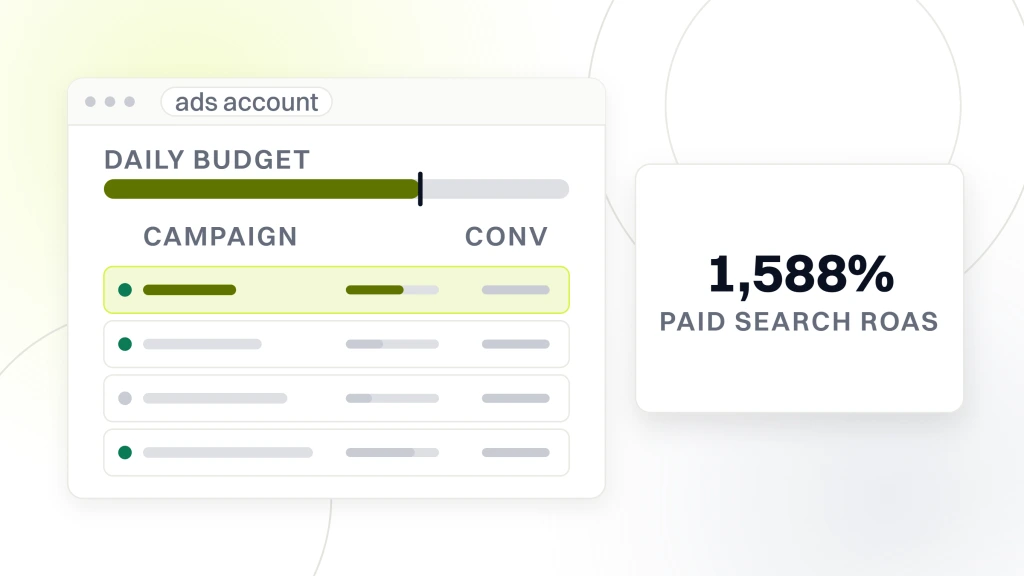
Abigail Ahern, a luxury home decor brand, split budget between Google Shopping, Meta Advantage+, and Pinterest. Ecommerce revenue lifted 179%. Paid search return on ad spend hit 1,588%. Paid social return on ad spend hit 3,000%. The brand ran the mix without a single discount banner, protecting premium positioning as paid channels grew the audience. Category and product pages were reworked for higher-intent search demand the brand was previously missing entirely.
Both results came from matching the platform stack to the category, not from adding every platform in month one. Both accounts also refreshed creative every 14 days on paid social and rebuilt the Google feed titles quarterly. Cadence is a compounding factor. Skip it and the same accounts stall.
Answers pulled from Google People Also Ask and top autocomplete queries on the best PPC platforms for e-commerce shortlist. Numbers cited match managed-account data and vendor benchmarks referenced above.
Get the best PPC platforms for e-commerce working on your store
Best PPC platforms for e-commerce brands in 2026 sit in a stack, not a ranked list. Google Shopping and Performance Max carry the intent-based workload for 80% of stores. Meta Advantage+ carries the prospecting and catalog retargeting workload for lifestyle and apparel. TikTok carries the discovery workload for beauty and skincare. Amazon carries the marketplace workload. Microsoft catches the incremental audience Google misses. Pinterest owns home decor and wedding categories. Running all six is rare. Running three or four is the working default.
Match the platform stack to your category before signing a retainer. Abigail Ahern grew ecommerce revenue 179% and paid-social return on ad spend to 3,000% by running the right three-platform mix, not by adding every channel at once. RAFZ Cirkulära Interiörer lifted conversions 28% by keeping the paid stack narrow and the site fast. Ask three vendors for line-item scopes, look for the platform mix they name upfront, and pick the one that names both bid strategy and creative refresh cadence in writing.
Redefine Web offers PPC retainers at $999, $1,499, $2,499, and from $4,500 per month, with ad spend billed separately. Every retainer names the platform stack, bid strategy, and creative refresh cadence in the scope. Explore the fixed-scope Ecommerce PPC Agency for DTC Brands package with the full platform stack included, plus a Google-first Google Ads Management Services program and a broader Ecommerce Marketing Agency for DTC and Shopify Brands retainer.