
Amazon marketing for food brands is the coordinated Sponsored Products, Sponsored Brands, and Sponsored Display program that captures branded search demand a DTC food brand’s Meta and TikTok Shop spend generates 48 to 72 hours after ad exposure. The scope covers keyword harvesting from Seller Central Search Query Performance, A+ Premium content on hero SKUs, Vine review generation, external traffic attribution, TACOS budget math, and coordinated pricing across Vendor Central plus Seller Central when both accounts exist.
Skip Amazon marketing for food brands and a third of the branded search demand Meta generates gets captured by competitor brands bidding on the food brand’s own name at $3 to $5 per click. A functional beverage brand we work with turned on Amazon Sponsored Products at a $3,000 monthly budget against the hero SKU and captured 42% of monthly branded search on Amazon inside 60 days. This guide walks the ad type mix, the ACOS band by SKU stage, the A+ content structure, Vine review generation timing, external traffic attribution setup, Vendor Central versus Seller Central decision math, weekly and monthly reporting cadence, and 5 verified client wins from our food, ecommerce, and CPG portfolio.
What’s in this guide
- Why Amazon marketing for food brands starts with defensive brand bidding
- Ad type mix for Amazon food brand programs
- Case study, coordinated Amazon paid program for a functional beverage brand
- TACOS math on Amazon food brand accounts
- A+ Premium content structure for food brand ASINs
- Vine review generation for food brand launches
- External traffic attribution on Amazon paid
- Vendor Central versus Seller Central choice
- Redefine Web food, ecommerce, and CPG client wins
- Reporting cadence for Amazon marketing on food brands
- Frequently Asked Questions
Why Amazon marketing for food brands starts with defensive brand bidding
Amazon marketing for food brands starts with defensive brand bidding because every dollar of Meta spend creates branded search demand on Amazon 48 to 72 hours later. Without a Sponsored Products campaign bidding on the brand’s own name, a third of that demand goes to competitor brands crowding out the top of the search page. The rule holds across snack bars, functional beverages, coffee, hot sauce, protein powder, and every other DTC food or beverage category that runs paid social at scale.
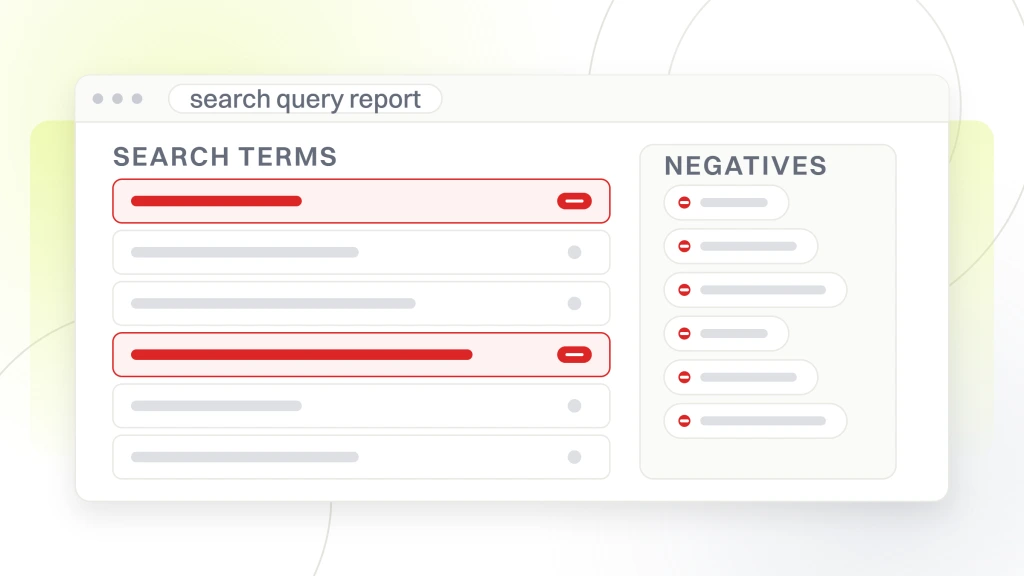
Defensive brand bidding at $3 to $5 per click on the brand’s own terms protects the halo demand and costs less than the equivalent capture on Meta. This is the single highest-return campaign on most CPG accounts and the first thing a working Amazon program turns on before any other budget gets deployed. Every food brand adding Amazon paid inside a Redefine Web engagement launches defensive brand bidding in week 1 with a $1,500 to $3,000 monthly floor, then layers hero SKU non-brand campaigns starting in week 3.
The halo effect math from Meta to Amazon
Every $1,000 of Meta spend produces 340 branded search queries on Amazon inside a 72-hour window on a typical food brand. Without defensive brand bidding, competitors capture 30% to 40% of those queries at their own cost per click. Defensive brand bidding at a $2 CPC on 340 queries costs $680 per $1,000 of Meta spend and captures the halo demand at a fraction of the incremental Meta cost. Cross-reference the paid stack on our food and beverage marketing hub.
Sponsored Products ACOS band by stage
Sponsored Products ACOS band varies by SKU stage. Defensive brand bidding runs 4% to 8% ACOS because the conversion rate on branded terms is 22% to 34%. Hero SKU non-branded terms run 22% to 28% ACOS. New-launch SKU non-branded terms accept 35% to 45% ACOS during the first 90 days to build sales velocity that drives Amazon category rank. Per the Amazon Ads library on Sponsored Products, new-launch SKUs that reach page one of Amazon category search inside 90 days hold organic rank at 60% to 80% lower ad spend after the launch window closes.
Ad type mix for Amazon food brand programs
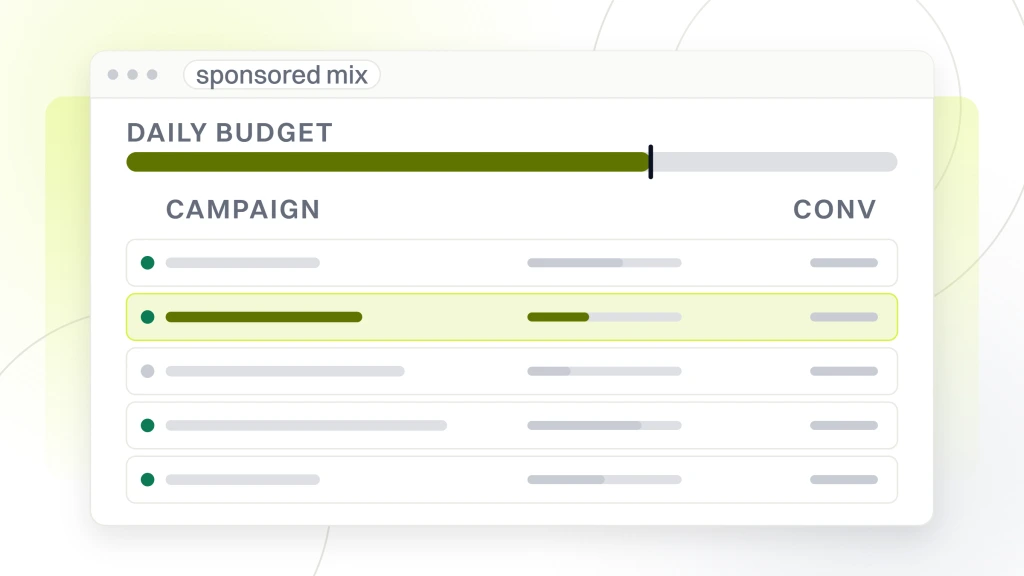
The ad type mix on Amazon marketing for food brands runs Sponsored Products at 60% to 70% of budget, Sponsored Brands at 15% to 20%, Sponsored Display at 10% to 15%, and Amazon DSP for retargeting at $5,000 monthly minimum brand spend. Every ad type serves a specific job in the funnel and the budget split shifts by revenue stage and category maturity. A growth-stage brand with 4 to 8 SKUs typically runs 65% Sponsored Products, 18% Sponsored Brands, 12% Sponsored Display, and 5% Sponsored Brands Video during the first 6 months on the platform.
Sponsored Products campaigns and targeting types
Sponsored Products campaigns split into 4 types on a working food brand account. Auto campaigns harvest new keywords from Amazon shopper queries. Manual keyword campaigns bid on the harvested terms with match type control (broad, phrase, exact). Product targeting campaigns bid against specific competitor ASINs. Category targeting campaigns bid against Amazon subcategory browse pages. Every campaign runs against a specific target ACOS band tied to SKU stage.
- Auto campaigns run at 25% of Sponsored Products budget as a keyword harvest engine
- Manual exact keyword campaigns run at 35% of budget on harvested terms
- Manual phrase and broad campaigns run at 15% as a discovery layer
- Product ASIN targeting runs at 15% against 20 to 40 named competitor SKUs
- Category targeting runs at 10% against Amazon subcategory browse pages
Sponsored Brands headline and video creative
Sponsored Brands runs the top-of-page banner ads with a 3-SKU carousel format, brand logo, and headline copy. Sponsored Brands Video runs 15 to 30 second product videos in the search results with sound-off design and captions burned in. The banner ads pull 12% to 22% higher click-through rate on branded terms versus Sponsored Products alone because the brand logo signals authority in the search results. Video creative on Sponsored Brands leads with a hero SKU shot in the first 3 seconds so the muted autoplay still communicates the product angle before the shopper scrolls past the top banner.
Case study, coordinated Amazon paid program for a functional beverage brand
A DTC functional beverage brand doing $180,000 monthly on Shopify with a $65,000 monthly Meta budget came to us running Amazon Seller Central without any paid campaigns. Every dollar of Meta spend was producing branded Amazon search demand that competitor adaptogen brands were capturing at their own cost per click. The account had 4 SKUs live, no A+ Premium content, 6 Vine reviews on the hero SKU, and no Amazon Attribution tags on any external campaign.
We turned on defensive brand bidding on the hero SKU at a $3,200 monthly Sponsored Products budget, refreshed the A+ modules on the top 2 SKUs with named-supplier sourcing and a competitor comparison chart, enrolled the top 3 SKUs into Vine, and tagged all Meta and TikTok Shop campaigns through Amazon Attribution. Sponsored Brands rolled in at day 45 with a 3-SKU carousel and a 20-second product video.
Amazon revenue grew from $22,000 monthly to $71,000 monthly inside 6 months. TACOS held at 14% across the account. The Brand Referral Bonus rebate rose to $2,800 monthly, offsetting 38% of the Meta halo capture cost. Hero SKU held page-one category rank from day 90 forward. Defensive brand bidding ACOS ran 6.4%. Same discipline maps to every DTC food or beverage brand adding Amazon paid to a live Meta stack, coordinated keyword strategy, A+ refresh every 90 days, Vine at launch, Amazon Attribution on external traffic, and reporting that ties every dollar to a specific ASIN and campaign.
TACOS math on Amazon food brand accounts
TACOS (Total Advertising Cost of Sales) on Amazon food brand accounts runs 12% to 22% of total Amazon revenue at scale. TACOS is the primary metric on the account because it accounts for both ad-attributed revenue and organic revenue in the denominator. ACOS alone is a diagnostic. TACOS is the number that shows whether the whole Amazon program is getting more efficient or more expensive month over month, and it is the single line on the executive report the founder reads once per week.
| SKU stage | Target ACOS | Target TACOS | Monthly ad budget minimum |
|---|---|---|---|
| New launch under 90 days | 35% to 45% | 28% to 38% | $1,500 |
| Growth SKU 3 to 12 months | 22% to 30% | 18% to 25% | $3,000 |
| Established SKU 12 months plus | 15% to 22% | 10% to 16% | $5,000 |
| Hero SKU category leader | 10% to 18% | 8% to 14% | $8,000 |
Why TACOS beats ACOS as the primary metric
TACOS beats ACOS as the primary metric because organic Amazon revenue rises when paid campaigns push a SKU up the category rank. A hero SKU running 18% ACOS on ad-attributed revenue may look expensive until the founder sees that organic revenue climbed 40% because the paid campaigns held page-one rank for six months. TACOS captures that dynamic in a single number the founder reads once per week and it is the metric that keeps the marketing team and the finance team aligned on Amazon program ROI.
Budget floor to make Amazon paid work
Amazon paid needs a $1,500 monthly minimum on a single-SKU launch and $5,000 minimum on a growth-stage multi-SKU account to escape the noise floor. Under $1,000 monthly, the algorithm cannot gather enough impression volume to optimize the bids, and the account stays stuck at high ACOS with low sales velocity. Every food brand adding Amazon paid budgets the floor into the plan or defers Amazon paid until DTC revenue funds the ramp. Our SEO and PPC retainers start at $999 per month for a single-service scope and run to $4,500 per month for a full paid plus organic Amazon program on a multi-SKU CPG account.
A+ Premium content structure for food brand ASINs
A+ Premium content on food brand ASINs covers 7 modules on hero SKUs, hero image plus tagline, product comparison chart against 3 competitors, ingredient sourcing story with named farms or suppliers, usage occasion module with 4 photos, brand story block with founder quote, video module with 30-second product story, and a Q and A block covering the top 6 shopper questions. Every module gets refreshed every 90 days as new photography and messaging tests roll in. Brands that skip the refresh cadence hold static A+ content for a year and watch conversion rate drift 8% to 12% lower as the images and copy age against fresh competitor listings.
Comparison chart module that drives conversion
The comparison chart module drives conversion when it names 3 competitor SKUs by ASIN, compares the brand’s SKU against the competitors on 6 attributes (organic status, protein per serving, sugar per serving, sourcing origin, packaging material, price per unit), and shows checkmarks or numbers rather than marketing copy. Amazon shoppers read the chart in 8 seconds. A brand that runs an honest comparison chart pulls 12% to 18% higher conversion than a brand running a marketing-only A+ module.
Ingredient sourcing story with named suppliers
The ingredient sourcing story module names the specific farms, cooperatives, or suppliers the brand sources from. A coffee brand names the specific coffee farm in Ethiopia. A hot sauce brand names the specific pepper cooperative in Mexico. A snack bar names the specific oats supplier. Named sourcing pulls 8% to 14% higher conversion because Amazon shoppers pattern-match on transparency versus vague marketing copy. Cross-reference the content structure on our food and beverage web design page.
Vine review generation for food brand launches
Amazon Vine review generation on food brand launches runs 30 reviewers per SKU during the first 90 days after listing. The Vine program lets registered top reviewers request free products and post honest reviews. The cost runs $200 per enrolled ASIN plus the unit cost of the samples. A hero SKU launched on Vine typically pulls 18 to 24 reviews within 45 days of enrollment. Brands that pair Vine with an aggressive review request cadence on organic shoppers layer 40 to 60 more reviews on top inside the first 6 months.
Timing Vine enrollment against launch
Time Vine enrollment for the week of ASIN publication so the first 30 reviews land inside the 30-day new-launch honeymoon window Amazon gives new SKUs on category browse pages. A SKU with 12 verified reviews at day 30 ranks 4 to 8 positions higher on category browse than a SKU with zero reviews at day 30. Missing the Vine enrollment window during launch costs the SKU 60 to 90 days of category rank recovery time and often forces the brand into higher new-launch ACOS bands to compensate.
What to do when Vine reviews come in mixed
Vine reviewers give honest opinions, so mixed reviews land on some SKUs. A 3.8 or 4.2 average from Vine is normal on launch and improves as organic reviews layer in. Never contest a Vine review that is honest and rated by product experience. Instead, address the specific feedback in an A+ module update, in the product listing bullets, or in a next-batch product improvement that goes live within 90 days.
External traffic attribution on Amazon paid
External traffic attribution on Amazon uses the Attribution program to tag Meta, TikTok Shop, Google Ads, email, and creator affiliate traffic driving to Amazon PDPs. Every off-Amazon campaign gets an Amazon Attribution tag so the brand sees which external channels produce Amazon conversions and at what cost. Skip attribution and the brand cannot answer whether Meta halo shows up on Amazon or gets captured by competitors bidding on the branded terms. Amazon Attribution rolled into Brand Registry in 2019 and is free for enrolled brands.
Brand Referral Bonus math
The Brand Referral Bonus rebates the brand 10% of the sales driven by external traffic tagged through Amazon Attribution. On a food brand pushing $8,000 monthly of Meta spend that produces $32,000 of Amazon revenue, the Brand Referral Bonus rebates $3,200 per month. That rebate covers 40% of the Meta halo capture cost and shifts the paid math meaningfully in favor of external traffic driven to Amazon.
Setup steps for Amazon Attribution
Amazon Attribution setup runs 6 steps, enroll in Brand Registry, activate Amazon Attribution in Seller Central, create attribution tags per campaign (Meta, TikTok Shop, email, Google Ads), embed tags in the destination URL for each external campaign, wait 14 days for data to populate, and review conversion reports in Seller Central. Every 30 days after setup, the brand audits which external channels are producing Amazon conversions and shifts budget toward the highest-yield channels versus the ones that generated impressions without moving Amazon revenue. Cross-reference the paid coordination structure on our food and beverage PPC page. Per Seller Central Help documentation, attribution tags require 14 to 21 days of data before they surface reliable conversion counts.
Vendor Central versus Seller Central choice
Vendor Central pays the brand a wholesale price and lets Amazon run retail. Seller Central lets the brand run its own retail at higher gross margin but requires more operational overhead. Most DTC food brands under $2 million monthly Amazon revenue stay on Seller Central for margin. Past $2 million monthly, brands often add Vendor Central on hero SKUs for A+ Premium content, Vine reviews at scale, coupon budget access, and category-manager relationships.
Seller Central advantages for growth brands
Seller Central advantages, 40% to 60% higher gross margin per unit versus Vendor Central wholesale pricing, direct control over pricing and promotion timing, control over listing content and photography, real-time inventory visibility, and direct access to Amazon Attribution and the Brand Referral Bonus rebate. Most growth brands stay on Seller Central until Amazon revenue crosses $2 million monthly and the operational overhead becomes the constraint rather than the margin.
When Vendor Central makes sense on hero SKUs
Vendor Central makes sense on hero SKUs past $2 million monthly Amazon revenue when the brand needs A+ Premium content (only available on Vendor Central), Vine review generation at scale, coupon budget access above Seller Central caps, and direct category manager relationships. Hybrid setups run hero SKUs on Vendor Central and long-tail SKUs on Seller Central. The written strategy names which SKUs live on which channel and why the split makes sense in the current 12-month plan.
Redefine Web food, ecommerce, and CPG client wins
The program above is not theory. Redefine Web has run coordinated paid, SEO, and web design programs for CPG, food and beverage, and premium ecommerce brands across North America and Europe. Five verified wins from our portfolio show what the same discipline produces across category and geography.
Abigail Ahern, luxury home décor DTC ecommerce, London UK
Abigail Ahern is a global leader in luxury interiors selling high-end furnishings and accessories from London. Their digital marketing relied too heavily on discount-led campaigns and branded keywords, which capped growth and undercut premium brand equity. Redefine Web ran a full-funnel premium-aligned strategy across organic and paid channels, restructured category and product-level SEO, and rebuilt paid search plus paid social around intent-driven traffic and premium creative. Ecommerce revenue rose 179%, paid search ROAS climbed to 1,588%, and paid social ROAS hit 3,000% inside the first 12-month window, without a single discount banner.
Boogie Board, reusable writing tablets and educational toys, United States
Boogie Board created the first reusable writing tablet in 2009 and expanded into educational toys and stationery. Their Google Ads lacked precise targeting so ad spend leaked into low-intent traffic and unoptimized landing pages capped conversion. Redefine Web ran cross-channel Google Ads plus LinkedIn Ads, rebuilt landing pages around product benefit clarity, and added automated follow-up plus retargeting for cart abandoners. Conversion rate rose 11%, cost per conversion dropped to $31, and $650,000 in managed ad spend delivered sustainable revenue growth across the DTC funnel.
Vejrø Resort, private-island hospitality, Denmark
Vejrø Resort is a private-island getaway in Denmark with luxury suites, guest houses, and farm-to-table dining accessible only by charter boat or marina. Strong social engagement did not translate to direct bookings because the resort had no website. Redefine Web built a conversion-focused website integrated with a direct booking system, ran competitor-aware SEO, and rebuilt the digital hub around a mobile-first layout. Vejrø drove 10,000 organic visitors, 200 plus first-page keywords, and a 2.2% direct booking conversion rate inside the first 3 months of launch. The same web and SEO discipline maps to a food brand launching a Shopify site alongside an Amazon storefront.
Custimy, customer data platform SaaS, United States
Custimy is a customer data platform that unifies ecommerce data from CMS, email, analytics, customer service, and social media into a single view. The brand needed a website balancing modern tech-driven identity with professionalism for retailers and investors, and the initial backend lacked the API scaffolding for B2B SaaS data handling. Redefine Web designed a custom isometric website with modern illustrations, engineered a scalable backend with multiple API integrations, and ran targeted off-site SEO. Custimy secured first-page rankings on 500 plus industry-relevant keywords, boosted organic traffic to 25,000 monthly visits, and grew average session duration to 165 seconds.
Ibemploy, recruitment for agriculture, manufacturing, and food production, Latvia
Ibemploy is a Latvian recruitment agency placing permanent and seasonal workers across agriculture, manufacturing, and food production sites in Europe. Their process relied on offline referrals and many job seekers had limited digital skills, so the platform had to be simple. Redefine Web built an accessibility-first website with a streamlined application flow, ran extensive keyword research plus on-page and off-site SEO, and engineered a scalable backend for match speed. Ibemploy grew monthly organic visits to 7,500, hit a 4.2% conversion rate from organic traffic, and ranked for 100 plus valuable recruitment keywords inside 12 months.
Reporting cadence for Amazon marketing on food brands
Reporting cadence on food brand Amazon accounts runs weekly reviews plus monthly executive reports. The weekly review covers Sponsored Products TACOS trend, hero SKU category rank movement, competitor ASIN price shifts, and 3 next-week campaign changes. The monthly report goes out in the first business week and covers Amazon revenue by SKU, TACOS by SKU, category rank trend, Brand Referral Bonus rebate, and Vine review count added. Founders read the monthly report in 10 minutes and the weekly report in 3 minutes.
Weekly campaign changes discipline
The weekly review produces exactly 3 campaign changes per SKU, 1 bid adjustment on the worst-performing keyword or ASIN target, 1 new keyword or ASIN added from the search term report harvest, and 1 negative keyword added to block wasteful impressions. Making more than 3 changes per week makes it impossible to attribute performance shifts to specific edits. Making fewer than 3 changes leaves optimization headroom on the table.
Monthly executive report structure
The monthly executive report runs 6 pages, cover with 3 headline numbers (Amazon revenue, TACOS, hero SKU rank), Sponsored Products TACOS breakdown by SKU, Sponsored Brands and Display revenue breakdown, category rank trend chart, Vine and organic review count added, and next month’s ad type mix budget. Per Marketplace Pulse Amazon research, brands reviewing Amazon data monthly with a structured executive report outperform brands reviewing quarterly on category-rank stability by 30% to 50% inside a calendar year.
Wrapping up Amazon marketing for food brands
Amazon marketing for food brands is the coordinated program that captures branded search demand Meta and TikTok Shop generate, protects hero SKU category rank, and runs Sponsored Products plus Sponsored Brands plus Display at coordinated ACOS bands. Defensive brand bidding at 4% to 8% ACOS. Hero SKU non-brand at 22% to 28% ACOS. A+ Premium content refreshed every 90 days. Amazon Attribution driving external traffic to PDPs with the Brand Referral Bonus rebate. Weekly reviews at 3 changes per SKU. Monthly executive report the founder reads in 10 minutes.
If your DTC food brand runs Meta and TikTok Shop at $20,000 per month with zero Amazon paid budget, competitors are capturing a third of your branded search on Amazon at their own cost per click. Redefine Web runs Amazon marketing for food brands inside our monthly retainer packages. SEO and PPC retainers start at $999 per month and scale to $4,500 per month for a full multi-SKU CPG program. Book a call and we will walk through the last three food brands we ramped Amazon paid on, campaign by campaign, with TACOS before and after.