Custom web portal development services turn a login screen into a real business system. Your customers stop calling for status updates. Your vendors stop emailing PDFs. Your employees stop pinging support for the same 6 answers a week. A well-scoped portal replaces the 3 hours a week your team loses to those interruptions. This guide is what you get, what it costs, and how our team at Redefine Web scopes one on the first call.
You will read the 7 portal types clients ask for most, how a customer portal differs from a vendor portal in scope, the pricing bands from $22,000 to $250,000, the stack picks that hold up in production, the .NET vs Node vs Laravel calls, why offshore custom web portal development services in India or UAE saves 30 to 60 percent with real tradeoffs, and a SaaS onboarding case study where the rebuilt portal drove activation up 300 percent in 30 days.
The 7 portal types custom web portal development services build most
The 7 portal types clients ask for most are customer portals, vendor portals, employee portals, patient portals, partner or investor portals, learning portals, and self-service knowledge portals. Every one has a different data model, a different auth pattern, and a different set of integrations. A vendor who quotes the same $60K number for all 7 is quoting a login form, not a portal. Naming the shape on the first call sets the scope for every downstream decision.
Customer portals are the most common ask and the easiest to over-scope. Start with self-service order status, invoice download, and a support ticket form. That covers 80 percent of the calls a customer makes to your team today. Vendor portals add a purchase-order upload, an accounts-receivable view, and a compliance document library. Patient portals add HIPAA-grade encryption, audit trails, and a scheduling module. Every extra shape adds 3 to 6 weeks of work on top of the customer-portal baseline.
7 scoping questions every vendor should ask on the first call
Which user roles will log in and what does each one need to do in the first 90 seconds. Which upstream systems hold the source-of-truth data and how does that data get in. Which downstream systems consume events from the portal and how often. What is the compliance floor (SOC 2, HIPAA, GDPR, PCI). What is the peak concurrent-user count in year 1 and year 3. What is the budget band and what is the hard launch date. Which internal team owns the portal after handoff.
Custom web portal development services pricing bands in USA and comparable markets
Custom web portal development services in USA and comparable markets run $22,000 to $250,000 depending on scope. Most custom web portal development services projects we build land in the $60,000 to $150,000 band. That range covers a real portal with 4 to 6 user roles, 3 to 5 integrations, hosted on managed infrastructure, and a 30-day hypercare window after launch. Below $22,000 you get a login form on a static site. Above $250,000 you get platform-level architecture with a dedicated squad.
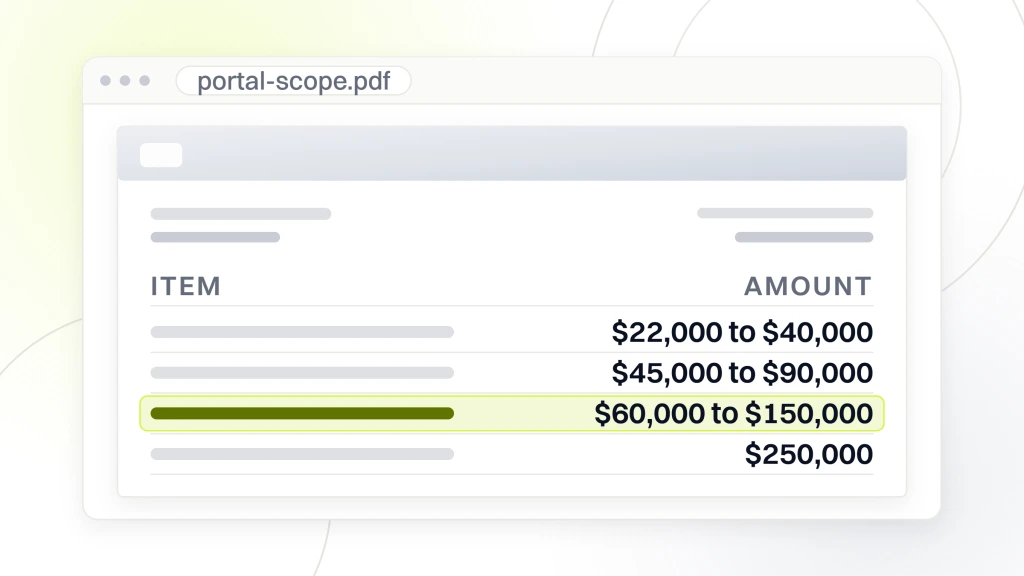
Offshore custom web portal development services in India or UAE quote 30 to 60 percent lower than US agencies. That savings comes with timezone gaps that add 24 to 48 hours per feedback cycle and cultural differences in stakeholder communication that add a scope reset every 4 to 6 weeks. Offshore wins when the scope is fully specified upfront. Offshore loses when the scope is emerging and the client needs synchronous conversations. Match the vendor to the shape of your project, not the other way around.
| Band | Portal type | Timeline | Best for |
|---|---|---|---|
| $22k to $40k | Single-role customer portal, 4 features, 1 integration | 8 to 12 weeks | Solo founder MVP, home services customer portal |
| $45k to $90k | Multi-role customer or employee portal, 6 features, 2 integrations | 12 to 16 weeks | Mid-market SaaS or ops portal |
| $95k to $180k | Multi-role vendor or patient portal, 8 features, 3 to 4 integrations, PM included | 16 to 24 weeks | Enterprise vendor or healthcare portal |
| $200k to $250k | Investor or partner portal, 10 plus features, 5 plus integrations, dedicated squad | 24 to 40 weeks | Regulated finance, PE-backed platforms |
Hidden costs vendors forget to name in custom web portal development services quotes
Hosting runs $120 to $2,500 per month for a portal depending on user count. Auth0 or Clerk for identity runs $150 to $2,000 per month. SendGrid or Postmark for transactional email runs $50 to $600 per month. Monitoring on Sentry or Datadog runs $30 to $500 per month. Backup and disaster recovery runs $80 to $400 per month. An honest custom web portal development services quote lists every one of these in a monthly-cost appendix so you know the operational bill.
Discovery cost is 10 to 15 percent of every band
Every honest portal quote allocates 10 to 15 percent of the total to discovery. That covers stakeholder interviews, workflow mapping, integration inventory, role model design, and a written scope document. Clients sometimes push back on paying for discovery. Skipping it is how projects blow past budget by 40 percent. The vendor rebuilds the same role gate three times in response to feedback that would have surfaced in a 40-minute interview on day one.
Tech stack picks for a custom web portal in 2026
Tech stack picks for custom web portal development services in 2026 come down to five calls. Next.js on the front-end covers 60 percent of the portals we build. React with Vite covers 25 percent. Vue with Nuxt covers 15 percent for teams with existing Vue expertise. On the back-end, Node with TypeScript on Fastify or Nest runs about half our portal work. Custom .NET web portal development services covers the .NET-native shops. Laravel covers PHP shops that want a mature framework and a big talent pool.
You do not need to pick the stack on the first call. Your vendor should recommend based on your team’s existing skills, your identity provider preference, and your hosting environment. The key point is that the stack follows the workflow, not the other way around. A vendor who leads with the stack on the first call is selling the tool, not the outcome. See MDN Web Docs on modern web development for the reference against which every stack pick gets evaluated.
Custom .NET web portal development services picks
ASP.NET Core is the winner for custom net web portal development services in enterprises with existing Microsoft stacks. You get first-class Active Directory and Azure AD integration, mature EF Core data access, and integrated Windows Server hosting for on-prem clients. Blazor covers the front-end when the team is deep on C#. React or Vue on top of an ASP.NET Core API covers the front-end when the team prefers a JavaScript client. Every .NET portal we build uses this exact pattern.
Node and Postgres picks for portal builds
Node with TypeScript on Fastify runs the back-end for most portal work we deliver. The shared language with the front-end team simplifies the hire pool. Postgres runs 90 percent of our database picks. Row-level security handles multi-tenant portal isolation cleanly. JSONB columns handle semi-structured user data without giving up transactional guarantees. Every Node portal we build uses Prisma or Drizzle for the ORM layer for the same reason.
Auth and security inside a custom web portal build
Auth and security inside a portal build cover 5 topics. Identity provider selection (Auth0, Clerk, Cognito, or custom). Password policy and MFA. Role-based access control. Audit logging. And session management. Every portal we build configures all 5 before the first user logs in. Missing any one of them creates a real risk that shows up in the first 90 days as a compliance finding or a user attack.
Identity provider selection is the pick you commit to for the life of the portal. Auth0 wins on enterprise features and SSO integrations. Clerk wins on developer velocity for SaaS portals. Amazon Cognito wins for AWS-native deployments. Custom-built auth wins in almost no case. Rolling your own creates security debt that compounds every year. Every portal we build uses a hosted identity provider. Every one saves the client 4 to 6 weeks of engineering effort versus a custom auth build.
MFA policy and rollout
MFA on portals should be opt-in with a strong nudge for regular users and mandatory for admins. TOTP apps like Authy or Google Authenticator cover 90 percent of use cases. SMS MFA is available for holdouts but should not be the default. SMS is the weakest MFA channel by a wide margin. WebAuthn is the modern winner for high-security portals with technical users. Every portal we build offers TOTP, SMS as a fallback, and WebAuthn for admins.
Audit logging discipline
Audit logs record who did what and when. Every portal we build logs every login, every permission change, every data export, and every high-value action to a separate append-only table. That log gets a 7-year retention policy for regulated industries and a 12-month retention for everyone else. Compliance auditors ask for these logs first on every audit we have supported. Missing them turns a routine audit into a finding and a finding into a customer escalation.
Integrations inside a custom web portal
Integrations inside custom web portal development services are where scope creeps most often. Every client mentions three integrations on the first call. By week 6, that list becomes 7. Every integration adds 3 to 15 days of engineering depending on complexity. Every one has to be scoped, tested, and error-handled. Every portal we build names the launch integrations in the SOW and treats every phase 2 integration as a separate change order priced on its own.
The winners on the integration side are CRMs (Salesforce, HubSpot), ERPs (NetSuite, SAP), HRIS (Workday, BambooHR), payment processors (Stripe, Braintree), and identity providers. Every integration falls into 1 of 2 patterns. Real-time via webhook when the source system supports it. Batch sync every 15 to 60 minutes when it does not. Every portal we build documents the pattern per integration so the on-call engineer knows what to check when a sync stalls.
Real-time webhook sync patterns
Real-time webhook sync means the source system fires an HTTP POST to your portal within seconds of a data change. Your portal validates the payload, updates the local cache, and emits a WebSocket message to any connected user. That pattern gives users the perception of live data without polling. Every webhook endpoint we build uses idempotency keys, retry logic, and a dead-letter queue for failed deliveries. Skipping any of these means data drift within 30 days.
Batch sync patterns for legacy systems
Legacy ERP and HRIS systems rarely support webhooks. You batch sync every 15 to 60 minutes via a scheduled job that pulls changes since the last sync. Every batch job we build tracks a high-water mark timestamp, handles pagination for large result sets, and writes a sync log to a monitoring system. Failed syncs page the on-call engineer within 15 minutes. Every legacy integration we build uses this exact pattern.
Offshore custom web portal development services in India and UAE
Offshore custom web portal development services in India and UAE quote 30 to 60 percent lower than US agencies. That savings is real. So are the tradeoffs. Timezone gaps of 8 to 12 hours mean async communication on every feedback loop, which extends the calendar by 20 to 40 percent even when raw engineering hours are lower. Language nuance costs an extra revision cycle on every scope document. Cultural differences in stakeholder communication cost 4 to 6 weeks over a 20-week engagement.
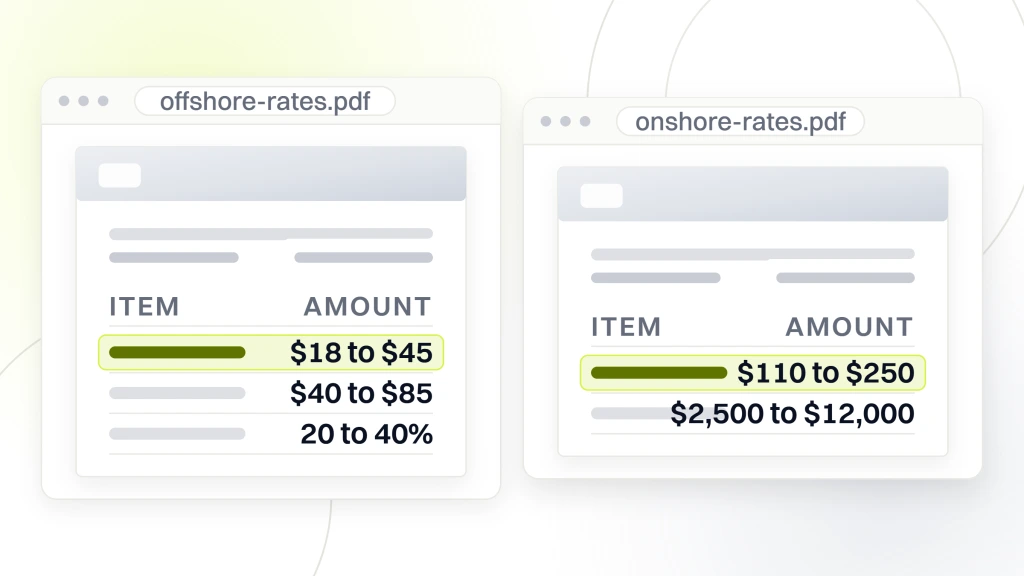
Offshore wins when the scope is fully specified upfront, the client has an internal PM who can front the timezone gap, and the workflow is well understood in the industry. Offshore loses when the scope is emerging, the client needs synchronous conversations to make trade-off calls, or the workflow is unusual enough that the offshore team has to guess at requirements. Match the vendor to the shape of your project. See our custom web development cost breakdown for the full price comparison.
India-based portal vendor tradeoffs
Custom web portal development services in India quote $18 to $45 per hour compared to $110 to $250 per hour in the US. The engineering talent pool is deep, especially on the .NET and Java sides. English proficiency is high in tier-1 cities like Bengaluru, Pune, and Hyderabad. The 10-hour timezone gap with US East Coast is the biggest logistical hurdle. Vendors who run a 4-hour overlap window per day mitigate the gap. Vendors who batch everything to a daily standup do not.
UAE-based portal vendor tradeoffs
Custom web portals development services in UAE quote $40 to $85 per hour and target Middle East and European clients as the primary market. The engineering talent pool is smaller than India but the timezone overlap with Europe and Africa is stronger. Data residency in Dubai or Abu Dhabi is a legal requirement for some Middle East government clients, which forces a UAE-based vendor pick even when the hourly is higher. Every UAE portal vendor we have partnered with has been strong on enterprise integrations and weaker on cutting-edge front-end frameworks.
Post-launch support and portal maintenance
Post-launch support is where portal projects succeed or fail long term. Every project we build includes a 30-day hypercare window covering priority-one bug fixes, minor feature tweaks, and integration stabilization. That window costs 5 to 10 percent of the total build and prevents 90 percent of the launch anxiety. Every serious custom web portal development services agreement includes hypercare as a line item, not a favor.
Past hypercare, ongoing support runs on a monthly retainer of $2,500 to $12,000 depending on complexity. That retainer covers minor feature additions, security patches, dependency updates, integration reconciliation on legacy syncs, and one round of design refinement per quarter. Every mid-market portal ends up paying about 15 to 25 percent of the initial build cost per year in ongoing maintenance. Budget for that from day one and the launch does not turn into a crisis in month 6.
Monitoring and error tracking
Sentry catches JavaScript errors. Datadog watches server performance. Uptime Robot pings the public endpoints every 5 minutes. Every portal we build configures all three before the first user logs in. That trio catches 95 percent of production issues within 15 minutes of them starting. See the web.dev Core Web Vitals reference for the metrics that monitoring dashboards track against on the front-end.
Security patching cadence
Dependency vulnerabilities show up in every portal within 90 days of launch. npm, NuGet, and Composer publish thousands of package updates every week. Every serious ongoing support contract runs weekly dependency scans, monthly patch cycles, and same-day patches for anything rated high or critical. Skipping this cadence is how portals end up in the news for a data breach two years after launch. Include it in the ongoing scope, not as an optional add-on.
A custom web portal development services case study
Rocket Software, Inc. came to us with a customer onboarding portal losing most of its trial signups before the second session. Only 7 percent of users installed the product within 30 minutes. Most never reached the moment where the product proved its value. The portal was a static dashboard with no personalization, the drip email sequence was misfiring, and the ops team had no signal on which behaviors mapped to retention. We scoped a targeted portal rebuild focused on the highest-drop-off 6 features.
Inside 30 days we plugged the rebuilt portal into the existing product, wired the event pipeline to Segment, and pushed the rebuild live. Rocket Software, Inc. drove activation rate up 300 percent in month one, hit 3,000 customers in launch week, and settled into 400 plus new subscribers per day post-launch. Every number came from a scoped 4-week portal rebuild focused on 6 features instead of a 6-month full rebuild. That focus is the shape of good portal work when the calendar is tight and the metrics are the deciding factor.
The 6 features that moved the primary metric
Three-step guided onboarding flow. Activation event tracking wired to Segment. Drip campaign engine triggered on activation gaps. Activation likelihood scoring model. Admin dashboard with cohort filters. Bulk export to CSV for the go-to-market team. 6 features. 4 weeks. 1 integrated release. That focus is what a good portal scope looks like when the calendar is tight and the metrics are the deciding factor.
A second SaaS portal build worth naming
Custimy came to us with a portal build blocked by 2 problems. The backend was thin, unable to integrate the APIs their product needed for real-time sales and customer data. And organic visibility was a flat line. We rebuilt the portal on a stack that supported the API load and paired it with a content and SEO program. The portal now sustains first-page rankings on 500 plus industry keywords, pulls 25,000 plus monthly organic visits, and holds an average session of 165 seconds. Real backend picks change what a portal earns in the market.
Scope your custom web portal development services project
Start with the 7 scoping questions above. Write your answers down. Send them to two vendors. Compare the proposals. The vendor whose proposal breaks the scope into portal types, names monthly hosting and third-party costs, quotes a discovery phase, and asks follow-up questions is the vendor you want. The vendor whose proposal quotes a flat number without breakout is quoting a website with a login form, not a portal.
Ready to scope custom web portal development services with a team that builds production software. Our custom web development services covers the full engagement. For the wider service context, see our web design and development services. For the base scope math, see our custom web application development services and custom web development cost. For authoritative reference on production architecture, see MDN Web Docs on server-side programming.