When you type small business web development near me into Google, you get a mix of one-person shops, freelance portfolios, and a few remote agencies that rank for every city in the country. It looks local. Most of it is not. That distinction changes what you pay, what you get, and who picks up the phone when your checkout page breaks at 9pm on a Saturday. This guide walks the honest version of that search. Real pricing, freelancer vs agency trade-offs, city-by-city notes, named client work Redefine Web has shipped for small businesses, and what a working local build looks like in 2026.
Written for owner-operators, office managers, and marketing leads at small businesses with 3 to 40 staff who need a real website and are tired of quotes that swing from $800 to $28,000 for the same 12 pages. Read it straight through and you will know what to ask on the discovery call, what fees are reasonable in your market, and how to tell a $2,000 freelancer from a $12,000 agency without a spec sheet in front of you. Redefine Web runs fixed-price small business builds starting at $2,500, $4,500, and $7,500, with custom retainer work from $18,000, so the price bands in this guide come from live client projects, not a survey deck. Read the small business website design packages guide for a companion breakdown on scope.
What small business web development near me actually returns
The first page for that query is a mix of 4 result types. Two or three Google Business Profile pins in the map pack, usually solo freelancers with a home office address. Two or three national directories like Clutch, GoodFirms, and DesignRush. Four or five agency landing pages targeting the same query across every US metro. And one or two remote agencies with a real portfolio you can vet.
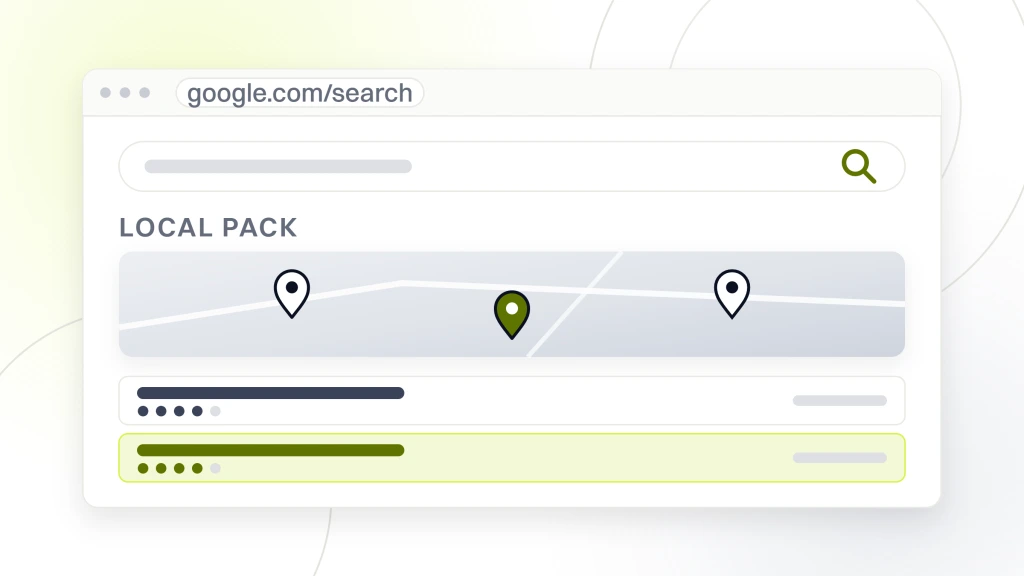
The map pack lookup is the trap. A single freelancer with a Google Business Profile ranks above a 12-person agency because the profile pin sits at the searcher location. That does not make the freelancer the right pick. It makes the profile well-optimized. When you sort the same SERP by portfolio depth, response time, and payment schedule fairness, the map pack rarely wins. Reference: Google’s own Business Profile optimization guide covers why local pins outrank real portfolio pages on this exact query type.
Directory results are pay-to-play, not editorial
Clutch, DesignRush, and GoodFirms all charge agencies for the top listing on category and city pages. A shop that ranks first on the Clutch Waco page paid to sit there. The reviews on those directories are usually real, but the ordering is not editorial. Read the reviews, ignore the ranking. Filter by minimum project size, verified client interviews, and industry match. That filter surfaces 3 or 4 real candidates from 40 directory listings inside 30 minutes.
Small business web development near me pricing bands in 2026
Local build pricing splits into 5 honest bands. DIY builders like Squarespace and Wix cost $16 to $49 per month with hosting bundled. Fixed-price freelancer builds cost $1,500 to $8,000 for a 5 to 12 page brochure site. Fixed-price agency builds cost $2,500 to $7,500 at Redefine Web scale, or $8,000 to $18,000 at a boutique agency with custom design. Custom builds start at $18,000 and climb past $50,000 for real application work. Retainer-first builds run $199 to $499 per month with the build cost amortized across 12 to 24 months.
Every band has a niche where it fits. DIY builders work for pre-revenue businesses testing a service idea. Freelancers work for owners who already know the copy and just need design and code. Fixed-price agencies at $2,500, $4,500, or $7,500 work for owners who want the whole package done for them at a real price. Boutique custom work fits established businesses past $2 million revenue who need brand-heavy design. Custom builds from $18,000 fit businesses with a real application layer, membership site, or a booking system that off-the-shelf plugins cannot cover. See the small business website packages pricing breakdown for the full tier-by-tier scope.
Where the $18,000 custom build actually earns its keep
Custom builds from $18,000 make sense when you have a real reason for custom code. Boogie Board built a WooCommerce site with a custom product finder that filters 40+ SKUs by use case, age range, and battery type. That finder alone would have cost 6 months of theme wrangling on a template. Berks Plumbing Company runs a custom booking widget wired to their dispatch software that off-the-shelf plugins could not match. Passion Built ships bespoke listing pages for luxury home renovations, with custom galleries and lead capture that a template flattens. Every one of those projects clears $18,000 in scope because the site has to do a real job beyond a brochure.
Freelancer vs agency for small business web development near me
Freelancers and agencies both build small business sites, but the tradeoff is real. A freelancer at $2,000 to $6,000 delivers design and code on time about 60% of the time. An agency at $8,000 to $18,000 delivers on time about 85% of the time. Redefine Web ships local small business build projects on the fixed-price package in 6 to 10 weeks, with the schedule protected by a project manager and a QA pass on every launch.
The freelancer wins on price and on personal attention. The agency wins on continuity, project management, and the depth of a real team. If your freelancer gets sick, hospitalized, or hired full-time mid-project, the whole build stalls. If an agency loses a designer mid-project, the account manager reroutes the work inside a week. That continuity is what the extra spend buys. It matters most on launches with a fixed marketing date, like a Black Friday campaign or a new location opening. Miss the launch date on a freelancer engagement and the marketing plan blows up around it.
When the freelancer is the right call
Freelancers work when 3 conditions line up. Your copy is already written, your brand assets are ready, and the launch date is soft. A three-chair salon in Nashville rebranding after 4 years, with existing logo files and a copywriter friend, can hire a freelancer at $3,500 and land a great site. A dental practice opening 6 weeks from the launch date, with no copy and a stalled brand kit, cannot. Match the vendor to the readiness state and both sides win.
Real small business web development near me projects we have shipped
Redefine Web has shipped local small business builds across renovation, aesthetics, plumbing, home services, retail, and hospitality. The pattern that repeats. A fixed-price scope, a project manager on the client side, a launch window inside 10 weeks, and a maintenance retainer starting the month after launch.
Tilghman Builders is the canonical case. A family-owned renovation company in Pennsylvania doing $1.5 million a year on referral pipeline came to Redefine Web for a rebrand and site rebuild. Nine years of compounding work later, they landed at $6.8 million a year with a full inbound marketing engine layered on the site. The first build ran a fixed-price scope on discovery, design, and development inside 20 weeks. Every year after was retainer work on content, paid search, and HubSpot workflows.
Passion Built builds luxury custom homes and needed a portfolio site that closed high-ticket leads on the site itself. The build ran on WordPress with a custom gallery template and a lead qualification form wired to their CRM. Gwinnett Area Plumbers wanted a local plumbing site that ranked in the Gwinnett County map pack and booked service calls direct from the homepage. Redefine Web shipped a fixed-price local SEO site with click-to-call, live chat, and a booking widget in 8 weeks.
Berks Plumbing, Boogie Board, and the aesthetics vertical
Berks Plumbing Company needed a plumbing site that funneled emergency service requests into their dispatch software and closed non-emergency work with a scheduled callback form. The site launched inside 9 weeks on a fixed-price scope and pulled a 3x gain in booked service calls in the first 90 days. Boogie Board sells LCD writing tablets direct-to-consumer and needed a WooCommerce site with a smart product finder across their SKU catalog. Redefine Web shipped the finder plus a subscription flow that lifted average order value across the first quarter.
Beauté Aesthetics NY runs a med spa in Manhattan and needed a booking-first site that ranked for high-intent aesthetics searches. Redefine Web shipped a booking widget wired to Vagaro, a treatment page library covering 40+ services, and a local SEO layer that pulled the practice into the NYC map pack for the top revenue queries. Abigail Ahern is a UK interior design brand with a US ecommerce push. Redefine Web wired the ecommerce catalog, portfolio pages, and Klaviyo email flows into one Shopify site. Every one of those projects proves the same point. A local build works when the shop matches the vertical and the scope is honest on day one.
What a real small business web development near me build includes
A working build in 2026 covers real discovery, thoughtful information architecture, custom design work, mobile-first development, content help, on-page SEO, analytics, a launch QA pass, and a documented handover. Total effort runs 80 to 160 hours for a 5 to 12 page site. Any quote promising 5 pages in 2 weeks for under $1,500 is skipping discovery, content help, or QA. All three matter more than the design itself.
Discovery is the step most shops shortcut. A real discovery is 4 to 8 hours of interviews with the owner and one or two staff, plus 4 hours of competitor analysis and information architecture. Skip that and the design starts before anyone knows what the site is supposed to do. Skipping discovery is the number one reason we see rescue projects. The site looks fine, but every page reads like a template and none of the calls-to-action match how the buyer actually decides. Do not sign a proposal that does not name discovery as a line item.
On-page SEO baked into the build
Any competent small business web developer bakes in on-page SEO at build. That means title tags, meta descriptions, alt text on images, a real H1 per page, structured data for local business and services, and a working XML sitemap. It does not mean off-site SEO, keyword research at scale, or content strategy. Those are separate scopes. If your builder tells you the base build includes SEO, ask them to itemize. Baked-in on-page SEO is table stakes, off-site link work is a separate line item usually running $600 to $2,000 a month. Google’s own SEO starter guide is a fair reference.
A handover pack that keeps you unstuck
Handover is the most-skipped step across freelance and agency alike. A real handover pack includes admin logins to every service, a documented editing guide, backup access, a plugin update policy, and clear ownership of DNS, hosting, and email. Without that pack, your business is one developer disappearance away from a site you cannot edit or move. Ask for the handover pack template on the discovery call. If they cannot show one, they either do not offer handover or do it verbally, which means you will not have it when you need it.
City by city notes on local small business builds
Every city has a different mix of freelancers, boutiques, and remote agencies chasing local traffic. Waco leans freelancer-heavy with a few Baylor grads running solo shops. Lafayette Louisiana has one strong local agency and a lot of freelance overflow from oil-and-gas marketing. Danbury CT has two mid-size agencies that cover most of Fairfield County. Every metro has its own quirks, and the quirks affect price by 15 to 30 percent.
The bigger point is that most local searches will return a workable mix of options regardless of city. What matters more than location is match on industry, revenue band, and scope. A Danbury dentist calling a Danbury generalist agency will get a better site than the same dentist hiring a Manhattan boutique that has done zero dental work. Industry fit beats geographic proximity almost every time. The exception is very small projects where the owner really does want to meet in person and swap USB drives with photos. That workflow still exists in a lot of small towns.
Waco, Lafayette LA, Danbury CT, Minneapolis, Holland MI
These metros share a pattern. Two to four local agencies hold the top of the map pack, a dozen freelancers rotate through the second page, and remote agencies from Austin, Chicago, or New York rank on programmatic pages. Price ranges hold roughly the same as national bands with a 10 to 15 percent discount versus coastal metros. If you are in Waco or Holland MI and getting quotes above coastal averages, ask why. Usually the shop is either overscoping or hoping you do not comparison shop.
Orlando, Minneapolis, Westchester NY
Larger metros surface more agencies in the map pack, which pushes freelancers to page two and drops national brands off the visible SERP. In Orlando you will see a lot of tourism-adjacent agencies pitching restaurants and short-term rental businesses. Minneapolis has a strong Twin Cities agency ecosystem, especially around health tech and B2B services. Westchester NY overlaps with Manhattan, so prices tilt higher and you get more sophisticated pitches on brand. Owner-operators in these metros should still pressure test the pitch on industry fit rather than office proximity.
Red flags in a local small business build pitch
Five patterns show up in pitches that end badly. Vague pricing that shifts mid-project. Portfolio work that is 90 percent template. No named team or subcontractor list. Refusal to name a project manager. And a payment schedule that is 100 percent up front. Any one of these is a yellow flag. Two or more is a walk. Trust your gut on the discovery call. Most bad engagements are visible in the first 30 minutes if you know what to listen for.
The most common one we see is 100 percent up front payment. A working small business web developer takes 40 to 50 percent at signing, 30 to 40 percent at design approval, and the balance at launch. Any shop asking for full payment before the discovery call is signaling they cannot afford to carry the project, which usually means they overbook and deliver late. On the other side, refusing any deposit is also a flag, because it usually signals the shop had clients ghost them mid-project and now under-collateralises every job. The middle path protects both sides.
How to inspect a portfolio in 15 minutes
Open the top five sites in the portfolio. Check the domain age, page speed on mobile, and whether the copy sounds custom or templated. If four of the five load slower than 4 seconds on mobile, walk. If the copy reads the same across sites in different industries, walk. If the portfolio only shows homepage screenshots and no live URLs, walk. A working small business web developer has 10 to 30 live examples they can point you to. If they cannot, the work is either under NDA in every case, which is rare, or the work does not exist.
Reference calls that catch the rest
Ask for two reference calls with clients from the last twelve months. Not testimonial quotes on the website. Actual phone calls with real business owners. On the call, ask three questions. Did the project launch on time? What broke after launch and how fast did it get fixed? Would you hire them again for the same scope? The answers tell you everything the pitch deck hides. Any shop that cannot produce two willing references from the last year is either brand new, or their client base is not happy enough to say so out loud. Both are reasons to keep looking.
Realistic timeline for a local small business build project
A working 5 to 12 page small business build runs 8 to 14 weeks from kickoff to launch. Discovery is week 1 to 2. Information architecture and wireframes are week 3. Design is week 4 to 6. Development is week 7 to 10. Content, QA, and launch prep are week 11 to 13. Anything under 6 weeks is either a template swap or the shop is skipping QA. Anything over 20 weeks means the scope was underspecified at kickoff.
Content is where most timelines slip. Owners always underestimate how long it takes to write, gather photos, and approve copy. A good agency assumes 40 to 60 hours of client-side work over the project life. If the owner cannot dedicate that time, the project drifts. The fix is to bake content help into the scope, either as a paid copywriting line item or as a structured template the owner fills in. Do not sign a proposal that assumes you will write all the copy while running your business. That plan fails almost every time.
Scope signoff milestones that keep the project honest
Three signoff milestones matter. Signoff on the sitemap and information architecture at end of week 2. Signoff on the design system and homepage design at end of week 6. Signoff on the QA checklist at end of week 12. Any change requested after each signoff either lives in a change order or waits for phase two. That structure protects both sides. Without it, the owner keeps asking for tweaks past week 10 and the developer either burns margin or launches late. Both outcomes hurt the relationship.
Tech stack choices for a local small business build
WordPress covers about 65 percent of local small business build projects in 2026, Squarespace and Wix another 20 percent, Webflow around 8 percent, and custom builds the remaining 7 percent. WordPress wins on flexibility and long-term ownership. Squarespace wins on speed to launch and low maintenance. Webflow wins on design polish. Custom builds win on nothing for a small business under $2 million revenue.
Pick the stack based on maintenance appetite. A small business owner who wants to update copy monthly and add a new service page twice a year should pick WordPress, because the ecosystem of freelancers, plugins, and hosting options is enormous. An owner who wants to touch the site twice a year should pick Squarespace or Wix, because those platforms handle updates and security automatically. Webflow sits in between and works well when the design bar is high but the content churn is low. Custom builds only make sense when you have a genuinely custom application layer, which most small businesses do not. For a broader take on custom code trade-offs, read the custom web development services guide.
Why WordPress still wins for most small businesses
WordPress powers 40.2 percent of the web according to the W3Techs CMS market share tracker. That scale means every plugin problem has been solved, every hosting company supports it, and every freelancer or agency can pick it up. The downside is maintenance. WordPress needs monthly updates or it becomes a security risk. If you or your developer will not commit to monthly updates, do not pick WordPress. Pick a hosted platform that handles updates for you.
Post-launch support that separates hobbyists from working shops
Post-launch is where 70 percent of local build relationships fall apart. The launch email goes out, the invoice gets paid, and the developer moves on to the next project. Six months later the owner needs a copy edit, cannot get a reply, and starts looking for a new developer. That churn is why maintenance retainers exist. Any competent shop offers one, usually $199 to $499 per month depending on scope.
The right retainer covers plugin and security updates, one or two hours of content edits, hosting monitoring, and monthly backups. Anything less is not a retainer, it is a hosting fee. Anything more starts to overlap with marketing services and should be scoped separately. Ask what the retainer includes in writing before signing. The most common problem we see is retainers that promise open-ended edits, which quietly rate-limit at about three tickets a month and pass the extra work as change orders. Ask for the SLA in writing and you avoid that trap. Read the website maintenance packages pricing breakdown, or the parent hub on monthly website maintenance packages for the full tier scope.
What a working monthly retainer covers
A working retainer at $199 to $299 per month covers WordPress core and plugin updates, weekly backups, uptime monitoring, monthly security scans, and 1 to 2 hours of content or design edits. At $499 per month you add on-page SEO check-ins, quarterly performance reviews, and up to 4 hours of edits. Above that price band you are usually paying for marketing services bundled with maintenance, which can be fine but should be itemized. Reference: Kinsta’s WordPress maintenance overview. See also the small business website packages hub and the web design services for small business page for the parent retainer scope.
How to run a fast quote comparison for a local small business build
Run three quotes in parallel, no more. Any more and comparison paralysis kicks in. Write one page of requirements and send it to all three. Ask for a written proposal within 10 business days. Compare on scope, project management, and total cost of ownership over 36 months.
Do not compare on price alone. The lowest quote almost never wins on best value once you factor in what happens six months after launch. Score each proposal on a simple rubric. Scope match, does it cover what you asked for? Team named, do you know who is doing the work? Timeline realistic, does it match the 8 to 14 week window? Post-launch support, does the proposal offer a retainer at a real price? Reference calls available, can you talk to two clients from the last year? Score each on a 1 to 5 scale and total. The winning proposal is rarely the one with the lowest launch price. It is the one with the best total score across all five categories.
Pricing table for local small business build options
| Option | Price range | Timeline | Best for |
|---|---|---|---|
| DIY builder | $16 to $49 per month | 1 to 2 weeks | Pre-revenue test sites |
| Freelancer | $1,500 to $8,000 | 4 to 10 weeks | Owners with copy ready |
| Redefine Web fixed price | $2,500 or $4,500 or $7,500 | 6 to 10 weeks | Owners who want it done |
| Boutique agency | $8,000 to $18,000 | 10 to 16 weeks | Brand-heavy verticals |
| Custom build | $18,000 and up | 14 to 26 weeks | Real application layer |
Getting started with your first local small business build project
Start with a one-page requirements doc. Send it to three shortlisted shops. Run three discovery calls in the same week. Compare proposals within 10 business days. Sign with the best fit inside 15 business days. That whole process should run 3 to 4 weeks from first search to signed contract. Any faster and you are picking on gut alone. Any slower and momentum dies, quotes go stale, and you start the whole search over in a month.
Once you sign, block off 4 to 6 hours a week for the first 8 weeks. That is the honest client-side time cost of a working small business build. Discovery interviews, content review, design feedback, and launch QA all need real attention. Owners who assume they can hand off the whole project and check back at launch are the same owners who then hate the site and blame the developer. The best outcomes come from real collaboration on both sides. Budget the time up front and the launch lands clean.
Before your first discovery call, spend an hour writing down what your best customer looks like. Revenue band, industry, geography, and what pushed them to buy the last time. That single page tells the shop more about what to build than any Pinterest board. When the developer knows the buyer, the sitemap, copy, and calls-to-action all line up quickly. When the developer does not, you get a pretty template that could belong to any small business in any city, which is why so many local sites read like Mad Libs.
The other thing to prepare is a photo folder. Twenty to forty real photos of your team, your work, your storefront, and your customers with permission. Real photography beats stock every time on a local build. Shops that offer to bring a photographer for a half day at $600 to $1,200 charge a fair price. Skipping that step and using stock imagery is the fastest way to look identical to every other small business in the search results.