
Digital Marketing for Ecommerce: Complete Guide
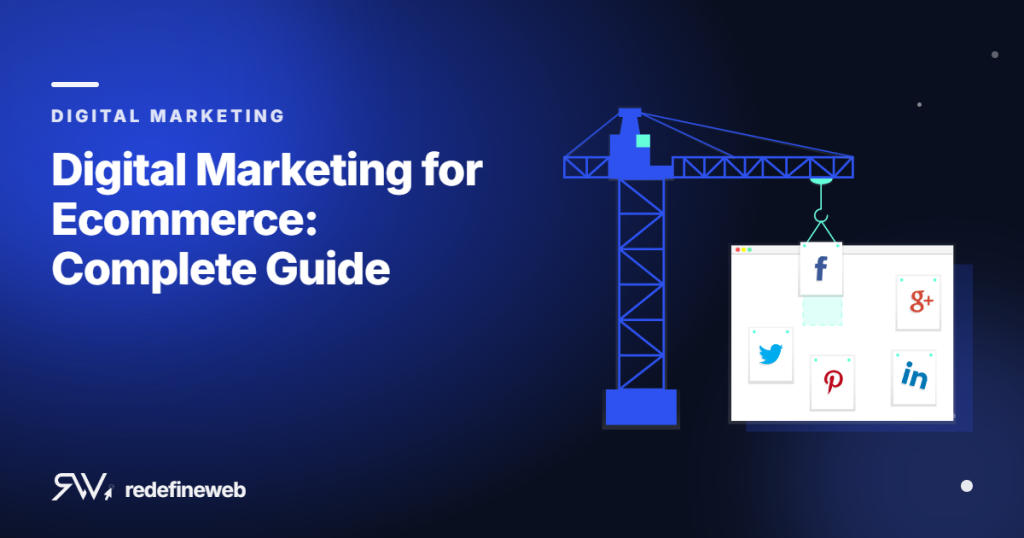
Digital Marketing for Ecommerce. Complete Guide
Digital marketing for ecommerce covers every online channel and tactic that drives traffic, converts visitors, and keeps customers buying. This guide covers the full picture: how each channel works, how to prioritize them, and how to build a program that drives consistent, profitable growth for your store.
Why Ecommerce Needs a Multi-Channel Digital Marketing Approach
No single marketing channel can do everything an ecommerce store needs. Paid search captures buyers with immediate purchase intent. SEO builds long-term organic traffic that doesn’t vanish when you pause a campaign. Email drives repeat purchases from your existing customer base. Social media builds brand awareness and product discovery. Each channel serves a distinct function in the customer journey.
Brands that rely on a single channel are fragile. Stores built entirely on paid Facebook ads suffered massive disruption when iOS 14 changed tracking. Stores built entirely on Google Shopping got hit by policy changes and category restrictions. Diversification across channels creates resilience and compound growth: each channel reinforces the others.
The goal is not to run every channel simultaneously with limited resources. It’s to build channels in priority order, prove performance in each, and expand deliberately. Most ecommerce brands start with paid search to generate immediate revenue, add SEO to build long-term organic growth, then invest in email to maximize value from the customer base being built.
Search Engine Optimization for Ecommerce
Organic search is the foundation of sustainable ecommerce growth. When your product and category pages rank on page one of Google, they generate qualified traffic around the clock without ongoing ad spend. The investment is in the SEO work itself: technical optimization, content creation, and link building. Once rankings are established, the traffic cost is near zero.
Ecommerce SEO focuses on three priority areas. Technical SEO ensures Google can crawl and index your pages efficiently, handling challenges unique to large catalogs like faceted navigation, duplicate content from URL parameters, and crawl budget management. On-page optimization makes individual product and category pages as relevant as possible for target keywords. Off-page SEO builds the domain authority that allows your pages to rank competitively.
Category page SEO is particularly high-value. A category page ranking for “women’s running shoes” in your region drives broad, high-intent traffic to a page that funnels shoppers into your specific product range. Investing in category page content, schema markup, and internal link structure pays off across every product in that category.
Paid Search and Google Shopping
Paid search delivers revenue from day one. For new stores without organic rankings, it’s the primary source of immediate traffic. For established stores, it captures high-intent buyers and supplements organic rankings for competitive terms.
Google Shopping campaigns show product images, prices, and ratings directly in search results. A shopper searching “blue denim jacket women” sees a row of products with prices from competing stores. Appearing in those Shopping results with a strong product image, competitive price, and positive reviews pulls qualified clicks.
Profitable paid search requires disciplined bid management, negative keyword lists that prevent irrelevant spend, and product feed optimization that ensures Shopping ads show for the right queries. Without these, ad spend burns fast with poor return. With them, paid search runs profitably at scale.
Email Marketing Strategy for Ecommerce
Email marketing generates between $36 and $45 for every dollar spent, making it the strongest-returning channel in ecommerce digital marketing. The returns come from two sources: automated flows that generate revenue passively, and broadcast campaigns to your full list.
Automated flows are the priority. A cart abandonment sequence targeting shoppers who added items but didn’t purchase typically recovers 5% to 15% of abandoned carts. A welcome sequence introduces new subscribers to your brand and best products. A post-purchase sequence encourages reviews, drives repeat purchases, and builds loyalty. These flows, once built, generate revenue without ongoing effort.
Broadcast campaigns supplement the automated flows with timely promotions, new product announcements, seasonal campaigns, and curated collections. The effectiveness of broadcasts depends heavily on list health and segmentation. Sending every campaign to your full list works early on but requires segmentation as the list grows to avoid unsubscribes from subscribers who aren’t interested in specific categories.
Social Media Marketing for Ecommerce
Social media marketing for ecommerce serves different functions depending on the platform and whether you’re running organic content or paid campaigns. Organic social builds brand identity and community. Paid social drives traffic and sales.
Meta ads remain powerful for ecommerce despite iOS privacy changes. Dynamic product ads serve relevant products from your catalog to past visitors, recovering browsing sessions that didn’t convert. Prospecting campaigns build brand awareness among audiences with similar profiles to your existing customers. The key is strong creative: ads that stop the scroll, communicate a clear value proposition, and match the platform’s visual style.
TikTok has emerged as a genuine ecommerce driver for brands with products that demonstrate well in short video. TikTok Shop and TikTok ads perform best for brands whose products benefit from demonstration: food, beauty, fitness, home improvement. For products that require more considered purchase decisions, TikTok builds awareness that other channels convert.
Content Marketing and Blogging for Ecommerce
Content marketing for ecommerce serves dual purposes: it attracts top-of-funnel traffic from shoppers in the research phase, and it builds the topical authority that strengthens all your organic rankings. A store selling outdoor gear that publishes comprehensive guides on camping, hiking, and gear selection ranks better for gear-related keywords across the board.
Buying guides are the highest-converting content format for ecommerce. A guide titled “How to Choose a Sleeping Bag” attracts searchers who are close to purchasing, answers their decision questions, and links naturally to the relevant product category. These pages can rank for multiple research queries while funneling readers directly toward purchase.
Comparison content targets buyers who are evaluating between options. “Sleeping bag vs. sleeping quilt” content captures comparison searches and positions your brand as an objective source while showcasing the advantages of your products. This content is particularly valuable because comparison searchers are typically close to making a purchase decision.
Conversion Rate Optimization
CRO improves the percentage of visitors who complete a purchase. Most ecommerce sites convert between 1% and 4% of visitors. Moving from 1.5% to 2.5% conversion rate is a 67% revenue increase without spending a single additional dollar on traffic acquisition. For most ecommerce stores, CRO is the highest-leverage investment available.
CRO starts with measurement. Heatmaps show where users click and scroll. Session recordings reveal where customers hesitate or abandon. Funnel analytics identify where in the purchase flow the most visitors drop off. This data directs attention to the highest-impact problems first.
A/B testing validates improvements before committing to them. Testing a simplified checkout against the existing multi-step flow, or testing a product page with video against one without, generates data about what actually improves conversion rather than what seems like it should. CRO based on testing outperforms CRO based on intuition.
Influencer and Affiliate Marketing for Ecommerce
Influencer marketing connects your products with established audiences through trusted voices. For ecommerce, the most effective influencer relationships are with niche creators whose audience matches your customer profile, not necessarily those with the largest follower counts. A cooking influencer with 50,000 engaged followers generates stronger sales for kitchen products than a lifestyle influencer with 2 million general followers.
Affiliate marketing scales influencer economics into an ongoing program. Affiliates earn a commission on sales they drive, aligning their incentives with yours. Managing an affiliate program requires tracking infrastructure, clear commission structures, and active management of affiliate relationships. When done well, affiliate marketing delivers scalable revenue at a predictable cost.
Customer Retention Marketing
Acquiring a new customer costs five to seven times more than retaining an existing one. Ecommerce brands that focus heavily on acquisition while neglecting retention are running on a leaky bucket. Customer retention marketing fills that bucket by turning one-time buyers into repeat customers and brand advocates.
Loyalty programs give customers a reason to return. Points systems, tiered rewards, early access to new products, and exclusive member pricing all create incentives for repeat purchase. The most effective loyalty programs are simple enough to understand immediately and valuable enough to change buying behavior.
Post-purchase marketing goes beyond the transactional confirmation email. Order status updates, delivery confirmation, product care tips, and personalized recommendations based on purchase history all keep your brand present in the customer’s mind and create opportunities for the next sale.
For a deep dive into building out each of these channels, read our digital marketing for ecommerce resource library or contact us to talk through your store’s specific situation.
Analytics and Performance Measurement
Digital marketing for ecommerce is only as good as its measurement. Without accurate attribution data, you can’t tell which channels are working, which campaigns to scale, and which to cut. Google Analytics 4 with proper ecommerce event tracking is the baseline. Layer in platform-specific data from Google Ads, Meta Ads, and your email platform for a complete picture.
Customer lifetime value is the metric that most changes how ecommerce brands should allocate marketing budget. When you know that the average customer makes 3.2 purchases over 18 months with an average order value of $85, you know you can profitably spend more to acquire them than a single transaction would justify. Brands that measure LTV make better acquisition decisions than brands that optimize for first-purchase profitability.
Frequently Asked Questions
What digital marketing channels work best for new ecommerce stores?
New ecommerce stores should start with paid search and Shopping ads to generate immediate revenue while building brand recognition. Simultaneously, set up basic email flows: welcome sequence and cart abandonment. These two investments deliver the fastest returns. Add SEO as a parallel investment that builds over 6 to 12 months. Social media can start organically and scale to paid once the brand identity is established and initial revenue is flowing.
How long does it take for ecommerce digital marketing to produce results?
Paid search produces results within days. Email automation produces results within weeks of setup. SEO typically takes 3 to 6 months to generate meaningful ranking improvements and 6 to 12 months to drive significant organic traffic. Content marketing follows a similar timeline to SEO. Expect a 90-day window before making major judgments about any channel’s performance, since most need time to accumulate data and optimize.
Should I focus on acquiring new customers or retaining existing ones?
Both, but in balance. Early-stage stores need acquisition to build their customer base. As the customer base grows, retention becomes increasingly important because repeat customers cost less to sell to and typically spend more per order. Most ecommerce brands should target 20% to 30% of revenue from repeat customers within two years. If your repeat purchase rate is below that, retention deserves more investment relative to acquisition.
How do I track digital marketing performance across multiple channels?
Google Analytics 4 with enhanced ecommerce tracking is the reporting hub. Connect your Google Ads, Meta Ads, and email platform for cross-channel data. Use UTM parameters consistently across all campaigns so traffic sources are correctly attributed. Review channel performance monthly against your target metrics: revenue per channel, acquisition cost, conversion rate, and return on ad spend. Set up a simple dashboard that shows all channels side by side for quick comparison.
What is the biggest digital marketing mistake ecommerce brands make?
Spending on traffic acquisition before fixing conversion problems. Driving paid traffic to a site with a 0.5% conversion rate and a broken mobile checkout burns budget without building sustainable results. Audit your conversion rate, checkout flow, and page speed before scaling any paid channel. Even small conversion rate improvements compound across all your traffic and make every acquisition channel more profitable.
Book your free 30-minute strategy call.
No spam, no sales rep. We use your email to schedule your call with a senior strategist. That is it.
More from the blog
View all articles → Digital Marketing
 Do You Need a Beauty Social Media Marketing Agency?
Read article Digital Marketing
 How Emerging Beauty Brands Should Choose a Marketing Agency
Read article Digital Marketing