B2B Google Ads for lead generation looks simple from the outside. You pick keywords, you write ads, you send traffic to a form. Then the CFO asks why cost per lead is $340 and only two of the last forty leads picked up the phone. If you’re running B2B Google Ads for lead generation and the pipeline number doesn’t match the leads number, the account is probably targeting the wrong intent, missing offline conversions, or sending clicks to a page built for consumer traffic.
This post covers the setup our team runs for B2B accounts. You get a keyword intent framework for B2B Google Ads for lead generation that filters out the tire kickers, an offline conversion setup that closes the loop between Google Ads and your CRM, an audience stack that finds the buyer inside the buying committee, and a reporting cadence that keeps sales and marketing pointed at the same number. Every section maps to work we’ve done on real accounts spending $8K to $180K per month.
Landing pages built for B2B buyers, not consumers
Landing pages for B2B Google Ads for lead generation campaigns are the piece most agencies get wrong. A B2B buyer doesn’t scroll a consumer-style hero, three benefit tiles, a testimonial slider, and a form. A B2B buyer wants proof, pricing signals, and a low-friction next step. Everything else on the page competes with the CTA and drops your conversion rate by 20 to 60 percent.
Every high-converting B2B landing page we run has the same skeleton. A headline that names the buyer’s pain and the outcome. A subhead with a proof number. A hero form or CTA above the fold. A three-column proof strip with real customer logos. A short section on how the solution works. A case study snapshot with a specific number. A second CTA. An FAQ block that handles the objections your sales team already hears every day. That’s it. No sliders. No autoplay video. No stacked testimonials that push the form off the screen.
Form length calibrated to lead quality
Long forms filter tire kickers. Short forms grow volume. Which one you want depends on your sales team’s capacity. If sales can handle 60 demos a month, run a 3-field form and let volume climb. If sales is drowning in low-fit leads, add 4 to 6 qualifying fields including company size, role, and timeline. Adding 4 fields typically cuts form fills by 25 to 45 percent and raises qualified lead rate by 60 to 120 percent. The trade off is usually worth it for B2B where sales time is the constraint.
Page speed that keeps quality score up
Landing page speed is a direct input to quality score, and a slow page can add $2 to $8 to your CPC on competitive B2B queries. Target Largest Contentful Paint under 2.0 seconds on mobile. Compress hero images to WebP under 80 KB. Remove third-party scripts from the initial paint. If you’re running a marketing page builder like Unbounce or Instapage, audit the injected scripts because most vendor page builders load 800 KB to 2 MB of JavaScript that you never see and never need. Google Search Central has a solid primer at Core Web Vitals, and the Google Ads help center covers bidding logic at smart bidding fundamentals. For offline conversion setup, see the offline conversions guide.
Budget planning for B2B Google Ads for lead generation campaigns
Budget planning for B2B Google Ads for lead generation is not about picking a spend and hoping. It’s about matching spend to the sales team’s demo capacity and the deal-size math. Overspend and you drown sales in low-fit leads that hurt sales morale and burn cash. Underspend and you never gather enough conversion data for smart bidding to work.
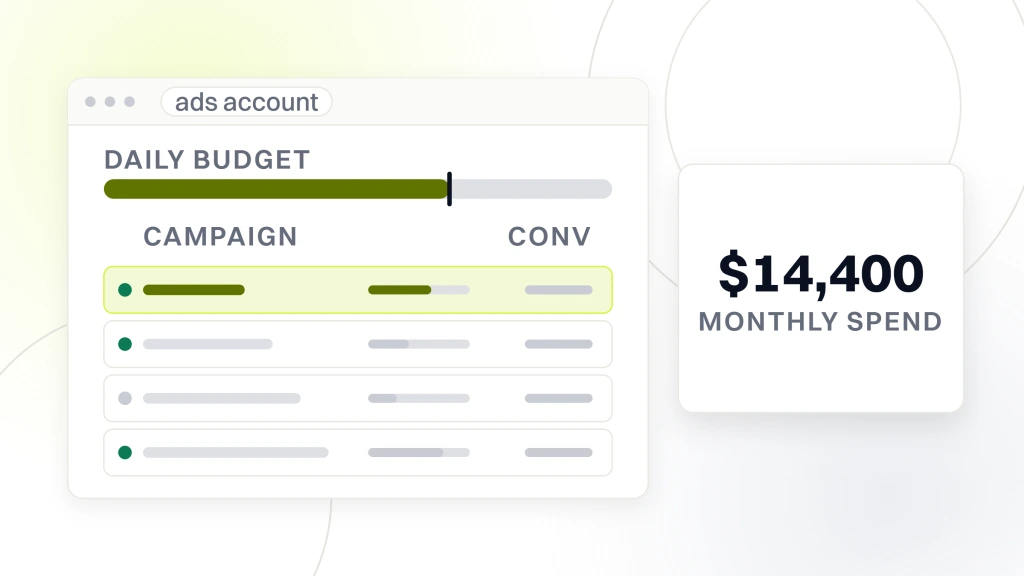
The math you want is total monthly spend divided by target cost per qualified lead. If sales can absorb 40 demos a month and your qualified lead rate off Google Ads is 22 percent, you need about 180 form fills. If your target cost per form fill is $80, your spend budget is $14,400 per month. Below that number, you starve smart bidding of conversion data. Above that, you starve sales of capacity. Get both sides of the math right and the account scales cleanly.
The minimum viable B2B ad spend
Google Ads smart bidding needs 30 to 50 conversions per month per campaign to work well. For a B2B account with a $150 target cost per lead, that means $4,500 to $7,500 per month per campaign as a floor. Accounts under $3K per month usually can’t generate enough conversion data for smart bidding to optimize and end up bouncing between manual bidding and half-trained automated strategies. If your total budget is under $5K, run one campaign, not four, and consolidate conversions into a single conversion action so smart bidding has something to work with.
Scaling spend without breaking efficiency
The classic B2B scaling trap is doubling spend inside a single month and watching cost per lead double alongside it. Smart bidding needs 2 to 4 weeks to re-learn after any spend change over 20 percent. If you need to scale from $10K to $30K per month, do it in 15 percent monthly increments over 4 months, not overnight. Every step lets smart bidding recalibrate. Every step keeps efficiency inside a tolerable range. Skip the increments and you spend an extra $15K to $40K on re-training that you didn’t need to spend.
Keyword intent tiers that separate demo requests from research clicks
Every B2B Google Ads for lead generation program lives or dies on how you sort keyword intent. Google’s default account structure treats every keyword the same. Buying-intent queries and research-intent queries share bids, share budgets, and share landing pages. The buyers who want a demo get pushed to the same page as the students writing a term paper. Sort keywords into three tiers and the account starts booking calls again.
Tier one is buying intent, and it’s the tier that carries most B2B Google Ads for lead generation revenue. Queries like “best CRM for financial services” or “HubSpot vs Salesforce pricing” or “enterprise payment gateway demo” go here. These buyers have a shortlist, a budget, and a timeline. Push them to a demo request page with pricing signals, a case study, and a form that takes 45 seconds to fill. Bid the highest here because these clicks close.
Tier two is solution intent. Queries like “how to reduce chargebacks” or “how to speed up invoice collection” go here. These buyers know they have a problem and are hunting for a category of solution. Push them to a diagnostic tool, a calculator, or a short guide with a soft CTA to book a call once they see the number. Bid mid-tier because the conversion window is longer.
Tier three is research intent. Queries like “what is API-first payments” or “SaaS payments glossary” go here. These are early-stage buyers and analysts. Push them to a whitepaper, a category explainer, or a comparison guide. Bid the lowest because most of these clicks won’t book a call for six months. Some will, and the remarketing signal is worth capturing.
A real B2B Google Ads for lead generation case study you can learn from
Rapyd Financial Network is a fintech SaaS payments company that came to us with fragmented marketing, a CRM the sales team was fighting with, and monthly inbound leads sitting around 5 a month. Paid search was running with no offline conversion feed, no customer match audiences, and landing pages built for a consumer payments audience instead of the enterprise buyers who fill out demo forms.
We rebuilt the account structure into three intent-tiered campaigns, wired offline conversions from HubSpot into Google Ads with deal-size-weighted values, uploaded three customer match lists for closed-won, opportunity, and MQL segments, and rebuilt landing pages with a B2B skeleton. Inside a year, monthly inbound leads tripled, over 1.8 million pounds of inbound sales pipeline was generated for Rapyd, and organic traffic grew 5x on the back of the redesigned pages carrying over into SEO. The pipeline math is what matters here. Every restructure fed the same number.
| Metric | Before | After |
|---|---|---|
| Monthly inbound leads (Rapyd) | ~5 | Tripled |
| Inbound sales pipeline | Untracked | Over 1.8m pounds |
| Organic traffic | Baseline | 5x |
| CRM state | Fragmented | Unified |
| Ad landing pages | Consumer style | B2B enterprise |
Reporting cadence for B2B Google Ads for lead generation leadership will read
The reporting cadence you run around B2B Google Ads for lead generation decides whether the CFO trusts you or defunds you. Google Ads native reports are aimed at platform metrics like impressions, clicks, and CTR. Leadership doesn’t care about those. Leadership cares about qualified leads, sales pipeline, and closed revenue. Your monthly report needs to speak that language on page one.
The template that works is a one-page top-line dashboard. Spend. Form fills. Qualified leads. Opportunities. Closed revenue. Cost per qualified lead. Pipeline generated. Comparison to prior month and prior quarter. That’s your headline. Under it goes the detail, but the detail is for the working session, not the board deck. If you can’t show these numbers in a single view, your reporting is broken and probably your attribution is too.
Weekly account review checklist
- Check spend pacing against budget and adjust if off by more than 8 percent
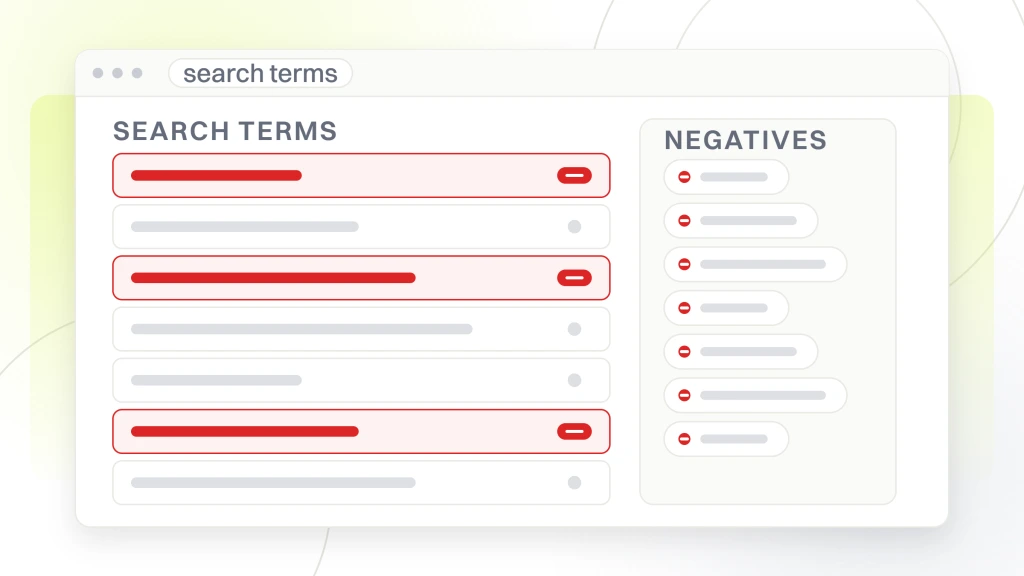
- Review search terms report and add 10 to 30 new negative keywords
- Check the audience report for underperforming segments and adjust bids
- Review ad copy performance and pause any responsive search ad below 20 percent below the group average
- Confirm offline conversion imports ran successfully in the last 7 days
- Check landing page conversion rate for anomalies and open a QA ticket if any page dropped over 25 percent
Monthly leadership report structure
Page one is the top-line dashboard. Page two is what changed and why. Page three is what’s planned for next month with expected impact. Page four onward is optional appendix detail for anyone who wants the click-level data. Leadership reads page one, glances at page two, and files the rest. The reason so many marketing reports go unread is they lead with the appendix. Flip the order and the report gets read. When leadership reads the report, budget conversations get easier. When it doesn’t, they get worse.
Testing frameworks that produce real wins
Testing on B2B Google Ads for lead generation accounts is often done badly. Agencies run tiny tests on tiny audiences, call the winner inside two weeks, and roll losing changes into the account. Then wonder why efficiency drifts down over a year. Real testing on a B2B account uses proper sample sizes, tests one variable at a time, and lets the test run long enough for confidence.
On a mature B2B Google Ads for lead generation account, you want to be testing three areas continuously. Ad copy, at the responsive search ad asset level. Landing pages, using Google Ads campaign experiments to split traffic. Bidding strategy, using experiments to test smart bidding variants against your baseline. Everything else is secondary. Every winning test compounds. Every losing test teaches you something concrete about your buyer.
Ad copy testing at asset level
Every responsive search ad holds up to 15 headlines and 4 descriptions. Don’t treat those slots as filler. Use Google Ads asset performance ratings and pause any headline rated Low after 30 days of data. Replace paused headlines with variants that target the exact pain points your sales team hears on discovery calls. The best-performing headlines on our B2B accounts are usually the ones that name a concrete role, deal size, or use case. Generic value-prop headlines like Boost Your Sales rate Low almost every time.
Landing page experiments with real sample sizes
A landing page A/B test needs at least 300 to 500 conversions per variant to reach statistical significance on B2B traffic. That usually means 4 to 8 weeks of runtime on a mid-sized account. Anything shorter is guessing. Test one variable per experiment. Headline. Form length. CTA placement. Proof section. Never test three at once because you lose the ability to attribute the win. Roll winning changes into the control and start the next test. Compounded across a year, this cadence usually adds 30 to 80 percent to overall conversion rate.
Attribution models that fit long B2B sales cycles
Attribution on B2B Google Ads for lead generation is harder than on consumer accounts because the sales cycle can stretch 90 to 270 days. Last-click attribution undervalues Google Ads because the deal usually closes months after the click. First-click over-credits Google Ads for buyers who would have found you anyway. Data-driven attribution is closer to fair, but only if you have enough conversion data to fuel it.
The practical answer for most B2B accounts is data-driven attribution inside Google Ads, paired with a CRM report that tracks first-touch and last-touch source. Google Ads uses its model for bidding. Sales uses its model for pipeline reporting. Both are valid. What kills reporting is when marketing and sales use different attribution models and then argue about the numbers. Pick a shared model, document it, and use it for every conversation. If you want the tactical side of paid attribution across paid channels, our SaaS PPC Services covers the setup for SaaS teams.
Multi-touch reporting inside your CRM
Every lead in your CRM should carry first-touch source and last-touch source as separate fields. Google Ads shows up on the first-touch side more often on brand new accounts and on the last-touch side more often on remarketing-heavy accounts. Both patterns are useful, and both patterns require the fields to exist in the CRM. If your CRM only tracks a single lead source field, you’re losing 40 to 70 percent of the Google Ads impact story. Add the fields and the picture sharpens.
Attribution window length
Set your Google Ads conversion window to match your sales cycle. A default 30-day window truncates B2B pipeline hard. If your average sales cycle is 90 days, set the click-through window to 90 days and the view-through window to 30 days. That aligns Google Ads reporting with reality and gives smart bidding the full conversion signal. Accounts that switch from 30-day to 90-day windows typically see reported conversion counts climb 20 to 40 percent inside the first month, not because performance improved but because attribution finally caught up.
Pitfalls that quietly break B2B Google Ads for lead generation accounts
The last section is a short list of pitfalls we see on almost every B2B account we audit. Each one is fixable inside a week. Each one usually accounts for 10 to 30 percent of the account’s inefficiency.
Fix these five and most B2B accounts see a 15 to 40 percent gain in cost per qualified lead inside a quarter. None of them require new spend. All of them require account hygiene.
Broad match on head terms
Broad match on a B2B head term like project management software burns through budget on job seekers, students, and researchers. Use phrase match or exact match on head terms. Reserve broad match for well-defined solution phrases where you want smart bidding to find variants. Even then, monitor the search terms report weekly and add negative keywords aggressively.
Display and search mixed in one campaign
Never enable display network inside a search campaign. It looks like a small toggle. It quietly redirects 30 to 60 percent of your budget into display placements with 90 percent lower conversion rates. Run display in its own campaign with its own audiences, creative, and budget. Same for search partners if the data shows they underperform on your account, which they usually do for B2B.
Conversion goals that don’t match the campaign
If your account has a demo request conversion goal, a whitepaper download conversion goal, and a contact form conversion goal, don’t lump them all under the same bidding target. Demo requests are worth 5 to 15 times a whitepaper download. Set primary conversion goals per campaign to match the actual objective. When you want the full accountable-media build for search across Google, our Google Ads Management Services and our B2B SaaS Marketing Agency Tied to Pipeline cover the setup from goals through offline import.
What to fix first in B2B Google Ads for lead generation
B2B Google Ads for lead generation only works when the campaign structure, offline conversion feed, audience stack, and offer stack all point at the same buyer. Get one of those wrong and the account drifts. Get all of them right and Google Ads becomes the most predictable pipeline channel in the B2B stack.
Pick 3 to 5 B2B Google Ads for lead generation fixes from this post that match where your account is weakest right now. Run them for 90 days. Measure qualified leads and pipeline, not clicks. Then pick the next 3 to 5. That compounding cadence is what separates B2B Google Ads for lead generation accounts that scale from B2B accounts that stall.