You evaluate a b2b google ads agency the same way you would hire a new head of demand gen. Judge the work the shop will actually do, not the logo wall on the homepage. This guide gives you the six-question script, the AI filter, the audience depth check, the LinkedIn cross-platform test, and the contract clauses that separate operators from packagers.
Read this the week before your discovery calls. Fill in the scorecard while each vendor talks, and compare answers before the pitch deck starts moving. When you evaluate a b2b google ads agency, the pitch call is your one clean shot to see how the shop thinks about your account. Numbers come from real client work on Automation Anywhere, Rapyd Financial Network, and Camu Digital Campus.
Where Google Ads Sits in Your B2B Marketing Mix
Before you evaluate a b2b google ads agency, know that the shop owns one channel inside a larger digital marketing stack. A Google Ads-only shop that ignores content, SEO, and outbound produces paid results that work in isolation and poorly inside the full funnel. That gap costs pipeline every quarter until someone rewires the mix.
Which Channels Feed Google Ads Results
SEO builds branded search demand that Google Ads defends. Content marketing produces the landing pages paid clicks convert against. LinkedIn warms audiences that Google catches later at commercial intent. Email nurtures leads between visit and close. When you evaluate a b2b google ads agency, the shop should talk about how it coordinates with the partners on your other channels.
Integrated Shop vs Paid Specialist
Hire an integrated agency when the account needs multi-channel coordination. Hire a paid specialist when in-house SEO, content, and outbound are already strong and you need paid at depth. Read our B2B PPC agency page for the integrated scope, or our Google Ads management services page for the specialist scope.
The Six-Question Script to Evaluate a B2B Google Ads Agency
The right way to evaluate a b2b google ads agency is a written six-question script that every shortlisted vendor answers on the pitch call. Score each answer 1 to 5. Add the totals. The shop with a score under 18 out of 30 is off the shortlist. That single rule prevents 80 percent of bad selections when you evaluate a b2b google ads agency in the wild.
Question One on Account Structure
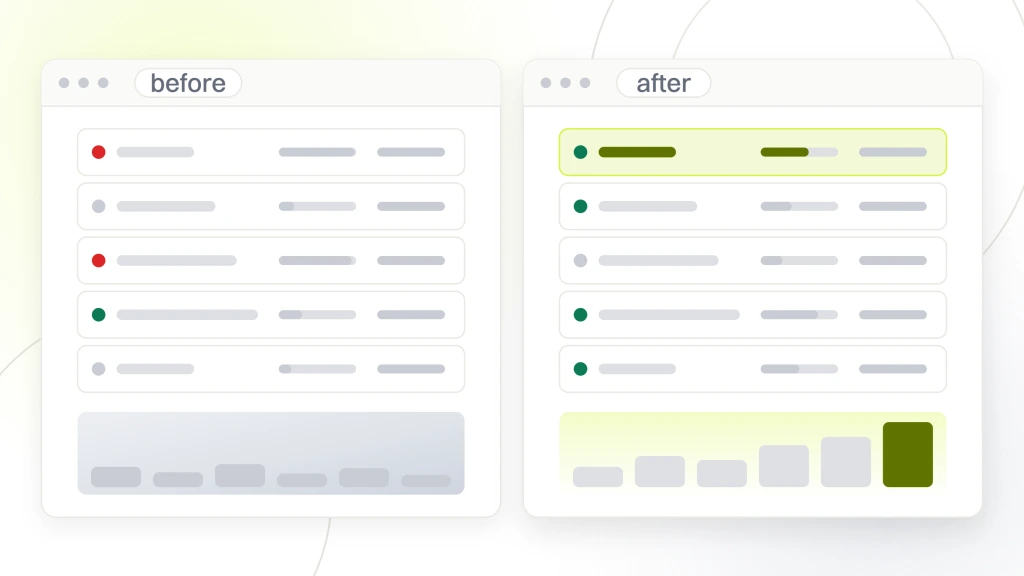
Ask how the vendor structures a new B2B account in the first 30 days. A good answer names branded, competitor, and category-intent campaigns as separate structures. It names offline conversion imports as day-one work, not a phase-two task. A packaging shop talks about keyword volume, ad copy variants, and quality score without naming pipeline signal.
Question Two on Offline Conversions
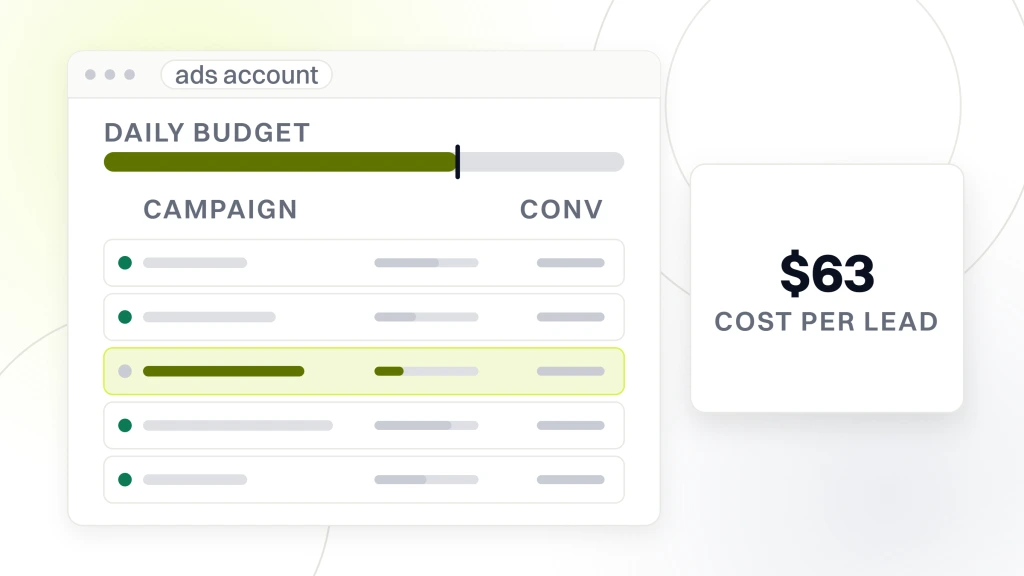
Ask what the offline conversion setup looks like on day one, and which CRM systems the shop has wired before. HubSpot, Salesforce, Pipedrive, and Insightly should all be named. If the vendor cannot describe how they push closed-won values back into Google Ads through the offline conversion API, the account chases form fills forever. Automation Anywhere ran into that exact wall before the wiring got done. Cost per lead dropped from $1,936 to $63 once smart bidding could see pipeline signal instead of raw form fills.
Question Three on Audience Depth
Ask which audience layers the vendor stacks on B2B search campaigns. A weak answer names in-market audiences and stops. A strong answer names customer match lists (closed-won, qualified lead, MQL), lookalike lists, competitor URL custom intent audiences, and first-party visitor lists. A shop that stacks four to seven audience layers on every search campaign is running a real B2B account.
Question Four on LinkedIn Coordination
Ask how the shop handles LinkedIn ads alongside Google Ads. Even if you are not running LinkedIn today, the answer reveals whether the vendor thinks about paid as one system. A good answer names sequenced messaging, shared audience lists between platforms, and matched attribution windows. A weak answer says “we can run LinkedIn too” with no stated pattern. That answer means the second channel runs as a silo.
Question Five on AI and Automation
Ask how the shop uses AI inside the account. Every good vendor now uses AI for keyword clustering, ad copy variant generation, landing page copy testing, and search query mining at scale. Ask for a concrete example. If the answer names no specific tool, no specific workflow, and no measured gain, drop the shop. AI competence is not optional in 2026.
Question Six on Reporting Cadence
Ask what weekly, monthly, and quarterly reporting looks like. The good answer names pipeline generated, cost per opportunity, cost per closed-won, and search impression share on buying-intent keywords as the first four numbers on every report. The weak answer names clicks, impressions, CTR, and cost per click. That answer means the shop reports platform metrics for 12 months while your CFO asks about pipeline.
The AI Filter to Evaluate a B2B Google Ads Agency
AI competence separates modern operators from shops running 2022 playbooks. When you evaluate a b2b google ads agency, the AI filter has three checkpoints. If the vendor fails two of three, move on.
Checkpoint One on Keyword Research
A modern answer names AI-powered clustering tools that group thousands of terms into intent tiers, plus a manual review pass. A shop that runs keyword research inside Keyword Planner alone misses half the buying-intent phrases your buyers use. On the Rapyd Financial Network account, the shift to AI-clustered research added 340 buying-intent phrases the account had been missing, and cost per qualified lead dropped 41 percent inside the first quarter.
Checkpoint Two on Ad Copy Testing
A modern answer names AI-generated headline banks (30 to 50 variants per ad group), programmatic assembly of responsive search ads, and a weekly review of asset performance data. A shop still writing three headlines per ad group by hand leaves 20 to 30 percent of CTR on the table.
Checkpoint Three on Landing Page Copy
The strong answer names AI-generated hero and subhead variants tested against paid traffic, plus a rollup of winners into a page-level playbook. The weak answer says landing pages are your team’s problem. Any B2B shop that hands landing page testing back to you does not close the loop between clicks and pipeline. Paid and landing page work needs to stay coordinated inside one retainer.
The Audience Targeting Depth Check
Audience targeting is where good B2B accounts pull ahead. The shop you hire needs to stack real audience layers on every campaign, not just enable in-market and call it done. The depth check has four layers. A vendor missing three of the four is running a consumer playbook against a B2B budget.
Customer Match Lists Uploaded Weekly
Closed-won, qualified lead, and MQL lists should all sit inside Google Ads as customer match audiences. The vendor should upload these weekly through the API, not quarterly through the interface. Weekly uploads keep smart bidding trained on fresh pipeline signal. On the Camu Digital Campus account, moving from monthly to weekly customer match uploads dropped cost per qualified lead 18 percent inside 60 days.
First-Party Visitor Segments
Every B2B website has at least six visitor segments worth targeting separately. Pricing, case study, demo abandoners, blog readers, comparison pages, and careers pages. The shop should have a plan for each segment with different creative and bid strategies. A vendor who lumps all site visitors into one remarketing list loses 30 to 60 percent of remarketing conversion rate.
Custom Intent Audiences on Competitor URLs
Custom intent audiences target buyers who search category keywords or visit competitor URLs. Feed the audience 15 to 30 category keywords and 10 to 20 competitor URLs. Any vendor who skips this layer misses a 20 to 40 percent gain in qualified lead rate. Ask for the exact URLs and keywords the shop plans to feed into the audience when you evaluate a b2b google ads agency.
Lookalike Modeling on Closed-Won Data
Google’s similar audiences model builds lookalikes from your closed-won list. The vendor should build these on your best-fit segment, not your full customer base. A lookalike from your top 200 accounts by revenue produces a different audience than a lookalike from your bottom 800. The packaging shop uploads whatever list you send and never asks the segmentation question.
The LinkedIn Cross-Platform Test
LinkedIn coordination is the fastest way to sort operators from packagers when you evaluate a b2b google ads agency. Every serious B2B account today runs paid across Google and LinkedIn. A vendor who runs each platform as a silo loses the cross-platform gains a coordinated stack produces.
Shared Audience Lists Between Platforms
Ask whether the shop pushes Google Ads audience data into LinkedIn and back. LinkedIn matched audiences accept CRM lists. Google Ads customer match accepts the same lists. The vendor should upload closed-won, qualified lead, and MQL lists to both platforms weekly. Otherwise you run two audience strategies that never meet.
Sequenced Messaging Across the Funnel
LinkedIn warms audiences that Google captures at commercial intent. The vendor should have a plan where LinkedIn runs category and problem-awareness content upstream, and Google Ads catches the same audience later on branded and category queries. A vendor without a stated handoff pattern is running two disconnected paid programs.
Attribution Windows That Match
LinkedIn defaults to 30-day view-through. Google Ads defaults to click-only with a 30-day click window. The vendor should reset both to a window that mirrors your sales cycle. On a B2B account with a 90-day cycle, both platforms run 90-day windows so pipeline attribution rolls up correctly. Mismatched windows inflate one platform and starve the other.
The Automation Anywhere Case Study on Real Vendor Selection
Automation Anywhere is a global leader in Robotic Process Automation serving 2,800+ companies and 1,600+ enterprise brands. The company came to Redefine Web paying nearly $2,000 per lead. Campaigns chased impression share, lead volume, and awareness at once. The main call-to-action was a plain contact form while competitors offered analyst reports, white papers, and free trials. Strong product, unsustainable acquisition economics.
Our team ran a multi-phase rebuild. A strategy audit separated campaigns by objective (branded, competitor, category intent) so smart bidding stopped averaging conflicting goals. An Insightly CRM implementation fed lead status back into Google Ads through offline conversion imports. A landing page system rolled out conversion-focused calls-to-action across the funnel. Email nurture sequences moved qualified leads through consideration.
Automation Anywhere Headline Numbers
Cost per lead dropped from $1,936 to $63, a 97 percent improvement in acquisition efficiency. Customer acquisition scaled 100x, from around 150 per month to nearly 8,000 leads monthly. Ad impressions grew 300 percent as smart bidding stopped fighting conflicting signals. Those numbers came from wiring the account for pipeline signal, not from raising the budget.
Why the Rebuild Worked
The wiring gap between marketing metrics and sales metrics is the pattern most B2B Google Ads audits find. Form fills climb inside Google Ads while sales sees lead quality drop. Offline conversion imports repair the misalignment so smart bidding optimizes against pipeline signal. When you evaluate a b2b google ads agency, ask whether the vendor has done this rewire before, on which CRM systems, and how long the wiring took. A shop that has done it three times names the exact steps.
The Contract Clauses That Separate Operators From Packagers
Every B2B Google Ads engagement lives or dies inside the contract. Four clauses matter more than the rest. Read the contract before you sign. Redline any of the four if they are missing when you evaluate a b2b google ads agency shortlist.
Data Ownership Clause
The contract names your company as the owner of every Google Ads account, GA4 property, and reporting dashboard the vendor touches. The account lives inside your MCC (or the vendor’s MCC with admin access granted to two of your team). When the engagement ends, you keep the account, the history, and the audiences. A vendor that resists this clause plans to hold your data hostage on the exit.
90-Day Mutual Out
The contract includes a 90-day review with a named metric that triggers a mutual out if missed. The metric is your call. Cost per qualified lead. Pipeline sourced. Cost per opportunity. Without it, month five turns into a slow-motion breakup that costs $30K to $80K in avoidable spend.
Named Team on the Account
The contract names the senior operator and account lead who will run your account. Not a title. A person. If the shop refuses to name people, the account gets handed to whoever has capacity that week. Named team on the contract keeps the shop honest.
Reporting Deliverables in Writing
The contract lists the reports the vendor delivers, the cadence, and the format. Weekly performance snapshot. Monthly pipeline report. Quarterly business review. Board-ready slides once per quarter. If the contract does not name the reports, the vendor delivers whatever is easiest, and the reporting gap feeds the board conversation you cannot afford to lose.
The Decision Framework to Evaluate a B2B Google Ads Agency
Every process to evaluate a b2b google ads agency ends with a written decision, signed off by your VP Marketing and Head of Sales, that names the vendor, the reasons, and the 90-day plan the vendor committed to. This document takes 30 minutes to write and prevents second-guessing the pick three months in when a campaign misses target.
What the Decision Document Should Contain
- Vendor name and the two runners-up with brief notes on why the winner beat them.
- Scorecard totals from the six-question script for all vendors evaluated.
- The 90-day plan the winning vendor committed to, with named deliverables and dates.
- Target metrics for months one through three (cost per marketing qualified lead, pipeline sourced, cost per closed customer).
- The 90-day review date and the specific metric that triggers the mutual out if missed.
- Signatures from VP Marketing and Head of Sales.
How to Run the 90-Day Review
Schedule the 90-day review on day one of the engagement. Put it on the calendar as an anchor both teams prepare for. On the review call, walk through actual versus target for each of the three named metrics, discuss the delta with the vendor’s account lead, and decide whether the engagement extends or the mutual out fires. Half the time metrics beat target and the engagement extends. A quarter of the time metrics miss for reasons the vendor can articulate and a plan gets built. A quarter of the time the mutual out fires and both sides walk cleanly.
Companion Reads for the Week Before Your Pitch Calls
The guide above works best when you already understand the strategic questions Google Ads answers for B2B. Three companion pieces round out the picture. Read them the week before your first vendor call so you enter each conversation with the right context to evaluate a b2b google ads agency at the strategic layer, not just the tactical one.
Strategy and Effectiveness Reads
Read the B2B Google Ads strategy guide for the campaign structure playbook. Read whether Google Ads work for B2B for the deal-size math. Read the Google Ads vs LinkedIn Ads for B2B comparison for the budget-split logic. The three pieces cover the strategic layer that sits above vendor selection.
Where Redefine Web Fits in Your Shortlist
If you want an outside look at your Google Ads account before vendor selection begins, we run a 30-minute audit that produces a written scorecard on the six areas above. Retainer floor sits at $999 per month with dedicated tiers built for SaaS, fintech, home services, and industrial B2B. See the B2B Google Ads services page for tier scopes and retainer math.
Final Word on How to Evaluate a B2B Google Ads Agency
When you evaluate a b2b google ads agency, the goal is not the best pitch deck. The goal is the shop that builds a pipeline channel your CFO trusts inside 90 days. The six-question script, AI filter, audience depth check, LinkedIn cross-platform test, and the four contract clauses give you a repeatable pattern to evaluate a b2b google ads agency without guesswork. Run every shortlisted vendor through the pattern. Score every answer. Sign the decision document. Then run the 90-day review on the calendar you set on day one. That turns vendor selection from a coin flip into a measured decision that pays back inside two quarters.