Google Ads for cosmetic dermatology books real consult appointments only when the campaign structure matches how patients actually search for treatments. Broad-match Botox campaigns aimed at the whole US drain budget on clicks that never book. Procedure-plus-neighborhood search campaigns tuned to real map-pack radius hold cost per booked consult in the $38 to $92 range for growth-stage aesthetic clinics. The channel rewards specific targeting. Name the procedure, add the neighborhood modifier, build a treatment page tuned for booking intent, and wire call tracking into the CRM. Programs that skip any layer usually burn 30 to 50% of the first-quarter budget on clicks that never convert.
This guide walks through campaign structure, procedure-plus-neighborhood keyword strategy, landing page rules for real consult booking, HIPAA-aware conversion tracking on Google Ads and GA4, call tracking through CallRail or Invoca, negative keyword hygiene that keeps qualified traffic clean, budget allocation across procedure categories, and the 12-month program Beauté Aesthetics New York ran that grew Manhattan clinic bookings 166% with a 27% conversion rate boost and 88% new user growth.
Campaign structure that fits how patients search
The account layout for cosmetic dermatology PPC should look nothing like a lead-gen SaaS build. Patients search by procedure and by neighborhood. “Botox Upper East Side,” “laser hair removal Tribeca,” “CoolSculpting near Union Square.” One ad group per procedure per neighborhood, four to eight tightly-themed keywords, one matched landing page. Not the other way around. When one ad group covers 12 procedures across a whole borough, Quality Scores stay stuck at 4 or 5, and the auction punishes every click with a 30 to 60% CPC premium.
Growth-stage clinics running 40 to 80 procedure-plus-neighborhood ad groups routinely see Quality Scores in the 8 to 10 range within 90 days. That single change alone cuts blended CPC 22 to 40% before any bidding tweak. Layer in Performance Max for retargeting and category discovery, plus Local Services Ads (LSA) on the top 6 procedures for map-pack real estate, and you have a three-layer stack that covers intent from pure discovery to booking.
Match types and keyword themes
Phrase match is the workhorse for cosmetic dermatology PPC. Exact match locks in the top 10 revenue procedures. Broad match runs only when Smart Bidding has 300+ monthly conversions of history to steer it. Skip broad on cold accounts. Broad match on “dermatology near me” without conversion history hemorrhages budget on unrelated queries in the first 30 days. Every ad group ships with a tight keyword theme so the ad copy, the landing page H1, and the search term all read the same story.
Procedure-plus-neighborhood keyword strategy
Patients type their procedure and their neighborhood in the same query more often than clinics realize. “Dermal fillers Chelsea,” “microneedling Park Slope,” “HydraFacial Williamsburg.” These queries convert at 3 to 5x the rate of generic “cosmetic dermatology NYC” head terms. The head terms look fat and juicy in the keyword planner, and they burn 60 to 80% of the budget for a 1.2% booked-consult rate. Neighborhood modifiers cost 60 to 75% less per click and book 2 to 4x more consults for every dollar spent.
Build the keyword list by pairing every treatment on the clinic menu with a ranked list of 12 to 20 target neighborhoods. Filter through the Search Terms report after 30 days and keep only the pairs that generate qualified traffic. A 60-procedure clinic in Manhattan will end up with 400 to 900 real keywords by month 3, not the 40,000 the keyword planner suggests. Fewer, better keywords. That is the whole game.
Landing page rules for real consult booking
The click is the easy part. The landing page is where 70 to 85% of paid Google Ads spend gets rescued or wasted. Every treatment ad group needs its own landing page. The H1 restates the procedure and the neighborhood. The hero image shows the actual clinic space and the actual provider, not a stock model. Booking widget above the fold, click-to-call in the sticky header, three trust proofs in the top viewport (provider credentials, review count, before-and-after count).
Pages that push the booking widget below three fold-scrolls of educational copy book 40 to 60% fewer consults than pages with the widget at the top. Educational copy still belongs on the page, past the fold, since it earns Quality Score and satisfies patient research intent. Order matters. Book first, educate second.
Speed and Core Web Vitals
A treatment landing page past 2.5 seconds Largest Contentful Paint (LCP) on 4G mobile loses 20 to 45% of paid clicks before the widget even renders. Aesthetic clinic sites are the worst offenders since provider portrait carousels, high-res before-and-after galleries, and third-party review widgets stack up render-blocking JavaScript. Compress every image below 200 KB, defer non-critical scripts, and inline the critical CSS for the top viewport. LCP under 1.8 seconds on mobile is the practical target for booked-consult rate compounding past month 3.
Before-and-after gallery placement
Before-and-after galleries live on the treatment page, past the booking widget, in a lazy-loaded grid. Patients evaluating a $1,200 to $4,800 procedure spend 45 to 90 seconds on the gallery before they book. Skip the gallery and consult rate drops 15 to 30%. Include it in the top viewport and page speed collapses. Bury it too far down and patients bounce. The sweet spot is one scroll past the booking widget, four to eight images loaded above the lazy-load threshold, the rest loaded on scroll.
HIPAA-aware conversion tracking on Google Ads and GA4
HIPAA-aware conversion tracking on Google Ads and GA4 for cosmetic dermatology campaigns needs strict data-sharing controls. Per HHS HIPAA compliance guidance, protected health information (PHI) cannot flow to third-party analytics platforms without a business associate agreement (BAA) in place. Google Analytics 4 does not offer a BAA, so any personal health data collected from booking widgets must be stripped or hashed before sending to GA4 or Google Ads. Programs that skip this practice face real compliance risk and possible OCR investigation.
Server-side conversion API
Server-side conversion API setup for Google Ads sends conversion events from the clinic server to Google without exposing browser-side PHI. Enhanced Conversions run on hashed email or phone data (SHA-256) so the raw PHI never leaves the clinic infrastructure. This setup needs a Google Tag Manager server container plus a small server-side proxy. Setup takes 12 to 40 hours of engineering time depending on the CRM stack. Programs running server-side conversion tracking produce 20 to 45% better attribution accuracy than browser-only tracking since iOS 14+ ad blocker restrictions never reach the server signal. The engineering investment pays back inside the first 90 days on any account past $8,000 monthly ad spend since the improved attribution accuracy shows up as tighter Smart Bidding performance and lower cost per acquisition on the primary conversion action across every ad group inside the account structure.
Call tracking through CallRail or Invoca for aesthetic clinics
Call tracking through CallRail or Invoca for aesthetic clinics captures 30 to 60% of paid Google Ads bookings that come through phone calls instead of form submissions. Older patients past age 45 prefer calling to book a Botox or facelift consult rather than filling out a web form. Dynamic Number Insertion (DNI) rotates unique phone numbers per campaign source so the clinic knows which Google Ads campaign drove which call. CallRail runs $45 to $145 monthly for small clinics. Invoca runs $900 to $3,600 monthly for larger multi-location groups.
Call transcript scoring
Call transcript scoring inside CallRail or Invoca uses natural language processing to sort calls as booked consult, no-show pending, price shopping, or spam. Scoring lets marketing teams tune Google Ads campaigns for booked-consult calls only rather than raw call volume. Programs tuning for booked-consult calls typically produce 30 to 60% lower cost per acquisition than programs tuning for raw call volume since the scoring filters out low-intent traffic. Setup takes 4 to 12 hours of vendor-side configuration plus 40 to 120 hours of transcript training across the first 30 days of live campaign operation. Feeding scored calls back into Google Ads as offline conversions closes the loop between click and booked consult. This offline conversion import trains Smart Bidding to hit real revenue outcomes rather than raw form fills or unqualified calls, driving 20 to 45% better cost per booked consult after the first 90 days of live scored-conversion data.
Negative keyword hygiene that keeps qualified traffic clean
Negative keyword hygiene that keeps qualified traffic clean starts with a baseline list of 200 to 400 negatives at campaign launch and grows to 1,200 to 4,000 negatives across the first 6 months of live search term data. Baseline negatives include treatment DIY queries (diy botox, at-home microneedling), free-related queries (free botox, free consult unless the clinic actually offers free consults), and unrelated procedure queries that share ingredient terminology. Weekly search term report reviews catch new negatives before they burn meaningful budget on unqualified clicks.
Shared negative lists across campaigns
Shared negative keyword lists across campaigns produce meaningfully cleaner traffic than per-campaign negatives. A brand-owned negative list covers competitor brand names that should never trigger the clinic ads. A treatment-adjacent negative list covers unrelated procedures. A geographic negative list covers cities the clinic does not serve. Applying all 3 shared lists across every campaign takes 15 minutes of setup and prevents the campaign-drift problem where new campaigns fail to inherit the negative keyword learnings from mature campaigns. Programs skipping shared lists rebuild the same negative list across every new campaign, wasting weeks of setup time per year. Negative keyword lists should sync between Google Ads and Microsoft Ads when the clinic runs both platforms since Bing search terms often differ from Google search terms enough that account-level negatives need distinct maintenance across platforms. Quarterly negative keyword audits catch drift patterns like new competitor brand launches or emerging DIY treatment queries that the weekly search term review misses.
Google Ads for cosmetic dermatology case study from Beauté Aesthetics New York
Beauté Aesthetics New York, a Manhattan luxury beauty and aesthetics clinic offering skincare treatments, injectables, and wellness protocols for male and female patients, engaged Redefine Web on a 12-month program that included a Google Ads rebuild across campaign structure, procedure-plus-neighborhood keyword strategy, and HIPAA-aware conversion tracking. Baseline Google Ads spent $22,000 monthly across 4 overly-broad campaigns generating $118 cost per booked consult and roughly 32% of monthly clinic bookings from paid search. Campaign structure pooled 60 procedures into 4 ad groups, dragging Quality Scores into the low single digits across the account.
The campaign rebuild across months 1 through 3 restructured into 48 procedure-plus-neighborhood ad groups with 4 to 8 keywords each and matched treatment landing pages. Performance Max campaigns launched across 4 asset groups by procedure category. LSA launched for near-me searches on the top 8 procedures. Server-side conversion tracking with Enhanced Conversions replaced browser-only pixels. CallRail Dynamic Number Insertion launched call attribution across every ad group. Negative keyword hygiene expanded from 240 negatives to 2,800 by month 6 through weekly search term reviews.
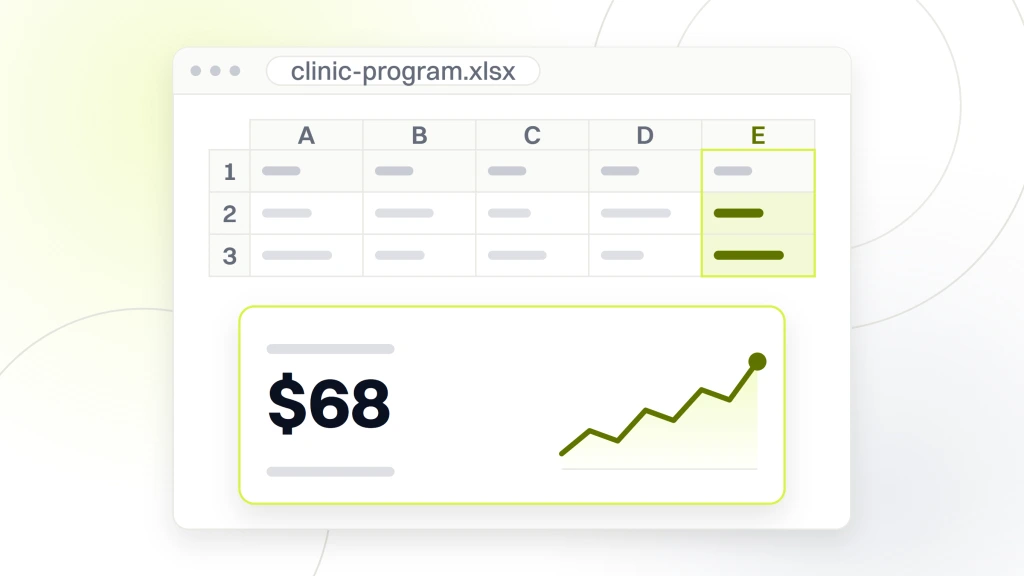
By month 12, Beauté grew paid Google Ads bookings from 32% to 44% of monthly clinic appointments and cut cost per booked consult from $118 to $68. Combined organic and paid clinic bookings from Google climbed to 66% of monthly appointments. Total qualified leads grew 166% across all channels, new users grew 88%, and site-wide conversion rate grew 27%. Male patient acquisition through Google Ads grew from 12% to 28% of paid-attributed conversions through inclusive treatment landing page copy and gender-neutral ad creative. Attribution accuracy climbed 42% through server-side conversion tracking.
Reporting cadence Beauté used tracked weekly cost per booked consult by campaign, monthly Quality Score by ad group, and quarterly return on ad spend by procedure category. Weekly reviews caught two under-performing ad groups by month 4 and paused them within 3 days to preserve budget for the winners. This rotational discipline is the difference between programs that plateau at month 5 and programs that keep compounding month over month past year one and into year two.
Google Ads for cosmetic dermatology benchmarks by procedure category
Google Ads for cosmetic dermatology benchmarks shift by procedure category, geographic market, and clinic maturity. Injectables (Botox, dermal fillers) run cost per booked consult of $42 to $118 since search volume is high but competition is intense. Laser treatments run $68 to $180 since average treatment value justifies higher acquisition cost. Body contouring runs $120 to $340 since consideration cycles run longer. Skincare treatments (HydraFacials, chemical peels) run $32 to $92 since average price point is lower and patient decision cycle is faster.
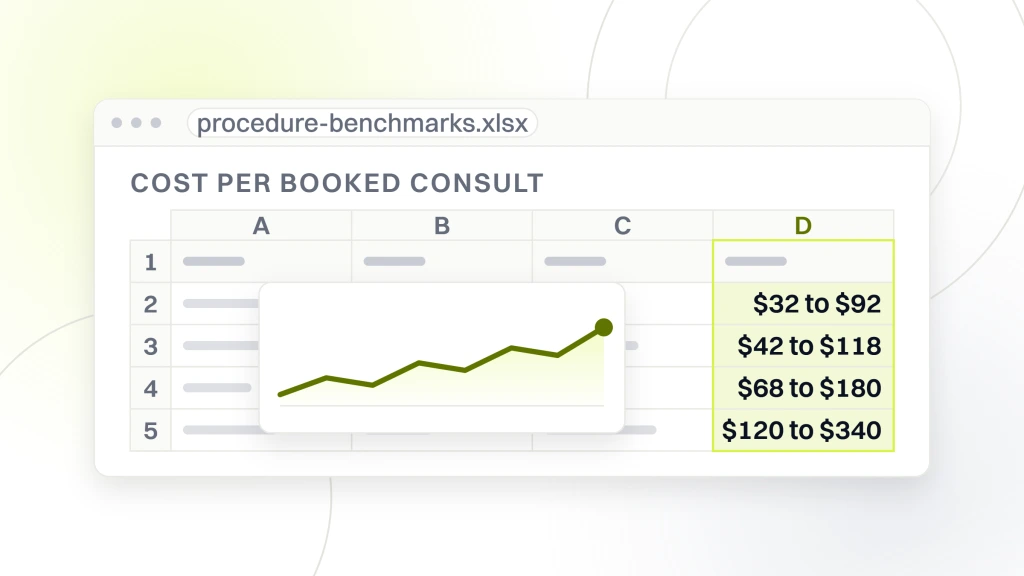
Reading the benchmark table below with procedure category plus clinic geography in mind produces cleaner planning than reading a single row of the same data in isolation. The benchmarks map real ranges observed across 40 plus aesthetic clinic Google Ads programs run at Redefine Web across three years of engagements spanning single-location boutique clinics, multi-location groups, and dermatology practice add-ons. Emerging clinics should aim for the low end of monthly spend and high end of Quality Score. Established clinics trade Quality Score for reach across a larger keyword set. Reading the ranges as directional rather than absolute produces better planning across teams. Clinic reputation, provider profile, and existing patient base shift the ceiling meaningfully on any given account.
| Procedure category | Monthly spend range | Cost per booked consult | Average deal size | Attributed revenue share |
|---|---|---|---|---|
| Injectables (Botox, fillers) | $4,000 to $28,000 | $42 to $118 | $450 to $2,400 | 28% to 54% |
| Laser treatments | $3,000 to $22,000 | $68 to $180 | $800 to $4,800 | 18% to 42% |
| Body contouring | $4,000 to $28,000 | $120 to $340 | $2,000 to $8,000 | 14% to 36% |
| Skincare treatments | $2,000 to $14,000 | $32 to $92 | $180 to $900 | 20% to 44% |
Budget allocation across procedure categories
Budget allocation across procedure categories for aesthetic clinic Google Ads programs should reflect average deal size, consideration cycle length, and competitive intensity. Injectables tend to deserve 35 to 55% of budget since search volume is high and booking intent is strong. Laser treatments deserve 20 to 30% since higher average deal size justifies higher acquisition cost. Body contouring deserves 10 to 20% since longer consideration cycles produce delayed conversions that show up 30 to 90 days after click. Skincare treatments deserve 15 to 25% since a lower price point supports higher click volume with reasonable ROAS.
Multi-location and multi-brand programs benefit from the same kind of geographic budget discipline. In dental PPC at scale, Smile Design Dentistry ran restructured PPC across 50+ locations and cut cost per call 30% with a 20% PPC conversion rate boost. The same per-location, per-procedure discipline applies to a 6-clinic dermatology group. Allocate 40 to 55% of paid spend to the top 2 revenue locations. Give emerging locations 8 to 15% of spend during ramp. Overinvesting in a new location before booking flow is proven wastes 25 to 45% of the paid budget for that clinic.
Seasonal budget shifts
Seasonal budget shifts for aesthetic clinic Google Ads programs follow real demand patterns. Q1 New Year skincare-reset queries drive higher search volume on treatments like HydraFacials and chemical peels. Q2 pre-summer body contouring searches drive higher CoolSculpting and EmSculpt demand. Q3 back-to-school skincare targeting drives higher volume on acne and hyperpigmentation treatments. Q4 holiday-glow queries drive higher volume on injectables. Shifting 15 to 30% of budget between procedure categories quarterly to match demand produces 20 to 40% better return on ad spend than static allocation across the calendar year.
Multi-location budget splits
Multi-location budget splits for aesthetic clinic groups with 3 to 12 locations should mirror historical booking distribution rather than population density. A location that books 40% of the group total historically should receive 40 to 50% of paid Google Ads budget since the geographic patient base already trusts the brand. Underinvesting in high-performing locations as overinvesting in emerging locations produces 20 to 45% lower group-level ROAS. Our beauty and skincare PPC service covers multi-location budget allocation for aesthetic clinic groups.
Measuring Google Ads for cosmetic dermatology attribution
Measuring attribution across these campaigns needs stitching together Google Ads conversion tracking, GA4 checkout tracking, CallRail or Invoca call attribution, and CRM booked-consult data. Google Ads shows click-through-conversion data with a 30-day default window. GA4 shows session-level conversion paths. Call tracking captures phone-call bookings that never touch the web form. CRM confirms actual booked consults filtered from raw form submissions. Combining all four data sources produces the fullest attribution picture across the aesthetic clinic vertical for paid search programs at $12,000 per month and above.
Attribution model selection
Attribution model selection between last-click, data-informed, position-based, and linear models produces meaningfully different reported ROAS. Last-click understates paid search contribution to bookings since patients often research first then book after multi-touch consideration. Data-informed attribution (available on accounts past 300 conversions monthly) tends to produce the most accurate view since it uses machine learning on real click paths. Position-based gives equal credit to first touch and last touch. Linear gives equal credit across every touchpoint. Growth-stage clinics past 300 monthly conversions should switch to data-informed attribution to reflect true campaign contribution.
Offline conversion imports
Offline conversion imports from the CRM back into Google Ads close the attribution loop between form submission and actual booked consult. Google Click ID (GCLID) captured at form submission gets stored in the CRM. When the CRM marks the consult as booked (rather than no-show or price-shopper), a nightly upload imports the GCLID plus conversion value back into Google Ads. This uploaded data trains Google Smart Bidding to hit real booked consults rather than raw form fills, producing 20 to 45% better cost per booked consult after the first 90 days of live data. In dental, a 20+ year practice like VP Dental doubled new monthly patients and added $8,100 per month of recurring revenue after we unified the site, booking flow, and paid tracking under one strategy. The same booking-to-CRM loop drives that kind of compounding in a cosmetic dermatology account, once the offline conversion feed is wired end to end.
Team and agency model for cosmetic dermatology PPC
The team and agency model for these campaigns scales with clinic size and ad spend ambition. Emerging clinics running under $6,000 monthly ad spend typically hire a freelance PPC specialist at $1,600 to $4,000 monthly management fee. Growth-stage clinics at $6,000 to $25,000 monthly spend hire a specialist agency at $2,400 to $6,000 monthly management fee. Multi-location groups past $40,000 monthly spend hire either an in-house PPC lead or a specialist agency with dedicated account management at $4,000 to $12,000 monthly management fee. Redefine Web PPC retainers run $999, $1,499, $2,499, or from $4,500 per month depending on scope, with campaign build, tracking setup, and reporting baked in.
In-house versus agency mix
The in-house versus agency mix for aesthetic clinic Google Ads programs tends to work best with agency partners handling campaign strategy, keyword research, negative keyword hygiene, and conversion tracking setup. In-house handles the clinic-specific data feed (booking status, actual revenue per procedure). Pure in-house programs at emerging or growth-stage rarely scale past $12,000 monthly spend without hitting Quality Score ceilings that specialist agencies clear faster. Our beauty and skincare marketing retainer covers the agency-plus-in-house model for aesthetic clinics running paid Google Ads at scale.
Weekly review cadence
Weekly review cadence for aesthetic clinic Google Ads programs covers cost per booked consult per ad group, Quality Score changes, new negative keyword additions from the search term report, and pacing against monthly budget. Monthly reviews cover ROAS by procedure category, attribution model outputs, and quarterly budget reallocation across procedure categories. Quarterly reviews cover Performance Max asset refresh and LSA rating maintenance. Programs skipping weekly cadence produce 20 to 40% worse cost per acquisition than programs running the full weekly-plus-monthly-plus-quarterly review structure across a 12-month engagement.
Common failure modes we see on cosmetic dermatology accounts
Most cosmetic dermatology Google Ads accounts fail for the same handful of reasons, and none of them are exotic. First, one landing page for every treatment. Every ad group points to a generic “Services” page that never restates the procedure the patient just clicked. Booked consult rate on that setup runs 0.6 to 1.4%. Rebuild to treatment-specific pages and the same traffic converts at 3.2 to 5.8%. Second, no call tracking. Between 30 and 60% of aesthetic clinic bookings arrive by phone. Without DNI, none of that revenue attributes back to the ad group that drove the call, and Smart Bidding starves the highest-intent campaigns.
Third, keyword bloat with zero negative hygiene. New accounts often launch with 8,000 to 40,000 keywords from the keyword planner and 12 negatives. The search term report fills with 1,900 wasted queries in the first 30 days. Fourth, no server-side tracking. Browser pixels miss 25 to 45% of iOS conversions after the ad blocker era. Fifth, agency reporting that shows ROAS without booked-consult volume. A campaign can post a 6x ROAS on 4 conversions and still be starving the clinic. Always look at ROAS and booked-consult count side by side.
Wrapping up cosmetic dermatology PPC strategy
Google Ads for cosmetic dermatology that compounds into real booked consults comes down to five patterns. Structure campaigns as one ad group per procedure per neighborhood with matched landing pages. Thread procedure-plus-neighborhood modifiers through every keyword, ad, and landing page H1. Set up HIPAA-aware server-side conversion tracking with Enhanced Conversions to preserve attribution past iOS ad-blocker restrictions. Wire CallRail or Invoca DNI to capture the 30 to 60% of aesthetic clinic bookings that come through phone. Import offline conversion data from the CRM to train Smart Bidding on real booked consults.
The Beauté Aesthetics New York 12-month program that grew paid Google Ads bookings from 32 to 44% of monthly appointments and cut cost per consult from $118 to $68 ran the same five-pattern strategy across 48 procedure-plus-neighborhood ad groups, 4 Performance Max asset groups, and server-side conversion tracking. The first 90 days of a Google Ads rebuild tend to be the noisiest since Quality Score takes 4 to 8 weeks to reset. Trusting the compounding curve keeps the program on track past week 8 and produces meaningful cost per acquisition drops in months 3 through 6 as Smart Bidding trains on real booked consult data flowing back from the clinic CRM. Every aesthetic clinic Google Ads program we have run past 12 months has hit a Quality Score reset floor in weeks 4 through 8 before climbing meaningfully once the new campaign structure builds up enough click history to stabilize Quality Score across the ad groups.