
Melbourne metro holds roughly 5.2 million people spread across a footprint that runs from Werribee in the west to Pakenham in the south-east and up to Wallan in the north. Auction pressure on Google runs 12 to 28 percent above the national AU average for most service verticals because Melbourne carries the deepest concentration of professional services buyers outside Sydney. Cost per click on high-intent queries like emergency plumber, cosmetic dentist, and family law sits between AUD 15 and AUD 52 depending on suburb and time of day. A poorly structured google ads management melbourne account burns 30 to 55 percent of monthly spend on wrong queries, wrong suburbs, and wrong device targeting inside the first quarter.
This guide walks the operating model we run on live Melbourne accounts. Vertical benchmarks, campaign structure, negatives, conversion tracking, and the monthly cadence that books leads at trades, dental practices, med spas, law firms, and B2B suppliers across Melbourne CBD, the inner east, the inner north, the south-east corridor, and the western growth corridor. If you want a broader view of how our team runs paid on any market, our PPC management services page covers the full engagement shape from onboarding through quarterly review, and retainers start at $999 per month and run to $4,500 and up for the largest managed spends.
What is in this guide
- Google ads management melbourne runs on a VIC-specific auction map
- Melbourne vertical benchmarks for google ads management melbourne accounts
- Campaign structure that keeps Melbourne spend efficient
- Negative keyword shape that protects Melbourne budgets
- Conversion tracking that makes Melbourne decisions honest
- Bidding strategy matched to Melbourne auction dynamics
- Melbourne build vs national agency defaults
- Monthly cadence for a Melbourne account
- Landing pages that make Melbourne clicks convert
- Common mistakes that sink Melbourne accounts
- Hiring the right google ads management melbourne partner
Google ads management melbourne runs on a VIC-specific auction map
Melbourne metro spans roughly 9,990 square kilometers across four major growth corridors. The Yarra River, the CityLink corridor, and the M1 split the metro into distinct service zones, and that geography changes how a Melbourne PPC account has to be built. A Toorak cosmetic clinic cannot serve Werribee patients profitably because the drive kills consult booking rates. A Northcote trades business loses margin on Pakenham jobs because travel time triples. Location targeting on Melbourne accounts has to be tight, and radius targeting fails because the metro geography does not fit a clean circle around any single point.
The VIC auction shape sits on four factors. Professional services concentration comes first. Melbourne CBD holds the deepest legal, finance, and consulting buyer pool in the AU market, and that concentration pushes B2B auction floors 30 to 60 percent above other AU capitals. Inner versus outer income gaps come second. Toorak, Brighton, Hawthorn, and Kew household income runs 2 to 4 times higher than outer growth corridors like Cranbourne, Wyndham Vale, and Craigieburn. The same broad match keyword pulls both if the account is not structured to separate them. Event seasonality comes third. AFL finals, the Melbourne Cup, the Spring Racing Carnival, and White Night push hospitality, travel, and elective care auctions across specific weekends. VIC school holidays and public holidays finish the list, shifting auction dynamics by 20 to 35 percent inside 48-hour windows.
Melbourne accounts run on national defaults will lose to Melbourne-tuned accounts within 90 days. The only way to win is to build the account around Melbourne suburbs, VIC-specific negatives, and a bid strategy that respects the actual travel-time economics of servicing the metro. Broad match without a strong negative list pulls queries from Geelong, Ballarat, Bendigo, and the Mornington Peninsula within a week, and those clicks convert at a fraction of Melbourne metro clicks because the searcher is 70 to 150 kilometers outside the service area. Search Partner Network is worse. Turn it off on Melbourne accounts and audit the search terms report weekly for regional bleed. Reference Google Ads Help for the toggle path.
The right operating model treats Melbourne as five connected micro-markets. CBD professional core, inner east across Hawthorn and Kew, inner north across Fitzroy and Northcote, south-east corridor from Caulfield through Dandenong to Pakenham, and western growth corridor from Footscray through Werribee each get their own campaign, budget cap, and negative keyword list. Reporting rolls up to metro totals, but we make bid and budget decisions at the sub-market level. That is how we keep Melbourne cost per booked lead below AU averages across dental, home services, med spa, and legal accounts.
Melbourne vertical benchmarks for google ads management melbourne accounts
Verticals in Melbourne behave differently from national averages. Home services accounts across HVAC, plumbing, electrical, roofing, and pest control sit at AUD 18 to AUD 38 cost per click on high-intent emergency terms. Cost per booked job runs AUD 80 to AUD 170 on well-structured accounts and AUD 220 to AUD 420 on accounts running default settings. That spread is what a Melbourne PPC agency actually earns its fee on. A trades business spending AUD 8,000 per month with the wrong structure books 26 jobs. The same spend with the right structure books 65 to 90 jobs. That is the gap between a break-even month and a profitable month.
Dental accounts across general and cosmetic dentistry sit at AUD 15 to AUD 28 cost per click. Cost per booked new patient consult runs AUD 95 to AUD 185 on structured accounts. Melbourne cosmetic dental buyers concentrate in Toorak, Brighton, Hawthorn, Kew, Malvern, and South Yarra, and location bid modifiers have to reflect that. Med spa auctions across injectables and skin treatments sit at AUD 13 to AUD 24 CPC with cost per booked consult in the AUD 75 to AUD 140 range. Family law and personal injury auctions run hot at AUD 45 to AUD 95 CPC and AUD 420 to AUD 950 cost per qualified inquiry. Legal accounts in Melbourne need heavy negative keyword work to filter out free-consult tire kickers and interstate queries.
B2B professional services and enterprise software is the VIC-specific vertical most agencies get wrong. The buyer is a director or C-level at a Melbourne CBD firm or an office park in Southbank, Docklands, or Cremorne. Search volume is low. Click cost is high. Conversion is by demo booking or RFQ, not by phone call. The account looks nothing like a home services build. Broad match is off. Every keyword sits on exact or phrase. Landing pages carry downloadable case studies and a calendar booking form. Search terms report review runs weekly, not monthly. Melbourne B2B accounts we run generate 5 to 18 qualified demos per month at AUD 350 to AUD 1,400 per demo, and each closed demo carries AUD 15,000 to AUD 180,000 in annual contract value.
Ecommerce in Melbourne runs against the densest AU competition. Melbourne-only ecommerce campaigns rarely make sense in most product categories. We run national campaigns with Melbourne-specific location bid adjustments where product margin supports the auction. On a Melbourne Shopify store, the shape is a national Performance Max campaign layered with Melbourne-specific search campaigns for high-intent keywords where Melbourne searchers convert at 1.4 to 2.0 times the national rate. Shopping feeds need AU-specific product data and local inventory where applicable.
Campaign structure that keeps Melbourne spend efficient
Structure decides account performance more than bids, budgets, or ad copy. Melbourne accounts run on a single-theme ad group model. One ad group covers one keyword theme, and one theme lands on one dedicated landing page. Emergency plumbing lands on an emergency plumbing page. Hot water repair lands on a hot water repair page. Blocked drain lands on a blocked drain page. Multi-theme ad groups pull quality score down by 2 to 3 points, and each point of quality score gap translates to 15 to 25 percent higher cost per click on VIC auctions.
Match type selection matters in Melbourne because auction depth on Melbourne-specific queries is deeper than Perth or Brisbane but shallower than Sydney. Broad match with smart bidding works on ecommerce and low-competition B2B, but it is a losing strategy on Melbourne trades and legal. Use phrase match with a dense negative keyword list on high-intent local service accounts. Use exact match on the top 15 to 25 keywords that drive 70 to 80 percent of booked leads. A phrase match keyword on a Melbourne plumbing account pulls qualified queries at a 62 to 74 percent match rate. The same keyword on broad match pulls at a 30 to 44 percent match rate.
Location targeting uses suburb-list, not radius-only. Radius pulls queries from Port Phillip Bay, from Yarra Ranges National Park, and from industrial estates where the buyer does not live or work. Build location lists at the suburb level for each business type. A Melbourne dental practice targeting cosmetic patients gets a list that includes Toorak, Brighton, Hawthorn, Kew, Malvern, South Yarra, Camberwell, and Armadale. A Melbourne trades business targeting emergency jobs gets a list of every suburb inside the actual drive-time zone the business services, measured through Google Maps, not through lat-long radius. Excluded locations get every VIC regional area outside the metro.
Ad copy on Melbourne accounts uses Melbourne-specific proof. Real suburb mentions in the description. Real VIC license numbers on trades ads. Real Melbourne phone numbers formatted as (03) followed by the local number. A Melbourne searcher can smell a national copy template inside two seconds. Copy that lands in Melbourne reads local, sounds local, and closes with a Melbourne-specific CTA. “Book a Melbourne callback in 15 minutes” outperforms “Get a free quote” on trades accounts by 40 to 60 percent CTR. “Serving Melbourne metro since 2011” outperforms “Fully insured and licensed” as a description line by 20 to 35 percent CTR.
Negative keyword shape that protects Melbourne budgets
Negative keyword lists are the highest-impact single control on any Melbourne account. A tight list on a Melbourne trades account stops 30 to 50 percent of wasted spend inside the first 60 days. The list starts with three master shapes.
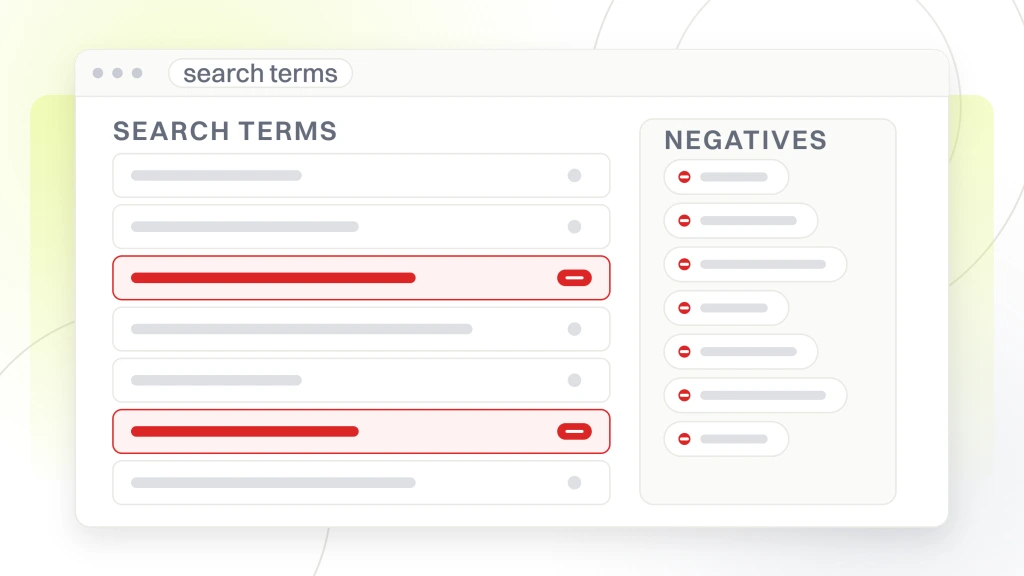
- Geographic negatives: Geelong, Ballarat, Bendigo, Shepparton, Warrnambool, Mildura, and every VIC regional center the business does not service.
- Informational negatives: how to, DIY, tutorial, salary, jobs, course, wiki, definition, meaning.
- Race-day and Cup terms that bleed into hospitality and travel auctions in November.
- AFL and A-League terms that bleed into hospitality and health accounts during finals seasons.
- University terms including Melbourne Uni, Monash, RMIT, Deakin, and La Trobe that bleed into B2B accounts.
- Public transport strike terms that bleed into rideshare and taxi auctions during industrial action.
- Irrelevant terms specific to the account, built from weekly search term review.
Weekly search term review is non-negotiable. Every Monday morning the account manager pulls the last 7 days of search terms, sorts by cost descending, and reviews every query that spent more than AUD 20 without converting. Half get added as exact match negatives. The other half get context. If the query is a close variant of a converting term, it stays. If it is a new theme that could work, it gets promoted to a fresh keyword in its own ad group. This discipline is what separates a Melbourne account that improves month over month from one that plateaus at month three.
Shared negative lists work well on Melbourne accounts because most VIC businesses share the same regional and informational negatives. Build a shared list once, apply it across every relevant campaign, and update it monthly. Individual campaign negatives get layered on top for campaign-specific waste. The combined structure catches waste at both levels without duplicating work. Skip ad-group level negatives except for very specific edge cases. Managing negatives at three levels creates review overhead without improving performance in most Melbourne accounts we have run.
Conversion tracking that makes Melbourne decisions honest
Bad conversion tracking is why most Melbourne accounts underperform. Counting form submits and calling that tracking is a losing model. A form submit is only a lead. Revenue comes from a booked call, a booked appointment, or a signed job. The gap between the two is 60 to 85 percent on most Melbourne service accounts. When you bid on form submits without weighting for the actual conversion-to-revenue rate, the account optimizes toward the wrong keywords, wrong ad copy, and wrong hours of day.
The tracking stack we install on Melbourne accounts covers four layers. Layer one is Google Ads conversion tracking on form submits, phone calls from ad extensions, and phone calls from the website. Layer two is offline conversion import from the CRM or practice management software. Every booked call, booked appointment, or signed contract gets imported back to Google Ads within 24 hours with a value assigned. Layer three is hashed-email conversions with hashed customer email addresses to close the iOS attribution gap. Layer four is server-side tagging through a Google Tag Manager server container to handle third-party cookie deprecation and preserve conversion signal quality on Safari and Firefox traffic.
Call tracking uses dynamic number insertion at the campaign level. Each campaign gets a unique tracking number so we know which campaign generated each call. We keep call recording live for the first 60 days, score call quality, and separate booked calls from tire kickers, wrong numbers, and existing customer service calls. After 60 days we drop to recording on 20 percent of calls to trim review time. Every call over 90 seconds counts as a qualified lead. Every call over 3 minutes counts as a high-quality lead. Calls under 30 seconds get excluded from conversion counts because they are almost always misdials or hang-ups.
For a working example of what accurate tracking does to account decisions, look at Berks Plumbing. A trusted residential and commercial plumber based in Berks County, USA, they came in running a single-page site and a PPC account with high CPCs, poor conversions, and irrelevant leads. We rebuilt the site into service-segmented landing pages, restructured Google Ads around 10 service-specific ad groups, and tuned Local Service Ads for verified review weight. Google Ads conversions jumped 99 percent, cost per acquisition dropped 67 percent, and organic users climbed 75 percent. The gain came from tracking the right events, feeding those signals back into bid decisions, and building pages that matched what searchers were actually looking for. Melbourne accounts running the same discipline see comparable movement inside 90 to 120 days.
Bidding strategy that matches Melbourne auction dynamics
Automated bidding works on Melbourne accounts, but only once the account carries enough conversion data to feed the algorithm. Fresh Melbourne accounts start on manual CPC or maximize clicks for the first 30 to 45 days. That period generates baseline data on which keywords, hours, and devices actually convert. Around conversion 30 to 50 on a single campaign, we transition to maximize conversions or target CPA. Around conversion 100 on the account, we test target ROAS on ecommerce campaigns and target CPA on lead gen campaigns. Skipping the manual phase and jumping straight to smart bidding on a fresh Melbourne account wastes 30 to 50 percent of the first two months in learning-phase inefficiency.
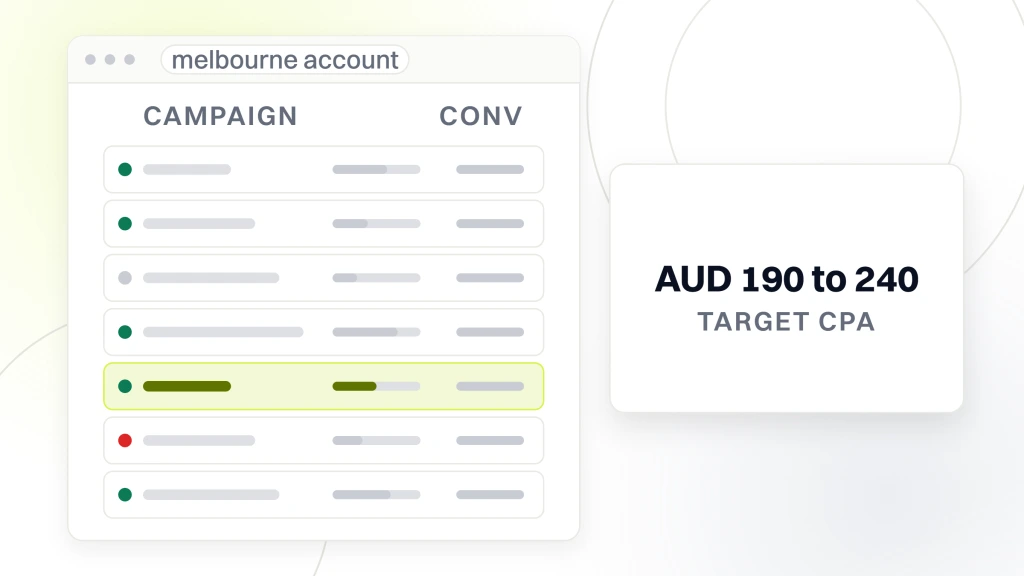
Target CPA on Melbourne service accounts gets set at 60 to 70 percent of customer lifetime value divided by the average leads-to-customer ratio. A Melbourne dental practice with an average patient value of AUD 2,600 and a lead-to-patient conversion rate of 30 percent carries a target CPA ceiling around AUD 780 per booked patient. We set target CPA at AUD 190 to AUD 240 for booked new patient consults on that account, which gives the algorithm room to work while keeping account economics profitable.
Day-parting on Melbourne accounts matters. Home services auctions peak between 7am and 10am AEST and again between 4pm and 7pm AEST on weekdays. Weekend performance varies by vertical but Saturday morning through Sunday afternoon is the peak window for elective health bookings. B2B accounts run 9am to 5pm AEST Monday through Thursday and pause on weekends. Legal auctions carry a Sunday evening spike because that is when people who had a bad weekend event start searching for lawyers. Day-parting bid modifiers of plus 15 to plus 30 percent on peak hours and minus 40 to minus 60 percent on dead hours pay for themselves inside 30 days.
Device bid modifiers reflect actual conversion patterns, not defaults. Mobile drives 65 to 78 percent of Melbourne service account clicks. Desktop drives higher conversion rates on B2B and legal. Tablet drives almost nothing worth optimizing for on most Melbourne accounts. Set device modifiers based on the actual conversion rate delta measured across at least 200 conversions. A Melbourne trades account that converts at 8 percent on mobile and 12 percent on desktop should carry a plus 30 to plus 40 percent desktop modifier. Our Google Ads management services page walks how our team applies these bidding patterns across every retainer we run.
Google ads management melbourne vs national agency accounts
Melbourne businesses often start with a national agency that treats Melbourne as one line item inside a national report. Six months later the conversation is the same. Cost per lead climbs, quality drops, and the agency blames the auction. The Melbourne market has specific patterns national agencies miss because their reporting rolls up to national averages and Melbourne micro-markets get averaged out. The table below shows the operating gap between a national account approach and a Melbourne-specific approach on the same budget.
| Account element | National agency default | Melbourne PPC build |
|---|---|---|
| Location targeting | Metro radius from Melbourne CBD, presence + interest | Suburb-list targeting inside actual service zone, presence-only |
| Negative keywords | Standard national informational list | VIC regional, race-day, campus, and sport-specific negatives layered |
| Match types | Broad match with smart bidding default | Phrase and exact match with weekly search term discipline |
| Ad copy | Templated national copy with city insertion | Melbourne suburb mentions, (03) phone format, VIC license proof |
| Conversion tracking | Form submits and calls counted as one event | Booked appointments imported from PMS or CRM with revenue value |
| Bidding | Smart bidding from day one | Manual 30 to 45 days then transition to target CPA with revenue-weighted goals |
| Search term review | Monthly if the client asks | Weekly Monday morning review with same-day negative additions |
| Reporting | National monthly rollup with Melbourne as a line item | Melbourne-only weekly report with sub-market splits and cost per booked lead |
The operating gap shows up in the numbers within 90 days. On the same monthly budget, a Melbourne-specific build generates 1.6 to 2.4 times the booked leads of a national agency default. Cost per booked lead drops 35 to 55 percent. Impression share on target keywords climbs 20 to 40 percentage points because bid strategy and quality score both improve. The account starts generating consistent monthly growth instead of the sawtooth pattern national accounts fall into when the algorithm cannot find a pattern to optimize against. A parallel AU example lives with Pet Insurance Australia, a national pet insurance brand where a keyword-focused Google Ads build with custom landing pages and remarketing generated 455 conversions in 5 months, an 8.87 percent CTR against a 1 to 3 percent benchmark, a 31.06 percent conversion rate, and 1132 percent return on ad spend. The same discipline transfers directly to Melbourne accounts.
Monthly cadence for Melbourne accounts
A well-run Melbourne account has a fixed weekly shape. Monday morning is search term review across every campaign that spent over AUD 500 in the previous week. Tuesday is bid adjustment review at the keyword and location level, with adjustments based on the last 28 days of conversion data. Wednesday is ad copy and landing page performance review, with underperforming ads paused and new variants launched. Thursday is competitor auction insight review, with bid adjustments where impression share dropped more than 5 percentage points. Friday is a weekly summary email to the client with three numbers, one action, and one question.
End of month runs the deeper review. Budget reallocation across campaigns based on cost per booked lead ranking. Keyword expansion in themes that have proven to convert, with new ad groups and dedicated landing pages built in the first two weeks of the following month. Negative keyword list cleanup, with obsolete negatives removed and new ones added. Landing page speed and conversion rate audit through Google PageSpeed and GA4. Every account gets a one-page monthly report that shows spend, conversions, cost per booked lead, and the one metric we are focused on improving in the next 30 days.
Client communication runs on Loom videos and short written reports, not slide decks. Every Monday a 5-minute Loom walks the previous week numbers, the top three search terms added as negatives, and the one campaign getting a bid or budget change that week. Every month a 12 to 18 minute Loom walks the monthly report with commentary on what worked, what did not, and what we are testing next. Melbourne business owners are busy and prefer async video updates over sitting through weekly calls.
Quarterly reviews are where account strategy gets revisited. Every 90 days we look at top-line growth, the cost per booked lead trend, and the vertical mix. Some Melbourne clients grow into new suburbs and need geographic expansion. Others hit capacity and need budget throttled back to protect job margin. A few pivot into new services and need new campaign structures built. We make those strategic moves in the quarterly conversation rather than in the middle of a monthly rush.
Landing pages that make Melbourne spend convert
Traffic quality is only half of the account. The landing page is the other half. Melbourne accounts that send traffic to a homepage instead of a keyword-matched landing page convert at 40 to 70 percent lower rates than accounts that send traffic to a dedicated page. This is measurable and repeatable. A Melbourne plumbing account with 5,000 monthly clicks and a homepage-only landing strategy books roughly 90 to 130 jobs a month. The same account with dedicated landing pages per service theme books 220 to 300 jobs a month on the same click volume. The gain comes from message match, page speed, and CTA clarity.
Message match on Melbourne landing pages means the headline matches the search query and the ad copy. A searcher who typed “emergency plumber Melbourne” and clicked an ad reading “24/7 emergency plumbing Melbourne” lands on a page with the headline “Emergency plumber in Melbourne. On site in 45 minutes.” That is message match. Bouncing them onto a homepage that reads “Welcome to our family plumbing business” is message miss. Every Melbourne landing page starts with the exact keyword theme in the H1, and every element above the fold points toward a single Melbourne-specific CTA.
Page speed on Melbourne landing pages targets sub-2.5 second largest contentful paint on mobile, matching the Core Web Vitals LCP benchmark. Melbourne mobile networks run 4G and 5G at Sydney-comparable speeds, but the tail of the user base still runs older devices. A page that lands in 4 seconds bounces at 40 to 55 percent. A page that lands in 1.8 seconds bounces at 15 to 25 percent. That gap is worth 300 to 800 extra booked leads a year on a mid-sized Melbourne account. We build Melbourne landing pages in lightweight WordPress or as standalone static pages served from Vercel or Cloudflare with AU edge nodes.
CTA clarity means one action per page. “Book a Melbourne callback” or “Get a Melbourne quote” or “Book a Melbourne consult.” One button, above the fold, repeated at 40 percent scroll depth and 80 percent scroll depth. No competing CTAs like “Read our blog” or “See our services” on a landing page pulled from an ad. Every extra option on the page drops the primary CTA click rate by 8 to 15 percent. For deeper context on how landing pages tie into full-stack lead generation, see the industry home services PPC page.
Common mistakes that sink Melbourne accounts
Melbourne accounts fail for a small number of repeat reasons. The first is running a national account structure on a VIC market. Broad match keywords, national negative lists, and campaigns that mix Melbourne with Sydney and Brisbane inside the same ad group. This is the fastest way to burn AUD 8,000 to AUD 22,000 a month with nothing to show for it. Split Melbourne into its own campaign or account, build the negatives that reflect VIC regional bleed, and stop trusting the platform to figure out geographic intent for you.
The second failure mode is chasing volume over quality. A Melbourne trades account that generates 400 form submits a month at AUD 30 each looks great on a dashboard. If 15 percent of those forms are qualified and 3 percent close as booked jobs, the account delivers 12 booked jobs a month for AUD 12,000 in spend. That is AUD 1,000 per booked job. The same budget spent on qualified leads at AUD 90 to AUD 160 per booked job delivers 75 to 130 booked jobs. Volume without qualification is a vanity metric. Every Melbourne account we run measures cost per booked lead, not cost per form submit. Gwinnett Area Plumbers, a residential and commercial plumbing provider in Gwinnett County, USA, is a clean parallel. We built 10 service-specific ad groups, dedicated landing pages, and full CallRail integration and produced 141 qualified leads in 4 months, 968 targeted ad clicks, and a 14.6 percent conversion rate. The mechanic behind that result works in Melbourne too.
The third failure mode is set-and-forget bidding. Smart bidding is not a substitute for account management. It is a tool that needs a competent operator to feed it clean conversion data, correct location targeting, and tight keyword themes. Melbourne accounts on target CPA with bad conversion tracking optimize toward garbage. Melbourne accounts on maximize conversions with broad match and no negatives optimize toward waste. The algorithm is only as good as the input, and Melbourne accounts need clean input more than most because auction competition is high and mistakes get expensive quickly.
The fourth failure mode is ignoring VIC calendar seasonality. AFL finals, the Melbourne Cup carnival, the F1 in March, the Australian Open in January, and the VIC school holiday cycle all move Melbourne auction dynamics. Home services auctions drop 30 percent during the Christmas shutdown. Legal auctions climb the first week of school going back. Elective health auctions climb the two weeks before Christmas. A Melbourne account that runs at fixed budget across the year is either underspending during peaks or overspending during troughs. Reserved budget adjustments matched to the VIC calendar recover 10 to 20 percent of annual account performance. Reference Google consumer trends and Business Victoria for calendar-anchored planning inputs.
Hiring the right google ads management melbourne partner
Hiring a Melbourne PPC partner is a business decision, not a marketing decision. The partner controls a five-figure to six-figure monthly line item and directly influences the pace of business growth. The wrong hire loses 6 to 12 months of momentum. The right hire compounds account performance quarter after quarter. Ask specific questions during the pitch and pay attention to what the pitch does not answer.
Ask for a screenshare walk of a live Melbourne account. Not a case study PDF. Not a slide with edited screenshots. A live account with the identifying info blurred. If the partner cannot show a live Melbourne account, they do not run Melbourne accounts at scale. Ask what specific Melbourne suburbs get positive location bid modifiers on their trades or dental accounts. If the answer is generic, they do not know the market. Ask what negative keyword themes are unique to Melbourne. Race-day, AFL and A-League, VIC university terms, and regional VIC town names should come up in under 30 seconds. Ask for AU-specific case studies. Ours include Pet Insurance Australia and the Sydney-based renovation company Passion Built, where a WordPress + Elementor rebuild, a Google My Business overhaul, and high-impression-share Google Ads on renovation queries generated more than $60,000 in bookings within 12 months and grew ranked keywords from 6 to 300 across the Sydney market.
Ask how the partner counts conversions and whether they import offline conversion data from a CRM or practice management system. If the answer is form submits and phone calls only, they are optimizing toward the wrong signal. Ask what their monthly reporting looks like and request a sample. A one-page report with spend, conversions, cost per booked lead, and one action for the next 30 days is what good looks like. A 40-slide deck is what agencies that need to justify their fee look like. The best Melbourne partners bill themselves on the outcome, not on the report length.
Ask about contract terms. Six-month terms are standard because Google Ads accounts take 60 to 90 days to hit steady state and another 60 to 90 days to show whether the model compounds. Anything shorter is a discovery engagement, not a management engagement. Ask about ownership of the Google Ads account. The client should own the account, not the agency. If the pitch includes handing over data to an agency-owned MCC without any clause returning the account to the client, walk away. Redefine Web keeps client ownership on every account we manage, and our retainers run from $999 to $4,500 per month across every vertical. For a broader look at cross-channel ecommerce paid, our work on Boogie Board is a useful reference. The pioneering reusable-writing-tablet brand cut cost per sale to $31, boosted conversion rate 11 percent, and managed $650,000 in sustained ad spend across Google and LinkedIn, with the same reporting cadence we run on Melbourne accounts.
Melbourne is a specific market with specific mechanics. Suburb-level targeting, VIC-shaped negatives, offline-imported conversions, and a Monday-morning review cadence do more for account performance than any single bid strategy setting. If your current agency treats Melbourne as a line item inside a national report, the account is under-earning. Book a call through our PPC management services page and we will walk a live audit of your Melbourne account inside a 30-minute Loom.