
Healthcare SEO services split into three workstreams that either compound or collapse depending on how the agency runs them. Strategy sets the bet. Content earns the ranking. Technical work keeps Google crawling. Miss any one of the three and organic search traffic goes flat, yet the invoices keep landing. This guide walks the strategy framework you use to pick healthcare SEO services, the content plan that ranks in your metro, the technical checklist a healthcare site really needs, and the pricing bands worth paying for.
You get the exact framework we run at Redefine Web across dental groups, DSO chains, med spas, and multi-location health systems. Honest pricing bands. A 14-location Pelvic Rehabilitation Medicine case where organic keywords grew 174% and organic traffic climbed 166% inside a year. The seven technical fixes we push live first on every healthcare rebuild. The five red flags in a healthcare SEO agency pitch that mean walk away. Read straight through in about 12 minutes and take the two sections that fit your stage.
Content plan that ranks in healthcare SEO
Content that ranks in healthcare answers the questions patients type before they call the practice. Symptom queries. Cost queries. Treatment comparison queries. Insurance coverage queries. Provider name queries. Location queries. The content plan we run at Redefine Web sorts those six intent types into a repeatable page structure that scales across specialties without breaking the editorial workflow.
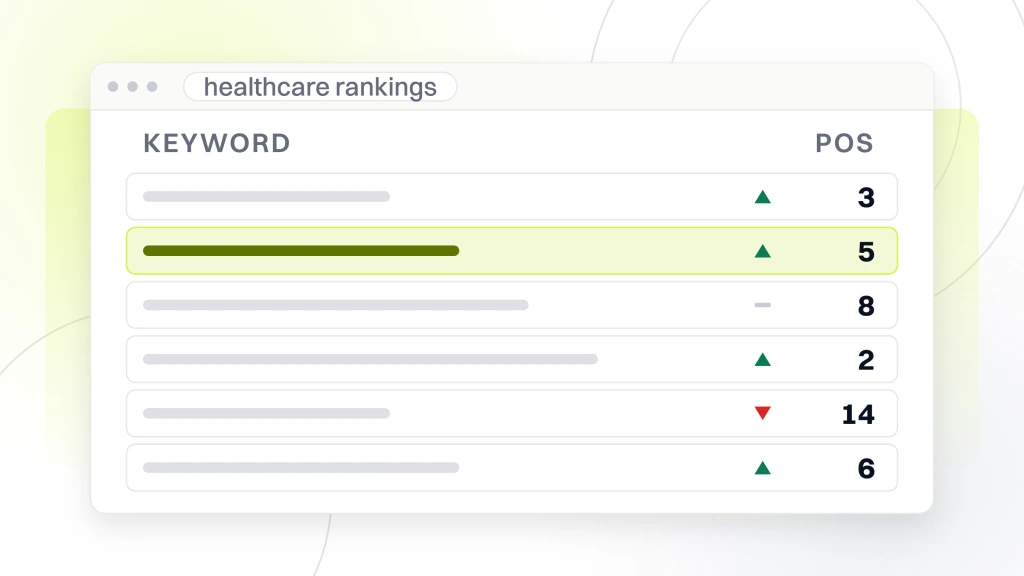
Every content plan needs a mix of hub pages that consolidate authority, service pages that convert, and blog posts that catch long-tail queries. Hub pages are the deepest resources on your site for a condition or treatment. Service pages are the transactional entry points that link straight to booking. Blog posts catch the pre-decision searches and feed internal links back to the service pages. Skip the mix and the site either ranks and does not convert, or converts and does not rank.
A working intent map covers head-term hubs at the top, service and location pages in the middle, and long-tail blog answers at the base. Head-term hubs pull broad-topic authority. Service and location pages pick up commercial queries with local qualifiers. Blog answers rank for the exact phrases patients paste into Google before they book. Wire the three tiers together with internal links and the whole site compounds instead of one page carrying the load.
Condition hubs
A condition hub is a 2,500 to 4,000 word page that covers everything a patient wants to know about a condition. Symptoms, causes, diagnosis, treatment options, provider list, insurance coverage, FAQs, and next steps. Hub pages own the head-term keyword for the condition and internally link to every supporting page. Groups that build proper condition hubs land in the top three organic results within 9 to 15 months for their target conditions. See our Healthcare SEO (Pillar) guide for the full architecture.
Provider bio pages
Provider bio pages rank for named searches. Patients often search for a specific doctor before they search for a practice. Each bio needs 600 to 1,200 words, Physician schema with sameAs links to NPI and state board records, real headshots, credentials, insurance accepted, and a direct booking link. Sites that publish thin two-paragraph bios lose the named search to Healthgrades and Yelp. Sites that publish deep bios own the top result for every clinician on the team.
technical SEO checklist for healthcare sites
Technical SEO for healthcare has seven fixes that produce more ranking movement than the next 50 combined. We run these seven on every audit and they clear inside 30 days on most sites. If your current SEO for healthcare partner has not done these, that is why organic traffic is flat.
- Core Web Vitals in the green on the 10 highest-traffic pages
- Physician schema on every provider page with sameAs to NPI
- MedicalOrganization or LocalBusiness schema per location
- Internal linking from condition hubs to provider pages and location pages
- Redirect map that resolves every 404 and old URL variant
- XML sitemap with dynamic entries for provider and location pages
- Mobile-first rendering with server-side hydration for provider grids
Core Web Vitals
Core Web Vitals in the green matter for two reasons. Google uses them as a ranking signal on mobile. Patients bounce off slow pages before they see the trust signals. The three metrics that count are LCP under 2.5 seconds, INP under 200 milliseconds, and CLS under 0.1. Healthcare sites that hit those three see mobile organic click-through gain 12% to 25% inside 60 days on the same rankings. Google’s own Web Vitals reference is the source you audit against. Ahrefs’ technical SEO reference is the second checklist worth having open next to your Search Console tab.
Schema markup that Google reads
Schema markup makes it easier for Google to understand what your pages describe. Physician schema on a provider page tells Google the person’s name, credentials, specialty, and where they practice. MedicalOrganization schema on a location page tells Google the practice name, address, phone, hours, and insurance accepted. Sites that push proper schema live across every provider and location see rich result eligibility climb from 15% to 40% of impressions up to 55% to 80% inside three months.
Case study on healthcare SEO services that drove 174% keyword growth
Pelvic Rehabilitation Medicine ran across 14 locations in 10 states when the engagement started. Provider pages were thin. Condition content was buried in blog archives. No page ranked in the top 20 for the head-term condition keywords in any metro. Patient acquisition depended almost entirely on physician referrals, which capped growth at the pace of physician outreach and left the group with zero organic pipeline of its own.
We consolidated to a single domain, built condition-first architecture across the site, published provider pages with schema for every clinician across all 14 locations, launched a patient community platform for pelvic-pain and endometriosis, and ran a technical SEO pass covering Core Web Vitals, internal linking, and mobile UX. 12 months later, organic keyword rankings expanded 174% year over year, organic traffic climbed 166%, and the Worthy Warrior community launched as a dedicated support hub that pulls new-patient inquiries directly.
| Metric | Baseline | After 12 months |
|---|---|---|
| Organic keyword rankings | Scattered, page 3+ | +174% YoY |
| Organic traffic | Limited | +166% |
| Provider pages with schema | Thin, no schema | Full coverage across 14 locations |
| Patient community platform | None | Worthy Warrior, active |
Domain consolidation
Consolidating three fragmented domains onto one authoritative property recovered scattered link equity and simplified the crawl. Every location and provider page mapped to a stable URL structure. Retired domains were 301-redirected page by page. Consolidated authority is why the ranking climb showed up inside six months instead of the 12 to 18 most healthcare replatforms take. If you are running multi-domain today, this is often the single highest-value move in a healthcare SEO plan.
Condition-first architecture
Old healthcare sites organize around services or departments. Patients search around conditions. The rebuild flipped the architecture so every condition, pelvic pain, endometriosis, interstitial cystitis, vulvodynia, got a dedicated hub with symptoms, treatment options, provider list, and community resources on one page. That structural change is why keyword growth showed up. Patients typing symptom queries landed on pages that answered them directly instead of bouncing off a generic services list.
Healthcare SEO companies pricing bands you can trust
Pricing for healthcare SEO companies varies by scope, provider count, and location count. The bands below are the honest ranges we see across dental groups, med spas, and multi-location health systems. Anything cheaper than the floor tends to be an offshore link-building operation that gets your site penalized. Anything above the ceiling for the project size is usually agency overhead you are paying for without the results scaling to match it.
| Practice size | Monthly retainer | Deliverables per month |
|---|---|---|
| Solo provider | $1,500 to $2,800 | 2 to 3 new pages, technical work, Search Console review |
| Small group (2 to 6 providers) | $2,800 to $5,500 | 4 to 6 new pages, provider optimization, monthly reporting |
| Multi-location group | $5,500 to $12,000 | 6 to 10 new pages, location optimization, link outreach |
| Enterprise health system | $12,000 to $28,000 | Strategy team, content team, technical team, monthly reviews |
What you are buying at each band
At the solo provider band you get a part-time lead plus one writer producing 2 to 3 pages per month. At the small group band you add a technical specialist and a monthly Search Console review. At the multi-location band you add a link outreach lead and quarterly content audits. At the enterprise band you get a full team, weekly standups, and a documented editorial process. Practices that pick the wrong band underperform. Solo providers at the enterprise band pay for capacity they never use. Enterprise systems at the small-group band get thin coverage that stalls progress.
Contract terms that protect you
Every healthcare SEO retainer should carry a six-month initial term, since rankings take time to move. Anything shorter and the agency has no reason to run the strategy work that pays back on month seven. Any agency demanding 12 months upfront without a written performance benchmark is asking for blind trust. The right contract has a six-month term, a clear scope document, monthly reporting against baseline metrics, and a written escalation path if numbers slip below benchmark past month four.
Red flags in a healthcare SEO agency pitch
Five red flags separate a real healthcare SEO agency from a churn-and-burn shop. Any one of them and you keep shopping. All five and you run.
- Guarantees of page-one rankings inside 30 days
- Refusal to name the writers producing your content
- Bulk link packages priced per hundred domains
- No baseline audit before signing a contract
- Monthly reports that hide keyword ranking data behind vanity metrics
The ranking guarantee red flag
Nobody outside of Google Search can guarantee a page-one ranking. Agencies that promise one are either bidding on brand keywords the practice already ranks for or running black-hat tactics that expose the site to a manual action. Both paths end badly. A real agency commits to a documented process with baseline metrics and monthly progress reviews against defined targets, not a ranking guarantee that lasts until Google’s next algorithm update.
The bulk link package red flag
Bulk link packages priced per hundred domains are almost always private blog networks or paid link farms. Google’s Search Central team has been public about link-scheme penalties for over a decade. See Google’s spam policies for the official reference. Practices that buy link packages sometimes rank for six months and then drop 60% to 90% of their organic traffic on a single algorithm update. The recovery from that penalty takes 12 to 24 months.
Measurement across SEO services for healthcare
The metrics you track separate a real healthcare SEO engagement from a monthly report full of vanity numbers. Organic sessions from ranking pages. Keyword rankings in the top three, top ten, and top fifty. New keywords entering the top 100. Appointment bookings attributed to organic traffic. Cost per booked appointment from organic versus paid. Track those five and you know whether the retainer is worth the invoice.
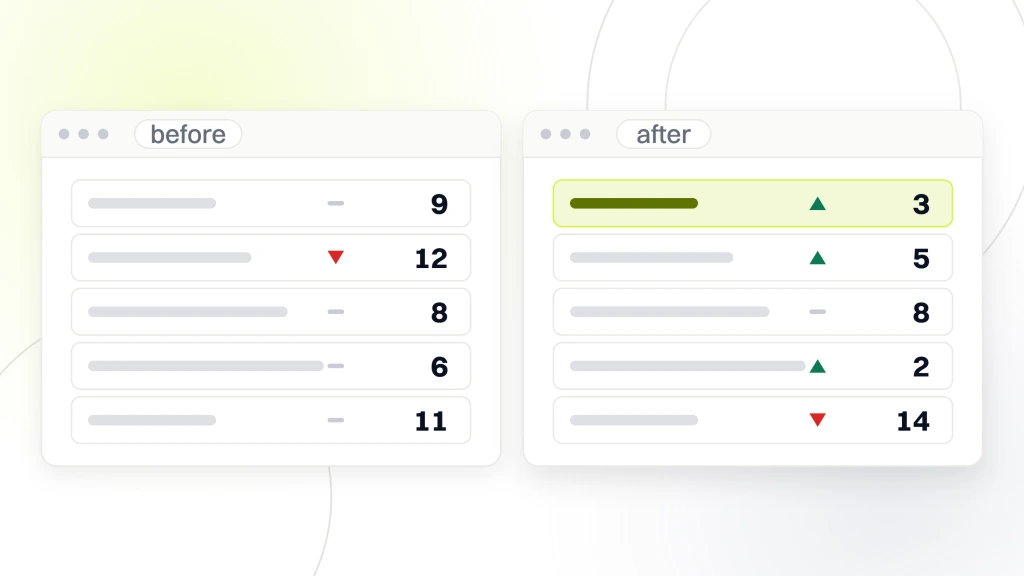
The two vanity metrics that agencies use to hide underperformance are total keywords ranking and total impressions. A site can rank for 40,000 keywords with zero of them in the top ten and zero bookings. A site can serve 1.2 million impressions and drive 200 clicks. Neither number is meaningful without the ranking distribution behind it. Ask any agency to report ranking distribution by band, top three, top ten, top fifty, past fifty, alongside the totals.
Attribution to booked appointments
Attribution to booked appointments requires a call tracker on the phone number and UTM tags on any organic-to-form journey. Without both, half your organic bookings attribute to direct traffic and the SEO retainer looks like it produced nothing. Set up the call tracker at kickoff. Confirm UTM tagging across every internal link. Report booked-appointment attribution monthly. Practices that do this see organic ROI clarify inside 60 days and stop the arguments about whether the retainer is working.
Reporting cadence and format
The reporting cadence that works is a monthly written summary plus a quarterly strategy review. The monthly summary covers what was published, what was optimized, ranking movement, session growth, and booked-appointment attribution. The quarterly review revises the 12-month plan based on what is working. Weekly reports are almost always noise. Weekly meetings are almost always a waste of the lead’s time that would be better spent producing. Push back if the agency proposes weekly touch-bases as a service feature.
Map-pack SEO for local healthcare practices
The local three-pack drives 40% to 60% of organic bookings for local healthcare practices. The three levers that move map-pack rankings are Google Business Profile completeness, review velocity, and local landing-page authority. Miss any of the three and the map pack goes to the competitor down the street who runs the discipline. Practices that run it well land in the top three for their target metros inside six months.
Completeness covers every field on Google Business Profile. Categories, services, insurance accepted, hours, photos, appointment link, description. Review velocity targets 4 to 8 new Google reviews per week per location. Ask every patient at checkout for a review with a QR code that opens the review form. Local landing-page authority means every location page carries LocalBusiness schema, unique content, and NAP consistency with your GBP listing. All three together produce local ranking movement inside 90 days.
Review velocity mechanics
Review velocity, not review count, drives map-pack ranking. A practice with 400 reviews and no new reviews in the past 90 days ranks below a practice with 80 reviews and 30 new ones this quarter. Set the ask into your checkout workflow. Print QR codes on receipts. Text the review link to patients an hour after their appointment. Train front-desk staff to make the ask verbally. Practices that hit 6 to 12 new reviews per week per location see map-pack rankings gain 3 to 6 positions inside 90 days.
Location pages that rank
Every location gets a dedicated page with 800 to 1,500 words of unique content, LocalBusiness schema, embedded map, hours, phone with click-to-call, provider list for that location, insurance accepted, parking notes, and directions from major landmarks. Cookie-cutter location pages that share 90% of content get ignored by Google. Unique location pages with real content rank in the top three for their metro’s core queries inside 6 to 9 months. See our Local SEO for Healthcare guide for the whole process.
Choosing a healthcare SEO agency for your practice
Three filters separate real healthcare SEO services from generic marketing shops when you shortlist healthcare SEO services. Recent healthcare case studies, not just testimonials. A documented editorial process for content that clears legal review. A technical team that can name specific fixes on your current site during the sales call. Any agency that cannot produce all three inside the first meeting is not the right partner for a healthcare practice.
The second filter is the writer pool. Healthcare content that ranks needs writers who understand medical terminology, can source from peer-reviewed literature, and can clear a legal review from your compliance team. Generalist writers produce content that fails legal review or reads as thin fluff. Ask any prospective agency to name the writers who will handle your account and share their bylines. Vague answers here mean the work is going to an offshore content mill.
The case-study check
Ask for three case studies from healthcare clients of similar size to your practice. Ask for the baseline metrics, the 12-month result metrics, and the retainer size. Any agency that shares only percentage growth without the baseline is hiding something. Any agency that has no healthcare case studies in the past 24 months is early in the vertical and your practice becomes the guinea pig. Neither is disqualifying on its own, but both together mean you probably want a different partner.
The discovery audit
A real healthcare SEO agency runs a discovery audit before quoting a retainer. The audit covers technical issues on the current site, content gaps against competitors, ranking distribution, and estimated 12-month upside. That audit should take two to four weeks and should produce a written document you keep whether you sign the retainer or not. Agencies that quote without discovery are guessing at scope. When you are ready to explore what a proper healthcare SEO plan looks like on your specific site, our Healthcare SEO agency page walks through the intake process.
Working with Redefine Web on healthcare SEO services
Redefine Web runs healthcare SEO services on a documented six-month framework. Weeks one through four are discovery and audit. Weeks five through twelve are the first content batch and the top technical fixes. Weeks thirteen through twenty-six are ongoing content, link outreach, and monthly optimization. By month six most practices see ranking movement in the top ten for their target keywords. By month twelve most practices see the kind of growth Pelvic Rehabilitation Medicine landed.
Our healthcare SEO services retainer covers strategy, content, technical work, and monthly reporting under one price starting at $999 a month and scaling with practice size. Our Healthcare Marketing Hub covers the wider stack, and our Healthcare SEO Strategy post walks through the framework in more depth. For technical readers, our Technical SEO for Healthcare post covers the seven fixes we push live first.