
Local SEO for healthcare is where most single-location and multi-location practices win or lose new patient volume. Your organic ranking on “dentist near me” or “orthopedic urgent care [city]” pulls more booked visits per month than any other channel we’ve measured. The pack search is late-funnel by the time it happens, so it produces the highest-intent leads too. The catch is that this work looks simple from the outside and turns out to demand five different disciplines the moment you start.
This post walks the whole stack in one place. The ranking factors that carry weight for multi-provider clinics. The Google Business Profile fields that move pack position. The citation cleanup nobody on staff wants to touch. The review capture that separates the top three from the bottom three. And the weekly rhythm that keeps rankings compounding instead of resetting every quarter. Roughly 94% of patients pick a provider on reputation, so healthcare review management is the single fastest lever most practices leave untouched.
Reviews Strategy for Local SEO for Healthcare Clinics
Reviews sit right behind the Google Business Profile as the second-heaviest lever. In every audit of these programs we run, review volume gaps show up in the top three ranking blockers. Volume, recency, star average, and response rate each feed pack ranking. In the same proximity band, the gap between the top three and the bottom three usually traces back to a 40 to 60% difference in review count. Practices treating reviews as a passive inbox instead of an active capture channel leave rank on the table every month.
The review request cadence
Ask every satisfied patient at the moment they’re most satisfied. That’s usually right after the appointment ends, before they leave the front desk. A checkout script that asks “how did your visit go” and, if positive, follows with “would you leave us a Google review on your phone” produces 3 to 5 times the review volume of a passive email follow-up. Automate the follow-up email as a safety net, yet the front desk ask carries most of the volume. Healthcare review management works best when the ask is human and the automation is backup, not the other way around.
Responding to reviews
Every review gets a response inside 48 hours. Positive reviews get a two-sentence thank-you referencing something specific from the review. Negative reviews get a calm acknowledgment, an offer to discuss offline, and a follow-up path that doesn’t include PHI (protected health information). Never respond in a way that acknowledges the reviewer was a patient (HIPAA constraint). The HHS HIPAA guidance on responding to online reviews is the primary reference for what you can and can’t say. The response rate contributes to pack ranking. Practices responding to 95% of reviews rank higher than practices responding to 40%, holding other factors constant.
Handling negative reviews
Negative reviews land on every practice. The response is what carries weight. Never argue, never dismiss. Acknowledge the reader’s experience, invite an offline conversation, and keep it short. If the review contains PHI or was clearly written by a non-patient (a competitor or ex-employee), flag it through Google’s review-flagging tool. Google removes roughly 30% of flagged healthcare reviews when the flag is well-documented. Don’t lean on removal though. Response quality matters more than removal in the long run.
On-Site Signals for Local SEO for Healthcare
Your website contributes to healthcare local search rankings through the content and schema that connect the practice to the geography. This is the on-site half of the work, and it is where most sites underperform. Most healthcare sites have a contact page, a homepage mention of the city, and nothing else. The competitor with 6 healthcare location pages, a neighborhood-focused blog post series, and LocalBusiness schema on every page outranks the practice with 40 blog posts and no local content. On top of that, roughly 64% of website traffic now comes from mobile, so the local content has to load fast and read cleanly on a phone or it never converts.
Location pages that carry weight
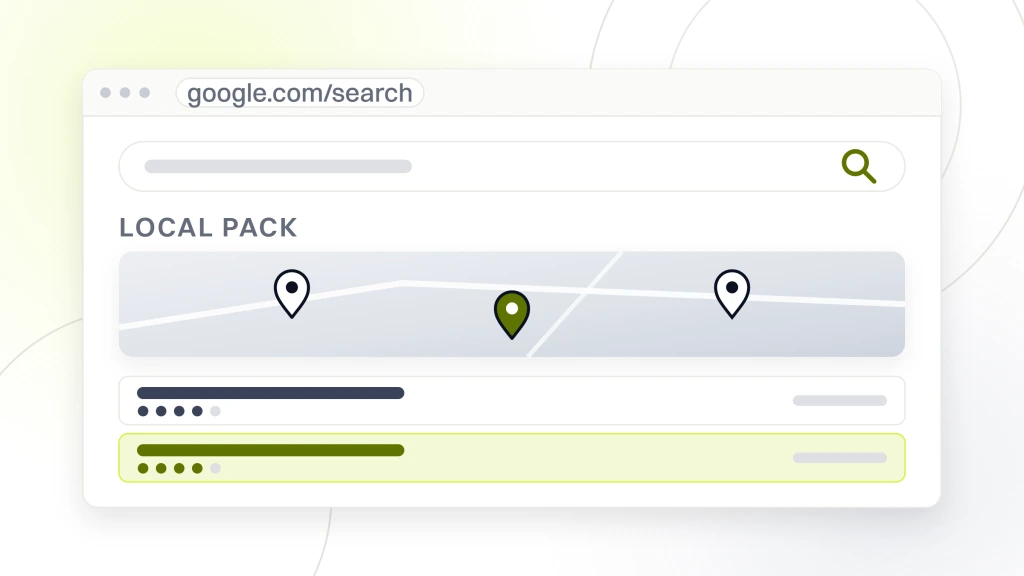
Every location gets a dedicated page with unique neighborhood context, driving directions from local landmarks, per-location insurance lists, per-location provider photos, an embedded Google Map pointing to the Google Business Profile, and LocalBusiness or MedicalOrganization schema tied to the location. Duplicated healthcare location pages get consolidated in Google’s index. Unique location pages rank independently in their respective local packs. See our Healthcare Website SEO for the site-level foundation this content sits on.
Neighborhood content that ranks
Content tied to specific neighborhoods pulls local search traffic that generic content misses. “Best pediatric dentist near [neighborhood name].” “Same-day dental care near [landmark].” “Family orthodontist in [ZIP code].” A monthly cadence of one neighborhood-focused post per active service area builds a local content moat inside 12 months. Practices skipping this layer plateau, and the competitor building it steadily climbs. Patients don’t search for “the city” once they know it. They search for the block, the mall, or the school their kid attends.
LocalBusiness schema alignment
Every page mentioning a location should emit LocalBusiness or MedicalOrganization schema referencing the exact address, phone, coordinates, and Google Business Profile URL. Alignment across the schema, the visible content, and the Business Profile itself reinforces the trust signal. Misalignment (schema referencing the old address, content showing the new address) confuses the local graph and caps pack ranking. Our On-Page SEO for Healthcare covers the schema patterns that pair with local content.
Real Numbers From a Multi-Location Local SEO for Healthcare Program
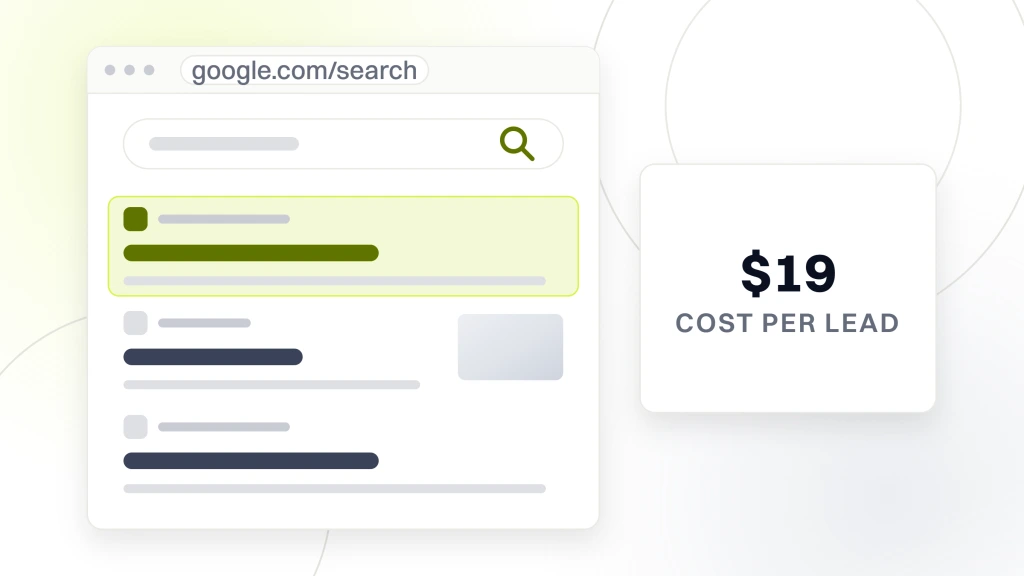
LifeStance Health Inc. ran a paired local plus paid search program across 10-plus Georgia clinics. The mix was Google Business Profile work, healthcare citations cleanup, review capture, location page rebuilds, and paid search targeting local queries. The 12-month result. Cost per lead held at $19 against a $25 target, patient acquisition volume tripled, and full impression share on niche services like TMS therapy. That $19 CPL is a real number from the case-study CSV, tied to the specific mix above, not a rounded average.
What moved the pack rankings
Three site-level moves shifted pack rankings first. Rebuilt healthcare location pages with unique per-clinic neighborhood copy, cleaned NAP (name, address, phone number) across 60-plus healthcare citations per location, and doubled review volume through front-desk asks. The Business Profile work added 40 to 60% more pack impressions across the 10 clinics over six months, and that impression share is where most of the paid CPL efficiency came from. Impression share on branded and near-branded queries climbed in step with the pack gain.
What operational changes stuck
The front-desk review-request script became a permanent part of checkout. The Business Profile posting cadence was automated through a shared content library. The citation report was scheduled quarterly. Those three routines produced the compounding effect. Practices that skip the routine work and lean only on the initial audit find their pack ranking drifts inside 6 months as competitors execute more consistently. Routine is the real strategy, not a supporting act.
Where the paid mix helped
Paid search covered the ground organic couldn’t reach fast enough. New service launches, niche modalities, and geographic expansion into markets where the pack ranking was still building. See our Healthcare PPC Agency Services for the paid search side of the paired approach. The paired model beats either channel alone by 20 to 40% on cost per acquired patient in most healthcare verticals.
Execution Rhythm for the Best Local SEO for Healthcare Systems
Multi-location systems don’t have a strategy problem. They have a rhythm problem. The strategy is well-known. Profile, citations, reviews, location pages, schema. The rhythm is what separates the systems that see compounding local ranking from the systems whose pack rankings drift within a year of launch. A shared calendar plus a named owner per location fixes 80% of the rhythm gap on its own.
| Cadence | Work | Owner | Time per location per month |
|---|---|---|---|
| Weekly | Business Profile posts, front-desk review asks, respond to new reviews | Front desk plus marketing lead | 2 to 3 hours |
| Monthly | New photos, Business Profile insights review, new location content | Marketing lead | 3 to 5 hours |
| Quarterly | Citation audit, NAP consistency check, ranking report by location | SEO specialist | 4 to 6 hours |
| Annually | Full profile refresh, service list update, category audit, provider directory sweep | SEO specialist plus marketing lead | 8 to 12 hours |
Who owns what
Ownership is where most multi-location programs stall out. Marketing owns strategy. Local office managers own execution. Nobody owns the weekly rhythm at the location level. That gap is why the Business Profile stops getting posts by month three, review asks fade by month six, and pack ranking drifts by month nine. The fix is a single named owner per location plus a shared content library the owner draws from. One accountable name beats a shared inbox every time.
Tools that keep the routine going
Local rank tracking through BrightLocal or Whitespark. Business Profile management through the Google Business Profile app or an aggregator. Review request automation through Podium, Birdeye, or a simple checkout script plus SMS. Citation monitoring through BrightLocal or Whitespark. None of these are optional past 5 locations. Under 5 locations, spreadsheets and calendar reminders work fine and a lean tool stack often outperforms a bloated one that no one logs into.
Reporting that surfaces the right work
Monthly reporting covers four things per location. Pack ranking, review volume trend, Business Profile insights (calls, direction requests, website clicks), and citation consistency percentage. The report is short. Two pages max per location, aggregated into a system-level dashboard for leadership. Longer reports get filed. Two-page reports get read and acted on. The report drives the next month’s priority list rather than sitting as a passive record on a shared drive.
Where Local SEO for Healthcare Fits Inside a Retainer
The program fits inside a monthly retainer as a mix of one-time setup and ongoing maintenance. The one-time setup is the initial audit, profile rebuild, healthcare citations cleanup, and location page rebuild. The ongoing work is the weekly and monthly cadence outlined above, plus the quarterly reporting and audit refresh. Splitting the two lets you scope both cleanly and stops the retainer from being a fuzzy “everything” bucket that never delivers.
Retainer scope for a single-location practice
Retainer starts at $999 a month for a single-location practice with a clean profile. That scope covers weekly Business Profile posts, monthly photo additions, review response monitoring, quarterly citation audits, and monthly ranking reports. Practices needing initial setup work (profile rebuild, citation cleanup) budget a separate $1,500 to $3,000 one-time setup fee before the retainer starts producing full ranking impact. That upfront fee is where most of the fast wins hide.
Retainer scope for multi-location systems
Multi-location systems scale from the single-location baseline with a volume discount per location. Ten locations at $300 to $600 per location per month covers the ongoing cadence with reasonable specialist depth. Beyond 25 locations, the retainer shifts to a program model with a dedicated program manager, shared content library, and location-owner training rather than fully outsourced execution. See our Healthcare SEO Services for the full retainer scope.
What shifts as the program matures
Year one skews toward setup and rebuild. Year two shifts to maintenance and expansion. Year three is mostly defense and small optimization. The retainer scope evolves in step. Practices that never make the shift end year three doing the same setup work over and over, which is a sign the initial work didn’t stick. Fix the rhythm early and the retainer scope shifts naturally over time.
Common Mistakes in Local SEO for Healthcare
The mistakes we see most. Setting up the Business Profile and never touching it again. Ignoring reviews as a passive stream. Duplicating healthcare location pages across offices. Assuming healthcare citations are fine after two years untouched. Skipping schema on location pages. Each of these caps pack ranking, and each has a specific fix that pays for itself inside a quarter.
Set and forget on the Business Profile
The most common failure mode. The profile gets set up, verified, and then abandoned. Meanwhile the competitor posts weekly, adds photos monthly, and picks up 30% more pack impressions as a result. The fix is a shared content library plus a weekly calendar reminder for a designated owner. Ten minutes a week is enough to keep the profile active and the pack impressions steady.
Passive review management
Reviews come in when patients feel motivated to leave them. That skews negative since negative feelings motivate more than positive ones. Active healthcare review management inverts the skew. Front desk asks at checkout produce 3 to 5 times the volume of passive email follow-ups, and the volume comes from satisfied patients who wouldn’t have bothered on their own. Skip active capture and the review average drifts down over time.
Duplicated location pages
Multi-location practices push 90% duplicate location page content across their offices. Google consolidates the pages in its index and picks one to rank per query. The others sit orphaned. The fix is 60 to 80% shared boilerplate plus 20 to 40% unique per-location content. Neighborhood context, per-office insurance lists, driving directions from local landmarks. It takes 4 to 8 hours per location page and pays for itself inside a quarter.
Ignoring citations
Healthcare citations don’t die dramatically. They drift. An old address stays on Yelp, a stale phone number stays on Vitals, the wrong hours stay on Healthgrades. Practices assume the initial cleanup holds. It doesn’t. Quarterly audits catch the drift before it caps ranking. See our Healthcare SEO Audit for the citation audit flow that pairs with the local rhythm.
Putting Local SEO for Healthcare in Motion
The program rewards routine over strategy. The strategy is well-known and copyable. The routine is what separates the practices at the top of the pack from the practices watching from position 12 and paying for the same marketing retainer. Set the rhythm, name the owner, and the pack ranking compounds on its own. In short, the practices that treat weekly work as sacred outrank the ones that treat it as optional.
Where to start next week
Pick one location to pilot. Audit the Business Profile against a 30-point checklist. Fill every empty field. Push a photo and a post. Ask the next five satisfied patients for a Google review at checkout. Log the four highest-priority citations you need to fix, and fix two this week. That single-location proof of concept becomes the template for rolling the rhythm across every other office in the group.
What to measure at the 90-day mark
Check three numbers at the 90-day mark of any program. Pack impressions from Google Business Profile insights (target: 20 to 40% higher than baseline). Review volume trend (target: 3 to 5 new reviews per month per location). Direction requests and calls from the profile (target: steady month-over-month growth). Miss any of the three and the routine needs adjustment, not the strategy.
When to bring in outside help
Outside help earns its retainer when the routine keeps slipping, when healthcare citations cleanup needs bulk directory work you can’t source internally, or when multi-location scale outgrows spreadsheet management. A specialist retainer pays for itself the moment two locations that were tied for pack position 5 both move to positions 2 and 3 inside a quarter. Under that threshold, in-house execution is usually the better spend.