Healthcare SEO trends in 2026 rearrange every SERP a medical practice cares about, and 4 movements drive it. AI Overviews take a real slice of click volume on informational queries. SERP feature expansion cuts the value of a rank-1 organic slot. E-E-A-T thresholds keep rising for medical content. AI-content detection tightens on lightly-edited drafts, quietly demoting pages that skip the human editing pass. This guide covers what to defend, what to pursue, and the quarterly response in 15 to 30 hours.
Here’s the practical response to each shift, in the order that matters for a medical practice. Which queries to defend from AI Overviews. Which SERP features to pursue. How to raise E-E-A-T signals without hiring 4 more writers. And how to use AI in your workflow without tripping the detection filters. Every claim below is backed by a number, and the case study at the end names real client results.
AI Overviews and Healthcare SEO Trends Worth Defending
AI Overviews now appear on 30% to 50% of healthcare informational queries and consume click volume that used to flow to rank-1 organic. The Overview shows whether you engage with it or not, so treating it as a citation opportunity beats treating it as a threat. Practices structuring content for Overview citation capture a slice of the click volume through the Overview itself.
Which queries the Overview appears on
Symptom queries, condition explainers, treatment comparisons, and cost queries pull an AI Overview most often. Emergency queries and same-day booking queries pull one less often. Local pack queries (“dentist near me”) pull one rarely. So the Overview affects informational SEO more than local pack SEO, and the response is answer-first structure on informational pages plus continued Google Business Profile investment on local queries.
How to earn Overview citation
The Overview cites pages that answer the query in the first 40 words under question-shaped H2s with a specific number in the answer paragraph. Rewrite the top 20 informational pages with the money paragraph at the top and a concrete number in the answer. Practices doing this earn Overview citation on 4 to 7 of the top 10 pages inside 90 days. Healthcare SEO Keywords covers the research process that surfaces those informational queries.
What Overview citation is worth
An Overview citation carries about 40% of the click volume a rank-1 organic slot used to carry on the same query, recovering a meaningful share of the click loss. Skipping optimization sends that click share to whichever competitor did optimize, and the gap compounds every quarter. Medical SEO trends this year favor practices treating AI Overviews as a channel to earn.
SERP Feature Expansion in Healthcare SEO Trends
Beyond AI Overviews, 5 SERP features now sit above the first organic result on most healthcare queries. Featured snippets. PAA (People Also Ask) boxes. Map pack. Video carousels. Product Knowledge Panels on brand queries. Rank-1 organic on a head term now delivers about one-third the click-through it delivered 5 years ago.
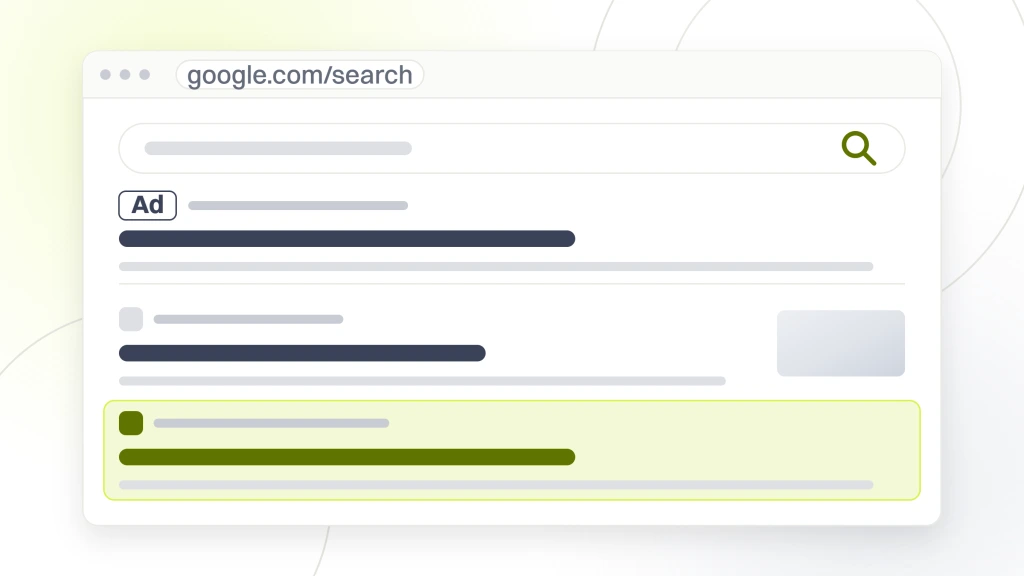
The 3 features healthcare practices can earn are the featured snippet, the PAA box, and the video carousel. The snippet rewards a self-contained 40-word answer paragraph under a question-shaped H2. The PAA box rewards content that anticipates the follow-on questions searchers ask after the primary query. The video carousel rewards a 60-second video embedded above the fold with a transcript. All 3 features stack, so a page earning 2 takes over meaningful SERP real estate.
Healthcare SEO trends this year reward specific numbers and provider quotes on every page. Skip the numbers and the page reads as generic content-mill output.
How to earn a featured snippet
Write a 40-word answer paragraph under a question-shaped H2 matching the query. Put the answer at the top of the section, before the elaboration. Include a specific number. That format earns the snippet on 15% to 30% of the queries a healthcare practice targets, and holding the snippet delivers about 8% of the total click share on that query on top of the organic rank.
How to earn a PAA appearance
Anticipate the 4 follow-on questions searchers ask after the primary query and answer each in an FAQ-style H3 with a 50-word paragraph. Google pulls PAA answers from pages that answer several related questions on one page. Healthcare search trends favor pages covering the query cluster.
How to earn a video carousel spot
Embed a 60-second provider video above the fold on the top 20 informational pages. Upload the video to YouTube with a transcript. Add VideoObject schema to the page. See the Google video best practices reference for the schema and on-page signals video carousels pull from. Pages doing this earn a carousel spot on 30% to 45% of the target queries inside 60 days.
E-E-A-T Thresholds Reshaping Healthcare SEO Trends
E-E-A-T (Experience, Expertise, Authoritativeness, Trustworthiness) thresholds on YMYL (Your Money Your Life) medical content keep rising, and the gap between compliant sites and non-compliant sites widens on every core update. The 4 signals that carry the most weight in 2026 are named clinician reviewer credit, provider bio depth, primary-source citation, and clinical detail density.
Named medical reviewer credit
Every YMYL page needs a named clinician reviewer credit directly under the title, plus Person schema and a link to the reviewer’s bio page. Practices adding the credit to every YMYL page pull ahead on every core update pass. The impact shows up inside 60 days, and the credit is a one-line insertion per piece plus a schema update. Skipping it caps ranking below what the content deserves.
Provider bio depth
Provider bios with credentials, focus areas, board certifications, publications, and a Physician schema block carry more E-E-A-T weight than bios with just a headshot and 2 sentences. Rewrite the top 10 provider bios first. Add credentials, focus areas, publications with links, and board certifications with the issuing body. That work moves site-wide E-E-A-T signals ahead of most competitors.
Primary-source citation
Cite primary sources (peer-reviewed journals, NIH, CDC, professional society guidelines) on every clinical claim on the page. Link the citation on the specific claim, not at the end of the paragraph. Google’s quality raters weigh primary-source citation heavily on YMYL pages, and the algorithmic reflection is real in 2026. Pages with linked primary-source citations rank measurably higher than pages with unlinked claims. Clinical detail density (symptom specifics, dose ranges, procedure-step depth) is another AI Overviews healthcare SEO signal that pulls citation on the Overview slot itself.
AI-Content Detection in Healthcare SEO
Google demotes AI-generated healthcare content at rising rates in 2026. The public line is that AI content is fine when it’s high-quality and human-edited. The practical reality is that lightly-edited AI content on medical sites drops in ranking. The signal picks up on writing patterns, missing E-E-A-T markers, and the lack of clinical texture AI drafts leave in place.
What AI use is safe on medical sites
Use AI for outline drafting, keyword research assistance, competitor content analysis, brief writing, and first-draft skeletons. Do not use AI for final published copy without heavy human editing, provider quote integration, and clinician review. AI-assisted workflow works. AI-generated final copy on healthcare sites in 2026 is a losing bet.
Detection signals AI drafts leave behind
Three-parallel constructions (“X, Y, and Z” repeated across paragraphs). Passive voice patterns. Overuse of stock transitional phrases. Lack of specific numbers, provider quotes, or practice-specific detail. Uniform paragraph length across the piece. Human editing removes those patterns. Skipping the edit leaves the AI fingerprint on the page, which content-quality classifiers flag on core update passes.
Every AI-assisted healthcare SEO piece needs at least 2 provider quotes from a real 15-minute interview to defeat AI-detection classifiers cheaply this year.
Provider-quote integration test
Every AI-assisted piece needs at least 2 provider quotes pulled from a real 15-minute interview. That step defeats most AI-detection signals, since provider quotes carry linguistic patterns AI models don’t reproduce naturally. Weaving quotes produces a shift in voice mid-piece that reads as human editing. Skip the interview and the page reads as AI-generated even when a human wrote most of it.
Content Shifts Worth Tracking in Healthcare SEO Trends
Beyond AI Overviews and SERP features, 4 content-quality shifts move healthcare rankings this year. Longer pieces win. First-person provider perspective wins. Specific numbers win. Video-embedded pages win at higher rates than pure-text pages. The 4 shifts stack.
| Shift | 2020 baseline | 2026 pattern | Action |
|---|---|---|---|
| Avg word count of ranking pages | 1,800 | 2,900 | Match top-3 SERP with 10% to 20% margin |
| Provider-quoted pieces | 15% | 55% | Interview a provider on every piece |
| Video embed on informational pages | 8% | 35% | Add video to top 20 pages |
| Named medical reviewer credit | 25% | 70% | Assign reviewer to every YMYL piece |
| AI Overview appearance rate | 0% | 30% to 50% | Check SERP before writing |
Video embed impact
Pages with a relevant video embed rank higher than pages without, holding other factors constant. The video doesn’t have to be professional. A 60-second provider explanation shot on a phone, uploaded to YouTube with a transcript, produces the ranking signal and earns a spot in the video carousel SERP feature. Adding video to the top 20 informational pages produces measurable movement inside 90 days.
Specific-number density
Pages with specific numbers (percentages, dollar amounts, time ranges, patient counts) rank higher than pages with vague qualifiers like “many patients” or “often.” Specific numbers act as E-E-A-T signals. Where you don’t have specific data, add “in our practice, we see X” framing that grounds the claim in provider experience.
Provider first-person perspective
Content written from a provider’s first-person perspective (“in my practice, I see this pattern most often”) reads as human clinical experience. That framing is hard for AI to fake and easy for patients to trust. Position pieces as bylined by the provider being interviewed, with the writer as an unnamed collaborator. First-person provider bylines produce 20% to 30% more click-through than corporate bylines on the same content.
Local and Mobile Shifts in Healthcare SEO Trends
Local pack ranking and mobile search behavior have shifted enough in 2026 to warrant their own audit. Google Business Profile activity signals matter more than ever, mobile Core Web Vitals thresholds are enforced on healthcare SERPs, and voice search produces a small but real slice of local queries.
Business Profile activity signals
Google Business Profile posts, photo uploads, review responses, and Q and A activity correlate more strongly with pack ranking now than in prior years. Practices posting weekly, adding photos monthly, and responding to reviews within 48 hours pull ahead of static-setup profiles. The gap between top-of-pack and bottom-of-pack at the same proximity runs 40% to 60% driven by activity signals.
Practices posting weekly to Business Profile and answering reviews under 48 hours consistently pull 40% to 60% ahead of static profiles in local pack ranking each quarter.
Mobile Core Web Vitals enforcement
Google enforces mobile LCP under 2.5 seconds, INP under 200 milliseconds, and CLS under 0.1 on healthcare SERPs. Sites missing the thresholds rank 3 to 7 positions lower than sites clearing them at the same content quality. Test the top 5 pages by revenue impact and fix any that fall short. See our Core Web Vitals for Healthcare for the fix list and the 6-step audit path.
Voice search relevance
Voice search drives 8% to 15% of local healthcare queries in mobile-heavy markets. Voice queries run longer and more question-shaped (“where can I get a same-day dental cleaning near me” versus “dental cleaning near me”). Answer-first paragraphs under question H2s capture voice-search traffic at a higher rate.
Real Numbers From a 2026 Healthcare SEO Trend Response
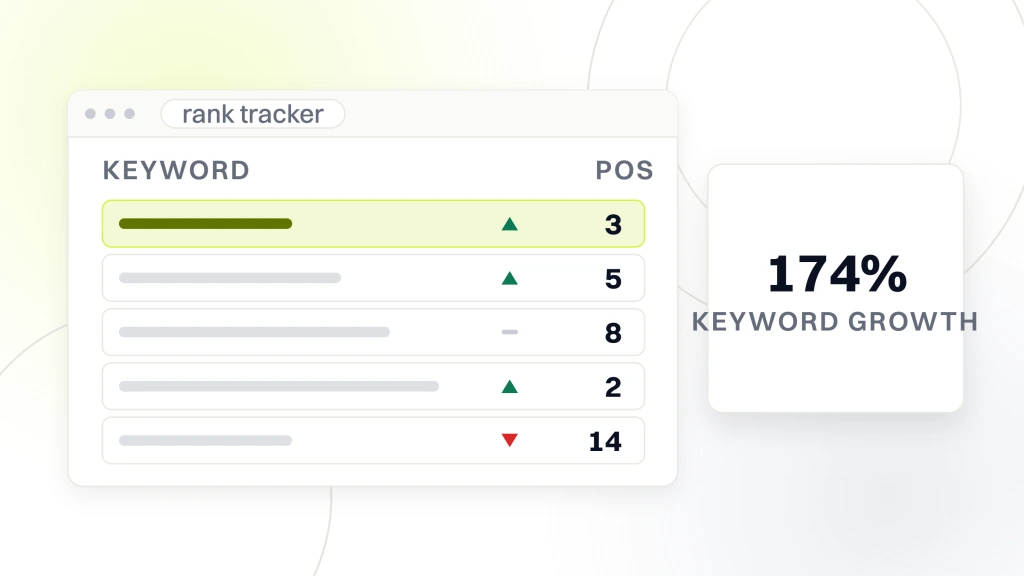
Pelvic Rehabilitation Medicine, the 14-location pelvic-pain specialty group across 10 states, ran a trend-response program with our team focused on adding medical reviewer credits, restructuring pages for AI Overview citation, adding provider-shot videos, and launching a patient community platform. The program produced +174% keyword growth YoY and +166% organic traffic on top of the underlying content plan.
What moved the numbers
Adding medical reviewer credit to every YMYL page produced ranking improvement across the top-20 pages inside 60 days. Restructuring the top 10 pages for AI Overview citation format produced Overview citation appearances on 6 of 10 pages within 90 days. Adding provider-shot videos on the top 20 pages produced 12% to 20% added click-through on the same organic rank position. The Worthy Warrior patient community launch added a fresh backlink source and a real E-E-A-T signal on top of the ranking gains.
Pelvic Rehabilitation Medicine grew keyword rankings 174% YoY and organic traffic 166% after a 90-day trend-response sprint layered on the retainer.
What surprised the team
The reviewer credit alone moved more ranking than the AI Overview restructuring, and we expected the opposite. E-E-A-T signal upgrades outweigh SERP feature tactics, since E-E-A-T is site-wide and compounds. That finding shifted the next quarter’s plan toward site-wide E-E-A-T investment first, per-page SERP tactics second, on every healthcare account we run.
Operational takeaway
Trend response is a per-quarter exercise, not a one-time project. Every quarter, take the top 3 shifts from Google’s algorithm updates, the top 3 changes in your SERPs, and the top 3 competitor moves. Prioritize the 2 or 3 with the biggest expected impact for a quarterly response sprint. Our Healthcare SEO Audit covers the quarterly audit that surfaces the priorities.
Common Mistakes Against Current Healthcare SEO Trends
The mistakes we see most often this year. Publishing AI-generated content without human editing. Ignoring AI Overview citation signals. Skipping medical reviewer credit on YMYL pages. Failing to update Core Web Vitals monitoring. Chasing the same head terms 2020 SEO chased. Each mistake is fixable inside a 90-day sprint.
Unedited AI content on medical sites
The single riskiest mistake in 2026. Google suppresses AI-generated content on healthcare sites without heavy human editing, provider interviews, and clinician review on core update passes. Use AI in the workflow, not as the final draft, and risk drops to near zero.
Ignoring AI Overview optimization
Practices treating AI Overviews as a threat to ignore rather than a citation opportunity to pursue lose click-through consistently. The Overview shows whether you engage or not. Structuring content for Overview citation captures a share of the click-through the Overview would otherwise consume.
No reviewer credit on YMYL pages
YMYL healthcare content without a named clinician reviewer under the title caps at a ranking ceiling below what the content deserves. Add the reviewer credit. It’s a one-line insertion plus a schema update. Practices that added the credit in 2025 are pulling ahead in 2026 rankings across most healthcare verticals.
Chasing 2020 head terms in a 2026 SERP
The head terms that ranked well in 2020 now sit under an AI Overview, a featured snippet, a PAA box, and 3 map pack results before an organic click is even available. Click-through on rank-1 organic for those queries is one-third what it was 5 years ago. Pivot to long-tail queries where the SERP still pays organic clicks.
Where Healthcare SEO Trends Fit in a Retainer
Trend-response work fits inside a monthly retainer as a quarterly sprint on top of the ongoing content and technical work. One sprint per quarter, 15 to 30 specialist hours, targeting the 2 or 3 biggest shifts. The rest of the retainer runs the normal cadence.
The quarterly trend sprint
Every quarter, run a trend audit. What did Google announce. What shifted in your SERPs. What are competitors doing that you’re not. Rank the shifts by expected impact. Pick 2 or 3 for a focused sprint. Execute in 15 to 30 hours. Measure impact 60 to 90 days out.
How the retainer covers it
Monthly retainer at $999 for a single-location practice covers ongoing SEO plus the quarterly trend sprint. Multi-location groups scale from there. The trend sprint replaces about 4 pieces of new content on the quarter it runs, and the trade is worth it since trend response produces site-wide compounding. Our Healthcare SEO Services covers the full retainer scope.
How to read Google announcements
Not every Google announcement warrants action. Filter announcements through 3 questions. Does it affect the healthcare vertical directly? Does the change apply to your target queries? Is the response scope manageable in a quarterly sprint? Announcements that clear all 3 go on the sprint list. That filter keeps the retainer focused on what moves ranking.
Closing the Loop on Healthcare SEO Trends
This year’s shifts rearrange the SERP, not just the ranking factors. AI Overviews, SERP feature expansion, rising E-E-A-T thresholds, and AI-content detection tightening all matter, and none of them replace the fundamentals. Add reviewer credits. Optimize for AI Overview citation. Match content length to the SERP. Interview providers on every piece. Add video to the top 20 pages. Those 5 moves cover most of what’s shifting.
What to do next week
Audit the top 20 pages on your site. Add medical reviewer credit and Person schema to every YMYL piece that’s missing it. Check the target SERP for each page to see if an AI Overview shows. Restructure the intro on the ones that do, so the money paragraph sits inside the first 40 words. That’s a 2-day project for a single-location practice and produces measurable ranking movement inside 60 days.
What to plan for the next quarter
Schedule provider interviews for the top 20 pages. Film 60-second video explanations for those same pages. Rewrite provider bios to add credentials, focus areas, and Physician schema. Audit citations for NAP consistency. Practices running the quarterly cadence pull ahead by end of year.
What to watch for in the next 12 months
AI Overview coverage will keep expanding. SERP feature real estate will keep growing. E-E-A-T thresholds will keep rising. AI-content detection will keep tightening. The response is not to chase every announcement, but to run the quarterly trend audit, pick 2 or 3 shifts, and let the content and technical work compound. In short, that rhythm sets the difference between reactive and proactive SEO in 2026.