
Is SEO still worth it? For some businesses it plainly is, for others it plainly is not, and what decides which group you are in is almost entirely about your business rather than about anything happening inside Google. Four conditions settle it, and you can test all four this week without talking to an agency.
Getting this wrong costs you in both directions. Buy search work when your buyers do not use search and you have funded a channel that cannot reach them. Skip it when they do and you hand those buyers to whoever did show up. The real cost is not the retainer on our SEO services page or anybody else’s. It is everything you did not spend on the channel that would have worked.
Why we are not a neutral source on this
We sell SEO. Our services page publishes a retainer ladder of $999, $1,499 and $2,499 a month, with an enterprise tier that starts at $4,500. Every paragraph on this page that favors investing also favors our invoice, and you should weigh the page with that in front of you rather than at the bottom of it.
That is why the middle of this article is four sections arguing that you should not buy what we sell. They are not there as a rhetorical move before the pitch. They are the four conditions that actually make the spend fail, and we would rather you found them here than eight invoices into a program that was never going to work for your category.
One more thing worth saying plainly. Google’s own guidance on hiring says that if you run a small local business you can probably do much of the work yourself, and that it costs nothing to appear in organic results. That is the search engine telling a whole segment of our addressable market that they may not need us. We think it is right, and the section on margins below is built around it.
What people are really asking when they ask this
Pull the results for this question and the top of the page is not agencies. It is two Reddit threads, a YouTube video and a Quora answer, all of them people asking strangers rather than reading a vendor. The agency pages start below them. That ordering tells you something about how much the market trusts the people who answer this question for a living, including us.
The related questions Google attaches to the search are more revealing still. They are not asking what is new. They are asking whether the thing survives at all. Will SEO exist in five years. Will it be replaced by AI. Is it even a thing anymore. Does it have a future. Those are durability questions, and they come from someone deciding whether to commit budget to a channel they suspect is quietly dying.
So there are really two questions stacked on top of each other. One is whether search traffic is still available to anybody. The other is whether it is available to you at a price that makes sense. They have different answers, and most articles on this subject answer only the first because the first is the one that lets them say yes.
What actually changed in search, stated plainly
Google now answers a large class of questions on the results page itself, through AI Overviews and AI Mode. Ask something explanatory or comparative and you can get a composed answer with links underneath it instead of a list of ten pages. That is a genuine structural change, not a scare story, and anybody telling you nothing has happened is not worth listening to either.
What Google publishes about it is narrower than the panic and narrower than the reassurance. Its documentation for site owners puts it plainly. “The best practices for SEO remain relevant for AI features in Google Search (such as AI Overviews and AI Mode).” It then answers the question everybody is actually asking. “There are no additional requirements to appear in AI Overviews or AI Mode, nor other special optimizations necessary.” So the work that gets you into an AI answer is the work that got you ranked. There is no separate discipline to buy, whatever it is being called this quarter.
Google publishes something else worth weighing against that. “With AI Overviews, people have been visiting a greater diversity of websites for help with more complex questions.” Take it for what it is. It is unquantified, and it comes from the party with the largest possible interest in publishers staying calm. It is evidence, but it is not measurement, and we are not going to present it as measurement because it happens to suit an agency.
What zero click does to the value of ranking
A zero click search is one where the person gets what they came for on the results page and never visits a site. Featured snippets did this years before AI answers existed. AI Overviews extend it to questions that used to need a real page, because a composed paragraph can carry an explanation that a snippet could not.
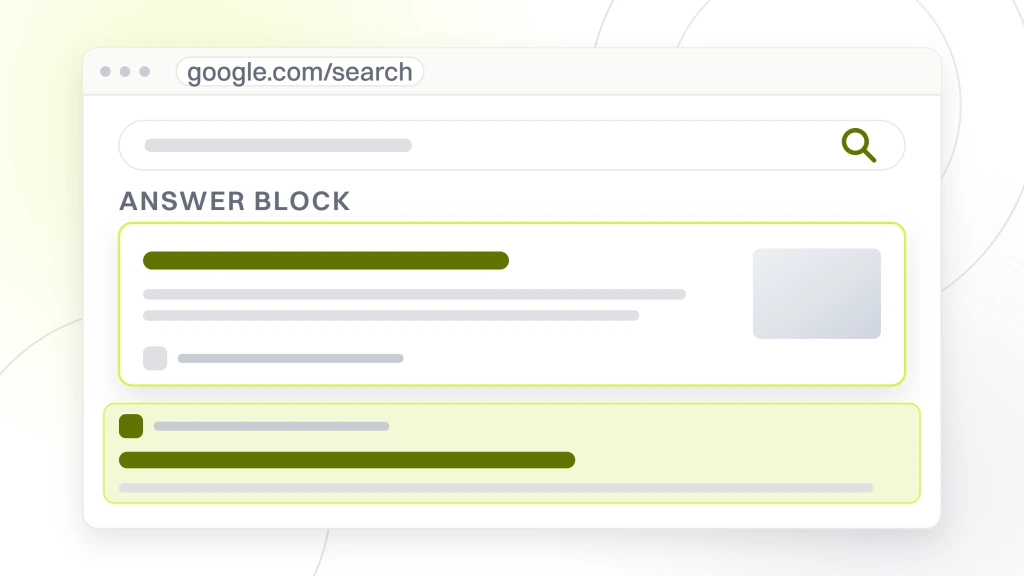
The honest consequence is that ranking and traffic have come partly apart. Position one used to be a reasonable proxy for visits. It is now a weaker proxy, and it is weaker by different amounts for different kinds of query. That is the change that matters to your budget, and it is a change in what you should measure rather than a reason to stop.
We are deliberately not giving you a percentage here. Google does not publish a per site figure for clicks lost to AI answers, and the third party numbers in circulation were measured on different query sets by parties with different interests, which is why they disagree with each other. Any article that hands you one clean number for this either picked the number that suited its argument or inherited it from somebody who did.
What you can do instead is sort your own searches. Queries that ask what a thing is are the ones an answer box absorbs. Queries where somebody is choosing a supplier, checking a price, booking, or looking for a business near them still need a destination, because the results page cannot do the transaction. If your commercial value sits in the first group you have a real problem. If it sits in the second you have less of one than the headlines suggest. Our piece on knowing whether your SEO is working covers how to tell those apart in your own reporting.
When your customers do not search for what you sell
This is the first and most common reason the spend fails, and it has nothing to do with AI. Some businesses sell things nobody looks for. Demand is created by a salesperson, a referral, a procurement list or a relationship, and the buyer never opens a search box at any point in the process.
Think of a components supplier on a handful of long framework contracts, a consultancy that runs entirely on partner introductions, or a genuinely new category where buyers do not yet have a word for what you make. In that last case people cannot search for you because the phrase does not exist yet. You can create the category, but that is content marketing and public relations doing the work, and it is a different budget line with a different shape.
The test is blunt. Write down the exact words you believe a buyer types before they find a company like yours. Not your product name, not your category as you describe it internally, the words a stranger with the problem would use. Then check whether anybody types them. If you cannot produce that list, or the list turns out to be nearly empty, there is nothing here for an agency to work with and no amount of technical competence changes that.
When you cannot wait, and need revenue sooner
Search work compounds and it does not start compounding on the day you sign. Pages have to be crawled, indexed and then evaluated against everything already ranking, and each of those is a queue you do not control. Paid search does not have that property. You can be in front of the same buyer within the hour, at a price per click instead of a price per month.
So if the business needs orders in order to still exist, or you are at the end of a runway, or the whole marketing budget is one quarter of trading, the honest recommendation is to buy clicks and fix the foundations later. A retainer that pays off after you have run out of cash has not paid off.
We are not going to attach a duration to any of this, and you should be suspicious of anyone who does without knowing your site. The timelines quoted in this market are mostly repeated rather than measured. We have a separate piece on how long SEO takes to show results that explains which parts move quickly, which parts wait on a crawl, and why the single number everybody wants is the one nobody can honestly supply.
When your margins cannot carry the retainer
Take our own entry tier, $999 a month, and do the arithmetic against your own numbers rather than anybody’s case study. Work out the gross profit on one average sale, after cost of goods and after delivery. Then work out how many of those sales a month it takes to cover the retainer before the program has made you anything at all.
If that number is one or two, the spend has a plausible path. If it is fifteen, you need to believe search can deliver fifteen extra sales every month, on top of whatever you already get, indefinitely. For a lot of low ticket local businesses that is not a realistic ask, and the answer is not a cheaper agency. A cheaper tier usually buys less work rather than the same work at a discount, which our piece on what the cheap tier actually buys goes through in detail.
There is a better option than a bad retainer, and it is the one Google points at. If you run a small local business, much of the foundational work is genuinely doable in house. Claim and complete your business profile, get your service pages saying what you actually sell, fix what is broken. Our breakdown of local SEO cost and our piece on audit pricing both exist partly so a reader can work out that they should be spending less than we would like them to.
When aggregators own your whole category
In some categories the first page of results belongs structurally to somebody else. Travel, insurance comparison, recruitment, event tickets, food delivery, and large parts of retail are dominated by marketplaces, directories and comparison sites. They are not there because they out optimized you. They are there because the searcher genuinely wants a list of options, and one site holding ten thousand options answers that better than any single business can.
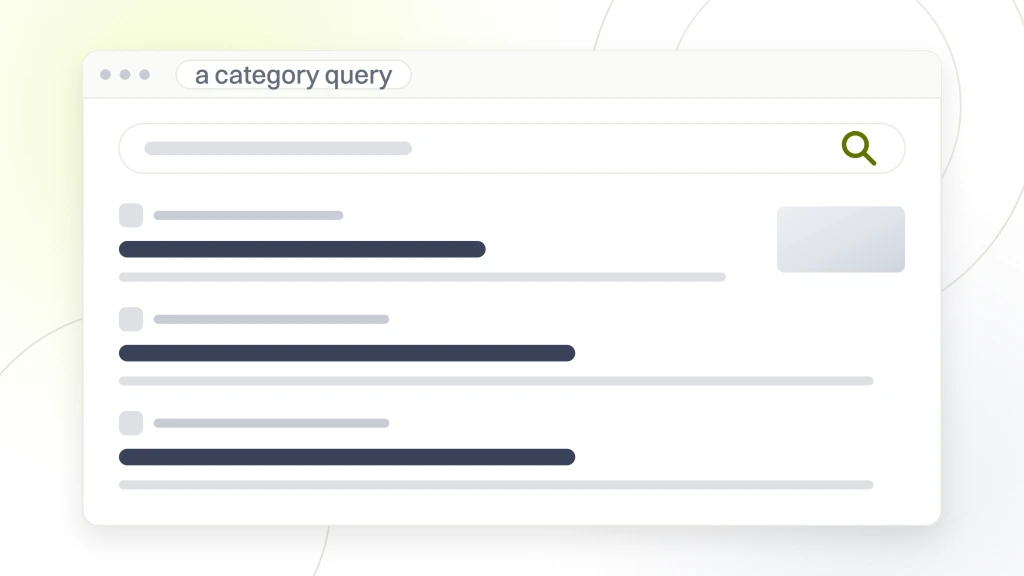
You can confirm this in about ten minutes and you do not need a tool. Search your three most commercially valuable terms and count how many of the results on the first page are businesses like yours, and how many are platforms listing businesses like yours. If it is eight platforms and two brands, you are not competing for a page, you are competing for a slot on somebody else’s page.
When that is the picture, the money usually goes further on ranking inside the aggregator, on the paid slots above it, or on the long tail the platforms do not bother with. That is still search work of a kind, but it is not the retainer most agencies would sell you, and an agency that quotes you a standard program without mentioning this has not looked at your results page.
Is SEO still worth it when none of those four apply
If people search for what you sell, you can wait, your margins carry the cost and your results page is made of companies rather than platforms, then the case is strong and it rests on a mechanism rather than on a statistic.
Search is the only channel where the customer arrives already having described their problem. Nobody has to be interrupted, persuaded to care, or retargeted into remembering you. That demand exists whether or not you spend anything, which means the question was never whether the traffic is there. It is whether it reaches you or the competitor who answered first.
The second half of the mechanism is that the asset stays yours. Stop paying for ads and the traffic stops that day. A page that ranks keeps working while you are not paying attention to it, and it keeps working on the next person with the same problem. That is also why it takes longer to build, and the two facts are the same fact seen from either end. Our explainer on how ranking actually works covers the underlying model if you want the detail.
The arithmetic that settles it, using your numbers
You will have noticed that this page has quoted no return multiple, no percentage of traffic and no click through rate by position. That is deliberate. Those figures are the whole genre of this topic and almost all of them are either unsourced, measured on somebody else’s category, or old enough to predate the change the article is claiming to assess. We would rather give you a method you can run than a number you cannot check.
Four inputs, all of which you already have or can get in an afternoon. The gross profit on one average sale. The proportion of leads that become sales, which your own records hold. The monthly cost you are considering. And the search volume on the terms that actually indicate buying intent, which a tool gives you and which any agency should show you before a contract rather than after.
Those four tell you how much of the available demand you would need to win before the program breaks even, and whether that share is plausible for a business at your size against the companies currently holding those positions. If a proposal cannot produce that calculation for your business, it is not a plan, it is a price. Our walkthrough of SEO pricing packages covers what the tiers usually contain underneath the headline figure.
What to make anyone quoting you put in writing
Google publishes its own list of questions to ask an SEO, and it is more useful than most agency checklists because it has no retainer at the end of it. It tells you to ask for examples of previous work, what results to expect and in what timeframe, how success will be measured, and whether the provider will share every change made to your site along with the reasoning behind it.
The same guidance is blunt about guarantees. “No one can guarantee a #1 ranking on Google.” It advises walking away from anyone claiming a special relationship with Google or a priority route into the index. It also warns against granting write access to Search Console before you have judged the work, and against acting on a third party tool’s audit without checking the recommendations against Google’s own documentation.
Apply every one of those to us as readily as to anybody else. An article by an agency about whether to hire an agency is only worth reading if it survives being pointed back at the author, and our guide to picking an SEO agency is written to be used that way.
What we would check first
In order, and none of it needs a vendor. Open your results page for your three money terms and count companies against platforms. Write the five phrases a stranger with your customer’s problem would type, and confirm somebody types them. Work the gross profit arithmetic against the monthly figure you are considering. Then decide whether you can wait for a queue you do not control, honestly, against your actual cash position.
Four answers, and they decide it between them. Any one of them coming back badly is a reason to spend the money somewhere else, and that remains true no matter how good the agency is. The competence of the supplier cannot fix a category with no demand or a margin that cannot carry the fee, which is the part most proposals skip.
Do them in that order, because they get harder to reverse as you go. The results page count costs you ten minutes and can end the conversation on its own. The phrase list costs an afternoon. The arithmetic needs your accounts open. The timing question is last because it is the one people answer optimistically, and it is worth asking somebody who is not responsible for the marketing budget to answer it with you.
Where this leaves you
The question is not whether search still works. It is whether it works for your business, at your margin, on your timeline, against the specific results page you are trying to enter. Those are four different questions and a yes to one of them is not a yes to the rest.
Notice that none of the four is about AI, zero click results, or any of the changes that make this question feel urgent. Those changes are real and they alter what you should measure, but they do not decide the case for or against you. A business with demand, runway, margin and a winnable results page was a good candidate before AI answers existed and remains one. A business missing any of the four was never a good candidate, and the arrival of AI answers did not make that worse so much as give it a more fashionable reason.
So run the four checks yourself before anybody quotes you, and be willing to arrive at no. The most useful outcome of this page is a reader who works through it and decides to spend the money on something else. If the checks come back well and you want a second opinion on what your results page is actually telling you, our free website audit is where to start.