
A five-figure yearly spend on the wrong agency is the most common preventable loss in a single-location dental practice. Learning how to choose a dental marketing company is not a marketing exercise. It is a procurement decision with real dollars, real patient volume, and a two-year impact on production. Most owners run the process on a sales call and a slide deck, then wonder six months later why the numbers never moved.
The short version. If the agency cannot name three current dental clients, show a real monthly report from one of them, and explain how they handle HIPAA in tracking, walk away. Those three answers eliminate 60 percent of the vendors who send proposals. This guide covers the checks that separate real dental marketing firms from repackagers, the pricing tiers that make sense, and the year-one warning signs.
Key takeaways
- Ask for three named current dental clients and one reference call before you sign anything.
- HIPAA fluency in the tracking stack is a hard gate, not a nice-to-have.
- Reports should lead with new patient count and cost per new patient, not clicks.
- Six-month first terms with a month-five review clause protect both sides fairly.
- Client-owned Google Ads, GA4, and GBP accounts are non-negotiable at signing.
What a Dental Marketing Company Actually Delivers
A dental marketing company is not a Google Ads shop with dental clients on the roster. It is a partner that runs local SEO, paid search, paid social, website work, review generation, and reporting as one program. The channels only work when they run together. Split them across three vendors and you get three vendors blaming each other every time patient bookings drop. A real partner owns the funnel from search query to booked appointment, with one strategist accountable for the outcome.
The baseline scope for a growth-stage practice looks like this. Local SEO on the Google Business Profile and site. Paid search with weekly search query mining. Paid social where the patient acquisition math supports it. Landing pages for the highest-spend campaigns. Review automation feeding the GBP. Call tracking with recorded calls. A monthly report tied to booked appointments. Per American Dental Association guidance, tracking that touches patient data must be reviewed for compliance before it goes live.
What sits outside scope matters too. A dental marketing agency does not manage your practice management system, billing, patient scheduling, or clinical workflows. Any vendor that promises to handle those is either misrepresenting the work or planning to outsource. Keep clinical inside. Keep marketing outside.
The best dental marketing companies show you a redacted client report on the first call. The worst show you a case study PDF written by their sales team.
Seven Questions to Ask Before You Choose a Dental Marketing Company
The discovery call is your only real interview. Owners who learn how to choose a dental marketing company through this checklist stop treating the pitch deck as evidence and start using the seven questions below as the filter. Real agencies answer them without checking with someone. Repackagers stall or send follow-up email answers that read like sales copy. Use the first call on these questions instead of the pitch deck.
- Which current dental client has the closest patient volume to ours, and can we call them?
- How do you handle HIPAA in your tracking and remarketing stack?
- What does your monthly client report actually show, and can we see a redacted sample?
- Who is the day-to-day strategist on our account, and how many other accounts do they run?
- What is your standard contract term, off-ramp clause, and account ownership structure?
- How do you split in-house work from any outsourced work, and where does that team sit?
- What does the first 30 days of onboarding look like before we spend a dollar on ads?
An agency that answers all seven with specifics is worth a proposal request. One that answers three or four is not automatically out, but the missing answers show where the risk sits. Dodging more than three is the wrong partner regardless of what the proposal says next week.
The HIPAA answer matters more than any other
Any agency running remarketing, Meta ads, or GA4 for a dental practice needs a specific answer here. The Meta Pixel firing on an appointment confirmation page without hashing protected health information is a real compliance exposure. Google Ads conversions with unhashed emails create the same risk. If the agency shrugs at the question, they have never thought about it. That alone disqualifies them. The HHS covered entities overview is the starting reference every partner should have read.
Red Flags in Dental Marketing Firm Sales Conversations
The sales call reveals more than the pitch deck. Every dental marketing firm has tells that expose how they actually operate. Watch for these patterns during the first two calls. Any one warrants a follow-up question. Two or more warrants moving to another candidate. Anything evasive at the sales stage tends to get worse after signing.
Pro tip. Record the discovery call with permission. Play it back the next day. Sales-call charisma fades on second listen, and the actual answers surface more clearly.
Promising specific ranking positions
Any vendor that promises to rank you number one for a specific keyword in a specific timeframe is either bluffing or planning to hit an easy long-tail phrase and call it a win. Rankings depend on your competitors, the algorithm state, and your site’s technical foundation. Broad growth targets tied to the whole program are fine. Specific rank promises are a tell.
Requiring a 12-month contract before showing any results
A 12-month contract with a heavy break fee before the agency has shown any results is a defensive move for the agency, not a client protection. Six months is a reasonable minimum for real SEO or paid programs to show meaningful data. Anything longer on the first contract is the agency protecting itself against churn from underperformance. Negotiate a six-month first term with a review clause at month five.
Vague deliverables inside the SOW
If the statement of work lists SEO work as a line item without hours, tasks, or output specifications, the agency is preserving its flexibility to under-deliver. A real SOW lists weekly and monthly tasks by category. Search query mining. Landing page tests. GBP posts per month. Content items per quarter. Reporting cadence. Ask for the detailed version and read it before signing.
What the Best Dental Marketing Companies Charge and Why
Pricing across dental marketing agencies clusters into three tiers. Knowing which tier fits your practice size and growth stage saves proposal-reading time. The tiers reflect real hours of strategist attention plus channel spend management. Anyone quoting outside these ranges is either underscoping or overcharging.
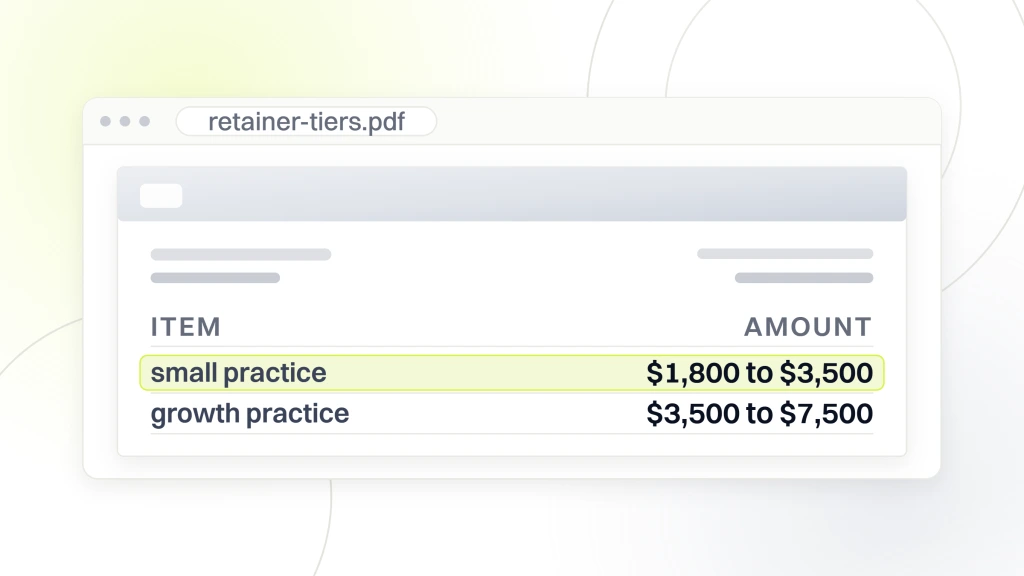
| Tier | Monthly Fee | Practice Size | Typical Scope |
|---|---|---|---|
| Small practice | $1,800 to $3,500 | Single location under 800 active patients | Local SEO, GBP work, review automation, light paid search |
| Growth practice | $3,500 to $7,500 | Single location or two locations, 800 to 2,500 active patients | Full SEO, PPC, paid social, landing pages, monthly strategy |
| Multi-location or DSO | $7,500 to $25,000+ | Three or more locations or DSO structure | Per-location strategy, cross-location reporting, custom builds |
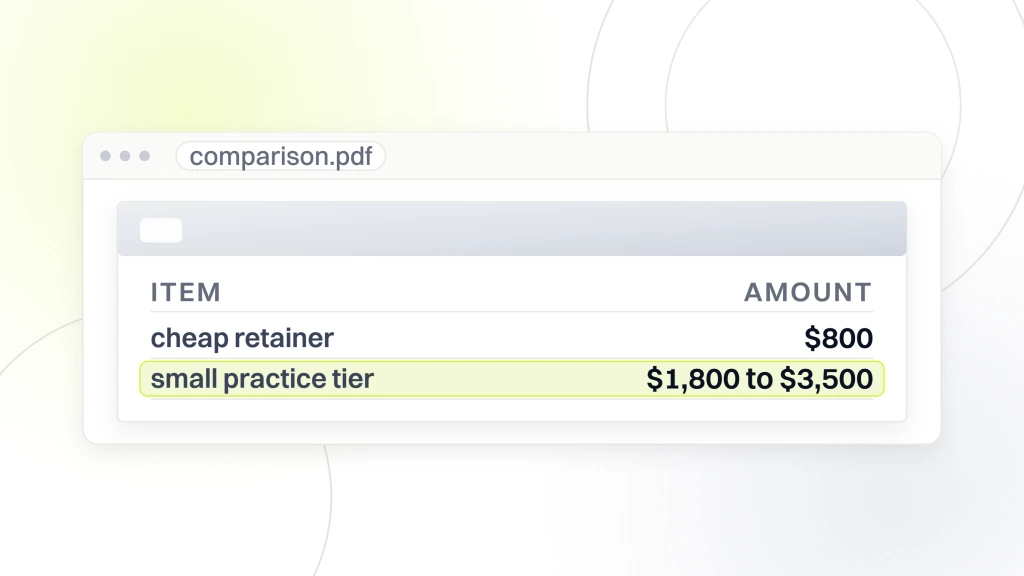
Callout. An $800 retainer looks cheap on the invoice and expensive on the annual patient count. Strategist time under three hours a month cannot grow an account.
Why cheap agencies are usually the most expensive over 12 months
An $800 monthly retainer sounds affordable until you count the wasted ad spend, the bad tracking, and the six months of no-progress reporting. A cheap agency covers itself by cutting strategist time to two hours a month. Two hours cannot keep an account from breaking, let alone grow it. Cheap agencies cost more over the full year than a mid-priced agency running real hours.
Ad spend structure and why flat fees beat percentage-of-spend
Ad spend sits separate from the agency fee. A common structure is a flat monthly fee for management plus your own ad spend paid direct to Google, Meta, and other platforms. Percentage-of-spend fees create a perverse incentive. The agency earns more by spending more, whether or not the extra spend books more patients. Flat fees or fixed hour bands align incentives better.
Contract Terms to Negotiate With a Dental Marketing Consultant
Every agency contract has three or four terms worth negotiating before signing. Most owners sign the standard template because they are excited about the work starting. The template favors the agency. Negotiating three specific terms costs the agency nothing and reveals how flexible your future partner actually is when pushed on paper.
Callout. Account ownership is a five-minute conversation on the first call. Any agency that refuses to run on client-owned accounts is holding your marketing assets hostage.
Ownership of accounts and creative assets
Your Google Ads, Meta Business Manager, GA4, GBP, and website should sit under your practice ownership with the agency granted user access. Any vendor that wants to own your accounts is holding your assets hostage. Every credible dental marketing consultant runs on client-owned accounts.
Reporting cadence and dashboard access
Monthly reports are the minimum. Better agencies offer a live dashboard you can check any time. Ask what the report includes, what format it arrives in, and whether you get a monthly call with the strategist. Both belong in the SOW.
The 30 or 60-day off-ramp clause
Every contract should specify a 30 or 60-day off-ramp with a clean handover of assets. The handover includes campaign structures, landing page files, tracking setup, and any content produced under the retainer. Practices that skip this term end up locked out of their own campaigns when the relationship ends. It costs the agency nothing and protects you at the exit.
How Dental Marketing Agencies Deliver the Work
Agencies deliver work in one of three models. Knowing which model your finalist runs on tells you a lot about work quality, pricing, and the risk profile you are signing up for. Ask directly during discovery. Honest agencies name the model without hesitation.
Pro tip. Ask the sales rep to introduce you to the strategist on the second call. Real agencies say yes on the same day. Repackagers ask to schedule that call three weeks later.
The in-house strategist model
Every account has a named strategist inside the agency who holds the client relationship and does the strategic work. Implementation like landing pages and content writing sits with a small in-house team. This model produces the best quality and prices in the mid-to-upper tier. Under 12 accounts per strategist is healthy. Over 20 is a warning sign.
The hybrid outsource model
A US-based strategist owns the account and strategy. Implementation work sits with offshore teams the agency has trained. Quality is mixed. Ask who writes the ad copy, who builds the landing pages, and where they sit geographically.
The full outsource model
The account manager is US-based. Every other role is offshore. This model shows up at the low end of the pricing range and generates the highest complaint volume in industry surveys. If the agency dodges questions about who does what, this is almost certainly the model. Not every offshore team is bad, but the accountability layer thins out and results usually suffer.
What Dental Marketing Firm Onboarding Should Cover in 30 Days
Onboarding is the first 30 days after signing, and what happens in that window predicts the next 12 months. Good agencies front-load discovery, audit, and strategy so campaign changes in month two sit on real data. Bad agencies push a template plan and start spending ad budget in week one.
Week one covers discovery and access
Discovery calls with the doctor and the office manager. Access requests for Google Ads, GA4, GBP, PMS reporting, and any existing analytics. A baseline audit of the current program. A kickoff document with goals, KPIs, and program structure. Any agency that skips discovery and asks for account access to start optimizing is running a template, not a strategy.
Weeks two and three cover audit and written strategy
Deep audit of the SEO, the paid accounts, the site, and the review profile. A written strategy document with the plan for the first 90 days. Sign-off from the client on the plan before implementation starts. This is where good agencies earn their fee, and where bad ones skip ahead to make campaign changes look busy for the month-one report.
Week four covers implementation and reporting foundation
Campaign restructures based on the audit. Tracking fixes. Landing page changes if needed. First automated report configured. Standing weekly Slack channel opened. A calendar invite for the first monthly strategy call. By day 30, the program is running on real data and the reporting cadence is live.
How North County Dental Care Picked a Dental Marketing Partner
North County Dental Care, a general and cosmetic dentistry practice in Vista, California, had several agencies running campaigns that did not line up. When the practice partnered with Redefine Web in 2021, it moved everything under one plan. By 2024, the numbers showed what that discipline produced.
The first phase rebuilt the site, hardened security, and refreshed local SEO signals. Structured schema and consistent NAP data across local directories gave the GBP profile signals to work with. That foundation is what most previous agencies had skipped in favor of running paid campaigns on a broken site. Advanced local SEO paired with GBP-driven PPC targeted the highest-value services first. Landing pages built for each ad group matched the messaging and converted the traffic.
Over the full engagement, North County Dental Care saw +1,000% patient growth, +385% organic traffic, and +500% marketing ROI. Two other Redefine Web dental clients ran similar programs. VP Dental doubled new patient bookings and added $8,100 per month in recurring revenue, with search impressions up 776%. iSmile Dental Spa in Carmichael, California drove +900% patient growth, +800% organic traffic, and +500% marketing ROI. Delicate Dental Group generated 700+ Google reviews with +280% Map Pack calls and tripled Maps impressions.
Year-One Warning Signs You Picked the Wrong Dental Marketing Agency
Even a careful process on how to choose a dental marketing company sometimes lands on the wrong shop. Watch for warning signs during the first 12 months. Any single sign is a conversation to have. Two or more is a signal to start evaluating alternatives. Catch problems in month six, not month 11 when the auto-renewal clock is inside 30 days.
Reporting drift toward vanity metrics
The first report leads with new patients booked. The sixth leads with impressions and click-through rate. That drift is a tell. The agency is quietly changing what they measure because the outcome numbers are trending down. Push back on the first report that hides the new patient count. See the Google Ads healthcare policies for the tracking rules any credible agency should follow.
Strategist turnover on your account
Your strategist changes in month three. Then again in month seven. High turnover signals internal churn at the agency. Every handover loses a week of momentum. Every new strategist takes 30 days to relearn your practice. Raise it with agency leadership before the third handover happens.
Slower response times on the shared Slack channel
Onboarding response times run four hours. Month-eight response times run three days. Communication drift usually maps to attention drift. The strategist has picked up too many accounts, or the agency has grown past its delivery capacity. Time to renegotiate scope, request a new strategist, or start evaluating options.