You want diy healthcare seo that moves rankings and books patients, not a 40-step beginner list that ends the same way for every practice. This is the real in-house playbook. It covers the 12 tasks any front-office or marketing hire can run without a specialist, the tools that pay for themselves in month one, the mistakes that quietly bury a practice site, and the moment where hiring targeted help saves more than it costs. Solo practices with one location and a clean service line can run 70 to 80 percent of diy healthcare seo in-house on 4 to 6 hours a week. Multi-location and specialty practices hit a wall around month four and start losing revenue by staying pure DIY past it. Read this once and you know which bucket your practice sits in before you spend another quarter guessing.
What DIY Healthcare SEO Really Means in 2026
Diy healthcare seo is the set of on-page, technical, local, and content tasks a solo provider or small in-house team can run without paying an agency retainer. It doesn’t mean cheap. It doesn’t mean fast. It means your practice owns the accounts, the work, and the results, and nobody bills you a monthly fee to click the same buttons your marketing hire could click.
The 2026 version has three drivers. Google Business Profile handles most local visibility for single-location practices. AI Overviews cite structured, sourced content over templated pages. Site speed and Core Web Vitals now factor into medical search ranking harder than any other vertical because YMYL (your money or your life) content gets held to a higher trust bar. Handle all three in-house if you’re systematic. Skip that and diy healthcare seo becomes a slow time drain with nothing to show after six months.
Key takeaways
- Solo practices run 70 to 80 percent of diy healthcare seo in-house on 4 to 6 hours a week.
- Google Business Profile drives more new patients than most practice websites do.
- NAP consistency and review velocity correlate directly with local rankings inside 60 days.
- AI-generated medical content without provider review triggers YMYL penalties fast.
- Hire targeted help when rankings stall past six months of consistent in-house work.
What You Can Honestly Run In-House
The diy healthcare seo task list splits into four buckets. A non-specialist on your team can run every task below on 4 to 6 hours a week. The line that matters is which tasks are hourly execution and which ones need real judgment. In-house programs hit their ceiling on the judgment work, and every practice we audit crosses that line without noticing.
Google Business Profile is where you win first
Claim it, verify it, and complete every field. Categories, hours, service list, insurance accepted, appointment booking link, service area, provider bios on individual profile listings. Add 5 to 10 real photos of the office and providers. Post updates weekly with genuine content. Reply to every review, positive and negative, inside 48 hours. This single platform drives more new patients for a solo practice than the website does.
On-page basics anyone can execute
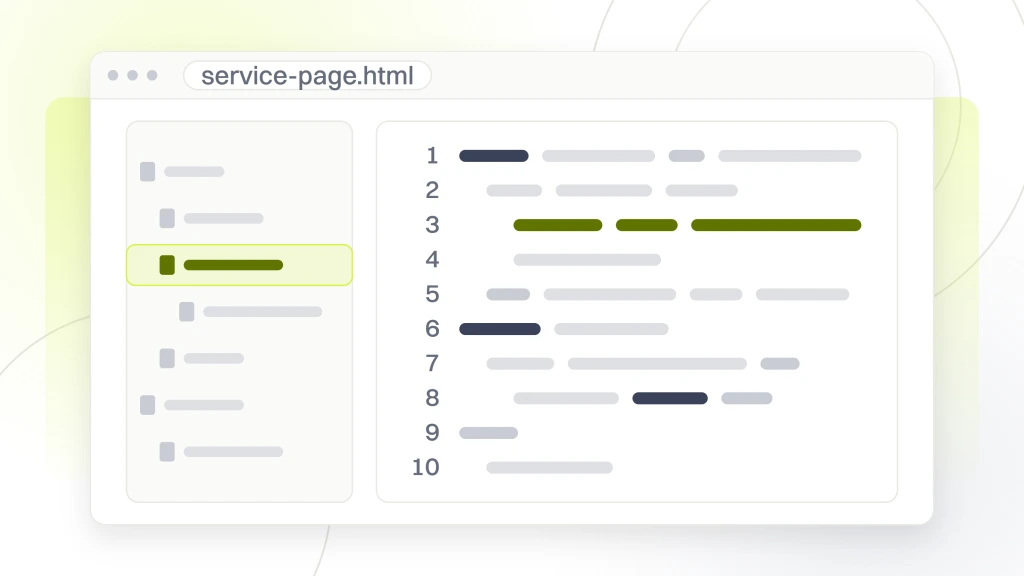
Every service page needs a unique title tag under 60 characters, a meta description under 155 characters, one H1, at least three H2s, and 400 to 800 words of body copy that answers a real patient question. Add FAQ schema for the five most common questions per service. Compress every image to WebP under 100 KB. Link each service page to the homepage and to two related service pages. That’s the on-page baseline for affordable seo for healthcare providers.
Local citations and NAP consistency
Your practice name, address, and phone number (NAP) has to match exactly on Google Business, Yelp, Healthgrades, Zocdoc, Vitals, WebMD, Bing Places, and 15 to 20 other medical directories. Inconsistent NAP data is the number one local ranking killer we see on audits. Free tools like Whitespark or Moz Local’s directory checker audit the mismatches, then fix each one manually. It’s a 4-hour project once and a 30-minute quarterly check after that.
Affordable SEO for Healthcare Providers That Moves Rankings
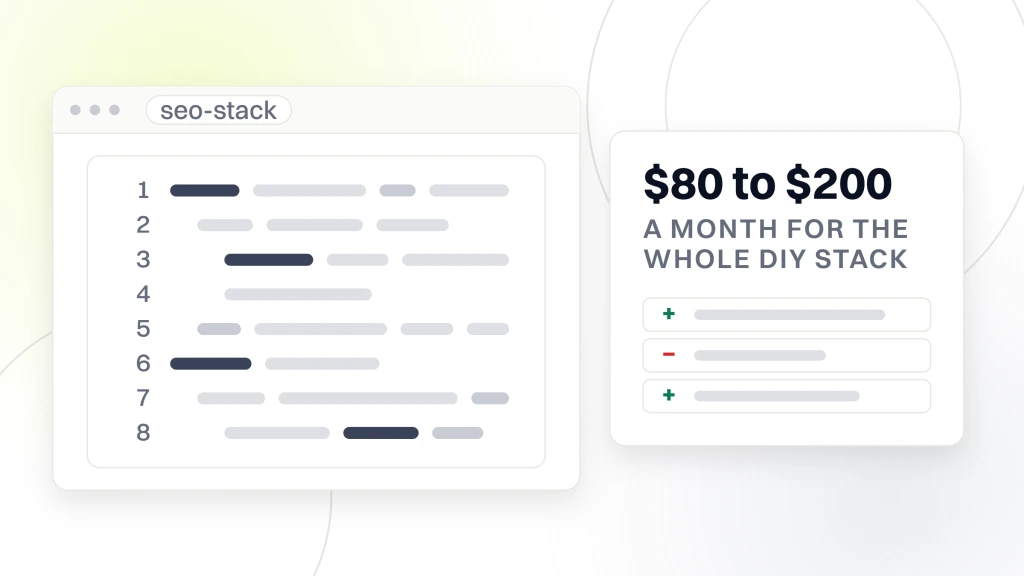
Affordable seo for healthcare providers doesn’t mean a $99-a-month automated tool that spams your site with AI-generated content. It means a lean stack plus disciplined in-house execution. The 2026 stack for diy healthcare seo runs $80 to $200 a month total and covers 80 percent of the visibility a small practice needs to compete locally.
The affordable tool stack
Free Google Search Console for indexing and query data. Free Google Analytics 4 for traffic. About $50 a month for a keyword research tool like Ubersuggest or Mangools. Around $30 a month for RankMath Pro on WordPress. Roughly $20 a month for a rank tracker like Serpwatch or Nightwatch. Free Screaming Frog under 500 URLs for technical audits. That’s under $100 a month and it covers every real diy healthcare seo task a small practice actually runs.
Where affordable stops being affordable
Affordable seo for healthcare providers breaks down at three thresholds. Multi-location practices need enterprise local SEO tools starting at $300 a month. Practices in competitive metros (dermatology in NYC, dental in LA, orthopedics in Chicago) need a backlink budget around $1,000 a month. Practices publishing more than two pages of content a month need dedicated medical writers who understand the trust rules.
Realistic ROI on the affordable path
A solo practice running the affordable stack with discipline over 12 months should see 2 to 5 new patients per month directly attributable to organic search by month six, growing to 8 to 15 by month twelve. If the trajectory hasn’t started by month six, the diy healthcare seo work isn’t sticking and you either fix the process or bring targeted help in.
How Can I Build My Healthcare Practice Website SEO Step By Step
The most common question we hear from practice owners is direct. How can i build my healthcare practice website seo without an agency. Here is the exact sequence that works for diy healthcare seo. Follow it in order. Skipping steps because they look boring is the number one reason DIY programs plateau at month three and never recover.
Weeks 1 to 2, audit and foundation
Run a free Screaming Frog crawl of the whole site. Note every broken link, every missing title tag, every duplicate H1. Check PageSpeed Insights for the top 10 pages. Confirm mobile-friendliness on every page. Fix anything scoring below 70 on mobile. Install RankMath. Set up Search Console. Submit the sitemap. Verify Google Business Profile.
Weeks 3 to 4, on-page optimization
Rewrite every service page title tag and meta description. Add an H1 with the primary service keyword and location where relevant. Add three to five H2s that answer real patient questions. Add FAQ schema on service pages. Add LocalBusiness schema on the homepage and Physician schema on provider bios. Compress every image to WebP under 100 KB. Add internal links between related service pages.
Weeks 5 to 8, content and citations
Publish two blog posts per month answering real patient questions, each 800 to 1,500 words, written or reviewed by a provider. Fix NAP across 20 medical directories. Post to Google Business Profile weekly. Ask 5 to 10 recent patients per week for a review. By the end of week eight the foundation is solid and you can start measuring what’s actually working.
SEO for Small Healthcare Practices That Compete With Corporate Chains
Seo for small healthcare practices has one advantage the corporate chains don’t. Authentic local presence with a face and a story. The chain gets national brand equity. You get to show up on Yelp with 200 five-star reviews from patients who know your name. Play to your strength and stop trying to out-scale the corporate playbook you cannot win on volume.
Where small practices beat chains
Local citations, review velocity, provider-personal content, and neighborhood-specific service pages. A corporate chain publishes one national landing page. Your practice publishes 12 neighborhood pages tuned to “pediatric dentist in [neighborhood name]” and each one ranks. That is a 12x visibility gain on the exact long-tail queries your patients type, and it is why diy healthcare seo can beat a national brand on local intent.
Where small practices lose
Technical SEO scale, backlink authority, and content publishing velocity. A chain has 40 in-house pages generating internal links to every service page. You have 12. A chain publishes 30 blog posts a month. You publish 2. On any competitive head term (“dentist [city]” without a neighborhood modifier) the chain wins.
The reviews engine
Every checkout at the front desk should ask, in a natural voice, for a review. “If today went well, would you leave us a Google review on your way out? Takes one minute.” That single scripted line moves review velocity 3 to 4 times over silent checkouts. Set a goal of 15 to 20 new reviews per month. Reply to every one. Local ranking correlates directly with review volume and recency.
Healthcare SEO Mistakes That Quietly Kill DIY Programs
Healthcare seo mistakes cluster into the same 10 patterns on nearly every DIY practice we audit. Every one is avoidable if you know it exists. Every one costs you a cluster of rankings you’re losing right now to competitors who don’t make them.
The top 10 mistakes list
- Duplicate title tags across every page (usually just the practice name).
- Missing or broken NAP citations across major medical directories.
- No provider bio pages, or bios without Physician schema.
- Homepage using “welcome to [practice name]” as the H1 instead of a search-friendly headline.
- Slow mobile page speed with LCP over 4 seconds.
- No FAQ schema on service pages.
- Publishing thin AI-generated posts that Google flags as low quality on YMYL topics.
- Ignoring negative reviews or replying defensively.
- Buying backlinks from directory farms and getting the site penalized.
- Never checking Search Console for indexing errors or manual actions.
The one mistake that kills the whole program
Publishing AI-generated medical content without physician review. Google’s medical YMYL rules explicitly penalize it. AI Overviews cite verified expert-authored content, not templated AI output. If your diy healthcare seo program leans on ChatGPT to write blog posts and nobody on your team has an MD, DO, RN, or equivalent to review, you’re building a penalty timer into your site.
Content Strategy for DIY Practices
Two blog posts a month is enough. Ten is better. Nobody in a small practice can sustain ten. Two is honest and repeatable, and two posts a month across 12 months puts 24 pages of expert content on your site that Google can index and rank against the long-tail patient questions your competitors ignore.
The topic engine
Ask the front desk for the top 20 questions patients ask before booking. Ask providers for the 10 questions patients ask during exams. That is 30 topics. Rank them by search volume in Ubersuggest. Pick the top 24 for the year. Assign one per two weeks. Done. The topics come from real practice conversations, which means the copy reads authentic and Google reads it as expert-authored medical content.
The writing workflow
Provider records a 5-minute voice memo answering the question. Marketing hire transcribes it and structures it into 800 to 1,500 words with H2s, FAQs, and internal links. Provider reviews the final draft in 10 minutes and adds the medical byline. Publish. Total provider time per post is 15 minutes. Total marketing time is 90 minutes. That is the workflow that scales diy healthcare seo without an agency.
Where AI helps and where it hurts
AI helps you transcribe voice memos, structure outlines, and draft meta descriptions. AI hurts you when it writes the medical content itself. The pattern that works in 2026 is straightforward. The human provider is the source of truth. AI is the formatter and editor. Reverse those roles and the site loses trust score inside 90 days on any healthcare query worth ranking for.
Tracking and Measurement for DIY Programs
You cannot manage what you don’t measure. DIY programs die faster than agency retainers because nobody is in a formal weekly review meeting checking whether the diy healthcare seo work is working. Fix that by building the same reporting rhythm agencies charge you $2,000 a month for. Twenty minutes a week, one dashboard, three questions.
The three metrics that matter
Ranking position for your top 15 target keywords (rank tracker). Organic sessions to your site (Analytics). New patient inquiries tagged as “found us on Google” or “searched online” (front-desk intake form). Watch those three trend lines every Friday. If two of three are trending up over a rolling 60-day window, diy healthcare seo is working. If all three are flat or declining, something is broken and you should know inside a month.
The weekly rhythm
Friday, 30 minutes. Open the rank tracker and note movement on top keywords. Open GA4 and check organic sessions this week vs last week. Ask the front desk for the intake tag count. Log all three in one shared spreadsheet. Every 4 weeks, review the trend. Every 12 weeks, decide whether to keep the DIY course or pivot to hiring targeted help.
Case Study, When DIY Stops Working at Pelvic Rehabilitation Medicine
Pelvic Rehabilitation Medicine is a specialty medical group of 14 clinics across 10 states treating pelvic pain and endometriosis. For years the practice ran what most owners would call a solid DIY effort. Provider-authored blog posts. Clean local citations. Consistent review responses. It built a baseline of visibility inside the existing patient community, but the keyword ranking curve had flattened and multi-location complexity was creating problems the in-house team couldn’t diagnose alone.
The rebuild focused on multi-location schema, structured content mapped to real patient search intent, on-camera provider credentials for the video program, corrected transcripts, chaptered walk-throughs of common procedures, and a companion patient community platform (Worthy Warrior) that cross-linked the whole content library. Twelve months in, organic keyword rankings expanded 174 percent year over year, organic traffic grew 166 percent, and Worthy Warrior launched as a real support hub for pelvic pain and endometriosis patients. The DIY work built the foundation. The specialist work built the ceiling. That is the diy healthcare seo pattern most successful multi-location practices settle into once they hit the wall of what an in-house team can do without specialist skills.
When DIY Healthcare SEO Stops Working and You Should Hire Help
Diy healthcare seo has an honest ceiling and pretending otherwise wastes real money. The signal to bring in help isn’t “we’ve been doing this a year and it’s hard.” It is specific. Watch for these five signs and act on the first two you hit, not the fifth.
The five triggers
- Rankings have been flat for 6 months on your top 10 target keywords despite consistent work.
- Practice added a second or third location and multi-location schema is beyond in-house skill.
- Publishing cadence dropped below 2 posts a month because the team is too busy.
- Search Console shows errors or manual actions the in-house team can’t diagnose.
- A competitor with obviously weaker content is outranking you and you can’t figure out why.
What to hire and what to keep in-house
Hire the technical SEO work (schema, site speed, indexing, penalty diagnosis). Hire the backlink outreach if you need one. Keep content strategy in-house because your team knows the patients. Keep review responses in-house because they need the practice’s voice. Keep Google Business Profile posting in-house because it is daily work with local flavor. The split saves 40 to 60 percent versus a full-service retainer.
The tipping-point math
A $2,000 monthly retainer needs to produce 3 to 5 new patients a month at your average patient lifetime value to pay for itself. Most healthcare LTVs run $800 to $3,000. If your diy healthcare seo program is delivering 2 new patients a month from search and you can pay $2,000 for 6, the retainer pays back inside 60 days.
The Hybrid Model Most Successful Practices Run
Pure DIY and full-service agency are two ends of a spectrum. Most practices we’ve watched grow past three locations settle in the middle. In-house team runs Google Business Profile, review outreach, and content workflow. Agency runs technical SEO, backlink acquisition, and monthly performance review. The split is 60 percent in-house budget, 40 percent agency budget, and it is the most cost-effective structure for a growing healthcare practice running diy healthcare seo as a hybrid.
How to structure the split
The in-house side gets weekly rhythms. Marketing hire spends 20 hours a week on Google Business Profile, content workflow, and review outreach. Front desk spends 30 minutes a day on review requests. Provider spends 30 minutes a week on content voice memos. That is roughly 22 hours a week total, or about $2,500 a month in labor cost if you price it out honestly.
How to choose the agency
Hire directly for what your team can’t do. Technical SEO audits quarterly. Schema and Core Web Vitals fixes. Backlink outreach. Skip agencies that want to own the content workflow because your team already does that better. Skip agencies that quote flat retainers without hour breakdowns. Ask for named strategist time, not “the team.”
Where we run this
If your diy healthcare seo program is ready to add a specialist layer, our Healthcare SEO Services guide covers retainer options. For strategy structure, see Healthcare SEO Strategy. For a full audit checklist, our Healthcare SEO Audit walks through every item. Small practices should read Local SEO for Healthcare. The external reference worth reading is the Google SEO Starter Guide.