
Google Ad Grant management is the strategy and monthly labor that turns Google’s free $10,000-a-month ad credit for 501(c)(3) nonprofits into donations, program signups, and volunteer applications. It covers eligibility, account setup, keyword coverage, ad copy that clears Google’s editorial bar, landing page work, conversion tracking, and monthly compliance checks against the Ad Grants policy. The grant itself is free. The management is where the outcomes come from.
Since 2003, Google has awarded over $10 billion in free Search ads to more than 115,000 nonprofits across 51 countries through the Google Ad Grants program. Most nonprofits still spend less than half of the $10K cap. That gap is the whole point of good Google Ad Grant management.
This Google Ad Grant management guide walks you through how the grant works, the compliance rules that pause accounts, what agency fees look like, how church and charity accounts differ, and the exact vetting questions that separate a real nonprofit partner from a generalist shop parking your grant on autopilot. You’ll walk out with a working framework, real fee ranges, a compliance checklist, and the intake questions that catch a bad partner before your grant lapses.
How Google Ad Grant management actually works
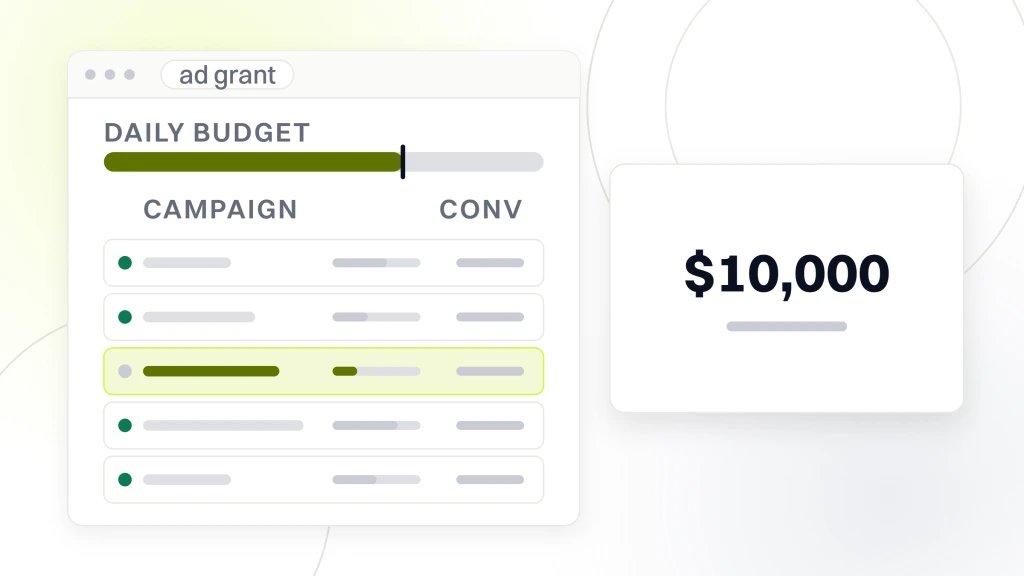
Google Ad Grant management runs the free Google Ads credit that qualifying 501(c)(3) nonprofits receive through Google for Nonprofits. The grant gives up to $10,000 a month in ad spend, capped at $329 a day, restricted to Search campaigns only. Every dollar has to drive a real outcome, not just a click.
What the grant covers, and what it doesn’t
The grant covers Google Search ads exclusively. No Display, no YouTube, no Performance Max, no Shopping. Bid caps sit at $2 per click on manual bidding. Switch to Maximize Conversions or Target CPA and the cap goes away, which is the only clean way to compete on high-value keywords. You cannot promote commercial products, cannot run affiliate offers, and cannot send traffic to any page that hosts outside advertising. Break one of these rules and Google pauses the account.
Where the real work sits
The daily work is keyword research aligned to donor intent and program signup pathways, ad copy that follows Google’s editorial rules, landing page work for conversion, conversion tracking setup, and monthly compliance checks. Real Google Ad Grant management runs a bi-weekly optimization cycle, monthly reporting, and quarterly strategy reviews. Anything less, and the grant sits idle as impression share slips away.
Why so many nonprofits never spend the full $10K
Most nonprofit accounts spend $1,500 to $4,000 of the available $10,000 in monthly grant credit. The gap is not on Google’s side. It comes from thin keyword coverage, weak bid strategy, and landing pages that convert at 1 to 2 percent. Real Google Ad Grant management pushes utilization up and keeps compliance clean. Agencies that run nonprofit grant accounts well typically move a $2,000-a-month spender to $6,000 or more inside 90 days.
Google Ad Grant compliance rules that actually matter
The Ad Grants program has strict compliance rules. Break them and Google pauses your account with a warning, then suspends it if the issue is not fixed in 30 days. A suspended grant is recoverable. It’s a 60 to 90 day rebuild before you get back to full utilization. Run compliant from month one and skip the pain.
The 5 percent click-through rate rule
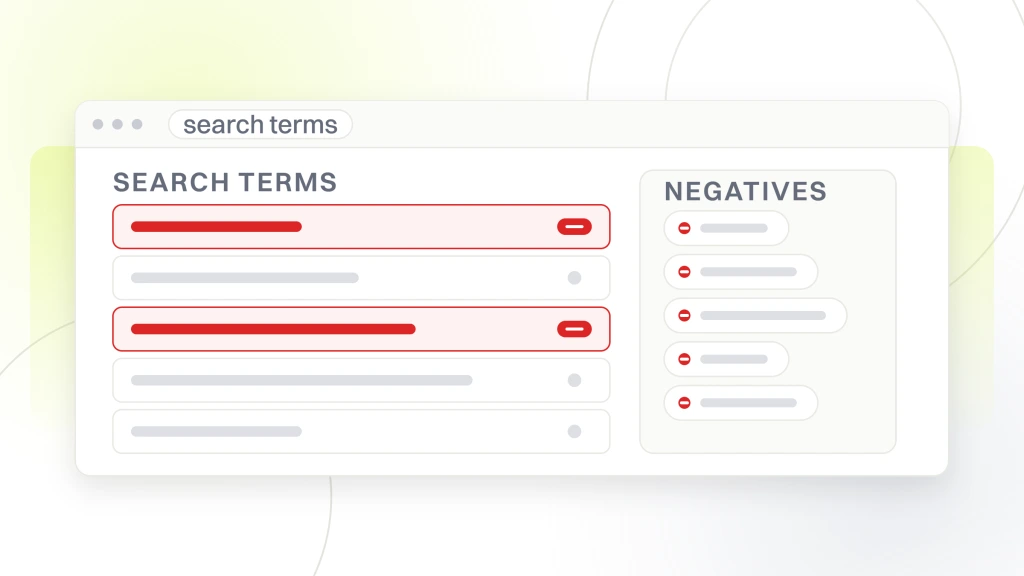
Grant accounts must hold a 5 percent click-through rate across the account, measured monthly. Fall below 5 percent for two straight months and Google pauses the account. This is the single most common compliance failure across nonprofit accounts. The fix is aggressive keyword pruning, tighter ad copy, and stricter negative-keyword lists. Autopilot accounts almost always slip below the threshold inside 6 months. Google’s own Ad Grants policy compliance guide spells out the rule in full.
Conversion tracking and reporting requirements
Every grant account has to track at least one meaningful conversion. That means a donation, email signup, event registration, or contact form, not a pageview. Google verifies conversion tracking through periodic account reviews. If your account has no conversions after 30 days, expect a warning email and a shorter timeline to fix it. Grant accounts have to complete the annual program survey. Miss it and Google can pause the account until you respond.
Ad quality and structural requirements
Each ad group needs at least two active ads. Each campaign needs at least two active ad groups. Single-keyword ad groups where the keyword matches the ad exactly are banned. Sitelinks are required. All ads must be geographically targeted. Miss any of these structural rules and Google pauses the relevant campaigns until the setup is corrected. This is where DIY accounts fail hardest, since the rules aren’t enforced at ad creation, only at review.
Google Ad Grant management for churches and faith-based nonprofits
Google Ad Grant management for churches follows the same policy every 501(c)(3) grant follows, with a few practical twists on outcome tracking. Churches usually optimize for service attendance, small-group signups, event registrations, and giving. Keyword themes trend local and community-focused. The compliance work is identical to any other grant account.
Keyword strategy for local congregations
Local church accounts focus on “church near me” queries, service time searches, denomination-specific terms, and community program keywords like food pantry, youth group, or grief support. National denominational nonprofits run broader terms around theology, church planting, and missions. Both structures work when the keywords line up with the intent of the audience you actually want to reach. Church-side Google Ad Grant management leans heavier on community outreach queries than most cause areas.
Landing page priorities for church accounts
Service time page. New visitor welcome page. Program-specific pages for youth, women’s ministry, seniors, and community outreach. Online giving page. Contact form for prayer requests or pastor contact. Miss any of these and the grant spend has nowhere useful to land visitors. Church websites often need updates before Google Ad Grant management can deliver real conversions.
Compliance realities for church grants
Google’s editorial rules on religious content are more relaxed than most churches assume. You can run religiously specific ads and target religious keywords. What you can’t do is push traffic to pages selling religious merchandise or hosting outside advertising. Church accounts sometimes get flagged when the site runs Google AdSense on pages the grant traffic lands on. Kill the AdSense on those pages, or route grant traffic elsewhere.
What performance looks like on grant accounts that are actually managed
Grant accounts respond to the same weekly rhythm as any paid search account, so pair this section with our weekly PPC campaign management playbook for the day-by-day cadence. Case study numbers help calibrate expectations. Our paid ads work on tightly managed accounts drove a 300 percent gain in qualified leads on a 90-day sprint, and cut cost per lead by 82 percent over a 24-month curve on another. Both accounts share the same delivery pattern that works on grant accounts once compliance rules are respected. Structured campaigns, matched landing pages, and conversion depth beat broad autopilot every time.
The rebuild pattern that grows utilization
Fragmented setups with 5 or fewer inbound leads a month turn around once a real operator rebuilds the funnel across paid search, content, and the site. Twelve months in, monthly inbound leads triple, organic traffic grows 5 times, and pipeline generation moves into seven figures on the commercial equivalents. Nonprofit grant work reads the same on the delivery side. The account structure, the keyword coverage, and the conversion tracking all move together.
Persona-driven campaigns versus autopilot
Broad-targeted ads with manual bidding drift to 0.2 percent engagement. Switch to persona-driven Search campaigns with structured bidding and qualified leads rise 70 percent, cost per acquisition drops 28 percent. Grant accounts see similar shifts when a real operator takes an autopilot account and rebuilds it against donor personas and program pathways. The grant is free. The operator attention pays for itself in program impact.
What it takes to break past $6K in monthly utilization
Accounts stuck at $2,000 in utilization almost always share three problems. Narrow keyword themes, manual bidding on the $2 cap, and homepage-only landing pages. Fix all three and utilization moves toward $6,000 to $8,000 inside a quarter. The ceiling above that is set by keyword competition in your cause area, not by Google’s rules.
Picking the best Google Ad Grant management agency for your nonprofit
The same evaluation lens applies to any paid search partner, so cross-check the criteria in our guide to the best Google Ads management agencies before you sign. The best Google Ad Grant management agency for your nonprofit is not the biggest one on Google. It’s the one that touches your account every week, files the compliance paperwork on time, and reports on program conversions instead of impressions. Bring these questions to every intake call and the good ones stand out fast.
Questions that qualify the agency
- How many nonprofit grant accounts do you currently manage?
- What’s the typical utilization rate you hit on the $10K monthly cap?
- How do you handle the 5 percent CTR rule when it starts slipping?
- Do you build landing pages inside the retainer, or quote them separately?
- What conversion tracking depth do you standardize across accounts?
- Who owns the Google for Nonprofits account, us or you?
- Are you a certified Google Partner, and can you show the badge?
Red flags on the intake call
Any agency promising “guaranteed grant approval” is running a script. Google approves grants directly, based on nonprofit qualification, not agency promises. Any agency asking for full ownership of your Google for Nonprofits account is signaling a control grab. Any agency quoting under $250 a month is running you through automation with a human name attached. Walk from any of these three signals.
Green flags to lean toward
Nonprofit-only or nonprofit-heavy client rosters. Named operators on the intake call, not just a salesperson. Written scope with a clear compliance workflow. Reporting cadence that includes conversion depth, not just impression share. Google for Nonprofits account ownership stays with you from day one. A written 90-day plan available by the end of week two. Any three of these signals mean you have a real candidate.
Google Ads Grant management for charities across cause areas
Google Ads Grant management for charities looks slightly different across cause areas. A food bank optimizes for donation conversions and volunteer signups. A homeless services charity optimizes for direct service intake and donor cultivation. A conservation nonprofit optimizes for petition signatures and membership drives. Match the account structure to the cause area or the campaigns underperform.
Human services and food banks
Human services nonprofits usually run three campaign tracks. Recipient service intake, volunteer recruitment, and donor giving. Keywords cluster around local service queries like “food pantry near me” for intake, volunteer verbs for recruitment, and cause-specific donation terms for giving. Landing pages need clear language for each audience. Donors and beneficiaries expect very different pages inside the same nonprofit.
Health and disease-specific nonprofits
Health nonprofits target patient information searches, treatment resource queries, family caregiver terms, and research donation keywords. The intent is high and the queries are specific. Landing pages need clean medical disclaimers and clear paths to patient resources or donation actions. Conversion tracking should separate patient resource requests from donor actions, since they measure very different outcomes.
Conservation and environmental nonprofits
Conservation groups optimize for petition signatures, membership drives, event registrations, and monthly giving. Keywords span cause-specific queries around species, ecosystems, or policy issues. Landing pages should pair issue education with a clear next action. Long-form advocacy pages work well here, since grant traffic often arrives ready to act, not ready to browse.
Common mistakes nonprofits make managing Google Ad Grants
Every nonprofit we onboard has a pattern of predictable mistakes on the existing grant account. Any one of them can turn a $10,000 monthly credit into $500 of wasted spend and a compliance suspension threat.
Running the grant on autopilot for 12 months
Autopilot accounts drift below the 5 percent click-through rate threshold inside 6 to 9 months. Google pauses the account. Nobody notices until program managers ask why the website traffic dropped. Real Google Ad Grant management catches drift inside 30 days and corrects the account structure before Google intervenes. The grant is free. Neglect still costs you.
Sending grant traffic to the homepage
Homepage traffic converts at 1 to 2 percent on nonprofit accounts. Program-matched landing pages convert at 8 to 15 percent. That gap is the entire program impact of the grant. Real Google Ad Grant management insists on landing page work as a precondition for meaningful results. Some agencies do the build inside the fee. Others quote it separately. Both are fine. What is not fine is running the grant without addressing landing pages at all.
Skipping conversion tracking depth
An account tracking only pageviews cannot optimize toward donations. Google’s Smart Bidding needs conversion signal. Real Google Ad Grant management sets up donation tracking, recurring donor tracking, event registration tracking, and volunteer application tracking as separate events. Some nonprofits import offline conversions from their CRM for donor attribution. That depth is the difference between a $2,000 spend and a $7,000 spend on the same grant.
Not preparing for the annual program review
Google reviews grant accounts annually and can request account improvements or extra conversion evidence. Nonprofits that skip preparation get surprised by warning emails. Real Google Ad Grant management includes an annual compliance review, a program impact report Google can reference, and a written response plan if Google flags the account. Preparation takes 2 to 4 hours a year. Skipping it costs a month of downtime.
Managing your Google Ad Grant in-house versus hiring an agency
Every nonprofit team asks the same question. Should we run the grant in-house, or hire an agency? Both models work. The right choice depends on your team’s paid search experience, the size of your program mix, and how much time your marketing lead can carve out for compliance monitoring every month.
Choose in-house when
- Your marketing lead has prior Google Ads experience.
- Your program mix is small and stable across 1 to 3 focus areas.
- Your website already has strong program-specific landing pages.
- Your team can spend 5 to 10 hours a month on the account.
- Your board expects grant management to be a hands-on line item.
Choose an agency when
- Your team has no prior paid search experience.
- Your program mix spans 5 or more focus areas or geographies.
- Your landing pages need audit and rebuild work.
- Your team already runs full on program delivery and cannot add campaign work.
- Your board wants the grant to move from $2K to $8K in monthly utilization.
The hybrid model as a middle path
Some nonprofits run a hybrid setup. The marketing lead handles day-to-day monitoring and content updates. An agency handles quarterly strategy, landing page work, and compliance audits. That structure gives you cost control and internal ownership without giving up specialist attention where it matters most. Hybrid fees usually land in the $400 to $800 a month range for the quarterly touch model.
Picking the right grant management tier for your nonprofit stage
The right management tier at a small local nonprofit is not the right tier at a national organization. Match the fee level to your stage, program complexity, and website readiness. Overspend on management and you erode the operational budget your board needs elsewhere. Underspend and the grant sits idle.
Small local nonprofit under $500K in budget
Launch tier at $999 a month. Focus the grant on 1 or 2 program areas plus a donor giving track. Monthly reporting is fine. Skip landing page rebuilds if the site is not genuinely broken. This tier fits nonprofits where the grant is a nice complement to direct fundraising, not a headline channel. Ad spend on the grant side is free, so the fee covers operator labor and account attention.
Regional nonprofit at $500K to $5M in budget
Growth tier at $1,499 a month. Full account rebuild, 5 or more campaigns, landing page audit, conversion tracking depth. This tier is where the grant starts driving real donor pipeline and program signups worth reporting to the board. Bi-weekly cadence keeps the account healthy and above the 5 percent CTR line.
National nonprofit above $5M in budget
Scale tier at $2,499 a month. Landing page production included. Dedicated operator. Weekly cadence. Quarterly strategy sessions. National grant accounts running at full utilization consistently produce seven-figure equivalent value in commercial search terms. Treat the account like a real marketing channel, and the ROI shows up on the board deck.
Enterprise engagements above the Scale tier
Multi-national or federated nonprofits with 10 or more chapters land at Enterprise engagements that start at $4,500 a month. That fee covers a full delivery pod, real-time dashboards, cross-account governance, and offline conversion imports from a shared CRM. Ad spend on grant accounts stays free. Paid ad spend on any non-grant Search or Performance Max programs is billed separately from the management fee.
When to run paid ads alongside the grant
Google Ad Grant management sometimes hits a ceiling on grant impressions in competitive cause areas. Once your grant account holds 5 percent CTR and 80 percent utilization consistently for 8 weeks, paid ads earn a place next to it. Paid search on brand terms is the cheapest first move. Paid Search on generic donor-intent terms comes second, after the grant has soaked up the free volume.
Ad spend runs separate from the management fee. On our engagements, paid retainers stack cleanly on top of grant work at the same $999 / $1,499 / $2,499 / from $4,500 monthly tiers, with ad spend billed separately. That structure keeps the grant work honest and the paid work accountable.
Google Ad Grant management is a strategy problem before it is a budget problem. Solve the strategy and the free grant credit does the rest. If you want help pressure-testing an existing grant account or building a new one from scratch, our team at Redefine Web runs nonprofit paid programs alongside commercial ones. Start with the Google Ads management services page. For broader retainer options, see PPC management services. Nonprofits looking at B2B SaaS accounts can see our SaaS PPC services page. If your grant account is B2B leaning, our B2B PPC agency service page has the specialist track.