
Marketing tools for chiropractors earn their keep when they book a new patient inside 30 days. This guide covers the working stack we run at independent chiropractic practices booking 30 to 90 new patients a month. Real prices, real setup times, and a clear line between the tools that pay for themselves in the first month and the ones that quietly bleed $89 a month for two years. None of the picks need a developer, and none of them trap the practice in a multi-year contract.
By the end you will have a seven-tool stack, a defensible monthly budget, and a written setup order. The chiropractic marketing tools that pay off are the ones wired together, not the ones collected quarter after quarter. Practices that keep adding a new SaaS every three months without connecting it to tracking end up with a shelf of tools that never talk to each other. The stack below is small by design and covers the full new patient funnel with less overlap than what most practices already run.
Call tracking and analytics tools that prove ROI
Call tracking is the highest-use tool in the chiropractic marketing stack because phone calls carry the majority of new patient conversions. Without a tracker in place, 40 to 60% of the calls from Google Ads never show up in the account, so the practice cannot tell which campaign, ad group, or keyword drove the booking. With one wired in, the practice pauses underperforming campaigns weekly instead of monthly and typically cuts cost per booked exam by 20 to 40% inside the first 60 days.
The two picks that hold up for chiropractic are CallRail and WhatConverts. Both integrate with Google Ads and GA4. Both let the practice assign different phone numbers to different campaigns, landing pages, and channels. Both record calls (with proper HIPAA-aware handling) and score calls by keyword. CallRail wins on integrations. WhatConverts wins on form tracking. Either is fine.
| Tool | Monthly cost | Best for | Setup time |
|---|---|---|---|
| CallRail | $45 to $145 | Multi-campaign attribution | 2 hours |
| WhatConverts | $30 to $130 | Form plus call tracking | 2 hours |
| Google Voice (free) | $0 | Starter setup under $1,500 ad spend | 30 minutes |
| CallTrackingMetrics | $79 to $299 | Multi-location practices | 4 hours |
GA4 and Search Console are free and non-negotiable
Google Analytics 4 and Google Search Console are free and both critical. GA4 tracks traffic, conversion events, and user flows. Search Console tracks which queries the site ranks for. Both take under 30 minutes to set up. Both feed into Search Central’s analytics documentation. Any practice not running both is guessing about SEO progress.
The EMR source field is the cheapest attribution tool
Add a source field to the EMR intake form. “How did you first hear about us?” Google, referral, sign, drive-by, other. The field costs nothing. It lets the practice pull cost per new patient by channel at the end of every month without cross-referencing four dashboards. Practices that skip it end up in the marketing manager’s office arguing over whether Facebook or Google produced last month’s growth. The answer was on the intake form.
Email marketing tools for chiropractors that fill the schedule
Email is the highest-ROI marketing tool in the chiropractic stack. A reactivation sequence to the 90-day lapsed file books 25 to 55 exams on the first send. The cost of the email tool that sends those messages is $10 to $30 a month for most solo practices. The math is not close.
MailerLite is the pick for practices under 3,000 subscribers. Simple interface, five-message sequences run out of the box, integrates with WordPress natively. ActiveCampaign is the pick above 3,000 or when the practice wants patient tagging, behavioral triggers, and CRM-style workflow. Skip Constant Contact and Mailchimp paid tiers. Both charge more for less on the features chiropractic practices use. Read email marketing software for chiropractors for the full software comparison.
What the reactivation sequence books
A first send to a lapsed file of 600 to 1,200 patients typically opens at 35 to 45%, clicks at 4 to 7%, and books 25 to 55 exams within seven days. The math beats every paid channel for those two weeks. After that the file is worked and the returns fall until the next 90-day cohort ages in. Practices that run this quarterly instead of once a year book 100 to 220 extra exams over 12 months at basically zero incremental cost.
The Mailchimp migration trap
Most practices we audit are on a legacy Mailchimp account paying $75 to $110 a month for 4,000 contacts they never segment. The move to MailerLite cuts the bill to about $30 and raises open rates 6 to 12 points in the first quarter, because the new tool actually clusters engaged patients into their own send list. Budget one working morning for the export, one for reimport, and one for reconnecting the WordPress form. Total downtime, zero.
If your Google review count sits under 60 at less than a 4.6 average, fix reviews before you touch Google Ads. Every paid channel gets 25 to 40% cheaper once you clear that bar.
Review management tools for chiropractors
Reviews carry more weight in the local pack than any single on-page ranking factor for chiropractic. Practices with 60 or more Google reviews at 4.6 stars or higher hold the top three map slots in most metros. Under 30 reviews, the practice ranks below dental offices and physical therapy clinics that never should have outranked it. The fix is a review management tool that automates the ask.
Podium, Birdeye, and NiceJob are the three that work for chiropractic. Podium costs $289 to $549 a month and adds a webchat that converts. Birdeye costs $299 to $599 and pushes reviews to more networks. NiceJob costs $75 to $180 a month and is the pick when the practice just needs Google review growth without the frills. For a solo practice, NiceJob is enough. For a two-plus location group, Podium wins.
Our chiropractic client Pain Cure Clinic ran the full review-and-content playbook and grew Google reviews by 162%, taking their rating from 4.3 to 4.9 stars. Patient appointments climbed 205% and organic traffic climbed 289% over the same window. The stack that produced those numbers is the exact one this guide describes.
The review language that moves rank
Reviews that mention a condition, a treatment, and a location outrank generic “great service” reviews inside the map pack. “Dr. Kim in Fort Worth fixed my sciatica in four visits” beats “highly recommend” by a wide margin. The review tool cannot force that language, but the ask can. Change the SMS prompt from “leave us a review” to “would you share what you came in for and how it went?” Practices that make the swap see 30 to 55% more condition-tagged reviews inside 60 days.
Why review response templates quietly fail
Canned “thanks for the kind words” replies read as bot output to both patients and Google. A better pattern is one sentence that references the specific care detail the reviewer wrote about. “Glad the adjustment helped after that car accident, Maria. See you at your follow-up.” That reply signals a real human at the practice and quietly re-mentions the condition keyword for search. The front desk can handle 10 to 20 responses a week in under 40 minutes.
SMS and messaging tools for chiropractors
SMS is the fastest booking channel in the stack. Text response rates run 90% or higher inside three minutes, versus 20 to 30% for email inside an hour. For chiropractic, that speed advantage shows up in two places. First, no-show recovery. A “we can still see you at 2pm” text on the day of the miss books back 30 to 45% of no-shows. Second, same-week slot fills, which we cover below.
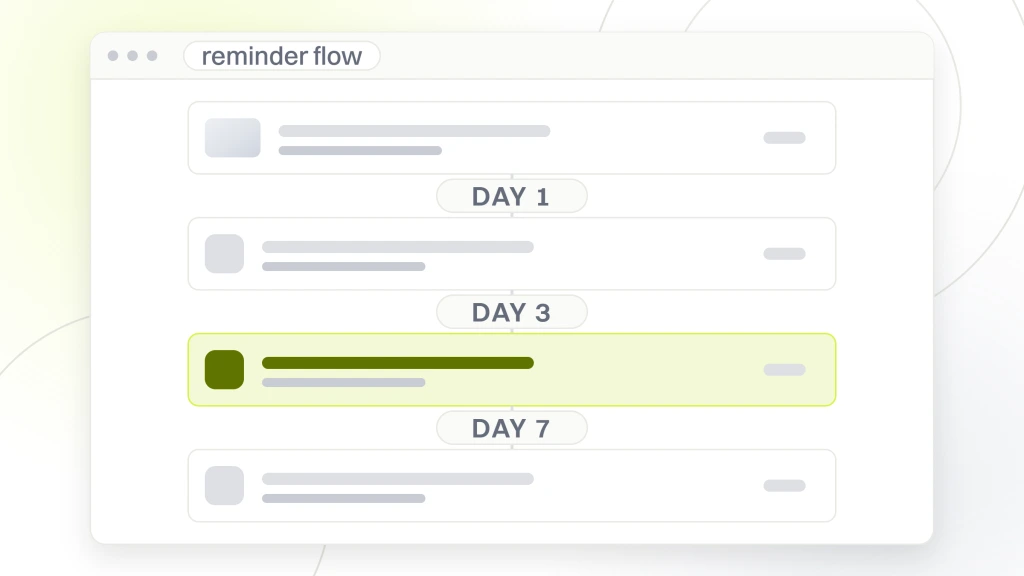
Podium, Solutionreach, and Weave are the three most-used SMS tools in chiropractic. Weave bundles phones and SMS, which suits practices that want one bill. Solutionreach is the mature pick with strong EMR bridges. Podium wins on webchat plus review integration. Compare the full field in our SMS marketing for chiropractors guide.
Consent and compliance basics
Every SMS number needs express written consent on file. The intake form takes care of it with one checkbox and one line of plain-English text. Skip the checkbox and the practice risks TCPA fines that start at $500 per message and top out at $1,500 with willful violation. All three tools above handle the audit trail for you, but only if the checkbox is wired to the patient record on save. Test it once a quarter.
The Tuesday afternoon slot-fill text
Send a single text to your active care plan patients every Tuesday at 11am. “Two openings today at 3 and 4pm. Reply YES to book.” Practices running that one text fill 4 to 8 extra slots a week that would have gone empty. The tool cost is already paid. The staff time is 60 seconds. Over a year, that is roughly 200 to 400 recovered visits at zero marginal spend.
Only add a new marketing tool once the current one hits 90 days of positive ROI. Adding sooner splits attention and slows both channels.
Advanced marketing tools for chiropractors past year one
Once the core stack is booking 40 or more new patients a month, four extra tools start earning their monthly bill. A CRM, an SEO tool, a social scheduler, and a referral tracker. None of them belong in the year-one stack. All of them start compounding in year two, when the practice has enough data to feed them.
When to add a CRM to the stack
HubSpot Starter at $50 a month works once the practice runs three lead sources at once (Google Ads, Facebook Ads, and organic search) and the front desk cannot keep straight who came from where. Below three sources, the EMR plus a spreadsheet does the same job. Above three, the CRM cuts follow-up time by 20 to 35% and catches the 12 to 18% of leads that the front desk misses on busy days.
SEO software worth the monthly check
Ahrefs at $129 a month or SEMrush at $139 a month, not both. Either one runs the monthly rank check, backlink audit, and competitor content gap analysis a growing practice needs. Skip the $499-tier plans. A solo chiropractic site does not have the page volume to use them.
The referral tool most practices skip
Referrals close at 40 to 60% versus 12 to 18% for paid clicks, yet most practices track them on a sticky note. ReferralCandy at $59 a month or a $0 spreadsheet plus a $20 gift card cadence both work. The cost of the tool is trivial. The cost of not tracking is missing the top-referring patient and thanking the wrong person at the holiday card mail-out.
Marketing tools chiropractors should avoid in year one
The pitch decks are aggressive. The trial periods are short. And the annual contracts convert 4 out of 5 practices we audit into paying $8,000 a year for a tool they open twice a quarter. Three categories to skip until the practice is booking 60-plus new patients a month.
Why all-in-one platforms fail for independent practices
Weave, Solutionreach, and Kareo all-in-one bundles run $499 to $1,200 a month. On paper they replace six tools. In practice the SMS module is fine, the email module is basic, the review module is middle-of-the-pack, and the reporting is a black box. Practices that unbundle typically save 40 to 60% and get better tools at every stop. Bundle only when the practice runs three or more locations with shared reporting.
The contract terms to never sign
Any 12-month lock-in with no 30-day out clause. Any tool that owns your patient list and will not export it in CSV on request. Any vendor that charges per user for the front desk (a five-user seat pack should not cost $99 per seat per month). Any social media tool that promises “AI-generated posts” without a human review step, which read as spam to patients within four weeks.
Any vendor pitching a 12-month contract with no 30-day out clause is telling you the tool churns hard at day 45. Walk.
The stack setup order that avoids wasted setup time
Set up in this order or the tools duplicate each other’s work. GA4 and Search Console first (free, 30 minutes, everything downstream needs the tracking). Then call tracking (60 to 90 days of clean data before you touch ad spend). Then email (fastest ROI). Then reviews (compounds over 90 to 180 days). Then SMS (fills the gaps the other tools leave). The order is deliberate and every skipped step costs 2 to 6 weeks of clean data later.
Week one setup plan
Monday, install GA4 and Search Console. Tuesday, spin up the CallRail or WhatConverts account and swap the site phone number. Wednesday, add the EMR source field. Thursday, open the email tool account and connect the WordPress form. Friday, export the last two years of patient data and upload the lapsed 90-day file into the email tool. Total time investment, six to eight hours. Total cost, under $100.
Week two setup plan
Monday, connect NiceJob or Podium and import the patient list. Tuesday, launch the first review-request SMS to the last 90 days of visits. Wednesday, connect the SMS platform and load the Tuesday slot-fill template. Thursday, write the first three reactivation emails. Friday, load the intake form checkbox for SMS consent and test it end-to-end. By day 10, the stack is running and the practice is 4 to 8 exams ahead of week zero.
Do the setup in this order. GA4, call tracking, email, reviews, SMS. Skip a step and the next tool starts with dirty data and misses 20 to 40% of the payoff.
How Redefine Web runs the marketing tools for chiropractors
Redefine Web audits your current tool stack against your booked-patient number. We map the six data points that matter (calls, forms, reviews, email opens, ad spend, and no-show rate) to the tools you are already paying for. Then we cut what does not earn its bill and wire up what actually books patients. Our chiropractic clients typically save 25 to 45% on tool spend inside 60 days and grow booked new patients 20 to 40% over the same window. See our chiropractor marketing services for the full engagement structure.
What a typical tool audit engagement looks like
Week one, we pull your last 12 months of tool bills and cross-check against booked exams from the EMR. Week two, we recommend cuts, swaps, and adds with a written cost delta. Week three, we execute the migration with your front desk (never around them, since they know which tool the intake staff actually uses). Week four, we hand back the new stack with a one-page run sheet the front desk can follow. See our Marketing plan for chiropractors for the strategy layer that sits above the tools.
Which tools to buy first if the budget is tight
If your monthly budget is under $200 for tools, the stack is GA4 (free), Google Voice with UTM tags (free), MailerLite ($15), and NiceJob ($75). Total, $90 a month. Add SMS via Podium starter ($289) when the practice clears 50 new patients a month. Add CallRail ($45 tier) when ad spend clears $2,000 a month. Every other tool waits until the numbers say the practice can carry the bill.
Book more patients with the right marketing tools for chiropractors
The bottom line, the marketing tools for chiropractors that pay off are small in number and specific in job. Tracking, email, reviews, SMS, and one paid channel. That is the whole stack for the first 12 months. Everything else waits until the practice has clean data. If you want a written audit of your current tools mapped to booked patients, book a 30-minute call with Redefine Web and we will send back a one-page recommendation inside the same week.