
A marketing plan for chiropractors is a one-page working document that names who you serve, the three channels you run, what offers feed each channel, what you spend, and how you measure. That’s it. Longer plans don’t produce better results. They produce more paper. This marketing plan for chiropractors guide walks you through a fillable template you finish in 90 minutes, the budgets that actually book patients, and the four numbers you check every Monday.
You’ll leave with a fillable one-page template, real budget ranges by practice size, the channel priorities that book first patients inside week one, and a scorecard that separates working channels from vanity ones. If the marketing plan for chiropractors on your wall isn’t booking patients, jump to the diagnostic section.
We built this playbook from work with practices like Pain Cure Clinic, a chiropractic care provider that grew patient appointments 205% and organic traffic 289% in one year on a focused three-channel plan. Focused execution beats scattered execution every quarter.
What is a marketing plan for chiropractors
A marketing plan for chiropractors is a one-page document with five sections. Ideal patient profile. Three primary channels. Offer stack. Monthly budget. Weekly scorecard. Written for the owner and the front desk, not a consultant. Reviewed every 90 days. Edited on the fly when a channel starts producing or stops. Not a slide deck.
The five sections of the plan
- Ideal patient profile. 34-year-old office worker, chronic lower back pain, insured, within 6 miles.
- Three primary channels. Google Business Profile plus reviews, Google Ads, reactivation email plus SMS.
- Offer stack. Free posture assessment (top), $47 new patient consult (middle), full-fee visit (bottom).
- Monthly budget. $2,000, split as $1,200 ad spend, $600 tooling, $200 reactivation.
- Weekly scorecard. New patient calls, booked new patients, cost per booked patient, GBP calls.
Why one page beats 40 pages and how it differs from strategy
A one-page plan gets read every Monday. A 40-page plan gets read once, then sits in a drawer. If your plan needs an agency to interpret, it’s a document, not a plan. The plan is also not the strategy. Strategy sits one level up (positioning, offer design, funnel logic). The plan sits one level down (what runs, when, on what budget, measured how). Different documents, different jobs.
The one-page marketing plan for chiropractors template
Here’s the marketing plan for chiropractors template, filled out for a hypothetical solo practice in a mid-competition metro. Copy the structure, replace the specifics with your own, and use it as your working document. Every field is required. Empty fields signal the marketing plan for chiropractors isn’t finished.

| Section | Example fill |
|---|---|
| Ideal patient | 34-year-old office worker, chronic lower back pain, insured, within 6 miles |
| Positioning statement | We help active adults over 30 with chronic lower back pain move and train without pain |
| Channel 1 | Google Business Profile plus review text-back, $400 retainer |
| Channel 2 | Google Ads on chiropractor near me and back pain keywords, $1,200 ad spend |
| Channel 3 | Reactivation email plus SMS to inactive list, $130 tooling |
| Top offer | Complimentary 30-minute posture assessment, no adjustment |
| Mid offer | New patient consult plus one adjustment, $47 |
| Full offer | Full new patient visit, $189 |
| Monthly budget | $2,000 total blended |
| Weekly scorecard | New calls, booked patients, cost per patient, GBP calls |
How to fill and how often to update the plan
Sit down for 90 focused minutes. Phone off. Email closed. Pull the top-20 patient list from your practice management software. Write the ideal patient profile from the pattern that emerges. Pick three channels. Draft three offers. Set the monthly budget. Post the finished page on the wall behind the front desk.
Formal review every 90 days. Informal edits any time a channel starts producing or stops. If Google Ads cost per booked patient jumps from $280 to $520 in one month, update the plan inside the week. Waiting for the quarterly review costs you two months of misdirected spend.
The three buckets every marketing plan chooses from
Before you pick three channels, know the three buckets they belong to. External marketing reaches strangers. Professional marketing builds referrals with other providers. Internal marketing engages your existing patient list. A working marketing plan for chiropractors pulls one channel from each bucket, not three from the same one.
External marketing
External channels include Google Ads, Meta Ads, direct mail, community events, and health fairs. Fastest way to book patients in month one, at the highest cost per patient. Expect $180 to $400 per booked new patient in a mid-competition metro. New practices lean on this bucket for the first 90 days.
Professional marketing
Core referral partners are primary care physicians, podiatrists, physical therapists, dentists, and massage therapists. These relationships take 60 to 120 days to build and produce the highest-loyalty patients you’ll ever treat. Two coffee meetings per quarter with three providers beats a $2,000 mailer to every practice in your zip code. Budget the time, not the dollars.
Internal marketing
Reactivation, referral asks, patient education touchpoints, and clean new-patient onboarding sit in this bucket. Reactivation converts roughly 10 times better than cold traffic. A single reactivation SMS to a 400-patient inactive list will out-book a $1,200 Google Ads month for $30 in SMS credits.
Pick one channel from each bucket. A plan running three external channels tips over on the first slow month, and you have no compounding referral base to hold the line.
Marketing strategies for chiropractors that pay off inside 90 days
Marketing strategies for chiropractors that pay off inside 90 days share three traits. They tie to one of the three primary channels in the marketing plan for chiropractors. They cost under $500 to test. They produce measurable data within 30 days. Strategies that miss any of those three don’t belong in the working plan. Park them on a wishlist and revisit next quarter.
Local SEO and Google Business Profile
Fully build the Google Business Profile with 20 real photos, accurate hours, service categories, and a review text-back firing 4 hours after every adjustment. Highest-return strategy at $0 ad spend. Reviews above a 4.6 average and 40-plus count are the threshold where every other channel gets 30 to 50% cheaper.
High-intent Google Ads on near-me terms
Launch Google Ads on chiropractor near me, city plus service (“back pain chiropractor Cleveland”), and one condition term (“sciatica treatment”). Start at $1,000 monthly with a dedicated landing page, not the homepage. First paid patients book day 3 to 7. Cost per booked patient lands between $180 and $400 by metro.
Reactivation email and SMS
Export every patient with no visit in the last 6 to 18 months from your PMS. Segment by chief complaint if the data is clean. Send a two-email plus one-SMS sequence with a specific reason to come back, not a generic “we miss you.” First patients book inside 14 days for under $150 in tooling cost.
Referral flywheel with a real incentive
Add a $20 credit for both referrer and referred patient at first visit. Turn it on at day 60 once reactivation and paid channels have proved out. Print a QR code card, hand one to every patient at checkout, add the ask to the post-visit email. Referred patients close at 65 to 80% first-visit conversion versus 25 to 40% for cold traffic.
Marketing ideas for chiropractors that fit the plan
Marketing ideas for chiropractors that fit a working plan share the same shape. Under $500 to test, tied to one of the three primary channels, producing measurable data within 30 days. Ideas that miss any of those three stay on the wishlist. Adding ideas faster than you can measure them is the fastest way to burn out a front desk.
Ideas that pass and ideas that don’t
- Corporate ergonomic assessments free to three local employers, 90 minutes each. Professional channel.
- Referral incentive. $20 credit for referrer and referred patient at first visit. Internal channel.
- Community event booth at a local 5K, half marathon, or health fair for $250 to $500. External channel.
- Google Ads keyword test on a new theme with a $300 monthly cap for 30 days. External channel.
- Reactivation subject-line test rotating one new hook every 30 days. Internal channel.
Skip podcast sponsorships, billboards, radio spots, TV, and direct mail to zip-code-wide lists. Each costs $1,000+ to test, ties to no primary channel, and produces nothing measurable inside 30 days. Budget any of these out of the wishlist and hold the primary plan intact.
How to run a 30-day idea test
Set a 30-day window and a budget cap before you start. Define success as a specific number of booked new patients or a specific cost per booked patient. If the idea hits the target, promote it to the primary plan. If it doesn’t, kill it.
Every marginal $100 in Google Ads spend books roughly one extra new patient at mid-competition metro rates. Every $100 in extra tooling books zero until the tool gets used weekly.
Marketing tools for chiropractors, the core five
Marketing tools for chiropractors in a working marketing plan for chiropractors add up to $400 to $600 a month. More is over-tooled. Less is under-instrumented. The list below covers a solo or two-provider practice running the three-channel starter stack. Every tool has one job. If it doesn’t own a job, cut it.
The core five tools
- CallRail for call tracking, $45 a month. Non-negotiable.
- ActiveCampaign or Klaviyo for email at $50 to $150 a month by list size.
- TextMagic or Twilio for SMS at $30 to $80 a month.
- Google Business Profile Manager for reviews and profile updates. Free.
- Google Ads for high-intent traffic, budget-based at $800 to $2,400 monthly spend.
Tools you probably don’t need yet, and where to spend an extra $100
Skip HubSpot Marketing Hub at $850 a month for a solo practice. Skip marketing automation platforms priced above $500. Skip AI chatbots promising booking capture. These are fine tools once you clear $250,000 monthly production and run seven channels. If you have $100 extra to add, add it to Google Ads spend. Not a new tool. Tools are the last thing to add to a marketing plan for chiropractors, not the first.
The 90-day marketing plan, week by week
Here’s the 90-day rollout for a marketing plan for chiropractors, from paper to booked patients. Every step assumes the previous one is done. No parallel launches. Firing everything in week one ends with a burned-out front desk and no clean data.
Weeks 1 to 2, foundation
Fully build the Google Business Profile. Upload 20 real photos. Install CallRail on the website. Add the source dropdown to the booking form. Export the inactive list from PMS. Send the first reactivation email. First patients land inside 14 days for under $150.
Weeks 3 to 6, ads and reviews
Turn on Google Ads at $1,000 monthly on chiropractor near me and city plus service keywords. Build a dedicated landing page per campaign. Set up the review text-back firing 4 hours after every adjustment. First paid patients book day 3 to 7. Reviews climb to 60+ if the cadence stays tight.
Weeks 7 to 12, scale and review
Scale Google Ads to $1,600 monthly if cost per booked patient stayed under $400. Launch the referral flywheel. Add one monthly blog post on a local keyword. Owner reviews the scorecard at day 90 and adjusts on real data. Not gut feel.
If your GBP has under 40 reviews at under a 4.6 average, fix reviews before you touch Google Ads. Every paid patient gets 30 to 50% cheaper past that bar.
How to measure the marketing plan for chiropractors
Measure the marketing plan for chiropractors against four numbers every Monday morning. New patient calls from the call tracker. Booked new patients from calls that turned into first visits. Cost per booked patient (ad spend divided by bookings). Google Business Profile calls direct from GBP insights. These four numbers tell you inside two weeks whether the plan is producing patients or just producing activity.
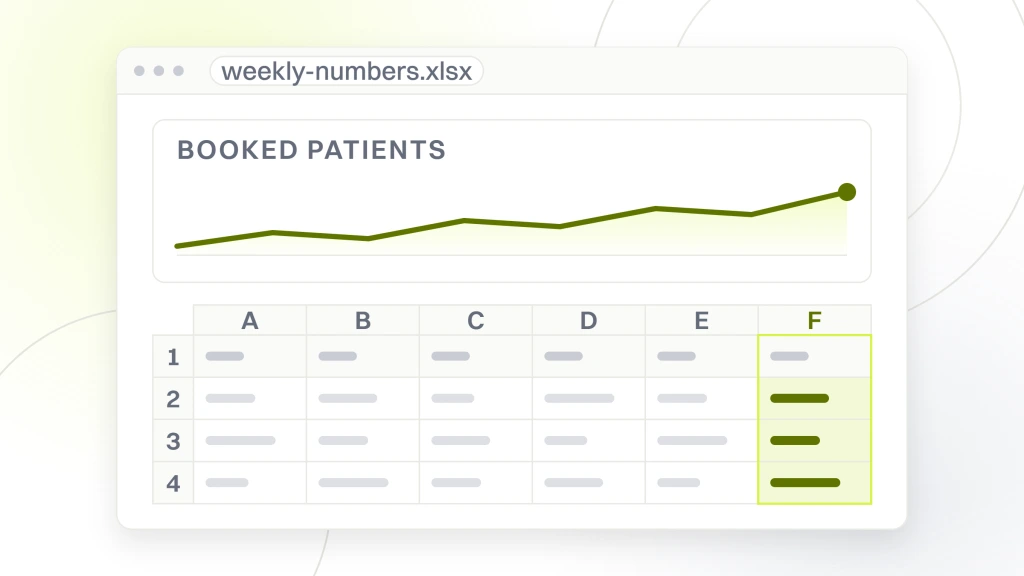
The 20-minute Monday morning review
20 minutes. Monday morning. You or an assistant reconciles call tracker source counts against PMS new-patient source counts. Numbers go into a spreadsheet with cost per channel divided by patients per channel. That single number, cost per booked patient by channel, tells you where to add or cut budget for the coming week.
Real numbers from a comparable plan
We ran a focused three-channel plan for Pain Cure Clinic, a chiropractic care provider working through the same skepticism and outdated intake problems most practices face. In 12 months the plan drove 205% more patient appointments (from 40 monthly to 122 monthly), 289% growth in organic traffic, and a 162% jump in reviews, lifting the Google rating from 4.3 to 4.9 stars. Same shape of plan. Focused execution. That’s what compounding channel discipline looks like.
What triggers a plan update
Update the plan when cost per booked patient exceeds 2x the target for three straight months, when a competitor absorbs your local pack ranking, or when the ideal patient profile no longer matches your top-20 lifetime revenue patients. Otherwise hold the line and let the plan compound.
What if your marketing plan for chiropractors isn’t working
If the marketing plan for chiropractors isn’t booking patients by day 60, one of three things is wrong. The ideal patient profile is off. The offer is off. Or attribution is broken and the plan is working but you can’t see it. Diagnose in that order. Fix one thing at a time.
Diagnostic one, check the ideal patient
Pull the last 30 booked patients. Compare each to the ideal patient profile in the plan. If more than half don’t match, the profile is off. Update it and align the offers to the patients actually booking, not the hypothetical ones you wrote 60 days ago.
Diagnostic two, check the offer
Check landing page conversion rate. Under 5% on a Google Ads campaign means the offer is wrong for the traffic. Complimentary posture assessment beats “new patient special” 3 times out of 4. Above 5% but bookings still low, the problem is downstream at the front desk.
Diagnostic three, check attribution
Check the call tracker source counts against the PMS. If the tracker shows patients coming in and the PMS doesn’t show matching bookings, someone at the front desk is dropping calls or forgetting to log the source. Fix the operational gap. Never rewrite a working plan when attribution was quietly broken.
Marketing tips for chiropractors we tell every practice
Six marketing tips for chiropractors we hand every practice before day one of the marketing plan for chiropractors. None are new. All are skipped by practices that rewrite their plan every 90 days instead of scaling it.
- Install call tracking before you spend a dollar on ads. Without CallRail, cost per patient is a guess inside week one.
- Send the review request text-back at 4 hours, not next day. Response rates drop 40% overnight.
- Pick one internal, one professional, one external channel. Never three from the same bucket.
- Cap tooling at $600 a month until the practice clears $250,000 monthly production.
- Test one idea per 30-day window. Two tests in parallel split your data and stall both.
- Reconcile the scorecard every Monday. 20 minutes protects the entire plan.
Where to take your marketing plan next
You now have the marketing plan for chiropractors template, the channel picks, the three buckets, the tools list, the 90-day timeline, and the four-number scorecard. What matters this week is filling out the one-page template, not building an elaborate document.
If you don’t have a plan yet
Fill the template above this week. Ideal patient. Three channels, one per bucket. Offer stack. Monthly budget. Weekly scorecard. Post it. Review it every Monday. If you want the deeper positioning layer under it, read our chiropractor marketing strategy guide.
If you have a plan but it’s not producing
Run the three diagnostics in order. Ideal patient. Offer. Attribution. Fix the one that’s broken. For the full channel breakdown, read our chiropractor marketing guide. For paid ads on their own, our PPC for chiropractors guide covers the ads bucket.
If you want the plan built and run for you
Our chiropractor marketing services cover the full stack. Strategy, plan, channel execution, weekly reporting. Retainer starts at $1,499 a month for the starter stack. External benchmarks worth reading. HubSpot on marketing plans. Search Engine Journal on local SEO. Google local business schema documentation.