
The PPC management checklist is the difference between a paid search account that grows and one that drifts. Every serious agency runs the same rhythm. Daily monitoring catches spend spikes and tracking breaks in under 30 minutes. Weekly optimization moves the account forward on search queries, ad copy, and bid strategy. Monthly work rebalances budgets and reviews the KPI hierarchy against real revenue. Quarterly deep audits catch the drift that monthly reports hide. Skip any layer and the account wastes spend. This is the working checklist we run against client accounts, and you can use it to grade your current agency, brief a new hire, or bring a neglected account back under control.
The short version. Daily work is 15 to 30 minutes per account. Weekly work is 2 to 4 hours. Monthly work is 6 to 10 hours. Quarterly work is 1 to 2 full days per account. Add it up and a mid-market account eats 25 to 40 agency hours a month at minimum. That is the real floor for PPC account management, not a marketing hook. Anything under 25 hours a month is coasting.
Daily PPC management tasks that catch account drift
Daily work is the fastest layer of the checklist and the most consequential. Every account you manage needs a 15 to 30 minute daily check. That check catches the anomalies that would eat a week of budget if they went unnoticed. This is what running the account looks like from Monday to Friday, and it is the layer that keeps a paid search program honest.
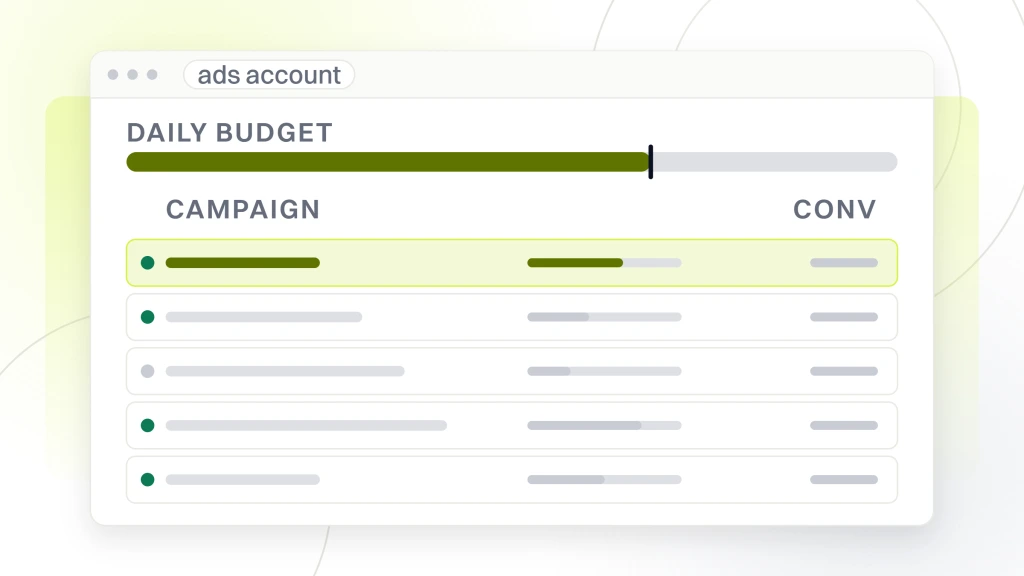
Spend and conversion pacing
Open the dashboard first. Compare yesterday’s spend and conversions against the 7-day rolling average. Anything more than 20% off in either direction gets flagged. A spend spike with no matching conversion growth usually means a bid strategy misfired overnight. A spend drop with conversions holding usually means a campaign paused itself or hit a budget cap. Fix the smaller of the two first, then triage the bigger one.
Search query anomalies
Skim the previous day’s search query report for anything obviously wasteful. A dental practice showing up for job listings. A B2B software showing up for consumer queries. Add those as negative keywords immediately. This single habit protects 5 to 10% of monthly spend on most accounts over a quarter. Skip it and your budget slowly drifts into irrelevant traffic that never converts.
Alerts triage
Optmyzr, Adalysis, or a custom alert layer surfaces anomalies you didn’t catch by eye. Disapproved ads. Landing page issues. Sudden Quality Score drops. Broken conversion tracking. Triage in order of revenue impact. Anything that stops the account from earning gets fixed today. Anything that limits optimization gets scheduled for weekly work. Keep a running note of what fires most often, so quarterly review knows where the system is fragile.
Weekly PPC management checklist that moves the account forward
The weekly PPC management checklist is where real optimization happens. Daily work catches anomalies. Weekly work moves the account. Every serious agency runs the same weekly rhythm because it works. Skip the weekly cadence and the account plateaus, no matter how well the daily checks are running. Here is what belongs on the weekly list, in the order we run it.
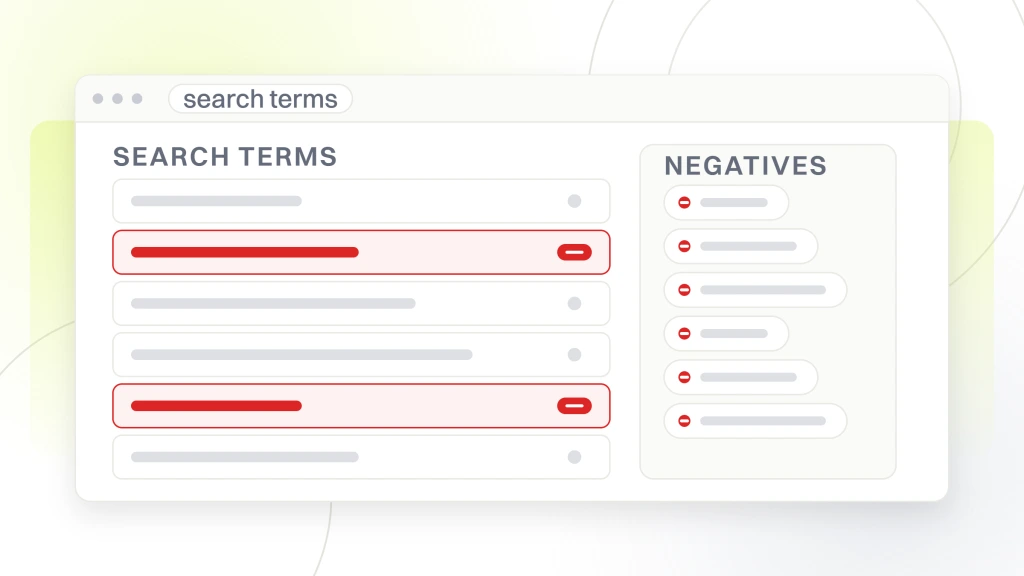
Search query mining and negative keyword hygiene
Pull the 7-day search query report. Sort by spend descending. Every query above a spend threshold with no conversions gets reviewed. Add negatives at the campaign or ad group level as appropriate. This is the single most effective weekly task on any Google Ads account. Google’s own search terms report documentation spells out how to read the data.
Ad copy performance review
Look at every ad group’s ad copy performance over the past 14 days. If a responsive search ad has fewer than 3 headlines rated Good or Best, add more variants. If an ad group has one ad clearly outperforming the others, promote the winner and iterate the runners-up. This is small, boring work that compounds into real click-through rate gains over months.
Bid strategy and budget check
Confirm every campaign is running the intended bid strategy. Confirm every campaign has its intended budget. Both drift more often than a lead expects. A bid strategy left on Manual CPC after a test never converted back. A budget cap that never got raised after a scope change. Weekly review catches both before the client sees a month of underspend on the highest-margin campaign.
Landing page and conversion tracking spot check
Click your top 3 ads. Land on the pages. Do the pages match the ad promise? Does the form work? Does the conversion event fire in GTM Preview mode? A weekly 5-minute spot check on the top-spend campaigns catches broken landing pages before they burn a full weekend of ad spend. This is where most self-service audits stop, and it is where the biggest silent losses hide.
Monthly PPC checklist that resets the strategy
The monthly pass is the layer where strategy meets execution. It runs once per calendar month, in the first week, and takes 6 to 10 hours per account. This is the pass that rebalances budgets, reviews the KPI hierarchy, and asks whether the last 30 days actually moved the business. Weekly work is about the account. Monthly work is about the plan behind it.
Month-over-month performance and pacing
Compare the last 30 days against the prior 30 and against the same month last year. Spend, clicks, conversions, cost per lead, and revenue where it is tracked. A 10% drop in any KPI gets a written explanation before the next client meeting. That written note is the artifact clients trust most, because it shows the account is being managed, not just watched.
Budget rebalancing across campaigns
Monthly rebalancing is where the boring work compounds. Move 10 to 20% of budget out of the lowest-ROAS or highest-CPL campaigns and into the ones actually hitting target. Do it every month and the account’s blended cost per lead drifts down naturally. Skip it for 2 quarters and half the budget is sitting in campaigns you would not launch today.
Competitive and auction insights review
Pull the auction insights report for the top 5 campaigns by spend. Note new competitors appearing at more than 10% impression share overlap. Screenshot competitor ads and landing pages. This is not busywork. It is the input that keeps ad copy sharp against the pages your prospects are also seeing, and it is where the seasonal shift shows up first.
PPC management strategy and process behind the checklist
PPC management strategy sits above the checklist. Strategy sets what you optimize for and why. Process defines how the work gets done consistently across accounts. The checklist executes the process against the strategy. Skip strategy and the checklist becomes make-work. Skip process and the strategy never lands in the account. The best-run teams write all 3 down and revisit them together on a fixed cadence.
Setting the KPI hierarchy
Every account has 1 primary KPI and 2 or 3 supporting KPIs on the PPC management checklist. Ecommerce accounts optimize for return on ad spend with revenue and average order value supporting. Lead-gen accounts optimize for cost per qualified lead with conversion rate and CTR (click-through rate) supporting. Awareness campaigns optimize for reach with frequency and video completion rate supporting. Get the hierarchy wrong and every optimization decision runs against the wrong target.
Documenting the PPC management process
Write the process down. Daily checklist, weekly checklist, monthly checklist, quarterly checklist. List the tools, the reports, the recurring decisions, and the escalation paths. New hires ramp in 2 weeks against a written process instead of 6 months against tribal knowledge. Clients also see the process in the onboarding docs and trust the work more from day one.
Reviewing the process quarterly
Every quarter, review the process itself. Which items still add value? Which have turned into busywork? Platform updates and tool changes shift the answer every year. A checklist you built in 2023 has drifted from what the platforms reward in 2026. Update it. Retire items that stopped mattering. Add items that emerged.
Day-to-day PPC management tasks in practice
Day-to-day PPC management is 60% execution and 40% judgment. What is involved in day-to-day PPC management on a normal Tuesday. Alerts triage. One search query mining pass on the highest-spend account. One ad copy iteration on the account with the weakest CTR. One client Slack response. And 1 strategic decision that could not wait for the weekly review.
The hardest part is prioritization
Every account produces more work than a single lead can execute. The skill is picking the 2 to 3 tasks that will move the account this week and cutting everything else. Junior team members try to do everything and burn out in a quarter. Experienced leads cut ruthlessly and focus on the moves that matter. That prioritization is where tenure shows, and it is the hardest thing to teach in writing.
The role of async communication
Day-to-day work benefits from async communication with clients. Slack updates. Loom videos. Dashboard comments with pinned context. Meetings kill execution time. A team member who spends 4 hours a day in client meetings has 30% less time for actual account work than one running async. Push the client relationship to async wherever the client allows it, and reserve live time for strategy calls.
What does not get done every day
Not every account gets the same daily attention. High-spend accounts get daily. Mid-spend accounts get every other day. Low-spend accounts get twice a week. Daily attention on every account is a myth. Real workload distribution matches the attention to the account size, not to the invoice date. Say that out loud in your team meeting and half the manufactured urgency disappears.
PPC agency checklist items you should skip
Not everything on a legacy PPC management checklist deserves a seat in 2026. Platforms have automated most of what the old checklists prescribed. Some items became theater on the modern PPC agency checklist. Here are 5 items you can drop without hurting the account, and one honest note on when they still matter.
- Manual bid adjustments inside Smart Bidding campaigns. Smart Bidding manages the bid. Human overrides usually hurt performance.
- Weekly Quality Score reviews. Quality Score is a directional signal, not a KPI. Fixing the underlying issue improves it. Watching the number does not.
- Daily ad copy A/B testing on responsive search ads. RSAs test copy for you. Weekly review is enough.
- Ad extension audits every week. Set them up once, review quarterly. Weekly review is over-management.
- Reporting on impression share every day. Weekly is enough. Daily adds noise that clients do not need.
What replaces the retired items
Retire the busywork and reinvest the hours in conversion tracking maintenance, offline conversion imports, first-party audience building, and cross-platform attribution work. Those are the tasks that move performance in a privacy-tightened world. The old checklists were built for a manual-bidding, third-party-cookie era that no longer exists.
How to phase out legacy checklist items
Retiring legacy items works best as a formal quarterly exercise. Sit with the team, walk the checklist item by item, and grade each on whether it still influences a real decision. Items that have not changed a bid, a budget, or a campaign in 6 months come off the list. The freed hours go to the higher-value work that emerged since the checklist was last written.
Documenting what got retired and why
Write down which items came off the list and why. This matters when a new hire joins 6 months later and asks whether they should be checking Quality Score daily. The written record answers the question without a meeting, and prevents legacy items from quietly creeping back into the workflow through tribal knowledge.
How a monthly PPC checklist rebuilt a home-services account
One of our long-standing home-services clients ran on this exact monthly PPC checklist through a multi-year growth program. The account grew from patchy paid search on a $1.5M revenue base to a full-funnel program supporting $6.8M in annual revenue. Our work drove 353% revenue growth, 784% traffic growth, and 637% qualified lead growth over a 9-year partnership. The checklist did the boring work that let the strategic decisions land.
Weekly search query mining protected the budget
The weekly search query review saved an estimated 12 to 15% of the paid search budget from irrelevant traffic in the first 6 months. A renovation contractor gets impressions from DIY searchers, general contractors looking for work, and homeowners looking for information rather than services. The negative keyword layer separates the signal from the noise, and the compounding effect over 9 years was substantial.
Monthly budget rebalancing compounded the wins
Monthly rebalancing moved budget from lower-performing campaigns into the campaigns targeting high-value kitchen and addition projects. Over 18 months, that rebalancing shifted 60% of the paid budget toward the highest-margin work. That single monthly habit set up the 353% revenue growth reported over the full 9-year window.
The quarterly deep audit caught tracking drift
2 of the first 6 quarterly audits caught broken conversion tracking that had drifted after site changes on the client side. Without the quarterly audit, both would have run undetected for months and produced misleading ROAS numbers. Catching tracking drift early is one of the highest-value items on the checklist. It rarely shows up in monthly reports because the numbers look plausible until you dig.
A PPC management checklist is only as good as the discipline behind it. If you want a partner to run the checklist on your account or audit the one your current agency is running, our team at Redefine Web offers PPC management services with the daily, weekly, and monthly workflow built into onboarding. Retainers start at $999/mo and scale to $1,499, $2,499, and from $4,500/mo based on account complexity, with ad spend billed separately. Related reads. PPC campaign management, what is PPC management, PPC management tools, and AI PPC management.