
Online marketing for chiropractors is the ranked mix of Google Business Profile work, review flow, Google Ads, patient reactivation, local SEO, and referrals that books new patients within 30 days for a solo or two-provider practice. Six channels, three phases, one weekly scorecard. That’s the whole shape.
77% of patients search the web for a provider before they call, per a 2024 Pew Research read on healthcare journeys. So online marketing for chiropractors is no longer optional. It’s where the first appointment gets won or lost. This guide walks the priority order, real budget ranges for a solo practice, the four-number weekly scorecard, and the mistake we see 80% of practices make with Google Ads on day one of a fresh account.
You’ll leave with a 90-day plan, a channel-by-channel cost table, and a case study from Pain Cure Clinic showing what happens when the six channels work in the right order. In 12 months they saw 205% appointment growth, 289% traffic, and 162% more reviews at a 4.9 star average.
What is online marketing for chiropractors
Chiropractic online marketing is the mix of Google visibility, paid ads, review flow, website booking, email, and SMS that produces measurable new patient calls for a specific practice in a specific ZIP code. The stack has six moving parts. The failure mode is one weak part starving the rest.
The 3 moves that book new patients in 30 days
- Fully build the Google Business Profile and turn on text-back review requests after every visit.
- Launch Google Ads with a $1,000 monthly budget on chiropractor near me and city plus service keywords.
- Export the inactive patient list from your PMS and send a 3-message reactivation email plus SMS sequence.
The channels that pay off in month 2 through 6
Local SEO for the map pack, technical fixes to the website (load speed under 2.5 seconds, mobile booking, phone number visibility), a referral flywheel with a $20 credit for referrer and referred, and monthly blog content targeting local keywords. These compound. You layer them on after the first 3 moves are stable, not before.
What is not chiropractic marketing that books patients
Instagram Reels of adjustments. Boosted Facebook posts. TikTok clips. Yelp Enhanced. Programmatic display ads. Groupon offers. These get airtime in every marketing panel and produce almost nothing for the average solo chiropractic practice. If you’re paying for any of them, ask for a call-tracked count of booked patients they produced last quarter. Under 3 patients, cut the channel and put the money into GBP, ads, or reactivation.
Priority order for the 6 channels that book patients
The stack works when you add channels in the right order. Trying to launch all six at once burns out the front desk and produces no readable data since nothing runs long enough to measure. The order below fits a solo or two-provider practice starting from a cold budget, and it’s the exact sequence we used with Pain Cure Clinic before their appointments climbed 205% in 12 months.
| Priority | Channel | Time to first patient | Monthly cost | Prerequisite |
|---|---|---|---|---|
| 1 | Google Business Profile plus reviews | Week 2 to 4 | $0 to $400 | None |
| 2 | Reactivation email plus SMS | Week 1 | $130 tooling | Inactive patient list |
| 3 | Google Ads on intent keywords | Day 3 to 7 | $800 to $1,600 spend | Landing page plus call tracker |
| 4 | Local SEO plus citations | Month 3 to 6 | $400 to $1,200 | GBP fully built |
| 5 | Referral flywheel | Week 4 onwards | $40 to $60 in credits | 40+ Google reviews |
| 6 | Content plus blog SEO | Month 6 to 12 | $400 to $1,800 | Working GBP and SEO baseline |
Why sequencing beats sprinting
Every practice that tries to add all six channels in month one blows out the front desk. Reviews don’t get requested since the automation isn’t set up yet. Ads run to the homepage since the landing page isn’t built yet. Reactivation emails go out with broken links. Sequencing skips the launch mess and lets each channel produce readable data before the next one gets added. Boring is a compliment when you’re setting up a marketing stack for a chiropractic practice.
What if you already have channels running
Skip channels that are working and jump to the next weakest link in your stack. If your GBP is fully built and you have 200+ Google reviews, skip to reactivation or ads. If Google Ads is producing patients under $400 cost per booked visit, skip to SEO. Fix the weakest one first, not the newest shiny channel you read about last week.
Google Business Profile is where the work starts
67% of chiropractic new-patient calls in a competitive metro come through the Google map pack, not the organic blue links. That’s why your Google Business Profile (GBP) is the single highest-impact surface in the entire stack. A fully built profile with 40+ reviews at a 4.6 average beats a $10K website rebuild for booking new patients this quarter.
The 8-item GBP setup that beats 90% of local competitors
- Primary category set to Chiropractor. Add secondary categories for Sports Injury Clinic, Physical Therapy Clinic, and any specialty you actually offer.
- Full services list. Adjustment, spinal decompression, massage, dry needling, prenatal, sports rehab. Google reads these as menu items and matches them to searches.
- 15+ photos of the office, team, and treatment rooms. Not stock. Real photos with visible people book 30% to 45% more calls in our audits.
- Weekly Google Post with a real update (new provider, new service, seasonal offer). Fresh posts raise map pack rank inside 6 to 8 weeks.
- Q&A section pre-seeded with the 8 questions patients actually ask (insurance, first visit, walk-in policy, kids, pregnancy).
- Booking link direct to your scheduler, not the homepage. Every click that leaves before booking is lost patient revenue.
- Review request sent within 2 hours of the visit by text, with a direct GBP review link. Response rate drops off a cliff after day two.
- Owner responses to every review inside 48 hours. Google reads response speed as a live signal of practice activity.
Review flow that gets to 40+ inside 90 days
Set the text-back automation to fire 90 minutes after checkout. Ask patients how the visit went in one sentence. If they answer 4 or 5 stars, send the Google review link. If they answer 1 to 3, route the reply to the practice manager for a phone call instead. That single fork protects your star rating and still books the honest positive reviews. A solo practice seeing 40 patients a week hits 40+ Google reviews inside 90 days on this flow.
Reactivation is the cheapest move in chiropractor marketing
Every chiropractic practice has 300 to 800 inactive patients from the past two years. Reactivating 8% to 12% of them books 30 to 100 appointments and costs almost nothing beyond the email tool. It’s the highest-ROI move in the entire stack, and 70% of practices skip it since it feels less exciting than launching a new ad campaign.
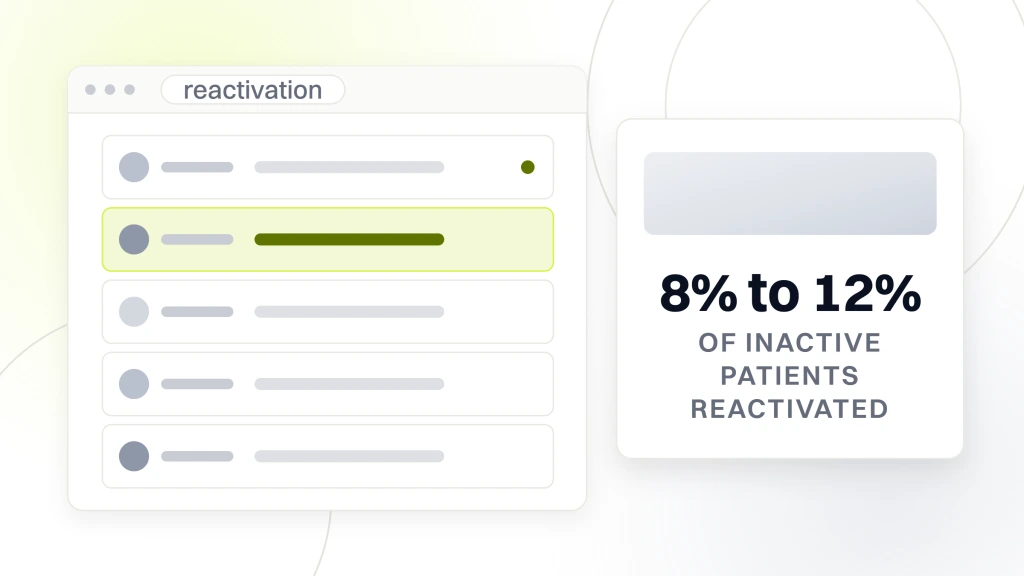
The 3-message reactivation flow that books 8% to 12%
Message one, email on day zero. A personal check-in from the doctor. No offer. Just a question. “Haven’t seen you since April. How’s the back holding up?” Reply rate lands around 6% and books the easy wins first. Message two, SMS on day four. A short reminder with a booking link, signed by the doctor. Books another 4% to 5%. Message three, email on day twelve. The offer. A complimentary 15-minute posture check for lapsed patients. Books another 2% to 3%.
The tooling that costs $130 a month, not $12,000
ActiveCampaign or Klaviyo for email at $50 to $150 monthly. TextMagic or Twilio for SMS at $30 to $80 depending on volume. Your PMS (Jane, ChiroTouch, ChiroFusion) exports the inactive patient list. Total tool cost about $130 a month. Total time to run about 3 hours a month once the templates are built. No marketing automation platform costing $12,000 a year required.
Ongoing patient newsletter cadence
Once you’ve reactivated the list, keep it warm with a monthly newsletter. Two paragraphs of useful content (one seasonal posture tip, one practice update), one photo of the team, one booking link. Open rates for chiropractic patient lists that get a monthly touch land at 32% to 45%. That keeps the list from going cold and produces 3 to 7 reactivation bookings a month on autopilot.
Google Ads is the fastest channel for booking new patients
Google Ads books the first new patient inside 3 to 7 days at a target cost per booked new patient of $180 to $380 in most metros. It’s the fastest channel in the stack, and it’s the most expensive to run badly. The single biggest failure mode we audit is sending paid traffic to the homepage. For a deeper walk-through, see our chiropractor PPC guide.
Keyword targets that book, not just click
Bid on chiropractor near me, chiropractor in [city], back pain chiropractor, sports injury chiropractor, prenatal chiropractor, and auto injury chiropractor. Skip broad terms like spinal decompression or wellness care until the intent keywords are running at target CPA (cost per acquisition). Negative-match adjustments youtube, jobs, salary, cracking videos, and school. Those pull curious clicks with no booking intent.
The landing page that turns a $4 click into a $180 patient
- Load speed under 2.5 seconds on 4G mobile. Every extra second cuts conversion 7% to 12%.
- One headline naming the offer plus the city. “Same-week appointments in Cleveland for back pain” beats “Welcome to our practice.”
- Three visible reviews above the fold. Real names, real photos, one specific outcome each.
- One booking form and one phone number. Both call-tracked. Nothing else competing for the click.
- Insurance logos and payment options in a strip near the fold. Answers the second-biggest objection before it kills the click.
How much does online marketing for chiropractors cost
The full stack runs $1,200 to $6,500 a month for a solo practice, depending on which channels are active and whether you manage it in-house or on retainer. Rural practices run 20% to 30% lower on ad spend. Metros with 40 chiropractors inside 5 miles run 30% to 45% higher. Two-provider practices sit near the top.
Starter stack at $1,200 to $2,200 monthly
Google Business Profile management ($400 managed or DIY), Google Ads spend ($800 to $1,400), call tracking ($45), email tool ($50), and one reactivation blast a month. This stack handles a solo practice under $60,000 in monthly production and books 8 to 15 new patients a month.
Growth stack at $2,500 to $4,000 monthly
Everything above plus retainer-managed local SEO ($800 to $1,200), higher Google Ads spend ($1,600 to $2,400), review automation ($60), and a monthly blog post feeding local SEO. This fits a two-provider practice or a solo doing $80,000+ in monthly production, and books 20 to 35 new patients a month.
Scale stack at $4,500 to $6,500 monthly
Multi-location or high-volume practices adding Meta ads for reactivation retargeting, deeper content SEO investment, and a paid community event calendar. This stack lives above $120,000 monthly production and only makes sense once the growth stack has been booking new patients consistently for 6 months and the front desk is trained to handle the volume without dropping calls.
The 4-number weekly scorecard
Track four numbers weekly. New patient calls from the call tracker. Booked new patients from calls that turned into first visits. Cost per booked new patient (ad spend divided by bookings). Google Business Profile calls direct from GBP insights, not aggregated with paid. These four numbers reveal exactly where the money is producing new patients and where it’s not.
Set up call tracking first
Without call tracking, every other number is a guess. CallRail runs $45 a month and pays for itself the first week you stop paying an agency for calls their ads didn’t actually produce. Use dedicated numbers per channel (Google Ads, GBP, Facebook Ads, website organic, print) so the source is unambiguous when the call rings the front desk.
Reconcile weekly in 20 minutes
Monday morning, 20 minutes. You or an assistant reconciles call tracker source counts against PMS new-patient source counts. Reconciled numbers go into a simple spreadsheet with cost per channel divided by patients per channel. That single number, cost per booked patient by channel, tells you where to add budget next month and where to cut.
Real numbers from a chiropractic client
We ran this exact sequencing shape for Pain Cure Clinic, a chiropractic and wellness healthcare provider. In 12 months they saw 205% appointment growth, 289% traffic growth, and 162% more reviews at a 4.9 star average. The gains came from condition-focused SEO content, GBP work, targeted Google Ads, and a segmented reactivation flow, not from adding channels. Sequencing is what compounds.
4 mistakes that kill a chiropractic marketing budget
Four mistakes eat the majority of chiropractic marketing budgets we audit. Any single one can kill the ROI of an otherwise sound stack. Fix these first before you scale ad spend or add channels.
Sending Google Ads traffic to the homepage
You pay $4 a click to send a searcher to a homepage with six competing calls to action, staff bios, blog posts, and a chatbot. They read for 8 seconds and leave. 90% of failed accounts we audit lose 50% to 70% of ad spend to this one mistake. Every ad campaign needs a dedicated landing page.
No call tracker on the site
Without call tracking, you can’t tell which channel produced which patient. You cut the wrong one first when budget tightens. Then you spend a quarter reconstructing what was working before you touched it. Install CallRail before you spend another cent on ads. Non-negotiable.
Firing SEO at month three
Local SEO produces in month 3 to 6. Content SEO produces in month 6 to 12. If you fire either at day 90 for not working, you’re firing right before the results land. Judge SEO on 6-month windows, not 30-day windows. Different tools, different scorecards.
Chasing the newest channel at every panel
Every quarter a new channel gets marketing panel airtime. TikTok. Programmatic display. AI chatbot booking. Half the practices we work with ask if they should add it. The answer is almost always no. Build the six core channels first. Add novel channels only after the six are booking new patients consistently for 12 months.
In-house vs agency for online marketing for chiropractors
Solo practices under $70,000 monthly production run the starter stack in-house on 3 to 5 hours a week of owner or front-desk time. Above that revenue line, the opportunity cost of the owner running marketing is higher than the cost of retaining an agency. The math is straightforward once you plug in a real hourly value on your own time.
What in-house handles well
Google Business Profile posts, review request follow-up, community event coordination, and the reactivation email cadence. Low-skill, high-relationship tasks. Your team lives inside the practice and can do them faster than any external partner.
What an agency handles better
Google Ads management (skill compounds across accounts), technical SEO, landing page builds, content production, and analytics dashboards. If you value your time at $150 an hour or more, hiring these out at $1,600 to $3,200 monthly retained is straightforward math. When you’re ready to run the full stack, our chiropractor marketing services cover every channel in this guide.
The hybrid that works
Front desk handles GBP posts, reviews, and reactivation. Agency handles ads, SEO, and the website. Owner reviews numbers once a month for 45 minutes. Total owner time 3 hours a month. Retainer cost $1,600 to $3,200. New patients booked 25 to 45 a month. That’s a working shape for a practice over $80,000 in monthly production, and it scales cleanly past the $150,000 mark when a two-provider practice or a second location comes into the picture.
Start your plan this week
You now have the priority order, the six channels, the budget ranges, and the four mistakes. What matters this week is picking one move to make, not overhauling everything. Pick the highest-priority channel you don’t have running yet, or the one running worst. Fix that first.
If you’re starting from zero
Fully build the Google Business Profile this week. Install a call tracker on the site. Export the inactive patient list and send the first reactivation email. Three tasks, about 4 hours of owner time, and the first new patients land inside 14 days. Cost under $150 in total tooling.
If you have ads running but nothing else
Audit the landing page first. Load speed under 2.5 seconds. One offer above the fold. Three reviews visible. Phone number that routes through the tracker. Fix these before you raise ad spend by another dollar. On top of that, set up GBP review requests. Ads plus reviews compounds faster than ads alone.
Where to read next
For the full seven-channel breakdown, see our chiropractor marketing guide. For the wider digital marketing view, read digital marketing for chiropractors. External benchmarks worth reading. The Google local business schema documentation, HubSpot on local SEO fundamentals, and Search Engine Journal’s local SEO section.