
Pet Website Maintenance for DTC Brands and Salons
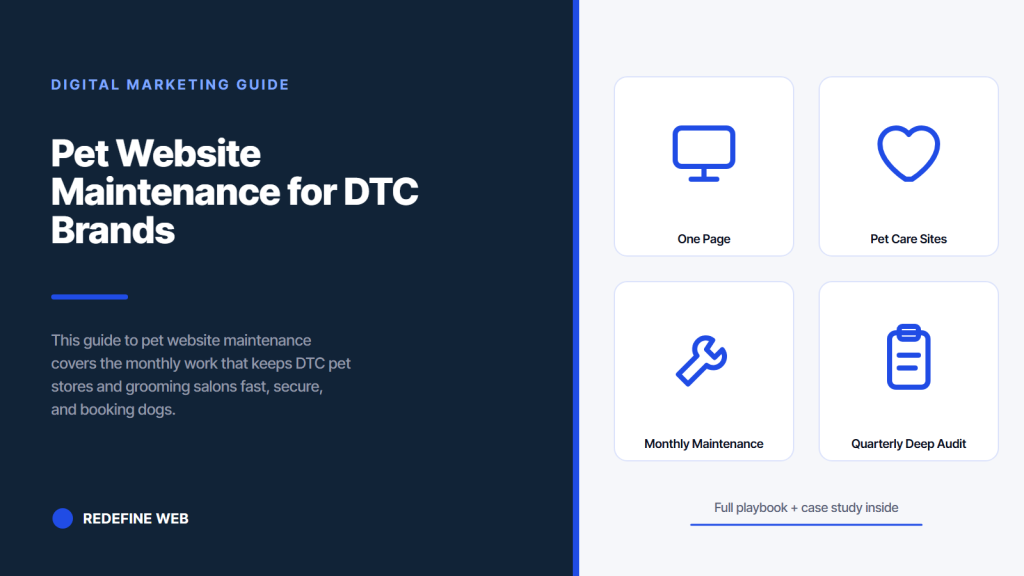
- Twelve monthly tasks run every 30 days without exception.
- Quarterly deep audit catches schema and integration drift.
- Black Friday readiness starts October 1st every year.
- App stack coverage matters more than theme updates alone.
- Budget floor is 199 dollars per month for a single salon.
- Pet website maintenance in one page
- Why pet care sites break more than other verticals
- Monthly maintenance checklist for pet website maintenance
- Quarterly deep audit inside pet website maintenance
- Annual rebuild flags to watch for
- Holiday and Black Friday readiness work
- Grooming and booking site maintenance variant
- Budget ranges for pet website maintenance
- How Berks Plumbing maps to pet website maintenance
- Five numbers to track when the site is running
- Pick the right partner for your pet site type
Pet website maintenance is the ongoing monthly work that keeps a DTC pet food store, a grooming salon booking page, or a multi location pet retail site fast, secure, and open for orders. Every pet brand runs a site that touches Shopify, WooCommerce, or WordPress with a Klaviyo flow, a subscription plugin, a booking scheduler, and half a dozen tracking pixels. Every one of those pieces breaks on its own timeline, and every break costs orders, appointments, and search rankings if the maintenance work is not scheduled.
This guide walks the field tested version of pet website maintenance Redefine Web runs with DTC pet brands, grooming salons, and retail pet chains. You will see the monthly checklist, the quarterly deep audit, the annual rebuild flags to watch for, and the real budget ranges by site type. Every task on the list is field tested against real client tickets, real outages, and real revenue impact from missed maintenance windows. If your pet business runs on a website, this is the retainer scope that prevents the 3am outage before Black Friday.
Pet website maintenance in one page
Pet website maintenance covers every ongoing task that keeps a pet brand site running fast, secure, and functional across the buyer path. The core stack has four pieces. Platform and plugin updates on Shopify, WooCommerce, or WordPress. Security monitoring, malware scanning, and backup rotation. Performance monitoring on Core Web Vitals, page speed, and uptime. Content and integration hygiene covering broken links, expired product pages, and pixel firing across ad channels.
Every extra tactic like design refreshes, A/B testing, and new landing page builds sits on top of that base. Nothing under it. A pet food brand that pays for a Meta ad refresh but skips plugin updates spends money to send buyers to a site that will crash the checkout page inside three months. The maintenance base protects every dollar spent on marketing above it, so a rational retainer buys maintenance first and marketing second.
Redefine Web tracks four pillars for every pet website maintenance retainer. Uptime percent on a 30 day rolling window. Core Web Vitals passing rate on mobile field data across every top revenue page. Security incident count and mean time to resolve inside a documented ticket queue. Broken link count and pixel error count across the property. If those four numbers hold month over month, pet website maintenance is doing its job every single month. Read the pet products marketing hub for the retainer scope pricing.
Why pet care sites break more than other verticals
Pet care sites break more than other verticals because the tech stack carries more moving parts per revenue dollar than most DTC categories. A pet brand runs a Shopify or WooCommerce base with a subscription plugin, a Klaviyo integration, a booking scheduler, an inventory sync, and pixel tracking across five ad channels.
The vet industry reference at the American Veterinary Medical Association tracks pet ownership at record levels, and the ecommerce arm of pet care has grown faster than almost any other consumer category over the last three years. That growth pulled brands onto tech stacks that were built to move fast, not to hold up under multi channel paid traffic and Black Friday load. Most brands that ran on a stock Shopify theme in 2022 have added six to twelve apps since, and none of the apps talk to each other cleanly.
Two operating implications drop out. First, a monthly maintenance retainer catches breaks before they turn into outages during the highest revenue windows of the year. Second, the maintenance work has to include the apps, the theme, and the integrations, not just the core platform. A retainer that only updates the Shopify version and ignores the twelve apps installed on top is a retainer that will miss half the breaks that actually take the site down for a Sunday afternoon subscription checkout.
Monthly maintenance checklist for pet website maintenance
The monthly maintenance checklist for pet website maintenance covers twelve tasks that run every 30 days without exception. Miss any three and the site drifts. Miss six and the site starts breaking. Skip the checklist for a full quarter and the next site emergency turns into a rebuild, not a fix. The twelve tasks split into four buckets. Platform. Security. Performance. Content and integration hygiene.
Platform tasks cover the Shopify version bump, the WordPress core update, the theme update, and every plugin or app update queued in the admin. Test each update in a staging environment before pushing to production. A pet subscription plugin update that ships a breaking change to the recurring order webhook kills the auto ship revenue for every subscriber on the account until the fix goes in, and the customer support inbox turns into a fire drill inside 24 hours.
Security tasks cover the malware scan, the backup rotation check, the SSL renewal window, the user account audit, and the login attempt log review. Performance tasks cover the Core Web Vitals field data check, the mobile page speed run, and the image optimization pass on any product photos uploaded in the last 30 days. Content tasks cover the broken link scan, the expired promo page check, and the pixel firing audit across every ad channel running paid spend that month. See the monthly website maintenance packages page for the full scope inclusion list.
Meta budget on a site that hasn't patched WooCommerce in 6 months sends buyers to a crash. Pull your plugin update log first. Fix maintenance before creative.
Quarterly deep audit inside pet website maintenance
The quarterly deep audit inside pet website maintenance covers the tasks that do not need monthly attention but do need eyes on them every 90 days. The audit takes six to twelve hours depending on site complexity and catches the slow drift issues the monthly checklist misses. Every audit ends in a written report with prioritized fixes ranked by revenue impact.
The audit covers eight areas. Full crawl and broken link scan across the whole property, not just the top navigation pages. Schema markup validation on products, categories, reviews, and local business. Sitemap and robots.txt review inside Search Console. Klaviyo or email flow deliverability audit across the last 90 days of sends. Shopify or WooCommerce checkout funnel test on desktop and mobile. Subscription plugin billing test. Backup restore test on staging to verify the backups actually restore. Uptime and downtime log review.
Schema validation is the audit item most brands skip and the one with the largest ranking impact when it breaks. A Shopify theme update that dropped review schema on the product pages three weeks ago is not visible in the admin but is visible to Google, and the shopping tab impressions drop 15 to 30 percent inside 30 days of the break. Read the Google structured data documentation for the current schema requirements every pet product page needs to hit.
Annual rebuild flags to watch for
Annual rebuild flags are the signals that pet website maintenance can no longer keep the site healthy without a bigger investment. Five flags to watch for. Theme version behind by two major releases with a paid upgrade path blocked. Apps or plugins with more than 25 installed, most of which duplicate function. Core Web Vitals field data failing on more than 30 percent of mobile visits for a full quarter. Checkout conversion rate down 20 percent year over year with no traffic quality change. Customer support ticket volume up 40 percent year over year with no order volume change.
Any one flag alone justifies a rebuild conversation. Two flags on the same site means the rebuild is overdue and every month of continued maintenance is money spent to slow a decline that a rebuild would reverse. Most pet brands hit two flags around year three on the platform, and every month past that mark costs more in patch work than a full rebuild would cost amortized over the next twelve.
A rebuild is not a redesign. A redesign changes the visual layer only. A rebuild replaces the theme, the app stack, and the integration architecture with a clean base that will hold up for the next 24 to 36 months. Redefine Web scopes rebuilds as a fixed price project separate from the maintenance retainer, then transitions the site back onto the retainer once the rebuild goes live. See the pet business web design page for the build scope on rebuilds.
Holiday and Black Friday readiness work
Holiday and Black Friday readiness work is the seasonal spike inside pet website maintenance and the highest revenue moment of the year for most pet brands. The load on the site jumps 3 to 8 times normal traffic between Black Friday and Cyber Monday, and every dropped session is an order that never happens. Readiness work starts October 1st and closes November 20th, no exceptions.
Six tasks fill the readiness window. Full load test at 4 to 6 times normal traffic on staging. CDN warm up and cache pre load for the holiday landing pages. Payment gateway verification with the processor on transaction volume limits. Fraud rule audit on the ecommerce platform since fraud volume spikes with holiday order volume. Subscription plugin quiet period test to make sure the recurring order webhook does not fire the same day as the holiday campaign send. Backup verification with a live restore test on staging inside the last 48 hours before Black Friday opens.
The one task most brands skip is the CDN warm up. A cold CDN cache on a landing page that gets 4x traffic on hour one of the sale kills the LCP on the mobile field data set inside the first hour, and the shopping tab impressions drop the same afternoon. Every pet founder I have worked with has a Black Friday war room set up on Slack, and every one of them ends up staring at Klaviyo error logs at 2am wondering why the abandoned cart flow stopped firing exactly when they needed it most.
Grooming and booking site maintenance variant
Grooming and booking site maintenance is the variant of pet website maintenance for salons, mobile groomers, and pet sitting businesses that run booking software on top of the site instead of a full ecommerce catalog. The scope shifts. Ecommerce specific tasks like the checkout funnel test and the subscription billing check drop out. Booking specific tasks like the scheduler sync test and the calendar integration audit take their place.
Five tasks anchor the grooming variant. Scheduler availability sync between the site and the booking software backend. Calendar integration test on the staff calendar to make sure appointments actually populate. Reminder text and email flow test with a real test appointment. Google Business Profile integration check on the appointment link. Payment deposit test on any grooming service that takes a hold at booking.
The single most common break on a grooming booking site is the scheduler sync. A theme update or a plugin update that touches the JavaScript on the booking button breaks the sync silently, and the calendar keeps taking bookings that never populate on the salon side until the first no show at 9am on Saturday morning. Prevention is a scheduler sync test after every deploy and a monthly regression run against a real test appointment that clears the whole booking to invoice loop. That test takes 20 minutes and catches every silent break inside a business day rather than three days later after the first no show costs the salon a full time slot. See the pet web design for service businesses page for the build pattern that pairs with this maintenance scope.
Budget ranges for pet website maintenance
Pet website maintenance runs 199 to 2,500 dollars per month depending on site complexity, platform, and channel mix. A single location grooming salon on WordPress sits near the floor. A multi brand DTC pet holding company on Shopify Plus sits near the ceiling. Program cost covers the monthly checklist, the quarterly audit, the security stack, and the reporting. Emergency fixes on breaks that happen outside the retainer scope are billed hourly at a capped rate.
The table below breaks down the typical monthly split by site type. These are field averages across the pet brands Redefine Web has worked with in the last three years, not a theoretical model. Every range is verified against real client billing and reported incident counts over multi year engagements. Brands with clean tech stacks and disciplined app installs land at the lower end. Brands with 15 plus apps and a legacy theme land at the higher end every time.
| Site type | Program cost | Checklist coverage | Focus | Uptime target |
|---|---|---|---|---|
| Single salon on WordPress | 199 to 499 | Monthly + quarterly | Booking > scheduler sync | 99.5 percent |
| DTC pet brand on Shopify | 499 to 1,200 | Monthly + quarterly + holiday | Feed < checkout < subs | 99.9 percent |
| Multi location retail | 1,200 to 1,800 | Monthly + quarterly + holiday | Location pages + inventory sync | 99.9 percent |
| Multi brand holding co on Plus | 1,800 to 2,500 | Full stack coverage | Integrations > scale > monitoring | 99.95 percent |
Two cost mistakes to avoid. First, do not skip the retainer to save 400 dollars per month and then pay 8,000 dollars in emergency fixes when the site crashes on Cyber Monday morning. The math never works. Second, do not accept a retainer that quotes hours instead of scope. A pet brand needs the twelve monthly tasks completed every month whether the site takes six hours or twelve to keep clean. See the pet products hosting maintenance page for the fixed scope retainer options.
How Berks Plumbing maps to pet website maintenance
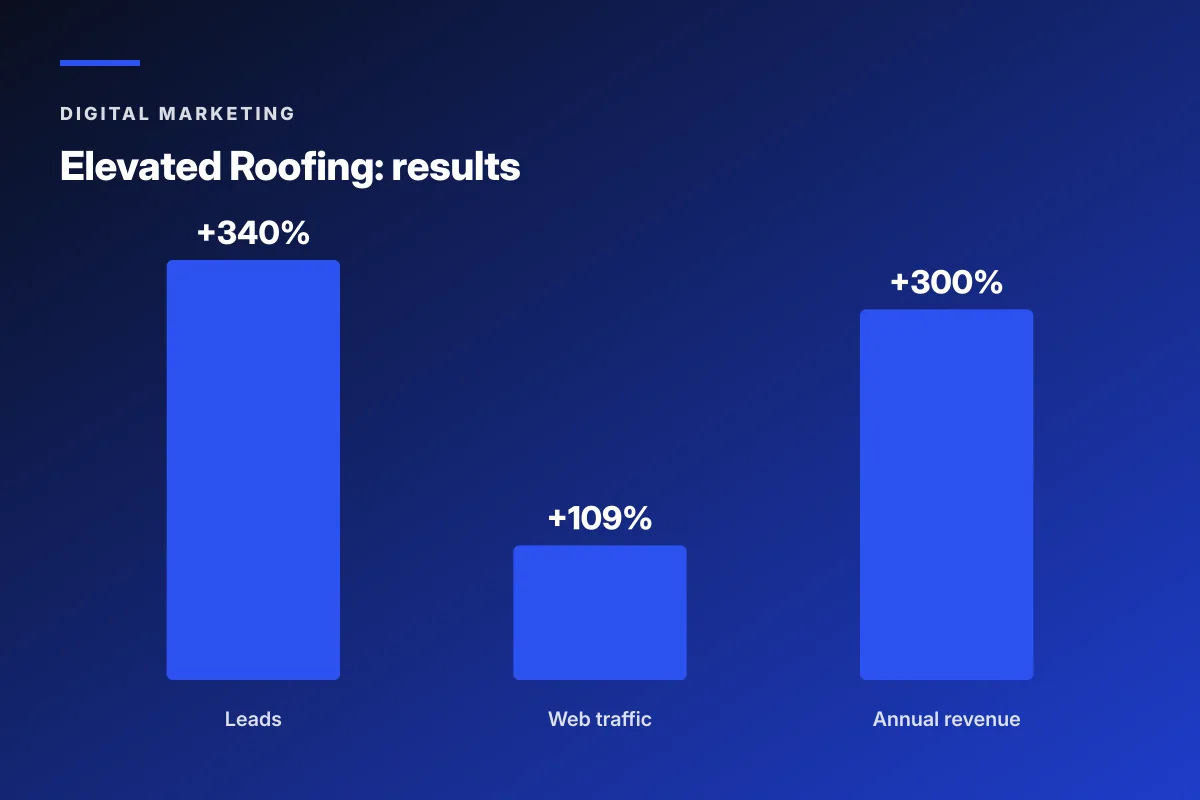
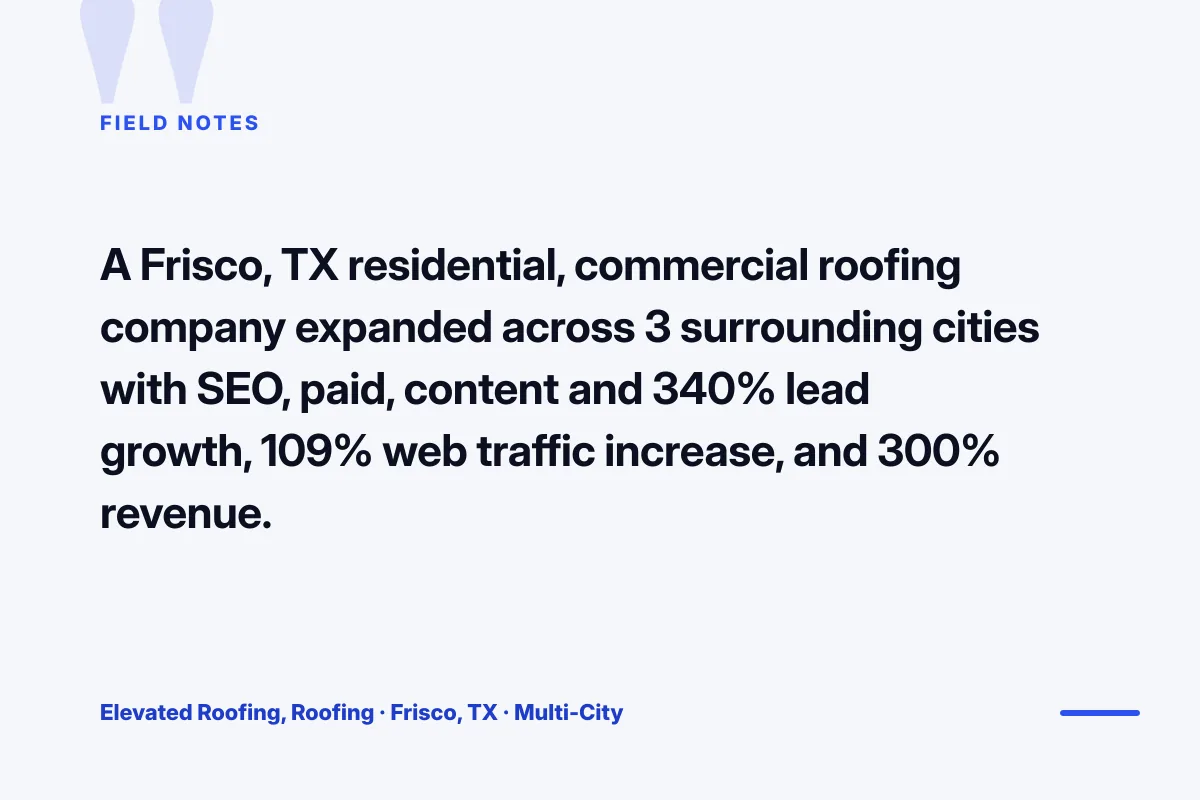
Berks Plumbing is a website rebuild plus maintenance story that transfers cleanly to a pet brand. The Berks County plumber grew Google Ads conversions 99 percent and organic users 75 percent after a full rebuild replaced a broken single page site and a service segmented rebuild took over.
Every play in that engagement applies to a pet brand carrying a legacy site. Rebuild off the single page or the bloated theme onto a clean base with service or product segmentation. Layer technical SEO improvements on speed, structure, and crawlability. Wire tracking and attribution end to end so every paid dollar ties back to a booked order or appointment. Then move the site onto a monthly maintenance retainer so the gains do not decay inside twelve months of the go live date.
The transfer point for pet care is the app stack. Berks Plumbing ran on a clean WordPress base with a handful of plugins that stayed stable across the year. A pet brand runs on Shopify with a subscription app, a Klaviyo integration, a review app, a shipping app, and a wishlist app that all update on different weeks. The maintenance scope has to include every one of those pieces, not just the theme or the base platform. Skip the app coverage and the maintenance retainer misses half the breaks that actually take orders offline for a Sunday afternoon subscription checkout window.
Five numbers to track when the site is running
Track five numbers monthly for pet website maintenance. Uptime percent on a 30 day rolling window. Mobile Core Web Vitals passing rate on field data, not lab data. Security incident count and mean time to resolve. Checkout or booking conversion rate on the primary funnel. Broken link count and pixel error count across the property. Everything else rolls into those five, and every one ties directly to closed revenue on the ad account or the booking scheduler.
Attach a real dollar value to each. Every minute of downtime costs roughly the average revenue per minute across the last 90 days of orders. Every 100 milliseconds of LCP slower than 2.5 seconds costs 3 to 8 percent of the checkout conversion rate. Every security incident that exposes customer data costs 4 to 12 hours of legal and communications work plus the churn cost from the affected customer segment.
Set the incident response protocol on top of that. Uptime alert on any two minute outage. Klaviyo error alert on any bounce rate spike. Checkout error alert on any failed payment webhook. All three feed the same on call rotation, and all three sit inside the retainer scope, not the founder’s phone at 2am. The reason enterprise pet brands never see 3am outages is not budget. It is that every outage triggers a real on call rotation, not a hopeful email to a freelancer.
Pick the right partner for your pet site type
The right partner for pet website maintenance depends on site platform and revenue stage. A grooming salon on WordPress with a booking plugin needs a partner strong on WordPress core updates, plugin conflict resolution, and scheduler sync work. A DTC pet brand on Shopify needs a partner strong on Shopify Plus level app management, subscription plugin tuning, and holiday load testing. A multi location retail site needs a partner strong on inventory sync, location page management, and multi profile Google Business Profile work.
Three signals separate a real pet maintenance partner from a generic web shop. Field tested experience in the vertical, meaning they know that a subscription plugin update on the first of the month risks the recurring order webhook that fires the same day. Incident response transparency, meaning they publish uptime and mean time to resolve monthly, not on request only. Platform ownership transparency, meaning the hosting, DNS, and admin accounts sit in your name, not theirs. Two of the three is not enough on a real retainer.
Where to start this week depends on the site state. If the site has not been maintained in six months, start with a full audit to catalog the broken pieces before any monthly work begins. If maintenance is running but Core Web Vitals are failing, start with a performance audit and a theme or app cleanup. Read the Kinsta maintenance guide for the platform reference material on the WordPress side.
Pet website maintenance is a small stack of tasks run every month without exception. Platform updates. Security scans. Performance monitoring. Content and integration hygiene. Berks Plumbing grew paid conversions 99 percent on a site rebuild plus maintenance model, and the same shape holds for pet care. A pet brand can hit the same math once the retainer is real and the work happens every month, not in emergency bursts around outages.

Frequently asked questions
What is pet website maintenance in plain terms?
Pet website maintenance is the ongoing monthly work that keeps a DTC pet food store, a grooming salon booking page, or a multi location pet retail site running fast, secure, and functional across the buyer path. The core stack has four parts. Platform and plugin or app updates. Security monitoring plus backup rotation. Performance monitoring on Core Web Vitals. Content and integration hygiene covering broken links, expired promo pages, and pixel firing across every ad channel running paid spend that month. Every task funnels into uptime, checkout rate, and search ranking hold.
How often does pet website maintenance need to happen?
Pet website maintenance runs on a monthly checklist, a quarterly deep audit, and an annual rebuild review. The monthly checklist covers twelve tasks that run every 30 days without exception. The quarterly audit covers eight deeper items every 90 days including schema validation, backup restore tests, and Klaviyo deliverability. The annual review checks the five rebuild flags to decide if the site needs a full rebuild or another year of maintenance. Skip any of the three cadences for a full quarter and the site drifts toward an outage during the next high revenue window like Black Friday.
How much should a pet brand spend on website maintenance per month?
A single location grooming salon on WordPress spends 199 to 499 dollars per month. A DTC pet brand on Shopify spends 499 to 1,200 dollars. A multi location pet retail site spends 1,200 to 1,800 dollars. A multi brand holding company on Shopify Plus spends 1,800 to 2,500 dollars. Program cost covers the monthly checklist, the quarterly audit, security tooling, and monthly reporting. Emergency fixes on breaks that happen outside the retainer scope are billed at a capped hourly rate to prevent runaway invoices during outage windows.
Do grooming salons need website maintenance if they use booking software?
Grooming salons that run booking software still need website maintenance because the booking software sits on top of a WordPress or Shopify site that carries its own update, security, and performance risks. A theme update that touches the JavaScript on the booking button breaks the scheduler sync silently, and the calendar keeps taking bookings that never populate on the salon side until the first no show at 9am on Saturday morning. Maintenance scope for grooming shifts from ecommerce specific tasks to scheduler sync tests, calendar integration audits, and reminder flow verification, but the monthly cadence stays the same.
Can a pet brand founder run website maintenance without an agency partner?
A pet brand founder with technical skills and time can run the basics without an agency partner. Set up automated backups on a schedule. Turn on uptime monitoring with alerts. Run the platform and plugin updates on a monthly cadence on a staging environment first. Test the checkout funnel every 30 days. Rotate SSL certificates before they expire. That gets 50 percent of the return of a full retainer. The moment the site adds subscription billing, Meta ad spend past 5,000 dollars per month, or a multi location catalog, the time cost of self managing overtakes the retainer cost every quarter.
What happens when pet website maintenance gets skipped for six months?
When pet website maintenance gets skipped for six months, four things drift at the same time. Platform and plugin versions fall behind by two or three releases each, and the paid upgrade path gets blocked by breaking changes. Core Web Vitals field data drops from green to red on mobile as image sizes bloat and JavaScript stacks up. Search rankings decay by 10 to 30 percent as schema breaks and structured data drops from product pages. Checkout conversion rate falls 15 to 25 percent from small errors that compound. The rebuild cost after six months of drift runs three to four times the maintenance retainer cost.
Book your free 30-minute strategy call.
No spam, no sales rep. We use your email to schedule your call with a senior strategist. That is it.
More from the blog
View all articles → Digital Marketing
 Dental Marketing Tips That Compound Into New Patients
Read article Digital Marketing
 Ecommerce Marketing Strategies That Drive Real DTC Revenue
Read article Digital Marketing