
Ask five agencies what PPC campaign management includes and you will get five lists, all of them long, none of them saying how often anything happens. That vagueness is the product. A retainer that never specifies what changes and how often can absorb any amount of activity and produce any amount of reporting without either side being able to say whether the work was worth it.
So this is organized by frequency rather than by feature. What genuinely needs attention every week, what belongs to a month, what belongs to a quarter, and the largest category of all, which is the things people change constantly that would perform better if left alone. Google publishes documentation on how its automated bidding actually behaves, and several of the rules below are quoted from it rather than from an agency’s methodology page.
We sell this work, so treat it as interested testimony and check it. Where our own offer does not cover something, the article says so plainly rather than leaving you to find out.
What PPC campaign management is, and the audit it is not
Two different pieces of work get sold under similar words and buying the wrong one is common, so settle it first.
Our breakdown of what goes in a Google Ads audit is the one-off inspection of an account you have inherited or stopped trusting, and this is the ongoing work of running campaigns week to week once the account is yours. An audit ends with a document. Management ends with a next week.
The distinction matters commercially because the two are priced differently and confused deliberately. An audit is a fixed piece of work with a deliverable you can hold. Management is a recurring fee against activity, and activity is exactly the thing that is easy to manufacture. A month with forty changes in it is not better than a month with four, and on an account that is performing it is usually worse.
The honest description of the job is this. You are maintaining the inputs that a mostly automated system uses to make decisions, protecting it from bad data, feeding it the things it cannot know, and deciding when a difference in the numbers is real. Our PPC management page is where we sell that, and the same page is the right place to check whether our description of the work matches what we charge for.
The things that change, and the one that mostly should not
Sort every possible action into three buckets before you build a cadence, because the buckets have very different half lives.
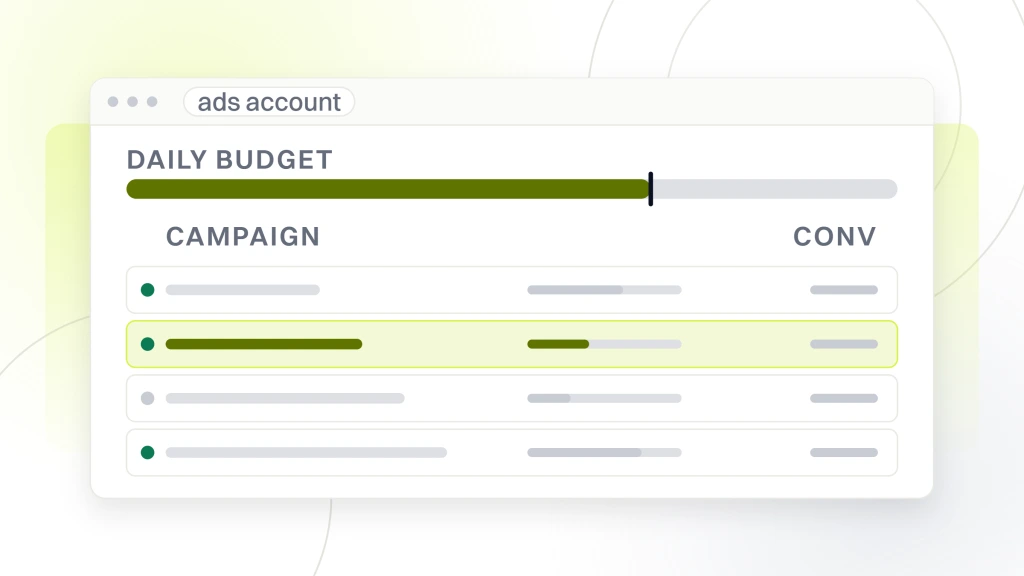
The first is data hygiene, and it genuinely is continuous. Search terms arriving that you do not want, conversions firing that are not conversions, feed errors, disapproved assets. These are not optimizations. They are the account equivalent of clearing a drain, and skipping them for a month costs real money.
The second is structure and creative, which moves on a slower clock. New ads, new asset groups, a campaign split because two products stopped belonging together, a landing page changed. These are experiments and each one needs long enough to produce a readable result before the next one starts.
The third is bids and targets, and this is the one most accounts touch far too often. Where an automated strategy is doing the bidding, every adjustment restarts its understanding of the account. That is the central fact of modern account management and it inverts the intuition that more attention means better results.
A good weekly session is therefore mostly reading, occasionally cleaning, and rarely adjusting. If your provider’s activity log is dominated by the third bucket, ask what each change was expected to do and how they knew afterward whether it did.
Why an automated bid strategy has to be left alone to learn
This is the single most expensive misunderstanding in the discipline and it is also the easiest to check, because the account tells you.
An automated strategy carries a status you can read. Google’s documentation describes it plainly, that “A bidding strategy’s status calls attention to its state at any given point in time. A status of ENABLED indicates an active strategy without any issues”, and that “Other values can indicate whether an automated bidding strategy is still learning or surface misconfigured settings” (developers.google.com/google-ads/api/docs/campaigns/bidding/strategy-status, read 16 September 2026).
Read that as an instruction. A strategy reporting that it is still learning is telling you it does not yet have a stable picture, and a target changed during that window starts the process again. The account that gets adjusted every Monday can therefore spend its entire life in that state, never settling, while the person adjusting it concludes that automation does not work here.
The same status is the first thing to check when performance looks wrong, before anything is changed in response. A strategy that is learning, or one flagged as misconfigured, explains a bad week without requiring a theory about the market. Checking it costs a minute and it prevents the reaction that makes the next week worse.
So build the discipline into the retainer rather than into somebody’s memory. Write down what was changed and when, and do not judge the result until the strategy has had a clear run without interference. If nobody can tell you the date of the last bid target change, the account is not being managed, it is being fiddled with.
Worth knowing what counts as a change, because the list is wider than the bid field. Moving a target, switching strategy type, altering a budget materially, changing what counts as a conversion, or adding and removing conversion actions are all inputs the system is reasoning from. Editing an ad headline is not the same class of thing. Keeping those two lists separate in your own head is most of what stops a well-meant tidy-up from resetting a month of settling.
Search terms, the one job that genuinely is weekly
If only one recurring task survives the budget, make it this one, because it is the only place where doing nothing has a continuous cost.
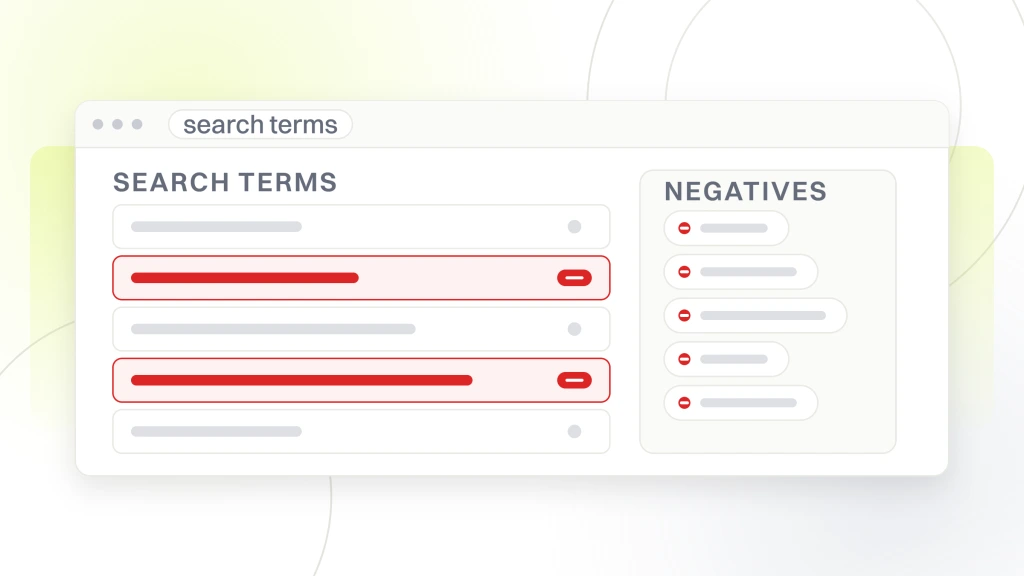
Matching has loosened a great deal, and a keyword now brings in a spread of related searches rather than the list you chose. Most of that spread is fine and some of it is not, and the part that is not arrives every week whether or not anybody looks. Reading actual search terms and excluding the ones that will never buy is maintenance, not optimization, and it is the closest thing to guaranteed value in the whole job.
Read them as a person rather than as a spreadsheet. You are looking for three shapes. Research phrasing from people nowhere near buying, terms attached to a different meaning of your product, and job seekers, students and competitors, who between them can take a startling share of a small budget.
Exclude carefully rather than aggressively. A negative added at the wrong level, or a broad one that swallows a phrase you do sell, removes traffic that was working and nobody notices for a month because the thing that disappeared leaves no record. Add negatives where you can see the term, note why you added it, and review the list occasionally rather than only ever growing it.
This is also the report that tells you whether your product language matches your customers’ language, which is worth more than the exclusions. Terms that keep arriving in wording you never use are telling you what to call things, and that lesson transfers straight onto your product pages and your organic work.
Set a floor on how far back you read, too. A weekly session that only ever looks at the last seven days misses the slow arrivals, the terms that turn up twice a month and cost something every time. Reading a longer window once a month alongside the weekly pass catches those without turning the job into an afternoon.
Budget pacing, and what running out by lunchtime costs
Budget gets treated as a number somebody sets once, and in practice it is a control that quietly decides which half of the day you advertise in.
A campaign that exhausts its daily budget early is not simply smaller than it could be. It is systematically absent for whatever part of the day comes after, and if your buyers are concentrated in the afternoon or the evening, you are paying to reach the wrong half of them. The spend figure looks correct at the end of the month either way, which is why this survives so long.
Check pacing by hour rather than by month at least once, then only when something changes. You are looking for a hard stop, a shape that ends abruptly rather than tailing off. That single view answers a question no monthly spend total can answer, which is whether the account was even present at the hours your buyers were.
The fix is a decision rather than a setting. Either raise the budget so the campaign runs through the day, narrow the targeting so the same money covers the whole day, or accept the limitation deliberately and say so in the reporting. What you should not do is leave it unexamined while reporting a cost per conversion calculated from half a day’s traffic and describing it as the account’s performance.
Shared budgets deserve their own look for the same reason. Where several campaigns draw on one pot, the one that spends fastest sets the ceiling for everything else, and a campaign you care about can be starved by one you were running as an experiment. The spend total still reconciles, so the arrangement can run for months looking correct at the level anybody checks. Split them when the campaigns have genuinely different jobs.
Seasonality, and the limits Google puts on telling it in advance
Every account has predictable spikes, and there is a proper tool for warning the system about them, with conditions attached that get ignored.
Google describes the mechanism as follows. “Seasonality adjustments are an advanced tool that can be used to inform Smart Bidding of expected changes in conversion rates for upcoming future events” (developers.google.com/google-ads/api/docs/campaigns/bidding/seasonality-adjustments, read 16 September 2026). So the input is a conversion rate you expect to change, not a budget or a bid, which is already narrower than the way these get described.
The condition is stated on the same page and it is the part that matters. “Seasonal adjustments are ideal for short events of 1-7 days. They may not work as well if you use them for extended periods (more than 14 days at a time).” That rules out the most common proposed use, which is a long trading season treated as one adjustment.
Read the two together and the honest scope is narrow. A short sale, a single promotional day, a known event with a conversion rate you can actually predict. A long peak is not that, and it is handled by the ordinary mechanism of the system observing what is happening, plus a budget that lets it act on what it observes.
If somebody proposes seasonality adjustments as a standing part of a monthly retainer, ask which events, for how many days each, and what conversion rate change they are predicting and on what basis. Those are answerable questions and the answers are usually absent.
When conversion tracking breaks, and the tool built for it
Tracking fails on every account eventually, usually during a site release, and the damage outlasts the outage because the system keeps learning from the broken days.
There is a specific remedy and it is narrower than it sounds. Google says that “Data exclusions are an advanced tool that can be used to inform Smart Bidding to ignore all data from dates when there were issues with an account’s conversion tracking” (developers.google.com/google-ads/api/docs/campaigns/bidding/data-exclusions, read 16 September 2026). That is the whole permitted purpose, dates when tracking itself was broken.
And the warning is on the same page. “Data exclusions are meant to account for outages or major issues. Using them often or for long periods could negatively impact Smart Bidding performance.” So this is not a tool for tidying up a bad week, a quiet holiday period, or a month somebody would rather the system forgot. Reaching for it when the tracking was working is the misuse the documentation is warning about.
What this means for a management arrangement is that somebody has to notice within days. An exclusion applied a month late has already let the damage into the system. So conversion volume needs a standing check with a threshold that raises an alarm, and whoever manages the account needs to know about site releases before they happen rather than from the graph afterward.
Testing ads without destroying the evidence
Creative testing is the part of the work that looks most like effort, and it is where the most unreadable results get produced.
The usual failure is changing several things at once and then attributing whatever happened next to the change somebody liked. New ads went in, the budget moved and a bid target shifted in the same week, and the following month is described as proof of the ad copy. Nothing about that sequence can be read afterward.
Change one class of thing at a time and write down the date. That is most of the rigor available in an account too small for formal experiments, which is most accounts. Where the platform does offer a proper experiment feature, use it, because it splits the traffic rather than splitting the calendar and it removes the argument about what else was going on.
Give each test enough conversions to mean something rather than enough days to feel thorough. A test that ends because the month ended is a test that ended for an administrative reason, and low-volume accounts frequently cannot run a readable creative test at all, which is worth saying out loud rather than running one anyway and reporting the noise.
What a management report should actually contain
The monthly document is where a retainer either becomes checkable or stays comfortable, and most of them are built to stay comfortable.
Four things make it checkable. A list of what was changed and the date of each change. What each change was expected to do, written before the result was known. What the numbers did, with the learning windows marked so a reader can see which periods are readable. And what is planned next, with the reason.
What does not belong is the impression of activity. A count of keywords added, a count of negatives, hours logged, an optimization score that moved. Those measure work rather than outcome and they are trivially inflatable by anyone who wants the graph to go up. Our breakdown of what goes in a report makes the same argument on the search side, and the failure mode is identical in both.
Ask for the account itself as well. Direct access to the change history settles every question about what was done and when, and any reluctance to grant it is itself an answer. Ownership of the account should sit with you regardless, so that changing provider is a permissions change rather than a rebuild.
Insist that comparisons name what they are comparing against. Against the previous month, against the same month a year earlier, or against the period before a specific change. Each answers a different question and each can be chosen after the fact to produce the flattering one. A report that fixes its comparison basis in advance, and keeps using it even when a month is poor, is worth more than a longer one that quietly picks a new baseline whenever the last one stops helping.
In-house, freelance or agency, and how to tell which you need
We are an agency, so read this knowing we have a preference, and the honest version does not point at us in every case.
A single simple account with a stable product and a modest budget does not need an agency and often does not need a specialist. The weekly work described above is a couple of hours, most of it reading, and somebody internal who understands the business will make better exclusion decisions than an outsider because they know which inquiries are worth having.
An outside specialist starts to earn the fee when the account has several campaign types running at once, when the money is large enough that a structural mistake is expensive, or when there is nobody internal who will reliably do the weekly reading. That last one is the real reason most accounts are outsourced and it is a perfectly good reason.
What should decide it is not a promised percentage improvement, because nobody can know that before seeing the account. Our guide to picking a provider covers the same buying problem on the search side, and if your store’s underlying economics are the real constraint then our work on increasing an ecommerce conversion rate and our comparison of platforms judged on merit are the more useful reading.
What we would do in the first month, and what to ask us
Given an account we have not seen, the first month is deliberately quiet, and a quiet first month is easy to mistake for nothing happening.
Week one is conversion tracking and nothing else, because every number downstream inherits its errors. Week two is search terms and budget pacing by hour, which are the two places where money leaks without showing up as a problem. Week three is structure, read but not yet changed. Only after that do targets move, one at a time, with the date written down. Our work on ecommerce paid search follows that order, and our retail SEO guide covers the organic side, which is the demand you do not have to buy a click for.
One thing to be clear about, because it would be easy to imply otherwise. Our free website audit is a review of the website itself and nobody on our side logs into a Google Ads account as part of it. If what worries you is where your ad budget goes, that is a different piece of work and it is the Google Ads audit, not the free one.
Now point all of that at us. The test this article sets is that every rule about automated bidding is quoted to Google’s own documentation with a date, that the cadence is justified by how the system behaves rather than by what fills a retainer, and that a report says what changed, when, and what it was expected to do. Ask whoever manages your account for the date of the last bid target change and what it was meant to achieve. If that question is difficult, you have your answer, and it applies to us as much as to anybody.
The first move costs nothing. Open your own change history and read the last three months of it.