
Dental PPC management is the weekly, hands-on work of running a dental practice’s Google Ads account so booked patients go up and cost per patient goes down. It’s 8 recurring tasks (bid tuning, negative keyword adds, ad copy rotation, landing page reviews, call scoring, competitor checks, budget pacing, and search terms review), and it runs every 7 days for the life of the account.
Google Ads shifts every 7 days. New auction rivals enter. Negative keyword sets need updating. Ad copy fatigues. Landing pages lose conversion rate. A manager who only touches the account once a month lets 3 of those shifts stack unaddressed. By day 21 the account is 15 to 30% less efficient than it was at kickoff, and you never see it. The report only shows totals. That gap is what dental PPC management exists to close. Google’s own Google Ads help center spells out how auction dynamics change weekly, and that pace is why monthly-only management leaves money on the table.
Below you get the weekly cadence we run on live dental Google Ads accounts, the metrics that actually move booked patients, the pricing tiers by practice size, the 30-day audit your manager should walk you through, and the 6 mistakes we see when a practice switches vendors. Plus the in-house versus vendor math so you know which side matches your stage. Read straight through in 10 minutes. Use it as a working checklist against your current vendor or your in-house lead the next time you sit down for a paid search review.
What dental PPC management actually covers
Dental practice PPC management covers 8 weekly tasks. Bid adjustments. Negative keyword additions. Ad copy rotation. Landing page conversion review. Call listening. Competitor auction insights. Budget pacing. Search terms report review. Skip any 3 and the account loses efficiency inside 30 days.
The word management gets overused. Some vendors sell dental Google Ads management as “we set it and refresh the report.” Real management moves the levers every 7 days. The account structure gets set once at launch. Optimization happens every week for the life of the campaign. Practices that pay for management and get monitoring are paying for a report they could pull themselves in 5 minutes.
The 8 weekly tasks every account needs
Every Monday your manager reviews the previous week’s search terms report and adds negative keywords. Tuesday runs bid adjustments based on device, location, and time-of-day performance. Wednesday rotates ad copy against fatigue signals. Thursday reviews landing page conversion rates and flags any drop. Friday listens to the recorded calls and scores lead quality. That is the base rhythm. Miss 2 Fridays in a row and the practice starts paying for bad leads without knowing it.
The monthly tasks that compound the weekly work
Every 30 days your manager runs the full audit. Search impression share by campaign. Wasted spend on low-intent queries. Landing page A/B test results if 1 is running. Competitor ad copy screenshots. Budget reallocation across campaigns based on cost per booked patient. A good monthly audit takes 3 to 5 hours and produces a 2-page written summary your practice owner can read in 8 minutes.
The quarterly tasks that keep the account fresh
Every 90 days the campaign structure gets a fresh look. New campaign types tested. Underperforming ad groups paused. New landing page variants built. Fresh creative for display and video remarketing. Google rolls new features every quarter, and accounts that never adopt them fall behind competitors who do. A quarterly reset takes 10 to 15 hours and pays back for the following 90 days of steady booked patients.
The weekly cadence on a real dental Google Ads account
A working dental Google Ads account runs on a 5-day rhythm. Monday resets the negative keyword list. Tuesday tunes bids. Wednesday rotates copy. Thursday audits landing pages. Friday listens to calls and scores leads. Every task takes 30 to 60 minutes. Total time per account per week lands at 3 to 5 hours across a solo practice, 6 to 9 hours for a multi-location group. Our dental client Smile Design Dentistry runs this exact cadence across 50+ locations, and it cut cost per call by 30% over 12 months and pushed PPC conversion rate up 20%.
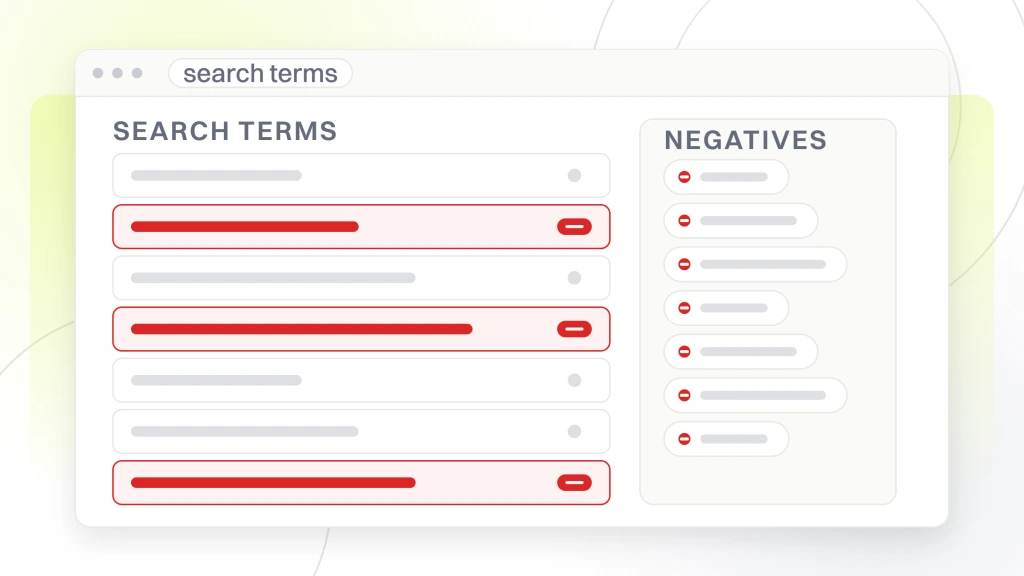
- Monday. Pull last 7 days of search terms, add 10 to 30 negative keywords
- Tuesday. Adjust device, location, and time bids by 10 to 25% based on conversion data
- Wednesday. Pause fatigued ads (CTR down 20%), add 2 to 3 fresh variants
- Thursday. Check landing page conversion rate, flag any drop over 15%
- Friday. Listen to 5 to 10 recorded calls, mark lead quality, adjust targeting
- Weekly total. 3 to 5 hours per solo practice, 6 to 9 hours per multi-location group
The point of the cadence isn’t the hours logged. It’s the discipline of catching every drift inside 7 days. A negative keyword added on Monday saves the practice $50 to $200 by Friday. A fatigued ad paused on Wednesday saves 15 to 25% of the week’s remaining spend. Compound that over 12 months and dental PPC weekly management pays for itself 3 to 5 times over.
Monday negative keyword review
Every dental Google Ads account collects garbage search terms weekly. “Free dental” queries. “Dentist for dogs” queries. “How to pull my own tooth” queries. Each one costs $6 to $18 per click and books 0 patients. Monday morning your manager pulls the search terms report, sorts by cost, and adds 10 to 30 negatives to the campaign or account level list. That single hour of work saves the account $200 to $800 over the following week.
Friday call quality review
Friday the manager listens to 5 to 10 recorded calls from the previous week. Marks each as booked patient, information seeker, spam, or wrong number. That data drives the targeting adjustments for the next week. Practices that skip call review pay for the same wrong-number calls month after month, and nobody tells the algorithm which queries produced them. Fixing the feedback loop cuts cost per booked patient 20 to 40% inside 60 days. That’s the same lever that pulled Smile Design Dentistry’s cost per call down 30% over 12 months across 50+ dental offices.
Dental ads management metrics that actually matter
Cost per booked patient is the metric that matters at the campaign level. Everything else is a diagnostic. Impressions, clicks, click-through rate, and conversion rate are downstream signals you watch to explain why cost per booked patient moved. When a vendor report leads with impressions or clicks and buries cost per booked patient, the report is designed to hide the story.
| Metric | What it tells you | Good range for dental |
|---|---|---|
| Cost per booked patient | True account efficiency | $80 to $220 general dentistry |
| Call to booking rate | Front desk performance | 35 to 55% |
| Landing page conversion | Site UX quality | 8 to 18% |
| Search impression share | Budget adequacy | 60 to 85% |
| Click-through rate | Ad copy fit | 5 to 12% branded, 3 to 6% non-brand |
| Quality Score average | Account health | 6 to 9 across top keywords |
Cost per booked patient math
Cost per booked patient equals total ad spend divided by patients who booked and showed. Not calls. Not form fills. Booked and showed. General dentistry sits at $80 to $220. Cosmetic dentistry $200 to $650. Implant consults $250 to $900. Emergency dental $60 to $180. Intent runs high and lead time is short. Practices tracking cost per click instead of cost per booked patient optimize for a proxy metric that misses the business outcome. Industry click-cost data from the WordStream Google Ads benchmarks shows dental sits near the top of every vertical for CPC, so getting cost per booked patient right is where the money is.
Call to booking conversion
The front desk handles the ad spend the moment the phone rings. If your call-to-booking rate sits at 20%, half your ad spend goes to calls the desk failed to convert. That is a training problem, not a Google Ads problem, and no amount of PPC optimization fixes it. Manager reports should include the call-to-booking rate every month, so the practice owner knows whether to invest in front desk training or more ad spend.
Landing page conversion rate
Landing page conversion rate is the second-highest-impact number in the account. A dental Google Ads landing page should convert 8 to 18% of paid clicks into calls or form fills. Below 8%, the page is the bottleneck. Above 18%, you can raise bids and grab more impression share without breaking cost per booked patient. See our full teardown of dental PPC landing pages for the 12-point checklist we run every quarter.
Dental PPC management pricing tiers by practice size
Dental PPC management pricing runs 4 tiers. Launch at $999 per month for solo practices under $3,000 ad spend. Growth at $1,499 for 1 or 2 locations spending $3,000 to $8,000. Scale at $2,499 for multi-location groups spending $8,000 to $20,000. Enterprise starts at $4,500 for dental groups running 3 or more accounts or spending over $20,000 per month. Ad spend is billed on top of the retainer, always.
| Tier | Monthly retainer | Practice fit | Ad spend range |
|---|---|---|---|
| Launch | $999 | Solo practice, 1 location | Under $3,000 |
| Growth | $1,499 | 1 to 2 locations | $3,000 to $8,000 |
| Scale | $2,499 | Multi-location group | $8,000 to $20,000 |
| Enterprise | Starts at $4,500 | 3+ accounts or DSO | $20,000+ |
Which tier fits your practice
Launch fits a solo general practice testing paid search for the first time. Growth fits an established solo or 2-op group with a proven front desk. Scale fits a multi-location group running cosmetic or implant campaigns. Enterprise fits a DSO or large multi-location group with 3 or more separate Google Ads accounts. Practices upgrade tiers as ad spend grows past a threshold, not as an arbitrary calendar milestone.
What’s included at each tier
Launch covers the 8 weekly tasks on 1 account. Growth adds monthly call scoring, quarterly landing page A/B tests, and a 30-minute strategy call. Scale adds creative testing, competitor teardowns, and a monthly video walkthrough of the account. Enterprise adds a dedicated account lead, custom dashboards, weekly executive summaries, and cross-account budget optimization for DSO groups.
In-house versus vendor. The math that decides
Under $8,000 per month in ad spend, outsource dental practice paid search. The retainer math wins. A certified Google Ads specialist earns $75,000 to $110,000 per year, which is $6,250 to $9,166 per month before benefits, taxes, and tools. Add $500 to $1,200 per month in software (call tracking, bid management, reporting) and the fully loaded in-house cost sits at $6,750 to $10,366 per month for 1 account. A $1,499 retainer covers the same work with a team, not a single point of failure.
Above $25,000 per month in ad spend across 3 or more locations, hire a full-time PPC lead and keep an agency on retainer for creative and analytics. Between $8,000 and $25,000 per month, outsource unless you already have a marketer on staff. The break-even math flips at roughly $25,000 in monthly spend, and the fully loaded in-house cost gets absorbed into ROI once the marketer manages multiple channels, not just paid search.
Vendor tradeoffs to weigh
A vendor buys you team depth. Someone covers the account when your specialist goes on vacation, when Google rolls a new feature, when a landing page breaks on a Friday afternoon. In exchange you accept a lower share of attention per account. In-house buys you undivided focus and faster feedback loops, at the cost of key-person risk and higher fixed overhead. Neither is universally right. The math decides.
The hybrid model most dental groups end up running
Most dental groups above $15,000 per month end up hybrid. An in-house marketer owns the practice’s overall funnel, calendar, and reporting, and an agency owns the paid search levers. This split keeps the practice close to the campaign data without paying a $110,000 specialist to only manage Google Ads. Plus it gives the agency the strategic context that improves ad copy and landing page decisions inside 30 days.
The 30-day audit your manager should walk you through
Every 30 days your dental practice PPC management vendor should walk you through a written audit. 2 pages, 8 minutes to read. It answers 5 questions. What was cost per booked patient this month versus last. What moved it. What’s changing next month. Where the account is under-invested. Where the front desk is losing conversion. If the audit doesn’t answer those 5, it’s a report, not an audit.
Section 1. Cost per booked patient trend
The audit opens with a 6-month cost per booked patient trend line. Not a pie chart. Not a bar of impressions. A line that shows the last 6 months of cost per booked patient with an annotation for every meaningful account change. That single chart tells the practice owner whether the account trends toward the target or away from it.
Section 2. Wasted spend cut this month
Every audit lists the search terms the vendor added as negatives, the ad groups paused, and the bids reduced. Total dollars saved. Percent of monthly spend that was wasted at the start of the month. This section is where the vendor shows work. Vague summaries (“we optimized the account”) mean the vendor didn’t do the work or can’t measure it.
Section 3. Impression share and competitive pressure
Section 3 shows search impression share by campaign and lost impression share split into 2 buckets. Lost to budget. Lost to rank. Budget losses mean the practice is under-invested on a winning campaign. Rank losses mean the ad copy or landing page needs work, not more budget. Mixing the 2 up is how practices overspend on a broken campaign for a full quarter.
Section 4. Front desk conversion snapshot
Section 4 pulls the call-to-booking rate from the previous 30 days. If it drops below 35%, the audit flags a front desk retraining need, not a Google Ads spend change. Section 5 lays out the next 30 days. What’s being tested, what’s being launched, what’s being paused, and the expected impact on cost per booked patient. Precise, measurable, dated.
The 6 mistakes practices make when switching dental Google Ads vendors
Switching dental Google Ads management vendors carries hidden cost. The account loses 4 to 6 weeks of learning data. Conversion tracking often breaks in transfer. New vendors rebuild campaigns from scratch instead of preserving the winning ad groups. The 6 mistakes below cost practices 20 to 40% of the following quarter’s cost per booked patient if not planned around.
- Switching mid-quarter without a 30-day overlap period between vendors
- Letting the new vendor rebuild campaigns instead of forking the winning ad groups
- Not exporting the last 12 months of search terms report before handoff
- Losing Google Ads conversion tracking during the account transfer
- Reassigning phone numbers without preserving call tracking history
- Failing to keep the old vendor on retainer for the first 30 days as a rollback option
Why the 30-day overlap matters
Google Ads runs on machine learning that needs 30 to 60 days of stable data to hit target cost per booked patient. Switching vendors mid-quarter resets that learning. A 30-day overlap lets the new vendor observe the account under real conditions, take over incrementally, and preserve the conversion history. Practices that skip the overlap trade 1 vendor’s fatigue for 6 weeks of learning debt.
Conversion tracking transfer
Conversion tracking breaks in about 30% of vendor transfers. Google Ads conversion tags, phone tracking pixels, and Google Analytics goals all need to move cleanly. If any of the 3 breaks, the account looks like it’s underperforming when in fact the data is just missing. Any new vendor should audit conversion tracking on day 1 and produce a written verification before touching bids.
The 6 red flags your dental PPC management vendor is under-performing
You know a dental practice PPC management vendor is under-performing when 3 of these 6 red flags fire in a rolling 30-day window. 1 flag is a bad month. 2 is a warning. 3 or more is a switch trigger. The flags below are lifted from 40+ dental vendor audits over the past 3 years.
- Search terms report has 5 or more repeat wasted queries. The vendor isn’t adding negatives weekly.
- Cost per booked patient rises 20% or more month over month. And the vendor can’t name the cause.
- Landing page conversion sits below 8%. No test is running. No fix is planned.
- Monthly report leads with impressions or clicks. Cost per booked patient isn’t on page 1.
- Vendor takes over 48 hours to answer a numbers question. The team isn’t in the account daily.
- Ad copy hasn’t rotated in 60 days. Fatigue is baked in and CTR is dropping.
1 flag versus 3
1 flag on its own means the vendor had a bad month. Every account has them. 2 in the same month is a warning that the vendor’s process is slipping. 3 or more inside 30 days means the vendor isn’t running dental PPC weekly management at all. That’s the switch trigger. Not price, not vibes, not a bad quarterly review call. 3 flags out of 6, and you go to market.
Case in point. Smile Design Dentistry cut cost per call 30% over 12 months
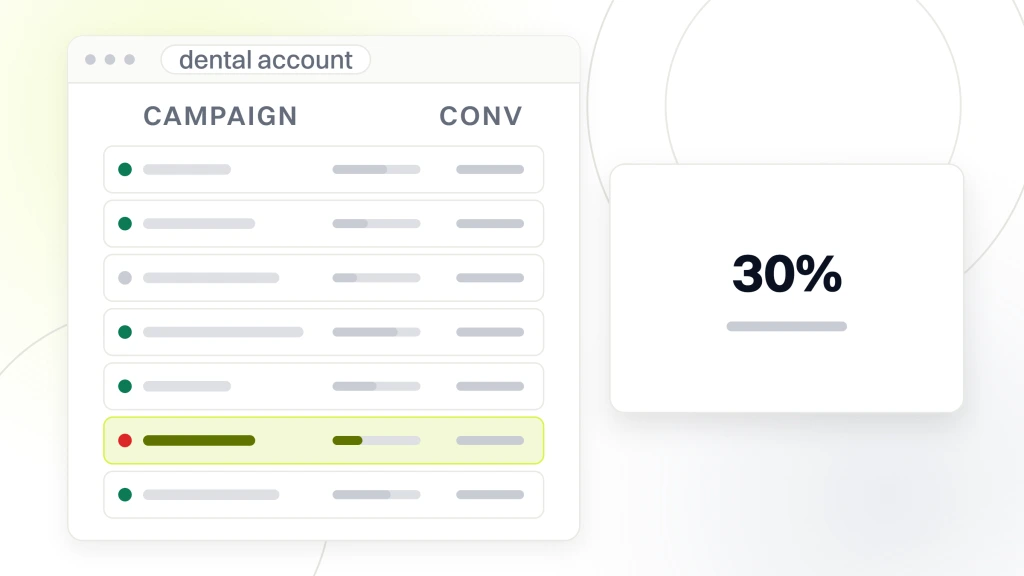
Smile Design Dentistry runs 50+ locations across the US. Before we started managing paid search, cost per call was climbing quarter over quarter and PPC conversion rate hovered in the low single digits. We rebuilt account structure, tightened negative keyword lists across all 50+ locations, rotated ad copy weekly, and matched every ad group to a dedicated landing page. Over 12 months cost per call dropped 30%, PPC conversion rate lifted 20%, and campaigns went live across 50+ locations with the same weekly cadence per office.
The rebuild wasn’t magic. It was the 8 weekly tasks run consistently for 52 weeks. Monday negatives. Tuesday bids. Wednesday copy. Thursday landing pages. Friday call scoring. Multiplied by 50+ locations. The lesson for any dental group. Dental practice paid search is the discipline of the boring weekly cadence, done at scale, for long enough that the numbers move.
Account structure that holds up under weekly optimization
The account structure decides how easy dental Google Ads management is to run for the next 12 months. A clean structure lets a manager tune bids in 20 minutes. A messy structure eats 4 hours of the week just to find the right ad group. 4 rules define a structure that holds up. 1 campaign per treatment category. 1 ad group per intent bucket. 1 landing page per ad group. 1 conversion action per goal.
Treatment categories break out cleanly. General dentistry, cosmetic, implants, orthodontics, and emergency get their own campaign. Each campaign runs its own budget so cosmetic can’t drain the general dentistry pool on a bad Tuesday. Inside each campaign, ad groups split by intent. Brand queries in 1 ad group. Near-me queries in another. Treatment-plus-city queries in a third. Every ad group maps to a landing page written around the exact phrase family the reader typed.
Campaign types to run and campaign types to skip
Search campaigns own the core spend. Performance Max fits practices with 3 or more locations and clean product feeds. Local Services Ads run in parallel on “dentist near me” and “emergency dentist” queries. Display and video remarketing pull past visitors back for high-ticket treatments like implants and Invisalign. Skip broad match on new accounts. It burns budget on unqualified queries in the first 30 days. Add it back in month 3 with a full negative keyword library in place.
Naming conventions that save 3 hours a week
Every campaign name carries 3 tokens. Treatment. Location. Match type. A campaign called “Implants. San Diego. Exact” tells you everything before you click into it. Ad groups follow the same rule. “Same day implants. Downtown SD. Phrase.” That naming saves 3 hours a week of hunting for the right lever, and it prevents the accidental bid change on the wrong campaign that costs practices 20% of a month’s spend in a single afternoon.
Seasonality patterns every dental Google Ads management account should plan for
Dental demand runs on a predictable annual pattern. January books the year’s biggest general dentistry spike as insurance benefits reset. May and June carry the second spike as families schedule pre-summer cleanings. August drops 15 to 25% as vacations pull budget. October climbs again on end-of-year insurance use-it-or-lose-it. December splits into 2 stories. Cosmetic surges in the first 2 weeks. General dentistry flatlines the last 2. A dental PPC weekly management account that runs the same bid strategy across all 12 months leaves 15 to 30% of possible booked patients on the table.
Budget pacing by month
Pace budgets to demand. January and October get 12 to 15% of annual budget each. May and June get 10 to 12%. August and November drop to 6 to 8%. December splits with 8% weighted toward the first 2 weeks. That leaves the remaining months at 8 to 10% each. This is the pacing curve that matches how patients actually search, not the flat 8.33% every month that most vendors default to.
Ad copy that shifts by season
Ad copy shifts by month too. January copy calls out “use your dental benefits before they reset.” October copy calls out “maximize your annual benefits this year.” August copy pivots to “back-to-school cleanings this week.” December cosmetic copy calls out “holiday-ready smile in 2 visits.” A dental practice PPC management account that runs the same 4 ad variations year-round misses the 8 to 12% CTR lift that seasonal copy delivers.
Conversion tracking that stands up to a 12-month review
Conversion tracking is where most dental Google Ads accounts quietly break. If the tracking is off, every optimization decision after that is guessing. A solid setup tracks 4 conversion actions per account. Booked appointments from the website form. Phone calls of 60 seconds or longer from ads. Click-to-call taps from mobile ads. Directions taps from Local Services Ads and location extensions. Miss any of the 4 and the account under-reports booked patients by 20 to 40%, which pushes the vendor to raise bids on the wrong campaigns.
Website form conversions need offline import for the practices that book patients through a call after a form fill. Google Ads offline conversion import syncs the actual booked-and-showed appointment back to the click that produced it. Without offline import, the account optimizes toward form fills, not booked patients, and cost per booked patient drifts up 15 to 25% over 6 months even as the vendor swears the account is healthy.
Call tracking that maps ad to patient
Every dental practice paid search account needs dynamic call tracking numbers, not a single static number in the ad extensions. Dynamic tracking swaps the display number based on the source campaign, ad group, and keyword. That lets the vendor tie a booked patient back to “same day crown Chicago” instead of a generic “call the practice” event. CallRail, WhatConverts, and CallTrackingMetrics all do this cleanly. Budget $150 to $350 per month for call tracking on a 1 to 3 location practice.
GA4 linking and audiences
Link Google Ads to Google Analytics 4 on day 1. GA4 audiences (past patients, form starters, service page viewers) feed remarketing lists that lift return-visit conversion 25 to 45%. Skip GA4 linking and the account gives up its highest-value audience data. Any dental Google Ads management vendor that doesn’t set up GA4 linking in the first week is behind before the account even ramps.
Where Local Services Ads fit inside dental PPC management
Local Services Ads (LSAs) opened to dentists in January 2023. They appear above regular Google Ads on local dental searches and charge per lead, not per click. Cost per lead runs $40 to $95 in most markets, and lead-to-booked rate sits at 25 to 40%. That puts cost per booked patient in the $150 to $300 range for LSAs alone. LSAs don’t replace Google Ads. They complement it. Practices should run both in parallel and let each channel own the searches it wins.
LSA versus search ads. When to run each
LSAs win top-of-page real estate on “dentist near me” and “emergency dentist” queries. Search ads win high-intent branded queries and long-tail treatment queries like “invisalign consult san diego” or “same day crown chicago.” A dental Google Ads management account that only runs LSAs misses the treatment-intent traffic. An account that only runs search ads misses the top-of-page click. Both belong in a real dental practice paid search program.
Related reading for dental PPC management
For the deeper dive on Google Ads, see our teardown of dental Google Ads management. For the full-funnel picture that includes SEO, local, and referral channels, see dental marketing for dentists. If you’re vetting done-for-you options, our dental PPC services page covers the retainer tiers, deliverables, and reporting cadence in detail. Google itself publishes the ranking guidance we follow at the Google ranking systems guide.
Make dental PPC management work for your practice
The bottom line. Dental PPC management is 8 weekly tasks, done every 7 days, measured against cost per booked patient. Retainer tiers are $999, $1,499, $2,499, from $4,500 per month. The switch trigger for a bad vendor is 3 of 6 red flags inside 30 days. The audit your vendor owes you is 2 pages, 5 questions, 8 minutes. Under $8,000 in monthly spend, outsource. Above $25,000, go hybrid. In between, outsource unless a marketer is already on payroll.
Pull the search terms report today. Sort by cost. If the top 10 queries include anything you don’t treat, that’s the first hour of the next 90 days. If cost per booked patient sits outside the ranges in this guide, that’s the second. And if your vendor can’t tell you cost per booked patient, front-desk call-to-booking rate, and search impression share in under 24 hours, that’s your switch trigger. Every practice that runs dental PPC weekly management on this cadence books more patients per dollar than the practice down the street running the same account monthly. The discipline is the moat.
Start with 1 tier. Launch for a solo practice under $3,000 spend. Growth for 1 or 2 locations spending $3,000 to $8,000. Move up as the ad spend and booked-patient volume prove out. Never buy a tier based on the retainer alone. Buy the tier that matches what the account actually needs this quarter. That’s the math that keeps dental Google Ads management from becoming an expense line and turns it into a growth line that pays for itself 3 to 5 times over every 12 months.