Custom PHP web development services still run 42% of the public web in 2026, and that share holds for one reason. Laravel ships fast, WordPress runs mature, and a seasoned PHP team lands features in weeks where a Node or .NET team spends months planning. This guide breaks the work into four clear pricing bands, from an $8K content site to a $500K enterprise build. This guide walks you through each band, when Laravel wins over Node, when ASP.NET fits an enterprise stack, and a mid-market B2B portal build where the framework pick held the timeline.
You’ll read what a US-based PHP build delivers past the sales deck, why a .NET quote often lands 20% above Laravel on the same scope, how AngularJS modernization compares with a Nuxt or Next.js rebuild, and when Next.js beats every PHP option on the shortlist. Every section names the framework, the fit, the cost band, and the case where the pick pays back.
Custom WordPress web development services and their limits
WordPress still covers 42% of the public web because it runs fast on content-first workflows. Marketing sites, small B2B sites, and simple WooCommerce stores go live in 4 to 12 weeks on a modern block theme. The plugin catalog covers hosting, security, and editorial tooling that skips the custom engineering work most content sites don’t need. Custom PHP work in this band often starts with WordPress and stops there.
Where WordPress breaks is on real-time apps, high-concurrency workflows, and complex role models past 10 admin roles. A B2B portal with granular permissions on WordPress ends up as a stack of plugins that fight each other at every update. Every WordPress build we scope past that complexity gets rebuilt on Laravel inside 2 years. The rebuild costs 2 to 3x what a right-sized Laravel build would have cost from the start. For pricing context on entry-level builds, our fixed-scope SMB sites start at $799, and full custom builds start at $18K.
Gutenberg custom blocks
Custom Gutenberg blocks are the default 2026 pattern for editorial teams that want branded design without a page-builder tax. A block library of 15 to 30 custom blocks goes live in 4 to 6 weeks and covers 95% of every editorial team’s content patterns. Every mid-market WordPress build we scope leans on Gutenberg custom blocks instead of a builder plugin. That pick pays back on performance, on editorial speed, and on future compatibility with core WordPress updates.
WooCommerce limits
WooCommerce holds up to 8,000 monthly orders on a well-tuned stack. Past that, database performance and cart concurrency turn into daily incidents that eat 20% of the operations team’s time. Every WooCommerce store past 8,000 orders per month migrates to Shopify Plus, a headless commerce stack, or a custom Laravel storefront inside 18 months. Naming the ceiling on day one saves the team the rebuild cost. See Laravel documentation for the framework the rebuild usually lands on.
Custom .NET web application development services
Custom .NET web application development services still win at US enterprises where the internal IT team runs Windows Server, SQL Server, and Active Directory. .NET Core plays well with every Microsoft-shop integration and hires easily on the US labor market. Every mid-market enterprise we advise on framework picks lands on .NET when the existing stack already runs Microsoft infrastructure. Skipping .NET on a Microsoft shop is a common mid-scope decision that costs the project 3 to 4 months of integration friction.
ASP.NET still carries the bulk of internal enterprise apps in the US mid-market. A .NET quote lands 20% to 30% above Laravel on the same scope, since the labor market carries a US premium and the tooling licenses add up. That premium pays back on staffing depth. Finding three Laravel engineers in Chicago takes 6 weeks. Finding three .NET Core engineers takes 2. Every enterprise scoping call weighs this labor-market math against the roadmap.
ASP.NET fit for enterprise
ASP.NET fits enterprise workflows where SSO through Active Directory, integration with Dynamics CRM, and reporting through Power BI all come out of the box. Every one of those integrations is a scoped deliverable on a Laravel or Node stack. On ASP.NET, they are configuration. Every mid-market enterprise we scope with Microsoft infrastructure lands on ASP.NET for that reason alone. Skipping this fit conversation is a common early-project decision that costs 4 to 6 weeks of integration friction later.
Blazor for internal tools
Blazor Server renders interactive UI without a JavaScript front-end team. That pattern fits internal tools where users sit on the corporate network and the team already carries .NET skills. A Blazor build for a mid-market internal tool lands 20% to 30% smaller in engineering hours than the equivalent React front end on a .NET API. That gap widens on tools with heavy admin interfaces and complex form workflows. Blazor is the underrated pick for internal enterprise tooling in 2026.
Custom AngularJS web development services and modern replacements
Custom AngularJS web development services still exist because AngularJS 1.x apps still run in enterprise environments. Every AngularJS engagement we run in 2026 is a modernization to Angular 17+ or a rewrite to React or Vue. The AngularJS core reached end-of-life in 2022 and every dependency in the AngularJS stack is now unsupported. Every AngularJS app past 3 years old is a security risk. Every honest scope conversation names the modernization path before any feature work begins.
Modern replacements split three ways. Angular 17+ for teams that want to stay on the Angular stack. React or Vue for teams that want the biggest talent pool. Svelte or Solid for teams that want the smallest bundle. Every one of those picks has a fit shape. Each one also has a wrong-fit trap that looks tempting on the first sprint. Every modernization we run scopes the pick in week 1 and holds it through the whole engagement.
Angular 17+ upgrade path
The Angular 17+ upgrade path from AngularJS runs 3 to 6 months for a mid-market app depending on component complexity. Every component gets rewritten. Every service gets migrated. Every template gets converted to modern syntax. The upgrade is not a compile-once operation. It’s a real rewrite that goes out in phases. Every AngularJS modernization we run splits the work into 4 to 6 releases so business features keep releasing alongside the upgrade.
Next.js as an alternative
Next.js fits teams that want SEO-strong marketing sites paired with an authenticated app on the same codebase. Every one of those splits used to require a WordPress front and a Node back. Next.js merges both into one codebase with server components for the marketing side and client components for the app side. Every mid-market rebuild we scope in 2026 considers Next.js against Laravel with Inertia. The pick depends on the front-end team’s React depth more than on the back-end preference.
Custom Laravel web application development services vs Node
Laravel beats Node on release speed for mid-market builds. A three-engineer Laravel team delivers in 12 weeks what a three-engineer Node team delivers in 18. Laravel wins on Eloquent ORM, Filament admin, and a mature package library. Node wins on real-time apps, event streaming, and JavaScript-first hiring. A serious scope compares the two on the feature list, not on team preference. Portal apps land on Laravel. Real-time apps land on Node.
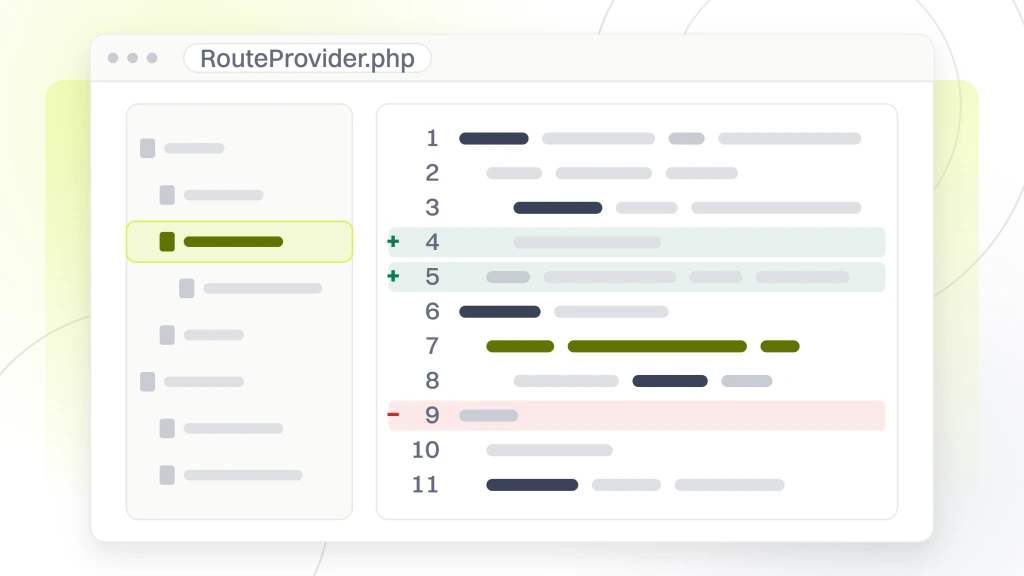
The Node case gets stronger past a certain scope. Real-time collaboration. Live document editing. High-frequency event streams. Every one of these is more idiomatic on Node than on PHP. Every one of these is a rebuild decision inside 18 months if you pick PHP for a workflow that needs event-driven concurrency. Every honest scope names the fit on day 1 rather than picking framework by team preference. See Node.js official documentation for the reference against which every Node scope gets evaluated.
Eloquent vs Prisma ORM comparison
Eloquent on Laravel offers tighter framework integration than Prisma does with Node frameworks. Relationships, eager loading, and query caching are one-liner idioms on Eloquent. On Prisma, every relationship needs explicit include statements. That gap is 15% to 20% of the total data-access engineering time on a mid-market build. It compounds into a 3% to 5% overall build timeline gap. An honest scope factors this into the framework comparison.
Deployment tooling
Laravel Vapor runs serverless deployment to AWS with zero infrastructure work. Forge handles traditional VPS deployment for teams that want persistent servers. Node deployment splits across Vercel for edge, Fly.io for regional, and Kubernetes for enterprise. The Laravel deployment picks are more prescriptive. The Node deployment picks are more flexible. Every team we advise picks based on operational preference rather than on framework capability. Both cover production scale without heroic engineering.
Custom PHP web development services pricing bands
Custom PHP web development services pricing lands in four clean bands. $8K to $60K for a custom WordPress content site or small store. $35K to $220K for a Laravel B2B portal or custom app. $60K to $350K for a Symfony enterprise build with structured teams and 6 to 12 engineers. $95K to $500K+ for a .NET Core enterprise build with Microsoft-shop integrations. Every band has a scope shape and a wrong pick that looks tempting on the first sprint.
Match the band to the workflow before comparing vendors. A founder who tries to buy a $220K Laravel portal for $45K ends up with a scope-cut build that launches without the role model that made the portal worth building in the first place. A founder who lands in the $60K WordPress band and pays $180K has been sold enterprise scope for a marketing-site problem. A serious agency scope names the band on the first call so the founder can check the math against the roadmap. Our fixed-scope SMB sites start at $799, and true custom PHP builds start at $18K.
Post-launch retainer scope
Post-launch retainer scope for a PHP build runs $2,500 to $12,000 per month for the first year. That retainer covers security patches, dependency updates, small feature releases, and on-call incident response. Skipping the retainer costs the site steady drift into unpatched security territory inside 90 days. Every mid-market build we launch keeps a retainer for at least 12 months, and 20% to 30% of those hours reserve for performance and security work rather than only feature releases.
Custom PHP web development services case study
A mid-market industrial distributor came to us with a legacy PHP portal serving 40 sales reps and 1,200 dealer accounts, a data model wired to a 15-year-old MySQL schema, and a search feature that timed out on any query past three filters. The team wanted a modern portal that could carry the dealer catalog, quote engine, and account dashboards without a three-year enterprise rewrite. The scope covered a Laravel rebuild, a Filament admin for internal ops, and an Eloquent data layer wired to the existing SQL Server warehouse.
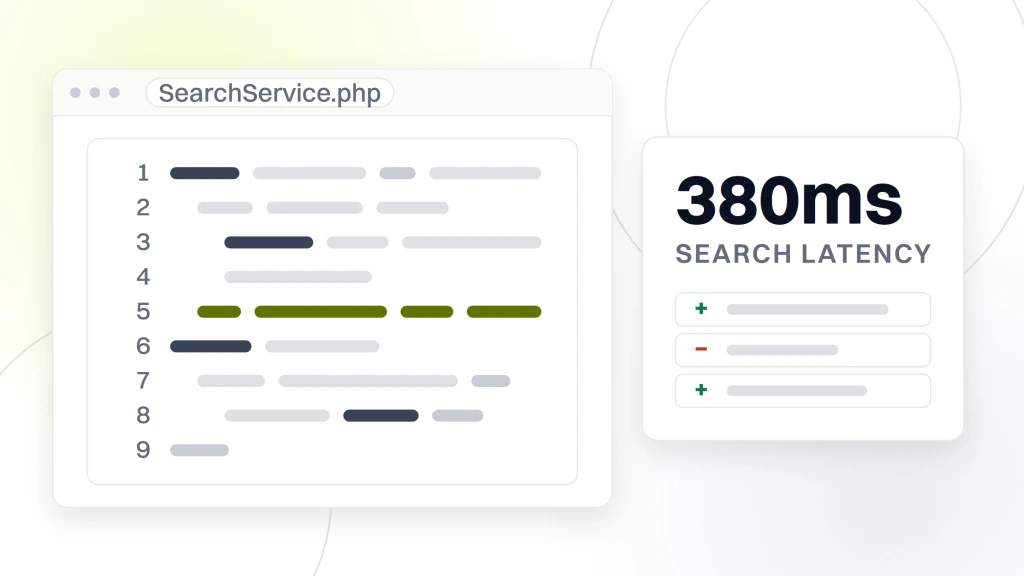
We rebuilt the portal on Laravel 11 with Filament for the internal admin, wired the dealer catalog through Eloquent with cached read models on Redis, and rebuilt the quote engine as a queued job pipeline so the search timeout became a background render. Server-side rendering with Inertia carried the account dashboards without a full React front end. That architecture compressed a projected 18-month rewrite into an 11-month phased release with the portal staying live the entire time.
The outcome measured on the portal rebuild
Portal search latency dropped from 14 seconds on complex filters to 380 milliseconds. Quote-to-order conversion grew 47% as the sales reps stopped fighting the tool. Dealer self-service order volume grew 62% as the account dashboards carried the catalog without a phone call. The Laravel rebuild, Filament admin, and Redis-cached read models running in parallel drove every one of those numbers. Skipping any single leg would have pushed the timeline back a full quarter.
Why PHP won the pick
The distributor portal could have run on Node with Nest or on .NET Core with Blazor and delivered the same feature set. Laravel on PHP won because the internal team already carried PHP skills, Filament shipped the admin in 6 weeks instead of 6 months, and Eloquent modeled the legacy schema without a data-migration project. A framework decision on a portal build weighs internal team skills ahead of engineering fashion. This rebuild proves the point on an 11-month timeline the internal team could staff on its own.
Trust signals from adjacent SaaS and B2B builds
Our SaaS and B2B tech work backs the portal case with numbers you can check. Automation Anywhere cut cost per lead 97% on the paid channel overhaul we ran with them. Rocket Software hit a 300% activation rate lift on the launch curve for the release we scoped. Forward Networks grew year-over-year revenue 300% across a 36-month curve. Simply.Coach grew lead volume 120% inside a 48-day sprint. Custimy hit 500+ new keyword rankings on the annual curve we tracked. Poly Processing cut cost per lead 90% on the annual curve. Every one of those wins depended on the same discipline that carries a PHP portal build. Pick the right stack, staff a small team, ship on schedule.
Picking custom PHP web development services vendors
Picking the right vendor starts with the framework fit conversation. A vendor whose portfolio is 90% WordPress will scope every problem into WordPress. A vendor whose portfolio is 90% Laravel will scope every problem into Laravel. Neither approach is wrong on its face. Every scope should still ask whether the framework fits the workflow before signing. Every honest agency runs the fit conversation before quoting. Every vendor who skips the fit conversation is quoting from a template.
Beyond framework fit, evaluate on portfolio at your scope, team size, sprint cadence, and communication style. A Laravel shop with 4 engineers delivers a 12-week build without heroic overwork. A Laravel shop with 12 engineers turns a 12-week build into 14 weeks since coordination overhead grows non-linearly. Team size matters more than most first-time buyers realize. See our web design and development services page for the umbrella process every engagement runs through.
Portfolio check
Portfolio check runs on the vendor’s live sites. Load 3 to 5 recent builds on a throttled 4G connection. Watch Lighthouse. Check the admin UI. Look at the content editor. If the vendor’s live sites stall, fail Core Web Vitals, or run an admin UI that clearly frustrates the editorial team, the vendor can’t deliver a build that hits your targets either. Every serious buyer runs the portfolio check in the first 30 minutes of vendor evaluation.
Reference calls that catch patterns
Reference calls with 2 to 3 past clients catch the patterns the sales deck hides. Ask about scope changes, timeline adherence, and post-launch responsiveness. Every one of those questions surfaces a pattern the vendor’s marketing does not. Every serious buyer runs 2 to 3 reference calls before signing an SOW past $60,000. That hour of homework prevents 8 to 12 weeks of misfit inside a bad engagement.
Contract structure and payment terms
Contract structure protects both sides on a mid-market PHP build. Fixed-scope, fixed-price contracts fit content sites and small stores where the deliverable list is short and stable. Time-and-materials contracts fit portal builds where the scope shifts as the internal team learns what the tool needs. Milestone-based contracts fit enterprise builds with 6 to 12 engineers on the vendor side. Pick the contract shape that matches the build shape, and pay in staged milestones tied to working software rather than to calendar dates.
Where to start with custom PHP web development services
Start with the framework fit conversation. Does your business run on content and editorial workflow. WordPress. Does your business need a custom portal with role-based access. Laravel. Does your business run on a Microsoft-shop enterprise stack. .NET Core. Every business fits one of these primary shapes with occasional exceptions. Every honest agency scope names the fit before quoting. Every vendor who quotes without the fit conversation is quoting from a template rather than from your workflow.
Ready to scope one of your own. We staff Laravel and WordPress builds with teams that have delivered mid-market portals, editorial sites, and B2B apps for 9 years. Our custom web development cost guide covers the underlying band math. See the official PHP language reference for the technical foundation every PHP build runs on.