Custom web development for small businesses turns a bottleneck in your business into working software or a working website. You already know the problem. Your team is running the workflow in five spreadsheets. Your customers are typing the same info into three places. Your ops lead is spending four hours a week on manual reconciliation. Custom web development for small businesses fixes that. This guide walks you through the scope, the pricing bands, the tech stack, and how our team at Redefine Web scopes a build on the first call.
You will read what custom web development for small businesses actually covers, how it differs from a template site or off-the-shelf SaaS, the six scoping questions we ask on every discovery call, the four pricing bands we see across projects, the affordable alternatives when the budget lands under $8,000, and a case study on a small business tax firm that hit 5x return on Google Ads spend inside 90 days after the rebuild.
Custom web development for small businesses pricing bands
Custom web development for small businesses in the US runs $6,000 to $60,000 depending on scope. Most projects we run land in the $12,000 to $28,000 band. That range covers a full custom design, 8 to 15 pages, real SEO structure, one CRM integration, one email integration, and a 30-day post-launch support window. Below $6,000 you get a template with light customization. Above $60,000 you get application-level complexity that most small businesses do not need.
Affordable custom web app development for small businesses in Austin, Nashville, Denver, or any US metro follows the same math. Local rates vary by 10 to 20 percent across metros. Scope drives the number, not the zip code. A $9,000 project covers 5 to 7 pages on a custom design with one integration and no dedicated project manager. A $22,000 project covers 10 to 15 pages on a custom design system with 3 integrations, a dedicated PM, and 60 days of post-launch support. Both are honest scopes.
| Band | Scope | Timeline | Best for |
|---|---|---|---|
| $6k to $9k | 5 to 7 pages, template plus custom sections, 1 integration | 4 to 8 weeks | Solo owner, 1-location business |
| $10k to $16k | 8 to 12 pages, custom design, 2 integrations | 8 to 12 weeks | Small team, growing lead volume |
| $18k to $28k | 12 to 20 pages, design system, 3 integrations, PM included | 12 to 16 weeks | Multi-location or growing e-commerce |
| $30k to $60k | 20+ pages, custom app features, 4+ integrations, dedicated squad | 16 to 26 weeks | Regional brand or SaaS-adjacent build |
Discovery is 10 to 15 percent of every band
Every honest quote for custom web development for small businesses allocates 10 to 15 percent of the total to discovery. That covers stakeholder interviews, workflow mapping, competitive analysis, and a written scope document. Clients sometimes push back on paying for discovery. Skipping discovery is how projects blow past budget by 60 percent, and the vendor rebuilds the same page four times in response to feedback that a 40-minute interview would have surfaced. Discovery pays for itself on every project.
The costs vendors forget to name
Hosting runs $20 to $250 per month depending on traffic. Domain and SSL run $20 to $200 per year. Premium plugins for forms, backups, and security add $200 to $800 per year. Stock photography from a real library adds $80 to $400. Copywriting handled by a separate writer adds $600 to $3,000. An honest custom web development for small businesses quote lists every one of these in a monthly-cost appendix. Miss them and a $12,000 build turns into a $2,400 annual surprise on your operations budget.
Tech stack picks for a custom small business site in 2026
Tech stack picks for custom web development for small businesses in 2026 are narrower than they were three years ago. The winners on our side are WordPress with a custom theme for content-heavy small business sites, Webflow for design-forward brands, and Next.js on the front-end for e-commerce or lightly-interactive builds. That trio handles 90 percent of small business projects at retainer scale. The other 10 percent needs a specialty pick, usually driven by a specific integration or existing team skill.
You do not need to know the stack picks going into a scoping call. Your custom web development for small businesses vendor should recommend based on your workflow, your team’s existing skills, and your hosting preferences. What you should know is that the tech stack is a downstream decision. A vendor who leads with the stack on the first call is selling the tool, not the outcome. See MDN Web Docs on modern web development for the reference against which every stack pick gets evaluated.
WordPress with a custom theme
WordPress with a custom theme runs 60 percent of the custom small business builds we run. The editor is familiar, the plugin ecosystem covers most needs, and the hire pool for future edits is deep. A custom theme built with the native Gutenberg block editor stores content in portable HTML, so you can migrate hosts, editors, or vendors without rebuilding the layout. Elementor and Divi lock content into their proprietary block format, so you avoid page builders on any long-term small business build. See our WordPress Website Development Services page for the stack we recommend.
Webflow for design-forward small business sites
Webflow covers 25 percent of our custom web development for small businesses builds when the design has to look editorial and content updates are infrequent. Webflow’s CSS-in-tool control gives designers cleaner control than WordPress. The tradeoffs are a smaller plugin ecosystem, higher monthly hosting, and a shallower talent pool if your first vendor disappears. Webflow wins on aesthetics. WordPress wins on flexibility. The math on your side is which of those you value more in year three.
Affordable web development for small businesses when the budget lands under $8,000
Affordable web development for small businesses is real. It has a ceiling too. A $4,500 build cannot cover a full custom design, a full copy pass, custom photography, an SEO structure, and a first month of maintenance. It can cover a semi-custom design based on a Kadence or GeneratePress theme, three service pages with vendor-written copy, and a Google Business Profile setup. If your revenue depends on organic search or paid ads, budget higher. If your revenue depends on referrals and repeat customers, the affordable band works fine.
Alternatives to custom web development for small businesses fall into three tiers. First, a done-for-you template swap on Squarespace or Wix in the $1,500 to $3,000 range for scope you can outgrow in year two. Second, a subscription website plan at $99 to $299 per month that bundles hosting, edits, and design updates over 36 months. Third, a semi-custom WordPress build on a purchased theme for $4,500 to $8,000 that covers the core pages without the full design system. See our Small Business Website Packages for the fixed-price scopes we publish.
The subscription website model
Subscription websites at $99 to $299 per month bundle hosting, ongoing edits, and design refreshes over a 36 to 60 month term. The math works if your business needs a site that stays fresh with monthly changes but does not need a custom design from day one. Cash flow stays predictable. You never write a $12,000 check up front. The tradeoff is that you pay more over 5 years than you would for a one-time build. See our pay monthly website plans for the honest version of that model.
Template swap tier
Template swaps on Squarespace or Wix cost $1,500 to $3,000 for a done-for-you build. You get a working site in 3 to 6 weeks. You accept that the site looks like every other template swap and that your SEO ceiling sits below what a custom build would reach. If your business is a photography studio, a personal training coach, or a solo consultant whose leads come mostly from referrals, that ceiling is fine. If your business is a dental practice competing for map-pack rank against three other clinics in the same 3-mile radius, the ceiling costs you leads.
Integrations that matter on a custom small business site
Integrations that matter on custom web development for small businesses fall into four buckets. CRM sync for lead capture, email tool for nurture, booking or scheduling for appointment-driven businesses, and payment processing for e-commerce. Every small business needs at least two of the four. The right vendor scopes these integrations up front and estimates each one as a separate deliverable, not a blanket line item. See Google’s SEO starter guide for the search fundamentals every integration should preserve.
Skipping integration scope on day one costs you at month six. The classic case is a small business that spends $12,000 on a rebuild, launches without a CRM connection, and spends the next four months manually copying leads from Gmail into HubSpot. The integration would have cost $1,800 up front. The manual work costs $600 a month in owner time. Every custom web app development tips for small businesses conversation should end with a written integration list before design starts.
CRM sync as the first integration
CRM sync catches every lead the moment they submit a form. HubSpot Free, Zoho CRM, or Pipedrive all offer form-to-CRM connections that a custom small business site can wire in a single sprint. The lead lands in the CRM tagged with the source page. The owner sees the lead inside 30 seconds. Follow-up starts the same day. Every small business we run this integration for reports a 20 to 40 percent gain in booked appointments in the first quarter. Leads no longer sit in an inbox unread.
Booking and scheduling integrations
Calendly, Acuity, or a native WordPress booking plugin all connect to a custom small business site in 1 to 3 days. Appointment-driven businesses (dental practices, med spas, home services contractors) recover 2 to 5 hours a week of front-desk time once the booking flow lands on the site. Customers book at midnight. The calendar syncs to Google or Outlook. Reminders trigger automatically. Custom web development for small businesses in appointment-driven verticals should almost always include a booking flow on day one.
SEO structure on a custom small business build
SEO structure on custom web development for small businesses is where the ranking comes from. Not the theme. Not the plugin. The structure. Clean URL slugs, a schema.org LocalBusiness block on every page, a service page per revenue service, a location page per market you serve, an internal linking map that pushes authority to the money pages, and an XML sitemap the CMS updates on its own. Every one of those is a first-draft deliverable, not a follow-on retainer item.
A vendor who ranks their own site organically for competitive terms in your industry knows how to build a site that ranks. That is the working demo of their SEO service. Ask what page one keywords their own site holds. Ask for two client sites with real ranking data over the past 12 months. Vendors who hand-wave on this question are vendors whose sites rank on Google Ads or referrals, not on organic search. That gap in their own portfolio predicts the gap in your build.
Local SEO for service-area small businesses
Local SEO for service-area small businesses rides on three assets. A Google Business Profile with complete NAP, weekly posts, and monthly review requests. A location page per market you serve, with 500 to 800 words of unique content per page. A citation footprint of 40 to 80 listings on directories that match your industry. Custom web development for small businesses in service verticals should include the Google Business Profile setup and the location pages in the initial scope. The citation footprint runs as a separate SEO retainer.
Schema markup that earns rich results
Schema markup on a custom small business site should include Organization, LocalBusiness, Service, and Review types at minimum. A dental practice adds MedicalBusiness. A home services contractor adds HomeAndConstructionBusiness. A restaurant adds Restaurant with menu items. Google reads schema to build rich results. Rich results in the SERP earn 15 to 30 percent higher click-through rates than plain blue links. Every custom web development for small businesses vendor should include schema on every page as a default, not a bolt-on upgrade.
Case study on custom web development for small businesses that pays back in 90 days
Stonehenge Consulting PLC, a small-business tax advisory firm, came to us with a referral pipeline that could not scale. Their existing site had been built by a freelancer two years earlier for $2,400. It ranked for nothing, converted at under one percent, and offered no clear path from a Google search to a booked consultation. The team had tried two more freelancers before landing on our first call. They had spent $6,800 on rebuilds that never made it to launch. Referrals were still driving 80 percent of new work and the pipeline was unpredictable month to month.
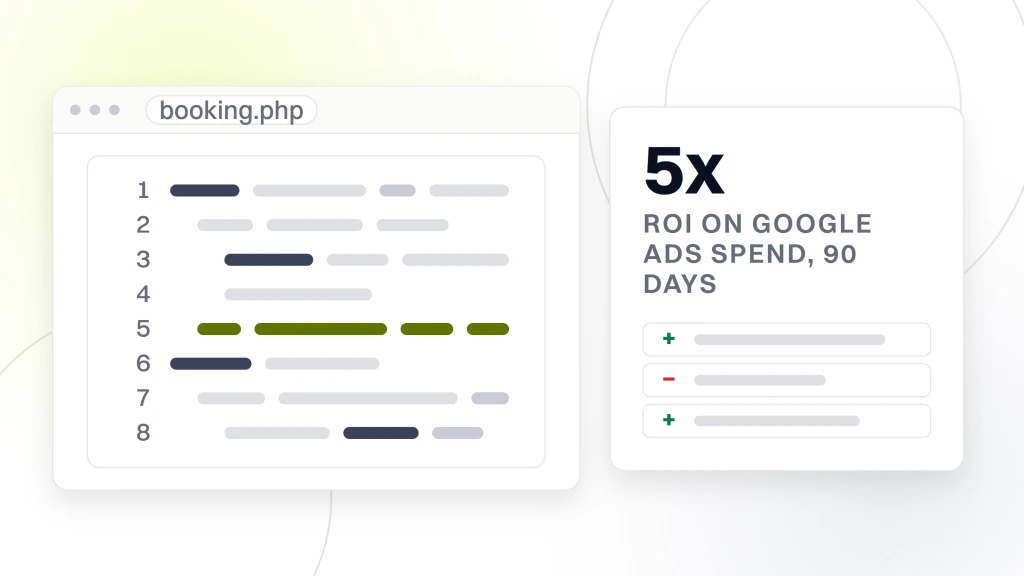
We ran the discovery, defined a fixed scope for a new WordPress build with three service pages, a real local SEO structure, and a Google Ads landing page tied to their top revenue service. Inside 90 days Stonehenge Consulting was pulling 5x ROI on Google Ads spend, had turned local visibility into weekly booked consultations, and had replaced the unpredictable referral pipeline with a steady monthly lead flow. Every one of those results came from picking a scope that matched the outcome, not the cheapest freelancer on Craigslist.
The outcome measured 90 days out
5x ROI on Google Ads spend inside the first quarter. 3x increase in local visibility on Google. Weekly booked consultations replacing a referral-only pipeline. Predictable monthly lead flow the owner could plan against. Those four numbers came from a scoped custom web development for small businesses engagement that focused on the money pages, the local SEO structure, and the paid-search landing page. Every dollar of the build fee paid back in ad-spend efficiency inside the first 90 days.
Lessons for your own build
Two lessons from the Stonehenge Consulting build apply to almost every custom web development for small businesses hire. First, cheap vendors who never finish the job do not save you money. Stonehenge spent $6,800 before the third rebuild landed. That is more than a mid-range agency would have charged from day one. Second, the outcome you want should be named in the scope. The Stonehenge scope named booked consultations and 5x ROI on ad spend as the target. Vendors who cannot commit to a named outcome are vendors optimizing for their own deliverable list.
Post-launch maintenance for a custom small business site
Post-launch maintenance on custom web development for small businesses runs $150 to $600 per month depending on site complexity and traffic. That covers monthly software updates, weekly backups, uptime monitoring, security patching, and a scoped block of hours per month for small edits. Every project we run includes a 30-day post-launch support window free of charge. Past that window, ongoing maintenance runs on a monthly retainer with a written scope and response-time commitment.
Maintenance without a written scope turns into an argument every month. Your vendor thinks the monthly fee covers hosting and nothing else. You think it covers hosting plus every small edit. Neither of you writes anything down. In month six, when you need a new page added, the vendor charges $400 for what you thought was included. Write the scope down on day one. Include the response-time commitment for high-priority issues. Include what triggers a change order versus a normal support ticket. Both sides win when the scope is clear.
Security patching cadence
WordPress core, themes, and plugins publish security patches every week. Miss two months of patches and your site becomes a target for automated bots that hit millions of URLs looking for known vulnerabilities. A real support contract runs weekly plugin updates on a staging environment first, then to production after a smoke test. That cadence catches 95 percent of security exposures before they turn into a hacked site and a rebuild bill. See the WordPress documentation on updates for the reference the vendor’s process should follow.
Monthly edit block
Every good maintenance retainer includes a scoped block of hours per month for small edits. Two to four hours a month covers content tweaks, image swaps, new team member headshots, and small page updates. Anything larger runs as a change order with its own quote. The block prevents the every-edit-is-a-negotiation dynamic that ruins the vendor relationship in month four. Both sides know what a normal support ticket looks like and what triggers a bigger scope conversation.
Start your custom web development for small businesses project
Start with the scoping questions above. Write your answers down. Send them to two vendors. Compare the proposals. The vendor whose proposal breaks the scope into nine work streams, names monthly hosting and third-party costs, quotes a discovery phase, and asks follow-up questions is the vendor you want to work with. The vendor whose proposal quotes a flat number without a breakout is quoting a template swap, not a custom build. That gap is the biggest single tell in a custom web development for small businesses hiring process.
Ready to scope a custom build with a team that runs work in your budget band. Our Custom Web Development Services USA covers the full engagement from discovery through post-launch. For the fixed-price scopes, see our Small Business Website Packages. For the sibling read on hiring, see our how to choose web designer and developer for small business. For authoritative reference on modern web development architecture, see MDN Web Docs on server-side programming.