Dental ads examples earn their keep only when the breakdown explains why the ad books patients, not when it shows a slick screenshot with no context. Practices copy the visual, skip the mechanics, and then wonder why the same layout drains $4,000 in a month. The four things worth copying are the hook, the offer, the audience match, and the booking count. This guide walks Google Search, Meta lead forms, YouTube, Local Services Ads, remarketing, print, and TikTok side by side. Every dental ads examples breakdown below is one Redefine Web either ran for a client or reverse-engineered from a live campaign.
Copy the patterns. Skip the graphics envy. Dental ads that book patients tend to look plain, read direct, and point to one offer the patient can act on the same day. A clear headline and a booking link beat polished creative nine times out of ten. That gap between “looks good” and “books patients” is where most practices burn budget. Read straight through in twelve minutes and you will spot the dental ad example that maps to the service line you want to grow.
Dental ads examples on Google Search
Google Search dental ads examples earn their spot at the top of the funnel by catching patients the moment they type an intent-heavy query. A search for “emergency dentist near me” or “same-day tooth extraction” signals a patient who wants to book today, not next month. Cost per click on dental search runs $2.60 to $8.40 on general terms and climbs to $12 to $28 on emergency, implant, and same-day queries. Practices that map the ad, the extensions, and the landing page to the query pull cost per booked patient down to $85 to $220.
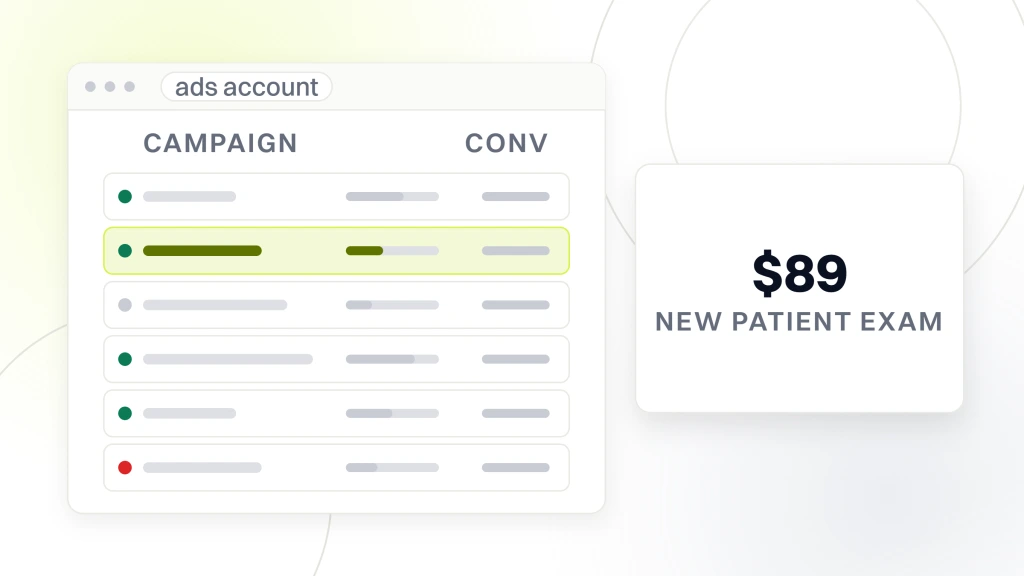
The winning search ad reads plain. Headline one names the service. Headline two names the offer. Headline three names the location. Description one lists the trust signals. Description two lists the booking path. Skip the flowery copy. “Same-Day Emergency Dental Care in Fort Wayne. New Patient Exam $89. Book in 60 Seconds” outperforms clever wordplay every quarter we test it. Sitelink extensions carry the map, the phone number, the insurances accepted, and the office hours. Call extensions convert 18 to 34% of clicks on mobile, so the phone number must sit on the ad and the landing page.
Smile Design Dentistry, a 50-plus location DSO, restructured their Google Search dental ads examples in 2024 and cut cost per call 30% over 12 months. The winning move was funnel-stage segmentation. High-intent search queries routed to bottom-of-funnel campaigns with location-matched landing pages, and CallRail tracking closed the loop from click to booked chair time. Our converting dental PPC ads post covers the search-campaign structure that pulled that result.
Search headline formula that books patients
Headline one carries the exact query the patient searched. Headline two carries the offer, the price, or the trust signal. Headline three carries the location or the booking speed. This ordering keeps quality score high, click-through rate steady, and cost per click down. Test 6 to 8 headline pairs per ad group during month one. Winners double conversion rate against the campaign average and pay back the testing cost inside the first 30 days.
Negative keyword list that saves budget
Google Search dental ads bleed 25 to 45% of budget without a strong negative keyword list. Common waste queries include “free,” “jobs,” “salary,” “how to become,” “assistant,” “school,” and every branded competitor query. Practices that build a 200-plus negative keyword list in month one cut wasted spend 30% before touching bids. Rebuild the list monthly and prune queries that never converted after 40 clicks. That is 4 to 6 hours per month of a media buyer’s time and the highest-ROI ad task in the account.
Dental ads examples on Meta lead forms
Meta lead form dental ads examples pull the booking form inside Facebook and Instagram, so the patient never leaves the feed. Cost per lead lands at $18 to $58 on well-targeted campaigns, versus $32 to $85 on Google Search. The trade-off is intent. A patient who filled out a Meta form still needs a phone call to book the chair, so lead-to-appointment rate sits at 12 to 24% on Meta versus 40 to 60% on Google Search. Practices that budget for front-desk follow-up inside 5 minutes of the form fill hold Meta at $95 to $260 cost per booked patient.
The best Meta dental ads examples share three traits. The hook opens with a visible outcome or a curiosity gap. The image shows a real patient or the doctor, not a stock photo. The offer names a price, a timeframe, or a bonus that pulls the click. “$89 New Patient Exam + Same-Week Booking” pulls 3 to 5 times the lead volume of “Book Your Appointment Today.” Test 4 to 6 creative pairs per ad set during month one. Winners run 6 to 8 weeks before creative fatigue trims click-through rate.
Meta audience targeting that avoids waste
Meta dental ads examples with weak audience targeting waste 40 to 65% of ad spend on patients who live 40 miles from the practice or already booked last month. Tight targeting starts with a 5-mile radius around the office, layered with an income floor for cosmetic services and an age band that maps to the service line. Custom audiences of past patients build a lookalike audience that pulls cost per lead down 20 to 35% by month three. Practices skipping custom audiences pay the retail rate on every impression.
Lead form field count that keeps conversion up
Meta lead forms lose 8 to 12% of completions per extra field. Keep the form to name, phone, and email. Skip the insurance dropdown. Skip the preferred appointment time. Every field on the form is a chance for the patient to bounce. The front desk asks the missing details during the call-back inside 5 minutes. Practices that trimmed forms from 7 fields to 3 fields saw lead volume climb 45 to 80% at the same ad spend.
Dental ads examples on YouTube video
YouTube dental ads examples fit the middle of the funnel where the patient is aware of the practice but not ready to book. Cost per view runs $0.04 to $0.09, and view-through rate on 15-second ads hits 40 to 70% when the hook lands in the first 3 seconds. Direct cost per booked patient runs $140 to $340 on YouTube in isolation. Layered with search remarketing, YouTube dental ads pull search click-through rate up 20 to 40% and drop overall cost per booked patient across the account.
The best YouTube dental ads examples run 15 to 30 seconds, open with the doctor or a real patient on camera, and name one outcome. “See your straight smile in 6 months, no braces.” Cut the mission-statement voiceover. Cut the stock footage. Real people talking to camera pull 2 to 4 times the view-through rate of produced ads with actors and B-roll. Practices that shot 6 to 8 raw variants in a single afternoon walked away with 3 winning ads that ran for 6 to 9 months without refresh.
Skippable in-stream format for dental ads
Skippable in-stream YouTube dental ads only charge after 30 seconds of watch time or a click. That pricing model means a weak hook costs nothing, so run every ad first as a skippable in-stream test. Watch time above 45% signals a strong hook worth scaling. Watch time under 20% signals cut the ad. Practices that used skippable in-stream to A/B test 12 to 16 hooks per month walked into the paid non-skippable format with only the winners. That saved 30 to 55% of the video ad budget.
YouTube retargeting layered on search
YouTube dental ads served to past website visitors pull search click-through rate up 20 to 40% inside the same account. The mechanism is brand familiarity. A patient who saw the doctor on YouTube for 15 seconds last week is 2 to 3 times more likely to click the Google Search ad this week. Layer the two channels and the account math shifts. Practices running YouTube plus search saw blended cost per booked patient drop 25 to 45% versus search alone.
Dental ads examples on Local Services Ads
Local Services Ads dental examples charge per booked lead, not per click, which is why they sit at the top of Google Search results with a green “Google Screened” badge. Cost per lead runs $16 to $58, and 60 to 78% of those leads become booked appointments once the patient clicked the phone number from the ad. Cost per booked patient lands at $45 to $145, the lowest of any dental ad channel we track. LSAs suit general dentistry queries that map to the seven service categories Google lists (general dentistry, cosmetic, orthodontist, endodontist, and so on).
The winning LSA dental ads examples share three traits. Google Screened badge active with background check and license verified. Review count above 40 with an average of 4.6 stars or higher. Response time under 2 hours during business hours and under 12 hours overnight. Miss any of those three and rank drops off the top three positions where every meaningful lead sits. Practices that responded to LSA leads inside 5 minutes booked 74 to 88% of them into the chair. Practices that responded next-day booked 12 to 24%.
LSA review floor that keeps rank
Local Services Ads dental accounts with fewer than 40 reviews at under a 4.6 average rank below the top three positions and pull 60 to 80% fewer leads than accounts that clear the floor. The fix is a review request workflow that fires after every appointment. Delicate Dental Group launched their practice with zero reviews and pulled 700-plus five-star reviews inside the launch curve by automating text-message review requests post-appointment plus staff training that made the review ask a natural close on every visit. That review base pushed them to top-three LSA and Map Pack rank inside 6 months.
LSA response time that books leads
Response time inside 5 minutes pulls LSA lead-to-booking rate from 24% to 84%. Every extra 30 minutes past the 5-minute mark trims booking rate 8 to 12%. Practices that assigned a dedicated front-desk response protocol saw LSA cost per booked patient drop 35 to 50% inside the first 90 days. The mechanic is human. A patient who clicked a phone number expected to talk to someone. Voicemail sends them to the next practice on the list.
Dental ads examples on remarketing and retargeting
Remarketing dental ads examples close the bookings that first-touch ads warmed up. Most patients need 4 to 12 touches before they book with a new practice, so the first ad they see is almost never the ad they act on. Remarketing ads follow patients across Google Display, YouTube, Facebook, and Instagram after they visit the website or click a search ad. Cost per booked appointment on remarketing runs 4 to 8 times lower than cold traffic since the audience is already warm.
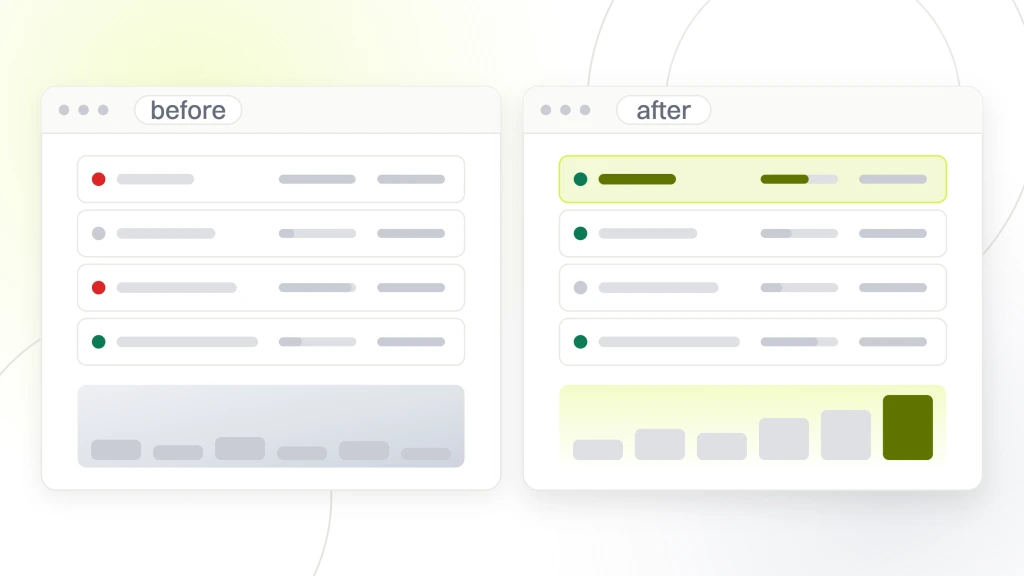
Smile Design Dentistry, the 50-plus location DSO named earlier, restructured their remarketing dental ads examples in 2024, cut cost per call 30%, and kept scaling into new markets. The winning pattern split traffic into two audiences. Audience one, website visitors who did not book, targeted with a $89 new patient offer for 30 days after the visit. Audience two, patients who booked a consult but did not attend, targeted with a soft reminder and a rescheduling link for 14 days after the missed appointment. Full breakdown lives in our dental case study library.
Remarketing frequency cap that avoids burnout
Remarketing dental ad examples burn out fast without a frequency cap. Baseline dental remarketing shows the same person the same ad 12 to 24 times per week if you leave the cap off. That damages brand perception and drives complaint calls. Cap frequency at 3 to 5 impressions per person per week across all placements. Practices that ran capped remarketing saw click-through rate hold steady at 1.8 to 2.6% for 8 to 12 weeks, versus uncapped remarketing that dropped to 0.4% by week 4.
Remarketing creative refresh schedule
Remarketing dental ads need creative refresh every 4 to 6 weeks. Same audience seeing the same creative for 8 plus weeks produces a 40 to 60% drop in click-through rate. Practices that rotated 4 creative variants on a monthly cycle held click-through rate steady across a 6-month campaign. The refresh cost 2 to 4 hours per month of a marketing coordinator’s time. Our converting dental PPC ads post covers the creative rotation pattern.
Dental ads examples on TikTok and Shorts
TikTok and YouTube Shorts dental ads examples pay off for cosmetic, Invisalign, and pediatric practices where the patient base skews under 40. The format rewards vertical video, on-screen text, and a hook that lands inside the first 2 seconds. Production polish drags results down. TikTok users trust rough phone footage more than a produced commercial, and dental ads shot behind the counter beat studio creative 3 to 5 times on watch-through rate.
One Miami Invisalign practice ran a TikTok dental ads example in June 2026 showing the doctor snapping a set of clear aligners on and off with on-screen text that read, “Your teeth in 6 months. No braces. Free scan.” That 12-second clip pulled 42,000 profile views in 21 days, drove 340 form submissions, and booked 68 Invisalign consults at a $19 cost per consult. The doctor shot it in one take on his iPhone leaned against the reception desk during lunch.
TikTok dental ad hook in first two seconds
TikTok dental ad examples live or die in the first 2 seconds. If the hook does not stop the scroll, everything after is wasted budget. Best-performing hooks name a visible outcome, a bold claim, or a curiosity gap. Second one, doctor holds up an object patients recognize. Second two, on-screen text names the outcome. Second three onward, ad delivers the offer and CTA. Test 4 to 6 hooks per week during the first month. Winners double or triple watch-through rate versus the campaign average.
YouTube Shorts vertical frame composition
YouTube Shorts dental ad examples share the same 9:16 vertical frame as TikTok, yet the audience skews slightly older. Composition rules stay the same. Face on camera. Text overlay. Movement in every frame. Static shots kill watch-through rate. Practices running Shorts as a dental ad channel saw 60 to 80% of TikTok creative work on Shorts with only cropping adjustments needed. Save the shooting time and repurpose the same footage across both platforms.
Dental ads examples in print and direct mail
Print and direct mail dental ads examples still book patients in the right zip codes. Small suburbs, rural markets, and retirement-heavy neighborhoods respond to postcards and local newspaper ads at 2 to 4 times the rate of digital. Cost per acquisition runs $180 to $340 on print versus $85 to $180 on digital, yet the patient base skews to higher retention. Print dental ads produce patients who stay 5 to 7 years versus 2 to 4 on digital acquisition. Lifetime value math wins in the specific markets where print still works.
The best print dental ad example in our library is a full-color postcard mailed to a 3-mile radius around a Fort Wayne, Indiana practice. Front, single photo of the doctor plus one line, “Now accepting new patients.” Back, list of accepted insurances, four testimonial quotes, and a $99 exam plus cleaning plus x-ray offer with a code to mention. That postcard mailed 12,000 times and booked 84 new patients at a cost per acquisition of $221. Retention on those 84 patients hit 91% at the 3-year mark, which pushed lifetime value to $4,800 per acquired patient.
Postcard dental ad example breakdown
Postcard dental ad examples that book patients follow a consistent format. Front, one photo, one line of copy, one visible offer. Back, list of accepted insurances, 3 to 4 quotes, one clear offer with a code, one phone number, one URL. Skip the paragraph-length practice history. Skip the six-service list. Every element that competes for attention drops response 15 to 30%. Response rate on well-designed dental postcards runs 0.8 to 1.4% of drops, versus 0.1 to 0.3% on cluttered postcards.
Local newspaper dental ad example breakdown
Local newspaper dental ad examples still work in retirement-heavy markets. Quarter-page color ad on the local news section, running weekly for 12 to 16 weeks builds practice recognition inside a specific readership. Weekly cost runs $180 to $420 per market. Cost per booked patient lands at $220 to $410, which competes with digital in the same market for the 55 plus demographic. Younger demographics stopped reading the local paper 10 years ago, and print dental ads targeting them waste every dollar.
Dental ads examples matched to landing pages
Dental ads examples fail the second the ad promises one thing and the landing page delivers another. Emergency dental ad clicks routed to a general homepage bounce 60 to 80% of the time and book close to zero appointments. Emergency dental ad clicks to a page with an emergency phone number, an evening hours list, and a same-day booking widget convert at 12 to 24%. The gap is entirely landing page match. Match every ad to a dedicated landing page and every metric moves.
Practices that spent 6 to 12 hours per month on landing page match saw cost per booked patient drop 40 to 65% versus practices sending every ad click to the homepage. That is time better spent than any ad-creative optimization, targeting change, or bid adjustment. Our dental PPC landing pages post covers the section-by-section landing page structure that converts search and Meta traffic. VP Dental doubled new monthly patients and added over $8,000 in monthly recurring revenue after we redesigned their landing pages with online scheduling, live chat, and digital forms tied to a Google Maps SEO campaign.
Homepage versus dedicated landing page performance
Homepage traffic from paid dental ads converts at 0.8 to 2.4% booked appointments. Dedicated landing page traffic from the same dental ads example converts at 4.8 to 14%. That is 3 to 6 times the performance for 4 to 8 hours of landing page build per campaign. Practices that sent every paid ad click to their homepage watched cost per booked patient double or triple versus practices running dedicated landing pages per campaign. The gain compounds monthly as ad spend scales.
Landing page headline that matches the ad
Landing page headline matching the dental ad headline gains conversion 2 to 4 times versus generic landing page headlines. If the ad promises “Same-Day Emergency Dental Care,” the landing page headline must say “Same-Day Emergency Dental Care” verbatim, not “Welcome to Our Practice.” Header match tells the visitor they landed in the right place. Skip header match and 30 to 50% bounce before the page finishes loading. Test both variants once and the math stops the debate.
Dental ads examples that track properly
Dental ads examples produce useful reporting only when call tracking, form tracking, and appointment attribution wire back to the source ad. Practices that skip call tracking see cost per lead but never see cost per booked appointment. That blind spot hides which dental ads examples book patients versus which ones only ring the front desk with tire-kickers. Fix tracking before you scale ad spend. Every dollar spent without attribution is a dollar you cannot judge.
Baseline tracking stack. CallRail or WhatConverts for call tracking with dynamic number insertion. Google Tag Manager for form tracking with conversion events. Practice management system integration to close the loop on appointments. Setup runs 6 to 12 hours per practice and cuts wasted ad spend 25 to 45% inside the first 90 days. Our call tracking for dentists post covers the CallRail install workflow. Reference the Google Ads conversion tracking documentation for the base setup.
Call tracking per dental ad source
Call tracking numbers assigned per ad source separate Google Search calls from Meta calls from LSA calls from print calls. Without per-source numbers, front desk logs every call as “marketing” and the practice manager cannot judge which channel produces booked appointments versus tire-kickers. Dynamic number insertion on the website plus static numbers on print ads gives complete coverage. Cost runs $30 to $75 monthly per channel tracked. Payback is 30 to 60 days on the wasted spend surfaced.
Appointment attribution back to ad source
Appointment attribution back to the dental ad source closes the reporting loop. Cost per booked appointment is the metric that matters, not cost per lead. A dental ad producing $32 leads that never book appointments is worse than a dental ad producing $85 leads that book 40% of the time. Practice management systems like Dentrix, Open Dental, and Eaglesoft integrate with call tracking platforms to close the loop automatically. Manual entry works, yet drifts. Automated integration wins over a 12-month window.
Dental ads examples versus performance benchmarks
Dental ads examples reported without benchmarks mislead. A 3.2% click-through rate looks strong next to a 1.8% industry average and weak next to a 7% competitor. Practices that judge dental ad performance without benchmarks either overpay or underpay for ad spend by 30 to 60%. Set benchmarks before you set targets. Google Ads industry benchmarks for dental sit around 3.8% CTR on search, $2.60 to $8.40 cost per click, and 4 to 8% conversion rate on landing pages.
Baseline Meta dental ad benchmarks sit around $28 to $68 cost per lead across markets, 1.4 to 3.2% click-through rate, and 12 to 24% lead-to-appointment conversion. YouTube dental ads run $0.04 to $0.09 per view with 40 to 70% view-through rate on well-produced 15-second ads. Dental usually runs 15 to 30% above the medical vertical average.
| Channel | Cost per lead | Cost per booked patient | Best use case |
|---|---|---|---|
| Google Search | $32 to $85 | $85 to $220 | Emergency, implants, high-intent search |
| Meta lead form | $18 to $58 | $95 to $260 | Cosmetic, Invisalign, offer-driven |
| YouTube video | $8 to $22 | $140 to $340 | Brand awareness, retargeting fuel |
| Local Services Ads | $16 to $58 | $45 to $145 | General dentistry, cleaning intent |
| Remarketing | $4 to $14 | $28 to $95 | Warm audience, offer reminders |
| Print postcard | $85 to $180 | $180 to $340 | Suburban, retirement markets |
Click-through rate benchmarks per channel
Click-through rate benchmarks tell you whether the ad creative earns attention. Google Search dental ads averaging 3.8% CTR are healthy. Anything under 2.4% signals the headline is off or the ad rank is buried. Meta dental ads averaging 1.4 to 3.2% CTR are healthy. Below 0.8% means creative fatigue or audience mismatch. YouTube dental ads with view-through under 30% mean the hook fails inside the first 3 seconds. Track CTR weekly and act inside 14 days when it drifts.
Conversion rate benchmarks per landing page
Conversion rate on dental ad landing pages runs 4 to 14% depending on offer strength and page match. Pages below 3% conversion need offer or headline fixes. Pages above 12% are usually running strong offers on high-intent search traffic. Test one variable per week. Change the headline. Measure. Change the offer. Measure. Never test 4 variables at once or the results become impossible to attribute. Our dental website conversion optimization post covers the test priority list. North County Dental Care pulled 1,000% patient volume growth from 2021 to 2024 by combining a rebuilt site and service pages with local SEO and Google Business Profile ads in one measurable stack.
For a wider set of angles, see our roundup of the best dental ads ranked by booked patients.
Work with Redefine Web on your dental ads
Bring the dental ads examples that already work in your market to a team that has run them across 40-plus practices. Redefine Web builds the ad, the landing page, the call tracking stack, and the attribution back to your practice management system so cost per booked patient is the metric you judge every dollar on. First-90-day median across our dental clients sits at 42% lower cost per booked patient versus the account we inherited. Book a 30-minute call and we will walk your current dental ads examples in the same session.