Every high ROI dental Google Ads account we’ve inherited looks the same on day one. Themed ad groups down to the keyword. One purpose-built landing page per campaign. A negative list built inside week one. And CallRail firing on every phone number visitors see. Miss two of the four and the account limps along at 2x return on ad spend when it should be running 6x to 10x. This guide walks through the 11 fixes we apply in the first 30 days of a takeover, the CPC and CPL benchmarks that tell you whether the account is healthy, and the real numbers from two dental rebuilds where the same fixes moved break-even accounts into profit. It’s a 13-minute read.
You will read the four structural rules that separate high ROI dental Google Ads from the median account, the 11 specific fixes we run in the first 30 days after account takeover, the benchmarks that tell you whether the account is on track (cost per click, cost per booked exam, return on ad spend), the best performing dental Google Ads formats by treatment type, the dental Google Ads management cadence that keeps performance from drifting, and the exact numbers from North County Dental Care and Smile Design Dentistry where the work drove 500% marketing ROI and a 20% conversion gain.
Four structural rules for high ROI dental google ads
The four rules read like table stakes, yet almost every account we audit is missing at least two of them. Tight keyword themes at the ad group level. One landing page per campaign theme. A negative keyword list built during week one from the search terms report. And CallRail with dynamic number insertion on every phone number the visitor can dial. Get all four in place and a 2x account moves to 6x inside 90 days, without touching a single bid.
Rule one on tight keyword themes means one theme per ad group. Emergency keywords in one ad group, general exam keywords in another, Invisalign in a third. Never mixed. Ad group tightness drives Quality Score. Quality Score drives cost per click. Cost per click drives cost per booked exam. The chain runs downhill and the whole account benefits when the top of the chain is tight.
Themed ad groups as rule one
Themed ad groups mean the ad copy and the landing page match the keyword theme exactly. “Emergency dentist near me” clicks land on an emergency dentist landing page with an emergency-specific offer. “Invisalign cost” clicks land on an Invisalign landing page with an Invisalign-specific offer. The message match is what earns high Quality Scores and low cost per click on dental keywords that run $8 to $22 elsewhere. Google’s own guidance backs this up. Tight theming pushes CTR up, which raises Quality Score, which cuts CPC across the ad group.
One landing page per theme as rule two
One landing page per campaign theme is the second structural rule. Every emergency campaign points at an emergency landing page. Every implant campaign points at an implant landing page. Never at the homepage. Never at a generic services page. Purpose-built landing pages convert 3 to 5x higher than the homepage on the same paid traffic. See our dental ppc landing pages guide for the page-by-page framework.
Eleven fixes that produce high roi dental google ads
These eleven fixes are the entire first-30-days playbook we apply to every dental Google Ads account we take over. Each one is a specific action with a definite output, not a vague recommendation like “tighten the account.” Run all eleven inside the first month and expect ROAS to move from roughly 2x to 5x by day 60, then 6x to 8x by day 90 as the algorithm learns off cleaner conversion data.
- Split every ad group so it holds one keyword theme only.
- Rewrite ads to include the keyword theme in the H1 and the description.
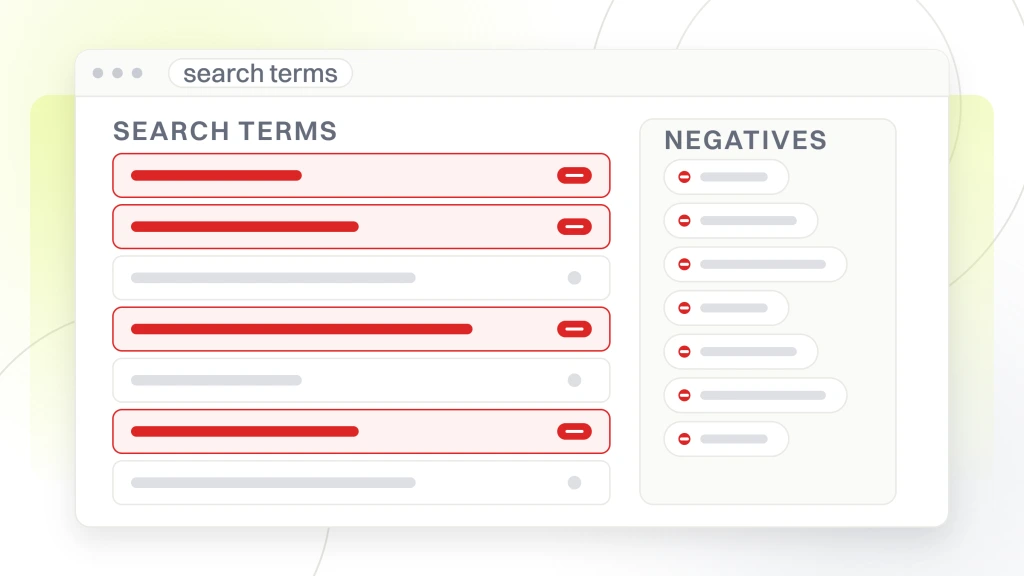
- Build a 200-plus term negative keyword list in week one from search terms report.
- Point every campaign at a purpose-built landing page, never the homepage.
- Add CallRail on every phone number with dynamic number insertion by campaign.
- Set up conversion tracking on form submits, phone calls, and Meet booking widget submits.
- Add negative keyword “jobs” and “salary” and “school” and “free” across the account.
- Enable Local Services Ads if the practice is eligible for Google Guaranteed.
- Cap Performance Max to $250/day maximum until conversion data hits 30 signals.
- Add extensions. Sitelinks, callouts, structured snippets, and location extensions.
- Turn on Enhanced Conversions with the CallRail integration to close the offline loop.
Every one of these fixes takes 20 minutes to 2 hours. Every one moves a specific metric. See our dental google ads management guide for the monthly cadence that keeps the account tight after the initial fixes ship. For more, read Google Ads Help on ad group structure.
Negative keyword build in week one
Negative keyword list building is the single highest-ROI first-week action. You pull the last 90 days of search terms. You flag every irrelevant search. “Dentist salary,” “dental hygienist school,” “free dental clinic,” “pet dentist.” You add all of them as campaign or account negatives. That single list typically covers 200 to 400 terms and cuts wasted spend by 30 to 45% inside two weeks.
CallRail with dynamic number insertion
CallRail with dynamic number insertion swaps the phone number on the landing page based on the traffic source. Google Ads visitors see one number. Organic visitors see another. Facebook visitors see a third. Every call routes to the same front desk pool but each is tagged with the source. That tagging is what closes the loop from Google Ads spend to booked exams. See our call tracking for dentists guide.
Benchmarks for high ROI dental google ads accounts
Benchmarks are the diagnostic layer. Cost per click on dental keywords lands between $6 and $22 depending on your city and how many practices are bidding against you. Cost per booked exam runs $45 to $180 depending on treatment mix. ROAS on a healthy account sits somewhere between 4x and 10x. If your account is sitting outside these ranges 90 days after the fixes are applied, something structural is still broken and it’s time for a full audit.
| Metric | Low end | High end | Alert threshold |
|---|---|---|---|
| Cost per click | $6 | $22 | >$28 |
| Click-through rate | 4.5% | 9.2% | <3% |
| Cost per booked exam (general) | $45 | $120 | >$180 |
| Cost per Invisalign consult | $85 | $220 | >$300 |
| Cost per implant consult | $180 | $420 | >$500 |
| Return on ad spend | 4x | 10x | <3x |
| Quality Score (average) | 7 | 9 | <6 |
Match your account numbers to the table. Every metric outside the alert threshold triggers a specific fix. Cost per click over $28 means the ad groups need tightening. Click-through rate under 3% means the ad copy needs rewriting. Cost per booked exam over $180 means the landing page needs CRO work. See our dental marketing roi guide for the full ROI framework.
Cost per click benchmark by treatment
Cost per click varies by treatment intent. General exam clicks run $6 to $12. Invisalign clicks run $9 to $18. Implant clicks run $14 to $28. Emergency dentist clicks run $8 to $16. Every treatment has a different competition depth, which is why the CPC range differs. Your account’s blended CPC tells you whether you have the right mix of treatment campaigns.
Return on ad spend benchmark
Return on ad spend is calculated on lifetime patient value, not first visit value. A general exam patient is worth $2,400 to $6,800 over three to five years. Divide your total booked exams by ad spend and multiply by the LTV (lifetime value). A healthy dental account runs 5x to 8x ROAS on lifetime value. Practices that measure ROAS on first-visit revenue alone underestimate the ad program by 3 to 6x.
Best performing dental google ads by format
Which format wins depends on the treatment and the search intent behind it. Responsive search ads (RSAs) take general exam and emergency campaigns. Performance Max takes mid-intent high-volume treatments like whitening and new patient specials. Local Services Ads take hyper-local general dentistry once Google Guaranteed is approved. Match the format to the treatment and the same budget books more patients at a lower cost per lead. That’s the shortest path to best performing dental Google Ads at every treatment tier.
RSA setup on a high ROI dental Google Ads account uses 12 to 15 headlines and 4 descriptions per ad group. Every headline includes the keyword theme or a close variant. Every description ends with a benefit or an offer. Google’s algorithm rotates headlines and descriptions to find the winning combinations, which typically stabilize after 200 to 400 clicks per ad group. See Google Ads Help on responsive search ads.
Responsive search ads setup
Responsive search ads need 12 to 15 headlines and 4 descriptions. Include the keyword theme in three headlines minimum. Include the specific offer in two headlines. Include a location signal in two headlines. Include a trust signal (years in practice, review count) in two headlines. That coverage lets Google’s algorithm test combinations and find the winning pair inside 2 to 3 weeks.
When Performance Max wins
Performance Max wins on high-volume mid-intent campaigns like whitening, cleanings, and new patient specials. Performance Max needs 30 to 60 conversions to stabilize learning. Practices with under 30 monthly booked exams should skip Performance Max until the search campaigns fill the conversion pool. See our performance max for dentists guide.
Local Services Ads and Google Guaranteed for high ROI
Local Services Ads (LSAs) sit above the regular Google Ads listings for local searches like “dentist near me.” LSAs charge per lead instead of per click and typically produce cost per lead 40 to 60% lower than standard search ads for general dentistry. Every dental practice eligible for Google Guaranteed should run LSAs alongside search ads, not in place of them.
Eligibility for Google Guaranteed requires background checks, license verification, and insurance verification. The application takes 4 to 6 weeks. Once approved, the practice appears with a green checkmark badge in the LSA unit. That badge alone raises click-through rate 30 to 45% versus non-verified competitors. See our local services ads for dentists guide.
Cost per LSA lead
Cost per LSA lead on dental accounts runs $22 to $65. LSA leads are pre-qualified. The visitor picks the practice from the LSA unit before dialing. The lead-to-booked-exam conversion rate on LSA leads runs 55 to 70%, higher than the 25 to 40% on standard search ad calls. That conversion gain is why LSA cost per booked exam typically runs half the cost of standard search.
LSA application workflow
The Google Guaranteed application requires state license verification for every dentist, general liability insurance verification, and a business background check. The full application takes 4 to 6 weeks. Practices that submit incomplete license documentation add 2 to 4 weeks. Every dental Google Ads takeover we run submits the LSA application in week one so the account has LSA running by month two.
Dental google ads management cadence
Dental Google Ads management is a weekly cadence, not a monthly project. Every week has a specific set of actions. Miss the cadence and the account drifts, ad copy stales, negative keywords compound, and CPL creeps up 5 to 15% per month. Every high ROI dental Google Ads account runs on a weekly management schedule.
- Monday. Pull search terms report. Add 5 to 15 new negatives. Pause any ad group with CPL over threshold.
- Wednesday. Review ad copy performance. Pause the bottom 20% of headlines. Add 3 to 5 new headline variants.
- Friday. Check conversion tracking. Confirm CallRail is firing. Confirm form submits are recording. Confirm booking widget conversions are tracked.
- Monthly. Full account audit. Review Quality Scores. Adjust bids by ad group. Rebalance budget between campaigns.
Every one of these actions takes 15 to 45 minutes. Every practice we manage runs on this cadence. Skipping any week compounds into a full audit two months later that costs 4 to 6 hours to fix. See our dental ppc management guide for the full monthly checklist.
Monday negative keyword pass
Monday negative keyword pass pulls the last 7 days of search terms and flags any irrelevant queries. New negatives get added to the campaign level or account level depending on scope. That weekly pass keeps the negative list current and prevents wasted spend from compounding. Every account we run averages 8 to 15 new negatives per week during the first six months.
Friday tracking verification
Friday tracking verification catches broken conversion tracking before it hides a full week of missed data. Confirm the CallRail number is dialing through. Confirm the form submit fires the Google Ads conversion pixel. Confirm the booking widget conversion event is landing in Google Ads. Every one of these takes 3 minutes to verify. Skipping it means finding out on Monday that Wednesday’s data is missing.
Quality Score and how it moves cost per click
Quality Score is the single lever that moves cost per click without touching a bid. On dental keywords, a Quality Score of 8 pays roughly half the cost per click of a Quality Score of 4 for the same auction position. That’s not marginal. On a $22 keyword, that’s the difference between paying $11 and $22 per click. Every fix in the first-30-days playbook exists to raise Quality Score, and every ad group we take over starts at 4 to 6.
Three inputs drive Quality Score. Expected click-through rate, ad relevance, and landing page experience. Expected CTR responds to keyword-theme-matched headlines. Ad relevance responds to keyword coverage across the ad group. Landing page experience responds to message match, page speed, and mobile usability. Fix all three inputs in the first 30 days and Quality Score climbs from 5 to 8 in 6 to 10 weeks.
Landing page experience quick wins
Three landing page quick wins move the experience score fast. Cut mobile load time under 2.5 seconds. Put the treatment name and the specific offer above the fold. Add one form and one phone number, never both competing for attention. Every practice we take over is at 5 to 8 seconds on mobile load. Cutting that in half moves Quality Score by 1 to 2 points inside a month.
Ad relevance inside the ad group
Ad relevance climbs when every headline and description carry the keyword theme or a close variant. That’s why the 12 to 15 headline RSA setup matters. Three of the headlines must contain the exact keyword theme, and two more must contain a close variant. Google scores relevance against the visible keyword coverage, not against how many total headlines the ad group holds.
Case studies. North County Dental Care and Smile Design Dentistry
North County Dental Care is a general and cosmetic dentistry practice in Vista, California that has served its community for more than 20 years. Before we started, several agencies ran its marketing with no clear plan and no way to measure ROI. The site did not work on phones and had no HTTPS.
We rebuilt the site, fixed technical SEO, and cleaned up local listings, then ran targeted Google Business Profile ads with Google Analytics tracking every campaign. From 2021 to 2024, total marketing ROI on the combined SEO plus paid program hit 500% and organic traffic climbed 385%. Patient volume grew 1,000%, from 1 to 2 new patients a month to 12 to 16.
Smile Design Dentistry numbers
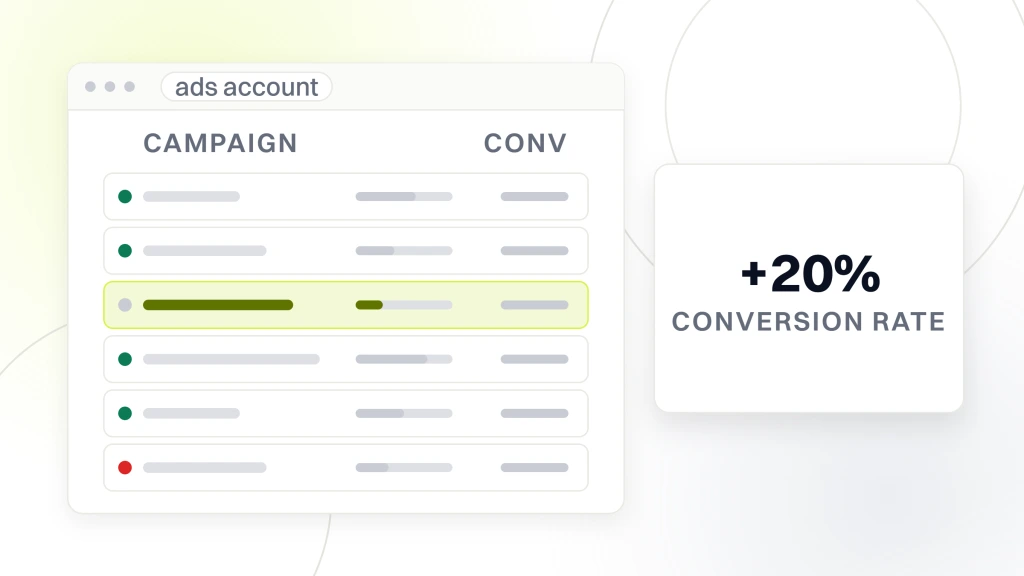
Smile Design Dentistry is a 50-plus location DSO in Central Florida and the Tampa Bay area. Before the rebuild, PPC conversion rate ran 4.2% and cost per call ran high across every office. After the takeover and the eleven fixes, PPC conversion rate climbed 20% and cost per call dropped 30% across all 50-plus locations. The rebuild proved the same four structural rules scale from solo practices to DSOs.
Common mistakes that kill high ROI dental google ads
Six common mistakes kill dental Google Ads ROI. Broad match on high-CPC keywords with no negatives. Homepage as the landing page for every campaign. Missing conversion tracking on phone calls. Overusing Performance Max before conversion data stabilizes. Bidding to a target CPA that ignores lifetime patient value. Skipping Local Services Ads on eligible accounts. Every one of these is a fixable structural error.
The homepage-as-landing-page mistake is the largest budget waster in dental Google Ads. The homepage lists every service, buries the specific offer, and requires the visitor to click a service page to see relevant content. Google Ads visitors do not click. They bounce. Purpose-built landing pages convert 3 to 5x higher. The visitor lands on the exact offer they searched. See our dental ppc mistakes guide.
The broad match trap
Broad match on dental keywords without a large negative list produces waste at scale. “Dentist” broad match matches “dentist salary,” “dental hygienist school,” “pet dentist,” and “free dental clinic.” Every one of those clicks costs $6 to $22 and books zero patients. Use phrase or exact match on the top 20% of keywords and always pair broad match with a negative keyword list of 200-plus terms.
The target CPA trap
Target CPA bidding to $50 seems reasonable until you realize a $50 booked exam is worth $2,400 to $6,800 in lifetime value. That target CPA leaves 60 to 70% of the demand curve unserved. Google’s algorithm caps bids to hit the artificially low target. Set target CPA at 8 to 12% of lifetime value, not first-visit revenue, and the account scales into demand that the low target CPA would ignore.
Budget scaling on high ROI dental google ads
Budget scaling starts once the account hits stable CPL for 4 consecutive weeks. Scaling means 20% budget increases per week until CPL climbs by more than 15%. That signal means you have hit the audience saturation point for the current keyword mix. Hold budget flat, add new keyword themes, and resume scaling when the new themes stabilize.
Practices with a $1,800 monthly budget can scale to $3,500 inside 12 weeks if the account is structured correctly. Practices at $3,500 can scale to $6,500. Practices at $6,500-plus enter a different tier where budget scaling requires expanding to new geographies, new treatment mixes, or new campaign types. See our dental marketing cost guide for the budget-to-patient-volume math.
The scaling signal
The scaling signal is 4 weeks of stable CPL inside the benchmark range. Stable means CPL varies less than 10% week over week. Once you hit that stability, scale budget 20% per week. If CPL climbs more than 15% in the week following a scale, pause the increase and hold budget flat for 2 weeks before trying again.
The scaling ceiling
Every dental Google Ads account has a scaling ceiling determined by local search volume. Once the account captures 80 to 90% of the search volume for the target keywords in the target radius, further budget increases produce diminishing returns. Break the ceiling by expanding to new keyword themes, adding LSA, or opening a display and retargeting layer. See our dental remarketing ads guide.
Conversion tracking as the ROI closer
Conversion tracking closes the loop from Google Ads spend to real booked exams. Without full-loop tracking, the account optimizes toward form submits and phone calls, not booked exams. Form submits and phone calls are proxies. Some convert to booked exams. Some do not. Optimizing to booked exams in place of proxies raises real ROI by 20 to 40%.
The tracking loop runs from Google Ads click to CallRail number to front desk to PMS booking. Enhanced Conversions in Google Ads accepts uploaded conversion data from the PMS via CallRail’s integration. That upload tells Google’s algorithm which specific clicks produced booked exams, which lets the algorithm bid smarter on similar clicks. See our dental marketing attribution guide and Google’s Enhanced Conversions setup guide.
Enhanced Conversions setup
Enhanced Conversions requires hashed email or phone at conversion time. The CallRail integration hashes the phone number automatically and uploads it to Google Ads with the conversion event. That upload matches back to the ad click that drove the call. Enhanced Conversions raises reported conversions by 15 to 30%. It catches conversions that cross device or clear cookies.
PMS integration for booked exam upload
PMS integration for booked exam upload is the last mile of the tracking loop. Every practice management system (Dentrix, Eaglesoft, Open Dental) supports an export of appointments by phone number. That export gets uploaded to Google Ads via Enhanced Conversions weekly. The upload tells the algorithm which specific ads produced booked exams and refines bid strategy toward the winning ads.
Where to start with high ROI dental google ads
Start with a search terms report audit. Pull the last 90 days. Count how many queries are irrelevant. If 30% or more are irrelevant, the negative keyword list is your first fix and it’ll cut waste immediately. Then audit the landing pages. If every campaign points at the homepage, that is your second fix. Two fixes and the account moves from 2x to 4x ROAS inside 60 days.
When you’re ready to run this across the whole practice, our dental ppc guide covers the full paid stack. For related reading in this cluster, see our dental google ads guide, our dental google ads keywords guide, and our dental ppc strategy guide.