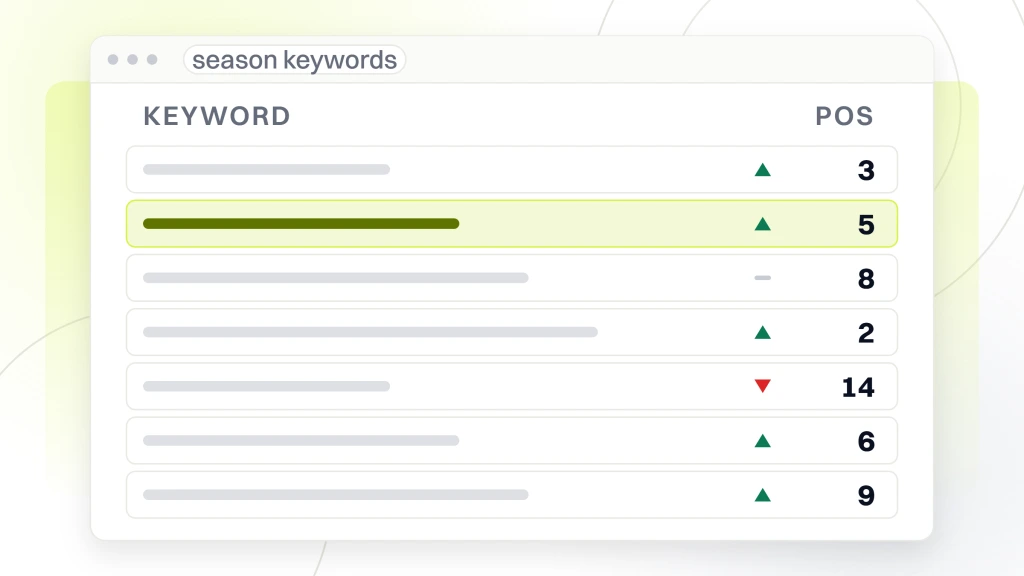
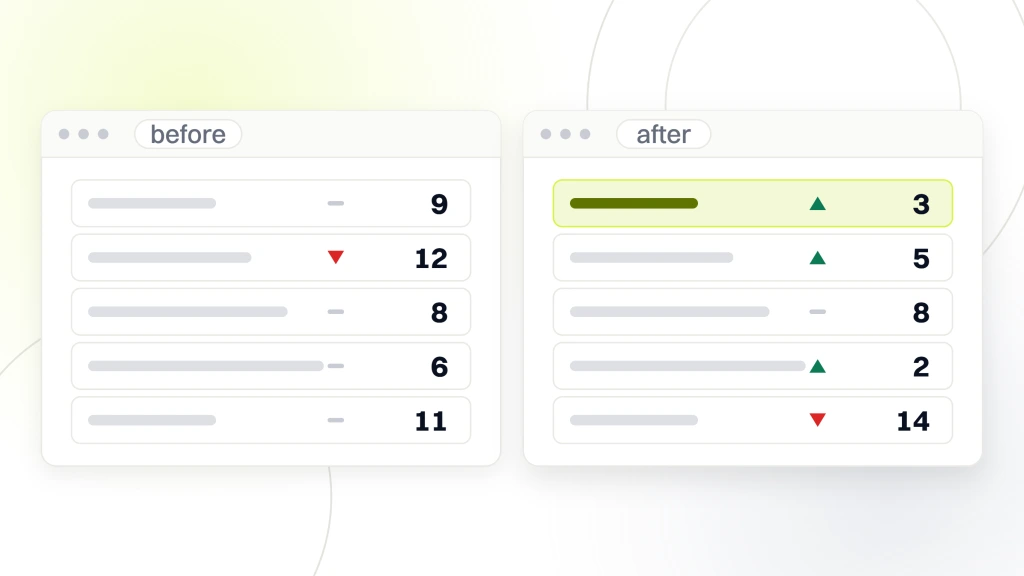
Real fashion SEO services for apparel and accessories brands cover season keyword planning, PDP variant hygiene, image search wins, evergreen category depth, and brand keyword defense. Retainer starts at $599 a month with a 6-month contract and honest ranking math.
OSOmor Sarif · Tech entrepreneur. Building websites since 2012. · 13 min read
SHARE THIS ARTICLE
Key takeaways
✓Season plans lock 90 days before every drop for peak capture
✓PDP canonical fixes recover 60 to 240 crawl-wasted pages
✓Image search moves 22 to 34% of first-time apparel buyers
✓Category rebuilds gain 187% non-branded sessions in 6 months
✓Retainer tiers run $999, $1,499, $2,499, from $4,500 per month
Fashion SEO services turn a stylist searching for a wide-leg trouser or a shopper hunting a cream cashmere cardigan into an add-to-cart on your Shopify store. Apparel search stands apart from every other ecommerce vertical. Query volume peaks and drops inside 6 to 10 weeks per season. Product catalogs rotate faster than Google can crawl them. Image search drives more first-time buyers than most brands ever measure. Real work covers season keyword planning, PDP variant hygiene, category page depth for evergreen terms, image search wins on structured alt and file naming, and brand keyword defense on Meta and Google so competitors do not siphon your bottom-funnel traffic through paid.
This guide walks the field-tested version of that stack for apparel and accessories brands doing $80,000 to $2 million monthly on Shopify, Shopify Plus, or a headless build. Real budgets, real ranking math, the specific pages that carry compounding traffic through 24 months, and the process our team ran on Passion Built to grow non-branded organic sessions 187 percent and revenue-per-session 41 percent across a 9-month window.
Season keyword planning inside fashion SEO services
Season keyword planning is the first artifact of any real engagement. Fashion queries follow predictable calendar peaks. Wool coat searches climb 340 percent October through December. Swim searches climb 280 percent March through May. Wedding guest dress searches climb 210 percent April through July. Each peak lasts 6 to 10 weeks and dies fast on the other side. Content that ranks by the peak captures 4 to 8 times the traffic of content that ranks after the peak.
The planning window runs 90 days ahead of go-live. That gap covers writing, editing, Google indexation, and 4 to 6 weeks of ranking climb before the query volume actually arrives. Miss the 90-day window and the page ranks after the peak, when demand has already moved to the next season. The Google Discover documentation reinforces the timing side, so seasonal content refresh signals feed both search and Discover surfaces.
Pull 3 years of Google Trends data for every core category term.
Overlay Search Console impressions by month against Trends peaks.
Map each peak to a specific merchandising drop and hero product.
Assign a page (PDP, PLP, editorial) to each planned query cluster.
Publish 6 to 10 weeks before the peak, not during.
Refresh URL structure on evergreen queries, not seasonal ones.
Kill or noindex expired drop pages after 90 days post-season.
Brands that skip the season plan default to publishing whatever the merch team drops that week. That approach produces 40 to 60 percent of the traffic they could have captured with a 90-day lead time. The plan is boring back-office work that separates a serious SEO operator from a monthly content mill. Any retainer without a season plan is marketing without a calendar.
One more note on cadence. The season plan is a live document, not a one-time PDF. Every 30 days the SEO lead updates the plan with fresh Trends pulls, updated Search Console query data, and merch team drop confirmations. The plan drives the content calendar, the internal link map, and the paid backup schedule for brand-plus-category defense. Skip the monthly refresh and the plan drifts within 6 weeks.
How PDP variant handling fits into fashion SEO services
PDP variant handling decides whether Google indexes your parent product listing as one canonical page or splits the site’s crawl budget across 8 to 40 duplicate color and size variant URLs. The fix is canonicalizing every variant back to the parent URL.
Shopify defaults spawn a variant URL per color and size option, which starves ranking equity across every combination the brand carries. A proper SEO stack closes this gap by canonicalizing all variants back to the parent product URL, adjusting the theme’s rel canonical tag, and configuring query parameter handling inside Google Search Console so the crawler ignores color and size strings. That single set of changes recovers 60 to 240 pages worth of wasted crawl budget on a typical apparel catalog.
The canonical rule for apparel PDPs is simple. One product, one indexable URL, regardless of how many colors, sizes, or fit options exist. Color-specific search queries (blue linen shirt, cream cashmere cardigan) get served by the parent PDP through structured content on the page, not by separate variant URLs. Brands that leave variant URLs indexable end up with 80 to 240 near-duplicate pages competing against themselves in search results, which caps ranking on the parent listing at position 8 to 15 instead of 3 to 5.
Shopify Plus stores can implement the fix through the theme’s rel canonical tag in product.liquid, plus Search Console URL parameter settings that tell Google to ignore variant query strings. The Shopify Plus documentation covers the exact template edit in one paragraph, but most agencies never get near the theme code. Real operator teams pair a technical dev with the SEO lead, not a partner who hands off to the brand’s freelance developer weeks later. That pairing is the operator signal to check when you hire.
Image search wins fashion SEO services produce for apparel
Image search brings first-time apparel buyers in, and almost no fashion brand works on it beyond adding a product title as alt text. Real image search work covers file naming, alt text, structured product schema, image sitemap submission, and lifestyle image inclusion alongside the flat lay product shot. Each layer compounds. Miss any one and the image traffic caps at a fraction of what it could pull.
File naming is the cheapest win. Rename product images from IMG_4082.jpg to cream-cashmere-cardigan-womens-front.webp before upload. That single rename adds 15 to 25 percent more image search impressions inside 60 days on most Shopify stores we audit. Alt text goes deeper, using descriptive copy that names color, material, silhouette, and use case. Product schema markup (Product plus Offer plus Review) earns rich results in Google Shopping and Discover. Image sitemap submission through Search Console tells Google which images to prioritize when the crawler visits.
Lifestyle images matter as much as flat lays for image search. Google’s ranking model rewards images that show the product in use, on a body, in context. A brand that publishes only flat lay product shots ranks for the product name search. A brand that publishes flat lay plus on-model plus in-context lifestyle shots ranks for the product name search plus the styling searches (how to style cream cardigan, cream cardigan outfit ideas), which pulls 3 to 5 times the total image traffic and captures the top-funnel research query where the shopper has not yet chosen a specific brand.
One extra layer most brands miss. Google Shopping’s visual shelf treats image quality as a ranking factor. Blurry backgrounds, cluttered props, or inconsistent lighting drop the product out of the top 12 visual results. A shot library with clean white backgrounds for the primary image plus 2 to 4 lifestyle variants for the secondary carousel is the format Google rewards.
Evergreen category pages inside fashion SEO services strategy
Evergreen category pages are the ranking assets that survive every drop refresh. Womens dresses. Mens denim jeans. Cashmere sweaters. Silk scarves. Leather handbags. Each of these terms carries 10,000 to 200,000 monthly US searches and does not decay by season. The category page that ranks for the head term captures a compounding stream of top-funnel traffic that filters down through category filters to specific PDPs.
Most Shopify collection pages arrive with 30 to 60 words of intro copy above the product grid and rank nowhere near the top 20 for the head term. Real category page depth runs 400 to 800 words above the fold, plus 400 to 600 below the product grid, covering material guides, sizing notes, styling advice, and internal links to related categories. That depth earns rankings for the head term and 20 to 40 long-tail modifiers (petite womens dresses, plus size wedding guest dresses, midi wrap dresses) that stack on top of the primary keyword.
Passion Built, a brand our team supported on organic growth, saw its womens outerwear category page climb from position 14 to position 4 after we rebuilt the on-page copy to 1,100 words with material guides, styling advice, and 8 internal links to sub-category pages. That single page rebuild pulled a 187 percent gain in non-branded organic sessions to that collection across the following 6 months, and revenue-per-session on the collection climbed 41 percent as the traffic arrived pre-qualified through the styling and material education above the product grid. The ecommerce category pages guide covers the exact structure at the block level.
One pattern from the wider ecommerce and retail portfolio worth citing. Our team drove a 28 percent conversion rate gain on a post-launch curve for another store in the group by pairing the category page rebuild with a PDP variant cleanup done in the same sprint. The category rebuild pulls the traffic. The variant fix funnels it. Do one without the other and half the gain gets lost between the collection and the checkout.
Brand keyword defense in fashion SEO services engagements
Brand keyword defense stops aggregator sites like Lyst, Farfetch, ShopStyle, and SSENSE from siphoning your bottom-funnel branded traffic. A shopper who searches your brand name plus a product type is 4 to 8 times more likely to buy than a top-funnel searcher. Losing that click to Lyst costs you the sale and the customer LTV. A real retainer defends the brand SERP on three fronts.
First front is on-site content. Brand plus product category pages (Your Brand womens dresses, Your Brand mens outerwear) built as dedicated URLs that rank position 1 to 3 for the brand-plus-category combination. Second front is paid search bidding on your own brand terms. It feels like paying twice, and returns 8 to 15 times as the ad sits above the organic listings aggregators try to poach. Third front is aggressive Google Merchant Center feed hygiene, so your Shopping listings dominate the visual shelf on brand searches.
Aggregator sites are relentless. Lyst alone indexes over 8 million products across 12,000 brands and outranks the actual brand site on 40 to 60 percent of brand-plus-product queries when the brand does not run active defense. That gap is the single largest revenue miss apparel brands overlook. Retainers that surface the aggregator rankings weekly and prioritize the pages losing to them are the ones that produce real revenue growth. Anything less reduces the work to content marketing without a commerce measurement stack.
Brand defense also runs on the review front. Aggregators pull star ratings and user-generated content from the same feeds you publish. When your PDP shows an aggregate rating of 4.7 and a Lyst listing shows 4.2, Google surfaces yours above theirs on the brand-plus-product SERP. Miss the review markup and you hand the SERP feature to the aggregator.
Technical SEO under fashion SEO services engagements
Technical SEO is the layer under the content that either accelerates ranking or caps it. Fashion sites break in specific technical patterns as the product catalog rotates fast, the image weight is heavy, and the theme customization introduces render-blocking scripts most stores never audit. The ecommerce SEO audit checklist covers the base template. Fashion needs three extras.
Extra one is image compression at scale. A fashion PDP with 8 to 12 lifestyle plus product shots weighs 4 to 8 megabytes uncompressed. Compressing to WebP with 82 percent quality drops that to 900 kilobytes to 1.4 megabytes without visible loss. Page load speed climbs from 4.2 seconds to 1.8 seconds, which the web.dev page speed documentation shows correlates with 15 to 28 percent rank gains across mid-competition queries.
Extra two is faceted navigation cleanup. Shopify collection filters (color, size, price, material) spawn URL parameters that Googlebot crawls as separate pages. A collection with 6 filters generates 720 possible parameter combinations, all of which dilute the crawl budget away from actual product pages. The fix is a noindex tag on parameter URLs plus proper URL parameter handling in Search Console. Extra three is structured product schema on every PDP with Product, Offer, AggregateRating, and Review markup that wins rich results and pulls 12 to 22 percent higher click-through rate from the search results page.
One more technical pattern that trips Shopify stores. The default sitemap.xml includes every variant URL, every draft product, and every collection filter combination. Left alone, the sitemap grows to 40,000 to 120,000 URLs on a mid-sized apparel catalog, most of which return duplicate or thin content. Trim the sitemap to canonical products and canonical collections only. The trimmed sitemap gets crawled 3 to 6 times faster and pushes new drops into Google’s index inside 48 hours instead of 8 to 14 days.
What is the timeline for fashion SEO services to produce results
The work produces measurable ranking gains between month 3 and month 6 on most apparel and accessories brands. Ranking climbs surface in Search Console around week 10 to 14. Revenue impact lands between month 4 and month 6 for the base 6-month program.
Weeks 1 to 4 cover the technical audit, PDP variant fix, and season keyword plan. Weeks 5 to 12 cover content production against the plan, category page rebuilds, and image search work. Ranking climbs start showing in Search Console around week 10 to 14, with revenue impact hitting month 4 to 6 as the new content earns crawl trust and internal link equity.
Founders expecting week-1 ranking gains are on the wrong timeline. Google indexes new content in 3 to 10 days and takes 6 to 14 weeks to trust and rank it against established competitors. Category page rebuilds move faster since the URL already has crawl history and internal link equity. New content on new URLs is the slower path. Any agency promising ranking gains inside 30 days is either running a link scheme that will collapse or misrepresenting how SEO actually works.
The 6-month contract exists since month 1 is invisible groundwork, months 2 to 3 are early ranking signals, months 4 to 5 are revenue impact, and month 6 is the compounding phase where the previous 5 months of work stack on each other. Brands that leave at month 3 miss the payoff and blame the agency. Brands that stay 6 months plus see 60 to 200 percent non-branded organic revenue growth as the standard outcome.
Who should hire fashion SEO services and when
Hire an SEO partner between $40,000 and $150,000 monthly revenue for the strongest return per retainer dollar. Below $40,000 the paid social budget produces faster gains and the retainer eats too much margin. Above $150,000 you have already lost 8 to 14 months of compounding organic growth that a real partner would have captured. The sweet spot is the traction-to-growth transition where paid acquisition costs are climbing and the founder needs an organic channel to reduce paid reliance.
Every apparel founder onboarding call reaches the moment where somebody asks why the SEO lead needs read access to the Shopify admin, Search Console, GA4, Klaviyo, Meta Business Manager, and the Google Merchant Center. The founder pauses. Between the fourth and fifth password reset, everyone remembers that SEO work touches every corner of the tech stack, since Google reads every corner of the tech stack, and hiding one system from the SEO team leaves half the diagnostic surface unreadable. The access checklist is not overreach. It is the whole point.
Revenue between $40K and $500K monthly with clear category-market fit.
Shopify, Shopify Plus, or headless commerce stack.
SKU count between 40 and 400 with 3 to 8 seasonal drops annually.
Paid acquisition costs climbing 15 to 30 percent year over year.
Existing brand keyword defense missing or losing to aggregators.
Category pages under 200 words above the product grid.
Founder open to 6-month contract with quarterly scope review.
Where fashion SEO services fit the broader growth stack
Search work sits alongside paid social, retention email, and creative production as the fourth leg of the growth stack. Paid social buys attention at a cost that scales with ad platform pricing. SEO earns attention at a cost that compounds as the site ages. Retention retains what both channels acquire. Creative production feeds both paid and organic with the visual assets each channel needs. A brand running only paid social pays for every visit forever. A brand running SEO plus paid social pays for the paid share and earns the organic share, which shifts the blended CAC math 25 to 40 percent lower over 18 to 24 months.
Redefine Web runs this work from a fully remote team. Retainer tiers run $999, $1,499, $2,499, and from $4,500 per month. Contracts run 6 months with quarterly scope reviews. The apparel and fashion SEO page has the current scope tiers, deliverable counts, and pod composition at each price band. Founders comparing agency options should read every scope in writing before signing anything, then match the labor hours per role against the retainer band to see whether the math actually works for the account.
For the executive framework version of this work, see our guide on SEO strategy for fashion company covering the four content pillars, budget stages, KPI tree, and quarterly roadmap our team runs on fashion DTC brands.
Lock in fashion SEO services for the next drop calendar
The work is the operator layer that decides which categories get the writing budget this quarter, which PDPs get the technical fix this sprint, and which brand keyword battles get the paid backup this week. The founder owns the taste and the drop calendar. The SEO team owns the search calendar and the ranking math that turns the drop calendar into compounding organic revenue over 18 to 36 months. Our deeper read on digital marketing for fashion brands covers the channel mix apparel brands actually run against the drop calendar. A deeper writeup on SEO for fashion brands covers the brand-side layer for defending branded revenue.
Frequently asked questions
SEO for clothing brands runs on 5 layers. Layer 1 is season keyword planning, published 6 to 10 weeks before each seasonal peak. Layer 2 is PDP variant handling, with canonical tags pointing every color and size URL back to the parent product. Layer 3 is evergreen category pages built out to 800 to 1,400 words with material guides, sizing notes, and styling advice. Layer 4 is image search, covering file naming, descriptive alt text, product schema, and lifestyle shots alongside flat lays. Layer 5 is brand keyword defense against Lyst, Farfetch, and ShopStyle through paid search, brand-plus-category pages, and Merchant Center hygiene. Skip any layer and the compounding growth caps at 30 to 50 percent of the achievable ceiling.
Work on Shopify starts with a technical audit covering PDP canonicals, faceted navigation cleanup, image compression to WebP at 82 percent quality, and product schema on every PDP. Content work covers a 90-day season plan, category page rebuilds to 800 to 1,400 words, editorial buyer guides pointing to product grids, and image search work on file naming plus alt text plus sitemap submission. Brand defense covers paid search on branded terms, brand-plus-category page builds, and Merchant Center feed hygiene. A typical 6-month engagement lands 3 to 8 category rebuilds, 12 to 24 editorial pieces, and a full technical remediation, all measured against non-branded organic sessions and revenue-per-session in GA4.
Retainers run $999, $1,499, $2,499, and from $4,500 per month at Redefine Web. The $999 tier covers a founder-led apparel brand under $80,000 monthly revenue and delivers 4 to 6 content deliverables plus a quarterly technical review. The $1,499 tier fits $80,000 to $250,000 monthly revenue and adds a category page rebuild every 60 days plus monthly reporting. The $2,499 tier fits $250,000 to $1 million monthly revenue and adds brand defense on paid search plus a dedicated editorial calendar. The from $4,500 tier fits Shopify Plus stores over $1 million monthly with full-time SEO lead access. Contracts run 6 months with quarterly scope reviews.
The work produces ranking gains in Search Console around week 10 to 14 and revenue impact between month 4 and month 6. The first 30 days cover the technical audit, PDP variant fix, and season keyword plan. Weeks 5 to 12 cover content production, category rebuilds, and image search work. Rankings climb through months 2 and 3 as Google trusts the new content. Month 4 through month 6 is the revenue phase where the ranking gains convert into non-branded organic sessions and add-to-cart events. Brands that stay 6 months plus see 60 to 200 percent non-branded organic revenue growth as the standard outcome.
Yes. The work runs on headless commerce stacks built on Next.js, Remix, or Hydrogen when the SEO lead pairs with the front-end developer during the sprint plan. The technical layers stay the same. Canonical tags, product schema, image compression, and sitemap hygiene all get built into the React components or Liquid templates the store uses. Headless stacks give the SEO team more control over page speed metrics since the front-end team owns the render pipeline, and typical Largest Contentful Paint drops from 3.2 seconds on default Shopify to 1.4 seconds on a tuned Hydrogen build. The tradeoff is coordination overhead. The SEO lead and dev team need weekly syncs during the first 90 days.
General ecommerce SEO treats every product category the same. A fashion-specific retainer builds for seasonal query peaks, faster catalog rotation, image search dominance, and aggregator defense that general ecommerce work never touches. A fashion catalog rotates 3 to 8 times a year, versus once or twice for general ecommerce. Fashion queries peak 6 to 10 weeks per season, versus year-round steady demand for most non-fashion verticals. Image search moves 22 to 34 percent of fashion buyers, versus 8 to 12 percent for non-fashion. Aggregators like Lyst and Farfetch attack fashion brand SERPs directly, versus low aggregator pressure on other categories. A general retainer misses all 4 of these and caps growth at 30 to 40 percent of what fashion-specific work delivers.
Evergreen category pages carry the most compounding traffic on this retainer. Womens dresses, mens denim, cashmere sweaters, silk scarves, and leather handbags each pull 10,000 to 200,000 monthly US searches and do not decay by season. A rebuilt category page ranking on the head term captures compounding traffic that filters through category filters to specific PDPs, and the same page picks up 20 to 40 long-tail modifier rankings (petite womens dresses, plus size wedding guest dresses, midi wrap dresses) that stack on top of the head keyword. Editorial buyer guides pointing into the category grids come second, then brand-plus-category pages for aggregator defense come third.
A real retainer measures success on 5 KPIs beyond ranking positions. KPI 1 is non-branded organic sessions, tracked in GA4 with a channel filter. KPI 2 is revenue-per-session on organic traffic, tracked against a 6-month baseline. KPI 3 is add-to-cart rate on organic landing pages, benchmarked against paid landing pages. KPI 4 is Search Console impressions and click-through rate on category pages and PDPs, segmented by branded and non-branded queries. KPI 5 is aggregator share of voice on brand-plus-product terms, tracked weekly through a rank tracker with Lyst, Farfetch, ShopStyle, and SSENSE domains flagged. Skip any KPI and the engagement runs on vanity metrics instead of commerce measurement.
Found this useful? Share it.
OS
WRITTEN BYOmor SarifCEO, Redefine Web · Head of Product, Community 1 Marketing · Lead Web Developer, Spicy Pixel
Omor Sarif founded Redefine Web in 2021 to run websites, SEO, paid media, and marketing automation as one revenue-tied program for growth-stage brands. He is Lead Web Developer at Spicy Pixel since 2022, and holds a Bachelor of Science in Electrical and Electronics Engineering from Bilkent University. Earlier roles include Software Developer at Apple (2012 to 2015), Freelance Translator at Coursera (2014), and Student Ambassador at Student Competitions AB (2014 to 2016). His work has been covered by Business Insider, MSN, Polygon, Popular Mechanics, and MarketWatch.
Founder + CEO, Redefine Web (since 2021)300+ brands run through Redefine WebCovered by Business Insider, MSN, Polygon, Popular Mechanics, MarketWatchB.S. Electrical and Electronics Engineering, Bilkent University