
Managed service provider Google Ads management is a niche paid search game with high stakes on every click. You are not selling coffee. You are selling a 3-year IT contract to a CFO who does not click ads on impulse. Search volumes stay small. Cost per click runs high, $22 to $65 for the head terms. Buying cycles stretch 45 to 120 days. The playbook that books MSP deals looks nothing like the one that books plumbers or dentists. This guide walks the exact operating model we run on live accounts, from keyword frames and campaign structure to the CPL math that fills a real B2B sales pipeline.
You will finish this in 10 minutes with a working framework, a budget calculator by MSP size, and specific numbers you can put to work this quarter. The same weekly rhythm holds whether you run a 6-person MSP outside Denver at $2,500 per month or a 40-person national MSP at $8,000 per month. What shifts is the geographic scope and the number of vertical landing pages, not the operating discipline underneath.
Why MSP paid search runs on a niche keyword universe
Pair the paid channel with your MSP SEO services roadmap so the same intent shows up in both channels.
MSP paid search operates on a compressed keyword universe with a stretched buying cycle. Generic B2B PPC assumes 200 plus keywords per campaign and a 14-day conversion window. Neither assumption holds for MSPs. You work with 40 to 90 buyer keywords, wait 45 to 120 days for the closed deal, and depend on multi-touch attribution. A CFO who clicks a search ad today rarely signs the same week. Treating an MSP account like a generic B2B account is the fastest route to draining a $5,000 monthly budget without booking a single discovery meeting.
The account structure has to fit the buyer journey, not the ad platform’s default. Every campaign maps to one intent bucket only. Break-fix search. Compliance search. Cloud migration search. Managed services RFP search. Mix the buckets and Smart Bidding trains on the wrong signal. Split them cleanly and every campaign builds its own signal profile. The work is boring, disciplined, and repeatable, not clever or novel. Treat it as an operating discipline first, a creative exercise second.
Search volume math for MSP keywords
Head terms like “managed IT services” carry 2,900 monthly US searches. Regional variants like “managed IT services Denver” drop to 210 monthly searches. Long-tail buyer queries like “outsourced IT support 50 employees” sit at 40 to 90 monthly searches. Total buyer-intent search volume in a mid-size metro rarely exceeds 3,500 monthly searches across all keywords combined. Small volume, high value. A single closed 3-year contract at $6,000 per month justifies a full year of $2,500 monthly ad spend on its own.
Multi-touch attribution for the long MSP cycle
Set up multi-touch attribution before the first campaign goes live. Default last-click attribution undercounts paid search on 45 to 120 day cycles by 30% to 50%. Switch to data-driven attribution inside Google Ads and route first-touch data into HubSpot or Salesforce so the CRM shows the paid search touch on the deal record. MSPs that skip this step see their PPC ROI look 40% worse than it is and cut the budget before the pipeline matures.
Keyword frames for managed service provider Google Ads management
Group MSP keywords into 6 buyer-intent frames. Break-fix intent. Compliance intent. Cloud migration intent. Vertical-specific intent (healthcare IT, legal IT, financial services IT). Geographic intent. Competitor-swap intent. Each frame runs its own campaign, its own landing page, and its own ad copy set. Six clean frames give the account a clean training signal and put every searcher on a page that speaks to the exact query they typed.
Break-fix queries like “IT support near me open now” and “computer repair for business” carry high urgency and low deal size. Compliance queries like “HIPAA IT services” and “SOC 2 managed services” carry lower urgency and 3 to 5 times higher deal size. Route break-fix to a matched landing page with a phone number above the fold. Route compliance queries to a matched landing page with a compliance checklist download and a sales meeting form. Mixing the two on one page loses both segments.
- Break-fix search: same-day IT support queries
- Compliance search: HIPAA, SOC 2, PCI, CMMC queries
- Cloud migration search: Azure, AWS, Microsoft 365 migration queries
- Vertical IT search: healthcare IT, legal IT, financial services IT
- Geographic search: managed IT services plus city name
- Competitor-swap search: switching from Rackspace, ConnectWise, and so on
Negative keyword hygiene for MSPs
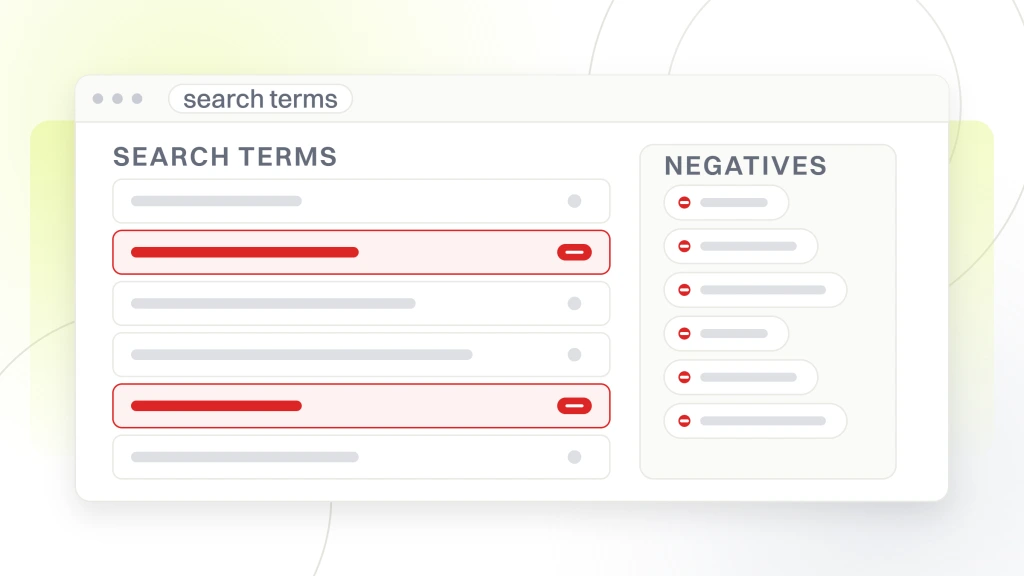
Pull the search terms report every Friday. Add 8 to 20 negatives per week. Look for job-seeker queries. “MSP jobs,” “IT support salary,” “help desk certification.” Look for consumer queries. “Fix my home computer,” “personal laptop repair.” Look for vendor-hunting queries. “MSP software,” “PSA tools,” “RMM comparison.” Every negative added saves $60 to $140 next week. MSP head terms cost $22 to $65 per click and the account cannot afford wasted impressions.
Campaign structure for msp google ads management accounts
MSP accounts run 5 to 8 campaigns, not 15. Every extra campaign splits budget thinner and starves Smart Bidding of training data on already-thin keyword volumes. The right structure opens with one break-fix search campaign, one compliance search campaign, one vertical-specific search campaign, one branded search campaign, one competitor-swap campaign, and one remarketing display campaign. Layer a LinkedIn integration campaign on top only after the search campaigns clear 20 plus conversions per month combined.
MSP paid search differs from consumer PPC on Smart Bidding usage. MSP accounts often run manual CPC for the first 6 months. Smart Bidding needs 30 plus conversions per campaign per month to train and MSP campaigns rarely produce that volume in year one. Manual bidding with a $22 to $65 CPC lets the account control spend precisely as the pipeline builds. Switch to Maximize Conversions or Target CPA only after the campaign holds 30 plus monthly conversions for 2 consecutive months.
Branded campaign is not optional
Every MSP needs a branded campaign to defend against competitor bids on your business name. Branded campaigns cost $2 to $5 per click and convert at 15% to 30%. Skipping the branded campaign lets a competitor snag prospects already searching your name after a referral or a networking event. MSPs that add a branded campaign after 6 months without one typically see a 20% to 35% gain in overall PPC conversions inside 30 days from recovered brand searches alone.
Competitor-swap campaign math
Competitor-swap campaigns target queries like “alternative to Rackspace” or “switching from ConnectWise.” Deal size on these queries runs 2 to 3 times the average. The buyer is already spending. Bid $18 to $35 per click, expect 8% to 12% conversion rate, and expect 1 in 3 conversions to close as a customer inside 90 days. The math holds when the offer is a “free MSP contract audit” rather than a generic “get a quote.” The audit reframes the conversation and preempts the swap-lock objection.
Budget and CPL benchmarks for managed service provider Google Ads services
For a wider view across B2B verticals, see the B2B PPC agency pricing models comparison.
MSP Google Ads budgets scale by target customer size, not by the MSP’s own headcount. A 6-person MSP going after 20-employee clients runs $2,500 to $4,000 per month. A 20-person MSP chasing 100-employee clients runs $5,000 to $8,000 per month. A national MSP going after 500-employee accounts runs $12,000 to $28,000 per month. Larger target customers pull CPCs up and stretch the buying cycle, and both pressures drive the monthly budget floor higher.
Cost per lead runs $180 to $450 across MSP accounts. Cost per marketing qualified lead sits at $340 to $760. Cost per sales qualified lead sits at $580 to $1,400. Cost per closed customer sits at $2,400 to $6,800. The full-funnel math looks expensive per head. It stops looking expensive at year 2 of the contract when the same customer paid $72,000 to $180,000 over the life of the deal. Paid search plays the long game here.
| MSP size | Monthly budget | Target CPL | Target CAC |
|---|---|---|---|
| Solo or 3 to 5 people | $2,000 to $3,500 | $220 to $420 | $2,800 to $5,200 |
| Small (6 to 15 people) | $3,500 to $6,500 | $180 to $380 | $2,400 to $4,800 |
| Mid (16 to 40 people) | $6,500 to $12,000 | $220 to $460 | $3,200 to $6,400 |
| Large (40 plus people) | $12,000 to $28,000 | $280 to $580 | $4,200 to $8,200 |
Weekly pacing on MSP budgets
Check budget pacing every Monday morning. On a $5,000 per month budget, one runaway compliance campaign can burn $600 in the wrong ad group and cost the week. Weekly checks fix pacing inside 24 hours. Accounts that check monthly usually catch pacing issues 3 weeks late and lose 15% to 25% of the month’s productive budget to drift. MSP campaigns feel the drift harder than consumer accounts. CPCs are 4 to 8 times higher.
Landing pages for MSP paid search
Every campaign needs a matched landing page. Not the homepage. Not the generic services page. A dedicated page carrying the intent frame in the H1, 3 trust signals above the fold, a demo request form, and a case study relevant to the buyer’s vertical. MSPs that route paid clicks to the homepage burn 45% to 65% of the traffic before the visitor reads anything.
Landing page conversion rate carries every MSP paid search account. A 3% click-through rate with a 1.5% landing page conversion rate is a rounding error at $35 CPC. A 3% click-through rate with a 5.5% landing page conversion rate is the engine that fills the pipeline. The landing page pulls its weight or it drags the whole account down. Every $35 of ad spend needs a landing page that respects it.
Above-the-fold rules for MSP pages
Above the fold needs 5 items. Intent-matched H1 (Break-fix support, HIPAA IT services, and so on). One trust signal (SOC 2 badge, MSP 501 ranking, years in business). Demo request form or clickable phone number. Case study snippet with the vertical you serve. Direct-line contact info visible without scroll. Miss any one and conversion rate falls 20% to 35%. Add all 5 and the same ad spend books 40% to 65% more meetings with no other change.
Case study on B2B tech Google Ads discipline at scale
Automation Anywhere, a global RPA platform serving 2,800 plus enterprise clients, ran the same discipline at scale. Before the rebuild, the account paid $1,936 per lead. Campaigns chased 3 goals at once. Impression share. Lead volume. Awareness. The contact form was the only offer against competitors handing out analyst reports and free trials. We split campaigns by goal, rebuilt the offer around a free-trial funnel, aligned per-region landing pages to local proof points, and shifted bid strategy from rank to conversion efficiency.
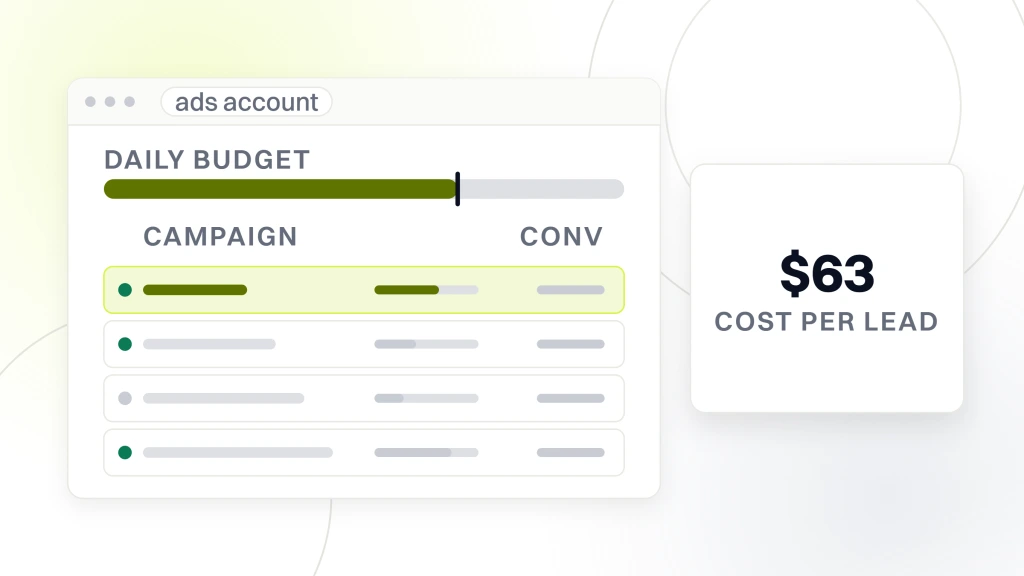
The result maps 1 to 1 onto MSP paid search. Cost per lead dropped 97%, from $1,936 to $63. Customer acquisition scaled 100 times, from 150 per month to nearly 8,000. Ad impressions grew 300% on a cleaner spend base. The pattern the enterprise account proves out is that discipline scales linearly. Weekly negatives. Weekly pacing checks. Monthly reallocation by cost per closed deal. Quarterly full-funnel review. The account that spends $28,000 per month and the account that spends $3,500 per month run the same rhythm.
The lesson for MSP owners considering paid search. Weekly discipline beats fancy automation every time on tight budgets. Add a $65 per month call tracking tool. Add 30 minutes per week to pull the search terms report. Add 60 minutes per month to reallocate budget by cost per SQL. That is the whole rhythm in 3 tasks. Everything else is a $499 per month subscription that produces less than the free 90 minutes of weekly work.
Conversion tracking and CRM plumbing
Track every conversion action. Phone calls via CallRail or CallTrackingMetrics. Form fills via GA4 events. Demo requests via CRM webhook. Chat interactions via chat-widget integrations. Every action carries a dollar value so the account optimizes toward revenue, not raw form fills. MSPs that track only form fills usually watch the account chase cheap leads at the expense of the phone calls that book higher-value discovery meetings. Google’s conversion tracking documentation covers the technical setup.
Audit conversion tracking every 90 days. Verify every action still fires on the correct trigger. Verify GA4 events still map to Google Ads conversions. Verify call tracking numbers still route to the right phone line. Accounts that skip the quarterly audit typically inherit a broken tracking setup at month 12 and lose 2 months of data quality to the fix. Wire Salesforce or HubSpot into the flow so closed-deal revenue writes back to Google Ads and Smart Bidding trains on real revenue signal.
Offline conversion imports
Import closed deals from your CRM into Google Ads via the offline conversion import. This is the single highest-impact integration for MSP paid search. The 90-day close cycle means Google Ads sees zero conversion signal from the online form on the day the deal closes. Offline import feeds the closed-deal event back into Smart Bidding on day 60 or day 90, and the bidding algorithm starts optimizing for the keywords that produce closed deals instead of the keywords that produce form fills.
In-house versus agency for msp google ads management
Under $2,500 per month in Google Ads spend, in-house management usually wins if the MSP has 4 plus hours per week protected for the work. Between $2,500 and $6,000 per month, the decision turns on whether the internal marketing lead has PPC depth. Above $6,000 per month, agency management pays back inside 90 days. The analytical depth required exceeds what a part-time internal marketer can maintain alongside other duties.
MSP-specialized agencies charge $1,200 to $3,500 per month for accounts in the small and mid-tier range. Generic B2B PPC agencies charge $800 to $2,400 per month but rarely understand the MSP buying cycle well enough to earn back the difference. Our Google Ads management services retainer starts at $999 per month for Launch accounts, $1,499 for Growth, $2,499 for Scale, and from $4,500 per month for Enterprise. For phone-heavy MSP verticals, the PPC management services retainer adds dedicated call scoring on top. B2B service teams lean on our B2B PPC agency track when the buying cycle stretches past 60 days.
Reference calls beat case study PDFs
When evaluating an MSP PPC agency, ask for 2 reference calls from active MSP clients on 6-month retainers. A one-page case study is a marketing artifact. A 20-minute reference call is real. Ask the reference how often the agency runs negative-keyword sweeps. Ask whether the MSP sees closed-deal data flow back to Google Ads. Ask what the agency did when a campaign underperformed for 45 days. Answers under 90 seconds indicate a real operating rhythm. Answers full of jargon indicate marketing spin.
Common mistakes in MSP paid search
Five mistakes cost MSP accounts 35% to 65% of their productive budget. Broad match on MSP keywords. No branded campaign. Homepage as landing page. Missing offline conversion import. Setting monthly budgets and forgetting them. Any 2 of the 5 together burn budget faster than any single mistake, so the fix order matters. MSP accounts succeed or fail on how fast the operator works this fix list.
Fix in this order. Add offline conversion import first. It reveals closed-deal signal to Smart Bidding on the 60 to 90 day cycle. Add a branded campaign second. It captures existing brand searches at $2 to $5 per conversion. Switch to phrase and exact match third. It stops the biggest budget drain on $22 to $65 CPC keywords. Build intent-matched landing pages fourth. Move to weekly budget pacing fifth. MSPs that work the list in that order typically double CPL efficiency inside 90 days without spending an extra dollar.
- Broad match on $35 CPC keywords burns budget in a week
- No branded search campaign leaves brand queries to competitors
- Homepage as landing page loses 50% of paid traffic
- Missing offline conversion import blinds Smart Bidding
- Monthly budget setting with no weekly checks lets pacing drift
- Adding campaigns before existing ones have 20 conversions per month
- Chasing MQL volume before the closed-deal loop is wired
Why the fix order matters
Offline conversion import has to go first. Every downstream bidding decision depends on Smart Bidding seeing closed-deal signal. Branded campaigns pay back inside 14 days on pennies per conversion. Match type changes stop the biggest budget drain and free up cash for landing page work. Landing page work compounds. Every campaign benefits. Budget pacing is the final discipline that keeps the compounding steady. Working in a different order leaves closed-deal revenue on the table.
90-day plan for managed service provider Google Ads management
Day 1 to 14 wires offline conversion import, GA4 events, call tracking, and the branded search campaign. Day 15 to 30 restructures campaigns by intent frame and rebuilds the negative keyword list. Day 31 to 60 builds intent-matched landing pages, launches responsive search ad variants, and layers on the competitor-swap campaign. Day 61 to 90 tunes bidding, reallocates budget by cost per SQL, and runs the first monthly report against the day 1 baseline.
The account follows a strict 90-day rhythm. Day 90 review compares cost per SQL against day 1. Under 20% improvement is a slow start and needs a diagnostic. 20% to 40% improvement is on pace and continues the same rhythm for the next quarter. Above 40% improvement is a strong account with headroom to scale spend by 15% to 25%. Reread the day 90 numbers before making any structural change. The pattern will keep compounding if left alone. For MSPs that want a second opinion before committing, our free Google Ads audit provides a full baseline.
Scaling spend after 90 days
Scale spend 15% to 25% per quarter on accounts that hit target CPL with headroom. Faster scaling breaks Smart Bidding calibration and Quality Score compounding on the small MSP keyword universe. Slower scaling leaves qualified demand on the table. Every quarter the account passes target CPL with room to grow, add 15% to 25% to the monthly budget and monitor CPL during the next quarter. MSPs that scale on a slow, disciplined cadence usually double monthly PPC spend inside 18 months without CPL creeping up.
Vertical frames inside MSP paid search
MSPs selling into B2B SaaS accounts can borrow the demo-book playbook from SaaS PPC services.
Vertical MSP paid search converts 2 to 4 times better than horizontal MSP paid search. A landing page for “HIPAA managed IT services for medical practices” converts at 6% to 9%. A landing page for “managed IT services” converts at 1.8 to 3.2%. The vertical frame pre-qualifies the buyer, matches the buyer’s language, and removes 8 seconds of orientation time on the landing page. Every mature MSP account trends toward more verticals, not fewer.
Pick 2 verticals to lead with. Not 5. Not 1. Two. One vertical builds an account too dependent on a single buyer segment. Five verticals splits attention and content production. Two verticals give the MSP enough diversification with the marketing engine focused. Common two-vertical pairs are healthcare plus legal, financial services plus professional services, and manufacturing plus construction. Pick the 2 that already produce your most profitable clients and double down on paid search there.
Vertical landing page requirements
Each vertical needs a dedicated landing page, case study, compliance checklist download, and Google Ads campaign. The overhead is not trivial. A single vertical launch runs 20 to 40 hours of copywriting, design, and compliance review. It pays back inside the first year. The vertical page holds a 3 to 5 times higher conversion rate than the horizontal page and the account books enterprise deals faster.
Ad copy that books MSP discovery meetings
Ad copy needs 3 elements to convert. Specific pain in the headline. Compliance or vertical qualifier in description line one. Trust signal (years in business, compliance certifications, client count) in description line two. Generic “professional IT services” copy loses to specific “HIPAA-audited managed IT for 12-employee practices” copy every time. The specific version pre-qualifies the searcher and pushes low-fit clicks toward competitors instead of eating your budget.
Every ad group needs 2 to 4 active responsive search ads with headlines covering pain, compliance, and outcome. Rotate one variant per ad group per month. Kill the worst-performing variant when the winner has 95% statistical confidence at 100 impressions. Accounts that let ad copy calcify for 6 months usually see click-through rate drop 15% to 25% below refreshed variants competing in the same auction.
Sitelink and callout extensions
Every MSP account needs sitelinks and callouts live from day one. Sitelinks let the ad show 4 to 6 additional links (About, Case studies, Compliance, Pricing). Callouts let the ad show 4 to 6 short phrases (“24/7 monitoring, SOC 2 certified, 100 plus MSP clients”). Both boost click-through rate 15% to 25% on average and cost nothing. MSPs that skip extensions leave that gain on the table for no reason. Add structured snippet extensions and price extensions after the account has 60 days of data to justify the extensions layer.
Book an MSP Google Ads audit with Redefine Web
The MSP accounts that book real deals off Google Ads are boring, disciplined, and repeatable. Weekly negatives. Six intent frames. Offline conversion import. Vertical landing pages. That is the whole playbook and it works from $2,500 per month to $28,000 per month. The rest is patience during the 45 to 120 day buying cycle. If you want a second set of eyes on your current account, our free MSP Google Ads audit reviews campaign structure, tracking hygiene, and landing page fit. You get a 90-day fix list ranked by dollar impact, then the work is yours to run in-house or hand back.