
You are a partner or a marketing director at a professional services firm, and every quarter someone from the sales side asks about marketing automation. Every quarter the answer is the same. We should get on that. Meanwhile leads sit in a shared inbox, follow-ups happen when someone remembers, and the last three warm prospects went dark because nobody sent a second email. You want marketing automation professional services firms actually deploy, not another six-month HubSpot onboarding that ends with a dormant workflow.
This guide is the tool comparison, the sales-funnel setup, the integration checklist, and the specific workflows that separate a working marketing automation professional services stack from a shelfware purchase. Everything here maps directly to accounts we support at Redefine Web across law firms, consultancies, and accounting practices. Every number and every workflow comes from live client dashboards, not from vendor slide decks. Read straight through in about fourteen minutes to walk away with a real deployment plan.
What is marketing automation professional services firms actually need
Marketing automation professional services firms actually need is the layer that captures a lead, tags them by practice area, sends nurture, alerts sales, and hands off with context. Nine workflows, six integrations, one CRM. Firms that deploy this narrow stack close 30 to 60 percent more consults from the same top-of-funnel traffic they already pay for.
The nine workflows every professional services firm needs
- New-lead intake. Capture form fill, tag by source and practice area, notify sales inside 5 minutes.
- Downloaded-guide nurture. 5 to 7 email sequence closing to a consult offer.
- Consult-request response. Instant confirmation, calendar link, sales assignment.
- Consult no-show recovery. 2 to 3 touches to re-book within a week.
- Long-term nurture for engaged non-buyers. Monthly touch for 12 to 18 months.
- Referral request post-engagement. 30-day and 90-day touch after closing.
- Win-back for lost consults. 4-touch sequence 60 days after a no-signed outcome.
- Newsletter for top-of-funnel subscribers. Weekly or biweekly cadence.
- Event and webinar registration handling. Reminders, replays, and follow-up.
Why nine workflows are enough for a professional services marketing automation deployment
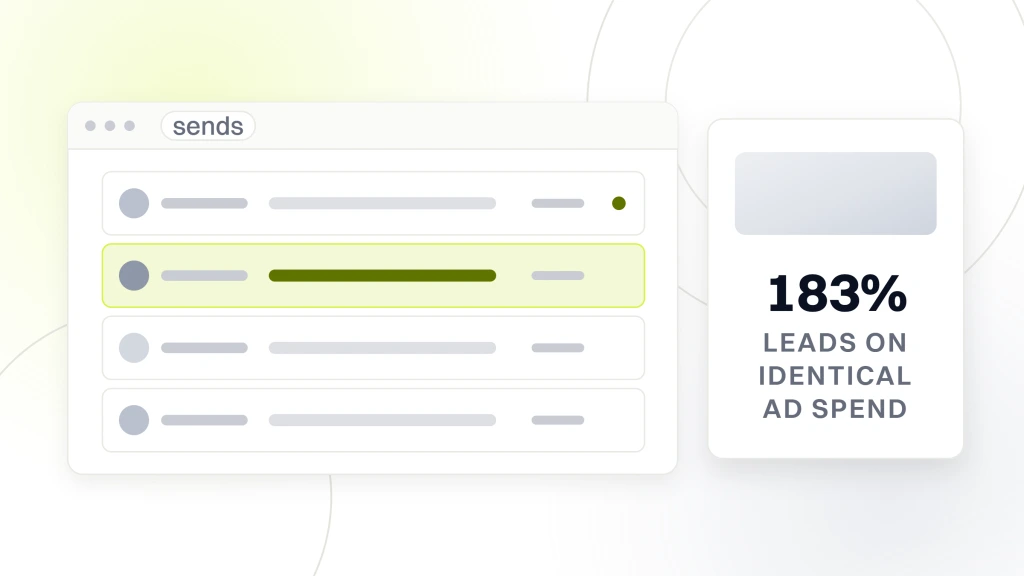
Firms that build 40 workflows spend more time maintaining the automation than running the marketing. Nine workflows cover every touchpoint from cold visit to closed engagement to referral loop. Adding a tenth workflow rarely produces a measurable pipeline gain and always adds maintenance overhead. Trilby Misso Lawyers, a Queensland personal-injury firm, ran six of these nine workflows on Facebook and Instagram traffic. Leads climbed 183 percent and client acquisition rose eight times on identical ad spend. The stack was small on purpose.
The Gillette Law Firm case study we published shows the same discipline applied to organic search. Gillette Law Firm grew from 6 monthly organic visitors to 2,900 monthly organic visitors after we deployed an SEO-first plan feeding a lean automation stack. Keyword rankings climbed from 92 to 1,300. Top-3 placement locked in for the highest-value truck-accident queries in Colorado. The automation captured every one of those new organic leads and routed them to the right partner. That is a 48,233 percent traffic gain paired with a workflow set that closed cases, not one that produced dashboards.
Professional services marketing automation platforms compared honestly
Professional services marketing automation platforms split into three real contenders. HubSpot Marketing Hub, Salesforce Marketing Cloud, and ActiveCampaign paired with Pipedrive. Every other option (Marketo, Pardot, Mailchimp) either overshoots the firm’s needs or undershoots the integration requirements. Pick from the three real contenders and skip the endless RFP that costs three months and delivers the same conclusion.
The three-platform decision table
| Platform | Monthly cost | Setup time | Best fit firm size | Learning curve |
|---|---|---|---|---|
| HubSpot Marketing Hub Professional | $800 to $2,400 | 3 to 5 weeks | 3 to 40 attorneys or consultants | Low to moderate |
| Salesforce Marketing Cloud plus Sales Cloud | $2,500 to $7,000 | 3 to 6 months | 25-plus attorneys, complex sales cycle | Steep |
| ActiveCampaign plus Pipedrive | $300 to $900 | 2 to 4 weeks | Solo to 15 attorneys, budget-conscious | Low |
| HubSpot Marketing Hub Enterprise | $3,600 to $6,500 | 6 to 10 weeks | Mid-market firms with dedicated ops | Moderate |
Why HubSpot wins the middle market
HubSpot Marketing Hub Professional at $800 to $2,400 monthly covers the nine workflows above with room to grow into a full professional services automation deployment. Setup runs 3 to 5 weeks with a competent partner. Partners can learn the CRM in a lunch-and-learn. Reports render in one click. The trade-off is that Enterprise features (custom objects, advanced attribution, dedicated IP) sit behind the $3,600 tier. Most firms under 40 attorneys never need those features. Firms over 40 usually do. Our Professional Services Website Design Agency team wires the HubSpot forms into new landing pages during the first-week build so the automation goes live on day one.
How much does marketing automation cost for a professional services firm
Marketing automation runs $300 to $900 monthly for a solo consultant on ActiveCampaign plus Pipedrive, $1,200 to $3,000 for a small firm on HubSpot Professional, and $4,000 to $12,000 for a mid-market firm on HubSpot Enterprise or Salesforce. Add 20 to 40 hours of setup labor at $150 to $250 per hour. Those numbers are the license plus the direct install cost. The content cost sits on top.
The hidden cost most firms miss
The software license is 30 to 40 percent of the real cost of a working automation program. The other 60 to 70 percent is content. The email copy, the guide PDFs, the landing pages, the workflow logic. Firms that budget only for the license end up with a $2,400 monthly HubSpot seat and zero live automations because nobody wrote the emails. Budget the content work explicitly. A working nine-workflow deployment needs 40 to 80 hours of email and asset writing on top of platform setup.
Ongoing monthly investment past year one
Year one gets front-loaded with setup. Year two and beyond, the monthly cost stabilizes at the license fee plus 8 to 20 hours of optimization work per month. Optimization covers A/B testing subject lines, revising workflow logic, tuning lead scoring, and adding new sequences as the firm launches new practice areas. Firms that skip ongoing optimization see performance decay 15 to 25 percent per year as the workflows drift out of alignment with the current buyer journey. Tune every month or the automation slowly stops earning its keep.
Where our SEO retainer tiers slot in
Content is the constraint on automation ROI, and content pairs with an SEO program that keeps qualified traffic flowing into the workflows. Our SEO retainer tiers run $999 for Visibility, $1,499 for Traffic, $2,499 for Scale, and from $4,500 monthly for Enterprise. Visibility covers a solo consultant filling one nurture sequence. Traffic covers a 3 to 15 attorney firm running the full nine-workflow deployment. Scale and Enterprise cover multi-office firms feeding paid and organic pipelines into the same automation stack. Pick the tier that matches the workflow count and the pipeline target, not the vanity of the firm size.
Integrations for inbound marketing professional services companies rely on
Integrations for inbound marketing professional services companies rely on cover six categories. CRM sync, phone tracking, calendar booking, e-signature, billing, and analytics. Every integration on the wish list beyond those six is scope creep. Every integration inside those six adds a measurable pipeline gain. Wire the six in the first 30 days of platform deployment and every downstream workflow works.
The six-integration default checklist
- CRM sync. HubSpot Sales Hub, Salesforce Sales Cloud, or Pipedrive as the single source of truth.
- Phone tracking. CallRail or WhatConverts logging every marketing call against a contact.
- Calendar booking. Calendly, HubSpot Meetings, or Chili Piper for one-click consult booking.
- E-signature. DocuSign, Adobe Sign, or PandaDoc for engagement letters and retention agreements.
- Billing and time tracking. Clio, PracticePanther, or QuickBooks Online for closed-engagement handoff.
- Analytics. Google Analytics 4 plus Google Search Console feeding into the automation platform.
Why practice-management integrations matter more than partners realize
Practice-management integrations (Clio for law, PracticePanther for boutiques, QuickBooks for accounting) close the loop between marketing and billed work. Without them, the firm cannot report revenue attributed to marketing because signed engagements live in a separate silo. With them, the monthly report shows dollars spent on marketing next to dollars closed from marketing. Every automation program at a professional services firm earns its year-two budget on the strength of that reporting connection alone. Firms that skip the practice-management wire keep repeating the same argument at every partner meeting.
The best professional services firm marketing automation tool for each size
Picking the best professional services firm marketing automation tool comes down to firm size, sales-cycle complexity, and existing practice-management system. There is no single winner across all firm sizes. There are correct picks per bracket. Match the tool to the bracket, deploy inside 4 to 8 weeks, and skip the 90-day vendor bake-off that never produces a materially better decision than the bracket rule delivers on day one.
Bracket-by-bracket pick
Solo consultant to 3 partners. ActiveCampaign plus Pipedrive at $300 to $900 monthly. Fastest to deploy, easiest to learn, lowest ceiling. 3 to 15 attorneys or consultants. HubSpot Marketing Hub Professional at $800 to $2,400 monthly. The middle-market default. 15 to 40 attorneys with a real sales cycle. HubSpot Marketing Hub Professional plus Sales Hub, or HubSpot Enterprise if the sales operations team wants custom objects. 40-plus attorneys with a complex sales cycle. Salesforce Marketing Cloud plus Sales Cloud, budgeted at $4,000 to $12,000 monthly with a 3-to-6-month implementation timeline.
When to skip HubSpot for Salesforce
You skip HubSpot for Salesforce when the sales cycle has more than 8 stages, when the firm has a dedicated Salesforce administrator on staff, or when 30 or more partners each maintain their own book of business inside the same instance. Under those conditions Salesforce’s customization pays for the implementation cost. Above those thresholds, Salesforce wins on control and reporting depth. Below them, HubSpot wins on speed to value and total cost of ownership by a wide margin.
Using HubSpot Marketing Hub as professional services marketing software
HubSpot Marketing Hub as professional services marketing software works when the deployment stays disciplined. Turn on nine workflows, wire the six integrations, define the lead-scoring model, and stop. Every additional feature the platform offers is optional. Firms that flip on 40 features waste six months in configuration. Firms that stay disciplined go live in 30 days.
The lead-scoring model that works for law and consulting
Score demographic fit (job title, industry, firm size) 0 to 40 points. Score behavior (guide download, pricing page visit, consult page visit) 0 to 60 points. Contacts above 60 total points get routed to a partner. Contacts 30 to 60 stay in nurture. Contacts under 30 stay on the newsletter. Every professional services firm we set up starts with this model and tunes the thresholds inside 60 days. Firms that build 200-point scoring models with 40 criteria produce sales confusion, not qualified handoffs.
Workflow triggers that keep the sales team moving
Every score threshold trigger fires a real-time notification to the assigned partner. Every notification includes contact name, firm or company, source campaign, last three activities, and a one-click link to the CRM record. Partners respond inside the SLA window because the notification carries enough context to act on immediately. Firms that send blank “lead assigned to you” notifications see 40 to 60 percent slower response times and lose the warm-lead advantage.
Professional services marketing automation workflows in detail
Professional services marketing automation workflows perform their job when the logic matches the real buyer journey. Every trigger reflects a real signal. Every branch handles a real user response. Every exit ties to a real sales outcome. Workflows that split on assumed behavior die inside 90 days because the assumed behavior never matches the real behavior. Build the workflows against the actual funnel, not against a template pulled from a vendor blog.
The downloaded-guide nurture sequence that closes consults
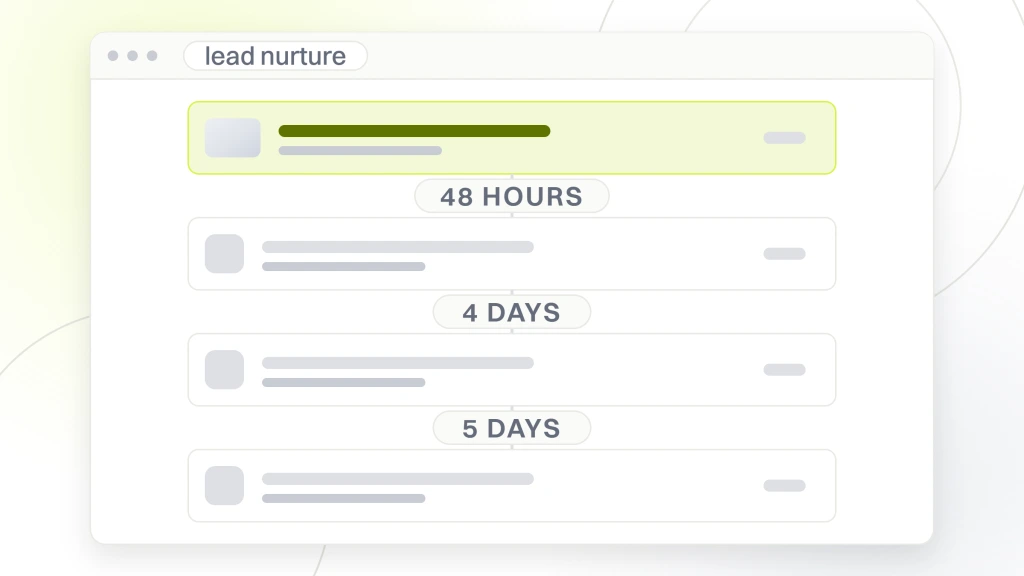
Send the guide instantly. Wait 48 hours, send a follow-up that references a specific insight in the guide. Wait 4 days, send a case study from the same practice area. Wait 5 days, send an invitation to book a 30-minute consult with a partner. Wait 7 days, send a soft “still relevant” check-in. Wait 10 days, exit the workflow to the long-term newsletter. Five touches over 26 days. This sequence converts 6 to 14 percent of downloaders to booked consults at professional services firms we work with, versus 1 to 3 percent for firms that send only the initial download and go quiet.
The no-show recovery workflow that saves the calendar
Contact does not show for the booked consult. Fire a workflow. 90 minutes after the miss, send a soft email asking if they need to reschedule. 2 days later, send a case-study email that reinforces the practice area. 6 days later, send one more re-booking offer. Firms that run this 3-touch sequence re-book 25 to 45 percent of no-shows. Firms that do nothing after a no-show re-book almost none. The workflow costs zero to implement once the platform is live.
Sales funnel structure for professional services firms
Sales funnel structure for professional services firms has four stages. Unknown visitor, known contact, qualified consult, signed engagement. Each stage has a clear entry trigger, a clear exit criterion, and a clear owner. Firms that skip stage definitions run pipelines full of contacts nobody knows what to do with. Firms that define the stages route contacts cleanly and forecast pipeline accurately 3 quarters out.
The four-stage funnel definition
Unknown visitor becomes known contact when a form fill or a chat interaction captures an email. Known contact becomes qualified consult when the lead score crosses 60 or when the contact books a consult directly. Qualified consult becomes signed engagement when the engagement letter is countersigned. Each transition triggers a workflow. Each workflow has a specific owner. Marketing owns the first two transitions. Sales owns the last two. The handoff is a hard event, not a fuzzy line drawn on a Miro board.
Conversion rates by stage that firms should benchmark against
Unknown to known. 2 to 4 percent of organic sessions, 6 to 12 percent of paid landing-page sessions. Known to qualified consult. 4 to 9 percent monthly on a healthy nurture. Qualified consult to signed engagement. 20 to 45 percent depending on practice area and consult quality. Firms falling well below these bands have a specific broken stage to fix. Firms hitting the high end typically have tight sales-marketing SLAs, real workflow logic, and a partner group that shows up for the consult on time.
Reporting on marketing automation that keeps the program funded
Reporting on marketing automation for a professional services firm needs to fit on one page. Monthly spend, contacts added, qualified consults, engagements signed, revenue attributed. 5 numbers, trended against the prior 6 months. Any dashboard that requires a 40-slide walk-through is an agency comfort blanket, not a partner report. Every deployment we run for a professional services firm reports against this one-page format. Partners read one page. They act on one page. Build one page.
The five-line monthly automation report
Line 1. Total marketing spend across all channels this month. Line 2. Net new contacts added to the CRM. Line 3. Qualified consults booked (lead score above 60 or direct consult request). Line 4. Engagements signed and total contract value. Line 5. Cost per signed engagement across the whole marketing program. Trend each line against a rolling 6-month average. That five-line report answers every question a partner group will ask in the monthly review.
What to do when the numbers stall
If contacts stall, look at top-of-funnel channels. If qualified consults stall, look at the nurture workflows and the lead-scoring model. If engagements signed stall, look at consult quality and the sales handoff. Each stage has a specific fix. Firms that treat a stall as “the automation is broken” waste weeks looking in the wrong place. Firms that walk the four-stage funnel diagnose the actual problem in one afternoon.
Putting marketing automation professional services in motion this quarter
You do not need every piece of this guide operating on Monday to move marketing automation professional services forward. You need 3 commitments from firm leadership. One platform pick made and stuck to, a named ops owner accountable for deployment, and a monthly report tied to the five-line dashboard. With those 3 in place the deployment runs on rails and the first workflows go live inside 45 days.
Where to start on day one
Buy the platform. Wire the CRM integration. Set up lead capture on the top 3 landing pages. Launch the new-lead intake workflow with the notification. That single 5-day sprint teaches the firm how the tool actually behaves versus how the vendor pitched it. Everything else stages behind that first sprint. Firms that start with the workflow library rather than the intake workflow always drown in configuration and never go live.
When to hire an outside implementation partner
Hire an outside partner when the in-house ops team is stretched, when the firm has no HubSpot or Salesforce expertise on staff, or when the deployment has stalled past 90 days. A specialized implementation partner delivers the working nine-workflow deployment in 30 to 60 days versus 90 to 180 days for a firm learning the platform from scratch. Our Professional Services Marketing Retainer from $1,499/mo covers the workflow build, the integration wiring, and the monthly reporting. Pair it with the Professional Services Marketing Agency hub for the wider strategy stack, and with the Professional PPC Services That Lower Consult Cost team when the automation needs paid demand feeding into it. Small stack, tight workflows, clean reporting.