Your service pages either rank on the strength of on-page SEO, or they sit on page four for the same reason. On page SEO services healthcare providers really need cover 7 items. Title tags, meta descriptions, headings, content depth, internal linking, image optimization, and schema markup. Every item carries a healthcare-specific twist generic SEO advice misses. Layer these fixes on top of a solid healthcare SEO foundation to compound the gains. Get them right on the top 10 service pages and rankings move inside one re-crawl cycle. You will read the 7-item checklist, healthcare expertise signals, the internal linking structure, one proof point from a 14-location group, and a 90-day plan.
Short version. On-page work is the cheapest layer to fix and the highest return per hour. Fix items 1 to 3 first. That gets you 80% of the gain for 20% of the effort. I have run this sequence across 14-location pelvic-pain groups and solo dental offices, and the top 3 always move first.
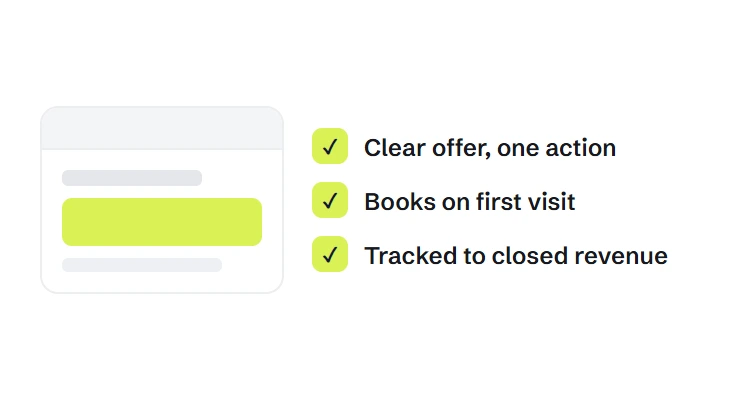
The 7-Item On Page SEO Services Healthcare Checklist
The checklist opens with title tags and closes with schema markup. The order is not arbitrary. Cost-to-return runs high at the top and steadies at the bottom. Fix items 1 through 3 on your top 10 money pages and you capture the majority of the ranking gain available on the whole site. Skip the sequence at your own risk.
- Title tags. Focus keyword front-loaded, city or service line included, under 60 characters. Rewrite the top 10 first.
- Meta descriptions. 150 to 160 characters, active voice, one power word, focus keyword in the first 60 characters.
- Headings. One H1 per URL carrying the focus keyword. H2s cover search intent, secondary keywords in H2 or H3 text.
- Content depth. 700 to 1,200 words on condition and service pages. 350-word thin pages get outranked every time.
- Internal linking. Money pages within 3 clicks of the homepage. Descriptive anchor text pointing to the target page.
- Image optimization. WebP under 100 KB for hero images, descriptive alt text, width and height attributes on every img tag.
- Schema markup. MedicalBusiness for locations, FAQ schema on service pages, Physician schema on team bios.
Each item pays back on its own timeline. Titles move first, schema earns rich results last. That layered rollout is normal. Anyone selling you a same-week ranking jump is selling fantasy.
Healthcare Website SEO Internal Linking That Compounds
Healthcare website SEO on internal linking follows 3 principles. Push authority to money pages. Cluster related content around pillar pages. Keep every money page within 3 clicks of the homepage. Practices that run internal linking as a deliberate exercise outrank practices that let links happen by accident, and the gap widens each re-crawl.
The money page priority
Treat the homepage and top-nav pages as the highest-authority anchors on the site. Push that authority to money pages with direct internal links from the homepage, from every major service page, and from the top 3 highest-traffic articles. A dental group in Cincinnati that added 4 homepage links to its Invisalign page picked up 3 positions inside 6 weeks. Not a rewrite. Just links.
The pillar and cluster pattern
Pillar pages cover a broad topic. Cluster pages cover subtopics. Every cluster links up to the pillar. The pillar links down to every cluster. That two-way pattern concentrates topical authority. A dental implants pillar linked to and from 10 cluster pages ranks better than an isolated page with no cluster support. Same goes for pelvic pain, cardiology, and every specialty with sub-conditions patients search separately.
Anchor text discipline
Anchor text tells Google what the linked page is about. Use the target keyword or a close variant. Skip Click here, Learn more, and Read more on internal links. Practices that discipline anchor text gain 2 to 5 spots inside one re-crawl. Treat every internal link as a small ranking vote and label the vote clearly.
SEO Best Practices for Healthcare Websites in 2026
SEO best practices for healthcare websites cover 6 items that reach past generic SEO advice. Practices that follow the healthcare playbook outrank practices running generic SEO by 2 to 5 positions on average for the same target keyword. These are the E-E-A-T signals Google raters explicitly look for on YMYL content.
- Named clinician byline with credentials on every clinical page.
- Dated review line within the last 18 months.
- At least one citation to a primary source like the CDC, NIH, or a peer-reviewed journal.
- Insurance and payment information visible above the fold on service pages.
- Real patient reviews or testimonials with attribution.
- Booking or contact CTA repeated at multiple scroll depths.
The credentialed byline is the biggest signal
Google treats healthcare pages as YMYL content and applies stricter quality thresholds. A named clinician byline with credentials is the single strongest signal a practice can add to a clinical URL. Missing it drops the page 2 to 3 positions. Adding it moves the page back up inside 2 to 6 weeks. Cheapest ranking gain in healthcare SEO, and it lands on the page in 10 minutes.
Dated review lines and freshness signals
Every clinical page needs a dated review line. Reviewed by [Clinician Name, Credentials] on [Date]. Practices that add dated review lines and refresh them annually outrank practices with stale content by 2 to 3 positions. Set a calendar reminder to re-review every 18 months. If the medical facts have not changed, refresh the date and one paragraph. Google reads that as an active editorial hand.
Primary source citations
Cite the original source, not the article that quoted it. The CDC, NIH, peer-reviewed journals, and clinical society guidelines are the primary sources Google raters weight highest. Pages that cite primary sources on clinical content outperform pages that cite blog posts. One or two well-placed primary citations per clinical page gets the job done. Over-citing looks spammy.
Image Optimization for Healthcare SEO
Image optimization for healthcare SEO is the item most practices skip and then wonder why Core Web Vitals fails. Every image needs 3 treatments. WebP under 100 KB. Descriptive alt text with the target keyword. Width and height attributes to prevent layout shift. Skip any one and mobile Core Web Vitals fails, which drops rankings on mobile-first indexed pages across the site.
Compression and format for SEO for healthcare websites
WebP is the default now. Every hero image compressed under 100 KB. Every in-article image under 60 KB. Practices running uncompressed PNG hero images pay for it on every mobile page load. Start with the 4 hero images that tank PageSpeed on your top money pages. Automate the rest and get back to writing pages that convert traffic to booked patient visits.
Alt text discipline
Alt text serves accessibility first and SEO second. Describe what the image shows in a plain sentence. Include the target keyword where natural. Skip stuffing variants. Practices that write clean alt text pass ADA compliance and pick up minor gains on image search.
Width and height for CLS
Every img tag needs explicit width and height attributes. Missing them causes cumulative layout shift, which fails Core Web Vitals. Two-hour developer job to sweep the site once. Zero-hour maintenance after that if the theme templates are set up correctly. See Technical SEO for Healthcare for the deeper walkthrough on layout shift.
How Structured Data Improves Healthcare SEO
How structured data improves healthcare seo comes down to one mechanic. Schema tells Google exactly what the page is about, which earns rich results in the SERP. Sites that ship 3 schema types outrank plain HTML sites by picking up expandable answers, knowledge panel data, and star ratings inside the search result. Rich results push click-through up 15 to 30% at the same rank, per multiple studies.
MedicalBusiness schema on locations
Every location page ships MedicalBusiness or LocalBusiness schema with the full property block. Name, address, phone, hours, geo coordinates, medical specialty, and accepted insurance. Google fills the knowledge panel from that markup. Two hours of developer work per location template. One-time cost, permanent gain.
FAQ schema on service pages
FAQ schema on service pages earns expandable answers inside the search result. Ship 5 to 7 question and answer pairs per service page, marked up with FAQPage JSON-LD. Google surfaces the top 2 or 3 as expandable rich results. That single treatment pushes click-through up 10 to 25% at the same rank. The FAQ block also feeds voice-search assistants that pull healthcare answers straight from marked-up content.
Physician schema on team pages
Every clinician bio ships Physician schema with name, credentials, medical specialty, hospital affiliation, and available services. That markup connects the clinician to the practice in Google knowledge graph, which strengthens the E-E-A-T signal on every URL that clinician contributed to. Bio pages with Physician schema pick up People Also Ask results.
Local On-Page Signals for Healthcare
For local ranking, 4 signals every location page has to carry. NAP block visible above the fold. City and neighborhood names in the H1, H2, and body copy. Directions and parking information written for a first-time patient. Schema markup for LocalBusiness or MedicalBusiness with the full property block. Skip these 4 and the local ranking benefit stays on the table.
NAP block placement
Name, address, phone visible above the fold on every location page. Not tucked in a footer that scrolls off screen. Google local ranking reads NAP prominence as a relevance signal. The same NAP string has to match Google Business Profile, Yelp, and every directory citation, character for character.
City and neighborhood mention density
Every location page needs the city name in the H1, at least one H2, and 3 to 5 times in body copy. Neighborhood names help disambiguate metros with multiple submarkets. Cincinnati works. Cincinnati-Norwood works better. Cincinnati-Norwood-Hyde Park-Oakley works for practices drawing patients from multiple neighborhoods across the metro.
Directions and parking as trust signals
Real driving directions from major landmarks. Parking availability. Public transit access. These read as relevance signals to Google and trust signals to first-time patients. Two paragraphs of directions per location page gain half a position on average against locations without them. Patients screenshot parking notes before their first visit.
A Real On Page SEO Services Healthcare Project
Pelvic Rehabilitation Medicine, a 14-location pelvic pain group across 10 states, ran the on-page layer as the first phase of a retained SEO engagement. The on-page rewrites produced most of the keyword growth that hit 174% year over year and organic traffic growth that hit 166% in the same window. Same play as the checklist above. No shortcuts.
What the work covered
Every condition page rewritten from 340 to 750 words on the 6-section structure. Every service page got a named clinician byline. Every page got a dated review line. Title tags and meta descriptions rewritten across the top 40 pages. Internal links added from the homepage and condition hub to every money page. Schema shipped on locations and service pages in the same quarter.
What moved first
Title tag rewrites moved click-through rate inside 2 weeks, since the crawler picks them up next visit. Content depth expansion moved ranking positions over 4 to 6 weeks. Schema markup earned rich results inside 4 to 8 weeks. Internal link mapping compounded ranking gains over the same window. Every layer moved on a different timeline, which is normal.
Numbers at 90 days
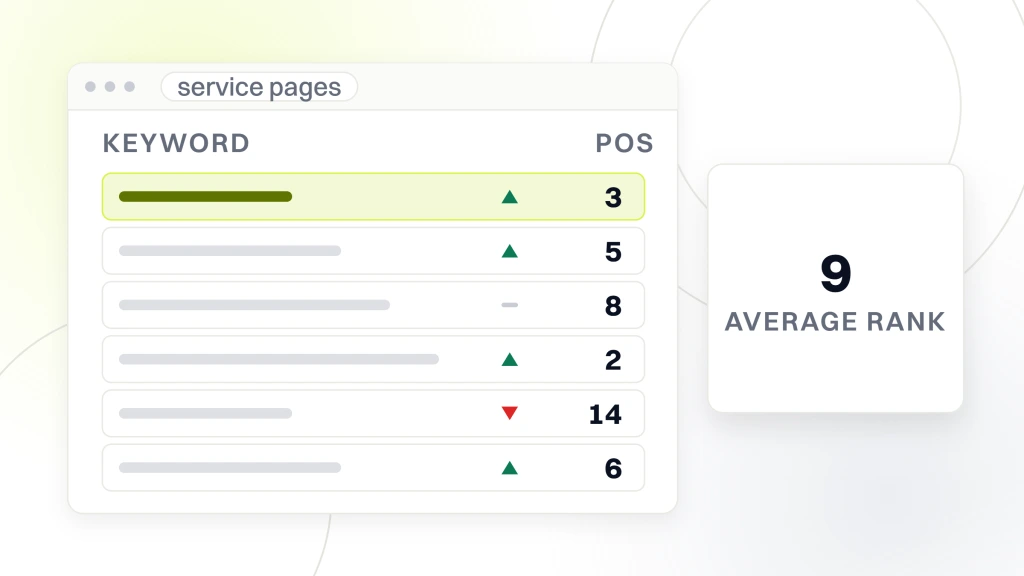
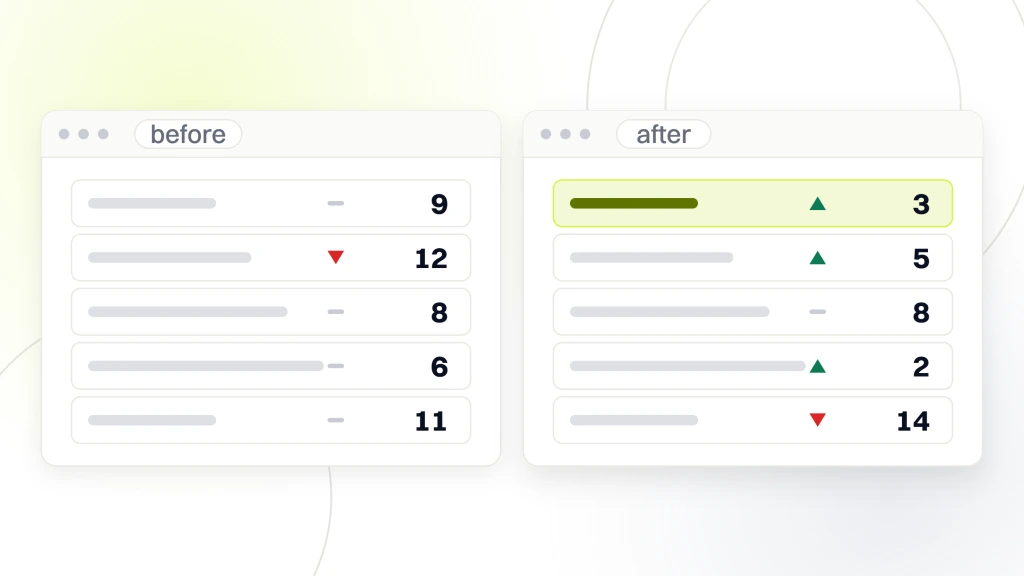
Average keyword rank moved from position 18 to position 9 across the target set. Rich results appeared on 22 of 40 target pages. Booked appointment volume started compounding at month 4. Final numbers on the case study page. 174% keyword rank growth. 166% organic traffic growth. See our Healthcare SEO Services for the retained engagement.
The 90-Day Plan You Can Run This Quarter
The 90-day plan runs in 3 phases. Days 1 to 30 hit titles, meta, and internal linking on the top 10 money pages. Days 31 to 60 rewrite content depth and add clinician bylines. Days 61 to 90 ship schema markup and image compression. Every phase moves rankings on a different timeline, which is why the sequence matters.
Days 1 to 30. Titles, meta, and internal links
Pull top 10 pages by organic traffic from Search Console, and run a quick healthcare SEO audit on each one to catch title, meta, and schema gaps before you rewrite. Rewrite the title tag and meta description on each, front-loading the focus keyword. Add 3 to 5 internal links to each money page from the homepage, primary nav, and the top 3 highest-traffic articles. That 30-hour sprint moves click-through rate inside 2 weeks and ranking positions inside 6 weeks.
Days 31 to 60. Content depth and E-E-A-T
Expand each of the top 10 money pages from a thin 300-word draft to 700 to 1,200 words. Add the 6-section healthcare structure. Add a named clinician byline and a dated review line under the H1. Cite one primary source per clinical page. That work strengthens YMYL trust signals and moves rank 2 to 5 spots inside 4 to 6 weeks.
Days 61 to 90. Schema and image optimization
Ship MedicalBusiness schema on every location page. Ship FAQPage schema on every service page. Ship Physician schema on every clinician bio. Compress every hero image to WebP under 100 KB. Add width and height on every img tag. Rich results appear inside 4 to 8 weeks after the schema goes live. See Local SEO for Healthcare for the map-pack companion play.
On Page SEO Services Healthcare Decision Summary
You now have the 7-item checklist, the E-E-A-T signals, the internal linking structure, one proof point, and the priority order. The decision reduces to 2 questions. Which 10 pages are the money pages, and who runs the work quarter after quarter.
Signals for in-house work
You have a writer comfortable with keyword research and healthcare depth. You have CMS access. You have a clinician willing to review every clinical page. Under those 3 conditions, in-house work costs 5 to 15 writer hours per page and produces the same ranking impact as outsourced work at lower total cost.
Signals for outsourcing
You do not have a writer with healthcare depth. Your top 10 pages have not been updated in 18 months. You want on-page work running at a defined pace without you owning the schedule. When you are ready to run this across the whole practice, our Healthcare Marketing Agency for Patient Growth covers the full stack, and the retainer starts at $1,499 a month.