Orthodontist Google Ads management is a specialty paid search game with a small keyword universe, a fast decision cycle, and a $4,800 to $7,200 case value that changes the math. A single booked consult that closes covers a full month of ad spend twice over. Parents search on their phone in the school pickup line. Teens search on TikTok and cross over to Google to price braces or Invisalign. The playbook that books orthodontic consults looks nothing like the one that books cleanings. This guide walks the exact operating model we run on live orthodontic accounts, from consult-focused keyword frames and campaign structure to the ROI math that fills a real consult calendar.
You will finish this in nine minutes with a full framework, a budget calculator by practice size, and specific numbers you can put to work this quarter. The same rhythm works whether you run a solo orthodontist in a mid-size metro at $1,800 per month or a three-doctor group at $6,500 per month. What changes is the number of location campaigns and the shape of the negative-keyword list, not the underlying discipline behind orthodontist Google Ads management.
Orthodontist Google Ads management runs on consult-first buyer intent
Orthodontic paid search runs on a small keyword universe with a fast decision cycle. General dental PPC assumes 200 plus keywords per campaign and multiple service categories. Orthodontist Google Ads management boils down to five buyer categories. Braces search. Invisalign search. Kid-orthodontic search. Adult-orthodontic search. Financing and payment plan search. Every campaign maps to one category cleanly. Mix them and Smart Bidding trains on the wrong signal.
The account structure has to fit the parent buyer, not the ad platform’s default. A parent searching “Invisalign for teens near me” wants price, timeline, and financing on one page inside 15 seconds. A teen searching “braces cost” wants the parent conversation started for them with a price band and a text-us button. Orthodontist Google Ads management done right routes each intent to a matched landing page and lets the parent close themselves. The account that treats parents like general dental patients loses 40 to 60 percent of qualified traffic before the second page view.
Search volume math for orthodontic keywords
Head terms like “orthodontist near me” carry 40,500 monthly US searches. Regional variants like “orthodontist Denver” drop to 1,600 monthly searches. Long-tail buyer queries like “Invisalign for teens Denver cost” sit at 90 to 210 monthly searches. Total buyer-intent search volume in a mid-size metro rarely exceeds 3,800 monthly searches across all keywords combined. Small volume, high case value. A single booked and closed consult at $6,000 case value justifies four months of $1,500 monthly ad spend on its own.
Consult calendar as the true conversion event
The form fill is not the conversion. The scheduled consult is. Orthodontic accounts that optimize toward form fills usually see 3 to 5 form fills per week and 1 booked consult from that batch. Optimizing toward booked consult events, tracked via CRM webhook back to Google Ads, shifts the account away from the low-intent tire-kicker leads. Practices that flip this switch inside the first 60 days typically see cost per booked consult drop 25 to 45 percent because Smart Bidding trains on the real revenue signal. That is the single highest-return change in an orthodontist Google Ads account.
Keyword frames for orthodontist Google Ads management
Group orthodontist Google Ads management keywords into five buyer-intent frames. Braces intent. Invisalign intent. Kid orthodontic intent. Adult orthodontic intent. Financing intent. Each frame gets a dedicated campaign, landing page, and ad copy set. Five frames give the account clean signal and a landing page that speaks to the specific problem the parent typed into the search bar.
Braces queries like “kids braces near me” and “braces cost Denver” carry the highest volume and lowest case value per lead. Invisalign queries like “Invisalign for teens” and “clear aligners cost” carry mid volume and higher case value. Adult orthodontic queries like “adult braces” and “Invisalign for adults” carry low volume and highest case value. Route each frame to a matched landing page. Mixing the three on one page loses all three segments and drops conversion rate 30 to 45 percent.
- Braces search: kids braces, teen braces, braces cost
- Invisalign search: clear aligners, Invisalign teens, Invisalign price
- Kid orthodontic search: pediatric orthodontist, kids orthodontic exam
- Adult orthodontic search: adult braces, adult Invisalign, adult clear aligners
- Financing search: orthodontic payment plan, monthly braces payment
Negative keyword hygiene for orthodontic accounts
Pull the search terms report every Friday. Add 10 to 20 negatives per week. Look for job-seeker queries such as “orthodontist jobs” and “dental assistant salary.” Look for consumer DIY queries such as “DIY braces” and “at-home aligners.” Look for competitor-comparison queries you do not want to compete on if your practice does not carry SmileDirectClub inventory. Every negative added saves $6 to $18 next week because orthodontic keywords cost $8 to $28 per click.
Campaign structure for orthodontist Google Ads management accounts
Orthodontist Google Ads management accounts run 4 to 7 campaigns, not 15. Every extra campaign splits budget thinner and starves Smart Bidding of training data on already-thin keyword volumes. The right structure starts with one Invisalign search campaign, one braces search campaign, one adult orthodontic search campaign, one branded search campaign, and one Local Service Ads campaign if the practice qualifies for Google Screened status. Add a Performance Max campaign only after the search campaigns reach 30 plus conversions per month combined.
Orthodontist Google Ads management works best on manual CPC for the first 4 months. Smart Bidding needs 30 plus conversions per campaign per month to train, and orthodontic campaigns rarely produce that volume in year one. Manual bidding with a $8 to $28 CPC lets the account control spend precisely as the pipeline builds. Switch to Maximize Conversions or Target CPA only after the campaign holds 30 plus monthly booked-consult conversions for 2 consecutive months.
Branded campaign is not optional
Every orthodontic practice needs a branded campaign to defend against competitor bids on the practice name. Branded campaigns cost $2 to $5 per click and convert at 18 to 32 percent. Skipping the branded campaign lets a competitor snag parents already searching your name after a referral or a school playground conversation. Practices that add a branded campaign after 6 months without one typically see a 25 to 40 percent gain in overall PPC conversions inside 30 days from recovered brand searches alone.
Local Service Ads for Google Screened practices
Orthodontic practices that qualify for Google Screened status should run LSAs alongside search. LSAs cost per lead (pay per lead, not per click) runs $22 to $75 in orthodontics and books 30 to 55 percent of orthodontic paid-search consults for eligible practices. Google’s Local Services Ads documentation covers the eligibility requirements. LSAs are not available in every market, but where they are, they consistently outperform search on cost per booked consult by 20 to 40 percent.
Budget and cost per booked consult benchmarks
Orthodontist Google Ads management budgets scale by consult volume target, not practice size. A solo orthodontist targeting 15 to 25 booked consults per month runs $1,800 to $3,200 per month. A two-doctor practice targeting 30 to 50 booked consults per month runs $3,200 to $5,500 per month. A three-doctor multi-location group targeting 60 to 100 booked consults per month runs $5,500 to $9,500 per month. The larger the consult volume target, the higher the CPC and the wider the geographic radius, and both drive the budget floor up.
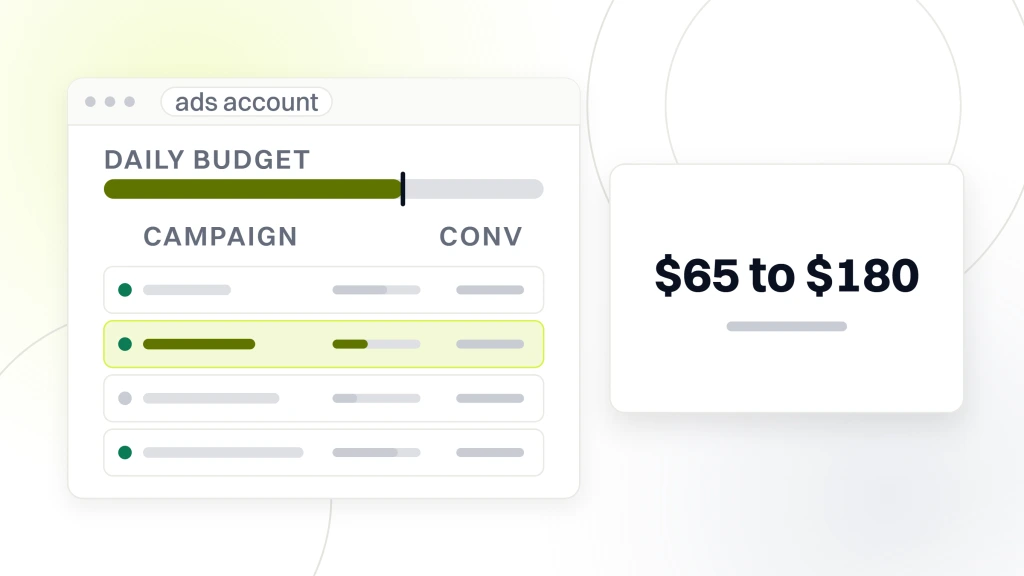
Cost per booked consult runs $65 to $180 across orthodontic accounts. Cost per closed case (a booked consult that signs a contract) runs $180 to $520. At a $6,000 average case value, cost per closed case at $520 represents an 11 to 1 return on ad spend. That math holds when the account routes calls and forms to booked consults, not to raw form volume. Practices that stop at form volume rarely see the closed-case ROI because Smart Bidding never sees the closed-case signal it needs to optimize toward.
| Practice size | Monthly budget | Cost per booked consult | Cost per closed case |
|---|---|---|---|
| Solo (1 doctor) | $1,800 to $3,200 | $65 to $140 | $180 to $360 |
| Small (2 doctors) | $3,200 to $5,500 | $70 to $160 | $200 to $420 |
| Mid (3+ doctors, multi-loc) | $5,500 to $9,500 | $85 to $180 | $240 to $520 |
| DSO orthodontic (10+ loc) | $9,500 to $28,000 | $95 to $200 | $280 to $580 |
Weekly pacing on orthodontic budgets
Check budget pacing every Monday morning. On a $3,500 per month budget, one runaway Invisalign campaign can burn $420 in the wrong ad group and cost the week. Weekly checks fix pacing inside 24 hours. Orthodontic accounts that check monthly usually catch pacing issues three weeks late and lose 15 to 25 percent of the month’s productive budget to drift. That drift is the silent killer on tight orthodontic budgets.
Landing pages for orthodontist paid search
Every campaign needs a matched landing page. Not the homepage. Not the generic services page. A dedicated page carrying the case type in the H1 (Braces for kids, Invisalign for teens, Adult clear aligners), a price band above the fold, a financing offer, one trust signal (rating, years, doctor’s board certification), and a click-to-book calendar embed. Practices that route paid clicks to the homepage burn 45 to 65 percent of the traffic before the parent reads anything. That is the single biggest budget leak in orthodontist Google Ads management.
Landing page conversion rate carries every orthodontist Google Ads management account. A 4 percent click-through rate with a 2 percent landing page conversion rate is a rounding error at $18 CPC. A 4 percent click-through rate with a 6 percent landing page conversion rate is the engine that fills the consult calendar. The landing page pulls its weight or it drags the whole account down. Every $18 of ad spend needs a landing page that respects it.
Above-the-fold rules for orthodontic pages
Above the fold needs five items. Case-type H1 matching the ad. Price band or financing offer. One trust signal (Google rating, doctor’s board certification, years in practice). Book-consult calendar embed or click-to-call for mobile. Parent-friendly reassurance (free consult, no obligation, kid-friendly office). Miss any one and conversion rate falls 20 to 35 percent. Add all five and the same ad spend books 40 to 65 percent more consults with no other change.
Case study on orthodontic paid search inside a multi-location DSO
Smile Design Dentistry runs orthodontic services across 50+ locations in Central Florida and Tampa Bay. We rebuilt their PPC on the same buyer-intent frame model, segmented every campaign by funnel stage and geography, and routed each frame to a location-specific landing page tied to the local market. Every location gets a dedicated campaign, per-location bidding rules, and a weekly negative-keyword pass. The account holds a monthly Google Ads spend well above the mid-tier orthodontic range, and cost per call dropped 30 percent and PPC conversion rate climbed 20 percent across the network.
The pattern the Smile Design Dentistry account proves out is that discipline scales linearly. Weekly negatives. Weekly pacing checks. Monthly reallocation by cost per booked consult. Quarterly full-funnel review. The account that spends $28,000 per month per location cluster and the solo practice that spends $2,400 per month run the same rhythm. What differs is the scale of the numbers, not the shape of the operating model. Practices that copy this cadence get 30 to 45 percent better cost per booked consult inside 90 days.
The lesson for orthodontic practice owners considering paid search. Weekly discipline beats fancy automation every time on orthodontic budgets. Add a $45 per month call tracking tool. Add 25 minutes per week to pull the search terms report. Add 45 minutes per month to reallocate budget by cost per booked consult. That is the whole of orthodontist Google Ads management in three tasks. Everything else is a $399 per month subscription that produces less than the free 70 minutes of weekly work.
Conversion tracking for booked consults
Orthodontist Google Ads management lives or dies on conversion tracking. Track every conversion action. Phone calls via CallRail or CallTrackingMetrics. Form fills via GA4 events. Book-consult confirmations via CRM webhook back to Google Ads. Chat interactions via chat-widget integrations. Every action needs a value tied to it so the account optimizes toward booked consults, not raw form fills. Practices that track only form fills usually see the account chase cheap leads at the expense of the phone calls that book higher-value consults. Google’s conversion tracking documentation covers the technical setup.
Audit conversion tracking every 90 days. Verify every action still fires on the correct trigger. Verify GA4 events still map to Google Ads conversions. Verify call tracking numbers still route to the front desk. Practices that skip the quarterly audit typically inherit a broken tracking setup at month 12 and lose two months of data quality to the fix. Wire the practice management system (Cloud 9, Dolphin, tops) into the flow so booked-consult events write back to Google Ads and Smart Bidding trains on real revenue signal.
Call tracking for orthodontic practices
Orthodontic accounts convert 55 to 75 percent of their PPC leads via phone because parents call to ask about financing before booking. Skipping call tracking means the account cannot see which keywords drive phone calls. That flies the account blind on 55 to 75 percent of the conversion volume. CallRail runs $45 per month for the small practice tier. It pays back in the first week by revealing which campaigns produce phone calls the form fill dashboard was missing. Track the call transcript through the conversion event to distinguish price-shopper calls from real consult-scheduling calls.
In-house versus agency for orthodontist Google Ads management
Under $2,000 per month in Google Ads spend, in-house management usually wins if the practice has 3 plus hours per week protected for it. Between $2,000 and $5,000 per month, the decision depends on whether the internal marketing lead has PPC depth. Above $5,000 per month, agency management pays back inside 90 days. The analytical depth needed exceeds what a part-time practice manager can maintain alongside other duties.
Dental-specialized agencies charge $800 to $2,400 per month for orthodontic accounts. General dental PPC agencies charge $500 to $1,600 per month but rarely understand the consult-book buying cycle well enough to earn back the difference. Our Google Ads management services retainer starts at $999 per month for a Launch tier, $1,499 per month for Growth, $2,499 per month for Scale, and from $4,500 per month for Enterprise-tier orthodontic accounts. Ad spend is billed separately. For dental verticals, the dental PPC services track adds call scoring and consult-focused optimization on top. Solo orthodontic practices often start on the PPC management services track and layer on the dental-specific rhythm at month 3.
Reference calls beat case study PDFs
When evaluating an orthodontic PPC agency, ask for two reference calls from active orthodontic clients on 6-month retainers. A one-page case study is a marketing artifact. A 20-minute reference call is real. Ask the reference how often the agency runs negative-keyword sweeps. Ask whether the practice sees booked-consult data flow back to Google Ads. Ask what the agency did when a campaign underperformed for 45 days. Answers under 90 seconds indicate a real operating rhythm. Answers full of jargon indicate marketing spin.
Common mistakes in orthodontist Google Ads management
Five mistakes cost orthodontic accounts 35 to 55 percent of their productive budget. Broad match on orthodontic keywords. No branded campaign. Homepage as landing page. Only form-fill tracking. Setting monthly budgets and forgetting them. Any two of the five together burn budget faster than any single mistake, so the fix order matters.
Fix in this order. Add call tracking first. It reveals hidden phone conversions immediately. Add a branded campaign second. It captures existing brand searches at pennies per booked consult. Switch to phrase and exact match third. That stops the biggest budget drain on $8 to $28 CPC keywords. Build case-type landing pages fourth. Move to weekly budget pacing fifth. Practices that work the list in that order typically double cost efficiency inside 60 days without spending an extra dollar.
- Broad match on tight orthodontic budgets burns money on cleanings queries
- No branded search campaign leaves brand queries to competitors
- Homepage as landing page loses 50 percent of paid traffic
- Form-fill only tracking blinds the account to phone conversions
- Monthly budget setting with no weekly checks lets pacing drift
- Adding campaigns before existing ones have 30 conversions per month
- Chasing volume before booked-consult tracking is wired
Why the fix order matters
Call tracking has to go first. Every downstream bidding decision depends on Smart Bidding seeing phone conversion signal. Branded campaigns pay back inside 14 days on pennies per conversion. Match type changes stop the biggest budget drain and free up cash for landing page work. Landing page work compounds. Every campaign benefits. Budget pacing is the final discipline that keeps the compounding steady. Working in a different order leaves booked consults on the table.
Ad copy that books orthodontic consults
Orthodontist Google Ads management uses ad copy with three elements that convert. Specific case type in the headline. Financing or offer in the description. Trust signal (rating, years, board certification) in the second description line. Generic “quality orthodontic care” copy loses to specific “Invisalign for teens from $199 per month, board-certified doctor” copy every time. The specific version pre-qualifies the parent and pushes low-fit clicks to competitors instead of eating your budget.
Every ad group needs 2 to 4 active responsive search ads with headlines covering case type, financing, and outcome. Rotate one variant per ad group per month. Kill the worst-performing variant when the winner has 95 percent statistical confidence at 100 conversions. Orthodontic accounts that let ad copy calcify for 6 months usually see click-through rate drop 15 to 25 percent below refreshed variants competing in the same auction.
Sitelink and callout extensions
Every orthodontic account needs sitelinks and callouts live from day one. Sitelinks let the ad show 4 to 6 additional links (Invisalign, Braces, Kids, Financing). Callouts let the ad show 4 to 6 short phrases (“Board-certified, Free consult, 0 percent financing, 4.9 star rating”). Both boost click-through rate 15 to 25 percent on average and cost nothing. Practices that skip extensions leave that gain on the table for no reason.
90-day plan for orthodontist Google Ads management
Orthodontist Google Ads management follows a strict 90-day rhythm. Day one to 14 sets up conversion tracking, call tracking, and the branded search campaign. Day 15 to 30 restructures campaigns by case-type frame and rebuilds the negative keyword list. Day 31 to 60 builds case-type landing pages and launches responsive search ad variants. Day 61 to 90 tunes bidding, reallocates budget by cost per booked consult, and runs the first monthly report against baseline.
Day 90 review compares cost per booked consult against day one. Under 20 percent improvement is a slow start and needs a diagnostic. 20 to 40 percent improvement is on pace and continues the same rhythm for the next quarter. Above 40 percent improvement is a strong account with headroom to scale spend by 15 to 25 percent. For practices that want a second opinion before committing, our free Google Ads audit provides a full baseline.
Scaling spend after 90 days
Scale spend 15 to 25 percent per quarter on accounts that hit target cost per booked consult with headroom. Faster scaling breaks Smart Bidding calibration and Quality Score compounding on the small orthodontic keyword universe. Slower scaling leaves qualified demand on the table. Every quarter the account passes target with room to grow, add 15 to 25 percent to the monthly budget and monitor cost per consult during the next quarter. Practices that scale on a slow, disciplined cadence usually double monthly PPC spend inside 18 months without cost per consult creeping up.
Pediatric dentists Google Ads management agency crossover
Pediatric dentists Google Ads management agency work overlaps with orthodontic paid search on 30 to 45 percent of keywords. Parents searching “kids dentist near me” often click “pediatric orthodontist near me” in the same session. Practices that offer both services (pediatric dental plus orthodontic) benefit from a shared account structure with distinct campaigns per service and shared negative keyword lists. The overlap saves 15 to 25 percent of setup time and produces cleaner search terms data across both services.
Orthodontists Google Ads management agency retainers typically add pediatric dental support inside the same account when the practice offers both. Splitting the account into two separate MCC properties adds administrative overhead without a corresponding gain. Keep it in one account. Split the campaigns cleanly by service. Share the negatives, the extensions, and the trust signals across both service arms.
Cross-service landing page rules
Pediatric dental landing pages sit separately from orthodontic landing pages even inside a single account. A parent searching “pediatric dentist” wants first-visit reassurance, insurance acceptance, and office kid-friendliness. A parent searching “kids braces” wants case-type options, financing, and a book-consult button. Mixing the two on one page loses both segments and drops conversion rate 25 to 40 percent.
Turn orthodontic search into booked consults
Orthodontist Google Ads management is a discipline, not a subscription. Wire booked-consult tracking to Google Ads. Segment the account into five buyer-intent frames. Build a landing page for each frame. Run weekly negatives and weekly pacing checks. Add a branded campaign the first week. Scale spend on a slow quarterly cadence. Every practice that runs this rhythm for two quarters straight books 30 to 45 percent more consults at 25 to 45 percent lower cost per booked consult than the account did on day one.
The bottom line for orthodontic practice owners. The math on a $6,000 case value protects a lot of tuition. One extra booked case per week is $312,000 a year in top-line revenue. That number is what makes disciplined orthodontist Google Ads management the highest-return marketing channel a specialty dental practice can run. Ready to see what your account is leaving on the table? Book a 20-minute call and we will walk your last 90 days of Google Ads data with you, no obligation, no pitch.