
Picking the right dental Google Ads agency decides whether a paid search account produces 20 to 40 booked new patient calls per month at a defensible cost, or burns $6,000 monthly on clicks that go nowhere. Most dental practices signing their second or third PPC contract have already paid a generic PPC shop for six to twelve months of underperformance. That expensive lesson is what makes the vetting on the next agency worth doing carefully.
This guide gives the working checklist for how to choose a dental Google Ads agency that will produce booked patient calls. The questions to ask on the first call. The deliverables that separate a working retainer from a padded management fee. The red flags that surface early. Smile Design Dentistry, a 50-plus location DSO tracked by Redefine Web, cut cost per call 30% and grew PPC conversion rate 20% on a vetted engagement that started with this exact checklist.
Every point below comes from real dental account teardowns, not generic PPC advice. If your practice is signing its first paid search contract, or replacing an agency that stopped producing new patients, work through the seven steps in order. Skip a step and the wrong choice usually shows up inside six months at $6,000 to $18,000 of wasted spend.
Step 1. How to read dental PPC case studies
A dental PPC case study earns weight when it names five numbers. Monthly ad spend. Monthly clicks. Monthly form submissions plus phone calls. Booked patient calls after front-desk filtering. Cost per booked patient call. Case studies missing the booked-call number are marketing pieces, not results reports.
The number to weight most heavily is cost per booked patient call at month twelve. Cost per lead at month one is easy to make look good by including form submissions from spam bots. Cost per booked call, after the front desk has filtered out spam, wrong-number calls, and existing patients asking about their appointments, is the number that ties back to real revenue. Agencies that cannot produce this number inside a case study usually cannot produce it in the monthly report either. For example, an account showing a $52 cost per lead but $195 cost per booked call is hiding a poor phone-call quality rate.
- Monthly ad spend. Total paid to Google, before agency fee.
- Monthly clicks. Total clicks from paid campaigns.
- Monthly leads. Form submissions plus phone calls tracked.
- Booked patient calls. Leads that converted to booked appointments.
- Cost per booked call. Monthly spend divided by booked calls.
- Vertical match. At least one case study inside dental at your practice size.
Case studies with the full five-number breakdown reflect real account performance. Case studies that stop at leads or form submissions typically hide a poor booked-call conversion rate downstream. Practices comparing quotes on the same monthly retainer should weight the booked-call number above everything else, so it correlates directly with new-patient revenue. In short, the metric that pays the mortgage is the metric to ask about first.
Step 2. Pricing bands for dental Google Ads management
PPC retainers for dental practices split into three bands plus a multi-location tier. The bottom band under $850 monthly covers basic bid management and monthly reporting with no landing page work. The middle band from $850 to $1,800 adds landing page updates and negative keyword mining. The upper band from $1,800 to $2,800 covers the full seven-workstream program plus quarterly strategic reviews. The multi-location tier above $2,800 covers group practices with per-location coordination. Redefine Web’s PPC retainers follow a similar shape at $999, $1,499, $2,499, and from $4,500 per month.
Fee versus spend should sit at 15% to 20% of monthly ad spend for smaller accounts, sliding down to 8% to 12% for accounts above $15,000 monthly spend. Practices paying management fees above 25% of ad spend on a mature account are usually overpaying for what the market delivers. Practices paying management fees below 10% of spend on a small account are usually receiving less attention than they need. That is a screening rule most practices skip.
| Management tier | Monthly fee | Includes | Skips | Best fit |
|---|---|---|---|---|
| Basic | $450 to $850 | Bid management, monthly reporting | Landing pages, weekly negatives | Solo practices, $2K to $4K ad spend |
| Standard | $850 to $1,800 | Above plus landing pages, negative keywords, monthly optimization | Quarterly deep-dive, competitor auction analysis | Growing practices, $5K to $12K ad spend |
| Premium | $1,800 to $2,800 | Above plus quarterly deep-dive, competitor auction insights, call-quality review | Per-location coordination | Single-location practices, $12K to $25K ad spend |
| Multi-location | $2,800+ or hybrid | Full program plus per-location coordination and DSO reporting | N/A | Multi-location groups, $30K+ ad spend |
A vendor quoting a flat $499 to $999 fee on a $12,000 monthly ad spend usually means one part-time analyst on a shared queue. That is fine for a small account. It is not fine for a mature account with 40-plus daily clicks and a live remarketing audience. Match the tier to the account size, not to the lowest quote on the table.
Step 3. Contract terms that favor both sides
A working dental PPC contract runs 90 days initial commitment with defined kickoff milestones, then converts to rolling monthly or a six-month renewal at the practice’s choice. The 90-day period covers account setup, initial landing page build, first bidding cycles, and the first monthly report showing cost per booked patient call. After that, either party should have a clean exit path.
Data and asset ownership is where practices lose negotiating power at renewal. Agencies retaining ownership of landing pages, ad copy, or the Google Ads account itself can technically pull all of it at termination. Working contracts assign ownership of ad account access, all creative assets, all landing pages, and all analytics data to the practice from day one, and the agency retains only its methodology and workflow templates. That is the ordering that keeps the practice in charge.
- 90-day initial period with defined milestones (account setup, first landing page, first optimization cycle).
- Exit clause. 30-day notice after day 90 without penalty.
- Account ownership. Practice owns the Google Ads account, not a sub-account inside the agency MCC.
- Asset ownership. Landing pages, ad creative, tracking scripts all owned by the practice.
- Data access. Practice retains full analytics, call recording, and reporting access after termination.
- Non-solicit. Mutual, capped at 6 months post-termination.
The single most important term is account ownership. If the Google Ads account sits under the agency’s MCC (manager account) with the practice as a sub-account, terminating the contract usually means losing all historical account data unless the agency actively transfers ownership. A working relationship gives the practice ownership of its own ad account from day one. In brief, the ad account is patient data. Own it.
Step 4. Reporting standards that separate real agencies
Monthly reporting on a dental PPC engagement should cover six categories. Spend versus budget. Clicks plus click-through rate. Form submissions plus phone calls tracked. Booked patient calls filtered by the front desk. Cost per booked call. Optimization changes made and their impact.
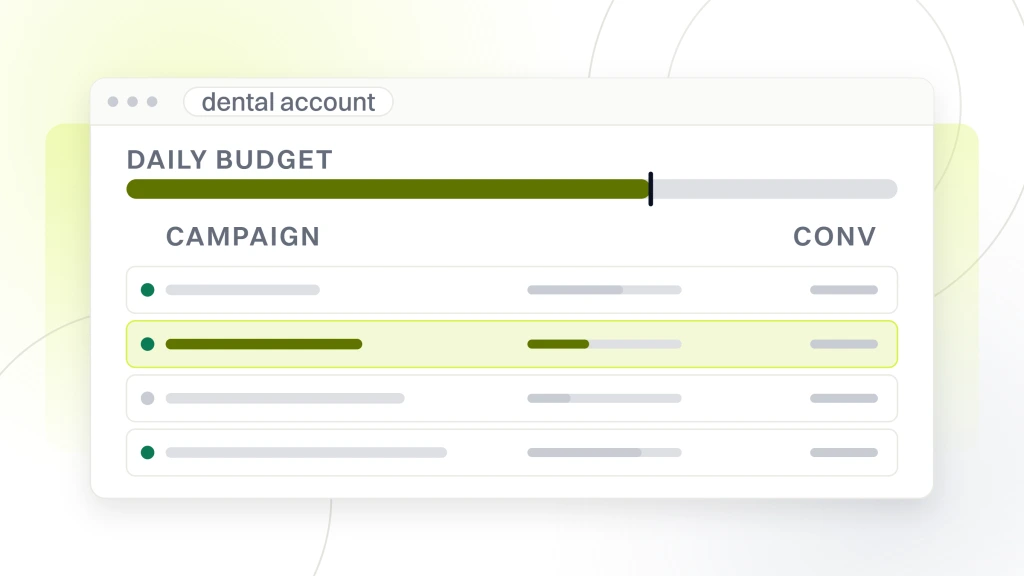
Reports stopping at clicks and leads hide the outcome that matters. The gap between leads reported and booked calls confirmed is where wasted spend sits. A dental account that reports 45 leads per month at a $52 cost per lead but only 12 booked calls per month is running at a $195 cost per booked call. Reports without that reconciliation obscure the real number, and practices signing a renewal on the cost-per-lead figure often discover the real cost only after switching agencies. Take a Phoenix pediatric dental practice we reviewed last quarter. Their old agency reported 62 leads per month at a $47 cost per lead. The front-desk log showed 14 actual booked calls, so the real cost per booked call sat at $208.
- Spend versus budget. Total spend, split by campaign, pacing against monthly budget.
- Clicks and CTR. Click totals, click-through rate by campaign, quality score movement.
- Leads tracked. Form submissions plus phone calls attributed to paid.
- Booked patient calls. Leads that converted to booked appointments after front-desk filtering.
- Cost per booked call. Total spend divided by booked calls.
- Optimization log. Changes made in the account and their impact on the numbers above.
The quarterly deep-dive goes further. Search term analysis. Landing page conversion analysis. Competitor auction insights. Bid strategy review. Practices without quarterly deep-dives typically stay stuck at the same cost per booked call quarter over quarter, since the monthly optimization loop only handles tactical adjustments. See our dental marketing ROI guide for how the PPC report layer ties into overall marketing ROI.
Step 5. Red flags during dental PPC vetting
Certain patterns during the sales call predict future problems with high accuracy. Guaranteed cost-per-lead or cost-per-call numbers is the single largest red flag, so ad auction dynamics prevent any legitimate agency from guaranteeing them. Vague answers about who manages the account weekly signal pooled resource time. Setup fees above $3,000 without a documented deliverable list usually fund agency onboarding rather than account work.
Two subtler patterns surface only under specific questions. Reluctance to share the specific dental accounts the team has managed inside the last 12 months usually signals thin vertical experience. Refusal to grant the practice ownership of the Google Ads account itself (versus running under the agency MCC) only affects the practice at contract termination, but it affects the practice a lot at that point. A Cleveland orthodontist we spoke with lost 4 years of quality score history when their prior agency refused the account transfer.
- Guaranteed cost-per-lead or “guaranteed booked calls per month” language.
- Vague account ownership. No specific team member assigned by name.
- High setup fees above $3,000 without a documented deliverable list.
- 12-month contract without a 90-day exit clause.
- Agency-owned Google Ads account. Practice cannot get direct access without asking.
- No HIPAA-aware tracking answer. Signals a compliance gap the practice will inherit.
- Refuses to share dental client list or specific accounts managed recently.
Any three of these on the same sales call is a walk-away signal. Any one deserves a follow-up question and a specific answer before the practice signs. The vetting is where money either gets saved or wasted, so recognizing these patterns is half the work of the vetting.
Step 6. HIPAA and compliance inside dental Google Ads
HIPAA rules restrict what patient information dental practices can share with third-party advertising platforms. Standard Google Ads conversion tracking on health-related form fields (checkboxes for procedures, treatment interest selectors, patient identifying data) can trigger a HIPAA violation, so Google Ads is not a covered entity. Working setups use offline conversion tracking that reports aggregated conversion counts to Google without identifiable patient data flowing through the pixel.
Call tracking runs on similar rules. CallRail and WhatConverts both offer HIPAA-compliant setups with signed business associate agreements. Agencies using standard call tracking without a BAA expose the practice to compliance risk. Neither the agency nor Google will absorb that risk if a complaint gets filed with the Office for Civil Rights. See the HHS HIPAA guidance for professionals for the current interpretation of covered entity obligations.
- Offline conversion tracking instead of standard Google Ads pixel on health forms.
- HIPAA-aware call tracking. CallRail HIPAA plan, WhatConverts HIPAA, or equivalent with signed BAA.
- Form fields review. Remove treatment interest selectors from pixel-tracked forms.
- Business associate agreements. Signed BAAs with every third-party platform touching patient data.
- Ad copy review. No protected health information in dynamic ad extensions or callouts.
Agencies that miss the HIPAA layer are usually general PPC shops running the same playbook across verticals. Dental-specialist agencies typically have this set up as standard operating procedure. Ask the vetting question and expect a specific answer citing offline tracking plus a specific HIPAA-aware call tracking vendor. That answer alone separates a real specialist from a repurposed home-services shop.
Step 7. In-house versus agency versus freelancer
The question of how to choose a dental Google Ads agency sometimes loops back to whether the practice should hire out at all. In-house PPC hires cost $55,000 to $85,000 fully loaded per year for a mid-level paid search specialist. Agencies cost $10,000 to $34,000 per year in management fees at the retainer bands above. Freelance PPC managers sit between, typically $700 to $2,000 per month with limited account manager time.
The in-house model works best for multi-location groups spending $30,000-plus monthly on paid channels where the specialist’s time gets fully absorbed. Below that, the fixed cost outweighs the flexibility. The dental PPC agency model works best for single-location practices where specialist depth and multi-account learning matter more than dedicated hours. The freelancer model works best for very small accounts where the practice needs monthly tuning without full-service reporting.
- In-house PPC hire. $55K to $85K per year, works for $30K-plus monthly ad spend.
- Dental PPC agency. $10K to $34K per year in management fees, works for most single-location practices.
- Freelance PPC manager. $8K to $24K per year, works for practices under $3K monthly ad spend.
- Hybrid. In-house lead plus specialist agency for landing pages and creative.
See our dental marketing agency vs in-house comparison for the fuller model across all marketing functions. One important note. The freelancer route usually works only when the practice already has a marketing coordinator or office manager who can absorb reporting review, landing page updates, and creative direction, so most freelance PPC managers do not carry account manager time inside the fee. Practices with no internal marketing bandwidth tend to leave the freelancer model inside six months.
What a real dental PPC agency does differently
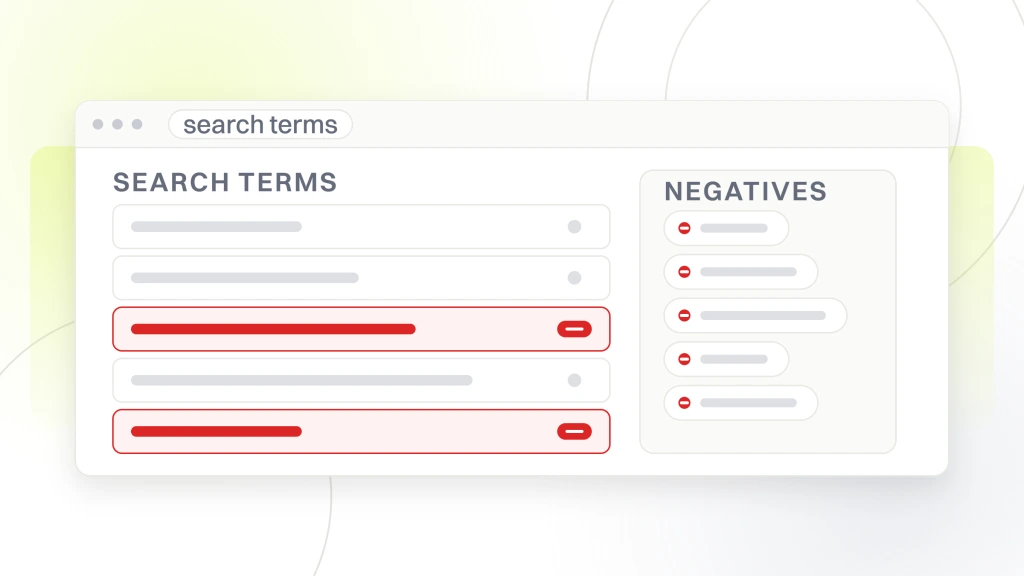
A vendor worth the retainer runs seven workstreams every month. Keyword and negative keyword mining. Landing page A/B testing. Ad copy rotation with three creative variants per ad group. Call quality scoring on booked versus non-booked calls. Competitor auction insight review. Bid strategy tuning by device and neighborhood. Monthly report review with the practice manager.
The Smile Design Dentistry engagement Redefine Web ran across 50-plus locations layered a per-location, per-stage campaign structure on top. That structure sent high-intent leads to the offices with capacity, not the next available phone. It cut cost per call 30% and grew PPC conversion rate 20% year over year. That is the outcome a real dental Google Ads management program produces at scale for a 50-location DSO. A generic PPC shop running a single campaign across all locations cannot match those numbers, so the routing logic and the front-desk feedback loop simply do not exist.
For a single-location practice, the same principle applies at smaller scale. Segment the campaigns by treatment category (implants, Invisalign, emergency, general). Attach a dedicated landing page to each. Feed booked-call data back into the campaign inside 30 days. That closed loop is what separates a working retainer from an agency running the account on autopilot for 18 months.
How to choose a dental Google Ads agency, the final 22-point checklist
The full vetting checklist runs 22 items across five categories. Sales-call quality. Case study depth. Contract terms. Deliverable clarity. Compliance readiness. Practices running all 22 items on two or three agencies before signing typically pick correctly and hold the agency relationship for 18-plus months. The bottom line. Spend 6 hours vetting or spend $18,000 fixing the mistake later.
The vetting cost is roughly 6 to 10 hours of practice manager time. The saving from picking correctly, versus paying six months to an agency that never learns the dental vertical, sits in the $8,000 to $18,000 range on typical single-location retainers. That is the return on the vetting time. Skipping the checklist and signing after one polished sales call is where practices end up on their second or third PPC agency inside two years.
If the current paid search account has stopped producing measurable booked-call growth, or if the practice is signing its first PPC retainer, this checklist runs cleanly on any comparable agency evaluation. See dental PPC services, our dental PPC agency reference, or the Google Ads healthcare policies for the compliance framework any qualified vendor should already be following.
The most common questions practices ask on the first vetting call, with the working answer for each.