
A GOTS-certified organic cotton apparel brand running $28,000 in monthly ad spend swapped a generic Meta buyer for a sustainability-native paid team in March and watched dynamic product ad revenue climb 47% inside 90 days on the same total budget. The account structure changed. The certification proof moved from the product page into the ad creative. The keyword mix pulled fast-fashion contamination out of Search. Retargeting windows stretched to match the real 32-day consideration cycle. Every fix compounded off the one before it. PPC for sustainable fashion brands is not fast-fashion PPC with a green coat of paint. It runs on distinct keyword clusters, certification-forward creative, and a lifetime value math that pays back a higher cost per acquisition over a longer horizon.
This breakdown walks through what PPC for sustainable fashion covers for a Shopify DTC ethical apparel brand end to end. The eco keyword intent map that separates research shoppers from ready buyers. The certification stack that carries weight inside paid creative. The catalog rules that keep recycled, organic, and vegan variants clean. And the higher CAC against higher LTV math our apparel fashion PPC team has held on real ethical DTC accounts across 2024 and 2025.
Eco keyword clusters for PPC for sustainable fashion brands
Keyword strategy is the second pillar of PPC for sustainable fashion brands, and the layer most fast-fashion agencies fumble the moment they inherit an ethical account. Sustainable fashion PPC keyword work rewards patience. The eco keyword universe splits cleanly into four intent buckets. Each bucket needs its own campaign, its own creative, and its own ROAS floor. Rolling them together into a single flat Search account is the fastest way to bleed budget on the wrong queries.
The four intent buckets
Research intent covers head-of-funnel terms like organic cotton dress, recycled polyester leggings, vegan leather bag, ethical fashion brands, and sustainable clothing UK. Traffic here is 5 to 12 pages deep across a 21 to 45 day window and reads at 0.4 to 0.9% conversion on first session. Comparison intent covers best sustainable clothing brands, GOTS certified activewear, B Corp fashion, and Patagonia alternatives. Traffic here reads on session 2 to 4 at 1.2 to 2.8% conversion.
Ready-to-buy intent covers buy organic linen shirt, sustainable wedding dress, vegan sneakers women, and GOTS cotton tee mens. Traffic here reads at 3.5 to 5.2% conversion. Brand-plus-eco intent pairs competitor brand names with sustainable or ethical modifiers and reads at 2.8 to 4.6%. Search account structure runs one campaign per bucket with tROAS floors 40 to 60% lower on research and comparison than on ready-to-buy. The payback horizon runs across the full consideration window, not the single session.
Negative keywords keep the account clean
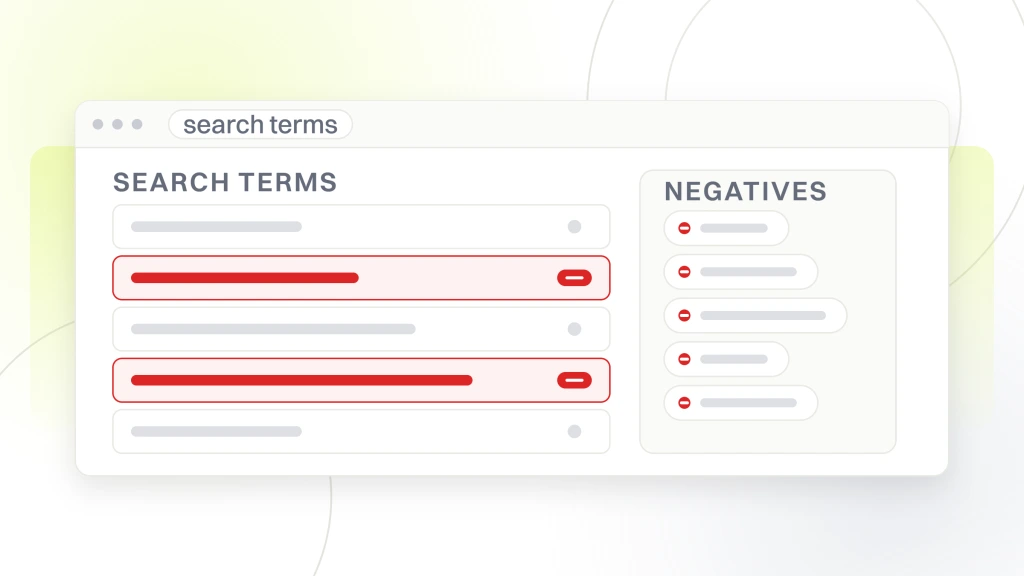
Fast-fashion contamination is the biggest single drain on ethical fashion Search accounts. Broad match traffic pulls in searches like Shein alternatives, cheap eco clothing, and fast fashion swap that convert at 40 to 60% below the account average. The search intent points at a different price ceiling. Negative keyword lists on sustainable fashion accounts should include the top 20 fast-fashion brand names, cheap plus eco combinations, dupe searches, and dropshipping-related terms.
Weekly negative keyword audits catch 3 to 8 new junk terms per week that spend meaningful budget before the sweep. Accounts skipping the weekly audit routinely burn 15 to 25% of Search spend on contaminated queries. Those queries produce first-purchase orders with a 2 to 4% second-purchase rate. The buyer never intended to become a repeat ethical customer, so the LTV math on those first orders never lands.
Catalog feed and material variants
Catalog feed hygiene for PPC for sustainable fashion brands carries an extra layer beyond generic apparel. The material story lives inside the product attributes themselves. A single dress selling in organic cotton, Tencel, and recycled polyester renders as three material-tier variants, and each variant needs its own feed title, its own certification badge, and its own custom label inside Merchant Center and Meta Commerce.
| Material | Certification | Custom label 0 | Price band | Feed refresh |
|---|---|---|---|---|
| Organic cotton | GOTS | material_organic | Premium | 1 hour |
| Recycled polyester | GRS | material_recycled | Mid | 1 hour |
| Tencel Lyocell | Bluesign | material_tencel | Premium | 1 hour |
| Hemp blend | OEKO-TEX | material_hemp | Mid | 2 hours |
| Vegan leather | PETA-Approved | material_vegan_leather | Premium | 2 hours |
| Linen | European Flax | material_linen | Premium | 2 hours |
The table above assumes a mid-size ethical DTC brand running $18,000 to $45,000 in monthly ad spend. A women’s basics line with 30 styles across 4 material tiers runs 120 material variants on top of 8 size and 4 color splits. That produces 3,840 feed items rather than the 30 parent products a fast-fashion feed would carry.
Brands skipping the material-tier split push single feed items that mix organic cotton and conventional cotton under one product ID. That torches the certification claim, blocks Merchant Center Shopping approval on eco-focused searches, and produces the exact kind of vague sustainability messaging the target buyer distrusts. Feed audits should also verify the certification label appears inside the Google Merchant Center attribute called sustainability_incentive plus a matching Meta commerce custom attribute. Both platforms started reading these in 2025 as trust signals for eco-focused catalog placements.
Accounts skipping those attributes serve dynamic product ads next to fast-fashion competitors with no visual certification advantage. That caps the click-through rate ceiling on the exact traffic ethical brands are paying premium bids to reach. Our PPC for fashion ecommerce catalog ads guide covers the underlying variant work in more depth.
Retargeting flows for longer consideration cycles
Retargeting inside PPC for sustainable fashion brands runs on a much longer clock than fast-fashion accounts. The ethical shopper takes 21 to 45 days from first visit to purchase, not the 4 to 12 day window fast-fashion runs on. Retargeting audiences left at the Meta default 7 or 14 days miss 55% to 70% of the real buyer cohort and quietly leave revenue on the platform.

The extended six-tier retargeting split
The six-tier retargeting split covers the full ethical shopper consideration cycle. Tier one is day 1 to 5 add-to-cart abandoners who see the exact SKU with certification proof in the creative plus a shipping cutoff timer. Tier two is day 6 to 21 abandoners who see the SKU in a factory transparency lookbook style. Tier three is day 22 to 45 site visitors who read the material story page but never added to cart. They get served category-level ads with the founder-video variant.
Tier four is post-purchase buyers suppressed for 45 days then moved into a cross-sell flow featuring adjacent material tiers from the same collection. Tier five is 90-day repeat buyers who see restock and new-collection teasers. Tier six is 180-day lapsed buyers who see an impact-report style creative featuring the certification renewal and factory audit story. Accounts running the six-tier split show 30 to 50% higher retargeting revenue than accounts running a single 14-day audience.
Frequency caps and suppression
Frequency caps run tighter on ethical retargeting. The shopper reads high-frequency ads as anti-ethical marketing behavior. Tier one runs 3 impressions per week, tier two 2 impressions per week, tier three 1 impression per week. Post-purchase suppression stretches to 45 days rather than the fast-fashion 30 to preserve the deliberate purchase feel the sustainable brand promises.
Ethical brands running the fast-fashion default of 4 impressions per day burn 45 to 65% of retargeting spend on ad fatigue and lose repeat purchase rate on the burned cohort.
CAC to LTV math for sustainable fashion PPC
The CAC to LTV math is the pillar of sustainable fashion PPC that founders lose sleep over. Cost per acquisition on ethical DTC runs 30% to 55% above generic apparel. The eco keyword universe carries lower search volume. The ad creative sits next to fast-fashion competitors pricing 40% to 60% below the ethical brand. That higher acquisition cost only pays back once the lifetime value math on the other side of the sale enters the reporting view.
What lifetime value truly pays back on ethical DTC
Ethical fashion lifetime value pays back the higher acquisition cost across three specific patterns. Repeat purchase rate on the second-year cohort lands 25 to 40% above fast-fashion baseline. Considered buyers stay loyal to certifications they trust. Average order value climbs 20 to 45% above fast-fashion. The price ceiling is higher and shoppers buy fewer, higher-value pieces per basket. Return rate drops 40 to 55% since the same considered purchase behavior lowers regret returns.
The three together produce a 24-month lifetime value that runs 1.6 to 2.4 times the fast-fashion equivalent on the same first-purchase order value. That pays back a $42 to $58 acquisition cost on a $95 average order value inside 8 to 14 months rather than the fast-fashion 24 to 36. Sustainable fashion PPC only reads as profitable when the reporting view stretches to that window.
The reporting cadence that keeps founders honest
Reporting for ethical DTC has to carry cohort-based lifetime value in the monthly view or the higher acquisition cost reads as a losing account. Our team builds a Looker Studio dashboard against Shopify order data joined to platform ad spend by day and cohort. The dashboard tracks first-purchase cost per acquisition against 90-day, 180-day, and 12-month lifetime value per acquired cohort.
Founders reading the dashboard weekly stop second-guessing the $52 cost per acquisition once they watch the 12-month cohort revenue clear $180 per acquired buyer against a $32 first-purchase margin. Founders without cohort reporting routinely pause ethical Meta campaigns after month 2. The first-purchase math looks scary. They rarely recover the momentum. Our PPC management for fashion brands monthly scope guide covers how the cohort dashboard fits inside the weekly cadence.
Creative testing for sustainable fashion ads
Creative testing inside PPC for sustainable fashion brands runs on a slower fatigue clock than fast-fashion, and that shows up in the rotation schedule. Fast-fashion Meta creative burns out in 5 to 12 days. Ethical fashion creative holds for 21 to 35 days. The material story, factory transparency, founder voice, and impact report angles keep giving the buyer new information across multiple exposures rather than repeating the same visual with a new discount stamp.
The five creative angles that work
Material story creative shows the fabric close up with the certification badge and one sentence on the material source. Factory transparency creative shows the workers, the workshop, or the wage story with the Fair Trade or B Corp badge. Founder video creative shows the founder speaking to camera about why the brand exists and what a specific customer note meant. Impact report creative shows the annual footprint numbers with a one-sentence goal for the next year.
Certification proof creative isolates the badge on a clean product shot with the badge acronym expanded in the caption. Rotating across all five on a 21-day cycle holds click-through rate stable across the full quarter rather than dropping 30 to 45% by week three the way single-angle rotations do. That rotation cadence is what makes ppc for sustainable fashion brands compound rather than fatigue.
UGC discipline on ethical accounts
User-generated content on ethical brands has to carry the same certification language the paid team uses on Meta. Sustainable buyers cross-check founder claims against customer reviews on Trustpilot and Reddit ethical fashion communities. UGC that reads as unboxing or haul content dilutes the ethical positioning and reads as fast-fashion behavior.
UGC that reads as capsule wardrobe planning, multi-year wear demonstration, or care and repair storytelling reinforces the ethical brand promise and converts 20 to 35% higher on cold traffic. Ethical brands running the fast-fashion UGC playbook of unboxing creators watch their brand affinity metrics drop over two quarters and the retargeting cohort break down.
Tracking and attribution for ethical DTC
Tracking work inside PPC for sustainable fashion brands has to survive a 45-day retargeting window without breaking cohort math along the way. Meta Pixel and Conversions API deduplication, Google Ads Enhanced Conversions match rate above 68%, GA4 to Shopify order reconciliation inside 4%, and consent mode implementation for EU and UK traffic all matter here. The ethical shopper base leans hard toward EU markets where consent behavior is stricter than the US default.
Cohort-based reporting has to survive the consent mode blocking that eats 20% to 40% of EU browser events. Server-side tracking through Shopify’s Google and Meta channels plus Conversions API recovers 60 to 80% of the blocked signal. Enhanced Conversions match rate on Google Ads should hold above 68% on sustainable accounts. Buyer email addresses stay stable across the 45-day consideration window unlike fast-fashion burst traffic.
Sustainable fashion PPC reporting stacks that skip the server-side layer read platform ROAS 25 to 40% higher than Shopify actuals. That produces founder decisions to scale spend against phantom revenue. The correction cycle when the founder finally reconciles the two takes 30 to 60 days and usually triggers a full retainer review.
Landing page work for sustainable Search traffic
Landing page work sits under the paid layer and decides whether Search traffic converts on session or bounces to a competitor. Sustainable fashion PPC buyers read 3 to 5 product pages, cross-reference certifications, and check the impact report page before purchase. A landing page missing any of that content converts 40 to 60% below a page carrying all of it.
Product page structure for ethical apparel
The ethical product page structure that PPC for sustainable fashion brands leans on holds the certification badge row above the fold with the badge acronym, one-sentence explanation, and the certification number. The material story block appears in the top third with fabric name, source country, and mill or supplier note. The size guide includes size-inclusive coverage from XXS to 4XL. Sustainable buyers over-index on brands carrying inclusive sizing.
The care and repair section includes a wash guide and a repair or return-to-brand link. The ethical shopper reads longevity as a brand attribute. Reviews sit lower on the page with a wear-time filter showing 6-month, 12-month, and 24-month wear data. Landing pages missing the wear-time filter fail to build the longevity trust the certification claims promise. Pages carrying the full stack convert 40 to 60% higher than pages holding only the certification badge.
Collection page structure
The ethical collection page structure filters by material tier first (organic cotton, recycled polyester, Tencel, linen) rather than color or size. The sustainable shopper leads with material intent. The certification filter row runs second, letting the buyer narrow to GOTS-only or B Corp-only inventory. Size and color filters run third. Collection page headers carry a factory or material story paragraph that explains the collection theme against the brand promise.
Collection pages missing the material-first filter convert 25 to 40% below pages carrying it. The shopper has to click into individual product pages to check material rather than filter at the collection level. Our luxury fashion marketing scarcity and brand playbook covers how the premium collection page pattern differs from the ethical one on structural specifics.
An adjacent ecommerce engagement in production
RAFZ Cirkulära Interiörer, a Swedish circular-economy ecommerce brand our team ran engagements for across 2023 and 2024, is the closest adjacency to the ethical DTC apparel accounts our fashion team runs today. The brand carried the same certification-forward messaging, the same longer consideration cycle, and the same higher lifetime value math as an ethical fashion brand. The site had grown organically for years on a plugin-heavy WordPress build with a 15-second page load, no API integrations, and a checkout cart that abandoned at 78%.
Our team rebuilt the site on a custom lightweight theme and cut page load from 15 seconds to 2 seconds. Reduced server requests by 82%. Integrated the place2place API for the sustainable resale marketplace angle. Rebuilt the product pages to lead with material story and certification proof above the fold. The paid layer on the account then held a longer 30 to 45 day retargeting window that matched the sustainable shopper reality rather than the fast furniture ecommerce default.
Conversion rate climbed 28% post-launch at RAFZ Cirkulära Interiörer. The same operating pattern of certification-forward creative plus longer consideration window plus lifetime value reporting carries over cleanly to ethical DTC apparel. Fashion brands with GOTS, GRS, or B Corp certifications running $15,000 to $60,000 in monthly ad spend see the same 25 to 45% revenue climb inside 90 days once the account structure matches the ethical shopper cycle rather than fighting it.
Where PPC for sustainable fashion brands fits the stack
PPC for sustainable fashion brands sits at the acquisition and retention layer of the ethical DTC marketing stack. Every retention channel, every organic content investment, every founder story email, and every impact report either compounds off certification-forward paid work or fights against a paid layer that quietly dilutes the brand promise. Ethical brands treating paid as separate from the sustainability narrative give up the compounding gains that show up when paid, organic, email, and community all carry the same certification-forward message across every touch.
Pricing bands for PPC for sustainable fashion brands sit at $999, $1,499, $2,499, and from $4,500 per month depending on ad spend and channel count, on a 6-month starter term. Ethical DTC needs two full seasonal windows before the lifetime value data reads honestly. Ad spend is billed separately from the retainer. The Google Ads Performance Max best practices guide is a useful outside read for founders doing account structure work between agency reviews.
Every read runs on the same certification-plus-lifetime-value operating pattern described here. The apparel fashion marketing retainer page covers the pricing math and the seasonal cycle the team runs against for accounts across organic cotton basics, recycled polyester activewear, vegan leather accessories, and small-batch linen wear. PPC for sustainable fashion brands is the operating layer that decides which paid investments compound the ethical brand and which ones quietly dilute it into fast-fashion territory.