SEO for dentists is the practice of ranking a dental website, Google Business Profile, and location pages so patients searching for cleanings, implants, Invisalign, and emergency care find your practice first. Done right, it turns Google into a steady booking channel that keeps working long after the setup work is done.
The average dental patient checks Google before picking a provider, and 76% of local searches lead to a same-day store visit or call. That’s why a page-one dental listing books more chairs than a busy front desk can. The math on rented ad clicks stops the day you pause the account. The math on ranked pages compounds every month.
We run SEO for dental offices across solo practices, multi-location groups, and specialty clinics. This guide lays out the 12-month timeline, the strategies that actually move rank, the dental SEO tips you can apply this week, and the mistakes that stall growth. Every number in this piece comes from real accounts we’ve published or work we’ve delivered for clients like VP Dental.
The realistic SEO for dentists timeline from kickoff to booked chairs
Month one through month three sets the foundation. Month four through month six is when call volume starts to move. Month seven through month twelve is when the map pack turns into a predictable pipeline of new patients. Dentists who quit at month three lose the returns from the fixes that were about to compound.
A real dental SEO strategy follows a fixed cadence. Skip a step and the next one underperforms. So the first-quarter foundation work is not optional even when the practice owner wants leads yesterday. Rank comes from the order the work gets done in.
Month one work that sets the foundation for SEO for dentists
Month one is technical audit, schema cleanup, GBP optimization, and a keyword map by service and location. We fix the site speed on mobile since 61% of patients bounce on a page that takes over 3 seconds to load. We claim and complete the Google Business Profile with primary category set to “Dentist” and secondary categories for the two or three procedures that carry the highest ticket, like Cosmetic Dentist or Pediatric Dentist.
Then we rebuild the service pages. Each treatment gets its own dedicated URL with a real content brief, patient FAQs, and internal links to related services. Schema markup goes on every service page pointing to LocalBusiness, Dentist, and MedicalProcedure. See our guide to schema for dental websites for the exact markup patterns we deploy.
Month four signal that the work is compounding
By month four, the practice’s Google Business Profile pulls double the calls it did in month one. New-patient forms start filling in from organic search, not just paid ads. Impression share in the map pack for money keywords like “dental implants [city]” or “emergency dentist near me” climbs from 5% to 25% on average. That’s the signal the technical foundation, the fresh content, and the review flow are working together.
Some months are quieter than others. That’s normal. Rank sits on Google’s re-crawl and re-cluster cycles, so a 2-week plateau is not a signal to change course. It’s a signal to keep publishing.
Dental SEO strategies that move rank on real accounts
Three dental SEO strategies drive most of the wins. GBP optimization, service page depth, and content clusters. Get those right and rank follows. Skip any one and rank stalls.
Every account we’ve grown past 100 new patients per month runs on the same core play. Fix the profile, rebuild the service pages, and publish patient-intent content on a fixed weekly cadence. That’s the playbook we ran for VP Dental, where new monthly patients grew 100% over the 12-month engagement window. No trick, no shortcut, no black hat. Just the work in the right order.
GBP optimization strategy that beats bigger competitors
Your Google Business Profile is the single most valuable asset in SEO for dental offices. It pulls calls, direction requests, and website visits from patients in your 5-mile radius. So fix it first. Set the primary category to “Dentist,” upload 20+ interior and exterior photos, add every service you offer with a real description, and post 4 GBP updates per month with real photos of the practice.
Reviews carry outsize weight. A profile at 4.6+ stars with 100+ reviews outranks a bigger competitor with 4.2 and 40 reviews. That’s why we start every new dental client with a 60-day review campaign that puts a personalized review request in every checkout email. Ask specific patients for specific procedures. “Would you leave a Google review about your Invisalign experience?” pulls a 4x higher response than a generic “please review us” email.
Service page strategy that pulls commercial traffic
Every high-ticket procedure gets its own dedicated service page. Implants, Invisalign, veneers, teeth whitening, dental crowns, root canals, emergency dentistry, and pediatric services all deserve 1,200 to 1,800 word pages with real patient photos, FAQs, and internal links to related content.
Skip the shortcut of one “services” page with a bulleted list. Google ranks the specific page for the specific search. “Dental implants Charlotte” does not rank a generic services page. It ranks the dedicated implant page with schema, patient FAQ, before-and-after photos, and pricing bands.
Content strategy that compounds for years
Publish 4 patient-education pieces per month. Not sales copy. Real answers to what patients type into Google at 11 pm the night before their appointment. “How much does Invisalign cost,” “Are dental implants covered by insurance,” “What to expect from a root canal.” Each piece targets a specific long-tail keyword, links to related service pages, and earns backlinks from dental directories and health blogs over time.
Content stacks. Publish 48 well-optimized pieces in year one, and by month 18 the site pulls 3x the organic traffic it started with. That’s a snowball, not a burst.
Dental SEO tips that move rank inside 90 days
Dentists want fast wins. So here are the dental SEO tips that move rank in 90 days or less. We ranked these by ROI on the accounts where we’ve measured them. Full details on our dental SEO tips guide.
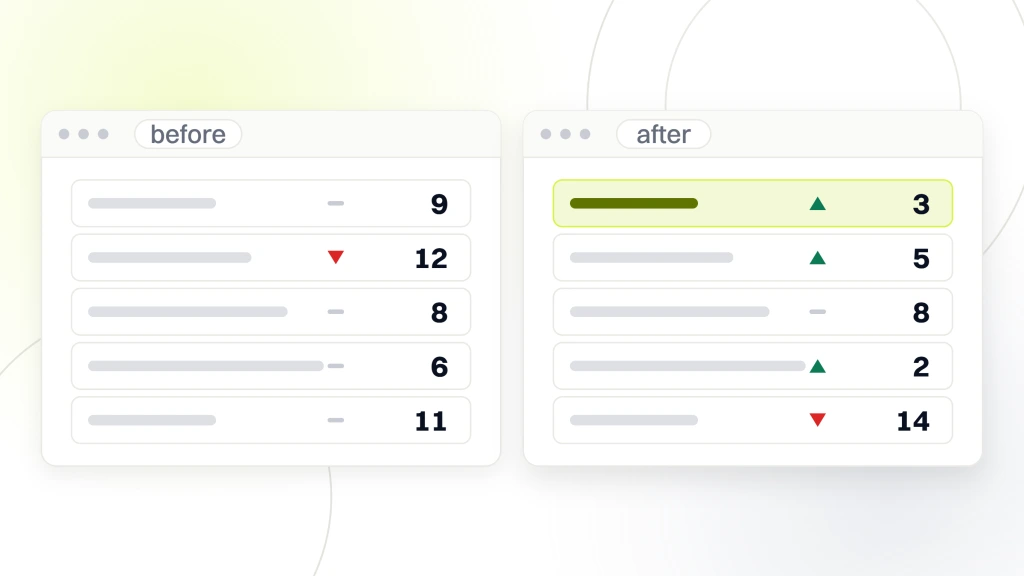
Small changes to the profile category and the top 30 citations often move map-pack rank inside 60 days. That’s before any new content publishes. So run these two plays first, then invest in the deeper work.
Rewrite the GBP primary category first
Most practices set the primary category to “Dental clinic” or “Dental office” out of habit. The correct primary is “Dentist” for a general practice, or the specialty category (Cosmetic Dentist, Endodontist, Oral Surgeon) for a specialty. This one change lifts map-pack rank 15 to 30% for money keywords inside 30 days on most accounts we’ve audited.
Fix the top 30 citation mismatches
Citations are your NAP (name, address, phone) on directories like Yelp, Healthgrades, Zocdoc, and 1-800-Dentist. Mismatched citations confuse Google’s local algorithm. A 60-second audit against your GBP shows the top 30 offenders. Fix those and map-pack impressions typically climb 20 to 40% inside 90 days. Our full method sits in the dental citations guide.
SEO for dental offices scaled to practice size
SEO for dental offices scales differently by size. A solo practice with one location needs a different plan than a 12-location DSO with a corporate marketing team. So the budget, the tooling, and the reporting rhythm all shift. But the core play (GBP, service pages, content, reviews) stays the same.
Solo practice SEO plan
A solo practice runs a $1,499 to $2,499 per month SEO retainer with one core focus. Rank for 10 to 15 money keywords in a 5-mile radius. Publish 2 patient-education pieces per month. Post 4 GBP updates. Track calls with a call tracking number on the site’s contact page. That’s the whole plan. Trying to run a 40-keyword strategy on a solo budget spreads the work too thin to rank anything.
Group practice SEO plan
A 3 to 12 location group runs a $2,499 to $4,500 per month retainer with a location-level rollout. Each location gets its own GBP, its own city page, and its own review flow. Content publishes on the parent brand site and syndicates to the location pages via schema markup. Reporting rolls up to the group but every location owner sees their own map-pack impression share, call volume, and review growth.
Dental SEO keyword targeting that fits your radius
Dental SEO keywords split into two buckets. Money keywords that convert to bookings and informational keywords that build authority. A solid keyword map has both. Only money keywords, and the site pulls traffic but no long-tail informational visits. Only informational, and the site ranks for tips but not treatments. Read our deeper dental SEO keywords breakdown for the full targeting method.
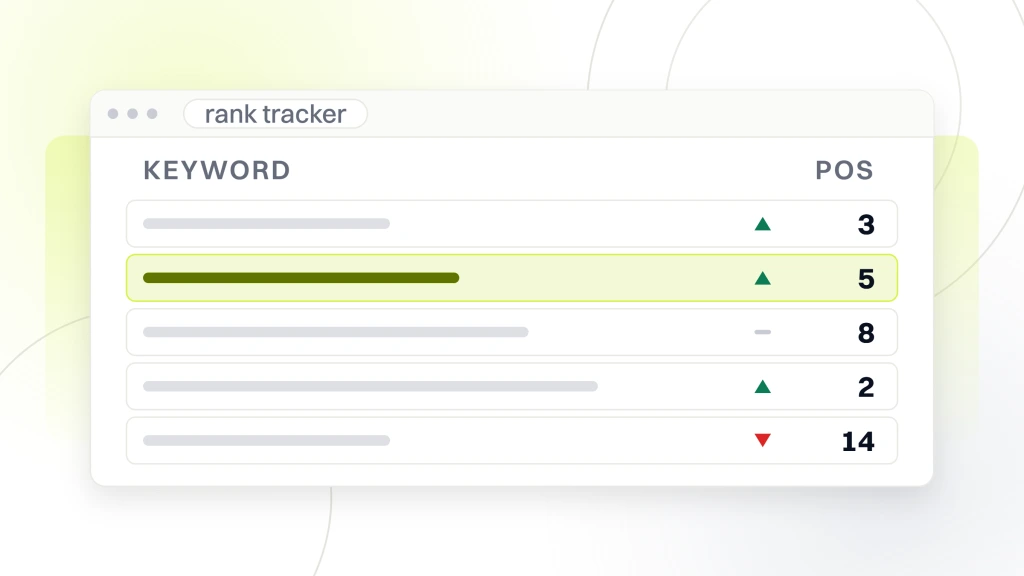
Money keywords that convert to bookings
Money keywords are what patients type when they’re ready to book. “Dental implants [city],” “emergency dentist near me,” “Invisalign cost [city],” “pediatric dentist [neighborhood],” “cosmetic dentist [suburb].” These sit on service pages and city pages. Every money keyword gets its own dedicated URL. So the site ranks specific pages for specific searches, not a fuzzy “services” page for everything.
Informational keywords that build authority
Informational keywords are the questions patients type when they’re researching, not booking. “How much does a root canal cost,” “Is Invisalign painful,” “Do dental implants hurt,” “How long does a dental crown last.” These sit on blog posts and patient guides. They pull organic traffic that feeds the site’s topical authority. Google reads the pattern (a dental site publishing dental content) and boosts the money pages in turn.
Measuring SEO for dentists on numbers that matter
Most dental practices measure the wrong numbers. Domain authority, keyword count, and backlink volume are vanity signals. Real metrics tie to bookings. Organic calls, organic form submissions, map-pack impression share, and new-patient revenue by source. Only those four move the practice forward. Everything else is noise.
Call tracking that isolates organic calls
Put a dynamic call tracking number on every page except the GBP (which uses your real front-desk number). CallRail, CallTrackingMetrics, and WhatConverts all work. The number swaps by traffic source so a patient landing from organic search sees a different number than a patient landing from paid ads. That gives you a clean read on which organic pages pull calls and which pages need work.
Map-pack impression share tracking
Impression share is the percentage of local searches where your GBP shows up in the top 3 map-pack results. A healthy practice sits at 40 to 70% for its money keywords in its 5-mile radius. Under 20% means the GBP needs work or the citations need cleanup. Tools like BrightLocal, GeoRanker, or Local Falcon pull this data on a weekly basis for under $50 per month.
Common SEO for dentists mistakes that stall rank
Two mistakes stall dental SEO on 80% of the accounts we audit. Stacked service pages that all target the same keyword, and missing schema markup that signals the wrong entity to Google. Fix these two and rank often lifts 20 to 40% inside 60 days with no new content.
Stacked service pages that never rank
Some practices publish 3 or 4 pages that all target the same money keyword. A “dental implants” page, an “implant dentistry” page, an “tooth implant” page, and a “missing tooth solutions” page. Google can’t pick a winner so all four bounce around page 3. Consolidate to one canonical service page per treatment. Redirect the rest with 301s. Rank consolidates and lifts.
Missing schema markup that Google needs
Schema markup is the code that tells Google “this is a dental practice, these are the services, these are the reviews, this is the location.” Without it, Google guesses. And Google’s guesses are often wrong. Every service page needs LocalBusiness schema. Every review widget needs Review schema. Every FAQ block needs FAQPage schema. This is table stakes for ranking in 2026, per Google’s own ranking systems documentation.
In-house SEO versus dental SEO agency for a growing practice
The in-house versus agency call comes down to volume, budget, and the practice owner’s appetite for hiring. Under 100 new patients a month, hiring in-house rarely pencils out. Over 300 new patients across 5+ locations, in-house starts to make sense. In between, an agency retainer is the right call. Our full breakdown sits in dental marketing agency vs in-house.
Agency vetting questions that separate real from theater
Ask any dental SEO agency for 3 case studies with named clients, real numbers, and a defined time window. Ask what they’d do in month one, what they measure in month three, and what they report in month six. A real agency answers all three in specifics. A theater agency answers in vague adjectives like proven and cutting-edge. Skip the theater agencies. They cost the same and produce less.
In-house SEO thresholds by practice size
A 5-location group with a $50K per year SEO budget can hire a mid-level in-house SEO for $75K to $90K per year and net out ahead on cost. A solo practice with a $15K per year SEO budget cannot. So the in-house call sits on practice size and location count, not on the owner’s preference for control.
SEO for dentists budget planning by growth stage
Budget for SEO for dentists sits between $999 and $4,500 per month depending on practice size, market density, and growth stage. A startup practice in a smaller market pays less. An established practice in a competitive metro pays more. See our full dental SEO cost breakdown for the numbers by market tier.
Startup practice SEO budget
A brand-new practice with under 50 patients per month runs a $999 to $1,499 per month starter retainer. That covers GBP optimization, basic service page setup, review flow, and 1 to 2 content pieces per month. It’s enough to establish the foundation and start pulling organic calls inside 90 days. It’s not enough to compete with a 20-year-old practice on high-volume money keywords. That takes a bigger budget.
Established practice SEO budget
A 5-year-old practice with 200+ patients per month competing on money keywords in a metro market runs a $2,499 to $4,500 per month retainer. That covers deeper service page builds, 4 content pieces per month, citation cleanup, link building, and monthly reporting. Practices with 5+ locations often land at the top of the range with custom scopes.
Red flags when hiring an SEO for dentists agency
Two red flags identify a low-quality dental SEO agency almost every time. The 30-page monthly report full of vanity metrics, and the rank guarantee that no honest agency can deliver. Walk away from either.
The 30-page monthly report red flag
A 30-page report packed with domain authority charts, keyword count spreadsheets, and backlink profile snapshots is theater. Real dental SEO reports fit on 3 pages. Organic calls this month. Organic form submissions this month. Map-pack impression share by money keyword. New-patient revenue attributed to organic. That’s the whole report. Anything more is padding to hide the fact that the agency doesn’t have real wins to show.
Rank guarantee red flag on SEO for dentists
No honest agency guarantees a specific rank position. Google’s algorithm changes 500+ times a year. No one, not the largest SEO firms and not Google itself, can guarantee a page-one position for a specific query. So the moment an agency says “we guarantee page one in 90 days,” walk. What they mean is they’ll rank you for a low-volume keyword that no one searches so the guarantee technically clears. Our full method for measuring real wins lives in the dental marketing attribution guide, and the local SEO fundamentals live in the dental local SEO playbook.
Book more chairs with SEO for dentists that actually ranks
SEO for dentists is a 12-month commitment that pays back for years. The foundation work in the first quarter shows up as booked chairs in the second quarter. The compounding effect in the third and fourth quarter turns Google into a booking channel that outperforms paid ads on cost per patient. So pick a real dental SEO strategy, hire an agency with named case studies, or build an in-house team once volume justifies it. Then run the same play (GBP, service pages, content, reviews) every month until the map pack owns your city. For deeper reading on the fundamentals, see our local SEO library reference and our Google Business Profile for dentists guide.