
A working real estate SEO strategy isn’t a checklist you copy from a portal. It’s a compounding practice built on keyword picks, page structures, and local signals that separate agent and brokerage sites booking consults from ones stuck on page four of Google. This guide walks through the steps we run on live accounts, sized for the reality that Zillow, Redfin, and Realtor.com own the head terms. You win by taking the modifier layer and turning organic traffic into signed listing agreements.
You’ll get the 10 steps, a 90-day rollout plan, the technical fixes that move rankings most, content patterns that book buyer and seller calls, and the budget math behind each stage. We cover the solo agent scope, small teams, and multi-market brokerages. Read this against your last 90 days of Google Search Console before you brief the next content sprint or sign an agency contract.
Technical real estate SEO strategy best practices
Technical SEO on a real estate site matters more than most verticals, and it starts by mapping the right real estate SEO keywords to each URL. Listings carry data-freshness, schema, and IDX (Internet Data Exchange) integration constraints portals don’t face the same way. The technical layer sits in six buckets, and a full real estate website SEO checklist maps every one. Schema markup, Core Web Vitals, IDX integration, internal link graph, sitemap architecture, and mobile UX.
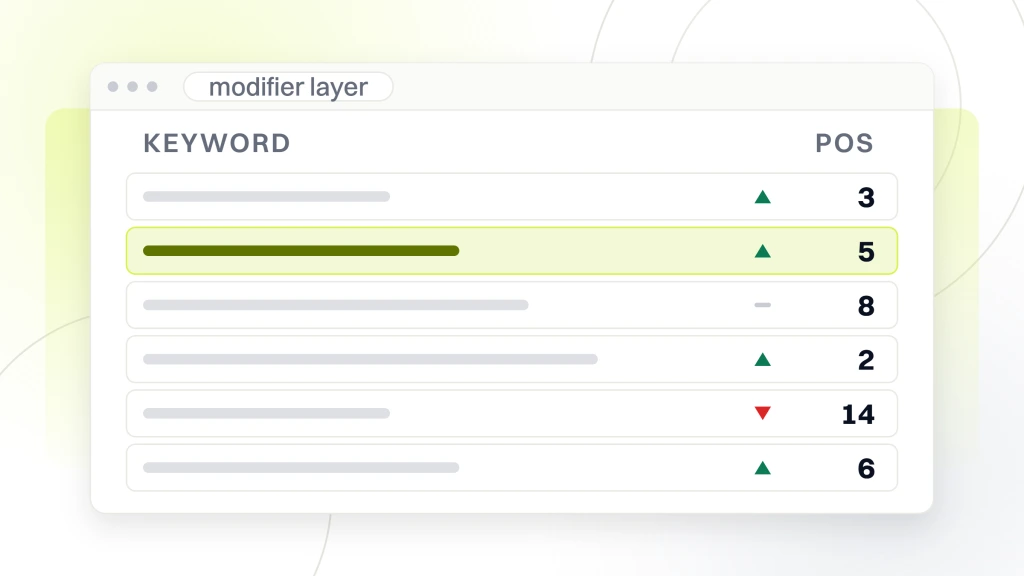
Schema markup. Every listing page carries schema.org RealEstateListing (or Product with real-estate-specific properties). Every neighborhood page carries LocalBusiness plus Place schema. Every agent profile carries Person plus RealEstateAgent schema. Every review testimonial carries Review schema tied to the RealEstateAgent. That schema stack pulls listings into rich results and pulls organic clicks away from Zillow. Reference the Google structured data guide for real estate listings.
Core Web Vitals. Real estate sites carry heavy media (property photos, video walkthroughs, IDX search widgets) and load slowly by default. Working accounts hit LCP (Largest Contentful Paint) under 2.5 seconds on mobile through image compression, IDX vendor tuning, and a CDN. Every one-second LCP gain moves mobile conversion rate 10% to 15% on real estate traffic. See the web.dev LCP guide for the technical checklist.
IDX integration. IDX vendors (Showcase IDX, iHomefinder, Homes.com IDX) each render listings differently. Some inline the listing data (great for SEO). Some iframe the listing data (bad for SEO, since Google can’t crawl inside the iframe). Pick an inline-rendering vendor before signing a two-year IDX contract. Verify inline rendering by right-clicking a listing page and viewing source. If the listing address and price appear in the HTML, you’re inline. If they don’t, you’re iframed and losing organic traffic on the whole account.
Internal link graph. Every neighborhood page links to 4 to 6 sibling neighborhood pages plus the top-level industry hub. Every listing page links to its parent neighborhood page. Every seller valuation page links to the recent-sales section on the parent neighborhood page. That graph carries link equity through the site and helps neighborhood pages rank without a huge backlink budget. Skip it and pages rank inconsistently, with none rising above the rest. Any tip that ignores internal linking wastes the rest of the plan.
Sitemap architecture and mobile UX round out the six-bucket stack. Split the XML sitemap by content type. One file for listings, one for neighborhood hubs, one for seller resources, one for the blog. Google crawls a segmented sitemap faster and surfaces indexing gaps within days instead of weeks. On mobile, keep the IDX search box above the fold, kill any modal that fires before the first click, and make the phone number a tap-to-call link on every template. 78% of real estate SERP clicks now come from mobile, and the bounce rate on a laggy mobile IDX kills every ranking gain the on-page work built.
Keyword targeting sits underneath every technical fix. The head terms Zillow owns aren’t the fight. The modifier layer wins. Neighborhood plus school zone, neighborhood plus condo association, neighborhood plus HOA, neighborhood plus new-construction, seller valuation plus zip code, buyer guide plus first-time, buyer guide plus VA loan, market report plus quarter. Every account we run maps 40 to 80 modifier terms in week 1 and picks the first 20 to build against. The picks are the plan. Every downstream template decision follows from the keyword-to-URL map.
Local backlink layer for a real estate site
Real estate brokerages lean on local SEO signals harder than most verticals. Google weighs the local-authority signal heavily on these SERPs. A brokerage with 40 local backlinks (chamber of commerce, MLS board, local news mentions, community sponsorships) outranks a brokerage with 400 generic backlinks from real-estate-blog swaps every quarter you measure it.
The local backlink targets we prioritize on a new account. Chamber of commerce member listing (free with membership). MLS board news mentions (sponsor a local Realtors event once a year). Neighborhood association newsletters (host a first-time buyer clinic and get mentioned). Local charity sponsorships (sponsor a Little League team, get mentioned on their site). Local news mentions (pitch a market-report angle to your metro’s business journal every quarter). Community event sponsorships (sponsor a local 5K, get mentioned on the event site).
Skip the guest-post-swap circuit most agencies still run. Those links come from thin sites Google discounts. One mention in your metro’s business journal or one chamber-of-commerce backlink beats 20 swap links. Quality of local backlink signal beats quantity every quarter you measure it. Reference our Real Estate SEO Services for Brokerages for the full backlink-outreach scope.
Track the backlinks you already have that agents don’t know about. Local news mentions from three years ago, chamber directories from a prior brokerage, real-estate podcast appearances. Audit the existing backlink profile with Ahrefs or the free Google Search Console link report before spending an hour building new ones. Most brokerages have 15 to 40 forgotten links that just need reclaim work (broken URLs, wrong anchor text, missing schema). That’s a week of cleanup that restores rankings before a single new outreach email goes out.
Reviews are the last local signal that gets treated as an afterthought and shouldn’t be. A brokerage that adds 8 to 12 authentic Google reviews per month for six straight months moves from map pack position 7 to position 2 on the primary neighborhood query. The signal isn’t just review count. It’s review recency, review keyword content (“buying agent”, “seller consult”, “neighborhood expertise”), and agent response cadence. Build a review-request template into the buyer and seller closing flow. Send it 3 days after close via email plus SMS with a direct Google review link. Response rate on that setup runs 40 to 55%, versus 5 to 10% on the ask-at-closing-table approach.
Comparison of scopes and budget tiers
Solo agent, team, and brokerage accounts run at a different scope. Template pattern, budget math, and timeline all shift by size. The table below sizes the work at each tier so you can pick the row that matches your account before signing a retainer.
| Scope | Neighborhood pages targeted | Monthly SEO budget | First results window | 90-day content output |
|---|---|---|---|---|
| Solo agent | 3 to 6 | $499 to $999/mo | 60 to 120 days | 10 to 14 pages |
| Small team (3 to 6) | 6 to 12 | $999 to $1,999/mo | 45 to 90 days | 20 to 28 pages |
| Brokerage (10+ agents) | 12 to 25 | $1,999 to $3,500/mo | 30 to 75 days | 28 to 40 pages |
| Multi-market brokerage | 25 to 60 | from $3,500/mo | 30 to 60 days | 40 to 80 pages |
Below the solo floor you don’t have the content velocity to rank inside 6 months. Above the multi-market ceiling you cross into an in-house SEO team plus agency support model. Match scope to revenue honestly. Any plan that overcommits on content without the budget produces six half-built pages that rank for nothing. Pick the tier your revenue actually supports and stay in it for three quarters before you level up.
Real numbers from live client accounts
This work compounds over multi-year windows. Two case examples from our portfolio show the pattern.
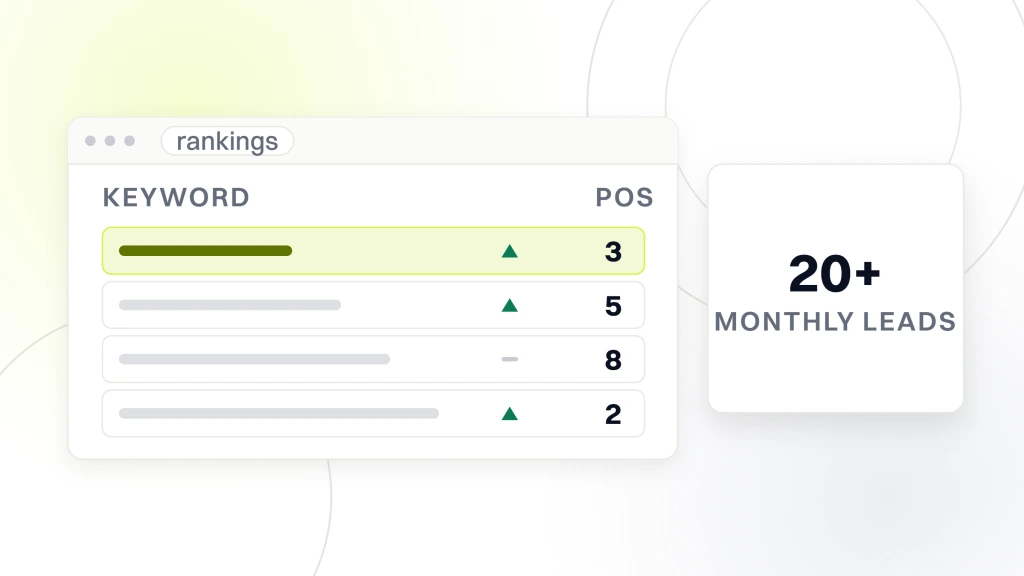
Abels Residential, a London letting agency, entered a crowded rental market with a conversion-focused website plus on-page and off-page SEO tuned for London rental queries. Inside the first year they hit 300+ keywords ranking on Google’s first page, 20+ qualified rental leads per month direct from organic search, and sub-2-second page load across every template. That’s the sizing that fits a boutique agency without a portal budget and still delivers a lead pipeline that doesn’t depend on referrals.
A top-tier Los Angeles luxury real estate team ran a fully custom rebuild with refreshed brand identity, IDX integration, and long-form market-insight content across a 10-year partnership. Users doubled (+100%), new-user share doubled (+100.1%), and pageviews more than doubled (+102.6%) against the prior site baseline. The plan carrying those numbers led with neighborhood-plus-price-band pages, private consult intake pages, and a market-report content calendar mapped to the top 8 luxury sub-markets in Los Angeles.
Both accounts prove the compounding pattern. This work isn’t a 90-day campaign that either wins or dies. It’s a 3 to 5 year practice that either compounds or wastes retainer fees. Every ranking neighborhood page carries the next one. Every local backlink carries the next. Every review in the map pack flow carries the next. Set the plan up right and the account gets easier every year the retainer runs.
Content patterns matter as much as the technical stack. Every neighborhood hub carries 8 sections. Neighborhood overview, price ranges by home type, school district data, commute times, walkability, recent sales, active listings via IDX, and a lead-capture block tied to a valuation offer. Every seller valuation page carries 6. Address input, recent comps in the neighborhood, market trend chart, time-on-market data, testimonial from a recent seller, and a booking CTA to a 30-minute consult. Every market report page carries quarterly refresh with new sales data, a written summary in plain English, and one embedded chart the reader can screenshot for LinkedIn.
Content velocity beats content polish on a new account. Two solid neighborhood hubs per week for 6 weeks lands the account at 12 ranked pages faster than four polished hubs over the same 6 weeks. Polish comes at the quarterly refresh, not the initial build. Every hub gets a light 45-minute refresh every quarter to add new comps, updated market trend numbers, and any new listings. That refresh cadence is the compounding motion. Rankings on refreshed pages hold and climb. Unrefreshed pages drop 2 to 5 positions per quarter.
Common mistakes that stall a brokerage account
First mistake. Chasing the head term since it looks big on paper. “Houses for sale in [big metro]” is a portal-owned SERP. Every hour on that term is an hour off the modifier terms that would rank position 2 for you. Skip the head term in year one and revisit only if your domain authority passes 40.
Second mistake. No seller-side content in the first 90 days. Every brokerage we audit has 40 buyer pages and zero seller pages. Seller keywords convert at 3 to 5x the buyer rate. Fix the ratio in weeks 3 to 6 or the account underperforms on booked listings for the first 12 months.
Third mistake. Skipping the Google Business Profile (GBP) cleanup. A cold GBP with 3 photos and 8 reviews caps map pack ranking at position 8 to 12. No content plan fixes that ceiling. Handle GBP cleanup in week 1 before the content ramp starts, and the map pack signals compound alongside the content signals.
Fourth mistake. No call tracking before the content ramp. Once organic produces consults, you need to know which page produced which call. Without dynamic-number insertion by traffic source, you’re guessing at attribution and the retainer budget conversation goes sideways in month 4. Install call tracking (CallRail or equivalent) in week 3 before the content ramp starts.
Fifth mistake. Reading tips off LinkedIn without connecting them to a concrete plan. A tip about anchor text is useless if it doesn’t map to the internal link graph choice you’re making for your neighborhood pages. Read tips as inputs, not the plan itself. Every best-practices article you read this week should end with a note in your strategy doc about which template it changes, or it goes in the trash.
90-day plan for a real estate SEO strategy
Weeks 1 to 4 (setup). Segment call, GBP cleanup, Search Console sweep, MLS filter cross-reference, call tracking install, technical baseline audit. Deliverable. Keyword-to-URL map for the first 20 pages, GBP with 30 photos and 40+ reviews, call tracker live. Setup is where retainer money either buys momentum or gets wasted. Skip any one of the six actions above and month two forces rework that costs twice as much as getting setup right the first time.
Weeks 5 to 8 (transactional pages). 6 neighborhood hubs, 6 seller valuation pages, technical fixes (schema, Core Web Vitals, internal links). Deliverable. 12 URLs live, first pages entering position 15 in Search Console, first booked consults from organic. Retainer conversations get easier in this phase since there’s finally something to point at. Every URL tracked, every call attributed, and the ratio of booked consults to hours starts looking reasonable to the account owner.
Weeks 9 to 12 (portfolio and expansion). 4 market-report pages, 4 buyer guides, 4 price-band variants, first backlink outreach wave. Deliverable. 24 URLs live, 8 to 12 ranking top 20, 2 to 5 booked consults per week from organic, first local backlinks secured. Total 90-day output. 24 pages, 4 to 6 booked consults per week, working attribution loop. From week 12 the model shifts to compounding maintenance. 2 to 4 new pages per week, monthly market reports, ongoing GBP updates, and quarterly technical audits. That’s the shape of a working retainer account past the first quarter.
What is the SEO strategy for real estate?
A working plan is a compounding practice that skips head terms owned by Zillow, Redfin, and Realtor.com and wins the modifier layer instead. That layer is neighborhood plus price band, seller valuation, first-time buyer guides, market reports, and school-zone queries. The stack sits on schema-clean listing pages, an inline-rendering IDX vendor, a clean Google Business Profile, and a chamber-plus-local-news backlink loop. Executed at a $999 to $3,500 per month retainer, that stack lands 2 to 5 booked consults per week from organic inside 4 to 6 months.
What are the top 5 SEO strategies?
The five moves that carry a brokerage account. First, neighborhood-plus-modifier keyword targeting instead of the head term. Second, an inline-rendering IDX vendor so Google can crawl listing content. Third, schema markup across listings, neighborhoods, agents, and reviews. Fourth, a local backlink loop from chamber, MLS board, and metro business journal mentions. Fifth, a Google Business Profile with 30+ photos and 40+ reviews so the map pack ceiling rises. Do those five in the right order over 90 days and the account books 2 to 5 consults a week by month 4.
What is a real estate seo strategy example?
A working example. Solo agent in Austin runs 6 neighborhood pages (Barton Hills, Zilker, Travis Heights, Bouldin Creek, Rosedale, Hyde Park), 6 seller valuation pages tied to those neighborhoods, and 4 market-report pages refreshed quarterly. IDX vendor renders inline. GBP has 42 photos and 47 five-star reviews. Chamber and Austin Business Journal each carry one backlink. Total spend $999/mo across 6 months. Result at month 5. 3 to 4 booked consults per week from organic, 2 signed listings per month, positive retainer math from month 6 forward.
what is seo strategy?
An SEO strategy is the organic pillar that carries lead volume without a portal spend. Paid ads run alongside, but SEO earns the compounding surface. Every ranking neighborhood page pulls buyers into the funnel for years. Every seller valuation page pulls the higher-value listing side. The plan pairs on-page work (schema, internal links, mobile speed) with off-page work (chamber links, local news mentions, GBP reviews). Executed over 12 months it usually beats an equal-budget paid campaign 3 to 5x on cost-per-consult, since the pages keep working after the retainer window closes.
How much does a real estate SEO retainer cost?
Retainer tiers we run on real estate accounts. Solo agents at $499 per month for a foundation build. Small teams at $999 per month for growth work across 6 to 12 neighborhood hubs. Brokerages with 10+ agents at $1,999 per month for authority work across 12 to 25 hubs. Multi-market brokerages from $3,500 per month for enterprise-scale programs across 25 to 60 hubs. Under the solo floor you can’t hit content velocity. Above the enterprise line the retainer covers a fractional in-house function tied to booked-listing outcomes, not hours.
How long does a real estate SEO strategy take to book calls?
First booked consults from organic land between weeks 8 and 12. The 2 to 5 consults per week benchmark hits between month 4 and month 6, depending on scope and metro competitiveness. Luxury sub-markets take longer, since the query volume is lower and the trust bar is higher. High-density urban rental markets can hit consults inside 6 weeks if the IDX and GBP are ready on day one. Compounding growth kicks in past month 9 as backlinks and reviews stack.
Can a real estate seo strategy beat Zillow on head terms?
No, and chasing those terms wastes retainer budget. A working plan skips head terms like houses for sale in [metro] and wins the modifier layer instead. Neighborhood plus price band, seller valuation, first-time buyer guides, and market reports carry the same booked-consult volume without the portal fight. Revisit head terms only if your domain authority passes 40 and your local backlink profile has 50+ authentic links from your metro. Under that bar, portal SERPs eat the effort.
How many pages does a real estate site need in year one?
A solo agent gets 40 to 60 pages live in year one. A small team gets 80 to 120. A brokerage gets 120 to 200. A multi-market brokerage crosses 200 pages. Below the solo floor the pipeline doesn’t produce enough surface area to rank inside 12 months. The page mix stays consistent across every tier. Roughly 40% neighborhood hubs, 25% seller-side pages, 20% buyer guides and market reports, 10% price-band variants, 5% agent profile depth. Skew heavier to seller if the account leans listing-side.
Do IDX vendors matter for a real estate SEO strategy?
Yes, more than any other technical choice. Inline-rendering IDX vendors let Google crawl listing content and rank it. Iframe-rendering IDX vendors hide the listing content from Google and cost you every listing-page ranking. Pick the inline vendor before signing a two-year contract or the plan caps at the neighborhood-page level. Test any vendor before signing. View source on a sample listing page. If the address, price, and property description sit in the raw HTML, you’re inline and safe.
How does GBP fit into a real estate SEO strategy?
Google Business Profile sets the map pack ceiling. A cold GBP with 3 photos and 8 reviews caps you at position 8 to 12 no matter how strong the on-page work runs. Clean the GBP in week 1. 30 photos, 40+ reviews, correct service areas, correct categories, weekly posts for the first 6 weeks. Once the GBP is dense the map pack and organic signals compound together, and every neighborhood page pulls double duty across the two ranking surfaces.
What to run this week to kick off
Three actions to finish this week. Book 60 minutes for the segment call. Residential agent, luxury agent, urban team, commercial broker, or investor. Pull the last 90 days of Search Console data and flag queries at positions 5 to 15. Audit your Google Business Profile against the checklist (categories, photos, reviews, service areas).
Those three actions become the foundation for the 10 steps. Segment decides templates. Search Console picks the first quick wins. GBP cleanup sets the map pack ceiling. Do them in that order and week two starts with a keyword-to-URL map you can defend to any brokerage stakeholder.
For accounts that want the plan plus the execution handled together, our Real Estate SEO Services for Brokerages team runs the segment call, the GBP cleanup, the Search Console sweep, and the first 24 pages inside a 12-week engagement. For the wider retainer motion behind a working real estate account, see Real Estate Marketing Agency for Brokerages. And for the PPC layer that pairs with organic on most working real estate accounts, see Real Estate PPC Agency for Brokerages.