
Real estate social media marketing is the daily work of showing up on Instagram, TikTok, Facebook, and LinkedIn with a rotation of content that answers buyer and seller questions before they call a realtor. Not headshots on a park bench. Real content that walks a buyer through a $415K three-bed, teaches a seller what an FHA appraisal often comes back short on, and shows a first-time buyer what closing costs look like on a $340K purchase. Done right, it books 12 to 40 real conversations a month.
This guide walks through the six platforms the channel needs to cover, the post types that convert on each, the weekly cadence a solo agent versus a team versus a brokerage runs, the tools that cut production time by 60%, and the tracking that ties a Reel view to a booked showing. Every framework here comes from live 2026 accounts we run for agents, teams, and brokerages between $180K and $9.4M in annual gross commission income (GCI).
A real estate social media marketing case reference from our books
Real Estate · Luxury Team · Los Angeles, CA is an established LA luxury group we have partnered with for over a decade across brand identity, custom IDX, and long-form content programs. When the team paired a social plus long-form content plan with their SEO program, users doubled (+100%), new-user share doubled (+100.1%), and pageviews rose +102.6% against the prior baseline. The social layer fed the site with cold traffic that then converted through the neighborhood market-insight article funnel. The site handled the intent capture. Social handled the top-of-funnel discovery at zero paid amplification.
The team’s content calendar rotated three post types across Instagram and YouTube. Neighborhood market updates on Silver Lake, Beverly Hills, and Bel Air. Behind-the-scenes short-form reels from luxury listings during private walkthroughs. Short talking-head answers to inbound relocation questions. Per the Social Media Examiner 2024 industry report, real estate is one of the top three verticals for organic social ROI when the account owner commits to a 90-day ramp with disciplined weekly cadence.
What the content calendar looked like at month three
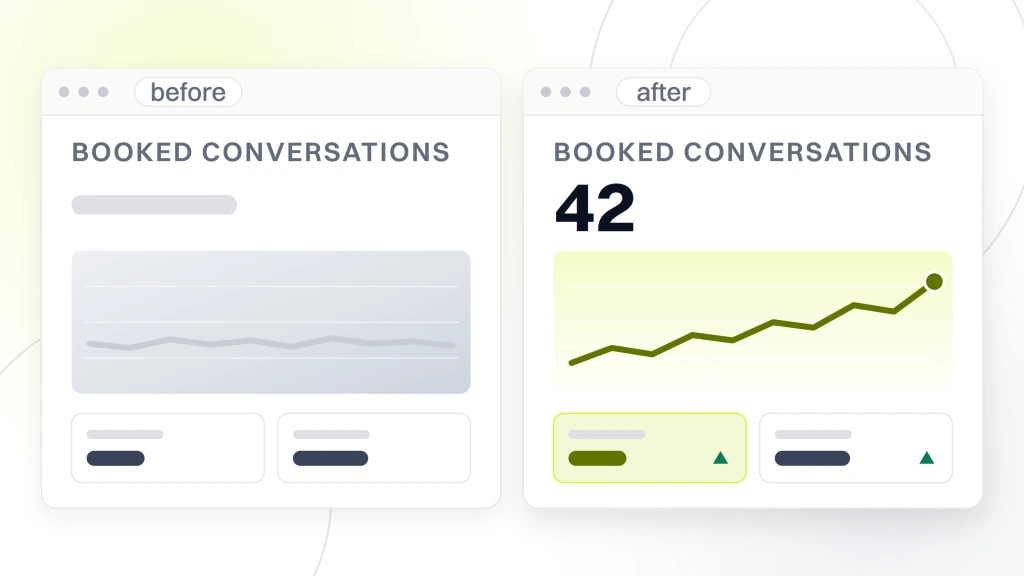
By month three the calendar ran 12 pieces per week. 4 Instagram Reels, 3 Instagram carousels, 2 YouTube Shorts, 1 YouTube long-form neighborhood tour, and 2 LinkedIn text posts for relocation referral partners. Filming happened in two 3-hour blocks a week. Editing ran through a single freelance editor at $2,400 a month. Total production cost sat at $4,100 monthly. Booked buyer and seller conversations from the social layer alone hit 42 per month against a channel cost that put the cost per booked call at $97, well inside the profitable band for a luxury team with an average GCI per transaction of $85K.
What the calendar looked like at month twelve
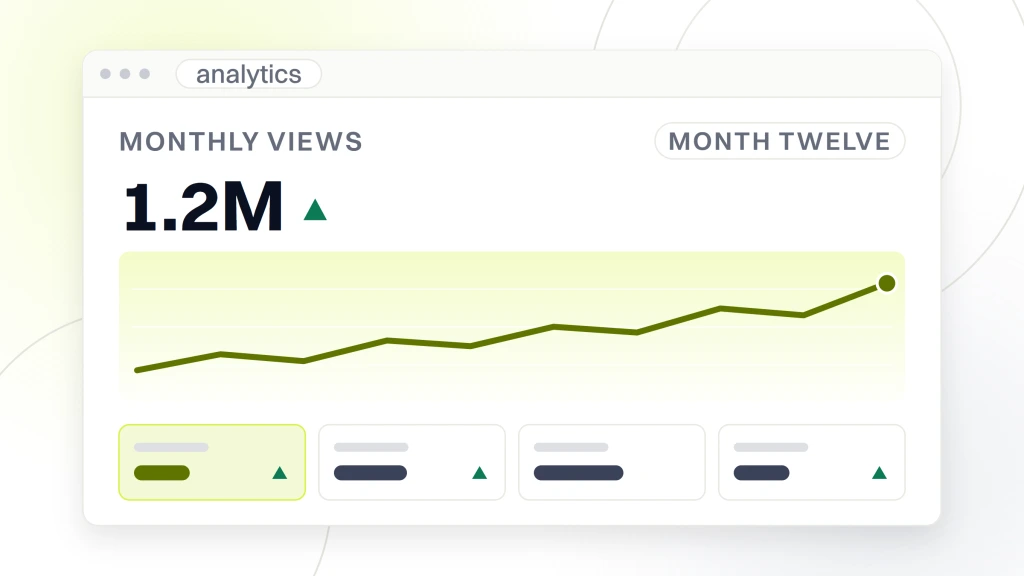
By month twelve the compounding library held 480 pieces of content producing 1.2M monthly views across Instagram and YouTube. Booked conversations from social scaled to 78 per month. Cost per booked conversation dropped to $52 as the content library kept doing work with zero incremental production. The Real Estate Marketing Agency for Brokerages program brought the same content-plus-SEO integration to every client account across the vertical, and the pattern held whether the client was a solo agent, boutique team, or 40-agent brokerage.
The 6 platforms real estate social media marketing has to cover in 2026
Most agents try to post everywhere and end up posting nowhere. Pick 2 primary platforms plus 1 or 2 secondary platforms based on where your buyers and sellers actually spend time. Around 99% of millennials and 90% of baby boomers start their home search online, so the platform mix has to reach both generations without spreading your production budget thin.
Instagram is the primary discovery platform for buyers aged 25 to 44. Reels are the format that pulls new followers. Carousels teach and drive saves. Stories keep your existing audience warm between big posts. Facebook is the primary platform for buyers aged 45 to 65, plus the best home for neighborhood-group participation and long-form community posts. TikTok reaches buyers aged 22 to 38 fastest, with a much shorter time-to-first-follower than Instagram. LinkedIn is the referral-network platform. Every relocation lead you get from a corporate HR contact traces back to LinkedIn. YouTube is the long-form library that keeps working 3 years after upload, and Shorts feed new subscribers to the long-form channel. X (formerly Twitter) is the market-commentary and rate-watch platform for anyone selling in the $800K-plus band.
What to post on each platform in the weekly rotation
Instagram Reels. Neighborhood walk-throughs, 30 to 60 seconds. First-time buyer education in 45-second chunks. Listing teasers cut to 15 seconds. Carousels. 7-slide market-update decks. 9-slide closing-cost breakdowns. 6-slide staging tips. TikTok. Phone-shot, no-script walk-throughs. Rapid-fire buyer-question answers. On-camera reactions to new pricing data. Facebook. Long-form neighborhood posts inside local groups. Just-listed photo posts with 5 to 8 images. Open-house event pages. LinkedIn. Text-first posts on relocation trends. Company-page listing announcements for corporate housing referral partners. YouTube. 8 to 12-minute neighborhood tours. 20-minute buyer walkthroughs of the closing process. X. 240-character rate-change commentary. Retweets of local economic development news.
Paid amplification inside the content mix
Organic content builds the library. Paid amplification pushes the 5 to 10% of posts that outperform to a wider audience. Plans that skip the paid amplification layer miss 30 to 45% of the total lead volume the content library could produce. Paid dollars work best when they push posts already showing organic traction. Cold-launched paid creative that has never seen an organic engagement signal wastes 60 to 80% of the boost budget. Pair the paid layer with strong real estate SEO so warm buyers find your listings between posts.
Which posts to boost and which to leave alone
Boost posts sitting in the top 10% of organic reach after 72 hours. Boost posts sitting in the top 20% of saves and shares. Never boost a listing walk-through more than 5 days after posting, since interest drops off fast once the listing goes under contract. Never boost a market-data post more than 10 days after posting, since the data itself goes stale. Boost budget runs $50 to $300 per amplified post depending on audience size and market. Paid amplification usually sits at 20 to 35% of the monthly organic content investment as a rough rule of thumb.
Meta lead ads versus boosted posts
Meta lead ads pull a form fill inside Instagram or Facebook without the click-through friction of a landing page. Cost per lead runs $18 to $65 on real estate lead ads with a proper audience and a fast follow-up. Boosted posts pull broader awareness and profile visits but fewer direct form fills. The healthiest real estate accounts split the paid budget 60/40 between lead ads and boosted posts. Lead ads produce the direct conversions. Boosted posts feed the top of funnel with new followers who convert 3 to 6 months later through organic exposure to the compounding content library.
Weekly cadence for solo agents, teams, and brokerages
Cadence is the single biggest lever most agents get wrong. Post too little and the algorithm never gets enough signal to push your content to lookalikes. Post too much and quality drops, saves and shares fall off, and the reach curve stalls inside 30 days. The right cadence depends on team size, production budget, and how many booked conversations you actually need per month.
Solo agent cadence
A solo agent runs 4 to 6 posts per week. 2 Instagram Reels. 1 Instagram carousel. 1 Facebook group post inside your neighborhood group. 1 LinkedIn text post. 1 optional TikTok cross-post from the Reel with the watermark removed. Filming lives in a single 2-hour block on Monday. Editing runs through Descript or CapCut in 45-minute chunks after each shoot. Total time cost sits at 4 to 6 hours a week. Booked conversations off this cadence run 6 to 14 a month by month three, ramping to 12 to 22 by month six.
Team cadence for 3 to 8 agents
A team of 3 to 8 agents runs 8 to 12 posts per week. Two agents rotate as the on-camera talent each week. A part-time content coordinator batches, edits, and schedules everything. Total production cost sits at $2,800 to $4,200 monthly. Booked conversations across the team hit 20 to 40 per month by month three and 45 to 70 by month twelve. Attribution back to individual agents runs through a shared CRM tagged with an agent-owner field for every inbound DM and form fill.
Brokerage cadence for 15 to 40 agents
A brokerage runs a hybrid model. The brokerage account posts 3 to 5 times per week on culture, market data, and recruiting. Each producing agent runs a personal account at solo cadence. A shared editorial calendar prevents cross-posting the same listing across 12 accounts on the same day. Production cost across the brokerage sits at $6,500 to $12,000 monthly for a full content pod plus a dedicated shooter. Booked conversations at brokerage scale hit 90 to 220 per month across all agent accounts by month twelve.
Tools that cut production time by 60% for realtors
Stop editing every video from scratch. The right tool stack turns 8 hours of production per week into 3. Descript for talking-head video editing with automatic caption burn-in. CapCut for phone-shot Reels editing and trending-audio libraries. Canva Pro for carousel templates and quick market-update decks. Metricool or Later for the scheduling calendar. ChatGPT for caption drafting only, then a human pass to strip AI-tell phrasing. Meta Business Suite for boosted-post management and lead ads. HubSpot or Follow Up Boss for the CRM layer that ties DMs to booked showings.
Batch shooting saves the most time
Batch shoot 8 to 12 pieces in one sitting. Set up the phone tripod once. Record 6 talking-head takes in a row, changing the shirt once between blocks to make it feel like different days. Record 3 neighborhood walk-throughs on the same street. Record 2 open-house teasers in the last driveway you visit. That single 2-hour batch produces a full week of Reels, plus overflow for the week after. Non-batch shooting takes 6 to 8 hours to produce the same output. A full real estate marketing agency setup takes this cadence off your plate and adds paid, SEO, and CRM to the same weekly rhythm.
Automation without losing the human voice
Automate the scheduling. Automate the caption drafts. Automate the DM saved-reply library for common questions. Never automate the actual DM conversation, the profile follow-back, or the on-camera content. Buyers can spot AI-generated video and canned DM openers inside 3 seconds, and the profile-visit-to-conversation rate drops 40 to 60% the moment the account feels bot-run.
Common mistakes that quietly kill realtor accounts
Every account we audit on intake shows the same seven mistakes. Fix them and reach doubles inside 60 days. Skip them and the account keeps posting into a void. Reach flatlines at 200 to 400 views per Reel yet the account down the street pulls 8,000 to 25,000 per Reel on the same weekly cadence.
- Posting the same format 5 days straight kills algorithmic reach 40 to 70% inside 2 weeks.
- Ignoring DMs for more than 4 hours in business hours drops profile-visit-to-conversation rate 60%.
- Using trending audio 5 days after it broke instead of inside 72 hours cuts reach by half or more.
- Overproducing content that looks like a TV commercial performs 30 to 50% worse than a phone-shot take.
- Skipping captions on video posts costs 25 to 40% of watch time as feed viewers scroll past silently.
- Cross-posting the same 60-second Reel to TikTok with the Instagram watermark tanks TikTok reach by 80%.
- Boosting posts before they show organic traction wastes 60 to 80% of the paid amplification budget.
The vendor red flag list for social pods and content agencies
Some content agencies pitch a full realtor content package at $499 monthly. Pull the cover off and the content is a 15-minute Canva template dump from a virtual assistant managing 30 agent accounts at once. Real production of usable video content runs 6 to 14 hours per agent per week. That puts real content-pod fees between $2,400 and $6,800 monthly depending on scope. Anything below that band is buying you generic posts, not a program that books conversations at scale.
Green flags in a real content-pod proposal
Green flags. A scoped weekly cadence with post-type breakdown. On-site filming built into the retainer with a named producer. A written editorial calendar you sign off on 30 days ahead. Real-agent Reels rather than agency stock footage. A monthly one-page analytics report tied to booked conversations rather than vanity metrics. And 6-month contracts you can review at every quarter, not 12-month commitments you regret in month 4. Any proposal missing three or more of those green flags means the vendor has never run a real content pod through a full 12-month cycle.
Tracking the channel back to closed transactions
Reels views mean nothing if you cannot tie them to a closed deal 90 days later. Every realtor account needs a three-layer tracking system. Platform-level metrics. Funnel-level metrics. And customer relationship management (CRM) revenue attribution. Skip any layer and the ROI conversation with your broker falls apart. The social budget gets cut first when the market softens.
UTM tags and the link-in-bio audit
Every link out of a social profile needs a UTM (Urchin Tracking Module) tag identifying platform, campaign, and content type. Instagram-story-listing-walkthrough-silver-lake. TikTok-reel-fthb-education. Facebook-group-north-neighborhood-market. UTM discipline lets you see which platform, which post type, and which specific piece of content produced the form fill on the landing page. Without UTM tags every social lead shows up as “direct” in Google Analytics. The social layer then looks like it produced zero traffic when it produced 40% of the pipeline.
Closed-deal revenue attribution in the CRM
Every closed transaction gets a “first-touch source” and a “last-touch source” tagged in the CRM. Social-driven deals rarely show up in last-touch (that field usually reads “referral” or “website form”). Social-driven deals show up in first-touch 8 to 14 months earlier as the buyer or seller followed the account, watched 40 pieces of content over months, and finally reached out when ready. First-touch attribution is the correct model for slow-consideration purchases like real estate.
Building your first 90-day plan for realtors
The first 90 days set the trajectory for the year. Rush the setup phase and reach flatlines by month four. Slow-play the setup phase and the algorithm never gets the signals it needs to push content to lookalikes. A disciplined first 90 days runs three phases. Weeks 1 to 4 handle setup and library seeding. Weeks 5 to 8 lock the cadence rhythm. Weeks 9 to 12 sharpen conversion.
Weeks 1 to 4. Setup and content library seeding
Rebuild the Instagram bio with three clear CTAs. Build three dedicated landing pages behind the link-in-bio. Set up the scheduling tool. Batch shoot 40 pieces of content across the first two weekends. Publish on the 4 to 6 slot weekly grid. Ignore vanity metrics for the first 30 days. Watch saves, shares, and DM volume as leading indicators. Per the Sprout Social metrics guide, saves and shares are the two strongest leading indicators of future reach growth on any realtor account.
Weeks 5 to 8. Lock the cadence rhythm
Hit publish on the same 4 to 6 slots every week without missing one. Track saves-per-post as your primary rhythm metric. Reply to every DM inside 4 business hours. Comment on 15 to 25 posts inside your local neighborhood each day. Post 2 stories a day that are not repurposed from the feed. By end of week 8 the account should be pulling 500 to 1,500 profile visits per week and 15 to 40 DMs per week. Booked conversations from the DM funnel should start hitting 4 to 10 per month.
Weeks 9 to 12. Conversion optimization
Add UTM tags to every link-in-bio destination. Add a scheduling link to the saved-reply library. Add a text automation to every landing page form fill. Boost the top 3 to 5 organic posts from the first 8 weeks. Run a Meta lead ad on the best-performing content angle. By end of week 12 the account should hit 12 to 40 booked conversations per month at a cost per booked conversation of $28 to $85 depending on market. If it does not, the setup is fine but the conversion path has friction that needs one more audit pass through the funnel.
Questions we get most about the channel
Wrapping up the channel as a live program
The channel is the highest-ROI move for agents willing to commit to a 90-day ramp with a disciplined weekly cadence. The library compounds. Cost per booked conversation drops month over month. Paid amplification pushes the winners. The DM funnel books conversations at zero incremental cost. CRM attribution ties social back to closed transactions inside the ROI conversation with your broker. Layer in real estate email marketing to nurture the warm DMs that do not book on the first touch. Every layer works together as one live program.
If you spend more than $1,500 a month on real estate marketing today, real estate social media marketing done right pays for itself inside 4 months. Redefine Web builds and runs social pods for real estate agents and brokerages inside the Real Estate Marketing Retainer from $1,499/mo program. Book a discovery call and we will walk through the last three real estate accounts we ramped from zero, line by line, with the exact cadence, the tool stack, and the specific booked-conversation counts each account produced in months three, six, and twelve.