
A real estate marketing agency runs the seven channels that book showings and closings for agents, teams, and brokerages. Website plus IDX. Google Business Profile plus local SEO. Google Ads on high-intent listing queries. Meta and TikTok for the softer discovery layer. Email nurture off the CRM. Video for listings and neighborhood tours. Review generation across Google, Zillow, and Realtor.com. The right vendor runs all seven as one connected program, not seven silos with seven invoices. Get it right and the phone rings 20 to 60 times a month with real buyer and seller intent inside the first 90 days.
Abels Residential is a London rental letting agency we launched from zero. Inside 12 months we ranked 300+ keywords on page one and drove 20+ qualified rental leads per month directly off organic search, on a page load under 2 seconds. McCarthy Court, a 7-unit luxury Sidcup development, sold 100% in 3 months pre-completion via an immersive virtual showcase site, pulling 60+ qualified buyer leads and 10K targeted visits. A separate top-tier Los Angeles luxury team we partnered with for a decade doubled users (+100%), new-user share (+100.1%), and pageviews (+102.6%) after a full custom IDX rebuild and refreshed brand identity. These aren’t outliers. They’re what a vertical-specific program actually produces when the seven channels run as one.
What the seven-channel program actually covers
Real estate marketing services cover seven working channels under one accountable owner. Your website with a live IDX feed. Google Business Profile hygiene and local SEO. Paid search on listing and neighborhood queries. Meta and TikTok for top-of-funnel discovery. Email and SMS nurture wired into the CRM. Video walkthroughs for listings and neighborhoods. Reviews across Google, Zillow, and Realtor.com. Every channel feeds one dashboard with one number that matters to you: cost per closed transaction. A vendor that only runs one channel is a specialist, and specialists are fine for pilots. For a full program that pays the retainer plus ad spend inside 90 days, you want the vendor running all seven.
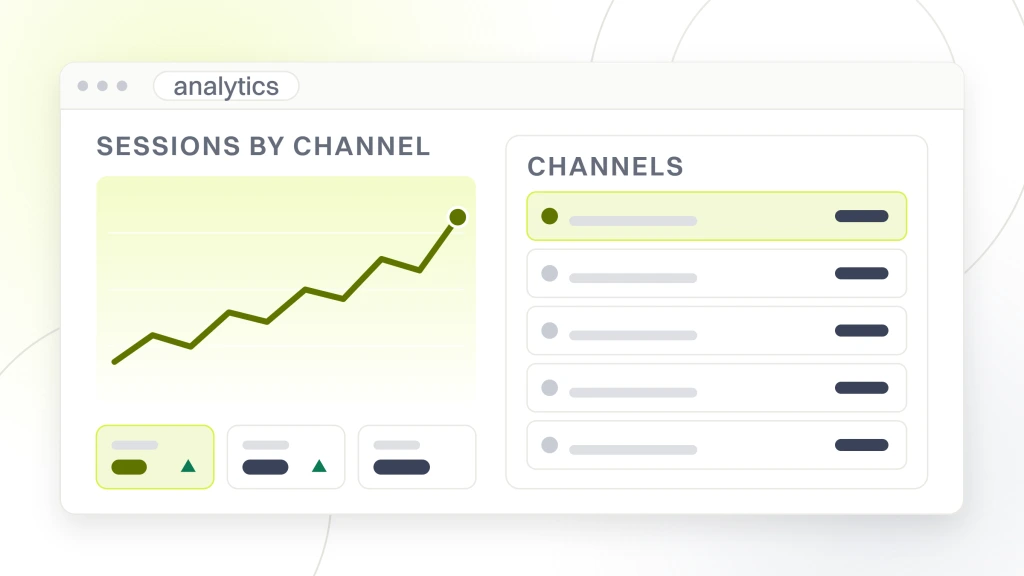
Redefine Web offers a full-vertical program at real estate marketing services. A working retainer starts at $2,499 per month for growth accounts, $3,999 per month for scale-tier accounts, and $6,000+ per month for brokerages and multi-agent teams. Foundation-tier engagements begin at $1,499 per month for agents building the first version of the program. Web design projects for real estate practices land at $2,500 for launch sites, $4,500 for growth builds with IDX, and $7,500 for Scale-tier custom builds. Ad spend is billed separately and stays inside your own client-owned Google Ads MCC.
Red flags in a vendor proposal
Every proposal reads clean until you compare it against a second one. The gap shows up in the details. Below are the red flags we watch for in real estate proposals, plus green flags that separate a working vendor from a pitch deck full of stock photography and vague promises about return on ad spend.
- No IDX integration in scope. If the site build ignores IDX, you’ll pay for it separately at $8,000 to $15,000 in month four.
- No conversion tracking QA before ad launch. Every serious engagement starts there.
- Retainer under $500 with a promise of full-stack management. That budget covers three hours a month of senior time.
- Account ownership through the agency’s MCC instead of a client-owned MCC link with 24-hour termination.
- No mention of Google Business Profile or local citation work. The map pack drives roughly 40% of a real estate lead pipeline.
- Case studies without real client names, real numbers, or real timeframes.
- Percent-of-spend pricing on accounts under $3,000 monthly ad budget. Creates a conflict of interest around inflating spend.
Every agent gets one really tempting pitch. Full-service real estate marketing for $199 a month, plus a proprietary conversion optimizer that promises to triple your closings by Friday. In practice, the optimizer is a WordPress plugin that swaps the button color, and the account manager is a chatbot named Kevin. Neither one has ever booked a showing in its life.
Green flags to look for instead
A written scope naming SEO, Google Ads, GBP, and CRM by platform (HubSpot, Follow Up Boss, kvCORE, etc.). A week-one tracking QA schedule. IDX build inside the setup fee if the current site lacks a real IDX. A weekly one-page report format sample. Client-owned MCC access with 24-hour termination. Case studies with real client names (Abels Residential, McCarthy Court, and named regional real estate accounts), real numbers, real timeframes, and at least six months of published-result data.
Metrics that decide whether the program is working
Reporting dashboards display 200 metrics. A working vendor watches roughly 10. The rest is noise. For real estate the 10 split into three groups. Spend efficiency, lead quality, and revenue outcomes. Founders shopping a retainer should ask which 10 the agency tracks weekly. Vague answers mean the account probably runs on autopilot with no one watching the wheel.
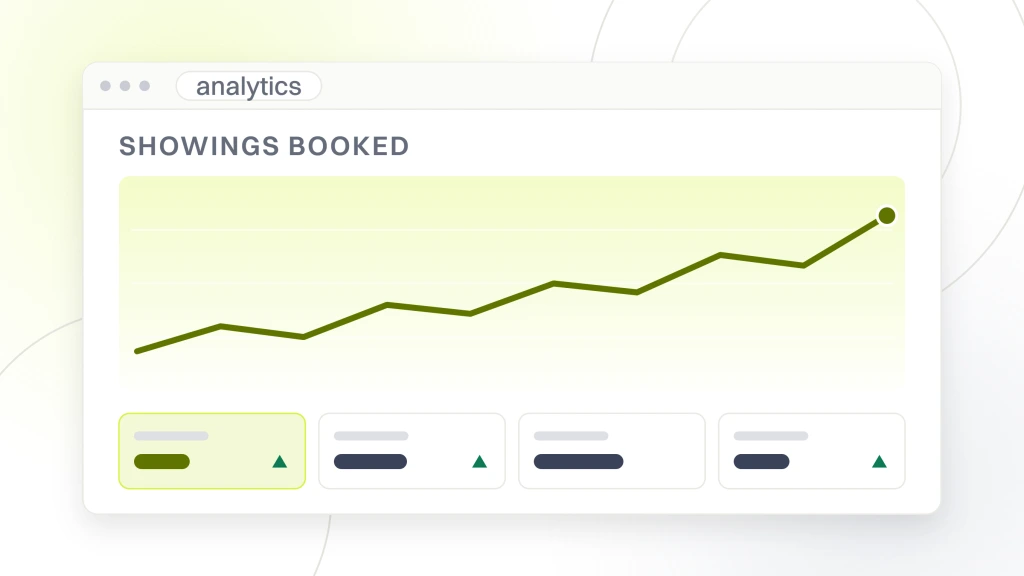
Spend efficiency plus lead quality
Cost per click, cost per qualified lead, cost per booked showing, quality score, and search impression share cover spend efficiency. Lead quality metrics track showing-to-lead ratio, disqualified-lead rate, and lead source attribution. The showing-to-lead ratio is the biggest lever. Accounts scoring under 20% booked-showing rate waste spend on junk leads that show up in the CRM but never book. Weekly review keeps this in check. A booked-showing scorecard shared with the client every Monday keeps the account manager honest and the agent oriented on the numbers that decide renewal.
Revenue outcomes that decide renewal
Cost per closed transaction, average commission per closed deal, revenue per source channel across the last 12 months, and lifetime value across the client roster. These four decide renewal. A weekly Slack summary with these four keeps the agent or brokerage owner oriented. When two of the four slide two weeks in a row, the manager runs a mid-month strategy call rather than waiting for the monthly review. Renewals close themselves when the four numbers stay green quarter after quarter, and the pipeline stays predictable across every seasonal swing in the market.
Timeline for real estate marketing services to show results
Month one shows setup and tracking work with modest volume changes. Month two shows the first optimization signal as negative keywords compound and Smart Bidding learns off cleaner data. Month three is where most real estate accounts hit break-even against the retainer plus ad spend. Months four through six are where compounding kicks in and cost per acquisition drops meaningfully. Local SEO takes 8 to 12 weeks to move the map pack. Full seasonal pattern shows up around month nine.
What the first 30 days look like
Week one covers Google Business Profile audit and cleanup, conversion tracking QA, CallRail installation, and access exchange across Google Ads, Meta Business Manager, and the CRM. Week two covers keyword research by service and neighborhood, competitor teardown, and initial ad copy. Week three covers landing page rewrites for the top three neighborhood pages plus IDX QA. Week four covers launch of the restructured Google Ads account and the first weekly report. Nothing about the first 30 days is speculative. It’s execution.
Month three break-even math
Break-even math for the retainer is honestly simple. At $2,500 per month retainer plus $6,000 monthly ad spend, break-even is roughly one closed transaction with $8,500 in commission. Most partnerships hit that inside month three. Multi-transaction months start in month four and compound from there. If the agency cannot show you a path to break-even inside 90 days on a written plan, they either don’t understand the vertical or don’t have the case data to back the promise.
Ten questions to ask any vendor before signing
Every proposal reads the same until you push on the details. These 10 questions separate the agencies that own real estate accounts from the agencies that sell the pitch. Ask all 10 in the first sales call. Any vendor who wants your signature will answer them straight.
- Which real estate accounts have you run past 12 months, and what was the cost per closed transaction on each?
- Do we own the Google Ads account through our own MCC link with 24-hour termination?
- What conversion tracking platform will you install in week one?
- Is IDX integration and Google Business Profile hygiene inside the setup fee or a separate scope?
- How many hours of senior time land on our account weekly, and who is the named account manager?
- What’s your process for disputing low-quality leads across Local Service Ads and Meta lead forms?
- Show me a sample weekly one-page report from a similar-sized real estate account.
- What’s the written trigger for a mid-month strategy call if numbers slide?
- How do you attribute a closed transaction back to the exact keyword and page that produced the lead?
- What are your last three lost renewals and what changed in the account that lost them?
What the answers should sound like
Named accounts with real numbers. Client-owned MCC access as default, not an upgrade. CallRail or WhatConverts in week one, not month three. IDX and GBP inside the setup fee. 5 to 12 hours of senior time weekly on a $2,500 retainer, more at higher tiers. A live dispute process running monthly. A sample report that shows spend, leads, showings, and closed deals on one page. A written mid-month trigger at 20% below plan. HubSpot or Follow Up Boss integration wiring closing data back into Google Ads via offline conversion imports.
Answers that should end the call
Vague answers about client references. Agency-owned MCC access with 30 days notice to transfer. Conversion tracking not covered in scope. IDX and GBP as $2,500 add-ons. Junior account managers at senior rates. No dispute process for LSA junk leads. Reports that show impressions and clicks but not showings or closings. No written mid-month trigger. Attribution that stops at form submission and never touches CRM data. Any two of those in one call is enough to end it and move to the next vendor on the shortlist.
Real estate digital marketing agency work needs vertical specialization
General digital marketing agencies win contracts by promising a full stack across every vertical. Real estate marketing services demand specific vertical fluency that general agencies rarely have. MLS integration, IDX feeds, showing versus buyer versus seller intent segmentation, Zillow and Realtor.com and Homes.com dynamics, DRE and licensing compliance in ad copy, fair housing language rules. A vendor that doesn’t know these on day one costs you money in the first 60 days.
Compliance and fair housing in ad copy
Real estate ad copy runs into HUD fair housing rules on every platform. Meta and Google enforce these algorithmically now. Any language that could imply preference on protected classes gets the ad flagged, disapproved, or the account restricted. A vertical-fluent vendor runs a compliance check on every ad copy variation before launch, keeps a bank of pre-approved neighborhood descriptors, and has a documented process for handling flagged ads. General digital marketing shops learn this the hard way in month two, usually after a Meta account gets restricted.
MLS and IDX feed reality
IDX feeds pull MLS data every 15 minutes into the site. Getting the feed live requires MLS board approval, a signed IDX agreement, and a technical integration through a vendor like iHomeFinder, Showcase IDX, or a direct RESO Web API pull. General marketing agencies quote a website build without factoring in a 30 to 45 day IDX approval window and then miss the launch date by six weeks. A vertical-fluent shop starts the IDX paperwork in week one, in parallel with the site design phase, so the launch date holds.
Budget and channel mix for the program
Most agents plan to spend 5% to 10% of gross commission income on marketing. Agents in growth mode or in competitive metros push that to 10% to 15% and track every major campaign against appointments, closings, and return on ad spend. On a $500,000 gross commission year, that puts total marketing in the $25,000 to $75,000 range across retainer and ad spend combined. Split that roughly 40% agency retainer, 50% paid media, and 10% content and creative production and you get a working budget for a solo agent or small team.
Brokerages and multi-agent teams scale the same math up. A 15-agent team spending $250,000 a year across marketing usually splits it 35% retainer, 55% media, and 10% production, and holds a small reserve for market-specific campaigns like new-development launches or seasonal buyer pushes. The right real estate marketing company earns its cut by making the media dollars work harder, not by inflating the retainer.
Getting started with a real estate marketing agency
The first conversation with any vendor should not be a slide deck. It should be a working session on your last 12 months of data. Which channels produced the closings you already have. What the cost per closed transaction looks like today. Where the pipeline breaks down between lead and showing and closing. A vendor who runs that math with you inside the first call gets the second call. A vendor who runs slides gets a thank-you email.
The intake data a real vendor asks for
Last 12 months of Google Ads data. Last 12 months of GA4 traffic and conversion data. CRM export of leads plus attributed source plus closed status. Current IDX and CRM platform names. Ad spend by month and channel. Number of licensed agents on the team. Average commission per closed deal. Geographic service area including primary ZIPs. Current site URL and any complaints from the team about what breaks. That’s about eight pieces of data. Any vendor worth a signature asks for all eight before quoting.
What Redefine Web pushes live in the first 90 days
Days 1 to 30 covers tracking QA, GBP cleanup, ad account restructure, keyword research by neighborhood, and initial IDX-integrated landing page work. Days 31 to 60 puts the first content cadence live on 8 to 12 neighborhood pages, first Google Ads campaigns optimizing off clean data, and first CRM automation flows firing. Days 61 to 90 sees local SEO signals compounding, first meaningful drop in cost per lead, and first booked showings attributable to the new program. Every real estate account we run signs an itemized 90-day plan before day one, and the plan is a shared doc both sides update weekly.
These are the questions we get most often on discovery calls with agents, teams, and brokerage owners. Short direct answers, real numbers where they exist, and pointers to the underlying math.
Wrapping up how to pick the right vendor
A vendor worth the retainer runs the seven channels as one connected program off one dashboard and one accountable owner. Website plus IDX. Local SEO. Google Ads and LSA. Meta and TikTok. Email and SMS off the CRM. Video for listings and neighborhoods. Reviews across Google, Zillow, and Realtor.com. Real client numbers from Abels Residential, McCarthy Court, and the Los Angeles luxury team prove the pattern holds across market segments and price points. Integrated local SEO plus paid programs still beat single-channel plays on cost per acquisition in 2026, because the same buyer gets a second and third chance to convert across channels.
If your practice does 15+ transactions annually or spends over $3,000 monthly on ads, the right program pays for itself inside three months. Ask three vendors for line-item scopes. Ask all 10 questions above. Pick the one who owns the seven-channel program, gives you MCC access, and shows you a written 90-day plan. Redefine Web offers a real estate program at real estate marketing services, and a retainer at real estate marketing retainer from $1,499 per month. Book a call and we walk through the last three real estate accounts we turned around, line by line, with the exact structure changes and the numbers each account produced inside 90 days. If you need channel-specific depth first, see real estate SEO services or real estate PPC agency.