Beverage brand social media gets treated like an aesthetics problem when the real work is distribution, demand, and repeat purchase stacked together. A cold-brew brand posting moody flat-lays three times a week won’t move cases through Kroger. A canned cocktail brand chasing follower counts on Instagram won’t build the CRM that DTC repeat orders need. The category rewards a specific kind of social strategy that most beverage brands never run.
At Redefine Web we’ve run Meta and TikTok accounts for kombucha, sparkling water, canned cocktail, functional beverage, cold brew, and craft cider brands. The pattern stays the same. Social converts when it ties to a physical purchase moment (retail shelf, taproom, event, sampling), not when it floats as disconnected brand building. And retention on beverages happens through SMS and email, not through comments and shares.
This guide walks through the beverage brand social media program we run with clients. Every recommendation ties to a specific outcome. Shelf velocity. DTC repeat rate. Event attendance. Distribution wins. You get a channel-by-channel structure that fits a beverage brand’s real economics, not the influencer-agency pitch that promises reach and never proves revenue. Retainer pricing at Redefine Web starts at $999/mo and scales to $4,500/mo based on channel mix and content volume, so the math stays honest at every stage.
Beverage Brand Social Media Solves A Trial Problem, Not An Awareness Problem
Beverage brand social media budgets get spent almost entirely on awareness content when the bottleneck for most brands is trial. A drinker who hasn’t tasted the product needs a decision moment at retail, at a bar, at a sampling table, or on a DTC landing page. Beverage brand social media content that doesn’t feed one of those moments produces reach numbers without producing sales.
Trial content inside a beverage brand social media plan looks different from awareness content. Trial content answers real questions. What does it taste like. Where can I buy it. Who is this for. How do I use it. Awareness content chases mood and story. Both matter, but the ratio should sit at 70 percent trial and 30 percent awareness for any brand under $30 million in yearly revenue. That split holds across every beverage social program we run.
The trial gap gets closed by store locators, retailer-specific promotions, and DTC first-purchase incentives. Every social post should push toward one of those endpoints. A beautifully shot Reel that ends with just the brand logo wastes the impression. The same Reel ending with a swipe-up to a zip code store locator or a first-order coupon captures real behavior. Grade beverage brand social media on click-through and conversion metrics, not on comment volume.
Sampling amplification is where social pays back hardest. According to Retail Insider industry reporting, in-store sampling can drive trial-to-purchase conversion in the 30 to 50 percent range in a single visit. Social content that tells drinkers exactly which stores are running samples this weekend, plus which nearby retailers stock the SKU, turns the sampling event into a shelf-velocity moment. Skip that layer and the sampling ROI evaporates.
TikTok Is The Beverage Platform Now, Not Instagram
Instagram used to be the default platform for beverage brand social media because the visual category fit the grid. That advantage is gone. TikTok’s algorithm now rewards food and drink content aggressively, cost per thousand impressions (CPM) runs lower than Meta, and organic reach on tagged content still exists in a way Instagram lost around 2022. Every beverage brand under $50 million in revenue should run TikTok as a primary channel, not a testing channel.
The content patterns that work on TikTok for beverages are narrow and specific. Taste-test videos where creators try the drink for the first time and react honestly. Recipe content using the beverage as an ingredient (cold brew cocktails, kombucha mocktails, sparkling water spritzers). Behind-the-scenes production content from breweries, cideries, or DTC ops. Founder-led explainers about what goes in the can. Retail runs where the creator shops for the SKU and walks through the buying decision.
Static image ads on TikTok waste money. Vertical short-form video is the only creative format that survives the feed. Production budgets should shift toward volume. Post 4 to 8 organic clips per week, boost the top 1 to 2 on early performance signals. A single $8,000 studio video usually underperforms 20 iPhone-shot clips at $200 apiece. A tight creator brief keeps quality high at that cost.
TikTok Shop is starting to matter for shelf-stable beverages that can ship without cold chain. Sparkling waters, shelf-stable RTD coffee, energy drinks, and non-alcoholic canned cocktails all fit the format. Cold-chain products (kombucha, cold-brew coffee, fresh juice) still struggle with TikTok Shop economics because shipping costs eat margin. According to eMarketer social commerce data, TikTok Shop is growing faster than any social commerce channel, and beverage brands that qualify should test it now, not next year.
Instagram Still Owns The Discovery Layer For Premium Beverage Brand Social Media
Instagram is no longer the growth engine for beverage brand social media, but it stays the discovery and validation layer for premium beverage brands. A drinker who sees a canned cocktail SKU at a natural grocery store and pulls out a phone to check the brand goes to Instagram first, not TikTok. If the Instagram grid looks empty, abandoned, or off-brand, the drinker often puts the can back.
The grid needs upkeep even if organic reach is minimal. Ten to fifteen recent posts, consistent brand look, clear store locator link in bio, and a highlight reel covering where to buy, what’s in it, how to drink it, and who’s behind the brand. This isn’t about growth. It’s about closing the shelf-to-buy loop for drinkers who Google the brand in the aisle.
Reels get more reach than static posts, but Reels inside a beverage brand social media stack should be repurposed TikTok content, not separately produced. Producing native content for each platform doubles the creative cost without doubling the return. Shoot for TikTok, adapt for Reels, cross-post to YouTube Shorts. The same three-clip package delivers to all three surfaces.
Stories are the workhorse for launches, event promotions, and retailer callouts. A brand launching at a new retailer should run a five-frame Story sequence pointing to the specific store, with location tags. Story completion rate is a stronger predictor of DTC conversion than any other Instagram metric, and it’s the one metric brands don’t watch closely enough. Pair the Story with a paid boost inside a 5-mile radius of the launch store and the payoff sharpens.
Meta Ads For Beverage Brands Need Retailer-Specific Targeting
Meta paid social for beverage brands looks nothing like Meta paid social for a Shopify apparel brand. Beverage sales happen in three channels. Retail (highest volume, lowest margin). DTC (highest margin, highest customer acquisition cost, or CAC). Events (unique moment, high LTV impact). Every Meta campaign inside a beverage brand social media program should be built to serve one specific channel.
Retail-focused campaigns should geo-fence within 3 miles of stores carrying the SKU. Run dynamic creative tied to retailer branding and store hours. The CTA reads Store Locator, not Shop Now. Retail purchase data won’t feed pixel-based conversion optimization, so campaigns target landing page views with strong engagement. Clicks beat conversions in the ad platform math for this campaign type.
DTC campaigns need the standard Shopify structure. Prospecting on broad audiences with creative-led ad sets. Retargeting for viewers and cart abandoners. Existing-customer campaigns for subscribe-and-save enrollment. The DTC CAC ceiling for shelf-stable beverages usually sits at $18 to $32 depending on average order value (AOV) and subscription attach rate. Anything above that means retention isn’t strong enough to support the acquisition cost.
Event campaigns are the highest-ROI Meta spend for regional beverage brands. Sampling activations, tap takeovers, festival appearances, and launch parties can run to hyperlocal audiences with RSVP CTAs. A $400 boost against a 5-mile radius can pull 200 attendees to a tasting event, of which 60 to 80 become CRM subscribers, of which 20 to 30 become repeat DTC customers. That’s better economics than most cold prospecting campaigns will ever deliver. Meta paid social retainers at Redefine Web scale from $999/mo for a single retail region up to $4,500/mo for national multi-channel programs.
Influencer Whitelisting Is How Beverage Brands Scale Paid Social
Raw influencer partnerships underperform for beverage brand social media programs. A creator posts once, engagement peaks in 48 hours, and the brand pays for reach that never repeats. Whitelisting flips the economics. The creator authorizes their handle to run paid ads from the brand’s Meta account. The brand tests, iterates, and scales the creative. A one-time impression turns into a durable ad asset.
The right influencer profile for beverage brand social media is narrower than most agencies pitch. Macro creators (500K+ followers) rarely produce ROI unless there’s a specific product tie-in like a chef partnership or a bartender collaboration. Micro creators (10K to 100K) in food, cocktail, fitness, or wellness niches produce more usable content at lower CPMs and higher trust ratings. A beverage brand running 8 to 12 micro-influencer partnerships per quarter with whitelisting rights usually generates enough ad creative to fuel a full paid social program.
Contract structure matters. Whitelisting rights need to be explicit. 90 days minimum, 180 days ideal. The brand needs raw video files, not just the finished post. Usage rights should cover Meta, TikTok, YouTube Shorts, and organic reposts. Skip creators who won’t grant whitelisting rights, even if their follower count looks attractive.
Performance measurement should look at cost per creative unit produced, not just cost per post. A $500 partnership that produces one Reel plus three raw clips plus usage rights delivers 4x the asset value of a $500 partnership that produces one post with no rights. Every content library needs to compound over time so paid campaigns can iterate creative weekly.
User-Generated Content Is Free Creative If The Insert Strategy Works
User-generated content (UGC) is the cheapest content in beverage brand social media, and most brands still don’t capture it in a repeatable way. Every shipped DTC order and every event giveaway should include an insert card with a specific hashtag, a specific ask (post a Reel using the drink in a recipe, tag the brand), and a real incentive (10 percent off next order for tagged content, entry into a monthly giveaway for the best submissions).
The resulting UGC library feeds three channels. Ads, product page carousels, and email hero images. Meta creative made from UGC beats studio-produced creative by 20 to 40 percent on cost per acquisition (CPA) for beverage brand social media accounts, based on internal benchmarks across the accounts we’ve managed. The reason is simple. UGC feels native to the platform, and native creative gets served more aggressively by the algorithm.
Rights management still matters. Every UGC submission needs a permissions release, and the insert card should include the release language plus a form or DM prompt for verification. Skipping this step creates legal risk if a piece of content becomes a top performer and starts running as a paid ad against millions of impressions.
Community-generated recipe content is a specific UGC pattern that works well for beverages. Cocktail brands, cold brew brands, and functional beverage brands can invite drinkers to submit their own recipes using the product. The best submissions get featured on the brand’s channels with attribution. This produces high-trust content, real recipe SEO for the DTC site, and community engagement that turns straight into repeat DTC orders.
Email And SMS Are Where Beverage Brand Social Media Converts
The biggest mistake a beverage brand social media program makes is treating social platforms as the end of the funnel. Social is the entry point into email and SMS, where conversion and retention happen. Every social post, every ad, every influencer partnership should push toward a CRM capture. A store locator email opt-in. A first-order discount. A text-for-recipe SMS keyword. An event RSVP list.
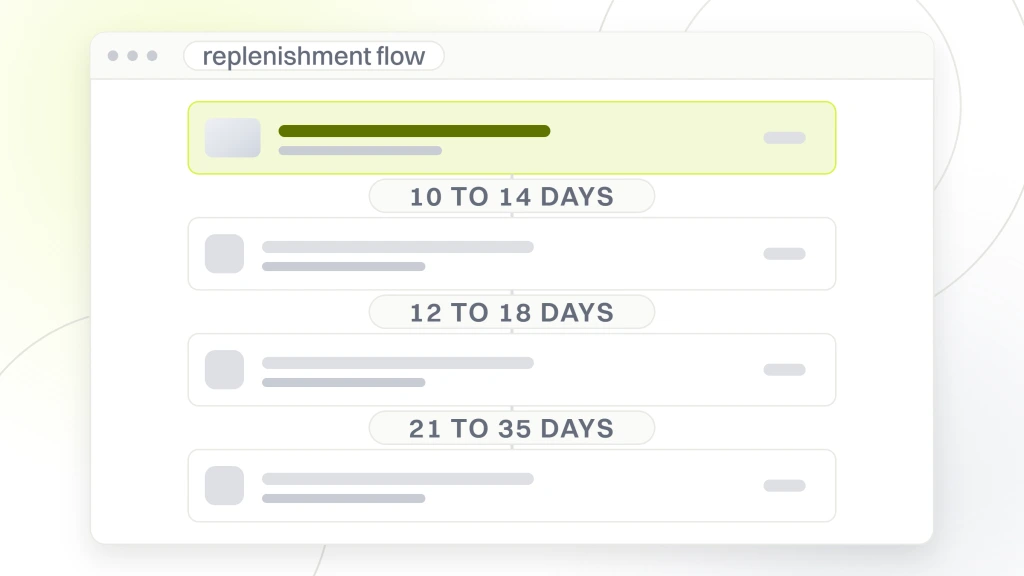
Klaviyo and Attentive stack together for any beverage brand social media program. Klaviyo runs the email flows (welcome, post-purchase, replenishment, win-back). Attentive runs the SMS layer. First-order rebuy rate for beverage brands usually sits between 22 percent and 38 percent when SMS replenishment is running, versus 12 percent to 22 percent for email-only setups. SMS is where the retention delta lives.
The replenishment flow needs to fire at the right cadence. Cold brew coffee replenishes at 10 to 14 days. Kombucha and functional beverages replenish at 12 to 18 days. Canned cocktails replenish at 21 to 35 days depending on serving occasion. SMS replenishment nudges should fire two to three days before predicted stock-out, with a subscribe-and-save upgrade offer attached.
Content-driven email works well for beverage brands too. Recipe emails, seasonal cocktail guides, and behind-the-brand stories build the lifetime value (LTV) that pure promotional emails don’t. A brand sending purely promotional emails will fatigue the list inside three months. A brand mixing content and promotion in a 60/40 ratio will keep open rates above 30 percent for 12+ months.
Beverage Brand Social Media Channels Compared By Fit, Speed, And Retention Value
The channels below score across three lenses for a beverage brand social media program. Fit for the beverage category, speed to measurable revenue, and downstream retention impact. Use it to build a channel mix that matches the brand’s stage and distribution model.
| Channel | Category Fit | Speed to Revenue | Retention Impact | Best Use |
|---|---|---|---|---|
| TikTok Organic | Very high | 2-8 weeks | Medium | Product trial content, recipe repurposing |
| TikTok Boosted | Very high | 2-4 weeks | Medium | Amplify top organic clips, launch pushes |
| Instagram Grid + Stories | High | Slow (validation only) | Low | Discovery layer for retail-first drinkers |
| Instagram Reels | High | 4-8 weeks | Medium | Cross-post TikTok, launch teasers |
| Meta Paid (retail geo-fenced) | High | 1-3 weeks | Low (acquisition) | Retail shelf velocity, event driving |
| Meta Paid (DTC prospecting) | Medium | 3-6 weeks | Medium if funnel works | Subscription-eligible brands |
| Influencer Whitelisting | High | 4-10 weeks | Medium (creative library) | All beverage brands scaling paid |
| UGC Insert Program | Very high | 6-12 weeks | High (compounds) | All DTC beverage brands |
| Email + SMS Flows | Very high | 2-4 weeks | Very high | All DTC beverage brands |
Read left to right and the pattern is clear. TikTok and email do most of the heavy lifting. Meta paid earns its slot on retail geo-fencing and event driving. Influencer whitelisting and UGC feed the top of the creative funnel so paid campaigns don’t stall on stale assets.
Content Cadence, Roles, And Budget For A Beverage Brand Social Media Program
A working beverage brand social media program is not a solo social manager posting five times a week. It’s a small pod. One content lead who owns brief writing and creator selection. One video editor working two days a week to cut 20 short clips a month. One paid media buyer running Meta and TikTok. One retention marketer running Klaviyo and Attentive. For a brand doing $2 million to $10 million in yearly revenue, that pod runs at $8,000 to $18,000 a month in blended fees plus creator payments.
The weekly cadence looks like this. Monday, the content lead ships briefs to 2 to 3 creators for the week. Tuesday and Wednesday, creators film and submit raw clips. Thursday, the editor cuts and delivers finished vertical video to the paid buyer and the organic queue. Friday, the paid buyer boosts top performers from the prior week and archives underperformers. The retention marketer syncs SMS and email flows to whatever storyline the social pod is running.
Budget shifts by stage. Emerging brands under $2 million yearly revenue push 60 percent of spend to paid Meta and TikTok, 25 percent to creator fees, 15 percent to retention tooling. Mid-stage brands between $5 million and $15 million balance closer to 40/40/20 as retail sampling and trade budgets grow. Legacy brands over $25 million drop paid social share to 25 to 30 percent and grow event, sponsorship, and brand equity spend as the model matures. Redefine Web retainers at $999/mo, $1,499/mo, $2,499/mo, and $4,500/mo map to those stages so budgets don’t leak on the wrong tier.
Reporting cadence matters as much as spend allocation. Weekly reviews cover creative performance, CPA trends, top three clips, and any anomaly worth acting on. Monthly reviews roll up CAC, LTV, retention flow performance, and channel mix. Quarterly reviews look at brand tracking studies, retail velocity from Nielsen or SPINS if available, and any channel worth adding or cutting. Skip the daily dashboards for a beverage program. Daily reads produce anxious decisions, not smart ones.
How Abigail Ahern Rebuilt Paid Social Without Discounts
Abigail Ahern is a luxury home décor brand, not a beverage brand, but the paid social pattern maps cleanly to premium beverage. They came to Redefine Web leaning too hard on discount-driven paid ads that pulled short-term sales and eroded the premium brand identity. Any beverage brand fighting the same discount trap on Meta will recognize the pattern.
The rebuild restructured paid social around segmented campaigns tuned to margin, not volume. Ad creative shifted from discount banners to mood-and-craft imagery matched to the brand identity. Retargeting brought interested visitors back to buying moments without coupons. Prospecting campaigns introduced the brand to new design-conscious audiences without relying on price.
Over 12 months. Ecommerce revenue up 179 percent, paid social return on ad spend (ROAS) reaching 3,000 percent, all without a single discount banner. Premium beverage brands running the same discipline (creative aligned to brand, segmented targeting by intent, retargeting tuned for repeat behavior) reach the same margin economics. The path away from discount-dependency is well worn and mostly ignored.
How Boogie Board Turned Cross-Channel Ads Into Sustainable ROI
Boogie Board sells reusable writing tablets, not beverages, but the paid social lesson still lands for any DTC beverage brand pushing high volume on Meta and TikTok with weak targeting. Google Ads spend was broad, landing pages were unoptimized, and there was no nurture sequence pulling repeat purchases through. Every dollar left revenue on the table.
Redefine Web restructured the program around cross-channel ads (Google plus LinkedIn), landing-page optimization, automated follow-ups, and retargeting. Ad creatives got matched to specific audiences. Landing pages simplified the shopping flow. Lead magnets showcasing sustainability and creativity captured engaged prospects. Automated email follow-ups and retargeting drove repeat purchases through a real nurture layer.
Result. Boogie Board hit an $31 cost per sale, boosted conversion rates 11 percent, and managed $650,000 in ad spend with sustainable ROI. For a beverage brand, the same discipline applies. Precise targeting beats broad reach. Landing pages need to close the trial-to-purchase gap. Automated retention flows carry the revenue that acquisition ads alone won’t produce.
How Vejrø Resort Turned Social Presence Into Direct Bookings
Vejrø Resort is a Danish private-island resort, not a beverage brand, but the social-to-conversion problem maps directly to any beverage brand relying on social without a real DTC funnel. Vejrø had strong social engagement and appeal but no website, no direct booking flow, and no central digital hub. Interested guests couldn’t easily find details, view galleries, read reviews, or book directly. Every social impression risked leaking to a competitor with a working site.
Redefine Web built a conversion-focused website with direct booking integration, on-site and off-site SEO, and competitor-aware content. The site turned into both a brand showcase and a booking engine. User-friendly layout, strong CTAs, SEO-driven content, mobile-first speed. The social channels finally had a destination that converted.
Over the first 3 months. 10K organic visitors, 200+ first-page keywords in the travel niche, and 2.2 percent booking conversion from organic traffic. For beverage brands, the parallel is direct. A polished Instagram and TikTok presence still needs a DTC site that closes. Store locators, subscription pages, and event RSVP flows have to be as tight as the social content pointing at them.
Where Beverage Brand Social Media Programs Break, And How To Fix Them
Most beverage brand social media programs break in three predictable ways. First, awareness content dominates and trial content stays under 30 percent of the mix. Second, paid social runs without retailer geo-fencing or event tie-ins, so budget spreads too thin. Third, retention flows on Klaviyo and Attentive never get built, so every acquired customer stays a one-time buyer. Fix those three and most beverage brand social media programs double the revenue they pull from social.
Common tactical fixes. Rewrite the content calendar so 70 percent of posts push toward a store locator, a DTC coupon, or an event RSVP. Split Meta campaigns by channel goal (retail, DTC, events) instead of running one general campaign. Build a 5-flow Klaviyo baseline (welcome, browse abandon, cart abandon, post-purchase, replenishment) before spending another dollar on top-of-funnel. Layer Attentive SMS on top for the replenishment trigger.
Team fixes matter too. A single social manager can’t run TikTok organic, Meta paid, influencer coordination, and email and SMS. That’s four jobs. Either hire a small pod, outsource to a specialist agency, or scope the program down to two channels done well instead of four channels done badly. According to Marketing Week agency benchmark reporting, beverage brands that consolidate to two well-run channels usually outperform brands running five channels at half depth.
Final fix. Report on revenue, not engagement. A social program that produces 5 million impressions and no measurable DTC or retail gain is a marketing report, not a business result. Every quarterly review should tie social spend back to store scan data, DTC revenue, subscription rate, and event attendance. If the numbers don’t move, the program needs a restructure, not another content refresh.
How To Set Up A Beverage Brand Social Media Program In The First 90 Days
A first-90-day beverage brand social media build should stay lean, measurable, and honest about what’s working. Skip the temptation to run five channels at once. Two channels done well beat five channels done poorly every quarter.
Day 1 through 30. Audit the current program. Pull last 90 days of Meta and TikTok performance. Score every campaign against the 70/30 trial/awareness split. Score every ad against retail, DTC, or event goals. Identify the three worst-performing spend lines and pause them. Build a creator shortlist of 15 to 20 micro-influencers (10K to 100K followers) in food, cocktail, wellness, or fitness niches. Draft whitelisting-inclusive contract language.
Day 31 through 60. Ship the first content calendar under the new mix. Launch 4 to 8 TikTok clips a week. Rebuild Instagram grid with 10 to 15 fresh posts. Launch geo-fenced Meta campaigns around top retail accounts. Kick off first 4 to 6 creator partnerships with whitelisting rights. Install Klaviyo baseline flows. Install Attentive SMS with a first-order welcome and a replenishment trigger.
Day 61 through 90. Iterate creative weekly based on paid performance. Boost the top 2 clips per week. Archive underperformers. Add subscribe-and-save promotion to the DTC site. Launch the first UGC insert card program in every shipped order. Run one paid event campaign against a live sampling activation or tap takeover. Report to the leadership team on CAC, LTV, DTC conversion rate, and any retail velocity signals available.
By day 90, a beverage brand should have a working 4-week creative cycle, a live retention flow moving repeat orders, a growing UGC library, and a real weekly reporting rhythm. If any of those pieces aren’t in place at day 90, the program either scoped too big or the team is understaffed. Rescope, don’t push through. For agency support, Redefine Web’s social media service page lays out the full retainer structure and channel-by-channel scope.