Real estate email marketing is the discipline that turns your CRM into a listing-appointment machine and your past clients into a referral engine that produces 20 to 45 deals a year on autopilot. Not weekly market updates nobody opens. Not price-drop alerts that hit the spam folder. Real segmented sequences that land in the primary inbox, get opened at 32 to 48%, and book 8 to 20 real seller and buyer conversations a month at a channel cost near zero once the platform fee is paid.
This guide walks through the six sequences every agent needs running, the four CRM plus email platform combinations that work in 2026, the segmentation model that quadruples reply rates, the templates that produce booked conversations at 8 to 14%, and the automation triggers that fire the right message at the right week without you touching a keyboard. Every framework here comes from live 2026 agent and brokerage accounts we run inside our real estate marketing retainer.
Subject lines that carry real estate email marketing above the fold in 2026
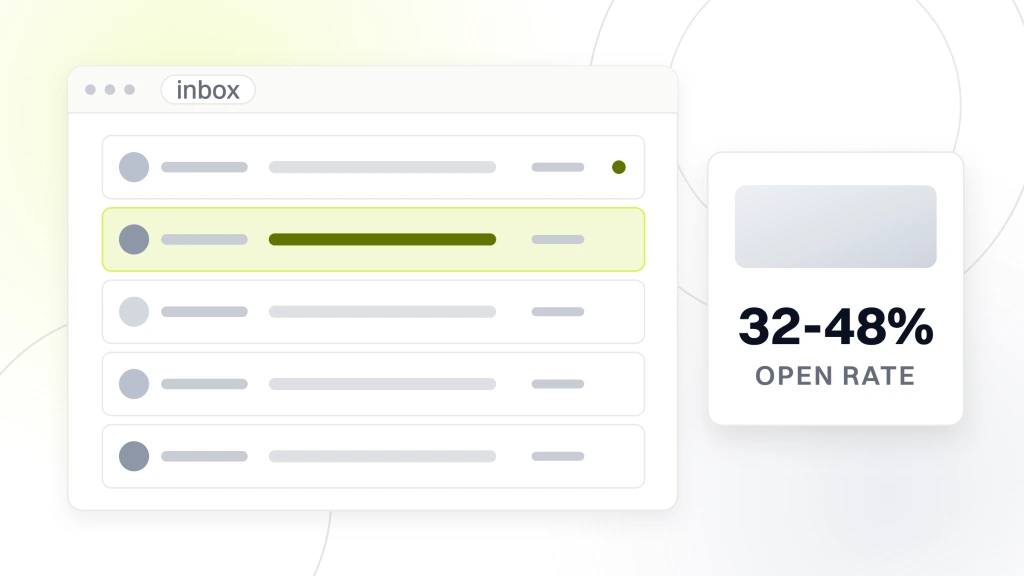
Subject lines decide 40 to 60% of the open rate outcome. The rest is inbox placement plus sender name recognition. Subject lines for this vertical have three patterns that outperform the rest. Hyperlocal specific. Question format. Personal name plus single detail. Corporate template subject lines like “Your monthly market update” pull 8 to 14% open rates. The three winning patterns pull 32 to 48% open rates on identical lists.
Hyperlocal specific pattern examples
“3 sales on Silverlake Blvd this week.” “The $1.42M cash offer on your block.” “Craftsman on Maple St went in 4 days.” Notice the pattern. Specific street, specific price, specific timeframe. No branding language. No superlatives. No emoji. The subject reads like a text a friend sends you when something interesting happens near your house. That framing pulls open rates in the 40s. It triggers curiosity without triggering the marketing-email pattern-match the brain does inside two seconds of hitting the inbox.
Question format and personal name patterns for email marketing for real estate
“Are you still thinking about selling this year?” “Did you see what the Johnson house sold for?” “Quick question about your neighborhood.” Question format pulls opens by creating an open loop the reader wants to close. Personal name plus single detail works the same way. “Sarah, the market on Elm Street just shifted.” Adding the first name in the subject raises opens 8 to 15% on agent lists. Pair the name with a specific hyperlocal detail and opens climb 20 to 35% against a generic subject line of the same length.
Platform comparison for agent email programs in 2026
Every platform has strengths and gaps. The table below compares the four combinations that work at scale in 2026, across monthly cost, deliverability tier, automation depth, and typical reply rate. For the full stack view, see our roundup of best real estate marketing tools and software.
| Stack | Monthly cost | Deliverability | Automation depth | Reply rate |
|---|---|---|---|---|
| FUB + Mailchimp | $108 to $173 | 92% primary inbox | Deep with Zapier | 18 to 32% |
| Sierra Interactive | $300 to $500 | 84% primary inbox | Deep native | 14 to 24% |
| kvCORE all-in-one | $500 to $1,200 | 82% primary inbox | Very deep native | 12 to 22% |
| HubSpot + native | $800 to $3,200 | 94% primary inbox | Very deep native | 20 to 38% |
Plain-text emails from a personal sender name outperform corporate HTML by 2 to 4x on reply rate for real estate lists.
Why reply rate matters more than open rate
Open rate is a vanity metric on iOS 15 and up. Apple Mail Privacy Protection pre-fetches images and inflates opens by 30 to 60%. Reply rate is the honest metric. It takes a human typing something back. Agent accounts should track reply rate as the primary success signal and open rate as a secondary directional trend. The four stacks above all produce inflated opens in the 40s to 50s. Reply rate is the fair comparison and shows the real deliverability plus content quality outcome.
The plain-text versus HTML template question
Plain-text emails from a personal sender name outperform corporate HTML templates by 2 to 4x on reply rate. Plain-text lands in the primary inbox 96% of the time versus 78% for HTML with a corporate header. The counterintuitive move is to send emails that look like personal one-to-one messages even when they hit a segment of 1,200 contacts at once. The recipient feels the message was written for them and replies at 8 to 14% instead of 1 to 3% for a designed template.
Automation triggers inside email marketing for real estate agents
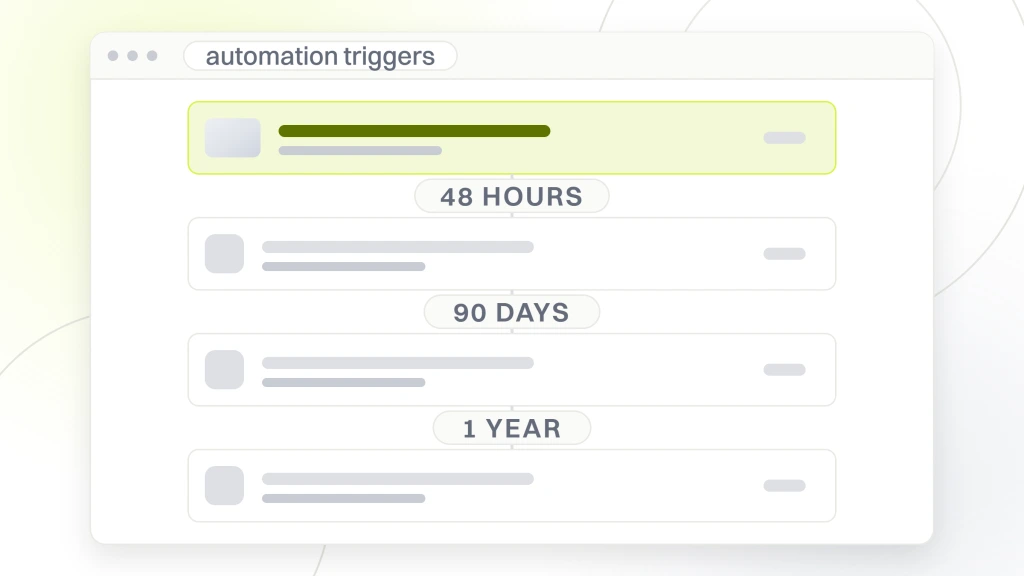
Automation is what makes the whole system produce results without a full-time admin behind it. The right triggers fire the right message at the right week without you thinking about it. The automation stack runs on three trigger types. Behavior triggers. Calendar triggers. CRM stage triggers. Each type covers a specific slice of the pipeline.
Behavior triggers that book conversations
A buyer lead clicks three listings inside the same neighborhood in one week. Fire a personal email asking if they want to see any in person. A seller lead opens the same recent-sales email twice inside 48 hours. Fire a text plus email asking if they are thinking about listing. A past client opens the “referral bonus” email. Fire a follow-up email offering a coffee meeting. These behavior triggers book 3 to 8 conversations per month on top of the standard sequence output at zero incremental cost since the automation is already running. See the Sales Funnel Services · Done-For-You program for the automation architecture that ties all three trigger types together.
Calendar triggers on client anniversaries
Closing anniversary. Birthday. Home purchase anniversary. Moving-in anniversary. Each date deserves an automated touch. A one-year closing anniversary email produces 12 to 18% reply rate on agent lists. A five-year anniversary email produces the highest referral-generation rate of any single automation in the vertical. Past clients are actively considering their next move around the 4-to-7 year mark. Calendar triggers cost nothing to run once configured and produce the highest lifetime value of any single automation category.
Templates you can copy this week
Templates should never look like templates. The best real estate email marketing templates read as personal one-to-one messages that reach 1,200 contacts at once. Every template below is written in the tone of a friend telling you something interesting, not an agent selling services. Copy any of these into your platform tonight and start seeing reply rates climb inside the first two weeks.
Send from your personal email address, not a marketing sender. Reply threads then hit your inbox instead of a shared bucket nobody checks.
The 4-line past-client check-in template
Subject line. “Quick question about the neighborhood.” Body. “Hi {first_name}, saw the {street} sale close at {price} last week and thought of you. Curious if you have been keeping an eye on values in the area recently. Let me know if you ever want a quick refresh on what your place would go for today. Signed, {agent}.” Four lines. Personal. Reply rate on this template runs 14 to 22% on past-client segments. It works by reading like a text message from someone who knows you, not a corporate outreach template.
The seller-lead follow-up template
Subject line. “The market shift on {neighborhood}.” Body. “Hi {first_name}, quick heads up. Three houses in your neighborhood went pending in the last 10 days, all above list. If you were on the fence about listing this fall, this is the window. Want to grab 15 minutes on the phone this week to walk through what your place could bring today? Signed, {agent}.” Book rate on this template runs 8 to 14% for seller leads inside 60 days of the initial lead capture. These templates work when they reference a specific hyperlocal signal the recipient can verify.
The buyer nurture drip template
Set a 6-email sequence over 21 days for new buyer leads. Day 1. “Welcome, here is what to expect from me.” Day 3. “5 questions to ask before you tour any home.” Day 7. “3 recent sales in your target neighborhood.” Day 12. “The one financing mistake I see first-time buyers make.” Day 17. “How the process usually plays out, week by week.” Day 21. “Ready to start touring? Grab a 15-minute slot on my calendar.” Reply rate across the full sequence averages 11 to 18% on cold buyer leads and 22 to 30% on warm leads from a listing inquiry.
A case reference from our books
McCarthy Court is a 7-unit luxury Sidcup development we partnered with to sell residences during the build phase. The developer needed to simulate the living experience, build trust, and drive buyer inquiries before completion. We designed an immersive, brand-aligned website showcasing McCarthy Court as a premier, eco-conscious destination. Stunning property renderings, detailed lifestyle content, and user-friendly navigation engaged buyers and built trust before completion. CTAs prominently captured inquiries and fed the email nurture layer that kept prospects warm through the final 3 months of the build.
The outcome. 100% occupancy in 3 months of completion. 60+ qualified buyer leads. 10K campaign visits. The email nurture layer worked by treating buyer inquiries as a warm segment with a defined timeline, not a cold list to blast. Every inquiry got a 4-email sequence over 14 days that referenced the specific unit type they had asked about, plus monthly renders and build-progress updates the developer supplied. According to the Mailchimp email marketing benchmarks report, real estate consistently ranks in the top three verticals for click-to-open ratio when segmentation is implemented at the level McCarthy Court used from month one.
What the sequence library looked like at month three
By month three the sequence library held 6 automated flows. Welcome for new buyer leads. Welcome for referral-source contacts. Monthly build-progress newsletter for warm inquiries. Quarterly newsletter for the wider prospect list. Closing anniversary for completed unit purchases. Re-engagement for dormant contacts over 90 days. Total nurture reach ran 4,200 emails monthly against a database that opened at 34 to 42% and replied at 6 to 11%. A nurture program at this scale produces measurable pipeline movement inside 60 days of launch.
What the library looked like at month twelve
By month twelve the library had grown to 14 flows. Behavior-triggered follow-ups. Calendar-triggered anniversaries. Stage-triggered handoff sequences from inquiry to viewing to reservation to closing. Reply rate on the full library averaged 8% across all segments. Monthly booked conversations tied to email sat at 28 across a database that had grown to 2,600 contacts. The Real Estate Marketing Agency for Brokerages program brought the same nurture-plus-website integration to every real estate account we ran across residential lettings, sales, and commercial letting operations.
Common mistakes that quietly kill agent email accounts
Every account we audit shows the same six mistakes on intake. Fix them and reply rate doubles inside 45 days. Skip the fixes and the account keeps sending monthly newsletters into inboxes with a 4% open rate and a 0.2% reply rate. Meanwhile the account down the street produces 20 booked conversations off the same size database. Pair the email channel with your real estate social media plan so no lead gets missed.
- Sending the same message to buyers, sellers, and past clients cuts open rates 60 to 80%.
- Using corporate HTML templates with a logo header lands 22% of emails in the promotions tab.
- Skipping the reply-rate metric hides the fact that 90% of emails are landing in gray zones.
- Sending from a no-reply address drops reply rate to zero. Nobody replies to no-reply.
- Blasting the same weekly newsletter for 18 months exhausts the list and drives 6% monthly unsubscribes.
- Skipping the automation layer forces manual sends that never happen consistently across a full quarter.
If a vendor pitches a full real estate email package under $200 a month, the sequences are template swaps, not real segmentation work.
The vendor red flag list for agent email services
Some vendors pitch a full package at $199 monthly. Pull the cover off and the “custom sequences” are the same 5 corporate templates sent to every agent across the vendor 800-account book with the {first_name} placeholder swapped out. Real production of segmented sequences plus platform management runs 4 to 10 hours a month at senior rates, which puts real fees between $650 and $2,400 monthly depending on database size and sequence count. Anything below that band is buying you an inbox blast, not a real program.
Green flags in a real proposal
Green flags. A written segmentation plan for at least five audience types. A plain-text sending strategy over corporate HTML. A reply-rate metric target rather than open-rate targeting. A documented deliverability warmup plan if the account is new. Automation triggers spelled out per sequence. A monthly one-page report tied to booked conversations rather than opens and clicks. Any proposal missing three or more of these green flags means the vendor is running a template shop, not a pod that produces booked conversations at scale.
Deliverability rules every sender has to respect in 2026
Deliverability is what decides whether 4,000 emails land in the primary inbox or the promotions tab. Gmail and Yahoo tightened requirements in early 2024 and the standards have not loosened. Agent accounts that skip the technical setup steps see 30 to 50% of their sends drop to promotions or spam inside 90 days of launch, regardless of content quality.
SPF, DKIM, and DMARC alignment
SPF (Sender Policy Framework), DKIM (DomainKeys Identified Mail), and DMARC (Domain-based Message Authentication) are three DNS records that authenticate the sender identity to Gmail, Yahoo, Apple Mail, and Outlook. Skip any of the three and inbox placement drops 30 to 60%. Setup takes 20 to 45 minutes with the platform documentation and your domain registrar. According to the Gmail sender guidelines, DMARC alignment is now required for any sender pushing over 5,000 messages per day and strongly recommended for smaller senders. Every serious sender account we run gets these three records verified in the first week of onboarding.
List hygiene and re-engagement rules
Contacts that have not opened an email in 180 days should get a two-touch re-engagement sequence, then be suppressed if they still do not open. Sending to dormant contacts drops the sender reputation across the entire list. According to the Litmus deliverability guide, list hygiene is the third-largest driver of primary-inbox placement behind SPF/DKIM/DMARC alignment and sender reputation history. Agent programs that skip the suppression discipline see reply rates drop 25 to 40% inside a year even when the content stays strong.
Suppress any contact that has not opened an email in 180 days. Sending to dormant addresses drops sender reputation across the whole list.
Warmup and sending-cadence rules for agent email programs
New accounts cannot start with a 4,000-contact monthly blast. Gmail and Yahoo will flag the sudden volume as suspicious and route 60 to 80% of the send to the promotions tab or the spam folder. Agent accounts need a 4-to-6 week warmup where sending volume climbs from 100 emails per day to 800 emails per day across the first month, then a monthly cap that respects the platform reputation ceiling. Map every sequence against your real estate marketing calendar so cadence lines up with buyer and seller seasons.
The 30-day warmup schedule that works
Week 1. Send 80 to 120 emails per day to the most-engaged 20% of the list. Week 2. Send 200 to 350 emails per day to the top-40% engagement tier. Week 3. Send 500 to 700 emails per day expanding to the top-70% tier. Week 4. Full list at 800 to 1,200 emails per day. This gradual ramp signals to Gmail and Yahoo that the sender is a legitimate business, not a spammer who bought a list. Skip the warmup and inbox placement drops 40 to 60% for the first 60 days and takes another 90 days to recover.
Monthly cadence caps by database size
A 500-contact database can handle 4 sends per month without fatigue. Pair the send discipline with the PPC Management Services · Flat-Fee, Senior US Team program so paid channels feed the top of the funnel and email nurtures the bottom. A 2,000-contact database can handle 6 to 8 sends per month with proper segmentation splitting the audience. A 5,000-contact database can handle 12 to 16 sends per month. Segments are big enough to absorb frequent touches without any single contact getting the same message twice a week. Accounts that violate the cap see unsubscribe rates climb from 0.2% monthly to 1.4% monthly, and the list erodes 25% per year instead of the healthy 3 to 5% churn a disciplined account produces.
Wrapping up your agent email program as a live channel
This channel is the highest-ROI play in the vertical for agents with an existing database of 200 or more contacts. The six sequences cover the pipeline. The seven segments carry relevance. The automation triggers do the heavy work so you can focus on showings and closings. The templates read as personal even when the audience is 1,200 people. The deliverability discipline lands you in the primary inbox where the reply rate work actually happens. Every layer works together as one live program.
If you have not touched your CRM email sequences in 90 days, you are leaving $180K to $600K of annual GCI (gross commission income) on the table depending on database size. Redefine Web builds and runs email programs for real estate agents and brokerages inside the Real Estate Marketing Retainer from $1,499/mo program. Book a discovery call and we will walk through the last three real estate accounts we rebuilt from a stale database, line by line, with the exact sequences, the automation triggers, and the specific booked-conversation counts each account produced in months two, four, and six.